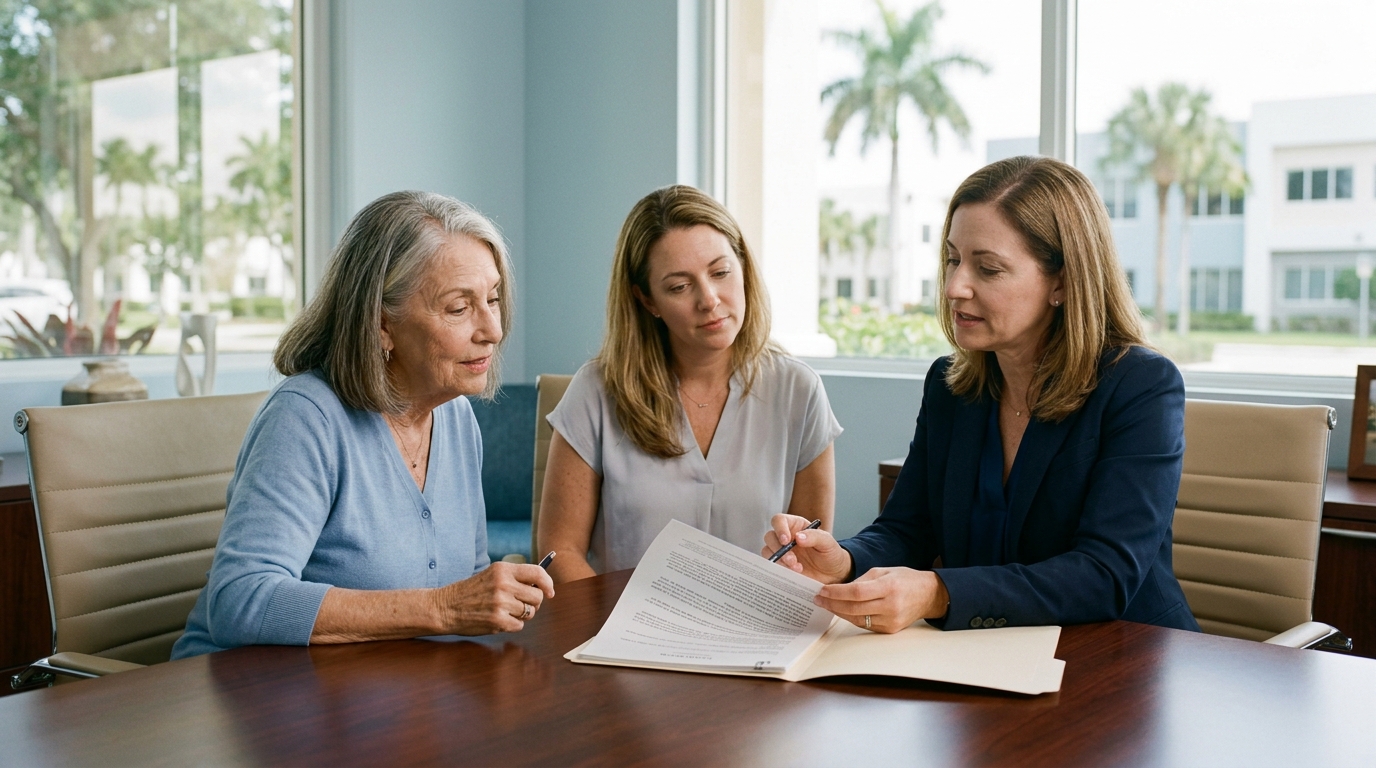
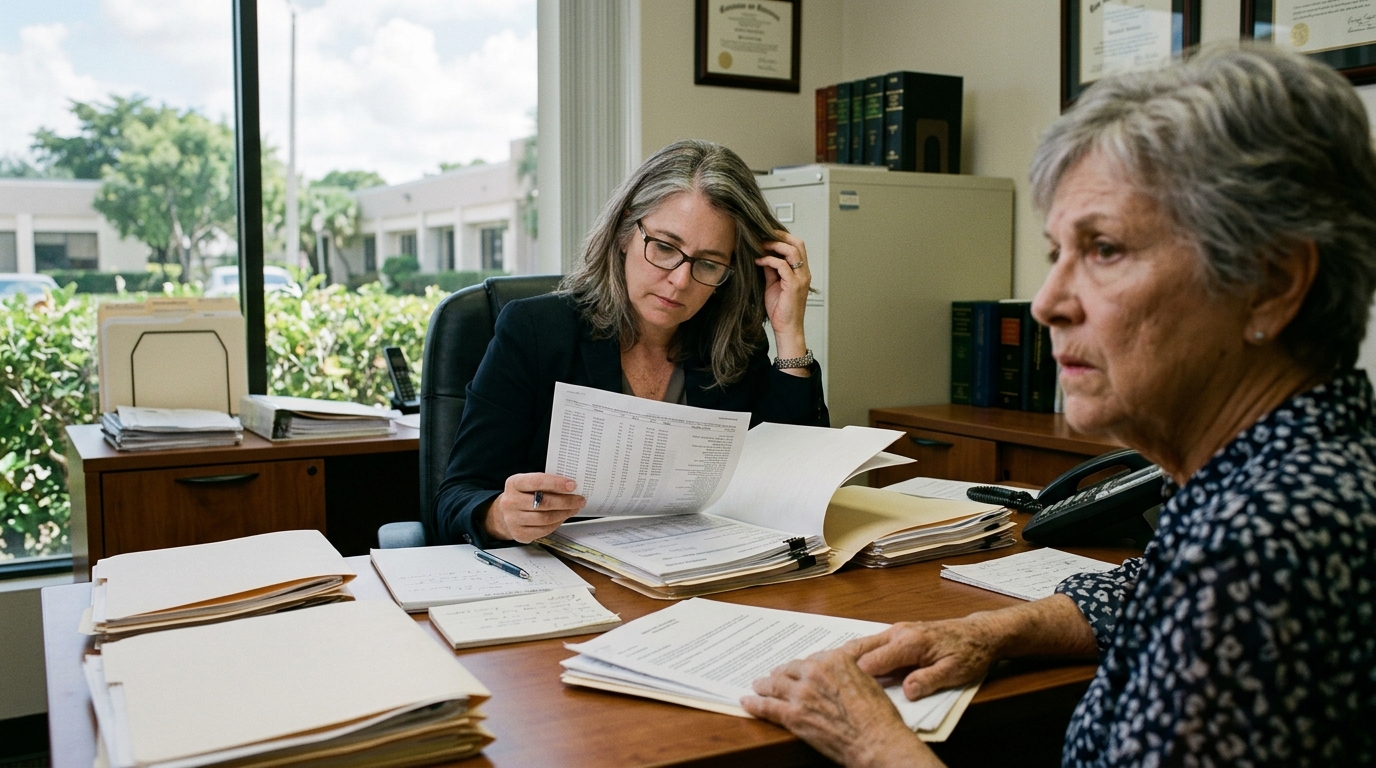
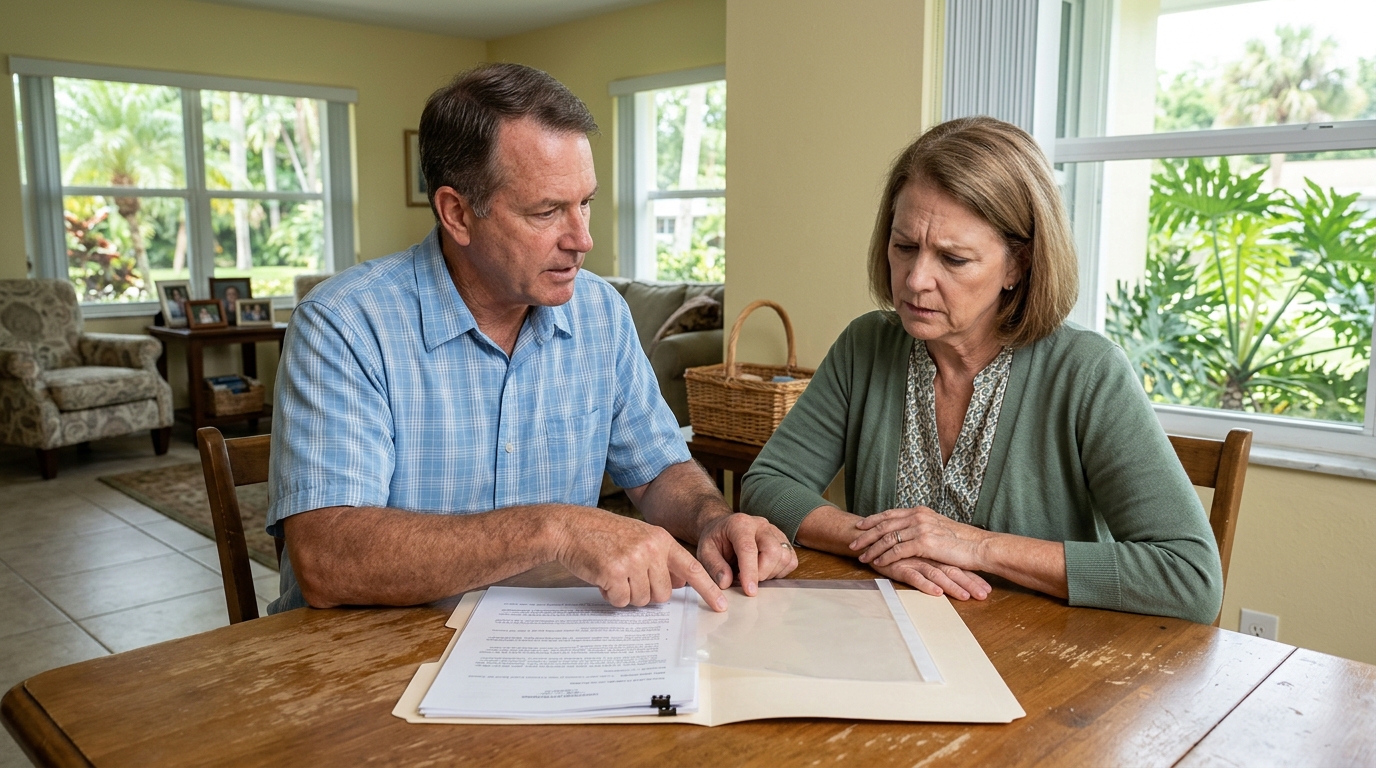
Elder law can sound like a narrow area of practice. It is anything but.
A family may encounter elder law because a parent is beginning to lose the ability to manage finances. It may arise when someone needs long term care and the family is trying to understand how that care will be paid for. It may involve a power of attorney, a guardianship, Medicaid planning, financial exploitation, or a disagreement over who should be making important decisions.
Sometimes the legal issue is obvious. Sometimes it is not.
That is part of what makes elder law different from simply hiring an attorney to handle a single document or transaction. The lawyer may need to look at capacity, health care, finances, public benefits, property, family relationships, and the legal authority that one person has to act for another.
The Florida Bar’s own definition of elder law reflects that breadth. The specialty includes planning for aging, illness and incapacity, along with estate planning, probate, guardianship, nursing home claims, public benefits, elder abuse and related litigation.
When Is an Elder Law Attorney the Right Lawyer to Call?
The easiest way to understand elder law is to forget the label for a moment and look at the problem in front of you.
Consider a few situations.
Your mother is still living independently, but you are becoming concerned about what would happen if she could no longer manage her finances or make medical decisions.
Your father needs nursing home care, and the family is trying to understand what Medicaid will cover and what financial consequences may follow.
An older relative has given someone access to bank accounts, and money appears to be disappearing.
A parent never created a durable power of attorney, and now family members disagree about who should handle financial affairs.
A family is considering guardianship because an older adult can no longer manage certain aspects of daily life.
These are very different problems. They can nevertheless fall within the same legal specialty.
Choosing an elder law attorney is not about finding someone who handles one particular document. Look for someone who understands how these issues interact.
If You Are Planning Before There Is a Crisis
The best time to confront many elder law issues is before a crisis makes the decisions for you.
Florida law provides several tools for planning around incapacity, including durable powers of attorney and advance health care directives. A health care surrogate can play an important role in medical decision making, while other planning documents can establish who has authority to act when a person can no longer do so independently. The Florida Bar identifies these instruments as part of the broader field of elder law.
The important point is not simply having paperwork.
The documents need to reflect the person’s wishes and circumstances. They also need to work together with the person’s financial and estate planning.
That is where an elder law attorney can provide something more substantial than a stack of forms. The attorney can examine what authority exists. He or she can see what authority may be needed, and what could happen if the person later loses capacity.
Capacity is more than often the dividing line.
While someone can make and change important decisions for themselves, planning may be available. Once capacity becomes seriously impaired, the family may have to rely on existing documents or turn to a court.
When a Parent or Spouse Is Losing Capacity
This is where elder law becomes particularly important.
Families sometimes assume that a spouse or adult child automatically has the legal authority to take over when an older person can no longer manage affairs. That is not necessarily how the law works.
If there is no adequate planning in place, guardianship may become an issue.
Florida guardianship proceedings are handled through the circuit courts under Chapter 744. A court may determine that a person is incapacitated and appoint a guardian to exercise particular legal rights. Importantly, Florida law recognizes that guardianship should be the least restrictive appropriate alternative. Most the time it sustains that an incapacitated person retains rights consistent with his or her abilities.
That difference matters.
Guardianship is not simply a legal mechanism for giving one family member control over another. It is a court supervised process involving the removal and delegation of specific rights.
Florida law also protects the rights of people who have been determined incapacitated. This includes rights involving dignity, independence, access to the courts, counsel, and continuing review of restrictions on their rights.
An elder law attorney may therefore become involved before a guardianship proceeding, during the proceeding. Or in disputes concerning an existing guardianship.
When Long Term Care Becomes a Financial Problem
Long term care can turn an ordinary family financial plan into a complicated legal problem surprisingly quickly.
Medicaid planning is one of the better known areas of elder law because eligibility for long term care benefits involves detailed federal and Florida rules concerning income, assets, transfers, exemptions, and other circumstances.
The Florida Bar’s current elder law education materials specifically describe Medicaid planning as an area in which elder law attorneys use federal and state rules to help clients legally and ethically protect assets and income when skilled long term care may be necessary.
This is also an area where timing affects the results.
A family that waits until admission to a nursing facility may be dealing with a very different set of circumstances from a family that begins planning years earlier. The appropriate strategy depends on the person’s assets, income, health situation, family circumstances, existing documents, and the applicable Medicaid rules.
For that reason, Medicaid planning should not be reduced to a simple question of whether someone is “over the limit.” Eligibility is a legal analysis, not a single number.
When Someone May Be Taking Advantage of an Older Adult
Not every elder law problem begins with a hospital, nursing facility, or court.
Sometimes it begins with a bank statement.
A caregiver starts using an older person’s money. A relative suddenly changes ownership of property. Someone with access to a power of attorney begins making transactions that appear to benefit themselves. An older adult may also be pressured into giving away assets or signing documents they do not fully understand.
Florida law specifically addresses exploitation of elderly persons and disabled adults. Section 825.103 includes conduct involving the unauthorized use of an older person’s funds, assets, or property, including circumstances involving people in positions of trust and confidence and certain breaches of fiduciary duty by guardians, trustees, and agents acting under powers of attorney.
The law also provides a civil cause of action for an injunction to protect a vulnerable adult from exploitation in qualifying circumstances.
These matters can require more than identifying that something feels wrong. The relevant documents, financial transactions, authority granted under a power of attorney, property records, and relationships between the people involved may all need to be examined.
Where Elder Law Meets Estate Planning and Probate
Elder law also overlaps naturally with estate planning and probate.
That does not mean every estate planning matter is an elder law matter. A straightforward will or trust may have little to do with elder law.
The overlap becomes more significant when planning involves incapacity, long term care, public benefits, special needs, guardianship, fiduciary responsibilities, or protecting an older person’s ability to control property and financial decisions.
This is also why the old idea that elder law is primarily about “estate taxes” misses the modern picture.
Florida does not impose a separate state estate tax on people who died after December 31, 2004. The Florida Department of Revenue confirms that the state no longer requires the former Florida estate tax affidavits for estates subject to the current rules.
Estate planning remains relevant to elder law, but the important questions are broader: who can act, when can they act, what authority do they have, what happens if capacity changes, and how should assets and responsibilities be handled?
What Should You Ask an Elder Law Attorney?
If you are meeting with an elder law attorney for the first time, the most useful questions are usually practical.
Ask whether the attorney regularly handles the type of problem you are facing. Ask what legal authority currently exists and what happens if the person’s capacity changes. If Medicaid or long term care is involved, ask what information the attorney needs before discussing eligibility or planning.
It is also reasonable to ask about experience with guardianship, powers of attorney, public benefits, exploitation, probate, or other areas that may overlap with your situation.
Board certification can provide another useful credential to investigate. The Florida Bar’s elder law certification requires at least five years of legal practice, substantial involvement in elder law, continuing legal education, peer review, and a written examination.
Certification is not the only measure of an attorney’s experience. But where it exists, it is a meaningful indication of specialized training and practice.
The Right Question May Be “What Happens Next?”
If you are reading about elder law because something has already happened in your family, you probably do not need a textbook definition of the field.
You need to understand what kind of legal problem you are looking at.
Is this a planning issue? A capacity issue? A Medicaid or long term care problem? A guardianship matter? A dispute over someone’s authority to act? Possible financial exploitation? A probate or estate planning issue that has become more complicated because of age, illness, or incapacity?
Those distinctions matter because the legal response can be very different.
If an older family member’s finances, health care decisions, capacity, or long term care has created a legal problem, contact Reinfeld & Cabrera in Coral Springs to discuss the circumstances with an elder law attorney.
Frequently Asked Questions
What does an elder law attorney do in Florida?
An elder law attorney may handle incapacity planning, powers of attorney, health care directives, guardianship, Medicaid and long term care planning, elder exploitation matters, estate planning, probate, and related disputes.
When should I contact an elder law attorney?
You can contact an elder law attorney before a crisis, particularly when planning for incapacity or future long term care. An attorney may also become important when a person is already losing capacity, facing guardianship, applying for long term care benefits, or experiencing possible financial exploitation.
Is guardianship always necessary when an older person loses capacity?
No. Florida law requires consideration of less restrictive alternatives when appropriate. Existing planning documents, including a durable power of attorney, advance health care directives, or certain trusts, may affect whether guardianship is necessary.
Does elder law include Medicaid planning?
Yes. Medicaid planning for long term care is a recognized part of elder law practice, and the applicable rules can be highly fact specific.
Can an elder law attorney help if someone is exploiting an older relative?
Potentially. Florida law addresses financial exploitation of elderly persons and disabled adults, including certain misuse of property and breaches of fiduciary duty. The appropriate legal response depends on the facts and the authority involved.
If the original will is missing in Florida, the court may still admit it to probate if the person seeking probate can prove its contents and establish that it was not revoked. Under Florida Statutes § 733.207, one disinterested witness can establish the contents when a correct copy exists. If no correct copy is available, two disinterested witnesses are required.
But finding a copy does not necessarily solve the problem. Florida courts may presume that a will was revoked if the original was last known to be in the deceased person’s possession and cannot be found after death. That presumption can be challenged with evidence about the document’s disappearance and the person’s intentions.
For families in Coral Springs and Broward County, the stakes can be substantial. A missing will may determine who inherits a family home, receives financial assets, or benefits from an estate plan. Understanding the evidence Florida law requires is the first step toward determining whether the missing document can still be honored.
Can a missing will still be admitted to probate in Florida?
Yes. Florida law allows a lost or destroyed will to be established and admitted to probate under specific conditions. The fact that the original cannot be located does not, by itself, mean the deceased person’s wishes must be disregarded.
The difficult part is proving the document’s terms and addressing whether it remained legally effective at death. Those are separate questions, and a family can have strong evidence on one without having enough evidence on the other.
A photocopy, for instance, might show exactly how the estate was supposed to be distributed. It does not necessarily explain why the original disappeared. That distinction becomes especially important when someone stands to inherit substantially more under the missing will than they would under Florida’s intestacy laws.
What if the family has a photocopy of the will?
A photocopy can be a very useful starting point. It may preserve the exact wording of the will and help identify the people who were supposed to inherit. Florida law expressly accounts for this situation.
Under § 733.207, a correct copy allows the will’s contents to be established through one disinterested witness. Without a correct copy, two disinterested witnesses are required to establish those contents.
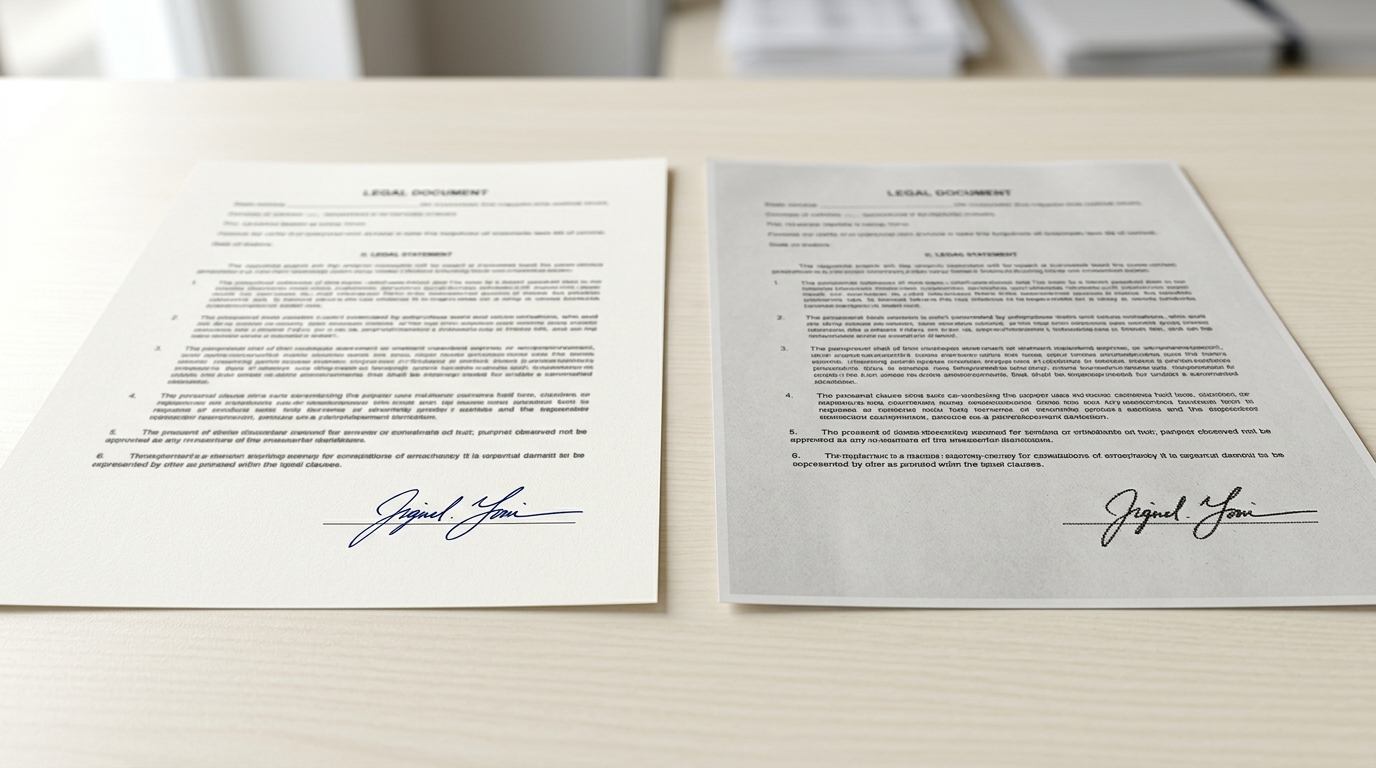
There is a catch, however. A document that looks convincing is not necessarily a correct copy of the executed will. A draft saved by the drafting attorney might contain nearly all the same provisions while omitting a final change. An older version might name a beneficiary who was later removed.
In In re Estate of Parker, the Florida Supreme Court distinguished an identical reproduction from a draft that merely reflected the contents of the missing will. That distinction may sound technical until an inheritance depends on whether a document qualifies under the statute.
The practical lesson is simple: preserve every version you find, even if some appear incomplete or outdated. An attorney can assess which documents may help establish the final will and which require further proof.
Who can testify about a missing will?
The law does not simply ask whether someone remembers the will. It matters what that person knows and whether they have an interest in the outcome.
A neighbor might remember that the deceased kept a will in a particular drawer. A relative might recall a conversation about leaving the house to one child. The attorney who prepared the document might have a draft in the firm’s records. Each person could provide useful information, but their testimony would not necessarily establish the precise contents of the missing will.
Florida requires disinterested witnesses to establish those contents under § 733.207. A witness who stands to benefit from the outcome may not qualify for that purpose.
This distinction became important in Pilak v. Reigel. The dispute involved a will and two codicils, which are documents that amend an existing will. A witness named as a beneficiary in a codicil could not establish the documents’ contents. The appellate court reversed the order admitting the documents to probate because the statutory requirements had not been satisfied.
The case offers a useful warning for families. A person may know the deceased extremely well and still be unable to provide the specific testimony the court needs. Familiarity with someone’s wishes is not the same as proof of the terms of a legal document.
The difficult question: Was the will revoked?
Finding a copy can feel like a breakthrough. It gives the family something concrete to work with, and it may settle arguments about what the deceased wanted. But the original’s disappearance can raise another question that a copy alone cannot answer.
Did the deceased intend to revoke the will?
Florida courts recognize a rebuttable presumption of revocation in certain circumstances. If the original will was last known to be in the testator’s possession and cannot be found after death, the court may presume that the testator destroyed it intending to revoke it.
The presumption does not mean that every missing will has been revoked. People misplace documents. Homes are sold, files are moved, and important papers occasionally disappear for reasons nobody can reconstruct. The court must consider the evidence surrounding the particular case.
What evidence can help show that the will remained valid?
There is no universal checklist that guarantees a successful petition. The usefulness of any particular piece of evidence depends on what happened to the document and what the court needs to determine.
Still, a few categories deserve attention.
Statements by the deceased may help establish whether they continued to regard the will as valid. Records from the attorney who prepared the document may help explain which version was final. Evidence about who had access to the original can also matter, particularly if the document disappeared from a location where other people could reach it.
The circumstances surrounding the disappearance deserve careful examination. A will that vanished during a house clearance presents different questions from one that was kept by an attorney and cannot now be located.
These details do not automatically prove that the deceased never revoked the will. They can, however, help the court evaluate competing explanations for what happened.
Two Florida cases show why the evidence matters
In Balboni v. LaRocque, the Fourth District Court of Appeal found the evidence insufficient to overcome the presumption that the deceased had intentionally revoked the missing will.
The result illustrates a difficult reality for families. Being convinced that a loved one would never have changed their mind is not necessarily enough to establish that conclusion in court. The relevant question is what the evidence supports.
A different outcome followed in Walton v. Estate of Walton. The Third District Court of Appeal found sufficient evidence to rebut the presumption. The evidence included a copy of the will and testimony about the deceased person’s wishes, along with circumstances involving the person’s final illness and another individual’s access to the home.
The contrast between these decisions is worth understanding. Florida law does not require families to give up whenever an original disappears. It does require them to establish their position with evidence that meets the applicable legal standard.
When a missing will puts a family home at stake
The consequences become especially tangible when the missing document controls who inherits real estate.
In Property Solutions Powerhouse, LLC v. Nelson, decided in June 2025, the dispute involved Margaret Templeton’s missing will and her homestead. The will purported to leave the property to a friend. After a foreclosure sale, surplus proceeds remained at issue, creating a dispute over who was entitled to the money.
The trial court admitted the lost will to probate. The appellate court affirmed the relevant orders, rejecting arguments concerning notice and the treatment of the homestead.
This kind of dispute helps explain why a missing will should not be treated as a minor paperwork problem. A document that appears to have vanished from a file cabinet can affect ownership of a valuable home or determine who receives the proceeds from its sale.
It also shows why the interests of other potential heirs matter. Someone who expects to inherit under Florida’s default rules may have a very different position from the person named in the missing will. Both may have legitimate reasons to pay close attention to the proceeding.
How to establish a lost will in Florida
Florida has a specific procedure for establishing and admitting a lost or destroyed will. The process involves proving the document’s contents and giving the appropriate people an opportunity to participate.
The practical work usually begins before a petition reaches the court. A family that spends time gathering records and understanding the history of the document may be better prepared to address the questions that arise during the proceeding.
1. Search for the original before treating it as lost
Start with the obvious places, even if someone has already checked them once. Look through personal files, home safes, safe deposit records, and correspondence from the attorney who prepared the will.
Ask whether the deceased gave the original to someone for safekeeping. A relative might have been asked to store it during a move. The drafting attorney may have retained records that help explain which version was signed.
Keep a record of what was searched and what was found. This is useful for organizing the family’s efforts and may help explain the circumstances to counsel.
2. Preserve every version of the document
A photocopy may be the best available evidence, but it should not be the only thing the family considers.
Keep scans, drafts, correspondence, codicils, and related estate planning documents. Do not discard an older version just because someone believes a newer will existed. The older document may help establish the history of the estate plan, even if it ultimately cannot govern the estate.
A codicil deserves particular attention. It may amend a will without replacing the entire document, and its disappearance can create a separate problem when the court tries to determine the deceased person’s final instructions.
3. Identify witnesses who can establish the actual terms
The next task is to determine who can testify about the contents of the will. The answer may involve the drafting attorney or another person who has direct knowledge of the final document.
Remember that the law distinguishes between knowing the contents and simply remembering the signing. A person who watched the deceased execute the will may be unable to say what its provisions actually were.
Under § 733.207, the number of disinterested witnesses required depends on whether a correct copy is available. Establishing that the appropriate witnesses exist is an important part of assessing the case.
4. Investigate why the original disappeared
The family should be prepared to explain what is known about the original’s whereabouts. Was it last kept at home? Did an attorney retain it? Did the deceased move shortly before death? Were other people able to access the place where it was stored?
The answers may help clarify whether the presumption of revocation applies and what evidence is available to address it.
This is also a point where assumptions can become counterproductive. If the family suspects that someone removed the will, it should preserve relevant information and discuss the circumstances with counsel rather than presenting an unproven suspicion as an established fact.
5. File the petition and give formal notice
The petition must explain the basis for establishing the lost will and state its contents or include a copy when one is available. The proceeding must comply with the applicable evidentiary requirements.
Formal notice must be given to people who would inherit if the missing will were not admitted. This can include heirs who would receive property under Florida’s intestacy laws.
Notice is important because the court is not simply resolving a private disagreement between relatives. The outcome can affect the legal rights of people whose interests may conflict with those of the petitioner.
6. Present the evidence to the court
The court considers the evidence about the contents of the missing will and whether the document remained effective at death. Interested parties may challenge the petition.
If the court admits the will, the final order states its terms. The estate can then proceed under the established will, subject to the other requirements of Florida probate law.
A successful petition does not eliminate every issue that may arise during administration. Questions about assets, creditor claims, ownership, or the distribution of particular property may still need to be resolved.
What happens if the court cannot admit the missing will?
If the court cannot establish the missing will, the next step depends on whether another valid will exists and how the deceased’s property is owned.
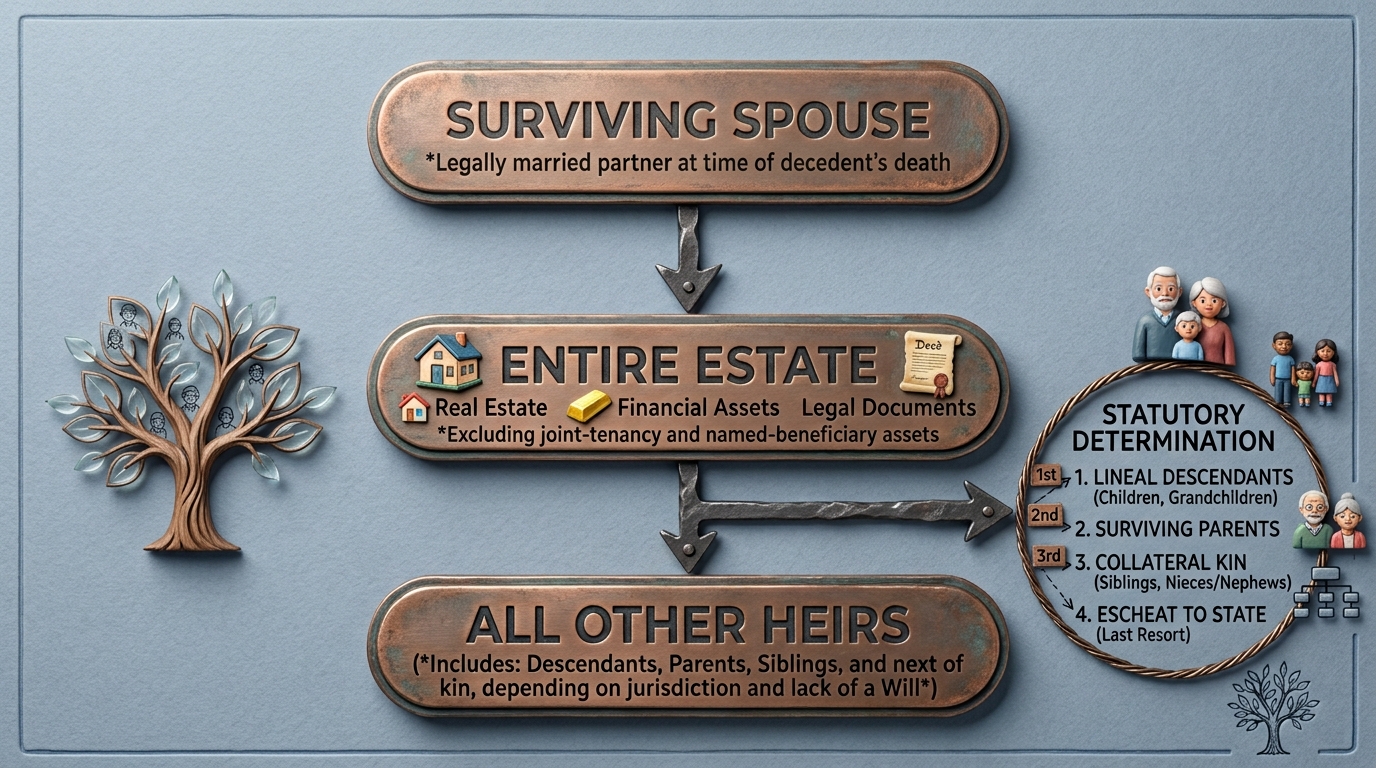
An earlier will may still be relevant. Some assets may also pass outside probate because of joint ownership or beneficiary designations. If no effective will governs the property, Florida’s intestacy rules generally determine who inherits it.
That can produce a result the deceased would not have chosen.
Imagine someone who intended to leave a house to a close friend while leaving other assets to relatives. If the missing will cannot be established, the friend may not receive the house under the rules that apply without an effective will. The actual outcome depends on the ownership arrangements and the applicable law.
It is important not to assume that every asset follows the same route. A will generally does not control property that passes automatically to another owner or beneficiary under a valid arrangement. The family may need to examine the title and beneficiary records before drawing conclusions about what is at stake.
For readers who want to understand the alternative, see MyPersonalAttorneys’ article on Florida intestate succession, which explains who may inherit when a person dies without an effective will.
What if someone finds the will after probate has started?
Sometimes the original turns up after the family has already begun the probate process. It might be discovered among old papers, in a storage box, or in records that were not available when the estate was opened.
Finding it can change the situation, but it does not automatically undo everything that has happened.
Florida Statutes § 733.208 addresses the discovery of a later will or codicil. It allows an interested person to petition concerning the later discovered document, subject to the statute’s requirements. It also restricts offering a will after the estate has been completely administered and the personal representative discharged.
The timing can be important. If a document is found after probate has begun, the family should not assume that it can simply be substituted for the will already being administered. Nor should anyone assume that a discovered document will necessarily change the outcome.
The appropriate response is to preserve the document and obtain legal advice promptly. Counsel can assess its status and explain what procedure may be available at that stage of the estate.
Common mistakes families make with a missing will
The law can be difficult enough without avoidable assumptions getting in the way. A few mistakes deserve particular attention.
Assuming a photocopy guarantees probate
A photocopy can help establish the contents, but the court must still apply the statutory requirements. The circumstances surrounding the original’s disappearance may raise a separate question about revocation.
Asking a beneficiary to prove the will
A person who expects to receive property under the document may not qualify as a disinterested witness. Even a close relative who remembers the deceased’s wishes may be unable to provide the required testimony.
Confusing the signing ceremony with proof of the contents
Someone may remember witnessing the will’s execution without knowing what it said. The law requires evidence of the document’s actual provisions, not simply proof that a signing occurred.
Treating suspicion as proof of interference
A missing will can create understandable mistrust. One relative may suspect another of taking the document, particularly when the inheritance would change significantly if the will were admitted.
The family should distinguish what it knows from what it suspects. Evidence about access, storage, and the document’s disappearance may be relevant, but an accusation alone does not establish what happened.
Waiting until the estate is almost finished
Families sometimes postpone dealing with a missing will because they expect the original to turn up eventually. That can be risky.
Section 733.208 restricts offering a will after the estate has been completely administered and the personal representative discharged. The applicable timing rules depend on the situation, so a family should not wait for a document to appear without understanding the potential consequences.
Why keeping a reliable copy matters
A missing will dispute is a good reminder that preparing an estate plan and preserving it are two different tasks.
A person may take considerable care when choosing beneficiaries and arranging their affairs, yet leave family members uncertain about where the final signed documents are kept. That uncertainty can create difficulties at precisely the moment when relatives are trying to settle the estate.
Keeping estate planning records organized and making sure the appropriate people know how to locate them can help. A copy stored securely with the drafting attorney may also prove useful if the original cannot be found.
Still, a copy is not a complete substitute for careful document management. The family needs to know which version was actually executed and whether a later will or codicil changed it.
The broader picture is worth considering, too. A 2025 Pew Research Center survey found that 32% of U.S. adults reported having created a will. That figure does not measure how often wills go missing, but it illustrates that many adults have not documented their wishes in a will at all.
For families who have already prepared a will, preserving the final version is a sensible next step. It may spare loved ones from having to reconstruct an estate plan from old emails, incomplete drafts, and conflicting memories.
When should you speak with a Florida probate attorney?
It is worth seeking legal advice if the original will cannot be located, if the available copy may not be the final version, or if relatives disagree about what happened to the document.
A probate attorney can review the evidence and assess whether the requirements for establishing the will may be met. The attorney can also help identify interested parties who must receive notice and evaluate whether the circumstances raise a question about revocation.
For families in Coral Springs and Broward County, it helps to gather the records already available before the first consultation. Bring any copies, drafts, correspondence with the drafting attorney, and information about where the original was last kept. Even documents that appear incomplete may help explain the history of the estate plan.
Frequently asked questions about missing wills in Florida
Can a photocopy of a will be used in Florida probate?
Yes. A correct copy may be used to establish the contents of a lost will if the statutory requirements are satisfied. Under § 733.207, one disinterested witness can establish the contents when a correct copy is available.
The copy does not automatically resolve whether the will remained valid at death. The circumstances surrounding the original’s disappearance may still matter.
Does Florida presume that a missing will was revoked?
Florida courts recognize a rebuttable presumption of revocation when an original will was last known to be in the testator’s possession and cannot be found after death. The presumption may be overcome with sufficient evidence, depending on the circumstances.
Can a family member testify about the contents of a lost will?
Potentially, provided the witness meets the legal requirements. The court considers whether the witness is disinterested and can establish the document’s precise terms.
A relative’s familiarity with the deceased’s wishes is not necessarily enough. The testimony must address what the will actually said.
What if the only document available is an unsigned draft?
An unsigned draft is not automatically a correct copy of an executed will. In In re Estate of Parker, the Florida Supreme Court distinguished an accurate draft from an identical reproduction of the missing document.
The draft may still provide useful evidence about the estate plan’s history. Whether it can help establish the will depends on the available evidence and the applicable legal requirements.
Do all heirs have to agree before a lost will can be admitted?
No. Unanimous agreement among heirs is not the statutory test. The proceeding must satisfy Florida’s evidentiary requirements, and formal notice must be given to people who would inherit if the will were not admitted.
Interested parties may challenge the petition if they dispute the document’s contents or continued validity.
What happens if the will is found after the estate has been distributed?
The answer depends on the stage of administration and the applicable law. Section 733.208 addresses later discovered wills and codicils, but it restricts offering a will after the estate has been completely administered and the personal representative discharged.
Anyone who discovers a will at this stage should seek legal advice promptly. The document’s discovery does not automatically reverse completed proceedings.
Is a lost will case the same as a will contest?
No. A lost will proceeding seeks to establish and admit a document that cannot be located. A will contest challenges a will’s validity on grounds such as lack of testamentary capacity or undue influence.
The issues can overlap. A dispute over a missing will may involve both the contents of the document and whether it remained effective at death.
Should I contact a probate attorney if I have a copy but not the original?
Seeking advice early is sensible, especially if the will affects a home or a substantial inheritance. An attorney can review the copy, assess the available evidence, and explain the procedure that may apply.
Final thoughts
A missing will can leave a family with an uncomfortable mixture of certainty and doubt. Everyone may remember that an estate plan existed, and someone may even have a copy. Yet the court still needs to determine what the document said and whether it remained legally effective.
Florida law provides a way to establish a lost or destroyed will, but the process depends on evidence rather than family recollection alone. The distinction between proving the contents and addressing possible revocation is often the most important part of the case.
For families in Coral Springs and throughout Broward County, the best place to start is with the documents and facts already available. A careful review can help clarify whether the missing will may still be admitted to probate and what steps are worth considering next.
A Florida real estate attorney knows the rules that govern property transactions, from contract requirements and title issues to closing procedures and the remedies available when something goes wrong. A buyer or seller generally does not have that knowledge. There is no reason to expect them to.
You know the property. What you want to pay or receive. You know the circumstances that brought you to the transaction. Your attorney brings something different: a working knowledge of Florida real estate law and the experience to recognize legal problems that may not be obvious from the face of a document.
The Florida Bar recommends consulting an experienced Florida licensed real estate lawyer before signing a purchase contract. That timing gives the attorney an opportunity to examine the agreement while its terms can still be negotiated.
For someone buying or selling property in Coral Springs, Broward County, or elsewhere in South Florida, that is often the most useful place to begin.
Who Represents Your Interests?
A property transaction can involve real estate agents, brokers, lenders, title professionals, inspectors, surveyors, insurance professionals, and attorneys.
Each person has a different responsibility.
A closing agent may coordinate documents, funds, title requirements, and the mechanics of completing the transaction. That person may also be a lawyer. The Florida Bar cautions consumers that a closing agent does not necessarily represent the buyer’s personal legal interests.
Your own attorney has a different assignment. The lawyer is there to advise you about your legal position, explain what you are agreeing to, identify problems, and negotiate or respond when necessary.
“A closing can look perfectly organized from the outside while still containing terms that deserve a closer legal review. The question is whether someone is specifically looking at the transaction from your legal point of view.”
That can matter when a contract contains unusual obligations, a title commitment raises questions, a condominium has complicated restrictions, or the parties disagree about what was promised.
Start With the Contract
The purchase agreement establishes the framework for the transaction.
Price is one provision. Deadlines, deposits, financing, inspections, repairs, default provisions, closing conditions, property disclosures, and special agreements can all affect what happens after the contract is signed.
The Florida Bar advises buyers to have a lawyer review the purchase contract before signing. Its consumer guidance also notes that contractual terms may become difficult to change once the agreement has been executed.
Florida Realtors has likewise advised consumers to read contracts carefully, including the particular version being used and provisions dealing with default and disputes. Familiarity with a standard form does not answer every question raised by an individual transaction.
A lawyer reviewing the agreement may examine
Contract issue
Questions legal review can address
Deposit
Where is it held? When can it be released?
Inspection
What rights exist if defects are discovered?
Financing
What deadlines and conditions apply?
Closing date
What happens if either side cannot close on time?
Repairs
Which obligations have actually been agreed to?
Default
What remedies may become available?
Special provisions
Do unusual terms create additional obligations?
Disputes
What procedures or remedies does the agreement provide?
A provision can look harmless when read by itself and have a very different effect when considered alongside the rest of the agreement. An attorney is trained to look for those connections.
Title Problems Can Follow the Property
Title work is another central part of a real estate transaction.
A title examination can involve years of recorded documents, previous transfers, liens, easements, restrictions, and other matters affecting ownership. The title insurance commitment identifies requirements that must be satisfied before the policy is issued as well as exceptions to coverage.
Consider a buyer who discovers an easement affecting part of the property. The existence of an easement does not automatically make the transaction unacceptable. Its location, purpose, language, and effect on the buyer’s intended use of the property are the questions that need attention.
The same applies to liens, restrictions, unresolved ownership questions, and other title matters.
A title commitment may identify an exception. The attorney’s job is to explain what that exception means and whether it creates a legal problem for the client.
Florida’s Department of Financial Services recognizes Florida attorneys in good standing as professionals who may handle real estate closings involving title insurance and escrow.
Negotiating the Terms
Real estate negotiations rarely stop at the number written on the first page.
A buyer may want additional time for financing. A seller may agree to repairs in exchange for a particular closing date. The parties may negotiate responsibility for an existing lien or an issue discovered during inspection. A condominium transaction may involve documents and restrictions that require attention before the buyer proceeds.
The lawyer brings legal knowledge to those negotiations.
That knowledge can be useful when a proposed change sounds reasonable but creates an obligation elsewhere in the contract. It can also help a client understand what is worth negotiating and what may create unnecessary complications.
Florida Realtors has emphasized that contract terms can be negotiated and that parties have a right to seek legal review.
A standard contract form is a starting point. The property, the parties, and the circumstances determine whether its provisions actually work for the transaction at hand.
What Happens at Closing?
Closing is where the contractual decisions, title work, financing, and other requirements come together.
The deed must transfer the property properly. Required documents must be completed. The closing figures must correspond with the transaction. Title requirements must be satisfied or addressed. Funds need to reach the correct destination.
A lawyer handling the transaction understands the legal significance of those documents and requirements. The client does not need to become a temporary expert in Florida property law simply because they are buying a house.
There is also a distinctly modern hazard: wire fraud.
That advice deserves serious attention. Real estate transactions can involve hundreds of thousands of dollars moving electronically. A fraudulent change to wiring instructions can turn an ordinary closing into a serious financial problem.
When a Transaction Starts to Fall Apart
Some legal questions do not appear until the deal is already under pressure.
The inspection may reveal significant damage. Financing may fail. A title defect may appear shortly before closing. The seller may refuse to perform an agreed obligation. The buyer may want to withdraw. The parties may disagree about the deposit.
Once that happens, the contract becomes the starting point for determining what each party is required to do and what remedies may exist.
Florida Realtors notes that a failed closing does not cause the underlying contract to disappear. The circumstances surrounding the failure can determine whether a breach occurred and what consequences follow.
This is where knowing the details of the agreement matters. Deadlines, contingencies, default provisions, notice requirements, and other clauses can determine what a party can do next.
An attorney who has reviewed the transaction from the beginning also has the benefit of knowing how the dispute developed, rather than trying to reconstruct the deal after the parties have reached an impasse.
Florida’s Property Market
Florida’s real estate market gives these transactions considerable financial weight.
By August 2026, the statewide median price was $415,000 for single-family homes and $298,000 for condos and townhouses. Inventory stood at 4.3 months for single-family homes and 7.7 months for condos and townhouses.
Florida residential market, August 2026
Median price
Inventory
Single-family homes
$415,000
4.3 months
Condos and townhouses
$298,000
7.7 months
A transaction involving a property worth several hundred thousand dollars can turn on a few sentences in a contract or a title document. Understanding those sentences is part of the attorney’s job.
Do You Need a Real Estate Attorney in Florida?
Florida does not require an attorney for every real estate transaction.
The Florida Bar nevertheless recommends consulting an experienced Florida licensed real estate lawyer before signing a purchase contract.
There is nothing strange about that distinction. People routinely hire professionals for matters that fall within those professionals’ expertise.
You probably would not expect a title examiner to negotiate your purchase agreement or a real estate agent to give you a complete analysis of Florida contract law. An attorney occupies a different place in the transaction.
The lawyer knows the statutes, regulations, contractual principles, title rules, and legal remedies that can affect the deal. The client brings knowledge of the property and their own objectives. Good representation connects the two.
Questions to Ask a Real Estate Attorney
If you are considering legal representation for a Florida property transaction, useful questions include:
Will you review the purchase contract before I sign it?
Will you review the title commitment and exceptions?
Who will represent my interests during closing?
Can you negotiate changes to the contract?
Will you review condominium or homeowners’ association documents when relevant?
What happens if the other party refuses to close?
What should I do if a title problem appears?
How will you communicate with the title company, lender, broker, or opposing counsel?
The answers can tell you how involved the attorney expects to be and whether the representation fits the transaction.
Why Use a Real Estate Attorney?
You do not need to memorize Florida’s real estate laws to buy a house.
You do need to understand the agreement you are signing and the legal consequences of the transaction. That is where an attorney’s knowledge becomes useful.
A real estate lawyer works with the statutes, contracts, title records, closing requirements, and disputes that surround property transactions. The lawyer can recognize legal issues that an ordinary buyer or seller may never have encountered before.
As he states: “A successful closing depends on documents that accurately reflect the agreement and on careful attention to the client’s legal interests throughout the transaction.”
If you are buying or selling property, refinancing, dealing with a title issue, or facing a disagreement over a real estate contract, contact Reinfeld & Cabrera to discuss your situation.
Frequently Asked Questions
Is a real estate attorney required in Florida?
No. Florida does not require an attorney for every real estate transaction. The Florida Bar recommends consulting an experienced Florida licensed real estate lawyer before signing a purchase contract.
When should I hire a real estate attorney?
Before signing the purchase contract is generally the most useful time. Early review allows potential contractual problems to be addressed while the terms remain open to negotiation.
What does a Florida real estate attorney do?
Depending on the transaction, an attorney may review contracts, investigate title issues, explain closing documents, negotiate terms, advise on property restrictions, and represent a client when a transaction develops into a dispute.
Does the closing agent represent the buyer?
Not necessarily. A closing agent can coordinate the transaction without representing the buyer’s individual legal interests.
Can a real estate attorney resolve title problems?
An attorney can investigate the legal significance of title defects, liens, easements, restrictions, and other title issues and advise the client about available options.
What happens when a Florida real estate transaction does not close?
The answer depends on the contract and the circumstances. The parties may have rights and obligations involving deposits, default, damages, deadlines, or other remedies. The contract and the facts need to be examined before determining what follows.
A real estate closing can look deceptively simple. The buyer signs documents, the seller signs documents, money changes hands, and the property changes ownership.
The legal work behind that moment is considerably less simple.
A Florida real estate attorney can review the purchase contract, examine title issues, address liens and other encumbrances, review the closing documents, and advise a buyer or seller when the transaction does not proceed exactly as expected. That work may begin weeks before the closing date.
For someone who already has a real estate agent, lender, title company, or closing agent, it is reasonable to ask what a separate attorney actually does. The answer depends on the transaction, but the attorney’s role is generally to provide legal advice to the client whose interests the attorney represents.
The Florida Bar recommends consulting a Florida licensed real estate lawyer before signing a purchase contract. It also points out that the closing agent may be an attorney without representing the individual buyer’s or seller’s interests.
The Lawyer’s Work Often Starts Before the Closing
The closing is the final stage of a transaction that began with a contract.
That contract determines the purchase price, deposit, financing arrangements, inspection rights, title requirements, closing date, possession, closing costs, and the obligations of both parties. It can also establish what happens when one side fails to perform.
Those provisions matter when the transaction develops a problem.
Suppose the seller discovers that an old mortgage was never properly released. Or the buyer learns that a title objection has not been resolved. Perhaps the parties disagree about whether a repair was required under the contract, or whether a closing deadline can be extended.
Those questions cannot be answered by looking only at the documents being signed on closing day. The purchase agreement, amendments, correspondence, title documents, and applicable Florida law may all matter.
That is one reason the Florida Bar recommends having a lawyer review the purchase contract before it is signed. Standard forms contain many provisions, but the parties can negotiate terms and add provisions that change their rights and obligations.
What Does a Real Estate Attorney Review?
The attorney may review the purchase agreement and the documents generated during the transaction. Depending on the property and the circumstances, that can include:
The purchase and sale agreement
Addenda and amendments
Title commitments and title evidence
Deeds
Mortgages and other recorded instruments
Liens and judgments
Easements and restrictions
Survey issues and possible encroachments
Closing statements
Tax and other prorations
Repair credits and other concessions
Financing documents
Possession provisions
Documents prepared for signing at closing
The attorney is also looking at how these documents fit together.
For example, a closing statement might contain a credit that was negotiated in an amendment to the purchase contract. A title commitment might identify an exception that needs to be addressed before the buyer can receive the title insurance coverage expected under the transaction. A survey might reveal an encroachment that was not apparent when the contract was signed.
The point is not to read every document in isolation. The documents have to be consistent with the transaction the parties actually agreed to.
Why Title Problems Can Delay a Closing
Title is one of the biggest legal issues in a real estate transaction because ownership is not established simply by the seller saying that the property belongs to them.
A title examination can reveal mortgages, tax liens, judgments, easements, restrictions, probate issues, prior conveyances, or other matters affecting the property. The Florida Bar notes that a title examination may involve records going back many years and that problems can originate in areas such as probate, divorce, foreclosure, inheritance, and previous financing.
Some problems are relatively easy to correct. Others require additional documents, negotiations, or legal proceedings.
The purchase contract also matters because it may give the buyer a specific period to examine the title and notify the seller of objections.
Florida courts have enforced those contractual deadlines. In Davis v. Ivey, 984 So. 2d 571 (Fla. 5th DCA 2008), the buyers had 15 days after receiving title evidence to examine the title and notify the seller of defects. The seller provided the title evidence only one day before the scheduled closing. The appellate court held that the contractual examination period still applied.
That kind of dispute illustrates why a closing date does not tell the entire story. The contract may give the parties rights that continue to operate as the closing approaches.
Is the Closing Agent Your Attorney?
Not necessarily.
A title company or settlement agent may handle many of the practical steps required to complete the transaction. That can include preparing or coordinating documents, receiving and disbursing funds, recording documents, satisfying title requirements, and communicating with the parties.
The closing agent’s role does not automatically create an attorney-client relationship with the buyer or seller.
The Florida Bar specifically warns consumers that a closing agent may be a lawyer but may not represent their individual interests.
This distinction becomes important when the parties have competing interests. If the buyer and seller disagree about a contractual provision, for example, the buyer may need independent legal advice rather than assuming that the person conducting the closing is there to advise the buyer.
What Happens When the Closing Statement Changes?
The money being exchanged at closing has to match the transaction.
The settlement statement can include the purchase price, deposit, loan proceeds, taxes, insurance, title charges, recording fees, commissions, credits, prorations, payoff amounts, and other expenses.
Some of these figures are routine. Others may require explanation.
A repair credit negotiated after the original contract was signed should appear consistently in the closing documents. A mortgage payoff should correspond with the amount required to satisfy the seller’s loan. Property taxes may need to be prorated according to the terms of the transaction and the relevant tax period.
A lawyer reviewing the closing documents can compare them with the contract and identify discrepancies that need to be resolved before signing.
Be Careful With Wire Instructions
Wire fraud deserves particular attention during a real estate transaction because large sums of money are commonly transferred shortly before or at closing.
The Florida Bar advises consumers to independently and personally verify wire instructions rather than relying on an email containing payment information.
That advice is worth taking literally. If someone sends new instructions shortly before closing, call the intended recipient using a telephone number you already know to be legitimate. Do not assume that an email is genuine because it contains familiar names, logos, or details from the transaction.
Florida Homestead Law Can Affect the Documents
Florida’s homestead rules create additional legal considerations for qualifying homestead property.
Section 196.031 of the Florida Statutes addresses the homestead exemption for qualifying permanent residences. Florida law also contains specific rules concerning the conveyance and mortgaging of homestead property. Section 689.111 addresses circumstances involving a married owner’s spouse.
These rules can affect the documents required for a transaction and whether a deed or mortgage has been properly executed.
Homestead status can also intersect with estate planning, ownership, and family circumstances. An attorney therefore needs to look at the property and the people involved rather than assuming that every Florida residential closing follows the same set of rules.
What If Something Goes Wrong at Closing?
A closing does not automatically become a lawsuit because a problem appears.
The parties may be able to correct a document, obtain a lien release, resolve a title objection, amend the contract, adjust the closing figures, or agree on another solution. The appropriate response depends on the nature of the problem and the rights established by the contract.
The legal question may become more serious when one party refuses to perform.
If a seller cannot deliver the title required by the agreement, a buyer may have contractual remedies. Maybe a buyer fails to provide required funds or financing, the seller may have rights under the contract. If the parties disagree about whether a condition has been satisfied, the language of the agreement can become central to the dispute.
This is why the purchase contract deserves attention before closing rather than being treated as paperwork that has already served its purpose.
Do You Need a Real Estate Attorney for a Florida Closing?
There is no single answer for every transaction.
A straightforward residential purchase may involve relatively few legal complications. Other transactions can involve title defects, probate issues, divorces, liens, boundary disputes, unusual financing arrangements, commercial property, seller financing, significant contract amendments, or disagreements between the parties.
Those circumstances can change the legal work required.
The Florida Bar recommends having a qualified Florida real estate lawyer review a purchase contract before it is signed, particularly because standard contracts can be modified and because the consequences of contractual language can be significant.
If you are considering hiring an attorney, ask what the attorney will actually review and what representation includes. You should know whether the lawyer will examine the purchase agreement, communicate with the title company, review title issues, examine the closing documents, and advise you about disputes that arise before closing.
Real Estate Closings in Coral Springs and Broward County
A Coral Springs real estate transaction follows Florida law, but the property itself has its own history.
The relevant records can include prior deeds, mortgages, liens, easements, tax information, surveys, condominium or homeowners’ association documents, and other records affecting the property.
That history matters because two properties in the same neighborhood can have completely different title issues.
For buyers and sellers in Coral Springs and Broward County, a real estate attorney can review the particular property and transaction rather than relying on assumptions about how a typical closing should proceed.
Questions to Ask a Real Estate Attorney
Before hiring a Florida real estate attorney, ask specific questions about the work you need:
Will you review my purchase contract before I sign it?
Will you review the title commitment and identify title problems?
Who will communicate with the title company or closing agent?
Will you review the final closing statement?
What happens if a lien or other title defect appears?
What happens if the other party misses a contractual deadline?
Will you review the documents before I sign them?
Who will handle my matter?
How will the legal fees be calculated?
The answers should give you a clear idea of what the attorney will actually do during the transaction.
Talk With a Coral Springs Real Estate Attorney
Reinfeld & Cabrera, P.A. represents clients in Coral Springs and throughout Broward County in real estate matters.
If you are buying or selling property and want legal advice about the contract, title, closing documents, or another issue affecting the transaction, contact the firm to discuss your circumstances with an attorney.
A legal guide to judicial dissolution, member deadlock, and disputes over business ownership
Yes, you can force an LLC to close in Florida without the other members’ consent, but you must prove that a legal ground for judicial dissolution exists. Under Florida Statutes § 605.0702, a court can dissolve an LLC when, for example, the members are trapped in a management deadlock that threatens irreparable injury, controlling members or managers engage in certain illegal or fraudulent conduct, or company assets are misappropriated or wasted in a way that causes the required injury. Depending on the circumstances, the court may also allow the dispute to end through a buyout of the member seeking dissolution rather than closing the company.
How Can a Florida Court Force an LLC to Close?
The answer depends on why the LLC can no longer function properly and what the evidence shows. A disagreement between business partners is not automatically enough. A serious deadlock, financial misconduct, or an operating structure that can no longer function under the company’s governing documents may create a stronger basis for judicial dissolution.
That distinction matters when a business relationship has become impossible to manage. One owner may control the finances while the other cannot get a satisfactory explanation for missing money. Two equal owners may be unable to approve a decision the company urgently needs to make. An operating agreement that seemed perfectly adequate when everyone got along can become a rather expensive reminder that optimism is not a governance strategy.
Florida law gives members a path through these disputes, but there is no legal button marked “shut it all down.” The court looks at the statutory requirements, the evidence supporting the claim, and the remedies available under the circumstances. In some cases, the better outcome may be a buyout rather than dissolution.
This guide explains when you can force an LLC to close in Florida, what qualifies as an LLC member deadlock, how alleged misconduct can affect a dissolution claim, and what can happen when another member wants to keep the business operating.
1. When can a Florida court dissolve an LLC?
Florida’s Revised Limited Liability Company Act establishes the rules for judicial dissolution in Chapter 605. Under § 605.0702(1)(b), a member or manager can ask a circuit court to dissolve an LLC when at least one of the specified statutory grounds is established. A difficult relationship between owners is not, by itself, enough.
The statute identifies five grounds.
The company’s activities are unlawful. A court may dissolve an LLC when all or substantially all of its activities and affairs are unlawful. This concerns the company’s operations, not simply an unpopular decision or a dispute over how the business should be run.
The business cannot reasonably operate under its governing documents. Dissolution may be available when it is no longer reasonably practicable to carry on the company’s activities in conformity with its articles of organization and operating agreement. This ground can become important when the company’s governance arrangements have broken down.
Controlling members or managers have acted illegally or fraudulently. The statute covers qualifying past conduct, ongoing conduct, and conduct reasonably expected in the future. A member may therefore have grounds to seek relief without waiting for further harm if the evidence supports the statutory requirements.
Company assets are being misappropriated or wasted. The statute addresses misuse or waste that injures the LLC. In a proceeding brought by a member, it also covers qualifying injury to one or more members.
Management has reached a harmful deadlock. Managers or members must reach an unbreakable deadlock over company operations, threatening or causing irreparable injury to the business.. All these requirements matter. A stalemate alone is not enough.
These are separate legal grounds, not five ways of describing a business relationship that has deteriorated. A member alleging fraud needs evidence relevant to the alleged conduct. A member relying on deadlock must establish the particular conditions that the statute requires.
That is why the first question should not be whether a business partner has been unreasonable. It should be which statutory ground fits the facts, and what evidence supports it.
2. Can you force an LLC to close if your business partner refuses?
Yes, potentially. The other members do not have an absolute veto over judicial dissolution. If the petitioner establishes a statutory ground, a court may order dissolution despite their opposition. But a member cannot force closure merely by announcing that the partnership is over.
Consider a consulting company owned equally by two members. One wants to take out a large loan to expand the business. The other refuses. If the operating agreement requires both members to approve the loan, the company may be unable to proceed.
That is a disagreement. Whether it becomes a legally actionable deadlock depends on what happens next.
If the loan is optional and the company can continue operating, the dispute may not justify dissolution. If the members cannot approve essential expenses, the business begins missing obligations, and the impasse threatens irreparable injury, the circumstances may be materially different.
Now suppose the operating agreement gives one member authority to make the decision alone. The other member may be furious about the loan, but the company may still have a functioning decision making process. Disliking a decision is not the same as being unable to make one.
The same caution applies to ownership percentages. A member with a 50 percent interest does not automatically have the right to dissolve the LLC. Equal ownership can create a deadlock, but the court must examine the company’s actual governance arrangements and the consequences of the impasse.
The practical question is whether the business can continue operating under its existing structure, not whether its owners still enjoy each other’s company. The law does not require business partners to be friends. Instead, petitioners must establish all legal requirements for their requested remedy..
3. What counts as a management deadlock?
A management deadlock occurs when the people responsible for running an LLC cannot resolve a decision making impasse. For judicial dissolution under § 605.0702(1)(b)(5), the statute requires more than disagreement. The members must be unable to break the deadlock, and irreparable injury to the company must be threatened or already occurring.
Consider two members who cannot agree on whether to hire another employee. If the operating agreement gives one member final authority over staffing, the company may still be able to function. If both members must approve the hire, the disagreement may be harder to resolve. But the court will still need to examine the consequences.
A company that delays a discretionary hire is in a different position from one that cannot approve essential payments because neither member will authorize them. This situation supports a deadlock claim when you satisfy all other statutory requirements.
Why does irreparable injury matter?
The requirement prevents every internal disagreement from becoming a potential dissolution case. The petitioner must connect the deadlock to serious harm that cannot adequately be addressed through ordinary business decisions or other available remedies.
Evidence could show that the company cannot meet essential obligations because the members cannot authorize payments. A business might also be losing a critical contract because the owners cannot approve a decision before a deadline.
A falling company valuation alone does not necessarily establish irreparable injury. The court will want to understand why the injury is occurring and how it relates to the unresolved impasse.
What does the operating agreement change?
The operating agreement may assign decision making authority to a manager or establish a procedure for breaking a deadlock. Those provisions can determine whether a genuine impasse exists in the first place.
In Kertesz v. Spa Floral, LLC, 994 So. 2d 473 (Fla. 3d DCA 2008), the Third District Court of Appeal rejected a dissolution claim based on alleged deadlock where the majority members had authority to replace the plaintiff as managing member. The decision illustrates the distinction between a management decision made by an authorized majority and a genuine inability to resolve a company’s affairs.
The case predates the current Revised LLC Act, which took effect in 2014. Therefore, treat this case as historical guidance rather than a complete interpretation of current statutory language.
The lesson is straightforward. A member who loses a vote has not necessarily established a deadlock. The court must examine the company’s actual governance arrangements and the harm caused by the alleged impasse.
4. Can you force an LLC to close because a member is taking company money?
Potentially. Section 605.0702 addresses the misappropriation or waste of company assets when the required injury exists. It separately addresses illegal or fraudulent conduct by managers or members who control the company. Depending on the facts, both grounds may be relevant.
Imagine a managing member transferring company money into a personal account without an obvious business purpose. The other member asks for an explanation and receives nothing useful in return. The transaction is suspicious, but the legal analysis cannot end there.
The transfer might be an unauthorized withdrawal. It might instead be a documented loan repayment or a legitimate distribution. Bank records show where the money went, but supporting documents reveal whether the transaction was improper.
What evidence matters?
A member alleging misappropriation should preserve relevant financial records and communications. Bank statements may show the disputed transfers. Accounting records may reveal how they were classified. Written requests for an explanation can help establish what information was sought and how the managing member responded.
The evidence should also explain the injury. Did the company lose money it needed to operate? Was an obligation left unpaid? Did the conduct harm a member in a way covered by the statute?
These questions matter because a court needs evidence supporting the statutory ground, not simply proof that the members distrust each other.
Is dissolution the only remedy for suspected misconduct?
No. Florida law allows a court in a dissolution proceeding to consider an injunction, a receiver or custodian, and other appropriate relief.
That flexibility matters when the business itself remains viable. If the immediate problem is the risk of further unauthorized transfers, preserving the company’s assets may be more urgent than shutting it down. If the misconduct has made continued operation untenable, dissolution may be a more relevant remedy.
A member should not assume that alleging fraud guarantees closure. The court will assess the evidence and the legal basis for the relief requested.
5. Can a court dissolve an LLC that has become impossible to operate?
Yes. Section 605.0702(1)(b)(2) allows judicial dissolution when it is no longer reasonably practicable to carry on the company’s activities and affairs in conformity with its articles of organization and operating agreement. This ground is distinct from the more specific test for management deadlock.
Suppose an operating agreement requires the members to cooperate on essential company functions. Their relationship deteriorates so badly that the arrangement no longer works in practice. One member may technically retain authority over certain decisions, yet the business may still be unable to function as the governing documents contemplate.
Whether that situation justifies dissolution depends on the actual agreement and the evidence. Personal hostility alone does not establish that it is no longer reasonably practicable to operate the company.
A petitioner should identify the provisions that have become unworkable and explain why the company cannot reasonably continue under them. The court needs to understand the operational problem, not simply hear that the owners cannot stand each other.
This ground is important because business disputes do not always fit neatly into a deadlock claim. Sometimes the deeper problem is that the company’s governance structure no longer provides a workable way to conduct its affairs.
6. Can the other members buy you out instead of closing the LLC?
Yes. A member who files for judicial dissolution may find that the company or the other members elect to purchase that member’s entire interest instead. Florida Statutes § 605.0706 establishes this procedure. This process results in a court-supervised ownership transfer rather than business dissolution..
This is one of the most important consequences to understand before filing. A member may enter the case seeking to close the company and leave it after a purchase order that allows the business to continue without them.
How does the statutory buyout work?
Under § 605.0706, the company generally has 90 days after the petition is filed to elect to purchase the petitioner’s interest, unless the court permits a later election. If the company does not elect to purchase, one or more other members may elect to do so. The company must notify other members within 10 days of a filed election. Members who wish to participate generally have 30 days after the notice takes effect to file their intention to join.
If the parties agree on fair value and the purchase terms within 60 days after the first election, the court can enter an order reflecting their agreement, subject to the statute. If they cannot agree, the court can determine fair value. The court may also establish payment terms, including installments where appropriate.
These deadlines are consequential. After filing an election, the petitioner generally cannot discontinue the proceeding or sell their interest without court approval. The statute sets conditions for that approval.
How is the member’s interest valued?
However, fair value does not automatically match a member’s original investment. Furthermore, courts do not calculate this figure by multiplying ownership percentage by gross assets.
The court determines fair value under the statutory framework, generally using the day before the petition was filed as the valuation date unless another date is appropriate under the circumstances. The purchase terms may also require attention to the company’s financial position and the rights attached to the interest.
Valuation can become a substantial dispute in its own right. A company may have valuable intellectual property or recurring revenue even if its tangible assets are modest. Another business may have significant debts that affect what the ownership interest is worth.
The important point is that a buyout is not merely an informal offer that the petitioner can ignore while the dissolution case continues unchanged. It is a statutory process with deadlines and consequences.
Before filing, a member should consider what they actually want. If the main objective is to leave the business at a fair price, a negotiated exit may be preferable to a fight over whether the entire company should close. When facing ongoing misconduct, parties must prioritize protecting company assets while resolving the dispute.
7. Can an operating agreement prevent judicial dissolution?
An operating agreement can significantly affect an LLC dispute, but it cannot simply remove the statutory grounds for judicial dissolution. Section 605.0105(3)(i) prohibits an operating agreement from varying the grounds specified in § 605.0702.
The agreement may still provide a way to resolve a deadlock before the court orders dissolution.
Deadlock sale provisions
Section 605.0702(2) addresses an operating agreement that contains a qualifying deadlock sale provision. Such a provision may provide for the purchase of a member’s interest, a change in governance, or the sale of the company or substantially all its assets. If the statutory conditions are met and the mechanism is initiated before the court determines that the deadlock grounds exist, the provision can apply instead of a judicial dissolution order or a statutory purchase order.
Timing is important. Filing a dissolution petition does not automatically eliminate the right to initiate an available deadlock mechanism. Therefore, attorneys must examine the provision carefully to understand how it operates and whether the case meets all requirements.
What if the agreement requires arbitration?
Therefore, an arbitration clause dictates where parties must resolve a dispute. Its scope and wording matter, and it should not be assumed that every dissolution claim is automatically subject to arbitration.
In Pro Play Games, LLC v. Roger, No. 3D23 1458 (Fla. 3d DCA 2024), the Third District held that a dispute concerning a member’s removal fell within the operating agreement’s arbitration provision. The appellate court reversed the denial of a motion to compel arbitration. Instead, the court reached no final decision on dissolving the LLC.
The case illustrates why the operating agreement should be reviewed before a member chooses a litigation strategy. A party who files in court without considering a binding arbitration clause may face a motion that changes the forum for the dispute.
8. How do you file for judicial dissolution in Florida?
Litigants must file judicial dissolution claims directly in circuit court.. The petition should identify the applicable statutory ground and explain the facts supporting it. General accusations that a partner is dishonest or impossible to work with will not substitute for the legal requirements.
Under § 605.0703, venue generally lies in the circuit court of the county where the LLC’s principal office is or was last located, as shown in the Department of State’s records. If the company has no principal office in Florida, the statute provides for venue in the county where its registered office is or was last located.
Before filing, a member should review the articles of organization and the operating agreement, including any amendments. Those documents help establish who has authority to make decisions and whether a contractual dispute resolution process applies.
Counsel must then align the available evidence with each specific claim.. A deadlock case needs proof of the impasse and the threatened or actual irreparable injury. A claim involving misappropriation needs records showing what happened to the assets and why the conduct caused the injury required by the statute.
What if the company needs protection before the case is decided?
A member might worry that insiders will siphoning off company assets or inflict further damage on the business during the lawsuit.. Section 605.0703 authorizes the court to issue injunctions or appoint a receiver or custodian while the case proceeds. The court can also step in to preserve company assets and keep the business operating until the full hearing.
This relief is not automatic. The requested intervention must be supported by the circumstances. A member seeking emergency relief should be prepared to explain the immediate risk and why waiting for a final hearing may be inadequate.
Can the court choose a different remedy?
Yes. Florida law does not limit the court to either dissolving the LLC or dismissing the case. Where the statutory requirements are met, the court may appoint a receiver or custodian, order a purchase of the petitioner’s interest, or grant another appropriate remedy upon a showing of good cause.
This makes it important to identify the real objective before filing. Someone seeking to stop ongoing asset transfers may need immediate protection. A member seeking an exit may be primarily concerned with valuation. A petitioner who believes the business cannot lawfully continue may need dissolution itself.
There is also a litigation risk. Section 605.0703 provides that § 57.105 applies to a dissolution proceeding. That does not mean attorney fees or sanctions automatically follow whenever a petitioner loses. The petitioner must fulfill every statutory requirement.
Judicial dissolution is therefore a serious step, not a harmless way to get a reluctant business partner to negotiate. As the Florida Bar Journal’s discussion of LLC disputes explains, seeking dissolution can put substantial control of the business in the court’s hands.
9. What happens after an LLC is dissolved?
A court order for dissolution does not make the company disappear overnight. The LLC generally enters a winding up process under Chapter 605, during which its remaining affairs must be concluded.
The company may need to collect money owed to it and address its outstanding obligations.The company must manage its remaining assets under statutory rules before distributing anything to members.
This is where an important misconception arises. Dissolution does not erase company debts. Creditors may still have claims, and the winding up process must account for the company’s liabilities. If the business owes more than it owns, members may receive little or nothing from the remaining assets.
Members should also distinguish the court’s dissolution order from the administrative steps required to update the company’s status with the Florida Department of State. The legal process for winding up and the records maintained by the state serve different purposes.
The details depend on the company’s financial position and the applicable provisions of Chapter 605. A business with significant assets and few liabilities presents different practical questions from one facing insolvency.
10. Common mistakes in LLC dissolution disputes
Assuming equal ownership guarantees dissolution. A 50 percent interest may contribute to deadlock, but it does not establish every element required by the statute.
Treating a bad business decision as fraud. A decision that loses money is not automatically fraudulent or unlawful. The claimant must support each allegation with evidence directly tied to the legal ground.
Ignoring the operating agreement. The agreement may allocate decision making authority or establish a process for resolving deadlock. It may also contain an arbitration clause that affects the proper forum.
Assuming dissolution is the only remedy. The court may consider a buyout or other relief where the statutory requirements are met.
Using dissolution as a negotiating threat. A petition can bring the court into the company’s affairs and create statutory buyout rights. That can change the dispute in ways the petitioner did not anticipate.
Failing to preserve evidence. Financial records and written communications may become harder to obtain as the conflict escalates. Relevant records should be preserved lawfully, especially when a member suspects that assets are being misused.
11. Evidence to gather before seeking dissolution
The documents needed will depend on the legal ground, but a member should start by identifying what the evidence must prove.
Issue
Potentially relevant evidence
Governance and authority
Articles of organization, operating agreement, amendments, voting records
Deadlock
Written communications about unresolved decisions, records of votes, evidence of business harm
Misappropriation
Bank statements, accounting records, invoices, records of disputed transfers
Records of missed obligations, lost contracts, or other consequences of the dispute
This is not a complete list of everything a case may require. Some disputes need expert valuation evidence or testimony about company operations. A lawyer can help determine which documents matter and how to obtain them without violating legal obligations.
12. Frequently asked questions
Could one LLC member dissolve a Florida LLC without the others agreeing?
A member can petition for judicial dissolution without the other members’ consent. The court must still find that a statutory ground has been established.
Can a 50 percent owner force an LLC to close?
Not automatically. Equal ownership may create a deadlock, but the petitioner must establish the additional statutory requirements. For a deadlock claim, the members must be unable to break the impasse, and irreparable injury to the company must be threatened or occurring.
Can I force my business partner out instead of closing the LLC?
Possibly. The operating agreement may provide a way to remove or buy out a member, depending on its terms and the circumstances. Florida’s statutory purchase process may also apply when a member seeks judicial dissolution. The available routes have different legal requirements.
What if my partner is taking money from the LLC?
Misappropriation or waste of company assets may support dissolution if the statutory injury requirement is met. Illegal or fraudulent conduct by controlling members or managers may provide another ground. The evidence must establish the applicable legal requirements rather than merely raise suspicion.
Can an operating agreement prevent a judge from dissolving an LLC?
It cannot simply eliminate the statutory grounds for judicial dissolution. It may establish a deadlock resolution mechanism that affects how a particular dispute is resolved. Arbitration provisions may also affect where related claims must be heard.
How long does judicial dissolution take in Florida?
There is no single timeline for every case. The duration depends on the complexity of the dispute and whether the parties contest the evidence or seek interim relief. A statutory buyout election may introduce additional deadlines and valuation proceedings. The 90 day election period is not a guarantee that the entire case will end within 90 days.
Will I receive my ownership share after dissolution?
Not necessarily in the amount you expect. The company must address its obligations during winding up before remaining assets can be distributed as permitted by law. If the company has substantial liabilities, the amount available to members may be reduced or eliminated.
Can I recover attorney fees if I win?
Section 605.0706 permits the court to award certain expenses to a petitioner who had probable grounds for relief in a qualifying purchase proceeding. Section 57.105 also applies to dissolution proceedings. Neither provision makes attorney fees automatic in every successful case.
Can I seek dissolution if the LLC is profitable?
Potentially. Profitability does not rule out every statutory ground. A profitable company may still face qualifying unlawful conduct or misappropriation. A deadlock may also threaten irreparable injury even if the company remains profitable at the time the petition is filed.
What if the court refuses to dissolve the LLC?
The company may continue operating, depending on the court’s ruling and any other relief granted. A member may still have other claims or remedies if the facts support them. The available options depend on the claims raised and the terms of the decision.
13. The real question is what Florida law allows you to accomplish
A member who wants to force an LLC to close in Florida needs more than proof that the business relationship has failed. The member must establish a statutory ground for judicial dissolution and should understand that the court may consider a different remedy.
The operating agreement is often the best place to begin. It can clarify who has authority to make decisions and whether the members agreed on a way to resolve deadlock. Financial records become particularly important when the dispute involves alleged misuse of company assets. The legal strategy should follow the evidence rather than the other way around.
For business owners in Coral Springs and across Broward County, these distinctions can matter before a dispute reaches court. The same principles apply elsewhere in South Florida, subject to the governing law and the facts of each case.
The goal is not necessarily to win the argument over who was the worse business partner. It is to identify a remedy that Florida law permits and that addresses the actual problem.
Who inherits when someone dies without a will in Florida?
The answer depends on the decedent’s surviving relatives and on which property is actually part of the intestate estate. Under Florida Statute § 732.101, property that is not effectively disposed of by a will passes to the decedent’s heirs under Florida’s intestacy laws. The right to that intestate property vests at death.
Florida’s rules do not give every relative an inheritance claim. A surviving spouse may receive the entire intestate estate in some families, while the spouse receives one half when certain descendants or blended family circumstances exist. If no spouse inherits the property, Florida law turns to descendants, parents, siblings, and progressively more remote relatives according to the hierarchy in § 732.103.
Florida Intestate Succession Hierarchy Structure
That hierarchy can produce results that surprise families. A half sibling can receive a different share from a whole blood sibling. A child who died before the decedent can leave a branch of descendants who inherit under the per stirpes rule. An alleged heir may have to prove the claimed family relationship before receiving anything. A distant relative may discover that being biologically related to the decedent does not place that person within a statutory class of heirs.
Florida law also treats some property differently from ordinary intestate assets. A jointly owned asset may pass through survivorship rights. A trust can control property outside the probate estate. A beneficiary designation can determine who receives certain financial assets. Florida homestead has its own inheritance rules that can change the analysis when a surviving spouse and descendants are involved.
The result is a legal question with several layers:
Who qualifies as an heir?
What share does that heir receive?
Is the property subject to intestate succession at all?
Those questions become particularly important when a Florida estate involves a blended family, disputed heirship, distant relatives, or a home owned by the decedent.
What Is Intestate Succession in Florida?
Intestate succession is the statutory process used to determine who inherits property that a Florida decedent did not effectively dispose of through a will.
Florida’s principal intestacy rules appear in Part I of Chapter 732 of the Florida Statutes. The provisions address the intestate estate, the surviving spouse’s share, the shares of other heirs, per stirpes inheritance, half blood relatives, afterborn heirs, escheat, adopted persons, children born outside marriage, and termination of parental rights.
The term therefore has a narrower legal meaning than “everything a person owned when they died.”
A person can die without a will while some assets pass through another legal mechanism. The intestacy statutes become relevant to property that remains subject to the statutory inheritance scheme.
Can someone have a will and still have an intestate estate?
Yes.
Florida Statute § 732.101 applies when part of an estate has not been effectively disposed of by will. A person can therefore leave a valid will while some property passes to heirs under intestate succession.
This is known as partial intestacy.
For example, a will might dispose of several assets but fail to provide an effective disposition for a particular piece of property. That property can pass under the intestacy statutes even though the decedent left a will.
That distinction matters throughout probate.
The relevant question is not simply whether a document called a will exists. The question is whether the will effectively disposes of the property at issue.
What Is Intestate Succession in Florida?
Florida intestate succession is the legal system that determines who receives property when a person dies without an effective will. Under Florida Statute § 732.101, property that is not effectively disposed of by a will passes to the decedent’s heirs under the intestacy statutes. The heirs’ rights to that intestate property vest at death.
The absence of a will does not mean that the estate has no legal rules governing inheritance. It means the legislature has supplied those rules.
Florida Statute § 732.102 addresses the surviving spouse. Section 732.103 determines who inherits the remaining estate when there is no surviving spouse or when the spouse does not receive the entire intestate estate. The result depends heavily on the decedent’s family relationships at the time of death.
That distinction matters because intestate succession applies only to property that actually belongs in the intestate estate. A person can die without a will while some assets pass through another legal mechanism. The ownership structure or beneficiary designation attached to an asset may determine what happens to it without applying the intestacy hierarchy.
Which Property Is Subject to Intestate Succession?
The first question in an intestate estate is not simply who the relatives are. It is whether the particular property passes through intestacy at all.
Florida Statute § 732.101 applies to property that was not effectively disposed of by will. This can include property that the decedent owned individually and that does not have another valid method of passing at death.
An asset may therefore fall outside the intestate estate because of the way it was owned or because another legal arrangement controls its transfer. For example, property held with another person in a form that carries a right of survivorship may pass to the surviving owner. Certain accounts and insurance policies may pass according to a valid beneficiary designation.
This distinction becomes particularly important when someone says that a deceased relative had “no will.” The absence of a will does not automatically mean that every asset must be divided under Chapter 732.
It is possible to have an estate with both intestate property and property that passes outside intestacy.
That situation is sometimes called partial intestacy. A will may also create partial intestacy if it fails to dispose effectively of some property. Florida law addresses the property that remains undisposed of through the intestacy statutes.
Who Inherits First Under Florida Intestacy Law?
The surviving spouse receives special treatment under Florida law.
If the decedent leaves no surviving descendants, the surviving spouse receives the entire intestate estate. The same result generally applies when every surviving descendant is also a descendant of the surviving spouse and the spouse has no descendant from another relationship.
The result changes when the family structure is different.
If the decedent has a surviving descendant who is not also a lineal descendant of the surviving spouse, the spouse receives one half of the intestate estate. The other half passes according to the rules governing the decedent’s descendants.
Florida law also addresses a less obvious blended family situation. Even if every surviving child of the decedent is also the spouse’s child, the spouse receives one half when the spouse has a descendant from another relationship who is not a descendant of the decedent.
Example: A Married Person With Children From Another Relationship
Suppose Maria dies without an effective will. She leaves a husband and two children. Both children are also her husband’s children.
If her husband has another child from a previous relationship, the statute treats the family differently from a marriage in which the surviving spouse has no children outside the marriage.
Under § 732.102, Maria’s husband receives one half of the intestate estate. The remaining half passes under the rules for Maria’s descendants.
This is one reason a simple statement such as “the spouse inherits everything” can be legally misleading.
What Happens If There Is No Surviving Spouse?
When there is no surviving spouse, Florida Statute § 732.103 supplies the succession rules.
The estate first passes to the decedent’s descendants. If the decedent has no descendants, the statute moves to the parents.
In some cases if neither parent survives, the statute reaches the decedent’s brothers and sisters and the descendants of deceased siblings.
If those relatives do not exist, the statute moves farther into the family tree. Florida divides this stage between the decedent’s paternal and maternal kindred. Grandparents receive priority within those branches. If the relevant grandparents are not living, the statute addresses aunts and uncles and the descendants of deceased aunts and uncles.
The statute does not continue indefinitely through every person who can establish some biological connection to the decedent.
That limitation became important in a recent Broward County case.
How Far Does Florida Intestacy Law Reach?
In State of Florida, Department of Legal Affairs v. Estate of Kyle William Bruening, the Fourth District Court of Appeal considered an intestate estate involving distant relatives.
Kyle Bruening died without a will. No spouse or children survived him. His parents and grandparents had also died, and there were no surviving siblings or aunts and uncles within the categories recognized by the statute. Several distant relatives claimed the estate because they shared great grandparents with Bruening.
The trial court treated those relatives as heirs. The Fourth District reversed.
The appellate court held that sharing great grandparents with the decedent did not place those relatives within a class of heirs recognized by § 732.103. The court explained that the statute identifies the relatives who inherit through intestacy and does not create a general right of inheritance for every distant blood relative.
The case arose in Broward County, which makes it particularly relevant to probate disputes in Coral Springs and elsewhere in South Florida.
The practical point is straightforward. A family connection is not enough by itself. The relationship must fall within a category recognized by Florida intestacy law.
What Does Per Stirpes Mean in Florida?
Florida Statute § 732.104 provides that intestate descent is per stirpes. The rule applies to descendants and to collateral heirs.
The concept becomes important when an heir who would have inherited directly has already died.
Consider a decedent who has two children. One child survives the decedent. The other child died before the decedent but left two children of their own.
The surviving child does not simply take the entire estate. The deceased child’s branch remains relevant. The descendants of that deceased child can receive the share attributable to that branch under the per stirpes rule.
This can produce a different result from dividing an estate equally among every living descendant. Florida law preserves the deceased heir’s branch when the statute reaches that branch of the family.
A family tree can therefore matter at several generations.
Can One Side of the Family Receive the Entire Estate?
Yes.
People sometimes miss this point because they assume that intestate property must always be divided equally between the maternal and paternal sides of the family.
Section 732.103 does not require that result when one side has no qualifying heirs.
In Faskowitz v. Department of Legal Affairs, the decedent had no surviving descendants. His will had attempted to leave his property to his wife, but she died before him and the will did not provide an alternate beneficiary. Relatives on the paternal side established their status as heirs. The probate court had treated half of the property as potentially belonging to unknown maternal relatives.
The Second District Court of Appeal rejected that approach. Under § 732.103, if there is no qualifying kindred on one side, the surviving kindred on the other side can receive the entire estate.
The case demonstrates why determining heirship requires more than locating one relative and assuming the estate will be divided along a simple family line.
What Happens If Family Members Disagree About Who Is an Heir?
Disputes over family relationships can easily turn an intestate estate contentious.
Florida Statute § 733.105 allows an interested person to ask the probate court to determine who is entitled to receive property or what share a person should receive when there is doubt about the proper beneficiaries.
That proceeding can require evidence about the decedent’s family history.
The Florida Supreme Court addressed this problem in State v. Rudawski, a case involving the estate of Jacob Tim. Tim died intestate in Miami Beach. More than fifty people appeared claiming different degrees of relationship to him. The court ultimately held that the claimants had failed to establish their entitlement to the estate.
The case illustrates a basic probate principle that can become decisive in an intestate estate: a person claiming inheritance must establish the legal basis for that claim.
A surname is not enough. A family story is not enough. The evidence must establish the relationship required by the applicable law.
Do Adopted Children Inherit Under Florida Intestacy Law?
Yes. Florida law generally treats an adopted person as a descendant of the adopting parent for purposes of intestate succession.
Section 732.108 provides that an adopted person becomes a descendant of the adopting parent and a member of that family for intestate succession purposes. The statute also contains specific exceptions involving certain adoptions by a natural parent’s spouse and other family relationships.
The details can matter when an adoption changes the legal relationship between the child and the natural family.
For that reason, a probate court may need to examine the adoption itself rather than relying on a family description used informally during the decedent’s lifetime.
What Happens With a Half Sibling?
Florida has a specific rule for half blood relatives.
When property passes to collateral relatives and some are related to the decedent by whole blood while others are related by half blood, the half blood relatives receive half as much as the whole blood relatives. If all of the relevant collateral relatives are half blood relatives, they receive equal shares.
This rule can matter when an estate reaches the sibling portion of the intestacy hierarchy.
For example, assume an intestate estate reaches the decedent’s siblings. When a surviving full sibling and a surviving half sibling both inherit, the statute does not automatically give them equal shares.
Therefore, you should calculate the shares under § 732.105 rather than treating every sibling as having the same statutory relationship.
Can a Child Born After the Parent’s Death Inherit?
Florida law expressly addresses this situation.
Under § 732.106, an heir who was conceived before the decedent’s death but born afterward inherits intestate property as though the child had been born during the decedent’s lifetime.
The timing of the birth therefore does not by itself eliminate the child’s inheritance rights.
Other legal questions can arise when parentage is disputed. Those questions should be addressed under the statutes governing the particular relationship rather than assumed from the family’s understanding of who the child’s parent was.
What Happens to a Florida Homestead When There Is No Will?
Florida homestead property requires separate attention because constitutional protections and Florida statutes impose special rules.
Section 732.401 provides that homestead generally descends under the intestacy rules when it has not been validly devised. When the decedent leaves a surviving spouse and descendants, however, the surviving spouse receives a life estate with a vested remainder in the descendants who were living at the decedent’s death. The spouse may instead elect an undivided one half interest as a tenant in common, with the remaining half passing to the descendants per stirpes.
This means a family home cannot always be treated like an ordinary asset in an intestate estate.
A surviving spouse may have rights that differ substantially from the result produced by simply dividing the home according to the general intestacy hierarchy.
The homestead rules also make property ownership particularly important. Before assuming that a house must be distributed through intestacy, the probate lawyer must determine how the property was titled and whether Florida’s homestead protections apply.
Can Intestate Succession Create Problems With a Family Home?
Yes.
Suppose a person dies in Coral Springs without a will and leaves a house to several descendants. Those heirs may acquire ownership interests in the property rather than receiving an automatic cash distribution.
The situation can become difficult when one heir wants to sell and another wants to keep the property. The heirs may also disagree about maintenance or the use of the house.
The problem can become larger with later deaths. An heir who receives an interest can later die without a will, causing that interest to pass through another estate. Over time, ownership can become divided among a growing number of relatives.
This is one reason intestate succession can have consequences long after the initial probate administration.
What Happens If No Legal Heir Can Be Found?
Florida law provides for escheat when a person dies without leaving anyone entitled to the estate.
Under § 732.107, property that has no person entitled to receive it can escheat to the State of Florida. The statute provides a procedure for handling the property and permits a person with a valid claim to seek the proceeds within the statutory period.
Escheat is not the first step merely because relatives are difficult to locate.
The question is whether a person legally entitled to inherit exists under the applicable statutes. Bruening demonstrates that a court will not expand the statutory categories simply because a distant relative can establish a biological connection.
Faskowitz demonstrates the other side of the problem. When qualifying heirs exist on one side of the family, the absence of qualifying heirs on the other side does not automatically send half the estate to the State.
Who Handles an Estate When There Is No Will?
An intestate estate still requires administration.
Florida law establishes a preference for appointment as personal representative in an intestate estate. The surviving spouse has the first preference. The statute then addresses selection by the heirs and the heir nearest in degree.
The personal representative is responsible for administering the estate under Florida probate law.
That role does not give the representative ownership of the estate. The representative administers property that belongs to the estate and distributes it according to the law after the required probate process has been completed.
A dispute over who should serve as personal representative can therefore be separate from a dispute over who inherits.
What If Nobody Knows Exactly Who the Heirs Are?
Florida provides a court procedure for this problem.
Under § 733.105, an interested person can petition the probate court to determine the beneficiaries or their respective shares when property passes through intestate succession and there is uncertainty about entitlement.
This can become relevant when relatives have incomplete records or when different family members provide conflicting accounts of the decedent’s family history.
The evidence may include civil records and other documentation establishing the claimed relationship. In a difficult estate, a genealogical investigation may also become necessary.
The objective is not to identify every person who might be related to the decedent. The objective is to establish the relatives who fall within the statutory categories of heirs.
What If the Person Had a Will That Did Not Cover Everything?
A person does not have to die completely intestate for the intestacy statutes to matter.
Section 732.101 applies to any part of an estate that was not effectively disposed of by will.
Imagine a will that leaves a particular bank account to one beneficiary but does not effectively dispose of the remainder of the estate.
The undisposed property can pass under Florida intestacy law.
This distinction matters when reviewing an older will after a death. The question is not simply whether the decedent signed a document called a will. The question is whether that document actually controls the property now at issue.
Why Intestate Succession Can Produce Surprising Results
Florida intestacy law follows statutory categories rather than the family’s idea of what would have been fair.
A decedent may have been especially close to a niece while having little contact with a sibling. That does not allow the niece to inherit simply because the relationship was closer.
A person may have supported one child financially during life while providing little support to another. Intestacy law does not generally adjust the statutory inheritance share because the family considers one relationship stronger.
The statute applies the legal relationships recognized by the Probate Code.
That is why the consequences can feel unexpected when a family has never discussed estate planning.
What Should a Family Do After Someone Dies Without a Will?
The first step is to determine what property actually belongs in the probate estate.
The next question is who may have inheritance rights under Florida law. That inquiry should account for the surviving spouse and the decedent’s descendants before moving farther into the family tree.
The family should also determine whether the decedent owned a Florida homestead. That property can be subject to special rules that change the ordinary intestacy analysis.
If relatives disagree about heirship, the probate court can determine who is entitled to the property and what share each person should receive. Section 733.105 specifically provides a procedure for resolving that uncertainty.
In Coral Springs and elsewhere in Broward County, these questions can arise in estates involving a family home, multiple generations, or relatives who have lived in different states for many years.
Waiting can make the factual investigation harder. Birth records may be difficult to locate. Family members may have incomplete information. Property may remain titled in the decedent’s name while relatives disagree about what should happen next.
A Florida probate attorney can review the ownership records and family relationships against the applicable statutes before the estate is distributed.
Frequently Asked Questions About Florida Intestate Succession
Who inherits if someone dies without a will in Florida?
The answer depends on the decedent’s surviving relatives and the property involved. A surviving spouse may receive the entire intestate estate or one half, depending on the family structure. If no spouse survives, descendants generally take priority under § 732.103.
Does the oldest child inherit more under Florida intestacy law?
No. Age does not give the oldest child a larger intestate share. When descendants inherit directly, Florida applies its statutory distribution rules.
Does a surviving spouse always inherit everything?
No. The surviving spouse receives the entire intestate estate in several situations, but § 732.102 reduces the spouse’s share to one half in specified family structures involving descendants.
Do grandchildren inherit if their parent is alive?
Generally, the inheritance hierarchy reaches the decedent’s descendants directly before moving to more remote relatives. The per stirpes rule becomes particularly important when a descendant who would have inherited has already died.
Can a niece or nephew inherit from an aunt or uncle who dies without a will?
A niece or nephew may inherit when the intestacy hierarchy reaches the descendants of a deceased sibling. The exact result depends on which relatives survive the decedent and how the statutory branches apply.
Can a second cousin inherit under Florida intestacy law?
Usually not merely because the person is a second cousin. In Bruening, the Fourth District held that relatives who shared great grandparents with the decedent did not fall within the statutory class of heirs applicable to that estate.
Do adopted children inherit from their adoptive parents?
Yes. Florida generally treats an adopted child as a descendant of the adopting parent for intestate succession. The statute contains specific exceptions that can affect relationships with natural family members.
Does a half sibling inherit the same amount as a full sibling?
Not always. When the relevant collateral heirs include both whole blood and half blood relatives, Florida law gives a half blood relative half the share of a whole blood relative.
What happens to a Florida house when the owner dies without a will?
The answer depends on the ownership of the property and the circumstances of the family. Florida homestead law contains special inheritance rules when a surviving spouse and descendants exist.
Can the State of Florida inherit an intestate estate?
Yes, but only when the statutory conditions for escheat are satisfied. If someone legally entitled to the estate exists under Florida law, the property does not simply pass to the State because the family is difficult to identify.
What if family members disagree about who should inherit?
An interested person can ask the probate court to determine who is entitled to the property or what share each person should receive. Florida Statute § 733.105 provides the procedure for that determination.
Florida Intestate Succession Requires a Property and Family Analysis
Dying without a will does not leave an estate without rules. Florida law supplies a statutory inheritance system that begins with the surviving spouse and descendants before reaching more remote relatives.
The difficult cases arise when the family structure is complicated or the property does not fit neatly into the ordinary probate estate. Homestead property can require a separate analysis. A distant relative may have a biological connection without having a statutory right to inherit. A surviving relative on one side of the family may receive the entire estate when the other side has no qualifying heirs.
For families in Coral Springs and Broward County, an intestate estate should be examined under the current Florida statutes before property is distributed. The right heir may not be the person the family expects, and the property that appears to belong to the estate may not all be subject to intestate succession.
Two people can have the same business idea and end up with very different legal problems.
Imagine two friends opening a design company in Coral Springs. They agree to split everything 50/50 and decide to form an LLC. The filing takes care of the immediate problem: the company now exists.
It does not answer what happens if one of them puts in more money. Or stops working. Or wants to sell his share. Perhaps he dies. Or decides that the company should be sold while the other wants to keep it.
Those are business formation questions too.
The Florida Department of State recorded 561,143 new domestic LLC filings in 2025, and its most recent quarterly figures show more than 3 million active Florida LLCs. There are more than 4.1 million active business entities of all types in the state.
There is nothing unusual about forming an LLC in Florida.
The filing itself is usually straightforward. Deciding what the company should look like, who should own it, how it should operate, and what happens when circumstances change can require considerably more thought.
What Do You Need to Decide Before Forming a Business in Florida?
Start with the people involved.
If you are forming a business by yourself, many of the ownership questions are relatively simple. If there are two, three, or ten owners, they become part of the legal structure.
Who owns the company?
Who makes decisions?
Where does the money come from?
Who contributes equipment, intellectual property, or work?
Can one owner sell an interest without the others agreeing?
What happens if an owner wants to leave?
What happens if the business loses money?
Those questions do not appear on a basic Sunbiz filing form.
They still need answers.
The choice of entity comes after some of those questions, not before them.
Florida recognizes several forms of business organization, including corporations, limited liability companies, partnerships, limited partnerships, and limited liability partnerships.
For many small businesses, the main discussion will be whether an LLC or corporation makes sense. That is a legal and tax decision, not a matter of choosing whichever form happens to be most popular.
Should You Form an LLC or a Corporation?
There is no universal answer.
An LLC and a corporation have different rules governing ownership, management, transfers, and other aspects of the business. Their federal tax treatment can also differ.
An LLC with one member is generally treated by the IRS as a disregarded entity for federal income tax purposes unless it elects corporate treatment. A domestic LLC with two or more members is generally treated as a partnership unless it elects to be treated as a corporation.
A corporation is a different legal structure, with shares, directors and officers forming part of its statutory framework.
That does not mean a corporation is inherently more sophisticated or an LLC is inherently better for a small business. The appropriate structure depends on what the owners are trying to accomplish.
An attorney and accountant may also need to look at the same proposed business from different angles. The attorney is concerned with the legal structure and documents. The accountant is concerned with tax treatment and financial consequences. Those questions overlap, but they are not the same question.
What about a partnership?
Partnership structures can also be appropriate in some circumstances. Florida has statutes governing general partnerships, limited partnerships, and limited liability partnerships.
The point is not that every entrepreneur needs a tour through every entity available under Florida law.
It is that “LLC or corporation?” is sometimes too early a question.
First figure out what the ownership and business arrangement actually looks like.
“I like to know what the owners expect the business to look like before we start talking about forms. A company with one owner and a company with four owners may both be called an LLC, but the legal questions can be completely different.”
How Do You Choose a Name for a Florida Business?
The name has to work legally as well as commercially.
For a Florida LLC, the name must be distinguishable on the records of the Department of State and must contain an appropriate designation such as “LLC.” A Florida profit corporation has its own naming requirements and must likewise use a distinguishable name. The state recommends searching its records before filing.
There is an important qualification to the old idea that another business simply cannot have “the exact same name.”
The state’s naming rules concern whether a proposed name is distinguishable on its records. That is a narrower question than whether nobody anywhere has rights in the name.
A Sunbiz search is not a trademark search.
That distinction becomes important if the business will spend substantial money on a brand, website, signs, advertising, packaging, or other intellectual property.
What if the business uses another name?
Florida also allows registration of a fictitious name, commonly called a DBA, when a person or business operates under a name different from its legal name. The registration is intended to tell the public who is conducting business under that name. It does not give the registrant ownership of the name or prevent someone else from registering or using it.
So there are several different concepts that people often lump together:
The legal name of the entity.
A fictitious or DBA name.
Trademark rights.
They are not interchangeable.
How Do You Form an LLC in Florida?
A Florida LLC is formed by filing Articles of Organization with the Division of Corporations.
The filing identifies the LLC and its registered agent and provides other information required by Florida law. The registered agent must have a physical street address in Florida.
The current filing instructions also make something important clear: the Division of Corporations is an administrative filing agency. It does not provide legal, accounting, or tax advice, and it recommends that legal counsel review formation documents when appropriate.
That tells you something about the limits of the filing process.
The state can process your Articles of Organization. It does not decide whether the ownership arrangement between you and your business partner is sensible.
How Do You Form a Corporation in Florida?
A Florida profit corporation is formed by filing Articles of Incorporation.
The document includes the corporation’s name, principal office, registered agent and other required information. A corporation must also identify the number of shares it is authorized to issue.
Again, the terminology matters.
LLC: Articles of Organization.
Corporation: Articles of Incorporation.
The two entities also operate under different statutory frameworks after formation.
The Florida Department of State specifically recommends legal review of Articles of Incorporation when the circumstances call for it.
That can be particularly relevant when the corporation will have several shareholders, unusual ownership arrangements, outside investors, or other provisions that go beyond the minimum filing requirements.
Do You Need an EIN for a Florida Business?
The answer depends on the business.
The IRS treats a single member LLC differently from a multi member LLC for federal income tax purposes. A single member LLC that has not elected corporate treatment is generally disregarded for federal income tax purposes. A multi member domestic LLC is generally treated as a partnership unless it elects otherwise.
That does not mean a single member LLC can simply ignore EINs.
The IRS says an LLC will need an EIN if it has employees or certain excise tax obligations. A single member disregarded LLC that does not have those obligations may not need an EIN for federal income tax purposes, although it may still obtain one for purposes such as opening a bank account or satisfying another requirement.
The old rule that a corporation “definitely” needs an EIN while an LLC simply gets to choose is therefore too crude.
The entity, its tax classification, its employees, and its activities all matter.
What Licenses and Tax Registrations Does a Florida Business Need?
There is no single Florida business license that covers every company.
The requirements depend on what the business actually does.
A business selling taxable goods or services may have to register with the Florida Department of Revenue before beginning those activities. The Department provides an online registration system that determines applicable tax registrations based on information about the business.
Other businesses may have professional licensing requirements, industry specific permits, local requirements, or regulations tied to their location.
A restaurant and a software consultant can both be Florida LLCs. Their regulatory obligations can be very different.
That is why “get your business license” is not much of a checklist.
The useful questions are:
What does the business sell?
Where does it operate?
Does the industry require a professional or occupational license?
Can the business collect a tax that requires registration?
Does the local government impose additional requirements?
Those questions produce a much more accurate answer.
What Documents Should Business Owners Have?
The state filing establishes the entity. It does not necessarily establish the relationship between its owners.
This becomes especially important with a multi member LLC.
Florida law expressly recognizes operating agreements and allows people who intend to become LLC members to make an agreement that will become the company’s operating agreement when the LLC is formed. The operating agreement governs important aspects of the company’s internal relationship.
An operating agreement can address issues such as:
Ownership percentages
Management
Voting
Contributions
Distributions
Transfers of ownership
Admission of new members
Withdrawal of a member
Events affecting the business when a member dies or becomes unable to participate
Procedures for resolving disagreements
Not every LLC needs the same document.
A one person consulting business does not present the same problems as a four person company whose owners are contributing different amounts of money and labor.
A Florida LLC Dispute Shows Why the Agreement Matters
In Dinuro Investments, LLC v. Camacho, a dispute among members of an LLC reached the Third District Court of Appeal. The case concerned when an individual LLC member could bring claims against other members in an individual capacity rather than bringing a derivative action on behalf of the company. The court adopted a framework distinguishing direct injuries from injuries belonging to the LLC itself and also recognized the importance of contractual or statutory duties owed directly to a member.
The case involved a real estate development company, not a hypothetical neighborhood startup.
That is useful precisely because disputes between owners do not stay theoretical for long once money and contractual rights are involved.
The operating agreement can become one of the documents the lawyers have to examine when trying to determine what the members agreed to and what rights they have.
Proposed quote — Stuart Reinfeld: “Two people can be completely comfortable with a 50/50 arrangement when the business is making its first dollar. The harder conversation is what happens when they disagree about the hundred thousandth dollar.”
What Happens After the Business Is Formed?
This is where the old six step checklist stopped too early.
Once the entity exists, the owners still have to run it.
Depending on the business, that can include:
Obtaining an EIN
Opening business banking and accounting systems
Establishing ownership and management records
Adopting an operating agreement or corporate governance documents
Obtaining licenses and permits
Registering for applicable Florida taxes
Preparing contracts
Hiring employees and addressing employment requirements
Maintaining the registered agent
Filing annual reports
Florida LLCs must file annual reports to maintain active status. The filing period runs from January 1 through May 1 of the applicable year, and failure to file can result in administrative dissolution. Corporations have the same basic annual reporting requirement.
The annual report is not a financial statement. It updates the state’s records about the entity.
That is a small administrative obligation with a very concrete consequence if it is ignored.
The company can disappear from the state’s active records even though the owners are still thinking about it as an operating business.
Why Should Business and Personal Finances Be Kept Separate?
Someone forming an LLC or corporation is creating a separate legal entity. The way the business is actually operated should reflect that.
That includes maintaining appropriate financial records and avoiding the casual mixing of company and personal money.
Florida courts have recognized the separate nature of business entities while also addressing circumstances in which members or shareholders seek to impose liability on individuals behind the entity.
In Dinuro, for example, the Third District discussed the limited liability associated with an LLC and the distinction between claims belonging to the company and claims belonging directly to an individual member.
There is no magic bank account that makes an owner immune from personal liability.
There is also no good reason to make the company’s records harder to understand than they need to be.
If the business buys equipment, the records should show who bought it.
Perhaps an owner puts money into the company, the transaction should be documented appropriately.
If the company signs a contract, the correct legal entity should be identified.
These are ordinary business practices. They also become very important when an owner later has to explain what happened to the company’s money or property.
What Can Go Wrong When Business Partners Do Not Plan Ahead?
Consider a common situation.
Two friends form an LLC. One contributes $100,000. The other contributes less money but works full time in the business. They decide to own the company equally because, at the time, that feels fair.
Three years later, the business is profitable.
The working owner believes his contribution should give him greater control. The other owner believes the original 50/50 agreement is still the agreement.
Neither is necessarily behaving irrationally.
They simply reached the point where the assumptions they made at the beginning no longer answer the questions they now have.
That is the sort of problem an operating agreement can address before the dispute exists.
Florida’s appellate courts have dealt with similar questions in actual LLC disputes. In Demir v. Schollmeier, the Third District considered an agreement between LLC members and concluded that the agreement governed their relationship even though it was not titled an “operating agreement” and was not executed at the time the LLC was originally formed.
The case involved a particular dispute and particular contractual language. It does not mean that every informal agreement between business partners will produce the same result.
It does illustrate why the arrangements between owners deserve attention when the company is being created.
When Should You Talk to a Business Attorney?
You can form a Florida business through the state’s online filing system without hiring a lawyer to click the buttons for you.
The harder question is whether the business has legal decisions that deserve advice before those buttons are clicked.
That is particularly true when:
There are multiple owners
Owners are contributing different amounts of money or labor
The business will have investors
Ownership may change
The business involves intellectual property
The company will own significant property
The owners are family members
The business is buying another company
The company will enter substantial contracts
A professional license is involved
The owners want restrictions on transfers
The business may eventually be sold
The owners have different ideas about management or control
In those circumstances, the formation documents are only part of the legal work.
The attorney may need to look at the proposed ownership structure, operating agreement, contracts, licensing requirements, intellectual property, real estate, or other issues before the business begins operating.
“The state filing tells you that the entity exists. It does not tell you whether the arrangement between the people who own it will work. That is usually where the more interesting legal questions begin.”
Frequently Asked Questions
How do I form a business in Florida?
You generally begin by choosing an appropriate legal structure, selecting a name, designating a registered agent, and filing the required formation documents with the Florida Department of State. The business may also need tax registrations, licenses, permits, and internal ownership or governance documents.
Is an LLC or corporation better for a Florida business?
Neither is automatically better. The appropriate structure depends on ownership, management, taxation, financing, liability considerations, and the way the owners expect the business to operate.
What is the difference between Articles of Organization and Articles of Incorporation?
Articles of Organization are used to form a Florida LLC. Articles of Incorporation are used to form a Florida profit corporation.
Do I need an EIN for a Florida LLC?
It depends on the LLC’s circumstances and federal tax classification. A single member LLC that is disregarded for federal income tax purposes may not need an EIN solely for federal income tax reporting if it has no employees and no applicable excise tax obligations, although an EIN may still be needed or useful for other purposes.
Do I need a business license in Florida?
There is no single license required for every Florida business. Requirements depend on the business activity, industry, location, and applicable state or local rules.
What happens after I form an LLC in Florida?
The owners may need to obtain an EIN, establish business banking and accounting procedures, prepare an operating agreement, obtain licenses and permits, register for applicable taxes, and maintain the entity’s state records and annual filings.
Does a Florida LLC need an operating agreement?
Florida law recognizes operating agreements as governing documents for LLCs. Whether a particular business needs a detailed agreement depends on its circumstances, but an operating agreement can establish important rules concerning ownership, management, transfers, and the relationship among members.
Can I use a different name from my company’s legal name?
Yes. A Florida business can generally register a fictitious name, commonly called a DBA, when it operates under a name different from its legal name. The registration does not give the business exclusive ownership of that name.
Starting a Business in Coral Springs or Broward County
Someone opening a business in Coral Springs deals with the same Florida entity laws as someone forming a company elsewhere in the state.
The local details can still matter.
A business may have a physical location, employees, professional licensing requirements, local regulatory issues, or tax and registration obligations connected to where it operates. A company working from a home office can have a different set of practical issues from a restaurant, medical practice, construction company, or retail store.
For business owners in Coral Springs and throughout Broward County, the formation decision should therefore account for the business that actually exists rather than an imaginary generic “Florida business.”
That is also why two businesses that both file as LLCs can need very different legal documents.
Talk With a Florida Business Attorney
If you are forming a business in Coral Springs, Broward County, or elsewhere in Florida, Reinfeld & Cabrera, P.A. can review the proposed structure, ownership arrangement, formation documents, and other legal issues involved in setting up the company.
A consultation can also be useful when the basic filing is straightforward but the relationship between the owners, the company’s contracts, its property, or its future plans raises questions that a state filing form cannot answer.
This article provides general information about Florida business formation and is not a substitute for legal, tax, or accounting advice concerning a particular business.
The primary property deeds used in Florida estate planning are Warranty Deeds, Quitclaim Deeds, and Enhanced Life Estate Deeds (commonly called Lady Bird Deeds).
While a deed physically transfers legal title to real estate, the way ownership is titled determines a lot. For example – whether your home must pass through Broward County probate court or transfer automatically to your loved ones upon your death. Understanding the distinction between legal deeds and property titling structures is one of the most effective ways to protect real estate assets, minimize tax exposure, and prevent costly judicial delays for Florida families.
Deeds vs. Titling: Understanding the Fundamental Difference
To build an effective estate plan, it is critical to separate the transfer instrument from the form of ownership:
The Deed (The Vehicle): The legal document signed, executed, and recorded in the county public records to transfer real estate ownership from a grantor to a grantee.
The Titling / Ownership Form (The Rules): The specific statutory language. Written directly into the deed that dictates who holds ownership rights today. For example how liabilities are shared, and what happens to the property when an owner passes away.
Even a perfectly drafted Warranty Deed will fail to keep your home out of probate court if the underlying titling structure is misconfigured under Florida real estate law.
Different real estate deeds serve distinct legal purposes during property transfers and estate planning:
Deed / Structure Type
Probate Avoidance?
Owner Retains Lifetime Control?
Primary Estate Planning & Legal Use Case
Lady Bird Deed(Enhanced Life Estate)
Yes
Yes(Can sell, mortgage, or revoke without consent)
Passing a Florida primary homestead directly to named beneficiaries outside probate without sacrificing Medicaid eligibility or lifetime control.
Traditional Life Estate Deed
Yes
No(Requires remainder beneficiary consent to sell or refinance)
Transferring property with irrevocable remainder rights. Rarely used in modern estate planning due to loss of owner flexibility.
Trust Transfer Deed
Yes
Yes(Managed seamlessly via Trustee)
Conveying real estate into a Revocable Living Trust to coordinate complex, multi-property, or multi-state real estate holdings.
Quitclaim Deed
No(Unless combined with joint titling)
Yes
Transferring property without title warranties, commonly between family members, during divorce settlements, or to clear title defects.
General / Special Warranty Deed
No(Unless combined with joint titling)
Yes
Standard commercial or residential real estate purchases where the grantor guarantees clear title free of encumbrances.
The Power of the Florida Lady Bird Deed (Enhanced Life Estate)
In South Florida, the Enhanced Life Estate Deed—popularly known as a Lady Bird Deed—is one of the most powerful probate-avoidance tools available to homeowners.
Unlike a traditional life estate deed, which restricts the primary owner from selling or mortgaging the home without written permission from the named beneficiaries, a Lady Bird Deed allows you to maintain total lifetime control over the property:
Full Unilateral Control: You reserve the right to sell, gift, lease, or mortgage the property during your lifetime. You do not need to notify or obtain consent from the named remainder beneficiaries.
Automatic Post-Death Transfer: Upon your passing, full legal ownership automatically transfers to your named beneficiaries. This is done by recording a certified death certificate in the Broward County public records, completely bypassing probate court.
Preservation of Homestead Protections: A Lady Bird Deed maintains your Florida Constitutional Homestead tax exemptions (including the Save Our Homes cap). And it also keeps the property protected from general judgment creditors.
Medicaid Eligibility Protection: Because reserving an enhanced life estate is not considered an immediate gift or transfer of asset value under current Florida Medicaid rules, it generally does not trigger Medicaid penalty periods.
How Property Titling Controls Probate Under Florida Law
When two or more individuals hold title to Florida real estate, the specific legal language on the recorded deed dictates how ownership passes upon death:
                                 FLORIDA PROPERTY TITLING
                                            │
               ┌────────────────────────────┼────────────────────────────┐
               ▼                            ▼                            ▼
      Tenants in Common         Joint Tenants w/ Survivorship    Tenancy by the Entirety
   (Default for Unmarried)           (Unmarried Co-Owners)             (Married Couples)
               │                            │                            │
               ▼                            ▼                            ▼
       Requires Probate            Bypasses Probate             Bypasses Probate
  (Passes to Deceased's Estate)    (Passes to Surviving Owner)  (Passes to Surviving Spouse)
1. Tenancy by the Entirety (Married Couples)
Under Florida law (F.S. § 689.115), real property jointly acquired by a married couple is legally presumed to be held as Tenancy by the Entirety. Each spouse owns an undivided 100% interest in the entire property. Upon the death of one spouse, full title automatically vests in the surviving spouse outside of probate. Additionally, this form of titling provides strong creditor protection against debt obligations incurred by only one spouse.
2. Joint Tenants with Right of Survivorship (JTWROS)
Frequently used by unmarried co-owners, adult siblings, or parents and children, Joint Tenants with Right of Survivorship explicitly mandates that when one joint owner dies, their ownership share automatically absorbs into the surviving owner’s share. This transfer occurs outside of probate court. However, adding non-spouse co-owners exposes the property to the joint owner’s personal financial liabilities, tax liens, or lawsuits.
3. Tenants in Common (TIC)
Tenants in Common is the default legal ownership structure for unmarried co-owners in Florida unless the deed explicitly specifies otherwise. Each co-owner holds a distinct, separate fractional percentage of the property. When a Tenant in Common dies, their ownership percentage does NOT pass to the surviving co-owner—it becomes part of the deceased person’s probate estate and must be distributed through court according to their Will or Florida’s intestate laws.
Pitfalls of DIY Deed Transfers & Co-Ownership
While deeding real estate directly to family members may seem like a quick alternative to formal estate planning, self-drafted quitclaim deeds frequently cause severe financial and legal consequences:
Title Defects & Clouded Titles: Missing marital status disclosures, incorrect legal descriptions, or improper witness attestations can cloud the title, preventing future sales or requiring costly quiet title lawsuits.
Unintended Tax Consequences: Gifting real estate during your lifetime through a standard quitclaim deed causes the beneficiary to inherit your original tax cost basis. Conversely, inheriting property upon death via a Lady Bird Deed or Trust provides a step-up in cost basis, drastically reducing capital gains taxes when sold.
Creditor & Divorce Exposure: Adding an adult child to your deed gives their creditors, judgment holders, or divorcing spouse a legal claim against your home.
Don’t Let an Outdated Deed Dictate Your Family’s Future
A single unreviewed property deed can trigger months of unexpected probate court proceedings, cloud your title, or expose your home to unnecessary tax liabilities. Whether you need to draft an Enhanced Life Estate (Lady Bird) Deed, transfer real estate into a Revocable Living Trust, or audit an existing deed after marriage or divorce, taking action now prevents costly legal disputes later.
Schedule a Property Deed & Titling Audit
Ensure your real estate title is structured to pass seamlessly outside of probate court. Contact Reinfeld Cabrera PA today to review your property deeds with our South Florida legal team.
Coral Springs Office: 9625 W. Sample Rd, Coral Springs, FL 33065
Direct Line: (954) 866-4878 | Toll-Free: 954-866-HURT
Local Practice Coverage: Coral Springs, Fort Lauderdale, Parkland, Tamarac, Margate, and Broward County
Frequently Asked Questions
What is a Florida Lady Bird Deed, and why is it popular in estate planning?
An Enhanced Life Estate Deed (Lady Bird Deed) allows a property owner to retain full lifetime control over their property—including the right to sell, mortgage, or revoke the deed—while naming a beneficiary who automatically inherits the real estate upon the owner’s death without probate court involvement.
Does adding my adult child to my deed avoid probate in Florida?
Adding an adult child as a Joint Tenant with Right of Survivorship can avoid probate, but it carries significant risk. It subjects your primary residence to your child’s creditors, financial judgments, bankruptcy proceedings, or marital disputes during your lifetime. Utilizing a Revocable Living Trust or Lady Bird Deed is generally a far safer legal alternative.
Do I need to update my deed after getting married or divorced?
Yes. Under Florida law, a final decree of divorce automatically converts property held as Tenancy by the Entirety into a Tenants in Common arrangement. Without an updated deed or property settlement agreement, your ex-spouse’s share will no longer pass automatically to you upon death, requiring court probate to settle.
Can I transfer Florida homestead property into a Revocable Living Trust?
Yes. Florida homestead real estate can be transferred into a properly drafted Revocable Living Trust without losing homestead tax exemptions or Save Our Homes caps, provided the trust agreement preserves your legal right to reside on the property during your lifetime.
What is the difference between a Quitclaim Deed and a Warranty Deed in Florida?
A Warranty Deed provides formal legal guarantees that the grantor holds clear, marketable title free of undisclosed liens or encumbrances. A Quitclaim Deed simply transfers whatever ownership interest the grantor currently holds without any guarantees regarding title quality.
The answer depends on when the beneficiary died, the language of the will, the beneficiary’s relationship to the person who died, and whether the beneficiary had already acquired a legal interest in the inheritance.
This situation can become complicated during Florida probate. A beneficiary may die while the estate is still being administered, leaving the personal representative and the surviving beneficiaries with an important question: Who is now entitled to receive that beneficiary’s share?
The answer is not always the beneficiary’s children, and the inheritance does not automatically return to the estate of the person who originally died.
What Happens When a Beneficiary Dies During Probate?
The first question is when the beneficiary died in relation to the person whose estate is being administered.
There is an important legal difference between a beneficiary who dies before the decedent and one who survives the decedent but dies before receiving an inheritance.
Those situations can produce different results under Florida law.
If the beneficiary survived the decedent, the beneficiary may have acquired an interest in the estate even though the probate case had not yet been completed. If that happens, the beneficiary’s own estate may become involved in receiving and administering that interest.
By contrast, if the beneficiary died before the decedent, Florida’s anti-lapse rules may determine whether the gift passes to certain descendants or otherwise fails under the terms of the will.
What If a Beneficiary Dies Before Receiving an Inheritance?
A common misconception is that an inheritance does not belong to a beneficiary until the personal representative actually writes the check or transfers the property.
That is not necessarily how probate works.
When a beneficiary survives the person who created the will, the legal treatment of that beneficiary’s interest can be different from the situation in which the beneficiary predeceases the decedent. The fact that distribution has not yet occurred does not by itself answer who ultimately receives the property.
The personal representative may therefore need to determine whether the deceased beneficiary’s interest must be distributed to the beneficiary’s estate.
This is one reason the question “what happens if a beneficiary dies before probate is complete?” cannot be answered with a single rule.
What If the Beneficiary Survived the Decedent?
This is one of the most important distinctions.
Suppose Maria leaves $100,000 to her son David in her will. Maria dies, and her probate estate is opened. David is alive when Maria dies, but he dies several months later while the probate case is still pending.
The fact that David died before receiving the $100,000 does not necessarily mean the gift disappears.
Depending on the circumstances and the terms of Maria’s will, David’s interest may become part of his own estate. His personal representative may then have to address that inheritance as part of David’s estate administration.
That can introduce a second probate or estate administration process.
The personal representative of Maria’s estate may therefore need to coordinate with the representative of David’s estate before the inheritance can be distributed.
What If the Beneficiary Died Before the Person Who Made the Will?
The situation can be different when a beneficiary dies before the testator.
For example, imagine that Maria’s will leaves her estate to her son David, but David dies before Maria. Maria later dies without changing her will.
Florida’s anti-lapse statute can sometimes preserve a gift to a deceased beneficiary’s descendants rather than allowing the gift to lapse. Florida Statutes section 732.603 applies to certain devisees who are relatives of the testator and who leave descendants who survive the testator. The statute also contains exceptions and conditions that can affect whether the rule applies.
This means that a beneficiary’s children do not automatically inherit every time a named beneficiary dies first.
The relationship between the deceased beneficiary and the testator matters. So does the language of the will.
How Does Florida’s Anti-Lapse Law Work?
Florida’s anti-lapse statute is designed to address certain situations in which a person named to receive property under a will dies before the testator.
Under section 732.603, a devise to certain relatives of the testator does not necessarily lapse merely because the named beneficiary dies before the testator. When the statutory requirements are satisfied, the deceased beneficiary’s descendants may take the property in the manner provided by the statute.
But anti-lapse rules should not be treated as a universal substitute-beneficiary provision.
The statute has specific requirements concerning the relationship between the testator and beneficiary, the beneficiary’s descendants, and survival. The will itself can also contain language that affects the outcome.
For that reason, determining whether Florida’s anti-lapse law applies requires examining the actual estate planning documents and the family relationships involved.
Does the Inheritance Go to the Beneficiary’s Children?
Not automatically.
Whether a deceased beneficiary’s children receive the inheritance depends on the circumstances.
If the beneficiary died before the testator, Florida’s anti-lapse statute may allow certain descendants to receive the gift.
If the beneficiary survived the testator and then died during probate, the analysis can be different. The beneficiary’s interest may instead become part of the beneficiary’s own estate, depending on the nature of the property interest and the governing documents.
The distinction is critical.
Simply knowing that “the beneficiary died” is not enough to determine what happens next.
What Happens to the Deceased Beneficiary’s Estate?
When a beneficiary survives the original decedent but dies before receiving the inheritance, the beneficiary’s own estate may become relevant.
The inheritance may need to be administered alongside the beneficiary’s other assets. The beneficiary’s will, if there is one, may affect who ultimately receives the property. If there is no valid will, the beneficiary’s estate may instead be distributed under the applicable intestacy rules.
This can create a situation in which one estate is effectively waiting for another estate to be administered.
For example, the personal representative of the first estate may need documentation establishing who has authority to act for the deceased beneficiary’s estate before completing distribution.
What If the Will Names a Backup Beneficiary?
Some wills specifically address what happens if a beneficiary dies.
A will might provide that if a named beneficiary does not survive the testator, the property goes to another person or group of people. Other wills may contain language creating a substitute gift or otherwise addressing descendants.
These provisions can change the analysis significantly.
This is why the will should be reviewed before relying on a general rule about a beneficiary who dies before receiving an inheritance.
A specific provision in the will may provide a different result from what would happen under the default statutory rules.
What Does the Personal Representative Need to Do?
The personal representative is responsible for administering the estate according to the will and Florida law.
When a beneficiary dies during administration, the personal representative may need to determine:
When the beneficiary died
Whether the beneficiary survived the decedent
Whether the will contains a substitute beneficiary provision
Whether Florida’s anti-lapse statute applies
Whether the beneficiary had already acquired an interest in the estate
Whether the beneficiary left a will
Who has authority to represent the beneficiary’s estate
Whether additional court filings are necessary
Whether the distribution should be delayed until the issue is resolved
The personal representative should not simply assume that the deceased beneficiary’s share goes to the beneficiary’s children or surviving relatives.
The correct result depends on the facts and governing documents.
Can a Beneficiary’s Death Delay Probate?
Yes.
A beneficiary’s death can complicate or delay an estate administration, particularly when the deceased beneficiary’s estate must become involved.
The personal representative may need additional documentation, court orders, or information about the beneficiary’s heirs or estate. If family members disagree about who should receive the deceased beneficiary’s share, the issue can become contested.
This is one reason a probate case can remain open even after the major assets and beneficiaries initially appear to have been identified.
What If Family Members Disagree About the Inheritance?
Disputes can arise when different family members interpret a will differently or disagree about whether an anti-lapse provision applies.
For example, one relative might argue that the deceased beneficiary’s children should receive the inheritance, while another argues that the property should pass under a different provision of the will.
The personal representative may need to seek legal guidance or court involvement rather than making the distribution based on an informal family agreement.
A disputed inheritance can also become more complicated when the deceased beneficiary had creditors, a separate probate estate, or competing heirs.
What Happens When a Beneficiary Dies Before the Estate Is Distributed in Florida?
There is no single answer for every Florida probate case.
If the beneficiary died before the decedent, Florida’s anti-lapse statute may apply in certain circumstances.
If the beneficiary survived the decedent but died before receiving the inheritance, the beneficiary’s interest may instead become part of the beneficiary’s own estate.
The will, the timing of the deaths, the relationship between the people involved, and the nature of the property all matter.
That is why a personal representative should determine the legal status of the beneficiary’s interest before distributing the estate.
Frequently Asked Questions
What happens if a beneficiary dies before probate is complete?
It depends on whether the beneficiary survived the person whose estate is being administered. If the beneficiary survived the decedent and later died during probate, the beneficiary’s interest may need to be handled through the beneficiary’s own estate. If the beneficiary died first, Florida’s anti-lapse rules may apply in certain circumstances.
Are heirs responsible for a deceased beneficiary’s inheritance?
Not necessarily. An inheritance may become part of the deceased beneficiary’s estate, and the people ultimately entitled to receive it can depend on the beneficiary’s will or Florida intestacy law.
Does a deceased beneficiary’s estate receive the inheritance?
When a beneficiary survives the original decedent but dies before distribution, the beneficiary’s estate may have a claim to the beneficiary’s share. The specific result depends on the nature of the interest, the will, and the circumstances of the estate.
Does Florida’s anti-lapse statute apply whenever a beneficiary dies?
No. Florida’s anti-lapse statute contains specific requirements and applies to certain circumstances involving beneficiaries who die before the testator. The statute should be reviewed together with the will and the family relationships involved.
Do the beneficiary’s children automatically inherit?
No. The beneficiary’s children do not automatically inherit simply because their parent died. They may receive property under Florida’s anti-lapse statute in qualifying circumstances, or they may inherit through their parent’s estate under different circumstances.
Can a beneficiary’s death create another probate case?
It can. If a beneficiary survives the original decedent and later dies while entitled to receive property, the beneficiary’s estate may need to administer that interest.
What should a personal representative do when a beneficiary dies?
The personal representative should establish when the beneficiary died. He needs to review the will, determine whether the beneficiary survived the decedent, identify any applicable substitute-beneficiary or anti-lapse provisions. He then needs to determine who has legal authority to receive or administer the beneficiary’s interest.
If you are waiting for a Florida estate to close, the frustrating part is often that nobody can give you a single number.
One estate may be resolved relatively quickly. Another may remain open for a year or longer. The difference usually has less to do with the passage of time itself than with what has to happen before the estate can be distributed and closed.
So, how long does probate take in Florida?
For many estates going through formal administration, probate takes months rather than weeks. Some uncomplicated estates can move faster. Others take considerably longer because of creditor claims, real estate, tax issues, missing beneficiaries, disputes, litigation, or problems with the estate administration.
Florida also has a simplified procedure called summary administration. For deaths occurring under the current law, summary administration generally applies when the property subject to administration does not exceed $150,000, after excluding property exempt from creditors, or when the decedent has been dead for more than two years.
The important point is that there is no single Florida probate timeline that applies to every estate.
What Determines How Long Probate Takes in Florida?
Probate is not one event. It is a series of legal and practical tasks.
The court must recognize the will, if there is one, and appoint a personal representative when formal administration is required. The personal representative then has to identify and protect estate property, address debts and creditor claims, deal with taxes when applicable, resolve outstanding issues, distribute the remaining assets, and complete the steps required to close the estate.
Florida law requires a personal representative to settle and distribute the estate as efficiently as is consistent with the interests of the estate and the people involved.
That does not mean every task can happen immediately.
A house may need to be sold. A bank account may need to be located. A creditor may file a claim. A beneficiary may object to something the personal representative has done. An estate asset may have to be appraised before it can be distributed.
Each of those issues can change the timetable.
How Long Does Formal Probate Usually Take?
Formal administration is the more involved form of Florida probate. It is generally used when the estate does not qualify for summary administration or when the circumstances require a formal proceeding.
There is no statutory rule saying that every formal probate case must be completed within a particular number of months.
That matters because two estates with similar values can have very different timelines.
Consider two hypothetical estates.
The first consists mainly of a Florida bank account, a vehicle, and other easily identified assets. There are no significant disputes, no difficult property issues, and no contested creditor claims.
The second includes a Coral Springs home, several financial accounts, an unresolved debt, a beneficiary who cannot be located, and disagreement among family members over the will.
Both estates are subject to the same general probate framework. Their practical timelines could be very different.
The question is therefore not simply how long does probate court take in Florida? It is what still has to be resolved before this particular estate can be closed?
How Long Does Summary Administration Take?
Summary administration is designed for qualifying estates that can be handled without the full administration process.
Summary administration can be substantially different from formal administration because the court may enter an order allowing distribution of estate assets without the same sequence of administration required in a formal case. Florida law specifically permits the court to authorize immediate distribution through the summary administration order.
That does not mean every small estate is resolved immediately.
The court still needs the required information. Known or reasonably ascertainable creditors must be addressed, and the people entitled to the estate must be properly identified.
If there is a dispute about the will, ownership of property, debts, or the people entitled to inherit, the matter may become more complicated regardless of the estate’s value.
What Is the 90-Day Creditor Period in Florida Probate?
One reason probate can take longer than a family expects is the period for creditors to present claims.
Under Florida Statute §733.702, certain claims against an estate generally must be filed by the later of three months after the first publication of the notice to creditors or 30 days after service of the notice on a creditor who is required to receive it.
This is one reason an estate cannot necessarily be distributed as soon as the personal representative finds the assets and identifies the beneficiaries.
There may still be claims to address.
The law also contains additional timing rules when a claim is disputed. For example, Florida Statute §733.705 gives interested parties a period to object to claims and provides procedures for claims that proceed into litigation.
So when someone asks why an estate is still open several months after the death, the answer may be that the administration is still dealing with creditor claims or other unresolved obligations.
What Can Delay Probate in Florida?
Some delays are ordinary parts of estate administration. Others result from complications that have to be resolved before distribution.
Common examples include:
A will that is being challenged
Disagreement among beneficiaries
Disputed creditor claims
Real estate that must be sold or otherwise transferred
Difficulty locating estate assets
Missing heirs or beneficiaries
Property with unclear ownership
Tax or accounting issues
Litigation involving the estate
A personal representative who is not completing required tasks
A personal representative who needs to be replaced
Assets located in another state
Complications involving another estate or trust
The size of an estate matters, but it is not the only factor.
A relatively modest estate can become complicated if the family is fighting over a house. A larger estate can sometimes be administered without the same level of delay if the assets, beneficiaries, and obligations are clear.
Can a Will Contest Make Probate Take Longer?
Yes.
A dispute over the validity or interpretation of a will can turn an otherwise routine estate administration into litigation.
That changes the nature of the case. The court may need to resolve issues concerning the validity of the will, the rights of beneficiaries, the meaning of particular provisions, or other contested questions before the estate can be distributed.
The same basic problem can arise when beneficiaries dispute the actions of the personal representative.
In those situations, the probate proceeding is no longer simply a matter of collecting property and distributing it. There is a legal dispute that has to be resolved.
That can add substantial time to the administration.
What Happens If the Personal Representative Is Delaying Probate?
The personal representative has legal duties. Florida law describes the personal representative as a fiduciary and requires the estate to be settled and distributed efficiently and in accordance with the will and the Florida Probate Code.
That does not mean a personal representative must distribute everything immediately.
Some assets cannot properly be distributed until debts, claims, taxes, expenses, or other issues have been addressed.
But there is a difference between necessary administration and unnecessary inaction.
Florida law provides procedures for removing a personal representative in certain circumstances, including failure to comply with a court order, failure to account for estate property, wasting or maladministration of the estate, and other specified grounds.
If beneficiaries believe an estate is being delayed because the personal representative is failing to perform required duties, that may require a legal proceeding rather than simply waiting longer.
Can Beneficiaries Receive an Inheritance Before Probate Ends?
Sometimes.
Florida law permits certain distributions before the administration is completely finished when the statutory requirements are satisfied. But a personal representative must consider the estate’s outstanding obligations before distributing property.
This is especially important when the estate still has unpaid debts, creditor claims, expenses, taxes, or unresolved disputes.
A beneficiary therefore should not assume that an asset is available for distribution simply because the will says that person is supposed to receive it.
The estate may need to retain enough property to satisfy obligations before the final distribution can occur.
Why Is My Probate Case Taking So Long?
If a Florida probate case seems unusually slow, look at what remains unresolved rather than simply counting the months since the death.
For example:
The estate has a house that has not been sold.
The administration may need to address the property’s title, mortgage, taxes, insurance, sale, or distribution.
A creditor filed a claim.
The personal representative may need to determine whether the claim is valid and whether it shoul be paid or challenged.
A beneficiary cannot be located.
The estate may need additional work before property can be distributed safely.
Family members are fighting.
A dispute can require formal court proceedings rather than ordinary estate administration.
The personal representative has not completed required work.
The beneficiaries may need to ask the probate court to address the problem.
This is why asking only “How long does probate take?” can produce a misleading answer.
A more useful question is:
What is preventing this estate from closing?
Can You Speed Up Probate in Florida?
Sometimes the answer is yes, but there is no shortcut that allows a personal representative to ignore required procedures.
The practical way to reduce unnecessary delay is to identify problems early.
That can mean locating estate assets promptly, identifying creditors, responding to claims within the applicable deadlines, resolving beneficiary disputes before they become larger litigation, handling real estate issues efficiently, and making sure required court filings are completed correctly.
It also means recognizing when a problem is genuinely legal rather than administrative.
For example, if a beneficiary objects to the validity of a will, repeatedly asking the personal representative to “move faster” will not resolve the underlying dispute.
Likewise, if an estate asset has a title problem, distribution may have to wait until ownership is established.
When Does a Florida Probate Estate Finally Close?
Probate ends when the administration has been completed and the required closing procedures have been satisfied.
Florida Statute §733.901 provides that after administration has been completed, the personal representative is discharged.
In practical terms, that generally means the estate’s remaining legal and financial obligations have been addressed, the property that should be distributed has been distributed, and the personal representative has completed the steps necessary to finish the administration.
The exact procedure depends on the estate and the type of administration.
That is why the date of death alone cannot tell you when probate will end.
How Long Does It Take to Settle an Estate in Florida?
For a straightforward estate, the process may be measured in months. A more complicated formal administration can take considerably longer.
There is no responsible way to promise that a particular Florida probate case will finish within a fixed number of months without knowing what the estate contains and what issues remain unresolved.
For a family in Coral Springs, Broward County, or elsewhere in South Florida, the most useful starting point is usually to identify the type of administration and then determine which legal or practical issues are keeping the estate open.
Once those issues are known, the timeline becomes much easier to understand.
Frequently Asked Questions
How long does probate take in Florida?
There is no single timeline for every Florida estate. Formal administration commonly takes months, while a straightforward case may move faster and a disputed or complicated estate may remain open considerably longer.
How long does summary administration take in Florida?
Summary administration can be faster because it is a simplified procedure for qualifying estates. Under current Florida law, the procedure generally applies to estates with no more than $150,000 in property subject to administration, after applicable exclusions, or to estates where the decedent has been dead for more than two years.
What time does it take to settle an estate in Florida?
The time depends on the type of probate, the estate’s assets and debts, creditor claims, property issues, beneficiary disputes, litigation, and how efficiently the administration proceeds.
What causes probate to take longer?
Common causes include creditor claims, will contests, beneficiary disputes, real estate issues, missing heirs, tax matters, litigation, difficult-to-locate assets, and delays in estate administration.
How long do creditors have to make a claim against an estate in Florida?
Under Florida Statute §733.702, certain claims generally must be filed by the later of three months after the first publication of the notice to creditors or 30 days after service on a creditor who is required to receive notice.
Can a personal representative delay probate?
A personal representative has a fiduciary duty to administer and distribute the estate efficiently and in accordance with Florida law and the decedent’s will. If the personal representative fails to perform required duties, Florida law provides procedures that can address misconduct or other grounds for removal.
Does probate end when the beneficiaries receive their inheritance?
Not necessarily. The estate still has to satisfy the requirements for completing the administration and discharging the personal representative. Florida law provides for discharge after administration has been completed.
The Bottom Line
There is no standard number of days or months that applies to every Florida probate case.
A simple estate may move relatively quickly. An estate involving real property, creditor claims, family disputes, litigation, or other unresolved issues can take much longer.
If you are trying to understand why an estate in Coral Springs or elsewhere in Broward County is still open, the important question is not simply how much time has passed.
It is what remains to be done before the estate can legally be closed.
Need Help With a Florida Probate Case?
If an estate has been open longer than expected, or a dispute is holding up distribution, a Florida probate attorney can review the administration and explain what is causing the delay.