
Quick Answer: The Florida Medicaid 5-Year Lookback Rule allows the Department of Children and Families (DCF) to review all financial transactions and asset transfers made within 60 months prior to applying for Nursing Home Medicaid. Gifting real estate or transferring home ownership below fair market value triggers severe penalty periods of Medicaid ineligibility.
However, homeowners can legally shield their residence from long-term care costs and Medicaid Estate Recovery (MERP) through statutory exceptions—such as the Caregiver Child Exemption, spousal transfers, Medicaid Asset Protection Trusts (MAPTs) created outside the 5-year window, or Lady Bird Deeds that bypass probate without violating lookback rules.
1. How the Florida Medicaid 5-Year Lookback Rule Operates
When an individual applies for Institutional Care Program (ICP) Medicaid in Florida, the state evaluates both income and countable assets. To prevent applicants from gifting away assets to qualify for state benefits, Florida enforces a strict 60-month “lookback” period.
- Month 60 to Application Date: The window of scrutiny evaluated by the state.
- Uncompensated Asset Transfer: Any transfer of property, cash, or real estate for less than fair market value during this 60-month window.
- Penalty Period Enforcement: DCF calculates a period of Medicaid ineligibility based on the total value of the uncompensated transfer.
The Penalty Period Calculation
If the Florida Department of Children and Families (DCF) discovers an uncompensated transfer within the 60 months preceding the application date, DCF imposes a penalty period during which the applicant is disqualified from Medicaid coverage.
During this penalty period, the applicant must pay for nursing home care entirely out-of-pocket—often exceeding $10,000 to $12,000 per month in South Florida facilities—before Medicaid coverage can begin.
Is the Primary Residence a Countable Asset?
In Florida, a primary residence homestead is generally considered an exempt asset for initial Medicaid eligibility if the applicant’s equity interest does not exceed the state’s maximum equity limit and the applicant indicates an “intent to return home” on the application.
However, holding a primary residence as an exempt asset during life does not protect it after death. Without proactive legal structuring, the home remains vulnerable to post-death creditor claims by the state.
2. The Threat of Medicaid Estate Recovery (MERP)
Qualifying for Medicaid during life is only half the battle. Under Fla. Stat. § 409.9101, Florida operates the Medicaid Estate Recovery Program (MERP). Upon the Medicaid recipient’s death, the state becomes a creditor against their probate estate to recoup every dollar paid out for long-term care services.
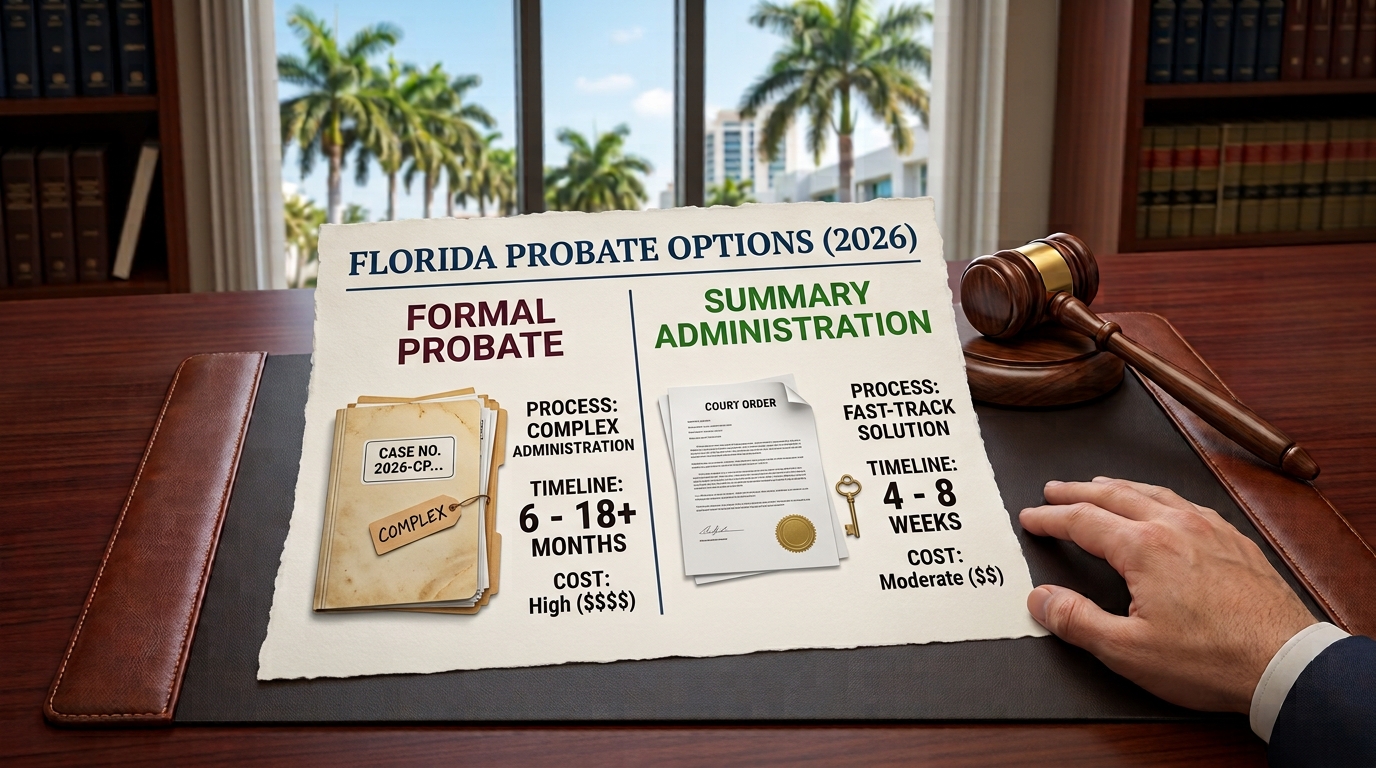
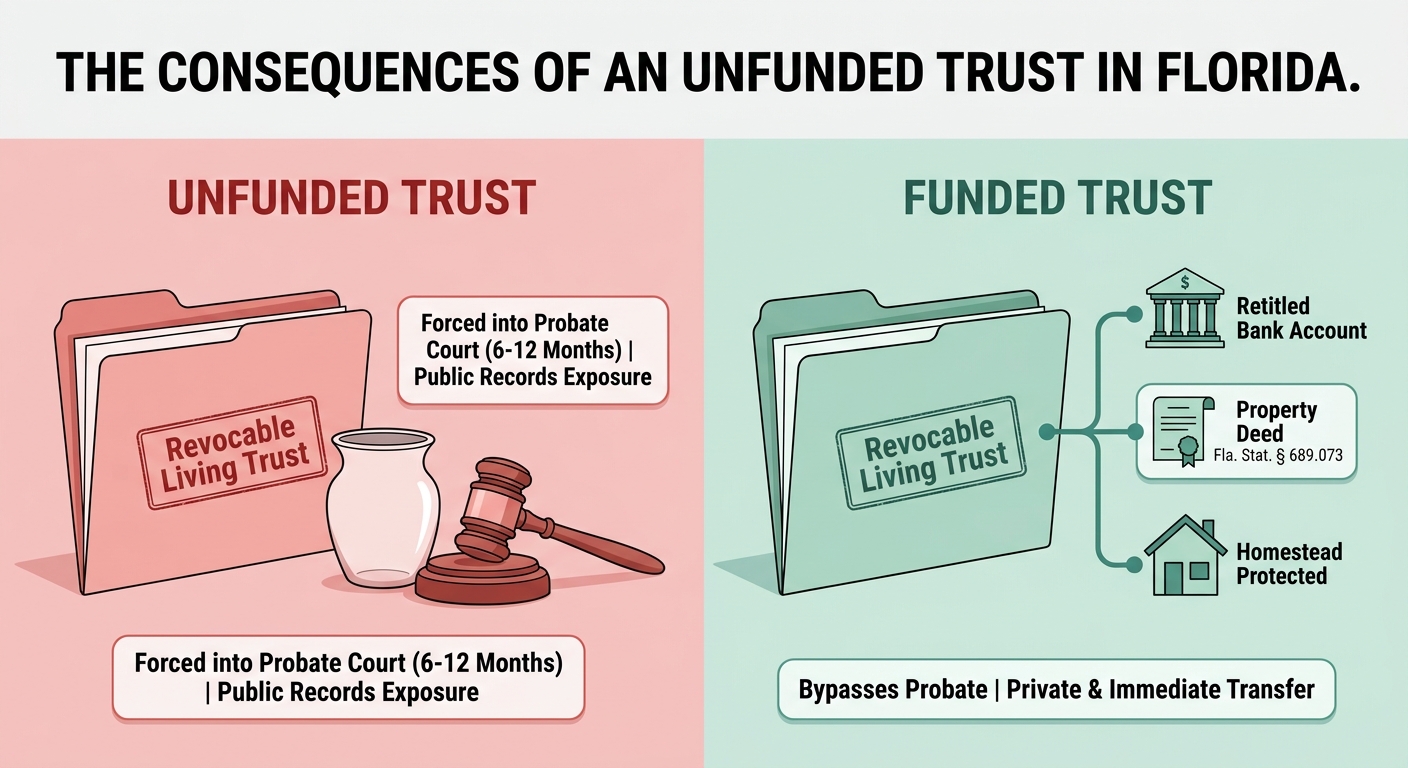
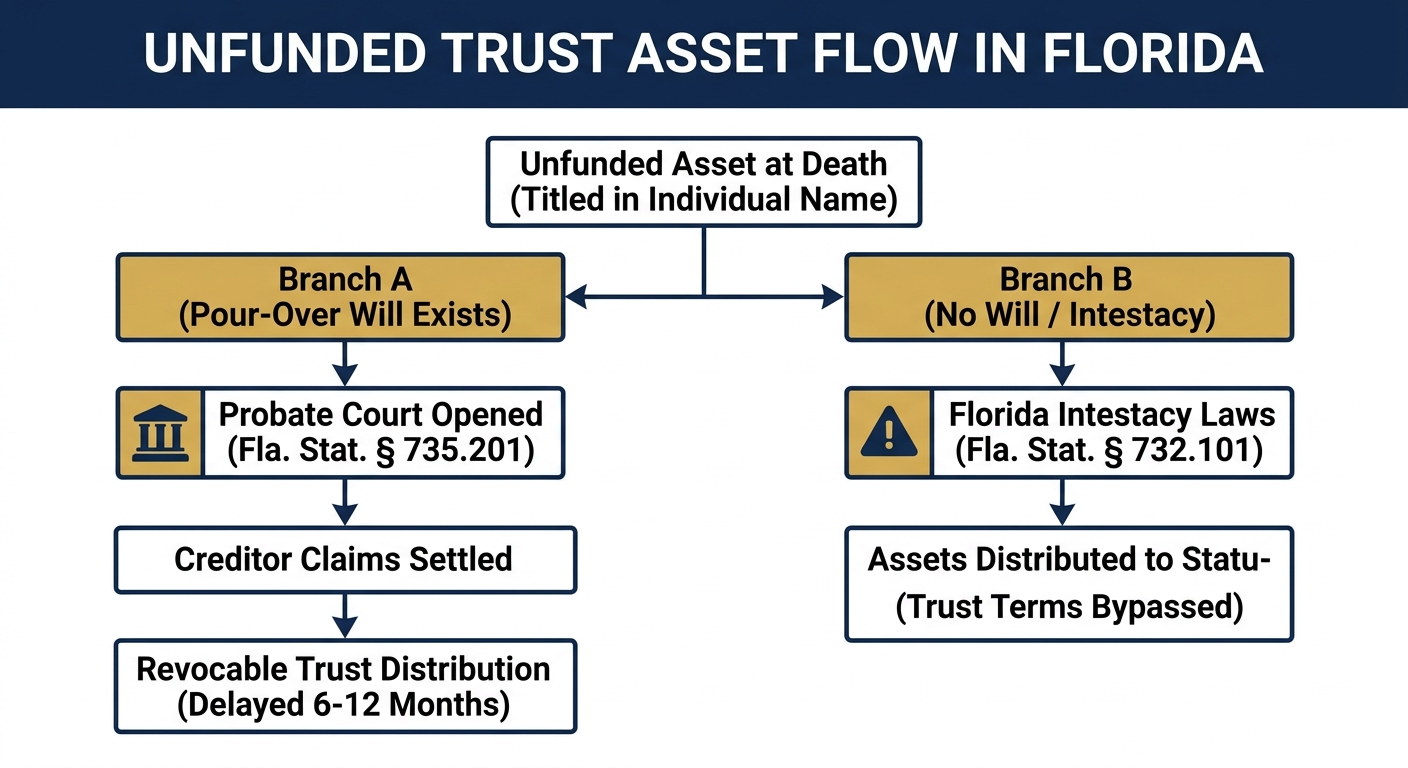
- Property Titled in Deceased’s Name Alone: Passes through formal probate administration, allowing MERP to execute claims and attach liens to force a sale.
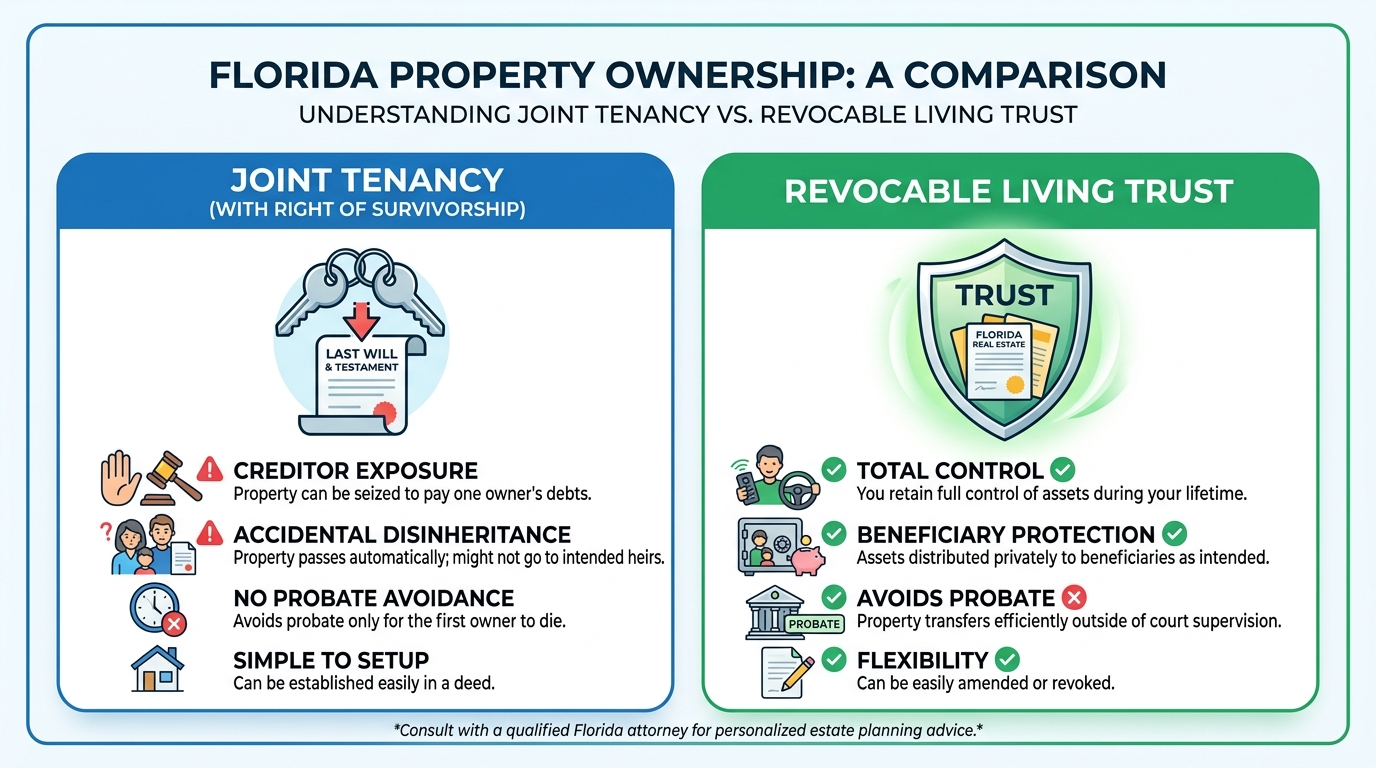
- Property Structured Outside Probate: Passes directly to designated heirs via deed or trust, completely avoiding probate administration and blocking MERP claims.
If the home passes through formal probate administration, the state can attach a lien to the real estate, forcing heirs to sell the property to satisfy the Medicaid debt. Protecting the family home requires strategies that insulate the residence during the lookback analysis while simultaneously ensuring the home bypasses probate court at death.
3. Statutory Exceptions and Exemption Strategies
Florida Medicaid rules contain explicit statutory safe harbors that permit home transfers within the 5-year window without triggering a penalty period.
| Transfer Strategy / Exemption | Lookback Penalty Status | Primary Legal Advantage |
| Transfer to Surviving Spouse | Fully Exempt | Preserves full ownership for the well spouse (Community Spouse) without penalty. |
| Caregiver Child Exemption | Fully Exempt | Transfers home title directly to an adult child who provided in-home care. |
| Transfer to Disabled Child | Fully Exempt | Protects property for a child verified as permanently disabled under SSI/SSDI rules. |
| Lady Bird Deed (Enhanced Life Estate) | Fully Exempt | Retains lifetime control, avoids probate, and blocks MERP claims. |
| Medicaid Asset Protection Trust (MAPT) | Subject to 5-Year Lookback | Must be executed >60 months prior to application; provides total asset protection. |
The Caregiver Child Exemption
Under Florida Medicaid guidelines, an applicant can transfer full title of the homestead to their adult child without incurring a transfer penalty if specific conditions are met:
- The adult child lived in the parent’s primary residence for at least two consecutive years immediately prior to the parent’s admission to a nursing home or long-term care facility.
- The child provided documented care that permitted the parent to reside safely at home rather than in a medical care facility during those two years.
- The care provided is verified through medical records, physician attestations, and detailed care logs.
Spousal Transfers and Community Spouse Resource Allowance (CSRA)
Transferring the primary residence to a Community Spouse (the spouse who remains living in the community) is completely exempt from the 5-year lookback rule. The well spouse can receive full title to the home without impacting the institutionalized spouse’s Medicaid application.
Lady Bird Deeds (Enhanced Life Estate Deeds)
A Florida Lady Bird Deed allows a property owner to retain an enhanced life estate (including full rights to sell, mortgage, or revoke the deed) while designating remainder beneficiaries who inherit the property automatically at death.
- Why it passes lookback scrutiny: Because the owner retains full control to revoke the deed during life, recording a Lady Bird Deed is not classified as a completed uncompensated gift by Florida DCF.
- Why it blocks MERP: The property transfers automatically upon death outside of probate administration, effectively shielding the homestead from state estate recovery claims under Fla. Stat. § 409.9101.
4. Real-World Execution Scenarios
Scenario A: Proactive Planning (7 Years Before Long-Term Care Needs)
- Profile: A 70-year-old homeowner in Broward County with early-stage health concerns wants to protect her home valued at $500,000 for her two adult children.
- Strategy: The homeowner executes a Medicaid Asset Protection Trust (MAPT) and deeds her home into the irrevocable trust.
- Outcome: Because the transfer occurred more than 60 months before she ever required nursing care, the 5-year lookback window expires cleanly. The home is completely sheltered from long-term care costs, and she retains the right to live in the home for life.
Scenario B: Emergency Crisis Planning (Immediate Nursing Home Admission)
- Profile: An 82-year-old widower suffers a severe stroke and requires immediate, permanent placement in a Coral Springs skilled nursing facility. He has lived with his adult daughter for the past three years, during which she managed his daily medical needs.
- Strategy: His legal team gathers medical documentation and physician certifications establishing the Caregiver Child Exemption, while simultaneously executing a Lady Bird Deed as a secondary safeguard.
- Outcome: The home is transferred directly to the daughter without triggering a Medicaid penalty period, preserving the home from immediate spend-down and future Medicaid estate recovery.
Frequently Asked Questions
Can Medicaid take my home while I am still alive in Florida?
No. Florida law does not allow Medicaid to place a lien on or seize your primary residence while you are alive, provided your equity remains under the state limit and you state an intent to return home. Threat of home loss occurs after death through the Medicaid Estate Recovery Program (MERP) during probate administration.
Does executing a Lady Bird Deed trigger a 5-year lookback penalty?
No. Because a Florida Lady Bird Deed allows you to retain total unilateral control to sell, refinance, or revoke the conveyance during your lifetime, Florida DCF does not treat it as a completed gift or uncompensated transfer. It does not trigger a Medicaid penalty period.
What evidence is required for the Caregiver Child Exemption in Florida?
Florida DCF requires clear written proof, including:
- Proof of joint residency (such as tax returns, driver’s licenses, or utility bills) covering the two years prior to facility admission.
- A signed written statement from the treating physician confirming that the care provided by the adult child allowed the parent to remain safely at home instead of entering a nursing facility.
Protect Your Family Home and Assets Before a Crisis Strikes
Navigating Florida Medicaid rules and protecting your real estate from long-term care costs requires proactive, highly technical legal planning. A single misstep with uncompensated asset transfers or failing to structure your property outside of probate can expose your family home to devastating out-of-pocket nursing home expenses and Medicaid Estate Recovery liens.
Do not leave your family’s legacy vulnerable to the uncertainties of the 5-year lookback window. Connect directly with our estate planning and elder law team to build a secure, customized asset protection strategy tailored to your circumstances.
- Call Our Office Today: Speak with our team directly at 954-866-4878 to discuss your options.
- Request a Consultation: Secure your initial estate planning or elder law review by visiting our website’s online contact portal.
Serving families throughout Coral Springs, Fort Lauderdale, Boca Raton, and across Broward County.