
Direct Answer:
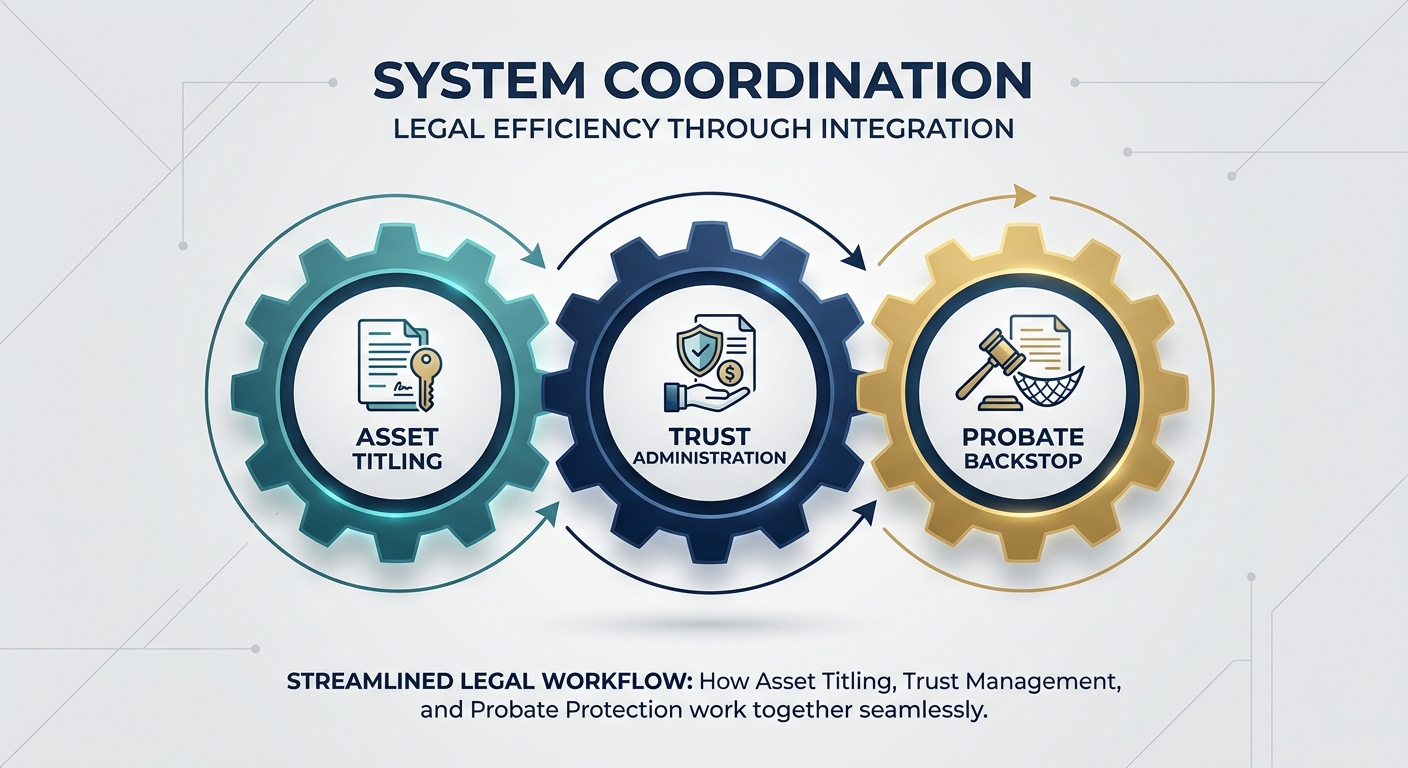
An estate plan under Florida law is not a single isolated document, but an interlocking system of distinct legal instruments.
To function effectively, it coordinates asset titling (how property is owned), contractual beneficiary designations (such as life insurance and retirement accounts that bypass probate), revocable living trusts (for private asset management), and a Last Will and Testament (which acts as an administrative backstop for stray assets and nominates guardians for minor children under the 17th Judicial Circuit probate framework).
A common misconception among clients entering an attorney’s office is that estate planning is merely a shopping exercise. People assume they need to choose between buying a will or setting up a trust. As if these documents were competing consumer products on a shelf.
In practice, a durable estate plan functions less like a single document and more like an interlocking machine. Each piece: whether it is a deed, a beneficiary designation, a trust agreement, or a last will and testament – answers a different legal question about your property, your care, and your family’s future security under Florida law.
Asset Ownership Sets the Foundation
Every legal instrument relies entirely on the underlying registration of your property.
The name on a title holds more legal authority over where property goes than almost any standard clause you can write down. Consider how differently law treats various holdings. A commercial storefront in Coral Springs tied to a corporate entity, a family home structured with survivorship rights, or an ordinary checking account carrying no payable on death instructions. Each follows its own strict statutory track.
Property registration and testamentary instruments point in opposite directions. The title or contractual beneficiary designation almost always supersedes your written documents. For instance, naming a child in a will has no legal effect on a bank account where a different individual is listed as the sole payable on death recipient. A thorough planning process evaluates these existing ownership titles first. Therefore ensuring that deeds, corporate shares, and financial accounts are adjusted or harmonized before any wills or trusts are finalized.
Different Assets Can Follow Different Paths
When an individual passes away, their property does not automatically flow down one universal river. Different asset classes utilize entirely distinct legal conduits:
- Contractual Transfers: Life insurance policies, retirement accounts, and payable on death bank accounts bypass both wills and trusts entirely. Thus transferring directly to named beneficiaries by operation of contract law.
- Trust Administration: Assets properly titled in the name of a revocable living trust flow privately through trustee administration without judicial interference.
- Probate Administration: Assets left solely in an individual name with no beneficiary designation must be processed through the probate court system.
Understanding that these pathways operate simultaneously is the key to grasping how an estate plan actually functions.

The Operational Reality of Financial Accounts and Institutional Payables
A common blind spot in estate planning is assuming that legal documents command absolute authority over every dollar an individual owns. In practice, financial institutions, such as major banks operating in Coral Springs and regional credit unions, don’t act like this. They do not look to your will or trust first when an account holder passes away.
Instead, financial operations are strictly governed by internal institutional protocols and direct account contracts. When a bank representative reviews an account after a death certificate is presented, they execute whatever binding agreement is physically attached to that specific account file. If a bank ledger lists an individual payable on death designation, or if a brokerage account registers a transfer on death instruction, institutional compliance departments are legally bound to disburse those funds directly to the named individual, bypassing any instructions found in a trust agreement or a court supervised will.
An integrated estate plan accounts for this operational friction by auditing every institutional account agreement during the drafting phase. Therefore ensuring that corporate paperwork matches your overarching legal strategy before a financial institution ever faces a disbursement decision.
Where the Will Fits Into the Plan
Rather than acting as the absolute ruler of your entire estate, a Last Will and Testament serves a specific structural purpose within the broader system.
Within an integrated plan, a will functions primarily as a legal backstop. It catches stray assets that were never retitled into a trust. Names guardians for minor children. It also nominates the personal representative to manage the probate administration process if court intervention becomes necessary.
Where a Trust Fits Into the Plan
A revocable living trust operates as an alternative operating system for asset management and distribution.
When properly funded during your lifetime, the trust holds legal title to your major property holdings. Instead of directing asset distribution through public probate filings, the trust instrument coordinates private management rules. It establishes exact conditions for beneficiaries, and governs how assets are handled if you experience temporary or permanent incapacity.
What Happens When Probate Enters the Picture?
Probate is often misunderstood as an estate planning document or a failure of foresight. In a well-coordinated plan, probate is simply recognized for what it is: a judicial administration route.
If certain assets remain outside your trust or lack beneficiary designations, the probate court becomes the mandatory administrative mechanism required to clear title and transfer ownership. The goal of comprehensive planning is not always to eliminate every possibility of court involvement, but to ensure that probate handles only what is necessary while private mechanisms handle the bulk of your wealth.
What Happens When the Pieces Do Not Match?
The most critical test of an estate plan occurs when its individual instruments conflict with one another.
Consider a scenario where an individual executes a trust directing that their financial account be divided equally among three children, but the underlying bank account form lists only one child as a payable on death beneficiary. Under Florida law, the contractual beneficiary designation on the account typically overrides the instructions in the trust or will.
When beneficiary designations, trust agreements, and asset titles point in opposing directions, family disputes and unintended disinheritances frequently follow. Coordination prevents these friction points.
Estate Planning Also Covers Incapacity
An estate plan is incomplete if it focuses exclusively on death. A truly integrated system addresses the reality of potential lifetime incapacity.
Through durable powers of attorney and healthcare surrogate designations, your plan designates trusted individuals to manage financial transactions, sign documents, and make medical decisions if you are unable to speak for yourself. These instruments integrate seamlessly with your property management framework, ensuring continuity whether you are navigating daily life or managing a medical crisis in Broward County.
Frequently Asked Questions
Does having a revocable living trust mean my estate will completely avoid probate in Florida?
- Not automatically. A trust only avoids probate for assets that were properly titled in the name of the trust during your lifetime. Any remaining individually owned assets left outside the trust at the time of death will still require a probate administration unless alternative transfer mechanisms apply.
Can a beneficiary designation override the instructions written in my last will and testament?
- Yes. Contractual arrangements such as life insurance policies, retirement accounts, and payable on death bank accounts operate independently of a will. The financial institution distributes funds directly to the named beneficiary on file, regardless of what your will states.
Why is asset titling just as important as drafting a will or trust?
- Asset titling dictates the legal pathway property travels upon death or incapacity. If your legal documents specify one distribution plan but your deeds or account titles are registered under a conflicting ownership structure, the ownership title or beneficiary form frequently overrides your written documents.
How does local court jurisdiction in Broward County affect the administration of an estate plan?
- When an estate plan requires judicial oversight, such as formal or summary administration through the 17th Judicial Circuit Court in Broward County, local procedural rules govern how property titles are cleared and distributed.
- An integrated estate plan accounts for these local court requirements ahead of time, minimizing administrative delays for real estate located in Coral Springs, Parkland, or Fort Lauderdale by ensuring property deeds and trust funding are properly structured before probate ever becomes necessary.
What happens if instructions in a revocable living trust contradict a financial account beneficiary form?
- Under Florida law, contractual arrangements and direct asset titling rules generally supersede instructions written inside a will or a trust.
- If a revocable living trust states that all liquid accounts should be divided equally among beneficiaries, but an individual retirement account or bank account lists a single person as a payable on death recipient, the financial institution is legally bound to honor the beneficiary form.
- A comprehensive estate audit resolves these discrepancies proactively to prevent unintended disinheritances.
Coordinate Your Estate Plan in Broward County
The goal of estate planning is not to accumulate the largest stack of legal documents. It is to ensure that your ownership titles, beneficiary forms, trusts, and wills work together as a unified system to protect your family and assets.
Schedule a Confidential Consultation
Ensure your legal instruments work together seamlessly under Florida law:
- Direct Phone: (954) 866-4878 | (954) 334-1520
- Coral Springs Main Office: 9625 W Sample Rd, Coral Springs, FL 33065
- Fort Lauderdale Office: 2933 W Cypress Creek Rd, Suite 201, Ft Lauderdale, FL 33309
- Website: mypersonalattorneys.com