Can You Receive Money From an Estate Before Probate Ends in Florida?

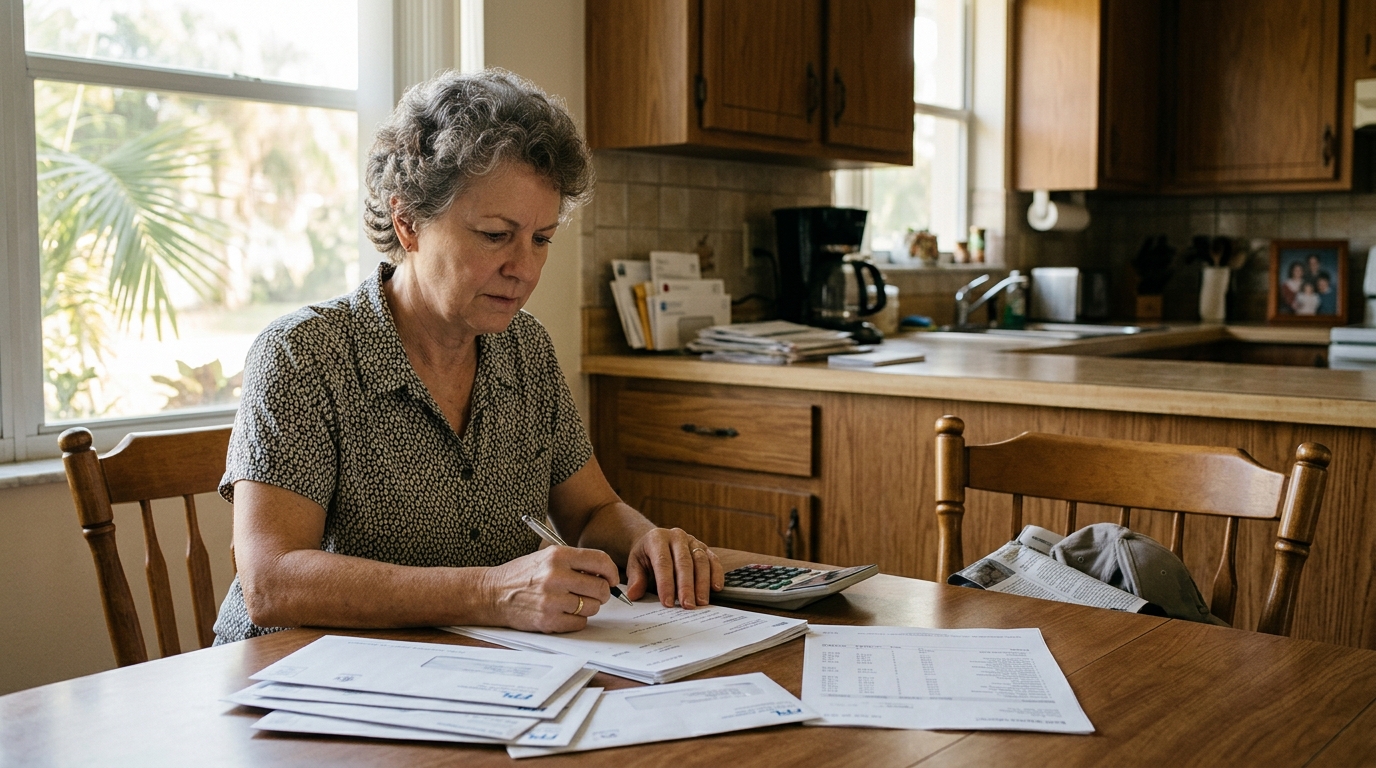
Surviving spouse reviewing household expenses while awaiting access to estate funds.

When someone dies, the mortgage company does not offer condolences before sending its next statement. The utility bills keep coming, insurance premiums remain due, and the grocery store is unlikely to accept an explanation about a pending probate case.

What happens when the person who paid most of the household expenses is gone, but the money they left behind cannot yet be accessed?

Quick Overview

Florida law provides a possible solution. Under Florida Statutes § 732.403, a surviving spouse and certain dependent family members may qualify for a family allowance of up to $18,000 during probate. The payment is intended to help cover living expenses while the estate is being administered.

The allowance has important limitations. The $18,000 cap is not an automatic payment, and a family relationship alone does not establish eligibility. The deceased person must have been domiciled in Florida, and the statutory requirements must be satisfied.

For families in Coral Springs and throughout Broward County, understanding this provision can help clarify what financial options may be available before an estate is ready for distribution.


What Is a Family Allowance in Florida Probate?

A family allowance is money provided from a deceased person’s estate to help eligible family members maintain themselves during probate administration.

The purpose is practical. A household may have lost its main source of income while the deceased person’s assets remain tied up in the legal process. Even a financially substantial estate can lack immediately available cash.

Florida’s family allowance statute addresses that gap. It authorizes a reasonable allowance for maintenance during administration, subject to a combined maximum of $18,000. The court may order payment in one lump sum or through periodic installments.

Imagine a couple living in Coral Springs. One spouse earned most of the household income and handled the mortgage payments. After that spouse dies, the surviving spouse still has the same house to maintain, but the money previously used to pay those expenses may not be readily available.

Does the surviving spouse necessarily have to wait until the estate closes? Not always. A family allowance may provide a way to request support during probate.

The allowance has several characteristics worth understanding:

  • It addresses current maintenance needs. Its purpose is to provide support during administration rather than distribute the deceased person’s entire estate.
  • It has a fixed statutory ceiling. The total family allowance cannot exceed $18,000.
  • It can be paid in different ways. A court may authorize a lump sum or periodic installments.
  • It is distinct from other estate benefits. The statute generally prevents the allowance from being charged against an otherwise passing benefit or share, unless the will provides otherwise.

That last point can be especially important. A surviving spouse may hesitate to request assistance out of concern that the payment will simply reduce a later inheritance. Section 732.403 generally protects the recipient’s other benefit or share from that offset, subject to the statute’s exception for a contrary provision in the will.


Who Qualifies for a Florida Family Allowance?

The statute covers a surviving spouse and the deceased person’s lineal heirs whom the deceased was supporting or was legally obligated to support.

The term lineal heir includes lineal ascendants and descendants. That can encompass parents, children, and other direct ancestors or descendants who meet the legal requirements.

Two issues therefore deserve separate attention: the person’s relationship to the deceased and the support that existed when the death occurred.


Can a surviving spouse receive the allowance?

A surviving spouse is expressly covered by § 732.403 when the deceased person was domiciled in Florida at death.

Consider a hypothetical Coral Springs household in which one spouse managed the family’s finances. The other spouse worked part time and relied on the deceased’s income to cover most monthly expenses. The surviving spouse now faces the mortgage and ordinary household bills while the estate is being administered.

That is the kind of financial situation in which it may be worth examining a family allowance. The spouse must still follow the applicable procedure, and the amount awarded depends on the circumstances.

A surviving spouse should also consider whether the estate raises separate questions about homestead, exempt property, or an elective share. Those rights operate under different provisions and may require separate analysis.


Can a child receive money from the estate before probate ends?

A child may qualify if the deceased person was supporting the child or was legally obligated to provide support.

A minor child who relied on a deceased parent’s income presents an obvious example. The child’s needs do not disappear because the estate has entered probate.

The statute also addresses how an allowance may be distributed when a dependent lineal heir does not live with the surviving spouse. The court may divide the allowance between the surviving spouse and the child, guardian, or other person responsible for the child’s care, depending on their respective needs.

That detail can matter in blended families. Suppose a deceased parent leaves a surviving spouse and a dependent child who lives with the other parent. The surviving spouse may have immediate household expenses, while the child continues to need financial support elsewhere. The law allows the court to consider those separate circumstances rather than assuming that all support must be paid to one household.

Probate attorney in coral springs discussing a family allowance petition with a client.

Can an adult child qualify?

Possibly. The key issue is not simply whether the applicant is an adult or whether the applicant expects to inherit. The statutory support requirement still matters.

An adult child who depended on the deceased for regular financial assistance may present a different claim from an independent adult child who received no support.

For example, imagine an adult child with a serious financial dependency who relied on a parent for essential living expenses. Whether the child qualifies would depend on the facts and the applicable law. The family should not assume that adulthood automatically defeats the claim, or that being a child automatically establishes it.


Can a parent receive an allowance after an adult child dies?

Potentially. Parents fall within the statutory category of lineal ascendants.

Suppose an adult child regularly helped a parent pay rent and other essential expenses. After the child’s death, that support stops. A parent in this situation may have grounds to ask whether the family allowance applies.

The support requirement remains essential. A parent who was financially independent cannot assume that the parent child relationship alone creates entitlement.


Can a sibling, cousin, or unmarried partner qualify?

Generally, not solely because of that relationship.

Siblings and cousins are collateral relatives rather than lineal heirs. An unmarried partner does not automatically qualify as a surviving spouse simply because the couple shared a home or finances.

This can produce difficult results. A long term partner may have depended on the deceased for years yet fall outside the family allowance statute. The same may be true of a sibling who shared living expenses with the deceased.

That does not establish that the person has no legal options whatsoever. It means the family allowance should not be treated as a universal safety net for everyone affected financially by a death.


How Much Can the Court Award?

Florida’s statutory maximum is $18,000 in total. It is not a guaranteed payment to every eligible family.

The statute calls for a reasonable allowance for maintenance during estate administration. A petition should therefore explain the financial circumstances and the support being requested rather than treating the cap as an automatic entitlement.

Does the court have to award the full $18,000?

No. The ceiling limits the maximum amount; it does not establish a standard award.

A family might need less than $18,000 to cover the immediate financial gap. Another household may face expenses that exceed the statutory limit. Neither circumstance changes the cap.

The practical question is what amount can properly be awarded under the law and the circumstances of the claim. An applicant should be prepared to explain the support needed while probate continues.

Can the allowance be paid monthly?

Yes. The statute expressly permits periodic installments.

For a surviving spouse who needs help covering regular living expenses, installments may be more useful than one lump sum. A different household might face an immediate expense that makes a lump sum more appropriate.

The court determines the payment arrangement. An applicant should not assume that a preferred schedule will automatically be approved.

Is the $18,000 cap per family member?

The statute states that the allowance cannot exceed a total of $18,000. It should not be presented as an automatic $18,000 payment to each qualifying person.

Where multiple people may qualify, the petition and proposed allocation should identify the people for whom an allowance is sought. The court’s order must specify each recipient’s entitlement and the method of payment.


What Happens If the Estate Does Not Have Enough Cash?

An estate can contain substantial assets without having much money readily available. A home may be worth hundreds of thousands of dollars, for example, while the estate’s bank accounts contain relatively little.

Consider a hypothetical family in Coral Springs. The deceased spouse owned the home and paid most of the bills. The surviving spouse has a modest income, and the house is the estate’s principal asset.

The family may be asset rich but cash poor. That distinction matters when someone needs money for current expenses.

Does the lack of available cash automatically defeat a family allowance request? It does not answer the legal question by itself. The estate’s assets and obligations need to be examined, and the family should not assume that the home must be sold to pay the allowance.

There is an equally important limitation. A family allowance does not automatically stop mortgage payments or other obligations owed to third parties. Those expenses may continue while the probate matter proceeds.

What if the estate has debts or competing claims?

The applicant should not assume that the family allowance overrides every obligation of the estate. Nor should the personal representative assume that a difficult cash position makes the statutory issue disappear.

The proper treatment of an allowance must be assessed in the context of the estate and applicable probate law. A family facing immediate financial pressure may also need to address mortgage obligations or other urgent expenses separately.

What if the family cannot afford to wait?

Imagine that the surviving spouse has enough savings for a few weeks but not enough to cover several months of expenses. The estate may eventually distribute assets, but that does little to solve the immediate problem.

This is precisely why timing matters. The family allowance exists to address maintenance during administration, rather than only after the estate is ready to close.

The family should promptly investigate whether it qualifies and what procedural steps are necessary. A potential allowance should not be treated as guaranteed money, however, and the household should not make financial commitments based on an award that has not been approved.


Household budget notes and calculator illustrating financial planning during probate.

How Do You Request a Family Allowance During Probate?

A family allowance is not automatically paid when someone dies. An interested person may file a petition asking the probate court to determine entitlement.

Florida Probate Rule 5.407 governs the proceeding. The rule’s current text took effect October 1, 2026. It requires a verified petition containing specified identifying information and details about each person for whom an allowance is requested.

The petition must identify the surviving spouse and adult lineal heirs. It must also provide specified information for minor lineal heirs who were being supported, or were entitled to support, at the time of death.

For each person seeking an allowance, the petition must state the person’s relationship to the deceased, the basis for the claim, and the amount requested. If the court grants the petition, its order must identify the people entitled to receive the allowance and specify the amount and method of payment.

What evidence should the family gather?

The necessary evidence will depend on the circumstances. The applicant should be prepared to establish the family relationship and explain the support provided by the deceased or the legal obligation to provide it.

Records showing household expenses may help explain the financial need during administration. Information about the deceased person’s contribution to the household may also be relevant to presenting the circumstances clearly.

Why does this preparation matter? Because the court needs more than a general statement that money would be helpful. It needs a petition that meets the rule and a sufficient basis to determine the claim.

Should the family wait until probate is nearly finished?

If the purpose is to obtain support during administration, waiting until the estate is ready for final distribution may defeat the practical reason for making the request.

The appropriate timing depends on the case and its procedural posture. An attorney can review the estate’s circumstances and explain the available steps.

Who receives the money if a child lives elsewhere?

The statute expressly contemplates this situation. If a lineal heir does not live with the surviving spouse, the court may allocate part of the allowance to the heir or the guardian or other person caring for that heir. The remainder may go to the surviving spouse, depending on the needs of each.

This is more than a procedural footnote. It can affect a family in which a child lives with a former spouse or another caregiver. The court has a mechanism to account for the child’s separate needs.


What Happens If the Personal Representative Refuses to Pay?

A personal representative administers the estate, but that role does not authorize the representative to disregard a court order.

A disagreement about whether someone qualifies for an allowance is one issue. Failure to pay an allowance that has already been approved is another.

The distinction is illustrated by Hoyt v. Hoyt, 814 So. 2d 1254 (Fla. 2d DCA 2002).


Case study: Hoyt v. Hoyt

Jacqueline Hoyt, a widow, petitioned for a lump sum family allowance of $6,000 under Florida law. The personal representative, who was the deceased’s son from a previous marriage, opposed the request.

The probate court eventually approved the $6,000 allowance. Yet payment did not follow as ordered, forcing the widow to return to court to seek enforcement. The court directed that the allowance be paid in six monthly installments of $1,000.

The widow also sought attorney’s fees for the work required to secure the allowance. The appellate court reversed the denial of fees and remanded the matter for further proceedings under equitable principles.

The case is useful because it illustrates a problem families may overlook: an order granting financial support is not the same as actually receiving the money.

The opinion also discusses the risk that the purpose of the allowance could be undermined if a recipient has to bear the cost of enforcing payment. That was part of the widow’s argument, and the court agreed with the arguments supporting reversal. It should not be misrepresented as wording from the statute itself.

Does Hoyt mean that attorney’s fees are automatically available whenever an estate delays payment? No. The decision turned on equitable principles and the circumstances before the court. It does not create an unconditional right to recover fees in every family allowance dispute.


Can a Prenuptial Agreement Affect a Family Allowance?

A premarital agreement may affect a surviving spouse’s rights after death. Its effect on a family allowance depends on the wording of the agreement and the law that applies.

This is one area where a quick glance at a document can lead to the wrong conclusion. An agreement may address rights in an estate, but the precise language and governing legal framework matter.
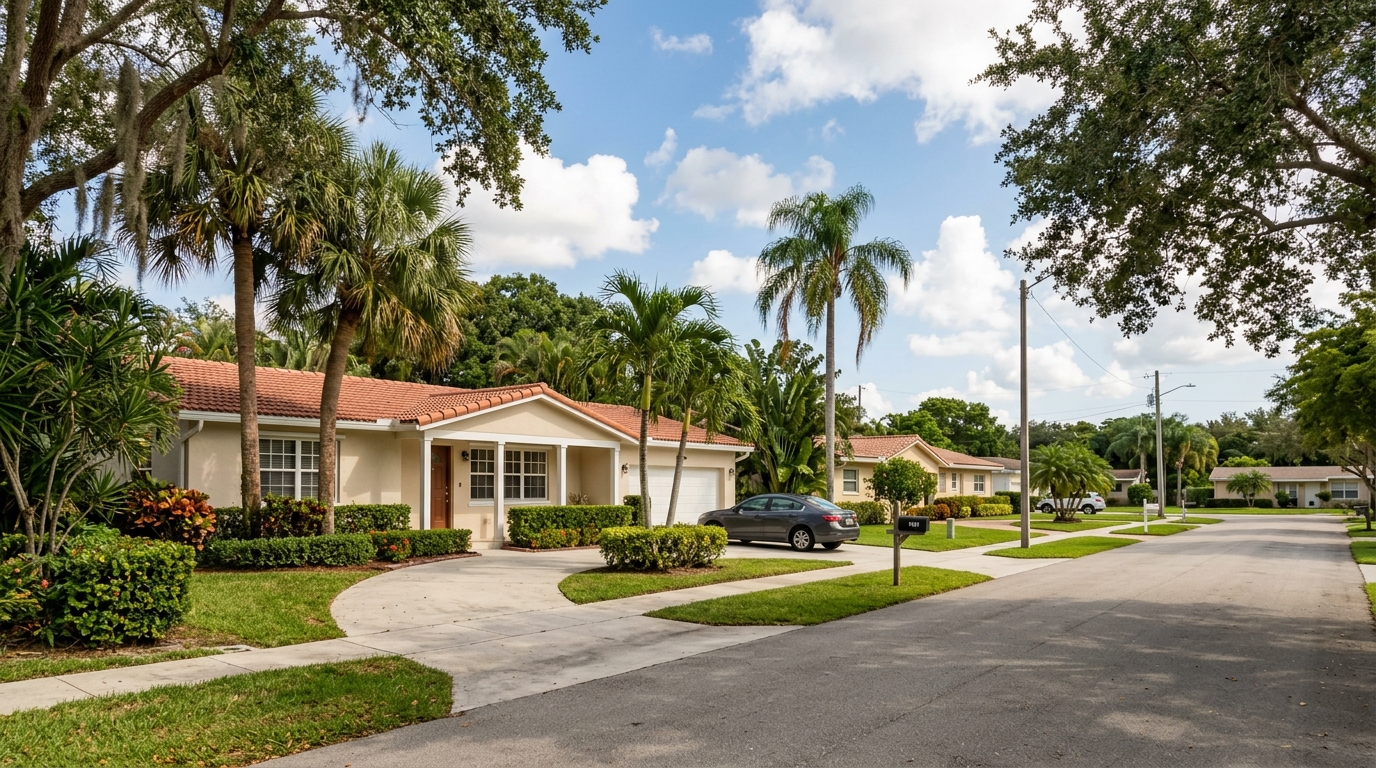

Residential home in Coral Springs, Florida, illustrating local probate concerns for surviving families.

Case study: Estate of Sage v. Sage

In Estate of Sage v. Sage, 515 So. 2d 1324 (Fla. 2d DCA 1987), a surviving spouse sought a family allowance after her husband’s death. The couple had signed a premarital agreement addressing rights in each other’s estates, including the family allowance.

The trial court found that the spouse had established need and that the agreement did not bar the claim. The appellate court reversed, concluding that the agreement barred the allowance under the law applicable to that case.

The lesson is not that every premarital agreement eliminates a family allowance. The decision involved the agreement before that court and the legal rules applicable to it.

If a surviving spouse signed an agreement before marriage, its language should be reviewed before anyone reaches a conclusion about the spouse’s rights. A broad recollection that “we waived inheritance” may not be enough to resolve the issue.


Why Does Florida Law Provide a Family Allowance?

The rationale for a family allowance appears in the Florida Supreme Court’s decision in In re Estate of Reed, 354 So. 2d 864 (Fla. 1978).

The case addressed a former version of Florida’s statute that treated widows and widowers differently. The Supreme Court found that the sex based classification violated equal protection. The Court explained that the allowance’s purpose was to help a needy spouse while probate was underway.

The Court described the problem as the “often lengthy probate administration process.”

That phrase remains useful for understanding the practical purpose of the provision, even though the case involved an older version of the law. The current statute is gender neutral and expressly covers a surviving spouse, together with qualifying dependent lineal heirs.

The underlying problem is easy to recognize. Estate administration can take time, but household expenses continue while the legal process runs its course.

Reed should not be cited as authority for the current $18,000 cap or every detail of present day eligibility. Its value here is the Court’s explanation of the law’s purpose and its treatment of the constitutional problem in the former statute.


What Happens If the Person Receiving the Allowance Dies?

Florida’s statute contains a technical provision that can have significant consequences. If a person entitled to a family allowance dies, the right to the portion of the allowance that has not yet been paid terminates.

Suppose a court authorizes installments for a surviving spouse, but the spouse dies before all payments have been made. The statute expressly addresses the unpaid portion of that person’s allowance.

This is different from assuming that every remaining installment automatically becomes an asset payable to the recipient’s heirs. The statutory language says the right to the unpaid portion terminates.

The result can be especially important when an allowance is structured over time. Anyone handling the estate should examine the statute and the order rather than assume that the remaining payments continue unchanged.


How Is a Family Allowance Different From Other Surviving Spouse Rights?

Florida probate law includes several protections that can affect a surviving spouse’s financial position. They are related in practical effect, but they do not serve the same legal purpose.

Family allowance under § 732.403

The family allowance provides money for maintenance during estate administration. It has a combined maximum of $18,000 and can be paid as a lump sum or in installments.

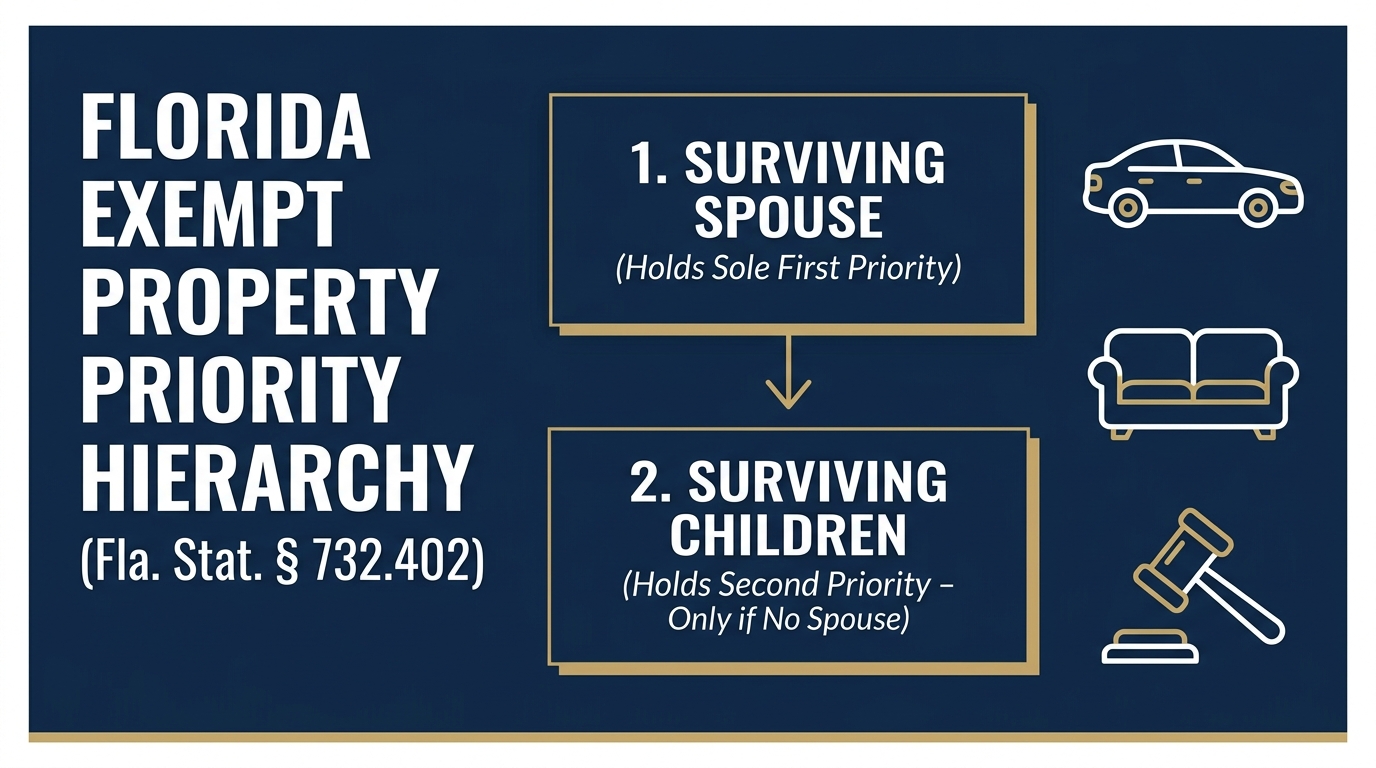
Exempt property under § 732.402

Florida law separately protects certain property for eligible family members. This is not the same as the family allowance, which provides money for maintenance.

Exempt property may include qualifying household furnishings and appliances, personal effects, and certain vehicles, subject to statutory conditions and limits. The details matter: eligibility, the nature of the property, title, and any applicable deadlines can affect the result.

For a family concerned about keeping essential belongings or a vehicle, exempt property may deserve separate examination. A family allowance request does not automatically settle those questions.

Homestead under §§ 732.401 and 732.4015

Florida’s homestead laws can affect how a deceased person’s primary residence passes after death. The outcome depends on the ownership arrangement and the family circumstances.

For a surviving spouse living in the family home, this can be a major issue. The home may be the estate’s most valuable asset, yet the legal rights attached to it are separate from the family allowance.

Elective share under §§ 732.201 through 732.215

A surviving spouse may also have an elective share right under Florida law. This is a separate statutory claim concerning the spouse’s share of the estate.

An elective share is not simply an advance payment to cover immediate living expenses. Its calculation and legal effect differ from those of a family allowance.

Why should a family distinguish between these provisions? Because focusing on one potential benefit can leave other relevant rights unexplored. A family may need to consider the allowance alongside separate questions about exempt property or the residence.


What Does the $18,000 Allowance Mean Against Florida Housing Costs?

The statutory cap can sound substantial until it is compared with ordinary housing expenses.

The U.S. Census Bureau’s 2020 to 2024 estimates put Florida’s median monthly owner costs for homes with a mortgage at $1,959. Median gross rent was $1,669.

At those amounts, $18,000 equals approximately 9.2 months of median owner costs with a mortgage, or 10.8 months of median gross rent.

These are illustrative comparisons, not predictions about the amount a court will award or the duration of a particular probate case. Actual housing costs vary by household.

Still, the figures show why access to funds during probate can matter. If a deceased person paid most of the household expenses, a delay in access to money may create real pressure even when the estate has substantial value.

For families in Coral Springs and throughout Broward County, the relevant question is whether a family allowance may be available to address that gap. The answer depends on the statutory requirements and the circumstances of the estate.


coral springs attorney preparing to defend his clients assets during probate

Frequently Asked Questions About Florida’s Family Allowance


Can I receive money from an estate before probate ends in Florida?

  • Potentially. Florida Statutes § 732.403 allows a qualifying surviving spouse or certain dependent lineal heirs to seek an allowance for maintenance during estate administration. The court determines entitlement and the appropriate amount.

Is the $18,000 family allowance automatic?

  • No. The statute sets a maximum, not a guaranteed payment. An interested person may file a petition, and the court determines the claim.

Can an adult child qualify for the allowance?

  • An adult child may qualify if the deceased person was supporting them or was legally obligated to provide support. The family relationship alone does not establish eligibility.

Can a parent receive an allowance after an adult child dies?

  • Potentially. A parent falls within the category of lineal ascendants, but the statutory support requirement must also be met.

Could the court divide an allowance between a surviving spouse and a child?

  • Yes. When a lineal heir does not live with the surviving spouse, the statute allows the court to allocate part of the allowance to the heir or the person responsible for the heir’s care, based on the needs involved.

Does a family allowance reduce my inheritance?

  • Generally, the allowance is not charged against a benefit or share otherwise passing to the surviving spouse or dependent lineal heirs unless the will provides otherwise. The estate plan and the applicable law should be reviewed before assuming how the allowance affects a later distribution.

Can the court pay the allowance in installments?

  • Yes. Florida law permits a lump sum or periodic installments. The court determines the payment arrangement.

What if the personal representative refuses to pay an approved allowance?

  • The recipient may need to ask the probate court to enforce its order. Hoyt v. Hoyt illustrates the problems that can arise when an approved allowance remains unpaid, although it does not guarantee attorney’s fees in every dispute.

Can a premarital agreement prevent a family allowance?

  • It may affect the claim, depending on the agreement and the applicable law. Estate of Sage v. Sage illustrates why the actual agreement needs to be examined rather than assuming the same rule applies to every couple.

What happens to unpaid installments if the recipient dies?

  • Florida Statutes § 732.403 provides that the right to the unpaid portion of an allowance terminates upon the death of a person entitled to it. The statute should be reviewed when an allowance is being paid over time.

Is a family allowance the same as exempt property?

  • No. A family allowance provides money for maintenance during administration. Exempt property is a separate statutory protection that may apply to certain property, subject to its own conditions.

Is a family allowance the same as an inheritance?

  • No. An inheritance passes under a will or Florida’s intestacy rules. A family allowance addresses maintenance during probate and is generally not charged against a recipient’s otherwise passing benefit or share unless the will provides otherwise.

Speak With a Florida Probate Attorney About a Family Allowance

A death can leave a family trying to manage personal loss while working out how to pay the bills. If the deceased person was the household’s primary source of income, uncertainty about estate funds can make an already difficult period more stressful.

You may be wondering whether you have to wait until probate ends before receiving any support. Depending on your relationship to the deceased and the estate’s circumstances, Florida’s family allowance may provide an option worth investigating.

MyPersonalAttorneys assists families with probate matters in Coral Springs and throughout Broward County. An attorney can review the family relationship and explain whether the statutory requirements may be satisfied.

If you need guidance about a family allowance or another surviving spouse’s rights, contact MyPersonalAttorneys to discuss the circumstances of your case.


Legal Sources


This article provides general legal information. It is not a substitute for advice about an individual probate matter.
What Happens to Your Estate Plan After You Move to Florida?

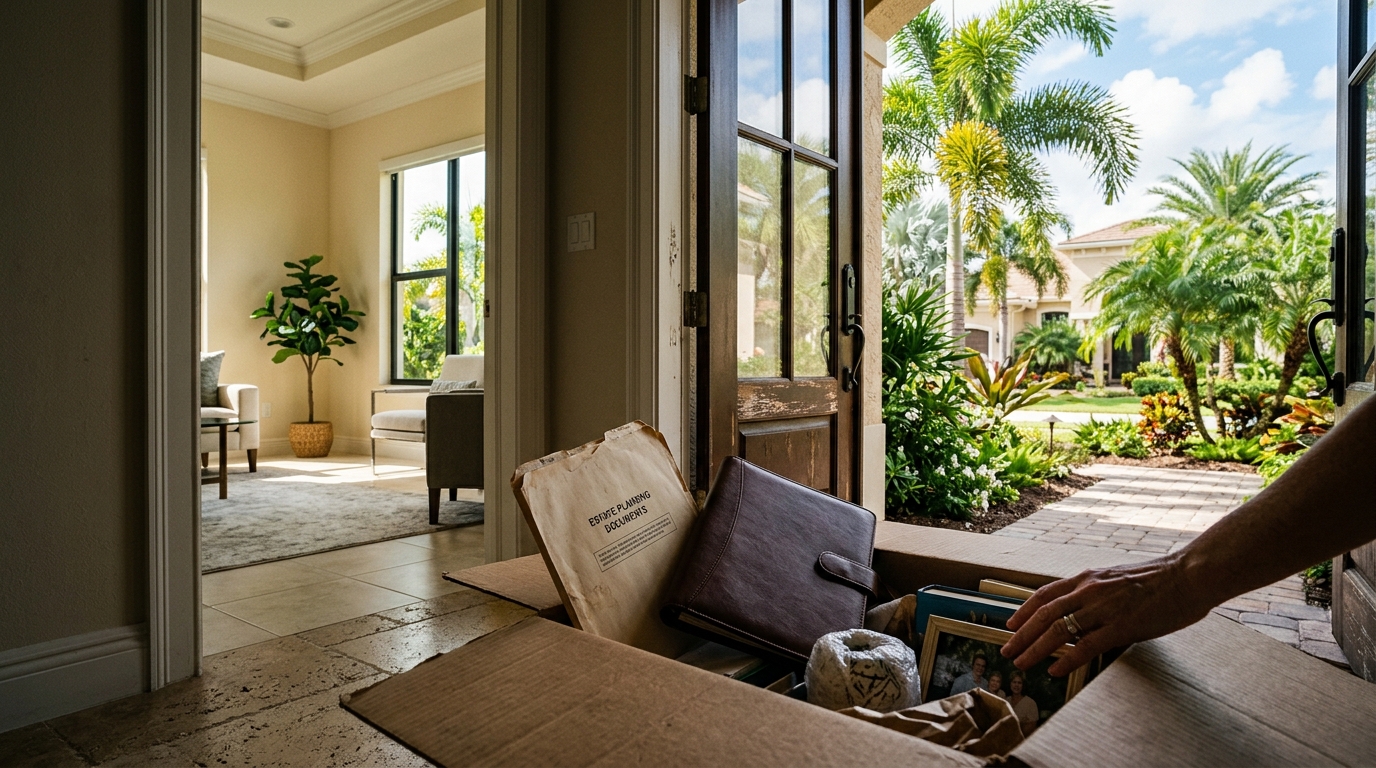
Estate planning documents being moved into a new Coral Springs home

You moved to Florida. Your will is still in a drawer in New Jersey, your power of attorney names your brother in Pennsylvania, and your new house is in Coral Springs.

Do you need to start your estate plan over?

Usually, that is not the right way to think about it.

Florida recognizes certain wills executed in another state if they were valid where they were signed. The same is true for certain powers of attorney executed elsewhere. Trusts can also remain valid after a move, depending on how and where the trust was created and what its terms provide.

The more useful question is different:

Does the estate plan you created before moving to Florida still work the way you intended?

That matters because your documents may have been written around a different home, different state laws, different property, different family circumstances, and different people serving as fiduciaries.

For someone who has recently settled in Coral Springs, Broward County, or elsewhere in South Florida, the move itself may be the least important part of the review. What matters is what changed along with it.


Your old will may still be valid

Moving from another state does not automatically mean that your will has to be rewritten.

Florida law provides that a will executed by a nonresident can be valid in Florida if it was valid under the law of the state or country where it was executed, subject to the statute’s exceptions.

That answers one question.

It does not answer the more important one.

Imagine that you signed your will fifteen years ago while living in New Jersey. At the time, you owned a house there, your children were young, your sister lived nearby, and you expected your estate to be handled there.

Now you live in Coral Springs. You sold the New Jersey house. You own a Florida home. One child lives in Georgia and another lives in California. Your sister has retired and no longer wants to serve as your personal representative.

The old will may still be a valid document.

It may also be a poor description of the life you have now.

Those are two different issues.


The Florida house can change the analysis

One of the biggest reasons a Florida move deserves an estate planning review is the home itself.

Florida’s homestead rules are unusually important in estate planning. The Florida Constitution restricts the ability of a homeowner to devise homestead property when the owner is survived by a spouse or minor child. Florida law contains corresponding restrictions on the devise of homestead.

That can create a problem for someone who arrives in Florida with an estate plan designed around the rules of another state.

Consider a simple example.

A person moves to Coral Springs, buys a home, and updates a will saying that the house should pass to a particular child. The person is married and has a minor child.

The sentence in the will may look perfectly clear.

That does not necessarily mean the person can dispose of the Florida homestead in that manner.

Florida’s homestead rules can control what happens to the property regardless of what the old estate plan appears to say.

This is one reason an estate plan should be reviewed after a move rather than simply filed away because the documents themselves remain technically valid.


What if your power of attorney was signed somewhere else?

The same question comes up with powers of attorney.

Florida law provides that an out-of-state power of attorney can be valid in Florida when it complied with the law of the state where it was executed.

So an older power of attorney is not automatically worthless because you crossed the Florida border.

But there is a practical issue that is easy to overlook.

The person you appointed may no longer be the person you want handling your affairs.

Your power of attorney might name a sibling who lives 1,200 miles away. Your adult child might now be the person who actually helps you with financial matters. Or the person you originally chose may have become unavailable, died, or simply no longer be the right choice.

There is also a difference between an instrument being legally valid and a particular bank, title company, or other institution being willing to accept it without additional questions.

That distinction matters when the power of attorney may be used for Florida real estate or other significant transactions. Florida’s statute specifically addresses the acceptance of certain out-of-state powers of attorney and permits a third party to request a legal opinion in some circumstances.

A move to Florida is therefore a good reason to find the original document, identify the current agent and successor agents, and determine whether the document still gives them the authority you intended.


You already have a trust. Does Florida change it?

Trusts require a little more care because there is no single answer that applies to every trust.

Florida law recognizes certain trusts created under the law of another jurisdiction. A trust that was not created by a will can generally be validly created if its creation complied with the law of the jurisdiction where the trust instrument was executed or where the settlor was domiciled when the trust was created.

But the question of which state’s law governs the trust can be separate from the question of whether the trust was validly created.

Florida law looks first to the governing-law provisions in the trust when they are valid and supported by a sufficient connection to the designated jurisdiction. If the trust does not contain a controlling designation, other rules determine the applicable law.

The trust’s principal place of administration can matter too. Florida law addresses how that location is determined and allows certain trusts to change their principal place of administration when the statutory requirements are satisfied.

In practical terms, someone who moves to Florida should not assume either of these things:

“My old trust is invalid now.”

or

“Nothing about my trust needs to be examined.”

The actual trust document matters.

So does the property inside it, the trustee, the beneficiaries, the governing-law clause, and where the trust is now being administered.


Florida homestead and estate planning considerations for a Broward County home

The bigger problem may be the people named in your documents

Sometimes the move to Florida exposes a problem that has nothing to do with state law.

Look at the names in the documents.

Who is your personal representative?

Who is the successor personal representative?

Where is your trustee?

Who takes over if your first choice cannot serve?

Which one has your financial power of attorney?

Who receives your property?

These choices can become outdated surprisingly quickly.

A will written when your children were teenagers may still contain their correct names but give responsibility to a relative who is now elderly. A trust created before a second marriage may still refer to a former family structure. A beneficiary designation on a retirement account may tell a completely different story from the will sitting in your safe.

That last point is particularly important because an estate plan is not contained in one document.

Your will may control some property. A trust may control other property. Beneficiary designations can control retirement accounts, life insurance, and other assets. Joint ownership can affect what happens to property after death.

Moving states is therefore a useful moment to compare the documents against the actual ownership of your assets.


What if you still own property in the state you left?

Florida may be your new home without being the only place where you own property.

You might have kept a rental property in New York, a vacation home in North Carolina, land in Georgia, or a family property that has been in your name for decades.

That creates a different question.

Where is the property, and how is it owned?

A Florida estate plan may need to account for property located elsewhere. Depending on the property and how it is titled, administration in another jurisdiction may still be necessary after death.

This is one reason a new Florida resident should bring the actual asset picture into the estate planning review. Looking only at the will can miss the problem.

A person can have a perfectly coherent will and still have an estate that is difficult to administer because the ownership of the assets does not match the plan.


What should you actually review after moving to Florida?

You do not necessarily need to replace every document.

Start with the documents and facts that changed.

  • Your will: Check the beneficiaries, personal representative, backup choices, and the way your property is described.
  • Your Florida home: Determine whether the property is your homestead and whether Florida’s homestead restrictions affect the plan.
  • Your trust: Check its governing law, trustee, beneficiaries, assets, and principal place of administration.
  • Your power of attorney: Confirm that the agent and successor agents are still the people you want making financial decisions.
  • Your beneficiary designations: Compare retirement accounts, insurance policies, and other accounts with the plan in your will and trust.
  • Your family: Marriage, divorce, new children, deaths, and changes in relationships can matter just as much as the change of address.
  • Your other property: Identify real estate and significant assets that remain outside Florida.

The goal is not to produce a new stack of documents simply because you have a new address.

The goal is to make sure the documents, ownership of your property, and your current circumstances are telling the same story.


Homeowner reviewing an out of state estate plan after moving to Florida

A Florida move is a good time to ask a different question

People often ask, “Is my old will still valid in Florida?”

That is a reasonable starting point.

It is not where the review should end.

Florida law gives substantial recognition to properly executed estate planning documents from other jurisdictions. But validity is only one piece of the problem. A document can survive a move perfectly well while becoming less useful because the people, property, or circumstances behind it have changed.

For a new Florida resident, the most important question is usually whether the existing plan still matches the life that exists now.

That is particularly worth examining when you have purchased a Florida homestead, married or divorced, had children, changed fiduciaries, acquired substantial property, or retained real estate in another state.

For families in Coral Springs and Broward County, an estate planning review can also identify Florida-specific issues before they become probate problems.


Frequently Asked Questions

Does moving to Florida invalidate an out-of-state will?

  • Not necessarily. Florida law recognizes certain wills executed by nonresidents when the will was valid under the law of the state or country where it was executed.

Do I need a new will after moving to Florida?

  • Not automatically. Whether a new will is appropriate depends on the existing document, your family circumstances, your property, and Florida-specific issues such as homestead.

Can Florida recognize a power of attorney from another state?

  • Florida law provides for recognition of certain powers of attorney executed in another state when they complied with the law of the state where they were executed.

Does my trust remain valid if I move to Florida?

  • It may. Florida recognizes certain trusts created under the law of another jurisdiction. The trust’s governing-law provisions, creation, administration, and assets can all matter.

Does buying a Florida home affect my estate plan?

  • It can, especially if the property qualifies as your Florida homestead. Florida’s Constitution and statutes place restrictions on the devise of homestead in certain family situations.

What should I do with my estate plan after moving to Florida?

  • Have the existing documents reviewed against your current circumstances. Pay particular attention to your Florida home, beneficiaries, fiduciaries, beneficiary designations, trusts, and property that remains in another state.

How Long Does Probate Take in Florida? Timeline and Common Delays

How long probate takes in Florida with estate documents and a calendar

If you are waiting for a Florida estate to close, the frustrating part is often that nobody can give you a single number.

One estate may be resolved relatively quickly. Another may remain open for a year or longer. The difference usually has less to do with the passage of time itself than with what has to happen before the estate can be distributed and closed.


So, how long does probate take in Florida?

For many estates going through formal administration, probate takes months rather than weeks. Some uncomplicated estates can move faster. Others take considerably longer because of creditor claims, real estate, tax issues, missing beneficiaries, disputes, litigation, or problems with the estate administration.

Florida also has a simplified procedure called summary administration. For deaths occurring under the current law, summary administration generally applies when the property subject to administration does not exceed $150,000, after excluding property exempt from creditors, or when the decedent has been dead for more than two years.

The important point is that there is no single Florida probate timeline that applies to every estate.


What Determines How Long Probate Takes in Florida?

Probate is not one event. It is a series of legal and practical tasks.

The court must recognize the will, if there is one, and appoint a personal representative when formal administration is required. The personal representative then has to identify and protect estate property, address debts and creditor claims, deal with taxes when applicable, resolve outstanding issues, distribute the remaining assets, and complete the steps required to close the estate.

Florida law requires a personal representative to settle and distribute the estate as efficiently as is consistent with the interests of the estate and the people involved.

That does not mean every task can happen immediately.

A house may need to be sold. A bank account may need to be located. A creditor may file a claim. A beneficiary may object to something the personal representative has done. An estate asset may have to be appraised before it can be distributed.

Each of those issues can change the timetable.


How Long Does Formal Probate Usually Take?

Formal administration is the more involved form of Florida probate. It is generally used when the estate does not qualify for summary administration or when the circumstances require a formal proceeding.

There is no statutory rule saying that every formal probate case must be completed within a particular number of months.

That matters because two estates with similar values can have very different timelines.

Consider two hypothetical estates.

The first consists mainly of a Florida bank account, a vehicle, and other easily identified assets. There are no significant disputes, no difficult property issues, and no contested creditor claims.

The second includes a Coral Springs home, several financial accounts, an unresolved debt, a beneficiary who cannot be located, and disagreement among family members over the will.

Both estates are subject to the same general probate framework. Their practical timelines could be very different.

The question is therefore not simply how long does probate court take in Florida? It is what still has to be resolved before this particular estate can be closed?


How Long Does Summary Administration Take?

Summary administration is designed for qualifying estates that can be handled without the full administration process.

Under current Florida law, an estate may qualify when the value of the property subject to administration, after excluding property exempt from creditors, does not exceed $150,000. An estate may also qualify when the decedent has been dead for more than two years, subject to the requirements of the statute.

Summary administration can be substantially different from formal administration because the court may enter an order allowing distribution of estate assets without the same sequence of administration required in a formal case. Florida law specifically permits the court to authorize immediate distribution through the summary administration order.

That does not mean every small estate is resolved immediately.

The court still needs the required information. Known or reasonably ascertainable creditors must be addressed, and the people entitled to the estate must be properly identified.

If there is a dispute about the will, ownership of property, debts, or the people entitled to inherit, the matter may become more complicated regardless of the estate’s value.


What Is the 90-Day Creditor Period in Florida Probate?

One reason probate can take longer than a family expects is the period for creditors to present claims.

Under Florida Statute §733.702, certain claims against an estate generally must be filed by the later of three months after the first publication of the notice to creditors or 30 days after service of the notice on a creditor who is required to receive it.

This is one reason an estate cannot necessarily be distributed as soon as the personal representative finds the assets and identifies the beneficiaries.

There may still be claims to address.

The law also contains additional timing rules when a claim is disputed. For example, Florida Statute §733.705 gives interested parties a period to object to claims and provides procedures for claims that proceed into litigation.

So when someone asks why an estate is still open several months after the death, the answer may be that the administration is still dealing with creditor claims or other unresolved obligations.


What Can Delay Probate in Florida?

Some delays are ordinary parts of estate administration. Others result from complications that have to be resolved before distribution.

Common examples include:

  • A will that is being challenged
  • Disagreement among beneficiaries
  • Disputed creditor claims
  • Real estate that must be sold or otherwise transferred
  • Difficulty locating estate assets
  • Missing heirs or beneficiaries
  • Property with unclear ownership
  • Tax or accounting issues
  • Litigation involving the estate
  • A personal representative who is not completing required tasks
  • A personal representative who needs to be replaced
  • Assets located in another state
  • Complications involving another estate or trust

The size of an estate matters, but it is not the only factor.

A relatively modest estate can become complicated if the family is fighting over a house. A larger estate can sometimes be administered without the same level of delay if the assets, beneficiaries, and obligations are clear.


Common probate delays involving property, creditor claims, and estate disputes in Florida

Can a Will Contest Make Probate Take Longer?

Yes.

A dispute over the validity or interpretation of a will can turn an otherwise routine estate administration into litigation.

That changes the nature of the case. The court may need to resolve issues concerning the validity of the will, the rights of beneficiaries, the meaning of particular provisions, or other contested questions before the estate can be distributed.

The same basic problem can arise when beneficiaries dispute the actions of the personal representative.

In those situations, the probate proceeding is no longer simply a matter of collecting property and distributing it. There is a legal dispute that has to be resolved.

That can add substantial time to the administration.


What Happens If the Personal Representative Is Delaying Probate?

The personal representative has legal duties. Florida law describes the personal representative as a fiduciary and requires the estate to be settled and distributed efficiently and in accordance with the will and the Florida Probate Code.

That does not mean a personal representative must distribute everything immediately.

Some assets cannot properly be distributed until debts, claims, taxes, expenses, or other issues have been addressed.

But there is a difference between necessary administration and unnecessary inaction.

Florida law provides procedures for removing a personal representative in certain circumstances, including failure to comply with a court order, failure to account for estate property, wasting or maladministration of the estate, and other specified grounds.

If beneficiaries believe an estate is being delayed because the personal representative is failing to perform required duties, that may require a legal proceeding rather than simply waiting longer.


Can Beneficiaries Receive an Inheritance Before Probate Ends?

Sometimes.

Florida law permits certain distributions before the administration is completely finished when the statutory requirements are satisfied. But a personal representative must consider the estate’s outstanding obligations before distributing property.

This is especially important when the estate still has unpaid debts, creditor claims, expenses, taxes, or unresolved disputes.

A beneficiary therefore should not assume that an asset is available for distribution simply because the will says that person is supposed to receive it.

The estate may need to retain enough property to satisfy obligations before the final distribution can occur.


Why Is My Probate Case Taking So Long?

If a Florida probate case seems unusually slow, look at what remains unresolved rather than simply counting the months since the death.

For example:

The estate has a house that has not been sold.

  • The administration may need to address the property’s title, mortgage, taxes, insurance, sale, or distribution.

A creditor filed a claim.

  • The personal representative may need to determine whether the claim is valid and whether it shoul be paid or challenged.

A beneficiary cannot be located.

  • The estate may need additional work before property can be distributed safely.

Family members are fighting.

  • A dispute can require formal court proceedings rather than ordinary estate administration.

The personal representative has not completed required work.

  • The beneficiaries may need to ask the probate court to address the problem.

This is why asking only “How long does probate take?” can produce a misleading answer.

A more useful question is:

What is preventing this estate from closing?


Can You Speed Up Probate in Florida?

Sometimes the answer is yes, but there is no shortcut that allows a personal representative to ignore required procedures.

The practical way to reduce unnecessary delay is to identify problems early.

That can mean locating estate assets promptly, identifying creditors, responding to claims within the applicable deadlines, resolving beneficiary disputes before they become larger litigation, handling real estate issues efficiently, and making sure required court filings are completed correctly.

It also means recognizing when a problem is genuinely legal rather than administrative.

For example, if a beneficiary objects to the validity of a will, repeatedly asking the personal representative to “move faster” will not resolve the underlying dispute.

Likewise, if an estate asset has a title problem, distribution may have to wait until ownership is established.


When Does a Florida Probate Estate Finally Close?

Probate ends when the administration has been completed and the required closing procedures have been satisfied.

Florida Statute §733.901 provides that after administration has been completed, the personal representative is discharged.

In practical terms, that generally means the estate’s remaining legal and financial obligations have been addressed, the property that should be distributed has been distributed, and the personal representative has completed the steps necessary to finish the administration.

The exact procedure depends on the estate and the type of administration.

That is why the date of death alone cannot tell you when probate will end.


How Long Does It Take to Settle an Estate in Florida?

For a straightforward estate, the process may be measured in months. A more complicated formal administration can take considerably longer.

There is no responsible way to promise that a particular Florida probate case will finish within a fixed number of months without knowing what the estate contains and what issues remain unresolved.

For a family in Coral Springs, Broward County, or elsewhere in South Florida, the most useful starting point is usually to identify the type of administration and then determine which legal or practical issues are keeping the estate open.

Once those issues are known, the timeline becomes much easier to understand.


Frequently Asked Questions

How long does probate take in Florida?

  • There is no single timeline for every Florida estate. Formal administration commonly takes months, while a straightforward case may move faster and a disputed or complicated estate may remain open considerably longer.

How long does summary administration take in Florida?

  • Summary administration can be faster because it is a simplified procedure for qualifying estates. Under current Florida law, the procedure generally applies to estates with no more than $150,000 in property subject to administration, after applicable exclusions, or to estates where the decedent has been dead for more than two years.

What time does it take to settle an estate in Florida?

  • The time depends on the type of probate, the estate’s assets and debts, creditor claims, property issues, beneficiary disputes, litigation, and how efficiently the administration proceeds.

What causes probate to take longer?

  • Common causes include creditor claims, will contests, beneficiary disputes, real estate issues, missing heirs, tax matters, litigation, difficult-to-locate assets, and delays in estate administration.

How long do creditors have to make a claim against an estate in Florida?

  • Under Florida Statute §733.702, certain claims generally must be filed by the later of three months after the first publication of the notice to creditors or 30 days after service on a creditor who is required to receive notice.

Can a personal representative delay probate?

  • A personal representative has a fiduciary duty to administer and distribute the estate efficiently and in accordance with Florida law and the decedent’s will. If the personal representative fails to perform required duties, Florida law provides procedures that can address misconduct or other grounds for removal.

Does probate end when the beneficiaries receive their inheritance?

  • Not necessarily. The estate still has to satisfy the requirements for completing the administration and discharging the personal representative. Florida law provides for discharge after administration has been completed.

The Bottom Line

There is no standard number of days or months that applies to every Florida probate case.

A simple estate may move relatively quickly. An estate involving real property, creditor claims, family disputes, litigation, or other unresolved issues can take much longer.

If you are trying to understand why an estate in Coral Springs or elsewhere in Broward County is still open, the important question is not simply how much time has passed.

It is what remains to be done before the estate can legally be closed.


Need Help With a Florida Probate Case?

If an estate has been open longer than expected, or a dispute is holding up distribution, a Florida probate attorney can review the administration and explain what is causing the delay.

MyPersonalAttorneys helps families in Coral Springs, Broward County, and throughout South Florida with probate and estate administration matters.

What Happens After a Foreclosure Lawsuit Is Filed in Florida?

Buying a home in Coral Springs or anywhere else in Broward County is usually framed as a milestone. But beneath the inspection reports and appraisal numbers lies a stack of legal decisions that quietly shape what you can actually do with the property for decades.

It helps to look past the excitement and understand the mechanics:

  • The contract dictates the rules of the game and what happens if things go sideways.
  • The title defines what you actually own and whether anyone else has a claim to it.
  • The deed makes the transfer official on paper.
  • How you choose to hold title determines who gets the property if life takes a sharp turn through divorce, incapacity, or probate.

Florida law sets the baseline, but every transaction has its own moving parts depending on the property and the people involved. Treating the legal framework like fine print to skim over is a gamble. The right time to untangle it is before you sign a purchase contract, not after.


Why title matters when buying a house

A real estate listing tells you who is selling the property. It does not establish the entire legal history of the property.

A title examination looks at recorded documents affecting ownership. Depending on the property, those records may include deeds, mortgages, liens, judgments, probate documents, and other instruments.

Florida law governs the recording of interests in real property. Florida Statutes Section 695.01 addresses the recording of conveyances, mortgages, and other interests in land and explains when recorded instruments have priority against certain creditors and subsequent purchasers.

For a buyer, the practical issue is whether the seller can deliver the ownership interest required by the purchase contract.

Consider a property that has passed through several generations.

The owner listed on the tax record may have inherited the house from a parent. That parent may have inherited it from someone else. At some point, an estate may have been administered incorrectly or a deed may have failed to include someone whose interest mattered.

The problem can remain hidden until the property is sold.

A title examination can reveal that history.

This is particularly relevant in established Broward County neighborhoods, where some properties have changed ownership several times over many years.


What happens when the seller inherited the house?

Inherited property can create title questions that do not appear in an ordinary residential sale.

If the seller acquired the property through an estate, the circumstances surrounding that transfer may need to be examined. The buyer may need documentation showing how ownership passed from the deceased person to the current seller.

Probate can therefore become part of a real estate transaction.

This is one reason real estate law and probate law sometimes meet in the same file.

A buyer does not need to become an expert in probate procedure. The important question is whether the person selling the property has the legal authority to transfer the interest the buyer expects to receive.

If that authority is unclear, the transaction may need additional documentation or court action before closing.

A buyer should not assume that an inherited property has a clean title simply because the seller has lived there for years.


The deed deserves careful attention

The deed is the document that transfers the seller’s interest in the property.

Buyers sometimes give it little attention because the purchase agreement and mortgage receive most of the discussion. The deed deserves its own review.

The buyer should understand what interest is being conveyed and who will receive it.

That second question is particularly important.

A person buying a house alone may have a straightforward ownership arrangement. A married couple may have different estate planning concerns. Two unmarried people purchasing together may need to consider what happens if one owner dies or wants to sell.

Parents sometimes purchase property with adult children. Some buyers consider a trust or another ownership arrangement.

Each situation raises different legal questions.

The answer should be based on the buyer’s circumstances rather than a generic preference about how property should be titled.


How you take title can affect your estate

Buying a house creates an asset that may eventually become part of your estate.

The way that asset is owned can affect what happens after death.

Certain forms of ownership can affect whether an interest passes through probate. Other ownership arrangements may require the property to be addressed through the owner’s estate.

This is why the deed and the estate plan should be considered together.

A person might have a carefully prepared will but never review whether the way the person’s property is titled supports the intended estate plan.

That can create problems later.

The purchase of a home is therefore a useful point to review the larger ownership picture.

For a Coral Springs homeowner purchasing a primary residence, that conversation may also involve Florida homestead law.


Florida homestead creates additional estate planning questions

Florida’s homestead laws deserve special attention when the property will be the buyer’s primary residence.

Florida provides significant legal protections for qualifying homestead property. The state also has specific rules concerning what happens to homestead property after the owner’s death.

Florida Statutes Section 732.401 addresses the descent of homestead property when an owner dies. Section 732.4015 places restrictions on the owner’s ability to devise homestead property when certain family members survive the owner.

These rules can affect surviving spouses and children.

For example, when a Florida homeowner dies while survived by a spouse and descendants, the disposition of the homestead may be governed by statutory rules rather than by whatever result the owner assumed a will would produce.

The details depend on the family and ownership circumstances.

That is why homeowners in Coral Springs and Broward County should not assume that a will alone determines what happens to their Florida homestead.


Can a will control who receives your house?

Sometimes. Florida law can limit what a homeowner may accomplish through a will when the property qualifies as homestead.

The owner’s family situation matters.

The ownership structure matters.

The type of property matters.

The timing of transfers can matter as well.

Florida Statutes Section 732.4015 contains specific restrictions concerning the devise of homestead when a spouse or minor child survives the owner. Section 732.401 also establishes rules concerning descent when a Florida resident dies without a valid disposition controlling the property.

This is one reason estate planning should be based on the actual assets a person owns.

A will should not be viewed in isolation from deeds, trusts, beneficiary arrangements, and Florida’s property laws.


Should you put your house in a trust?

A trust can be useful in some estate plans. It is not the right ownership arrangement for every homeowner.

The decision depends on what the owner wants the estate plan to accomplish.

A revocable living trust, for example, may be considered as part of an incapacity and estate administration plan. Other trusts can serve different purposes.

The important question is whether a particular trust arrangement fits the person’s property, family circumstances, and estate planning objectives.

Florida also has specific rules concerning transfers of homestead property into trusts and other lifetime transfers. Florida Statutes Section 732.4017 addresses certain transfers of homestead property and explains circumstances affecting the way the property is treated under the homestead rules.

That makes professional review useful before changing the title to a Florida home.

A homeowner should understand the consequences of the transfer before signing a new deed.


What if the inspection reveals serious damage?

A home inspection and a legal review serve different purposes.

An inspector examines the physical condition of the house. An attorney examines the legal rights and obligations created by the transaction.

Suppose an inspection reveals structural damage.

The buyer may want the seller to make repairs. A buyer may prefer a price reduction. The buyer may want a credit at closing. The buyer may decide that the property is no longer worth purchasing.

The purchase agreement determines which options are available.

An inspection report does not automatically give the buyer a right to cancel the transaction.

The contract may contain deadlines governing inspection objections. It may establish particular procedures for repairs or termination. Missing those deadlines can affect the buyer’s rights.

A lawyer can explain the relevant provisions before the buyer takes action.


What happens when a title search reveals a lien?

A lien does not always mean the buyer has to abandon the transaction.

The first step is understanding what the lien is and whose obligation created it.

The closing agent may need to satisfy the mortgage at closing. A judgment may require resolution. A construction lien may involve a contractor or subcontractor. An estate matter may require additional documentation.

The appropriate solution depends on the problem.

This is where title work becomes practical rather than abstract. The buyer needs to know if someone can fix the defect before closing and if the title company will insure their intended ownership.

A buyer should also understand any exceptions listed in the title commitment.

Accepting an exception without understanding it can leave the buyer with a title issue that was visible before closing.


Is title insurance enough?

Title insurance provides protection against covered title risks under the terms of the policy.

It does not perform the same function as an attorney representing the buyer.

The Florida Bar explains that a title examination generally precedes issuance of a title insurance policy. A title commitment identifies requirements that the title company must satisfy before issuing the policy, and it lists exceptions to coverage..

Those exceptions deserve attention.

A buyer should know what the policy covers and what it does not cover.

The buyer should also know who represents the buyer.

The transaction may involve a closing attorney without the attorney representing the buyer personally. The Florida Bar specifically advises consumers to determine who the closing attorney represents.

If you want independent legal advice, ask that question before closing.


When should a Broward County homebuyer consider legal representation?

Some circumstances call for particular caution.

Consider speaking with a Florida real estate attorney when:

  • The purchase contract contains provisions you do not understand.
  • The seller inherited the property.
  • The property has been involved in probate.
  • The title search identifies a lien or judgment.
  • A previous deed appears defective.
  • A divorce affected ownership.
  • You are buying with someone who is not your spouse.
  • You are considering buying the property through a trust or business entity.
  • The house will be a major part of your estate.
  • The inspection reveals serious defects.
  • The seller disputes a repair obligation.
  • The transaction involves seller financing.
  • The property has unusual easements or restrictions.
  • A dispute develops before closing.
  • You are unsure how the property should be titled.

These circumstances apply to any particular Broward County neighborhood. They can arise in a Coral Springs purchase just as they can in a transaction elsewhere in South Florida.

The common factor is uncertainty.

A buyer does not need to wait until a dispute reaches court before asking a lawyer to review the transaction.


What should you bring to the attorney?

The purchase contract is the obvious starting point.

If you have not signed it, bring the proposed agreement.

If you have already signed it, bring the complete version along with any amendments.

Other useful documents can include the title commitment, inspection report, seller disclosures, survey, mortgage documents, homeowners association documents, and written communications about repairs.

If the property was inherited, information about the estate can also be important.

If you are purchasing the property as part of an estate plan, bring the relevant estate planning documents.

The attorney also needs to know what you intend to do with the property.

Will it be your primary residence?

Will you own it alone?

Could someone else share ownership?

Do you expect to leave the property to your children?

Are you considering a trust?

Those answers can change the legal analysis.


What does this have to do with probate?

A house can become one of the largest assets handled by an estate.

When the owner dies, the legal treatment of that property depends on how it was owned and the circumstances surrounding the owner’s death.

Some properties pass through probate. Others may pass through a different legal mechanism. Homestead can create additional rules.

This is why the deed signed at the time of purchase can become relevant years later in an estate administration.

A buyer may be thinking about a mortgage and a move.

An estate planning attorney may also need to think about incapacity, death, family rights, and the eventual transfer of the property.

Both perspectives concern the same asset.

For families in Coral Springs and throughout Broward County, that connection proves particularly useful when a family member plans to keep the home.


A house can create legal consequences long after closing

The closing date is only one point in the property’s legal history.

The deed remains part of the public record. The mortgage may remain for decades. The property may become subject to homestead protections. Ownership may change through marriage, divorce, death, or another transfer.

The house may eventually become part of a probate estate.

That is why a home purchase can be a useful time to review an estate plan.

If you live in Coral Springs or elsewhere in Broward County, the attorney reviewing your purchase should understand the Florida laws that govern the property and your ownership interest.

The goal is to understand the legal consequences before they become difficult to correct.


Questions to ask before signing a purchase contract

A buyer does not need a law degree to ask useful questions.

Start with these:

Who owns the property now?

Title records should support the answer.

Can the seller deliver the title required by the contract?

A title examination can identify issues that need attention.

What happens if the inspection reveals a serious problem?

The answer should come from the purchase agreement and applicable law.

What happens if financing is delayed or denied?

The contract should establish the buyer’s rights in that situation.

Who will own the property after closing?

The deed should reflect the intended ownership arrangement.

What happens to the property if one owner dies?

That question can bring estate planning into the discussion.

Does the property qualify as homestead?

If it will be the buyer’s primary residence, Florida’s homestead laws deserve attention.

Does my estate plan account for this property?

If the house will be a significant asset, the answer should be clear.


The right legal question is often a little earlier

Homebuyers usually have plenty of practical questions.

  • How much will the mortgage cost?
  • When can we move in?
  • Did the inspection find anything serious?
  • Are the repairs finished?

Those questions matter.

There is another question worth asking before signing:


Do I understand the legal rights I am acquiring and the obligations I am accepting?

If the answer is uncertain, a Florida real estate attorney can review the transaction before the buyer becomes committed to terms that may be difficult to change.

For buyers in Coral Springs and throughout Broward County, that conversation can also include estate planning and probate considerations when the property is expected to remain a significant family asset.

A home purchase creates ownership.

The way that ownership is established can matter for years afterward.


Frequently Asked Questions

Do I need a real estate attorney to buy a house in Florida?

  • Florida does not require every residential buyer to hire a lawyer. The Florida Bar recommends that prospective buyers consult an experienced Florida licensed real estate attorney before signing a purchase contract. Legal advice can be particularly useful when the transaction involves title questions, unusual contract terms, probate, ownership concerns, or estate planning.

What does a real estate attorney check when buying a house?

  • A real estate attorney can review the purchase contract, examine title records, review the deed and closing documents, identify liens or other title problems, advise on ownership, and address disputes that arise before closing.

Should I hire an attorney before signing a purchase contract?

  • If you want legal advice about the agreement, reviewing it before signing gives the attorney an opportunity to identify provisions that could affect your rights. The Florida Bar specifically recommends consulting a Florida real estate lawyer before signing a purchase contract.

Can buying a house affect my estate plan?

  • Yes. The way a home is owned can affect what happens to the property during incapacity and after death. Florida also has special rules concerning homestead property.

Does a will determine who receives my Florida home?

  • A will may control some aspects of an estate, but Florida homestead law can restrict how a homestead property may be devised when a surviving spouse or minor child is involved. The ownership structure and family circumstances need to be considered.

Can a house become part of probate?

  • Yes. Real estate can become part of a probate estate when its owner dies, depending on the ownership structure and circumstances. Property that belonged to a deceased owner may therefore require probate administration before it can be transferred or sold.

Is a title search the same as a home inspection?

  • No. A home inspection examines the physical condition of the property. A title examination investigates ownership and recorded interests affecting the property.

Does title insurance replace a real estate attorney?

  • No. Title insurance protects against covered risks under the policy. An attorney can provide legal advice about the contract, title, ownership, closing documents, and other legal issues affecting the buyer.

Should I discuss estate planning when buying a house?

  • It can be useful when the property will be a significant asset or when the buyer has specific plans for its future ownership. The purchase may be a good opportunity to review the relationship between the new property, the deed, and the existing estate plan.

Can I put my Florida home into a trust?

  • A Florida homeowner may be able to transfer a home into a trust, but the consequences depend on the type of trust, the property, the owner’s circumstances, and Florida homestead law. Legal advice should be obtained before changing the title.

Talk with an attorney before signing

A home purchase can involve questions about contracts, title, ownership, homestead, probate, and estate planning.

If you are buying a home in Coral Springs or elsewhere in Broward County and have questions about the legal side of the transaction, My Personal Attorneys can review your circumstances and explain the issues that may affect your property.

The earlier those questions are addressed, the more options a buyer usually has.

Can Creditors Take a Deceased Person’s Car or Furniture in Florida?

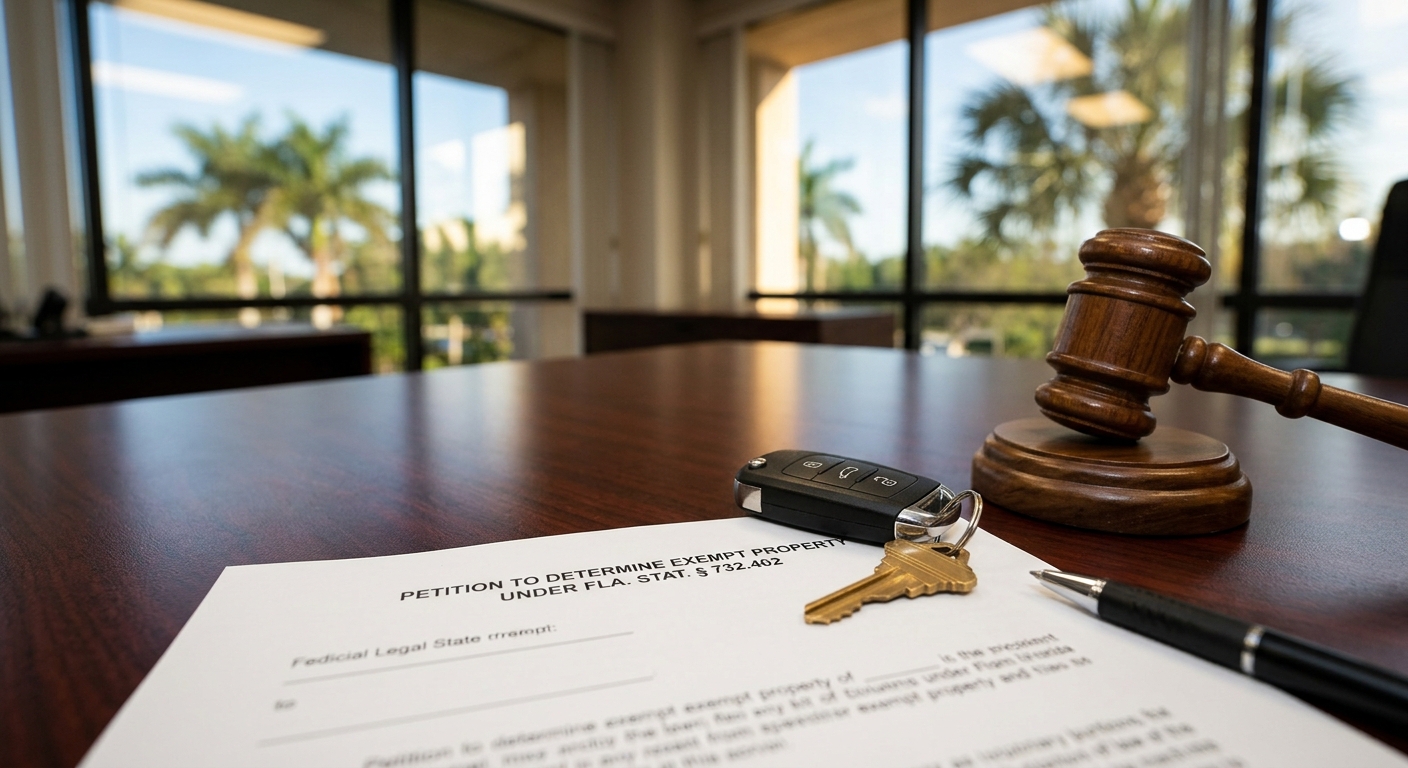
Petition to determine exempt property under Florida Statute 732.402 protecting a deceased person's car and household furniture from estate creditors in Coral Springs, FL.

A Comprehensive Guide to Florida Statute Section 732.402, Local Courthouse Procedures, Case Law Precedents, Common Misconceptions, and Tactical Protections in Broward County.


Losing a loved one feels like navigating an unexpected emotional storm. The absolute last thing any grieving family needs is a predatory debt collector calling during dinner to ask if Mom’s 2018 Honda Civic is parked in the driveway for immediate repossession, or if someone will be home on Tuesday so credit card liquidators can carry off Dad’s favorite armchair.

That grim mental picture belongs in a Victorian novel, not modern Florida. Florida law takes an aggressive defensive stance against collection tactics following a death. Under Florida Statute Section 732.402, lawmakers built a legal fortress around personal vehicles and everyday household goods. This statutory shield prevents general estate creditors from stripping surviving family members of basic personal belongings.

These statutory protections do not execute themselves. Securing them requires active legal steps inside Broward County’s probate court. If you miss mandatory statutory deadlines or skip required local procedural filings, those rights dissolve, leaving personal effects vulnerable to forced liquidation.

Below is an authoritative, step-by-step breakdown of how Florida exempt property protections function, how local rules operate within the Seventeenth Judicial Circuit Court in Fort Lauderdale, key judicial case law precedents, common mistakes that hand victory to creditors, and what surviving heirs must do to secure clean legal title.


The Macro Reality: Why Creditors Push and Why Florida Law Stops Them

To understand why exempt property laws exist, consider the sheer volume of cases clogging the court system. In Broward County alone, the Seventeenth Judicial Circuit Court processes thousands of probate matters every single year. Each judge in Broward’s probate division handles thousands of active files annually.

Nationally, data from the National Center for State Courts indicates that roughly 2.6 million probate cases are filed across state courts each year. With billions of dollars in unsecured medical debt and credit card balances circulating through those estates, collection agencies rely on automated notices and aggressive demand letters, hoping grieving families will simply hand over cash or car keys out of sheer panic or confusion.

Florida lawmakers recognized decades ago that driving a grieving family onto the street or forcing a widow to walk to work just to satisfy medical bills is fundamentally unjust. Florida Statute Section 732.402(2) establishes specific statutory protections for personal belongings that general creditors cannot touch.


1. What Assets Qualify as Exempt Property Under Florida Law?

Section 732.402(2) breaks down qualifying exempt assets into four primary categories:

A. Personal Motor Vehicles

The statute shields up to two personal motor vehicles held in the decedent’s name. Each vehicle must satisfy two distinct criteria:

  • The Weight Cap: Every individual vehicle must have a Gross Vehicle Weight Rating under 15,000 pounds. Your standard family sedan, light pickup truck, minivan, or personal SUV clears this bar easily. Heavy commercial haulers or massive industrial rigs exceed this weight limit.
    Statutes & Constitution :View Statutes : Online Sunshine
  • The Regular Personal Use Standard: The vehicle must have served as regular personal transportation for the decedent or their immediate family. Vehicles maintained purely as corporate fleet units stay outside statutory protection.
    Statutes & Constitution :View Statutes : Online Sunshine

B. Household Goods and Furnishings

The law shields household furniture, appliances, and general furnishings located in the decedent’s usual residence up to a net value of $20,000 as of the date of death.

The court measures this $20,000 threshold using realistic thrift store or garage sale market value on the exact date of death. Original retail purchase receipts do not dictate value here. Because used furniture depreciates rapidly, $20,000 in garage sale value almost always encompasses every physical item inside a home.

C. Qualified Tuition Programs

Under Section 732.402(2)(c), all higher education tuition contracts authorized under Section 529 of the Internal Revenue Code receive complete protection from estate creditors. This includes Florida Prepaid College Trust Fund accounts and state sponsored college savings plans.

D. Educator Death Benefits

Section 732.402(2)(d) protects specific teacher death benefits authorized under state law, shielding those funds directly from creditor claims filed against the estate.


2. Who Holds Legal Priority to Claim Exempt Assets?

Statutory rights under Section 732.402 do not distribute randomly across extended family lines. Florida law establishes an absolute priority structure that leaves zero space for informal family squabbles:

  • Sole First Priority (The Surviving Spouse): If the decedent was legally married at death, the surviving spouse holds exclusive legal priority to claim exempt property.
  • Second Priority (The Decedent’s Children): The decedent’s surviving children hold rights to claim exempt property only when no surviving spouse exists.

Friction Rules in Blended Families

Blended family structures routinely trigger disputes over personal property. Adult children from a previous marriage often attempt to secure a late parent’s personal vehicle or household effects. Florida law grants the surviving second spouse complete statutory priority over cars and household belongings regardless of emotional claims or informal family arrangements.


Broward County Central Courthouse in Fort Lauderdale where probate lawyers file exempt property petitions for Coral Springs families.

3. Deep-Dive Case Law Precedents: How Florida Courts Rule

To truly appreciate how Section 732.402 functions when pushed into litigation, we must examine key Florida appellate decisions that define the boundaries of asset eligibility, statutory deadlines, and usage standards:

In re Estate of Corbin, 603 So. 2d 127 (Fla. 1st DCA 1992)

This foundational decision clarified the operational scope of motor vehicle exemptions under Florida probate law. In Corbin, the court confronted a dispute over whether specialized recreational vehicles, specifically a motor home and travel trailer, qualified as exempt personal motor vehicles under Section 732.402.

The appellate court established that vehicle eligibility hinges strictly on actual, regular personal use by the decedent or immediate family members as standard personal transport. Because motor homes and specialized travel trailers served primarily as recreational housing units rather than day-to-day personal motor vehicles, they failed the statutory test.

The lesson from Corbin is clear: trial courts will examine the physical reality of how a vehicle was routinely operated, rejecting attempts to shield commercial units, recreational rigs, or off-site investment vehicles under the guise of personal transportation.

In re Estate of Liberman, 677 So. 2d 1294 (Fla. 4th DCA 1996)

Originating within the Fourth District Court of Appeal (which directly governs Broward County probate matters), Liberman serves as a stern judicial warning regarding statutory deadlines. The court addressed a situation where a petition claiming exempt property was filed well past the mandatory statutory timeframe established under Section 732.402(6).

The Fourth DCA affirmed that the statutory filing window is a mandatory jurisdictional cutoff. Missing the petition deadline results in an automatic, irreversible waiver of exempt property rights.

The court made it explicitly clear that probate judges possess no equitable authority to grant late exemptions if the petitioner allowed the statutory window to close without filing.

In re Estate of Salathe, 703 So. 2d 1167 (Fla. 2d DCA 1997)

The Salathe ruling examined the statutory interplay between a decedent’s Last Will and Testament and the exempt property rights of a surviving spouse under Section 732.402(5).

The court confirmed that while a general, non-specific bequest in a Will does not defeat exempt property protections, a specific bequest leaving a named item directly to a designated third party overrides general exemption claims unless that specific beneficiary executes a written waiver.

This case highlights why reading the precise text of a Will is essential before assuming an asset can be claimed under the general exemption allowance.


4. Common Mistakes People Make That Facilitate Creditors’ Work

In probate practice, creditors rarely win because the law favors them. They win because grieving heirs inadvertently make critical tactical mistakes that gift the creditor a legal advantage. Here are six major blunders that pave the way for debt collectors:

Mistake 1: Assuming That “Exempt” Means “Automatic”

This is the single most costly misconception in Florida probate. Families frequently assume that because a statute exists, Mom’s car and furniture are automatically shielded the second she passes away. In reality, Florida law requires an affirmative court order signed by a probate judge. Until a verified petition is e-filed and a judicial order is entered, the property remains unverified personal estate property. Sitting back doing nothing hands creditors the legal opening they need to demand liquidation.

Mistake 2: Voluntary Surrender After Believing Creditor Phone Demands

Third-party collection agencies employ aggressive call scripts designed to instill immediate panic. Representatives often tell surviving family members that keeping a deceased parent’s car constitutes fraud or theft, demanding that the family turn over the keys or reveal the vehicle’s location. Grieving relatives routinely comply out of fear.

Voluntarily handing over keys or surrendering physical possession before consulting a probate attorney waives practical leverage and forces the family to fight an uphill battle to recover converted property.

Mistake 3: Confusing Retail Replacement Value with Date-of-Death Liquidation Value

Heirs frequently look around a deceased relative’s home, calculate that the furniture cost $35,000 when purchased ten years ago, and conclude they are far over the $20,000 statutory exemption cap. They mistakenly inform the personal representative or creditors that the household goods exceed the limit. In probate court, retail purchase receipts belong in the trash.

Valuation is calculated strictly using date-of-death garage sale or thrift store liquidation prices. That ten-year-old living room set that cost $5,000 brand new might only fetch $300 at a yard sale today, easily fitting under the statutory cap.

Mistake 4: Missing the Statutory 4-Month Filing Window

Florida Statute Section 732.402(6) mandates that a petition for exempt property must be filed by the later of four months after the service date of the Notice of Administration or 40 days after the conclusion of any will challenge proceedings.

Families preoccupied with personal affairs frequently ignore formal legal notices arriving in the mail. Letting four months slip by legally waives the exemption permanently, handing creditors a free pass to liquidate the assets to satisfy outstanding bills.

Mistake 5: Informally Distributing Belongings Among Relatives Before Filing

When a parent dies, adult siblings often meet at the house over a weekend to divide up furniture, electronics, and vehicles without opening probate or seeking legal advice. Informally distributing assets without a court order creates chaotic titling disputes, exposes the heirs to claims of asset conversion, and prevents the probate court from entering a clean Order Determining Exempt Property. Creditors can exploit these informal transfers to claim that assets were improperly hidden or dissipated.

Mistake 6: Failing to Distinguish Between Secured Liens and Unsecured Debt

Section 732.402 shields assets against unsecured creditors like medical billing groups and credit card companies. It does not erase perfected security interests. Heirs often assume that declaring a financed car “exempt” eliminates the monthly auto loan balance. When the family stops making payments, the bank repossesses the vehicle under its valid security lien. An exempt property order shields the car from credit cards, but the family must maintain loan payments or refinance the balance to keep the vehicle.


Legal schedule detailing the exemption of two personal motor vehicles and $20,000 in household goods under Florida probate law.

5. Direct Commentary: What Authority Figures Say

Legal scholars and seasoned probate practitioners frequently emphasize that Section 732.402 is an affirmative shield designed to maintain household stability, not a mechanism for unjust enrichment.

As prominent Florida probate commentators have noted across appellate rulings, the statutory intent behind Section 732.402 is to preserve the immediate physical environment of the decedent’s home for surviving family members. The court’s primary goal is ensuring that the surviving spouse or minor children do not face sudden physical dislocation or loss of basic personal transportation while the broader estate administration drags on over many months.


6. Critical Exceptions: When Creditors or Wills Prevail

While Section 732.402 blocks general medical bills and credit card accounts, two explicit legal situations limit or bypass exempt property protections:

A. Perfected Security Interests and Auto Loans

Section 732.402(4) shields assets against unsecured general claims only. It does not eliminate perfected security interests.

When a decedent owed money on an active vehicle financing agreement, the lender holds a valid security lien. Declaring the vehicle exempt keeps credit card collectors from forcing a sale, but the surviving family must keep making monthly car payments or surrender the vehicle to the lender.

B. Specific Bequests in a Last Will

Under Section 732.402(5), property specifically devised in a Last Will to a designated individual cannot be claimed as general exempt property by a spouse or child. A specific clause leaving a classic car to a named sibling overrides general statutory exemption rights unless that designated beneficiary signs a formal waiver.


7. Modern Belongings: Consumer Electronics and Digital Assets

Florida probate practice must reconcile traditional statutory definitions written for physical furniture with modern household technology:

  • Consumer Electronics & Smart Home Infrastructure: Laptops, desktop computers, high end televisions, home theater systems, and smart appliances located inside the primary residence qualify as household furnishings under Section 732.402(2)(a). Their combined liquidation value counts against the $20,000 date of death cap.
  • Tangible Hardware vs. Digital Assets: Physical storage hardware (hard drives, tablets, personal servers) qualifies as tangible personal property. Digital assets, online subscriptions, cloud media libraries, and cryptocurrency holdings fall under Florida Statute Chapter 740 (Florida’s Revised Uniform Fiduciary Access to Digital Assets Act) and are governed by separate fiduciary access frameworks.

8. Procedural Protocol: Claiming Exempt Assets in Broward County

Exempt property status is never automatic. Obtaining marketable legal title and insulating assets from estate claims requires executing formal proceedings inside the Seventeenth Judicial Circuit Court of Florida.

Broward County Judicial Circuit Court Workflow

  1. Prepare the Verified Petition: Draft a formal Petition for Determination of Exempt Property complying with Florida Probate Rule 5.406. The pleading must list exact Vehicle Identification Numbers, titling records, and itemized property valuations.
  2. E-File via the Florida Courts Portal: Submit the pleading through the Florida Courts E-Filing Portal directed to the Broward County Clerk of Courts Probate Division at the Central Courthouse in Fort Lauderdale.
  3. Execute Formal Notice Procedures: Serve copies of the petition upon the court appointed Personal Representative and known creditors. Served parties receive a 30-day window to file formal written objections.
  4. Obtain Judicial Orders and Re-Title Assets: Once the judge signs the Order Determining Exempt Property, present certified copies to the Florida Department of Highway Safety and Motor Vehicles to issue clean vehicle titles.

9. The Small Estate Shortcut: Disposition Without Administration

When a Broward resident dies leaving behind only exempt property along with non-exempt personal assets that do not exceed funeral expenses and final medical bills, formal probate can be bypassed completely.

Under Florida Statute Section 735.301, qualifying family members can file a streamlined proceeding known as Disposition of Personal Property Without Administration. Family members can request Disposition forms directly at the Broward County Probate Clerk counter on the third floor of the Central Courthouse, Room 03150, located at 201 SE 6th Street in Fort Lauderdale. This short form track authorizes fast asset release without formal administration fees.


10. Tactical Protective Measures and Hidden Legal Pitfalls

To ensure creditors or disgruntled relatives do not unlawfully seize physical property while court filings are pending, surviving family members should execute active protective measures immediately:

  • Secure physical access right away: Change residential door locks and store vehicle keys in a safe location immediately following a death. Never permit third party debt collectors or co heirs to enter the premises without formal judicial authorization.
  • Refuse informal surrender demands: Debt collectors frequently contact surviving relatives claiming an immediate right to tow vehicles or collect furniture. Never surrender physical custody of any item without a signed order from a Broward probate judge.
  • Prohibit informal asset sales: Selling or giving away household items before filing a Petition for Determination of Exempt Property can invalidate statutory protections and expose heirs to claims of asset conversion from estate creditors.

11. Strict Filing Deadlines Under Florida Law

Hesitating to file court paperwork destroys your statutory rights. Under Florida Statute Section 732.402(6), statutory protections are permanently lost if mandatory filing deadlines expire:

Statutory Deadlines Under Section 732.402(6)

A Petition for Determination of Exempt Property must be filed on or before the LATER of these two dates:

  • 4 months following the date of service of the Notice of Administration.
  • 40 days following the complete conclusion of any court proceedings challenging the Will.

The Cost of Delay: Missing these statutory deadlines waives your rights permanently. Unprotected vehicles and household furnishings drop straight into the general estate, where general creditors can force public sales to satisfy outstanding debts.


12. Action Plan for Broward County Families

Securing physical belongings after a loss requires methodical organization. Taking these immediate steps keeps aggressive creditors at a distance:

  1. Protect physical possession: Secure car keys and keep residential premises locked to stop third parties from making off with personal belongings.
  2. Review vehicle registration records: Check if car titles stand in the decedent’s name alone and review records for active bank liens.
  3. Compile a realistic property inventory: List major furniture pieces alongside garage sale market valuations.
  4. Monitor court notices in your mail: Note the exact service date of the Notice of Administration to calculate your petition deadlines.
  5. Retain Broward County probate counsel: Work with a skilled local firm to file your verified petition in the Seventeenth Judicial Circuit Court before statutory windows close.

Infographic chart explaining surviving spouse priority over adult children for exempt property under Florida Statute Section 732.402.

Need Help Protecting Your Family’s Property in Broward County?

Losing someone close to you brings a heavy emotional burden, and dealing with aggressive debt collectors on top of that grief is entirely unfair. If you are handling estate claims, fighting over vehicle title transfers, or trying to understand how Florida exempt property rules apply to your situation, you do not have to carry that weight by yourself.

At the Law Offices of Reinfeld & Cabrera, we stand beside families across Coral Springs, Fort Lauderdale, and all of Broward County to protect what matters most. We step in to manage the probate filings, handle the creditor pressure, and make sure your family’s statutory rights under Florida law are fully enforced.

Call our Coral Springs office today at (954) 755-1280 or contact us online to schedule a confidential consultation with an experienced Broward County probate attorney. Let us take the legal burden off your shoulders so you can focus on taking care of your family.


Frequently Asked Questions

Can credit card companies seize a deceased person’s car in Florida?

  • No. Under Florida Statute Section 732.402, up to two personal motor vehicles weighing under 15,000 pounds Gross Vehicle Weight Rating are shielded from general unsecured creditors. Securing this protection requires an eligible surviving spouse or child to file a formal petition in probate court.

What happens if you miss the deadline to claim exempt property in Florida probate?

  • Under Florida Statute Section 732.402(6), missing the filing window waives your exemption rights permanently. Unclaimed assets fall into the general estate pool, where creditors can force public sales to satisfy outstanding claims.

Does Florida exempt property protection apply to adult children?

  • Yes, but only when no surviving spouse exists. The surviving spouse holds sole statutory priority. Adult children can step forward only when the decedent left no surviving spouse or when the spouse lawfully waived their rights.

What happens if the deceased person owned three personal cars?

  • The surviving spouse or children must select two vehicles to shield under Section 732.402. The third vehicle enters the general probate estate, where general creditors can target it unless another legal exemption applies.

Can a credit card company take furniture out of a deceased person’s home?

  • Unsecured creditors cannot seize household furniture if an eligible heir petitions for exemption under Florida law. The statute shields up to $20,000 in garage sale value of household furnishings from estate debts.

Does exempt property reduce a surviving spouse’s inheritance share?

  • No. Exempt property determined under Section 732.402 is excluded from net estate calculations. It passes directly to the surviving spouse or children in addition to any statutory elective share or intestate inheritance distribution.

Can an auto lender repossess a vehicle that the court declared exempt?

  • Yes. Section 732.402 protects property against unsecured creditors only. It does not erase perfected security liens. A financed car lender retains full legal rights to repossess the vehicle if loan payments lapse.

How do you establish the value of household furniture during Broward probate?

  • Courts evaluate household belongings using garage sale or thrift store market value on the date of death. Itemized property lists accompanied by photos and signed under penalty of perjury generally satisfy local judicial standards in the Seventeenth Judicial Circuit Court.