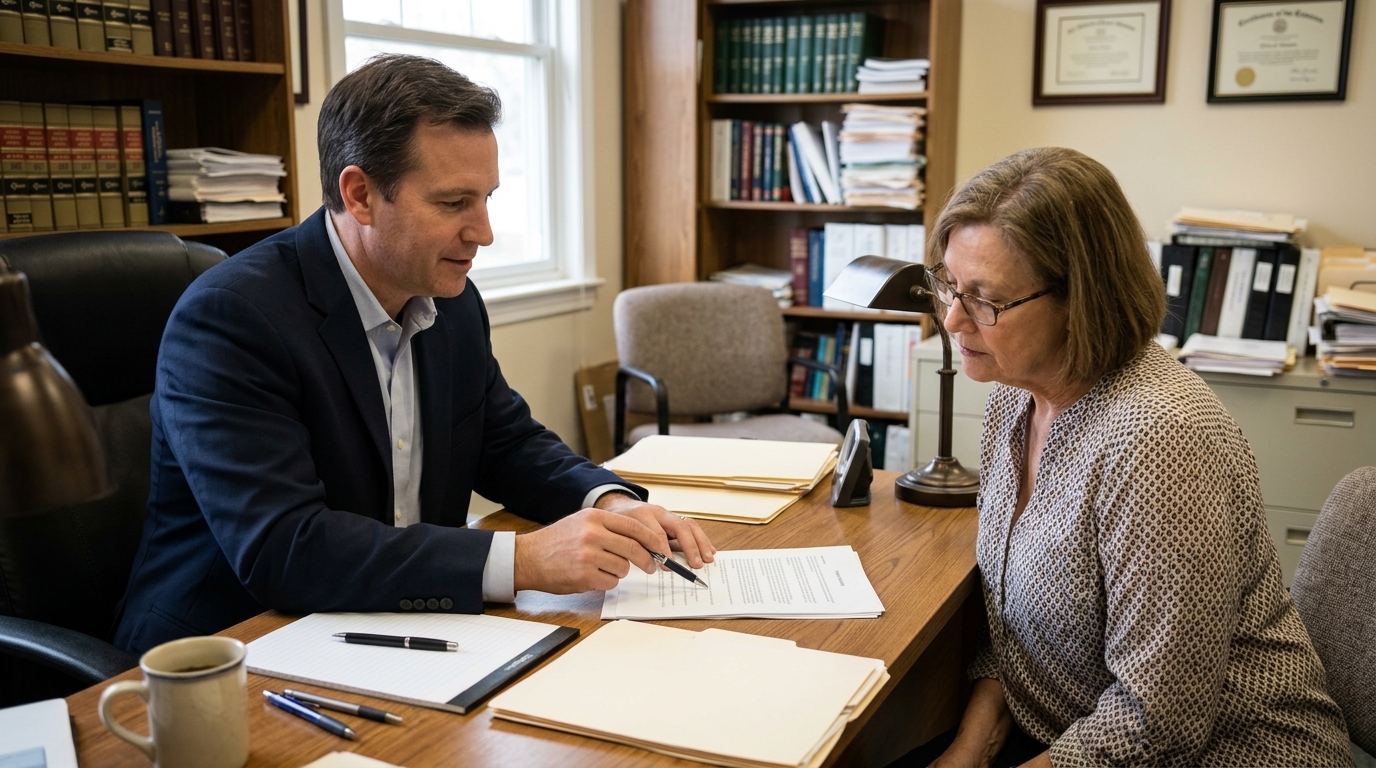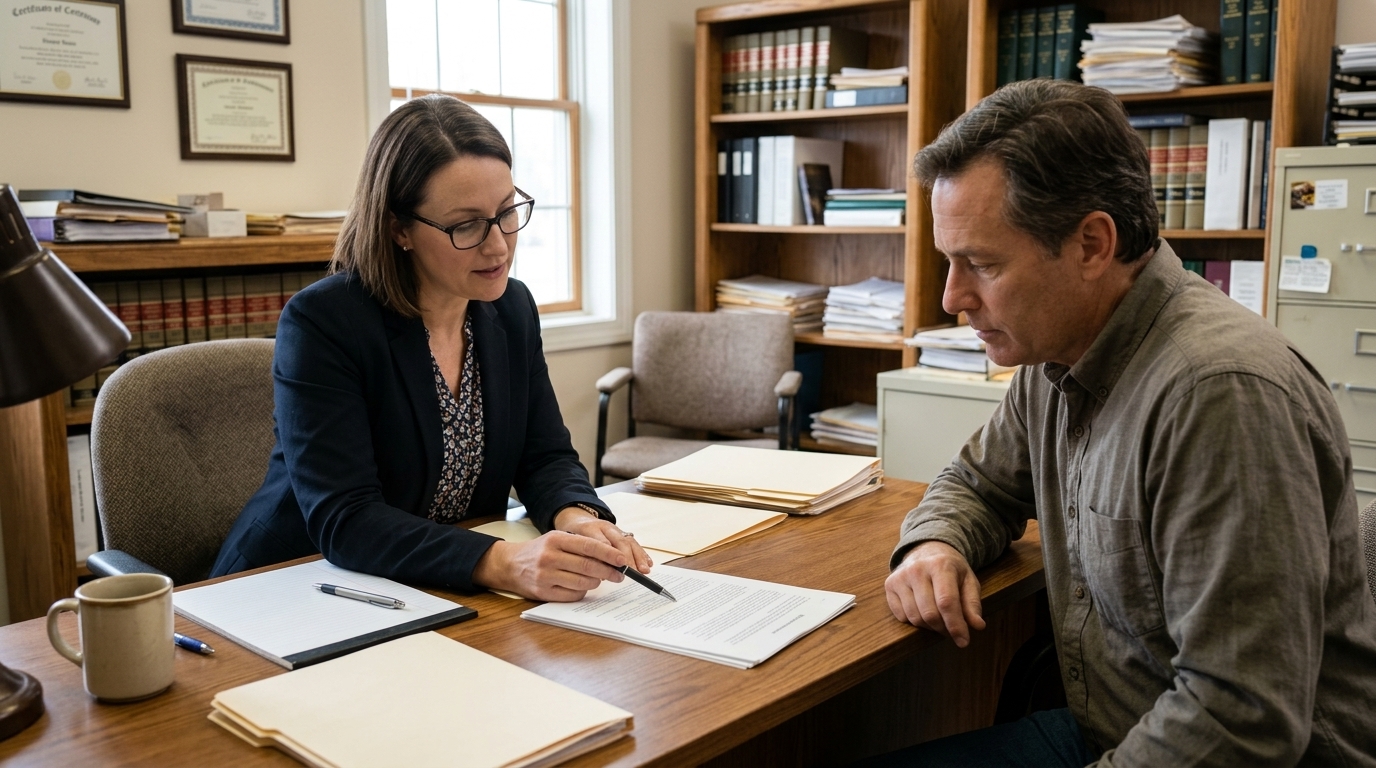
Nobody enjoys imagining their own funeral. Choosing who gets the house is hardly a party either. Yet putting off a will can leave your family answering legal questions at the worst possible time, often while grieving and trying to work out what you wanted.
A will gives you a say in what happens to property you leave behind. It can also nominate the person who will administer your estate and name a guardian for minor children. Florida strictly regulates how you must sign a will, so writing down your wishes is only part of the job.
If you live in Coral Springs or elsewhere in Broward County, this guide explains how to make a valid will under Florida law. We will cover the signing requirements, the different kinds of wills, and the mistakes that can leave families dealing with avoidable disputes.
Why do so many people put off making a will?
A 2025 survey by Caring.com found that 24% of respondents reported having a will. Among respondents without one, 43% said they simply had not gotten around to it. YouGov conducted the survey, which included more than 2,500 American adults. These are national survey results, not figures specific to Florida.
A separate study by Pew Research Center, published in November 2025, found that 32% of U.S. adults said they had created a will. The two figures differ because the surveys used different research methods and questions. No one should present either figure as a precise estimate for Broward County
Sources: Caring.com 2025 Wills and Estate Planning Study and Pew Research Center’s 2025 report.
The reasons for delaying a will are understandable. Some people believe they do not own enough to justify one. Others assume they can deal with it when they are older. Unfortunately, neither assumption answers the question of who should manage their estate or how their property should pass after death.
You do not need a mansion or a complicated investment portfolio to benefit from a will. A home, personal belongings, and a child who depends on you can be reason enough to start planning.
1. What makes a will legally valid in Florida?
Florida law sets out the basic requirements in Florida Statutes § 732.502. A will generally must meet these conditions:
- You must have legal capacity. You must be at least 18 years old or an emancipated minor. You also need to understand that you are making a will and have a general understanding of your property and the people who would ordinarily be expected to inherit from you.
- The will must be written. Florida generally does not recognize an ordinary handwritten note or an oral statement as a valid will.
- You must sign it at the end. The signature must follow Florida’s execution rules. A signature placed elsewhere can create questions about whether the parties properly executed the document..
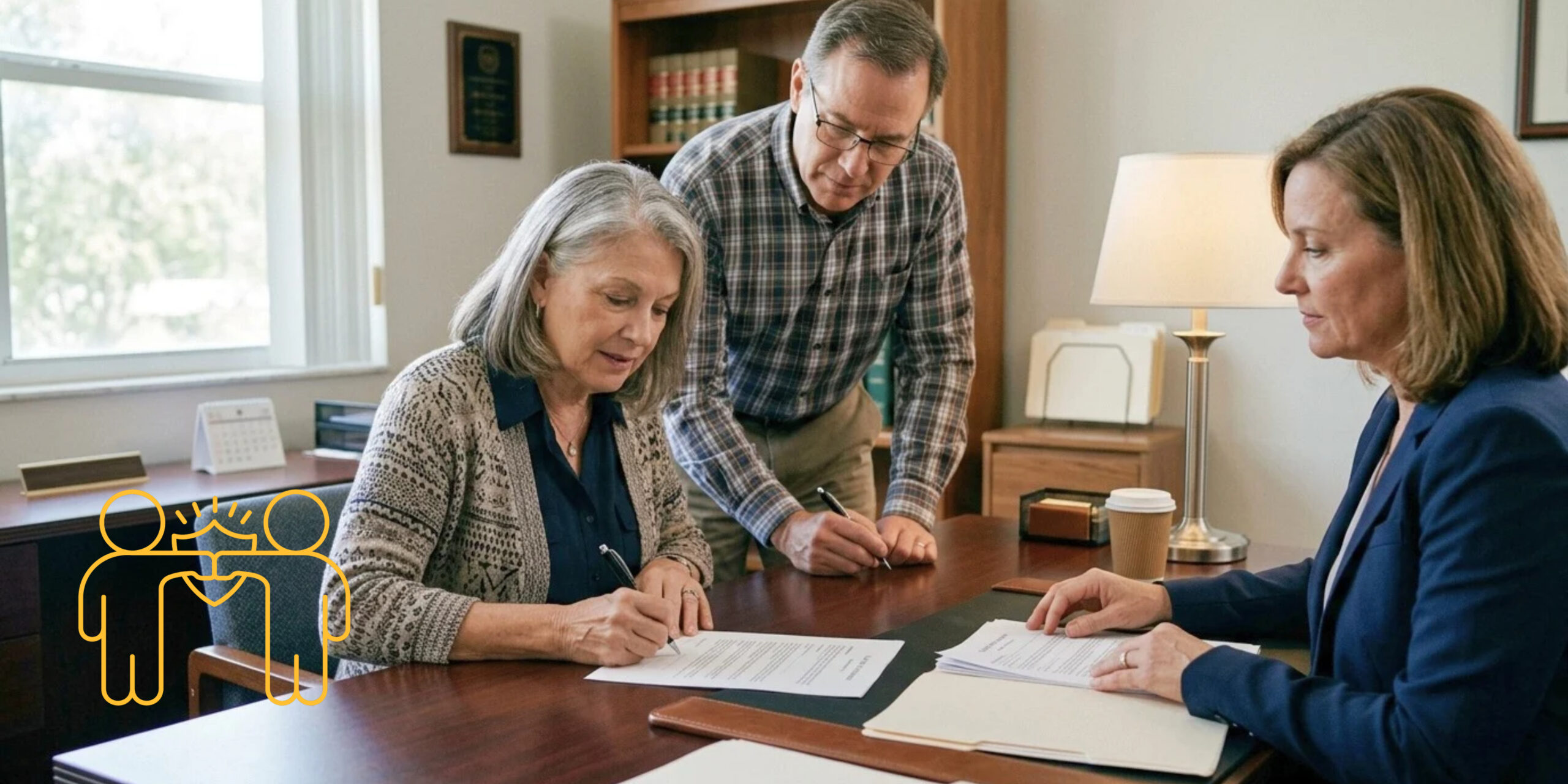
- Two witnesses must observe the signing. You must sign in the presence of two witnesses, or acknowledge your signature to them. They must sign in your presence and in each other’s presence.
These formalities matter even when your intentions seem perfectly obvious. A document can express exactly what you wanted and still fail as a will if you did not execute it correctly
Does a will have to be notarized?
A notary stamp alone does not make a will valid. The signing and witnessing requirements still apply.
Florida allows a testator to make a will self-proving under Section 732.503. This involves the testator’s acknowledgment and affidavits from the witnesses before an officer authorized to administer oaths. You must attach the required certificate to the end of the will.
The court can usually admit a self-proving will to probate without locating a witness to establish proper execution. That can save time and expense when the estate is administered.
The sensible approach is to arrange the self proving affidavit as part of the signing appointment. It is a useful precaution, although it does not replace the ordinary execution requirements.
Official source: Florida Statute 732.503.
How should the signing take place?
Prepare the final version before the witnesses arrive. Check the names and provisions carefully, because the signing ceremony is a poor time to discover that you left someone out.
The testator should sign, or acknowledge their signature, while both witnesses are present. The witnesses then sign while the testator and each other are present. Arrange the self proving affidavit with an authorized officer as part of the same appointment where possible.
Choose witnesses who can act competently and who are not beneficiaries if practical. Florida law does not automatically invalidate a will simply because a witness holds a financial interest in it, but using independent witnesses prevents unnecessary disputes later.
Do not collect signatures from people who sign separately without understanding the required procedure. Nor should you assume that a notary can fix an execution ceremony that failed to meet Florida law.
The Florida Bar puts the point plainly in its consumer guidance, Do You Have a Will?: “It is necessary to follow exactly the formalities required by Florida law for the execution of a will.”
Read the Florida Bar’s consumer pamphlet for additional information.
2. Which type of will should you choose?
The right document depends on what you want to happen to your property. People commonly use the term ‘simple will’ to describe a straightforward document, but that label never guarantees that an estate is legally simple.
A conventional will
A conventional will directs the distribution of property that passes through the estate. It can name beneficiaries and nominate a personal representative. It may also nominate a guardian for minor children.
For someone with straightforward wishes and no unusual family or property issues, this may be a suitable starting point. The important question is whether the document actually accounts for the person’s assets and family circumstances.
A will containing a testamentary trust
A testamentary trust takes effect under the will after the testator’s death. A trustee can manage assets for a beneficiary rather than distribute them outright.
For example, a parent may want a child to receive an inheritance when older instead of gaining unrestricted control over it immediately. The will can establish a trust with terms governing its administration and distributions.
The arrangement needs careful drafting. The document should identify the trustee and explain when they may make distributions.. Assets passing into a testamentary trust through the will generally must first go through the applicable estate administration process.
A pour over will
Estate planners commonly pair a pour-over will with a revocable living trust. It directs eligible assets left outside the trust into it after death.
This does not mean every asset automatically avoids probate. Property that remains outside the trust may still require probate before an executor can transfer it. An owner must properly fund the trust during their lifetime if they intend to hold assets in it.
A pour over will is part of a broader plan, not a substitute for checking how property is titled.
An electronic will
Florida recognizes electronic wills under Sections 732.521 through 732.526. However, an electronic signature on an ordinary PDF does not automatically create a valid electronic will.
The law establishes requirements for execution and related records. It also addresses self proving and the role of qualified custodians.
You must prepare and maintain an electronic will through a process that complies with Florida’s specific requirements.. Do not assume that saving a signed file in an email account or cloud folder is enough.
See Florida Statute 732.521 and Section 732.524 on qualified custodians.
A codicil
A codicil is a formal amendment to an existing will. It may be suitable when a person needs to make a limited change without replacing the whole document.
Florida requires a codicil to follow the same execution formalities as a will. If several provisions need to change, preparing a new will may be clearer than trying to interpret multiple amendments alongside the original.
Handwritten and oral wills
Florida does not provide a general exception that makes an unwitnessed handwritten note or spoken instructions valid simply because they reflect the person’s wishes. The statutory rules for wills executed outside Florida specifically distinguish holographic and nuncupative wills from other documents that may qualify under another jurisdiction’s law.
If you have written your wishes on a piece of paper and tucked it into a drawer, do not assume that your family can use it as a substitute for a properly executed will.
A living will is a different document
A living will concerns medical treatment preferences under the circumstances covered by Florida’s advance directive laws. A last will and testament deals with the distribution of property after death.
Having one does not mean you have the other. Depending on your circumstances, you may also want to consider a health care surrogate designation and a durable power of attorney. These documents serve different purposes and should not be treated as interchangeable.
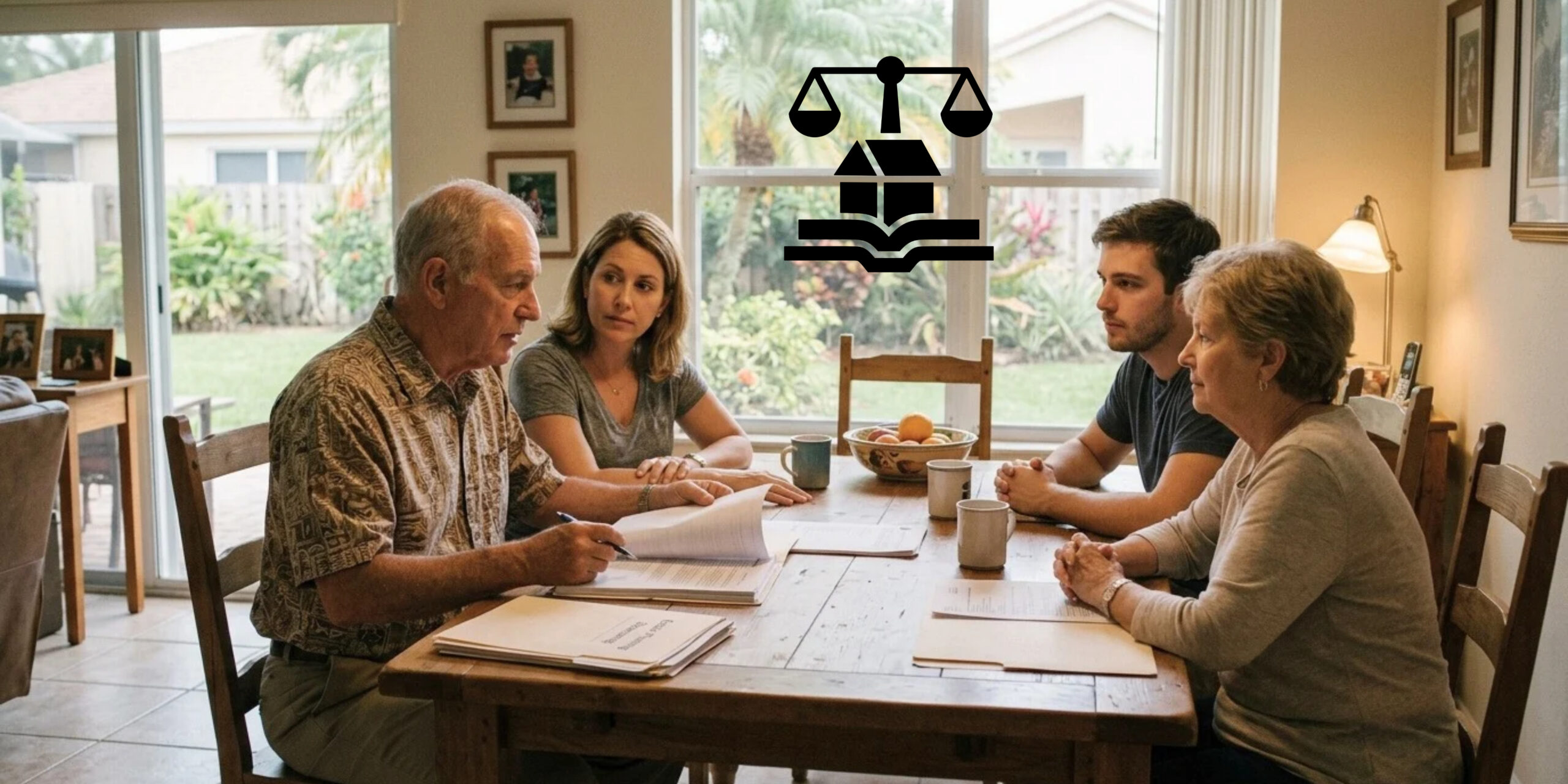
3. Decide who should inherit your property
Before preparing a will, work out who should receive your property and what should happen if one of those people dies before you.
You might want to leave a particular item to a relative. You may prefer to divide the remainder of your estate among several beneficiaries. Whatever the arrangement, the document should make your intentions clear.
Consider what should happen if a beneficiary dies before you. Without an appropriate backup provision, the distribution may not work out as you expected. Florida has statutory rules governing certain gifts when a beneficiary does not survive the testator, so the wording matters.
Do not assume that every asset you own will pass under the will. The way an asset is titled can determine what happens to it.
Life insurance and retirement accounts may pass according to beneficiary designations. Property held with a valid right of survivorship may pass directly to the surviving owner. These arrangements can operate separately from the will.
Review the actual account records and deeds rather than relying on memory. An old beneficiary designation can contradict the plan you have just put in writing.
4. Choose a personal representative
Florida uses the term personal representative for the person responsible for administering an estate. You may know the role as an executor.
The personal representative may need to identify estate property, handle creditor claims, comply with probate requirements, and distribute assets according to the will and applicable law.
Choose someone who can manage these responsibilities. A close relative may be a good choice, but family closeness does not automatically make someone suitable for the role.
It is worth naming an alternate in case your first choice dies, becomes unable to serve, or declines the appointment. The person named in the will must also qualify under Florida law.
For estates involving substantial assets or complicated family circumstances, discuss the appointment with an attorney before finalizing the document.
5. Plan for minor children
Parents often focus on who will inherit their money and overlook the question of who should care for their children.
A will can nominate a guardian for minor children. That nomination tells the court whom the parent would prefer to serve, but it does not guarantee the appointment in every circumstance. The court must apply the relevant law.
Parents should also consider how an inheritance would be managed if a child is still young. An outright distribution may not suit every family. A testamentary trust can provide a structure for managing assets until specified conditions are met.
The terms need to be clear. Someone must be responsible for administering the trust, and the document should explain how and when the child may receive distributions.

6. Pay special attention to a Florida homestead
Florida’s homestead rules can affect how a person’s primary residence may be transferred at death. This is one of the areas where a generic will template can leave important questions unanswered.
Under Florida Statute 732.4015, homestead property generally cannot be devised by will if the owner is survived by a spouse or minor child, subject to the statutory and constitutional rules. One exception allows a devise to the spouse when the owner has no minor child.
If a home is not devised as permitted by law, Florida Statute 732.401 governs how it may descend in certain circumstances. A surviving spouse and descendants may have different interests in the property.
Official sources: Florida Statute 732.401 and Florida Statute 732.4015.
This deserves particular attention if you own a home in Coral Springs and have a blended family. The intended inheritance should be checked against the deed and the family circumstances before the will is signed.
7. Understand a surviving spouse’s rights
Marriage can affect an existing will. Florida Statute 732.507 provides that a later marriage does not automatically revoke a prior will. A surviving spouse who was omitted may nevertheless have statutory rights under the rules for a pretermitted spouse.
Florida also gives a surviving spouse a potential right to claim an elective share. Under Section 732.2065, the elective share is 30% of the elective estate, calculated under the applicable statutory rules.
This does not mean every spouse simply receives 30% of the property listed in a will. The elective estate has its own calculation, and the law addresses which assets and interests are included.
A person who wants to leave a spouse out of an estate plan should not assume that a sentence in the will will settle the matter. The relevant rights and any applicable marital agreement need to be examined under Florida law.
Official sources: Florida Statute 732.507 and Florida Statute 732.2065.
8. What happens if you marry, divorce, or have another child?
Life does not stop changing because a will has been signed.
Under Section 732.507, a later marriage or the birth or adoption of a descendant does not automatically revoke the existing will. However, a pretermitted spouse or child may have rights under separate provisions of Florida law.
Divorce can have a different effect. Provisions in a will affecting a former spouse are generally treated as void after the marriage is judicially dissolved, subject to statutory exceptions.
A new child may also be entitled to a share under Florida’s pretermitted child rules when the will does not provide for that child. The result depends on the circumstances and the exceptions in Section 732.302.
Sources: Florida Statute 732.507 and Florida Statute 732.302.
After a marriage, divorce, birth, or adoption, review the will rather than assuming the law has done the necessary work for you. Check the beneficiary designations and property arrangements too, since they may be governed by separate rules.
9. Common mistakes that can cause trouble later
Writing changes onto a signed will
Crossing out a beneficiary or adding a handwritten instruction is not a reliable way to amend an executed will. Florida has formal requirements for changes.
The Florida Bar warns that writing on an executed will may invalidate part or all of it. Use a properly executed codicil or prepare a new will instead.
Forgetting backup choices
A beneficiary may die before the testator. A personal representative may decline the appointment. Include appropriate alternatives so the plan does not depend entirely on one person remaining available.
Assuming the will controls every asset
A beneficiary designation or ownership arrangement may determine where an asset goes. Check the records instead of assuming the will overrides them.
Ignoring the original document
A will needs to be located after death. Keep the original in a secure place and tell the appropriate person where it can be found. Security is useful, but a document that nobody can locate creates an entirely different problem.
Overlooking undue influence
A will should reflect the testator’s own wishes. If someone who stands to inherit is pressuring the testator, or the testator’s decision making ability is in question, the circumstances deserve particular care.
Florida Statute 732.5165 addresses wills procured by fraud, duress, mistake, or undue influence. A will can be invalidated when the law’s requirements are met.
Assuming a will avoids probate
A will generally directs how property passing through the estate should be distributed. It does not automatically eliminate probate.
Some assets pass outside probate because of their ownership or beneficiary arrangements. Others may require estate administration before they can be distributed. A will and a trust can serve different roles, so choosing one does not automatically make the other unnecessary.
10. What should you do after signing the will?
First, check that the document is complete and that the signing formalities were followed. Arrange the self proving affidavit if appropriate.
Next, store the original securely. Make sure the person who may need it knows where it is kept.
Review related records, including beneficiary designations and property deeds. The will should fit the way your assets are actually owned.
Finally, revisit the document when circumstances change. There is no universal rule requiring a new will every year. A significant change in family relationships or assets is a sensible reason to review it.
If you move to Florida from another state, have the existing will reviewed by a Florida attorney. A will validly executed elsewhere may be recognized in Florida, but local review can identify issues involving administration or Florida specific property rules.
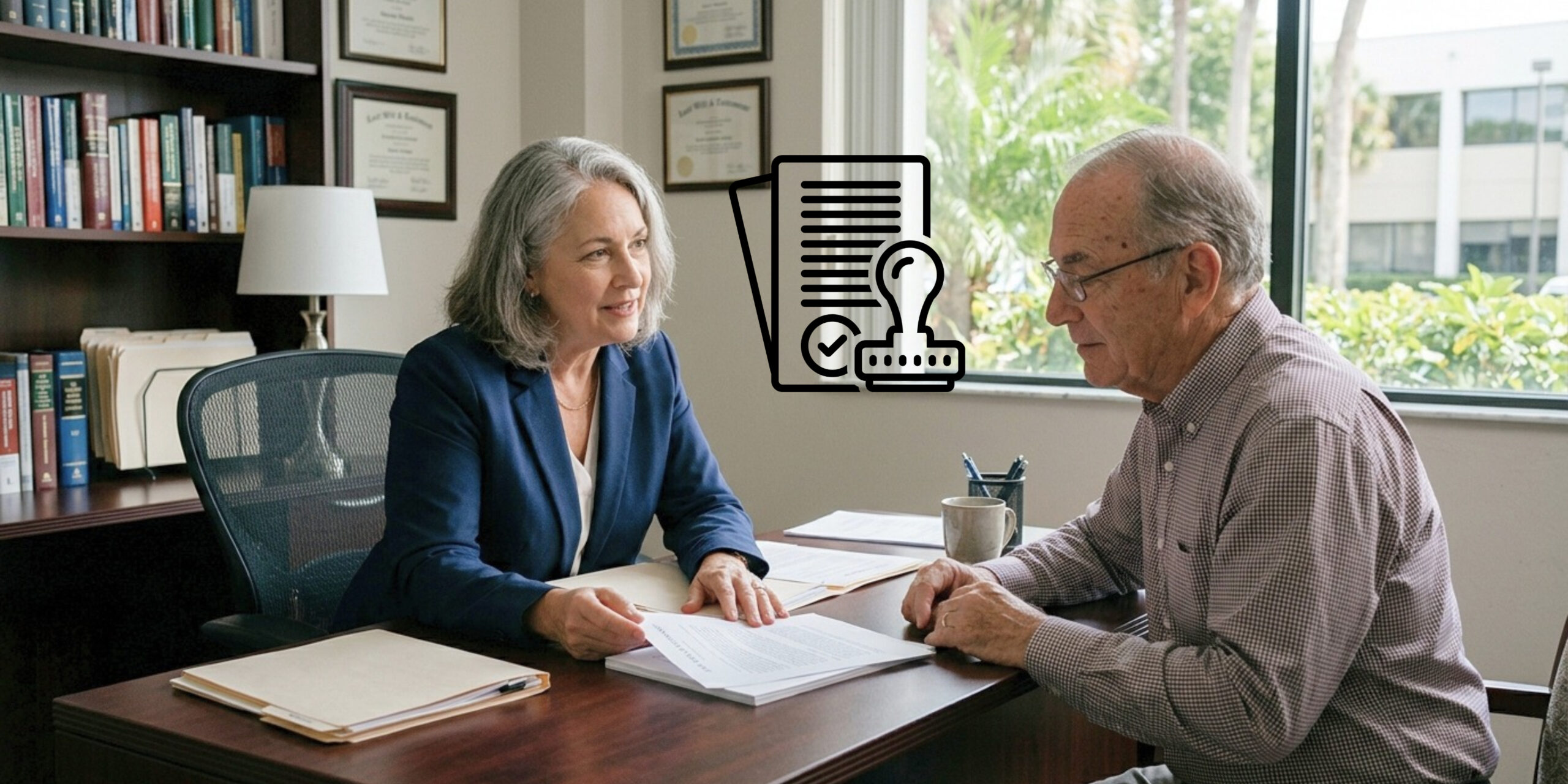
11. When should you consult a Florida estate planning attorney?
Some people have straightforward wishes and few complications. Others have circumstances that deserve individual legal review.
Consider speaking with an attorney if you own a Florida homestead and have a spouse or minor children. The same applies if your family includes children from different relationships or you want an inheritance managed through a trust.
A business interest can introduce additional questions about ownership and transfer restrictions. Substantial assets may also raise issues that a generic template will not address.
An attorney can review the proposed distribution against Florida law and explain the options available for your circumstances. That is particularly important when the intended plan may affect a surviving spouse or another person with statutory rights.
Frequently asked questions about making a will in Florida
Can I write my own will in Florida?
- Florida law does not require every will to be drafted by an attorney. However, the document must satisfy the applicable legal requirements. A poorly drafted will can create uncertainty about the person’s wishes or fail to account for important restrictions.
Does a Florida will need two witnesses?
- Yes. A conventional written will generally requires two attesting witnesses under Section 732.502. The testator and both witnesses must follow the statutory signing procedure.
Can I use an online will template?
- A template may help organize basic information, but it cannot determine whether your proposed plan works with Florida homestead rules, spousal rights, or the ownership of your assets. Make sure the execution requirements are followed.
Does marriage automatically cancel my old will?
- No. Florida Statute 732.507 says a later marriage does not automatically revoke a prior will. A surviving spouse may nevertheless have statutory rights if omitted.
Can I change my will by crossing out a name?
- Do not rely on handwritten edits to an executed will. Florida requires formalities for amendments, and writing on the document may create serious problems.
Does having a will mean my family can avoid probate?
- Not necessarily. A will generally directs the distribution of property administered through the estate. Some assets pass outside probate, while others may require court supervised administration.
What is the difference between a living will and a last will?
- A living will addresses medical treatment preferences under applicable advance directive law. A last will and testament directs the distribution of property after death. They serve different purposes.
Making a will that reflects your wishes
A will should make your intentions clear and follow Florida’s legal requirements. It should also account for the way your property is owned and the people who may have legal rights after your death.
For residents of Coral Springs and throughout Broward County, Reinfeld & Cabrera, P.A. can review estate planning questions and explain how Florida law applies to individual circumstances.
If you already have a will, bring it for review when your family or financial situation changes. If you have not prepared one, begin by deciding who should inherit your property and who should be responsible for administering the estate. Those decisions provide a useful starting point for a document that can actually do its job.
This article provides general information about Florida law as of 2026. It is not a substitute for legal advice about your individual circumstances. Laws can change, so verify the applicable requirements before signing or updating a will.