
Professional Divorce Attorneys in Coral Springs

Divorce-AttorneyProfessional divorce attorneys in Coral Springs like Reinfeld & Cabrera, P.A. deal with cases involving marriage, divorce, child custody, and guardianship. If you are in need of a pre-nuptial agreement, or ready to file for divorce, you may wish to hire a good divorce attorney. While there are many attorneys in Coral Springs to choose from, not all divorce attorneys are created equal. To find professional divorce attorneys in Coral Springs who you can rely on, simply follow these easy steps.

1. Identify divorce attorneys in the county where your case will be filed: A prudent move would be to identify divorce attorneys who are familiar with the Judges, court staff, local customs, and other attorneys involved in your case. Look through the local yellow pages, divorce attorney ads or scroll through an online directory such as Lawyers.com, LawInfo, and FindLaw.

2. Make appointments with the divorce attorneys you are most interested in: Schedule a consultation with your top choices of divorce attorneys that you have identified on your list. A professional divorce attorney in Coral Springs should offer free initial consultations, however it is good to note that others may charge for the initial consult. Make sure to ask about this when making an appointment. On the day of the appointment prepare yourself well. In essence you are not only trying to get information regarding your case, but you are also conducting an interview of each of the divorce attorneys you are meeting with.

3. Shortlist: after all your appointments have concluded, revise your list and shortlist only your top three divorce attorneys. Eliminate any divorce attorneys you did not feel comfortable with, whose payment plan does not work for you, or those who, simply put, you just did not like.

4. Research: Simple online research could be of some assistance when performing your background checks on your shortlisted divorce attorneys. Most divorce attorneys should have a basic website listing practice areas and contact information. Other divorce attorneys will have more comprehensive websites that will list their detailed information about their experience and qualifications. Check online reviews of divorce attorneys in Coral Springs on sites such as Avvo, Findlaw, Lawyers.com, Martindale-Hubbell, and Yahoo Local. Browse social medial profiles such as Twitter, Facebook, Google +, and LinkedIn for each of the attorneys or law firms on your shortlist. Do not under estimate the wealth of information social media profiles and status updates can provide. Other great sources of information are news stories and press releases concerning individual divorce attorneys and law firms. While some divorce attorneys may have a strong online presence, others may be more difficult to locate online. Consult friends and family who may have experience with the attorneys on your shortlist.

At the end of the day the most important thing is to find the divorce attorney in Coral Springs who suits you. As professional divorce attorneys in Coral Sptings, Reinfeld & Cabrera, P.A. are more than happy to help you with your divorce attorney needs.

What is Commercial Litigation?

Commercial-litigation-attorney

You may know someone who is a commercial litigation attorney, but have you ever found yourself wondering “what is commercial litigation?” As experienced commercial litigation lawyers ourselves, we at Reinfeld & Cabrera, P.A. are here to answer your questions on commercial litigation.

What is commercial litigation?
Let’s start with commercial law: commercial law, also known as a part of business law, applies to the rights, relations, and conduct of persons and businesses engaged in commerce, merchandising, trade, and sales. Therefore, commercial litigation is any dispute which may arise in any business activities and which most often results in court proceedings to settle the issue. Usually these disputes are focussed on property or finances with some examples being corporate governance, banking transactions, mergers and acquisitions.

Why is commercial litigation necessary?
During the day-to-day events of any business, many legal matters may arise and need to be dealt with. Because commercial industries fall under both private and public law, these legal matters are of utmost importance to the smooth running and wellbeing of your business. As any business owner, large or small, will know, you cannot run a business without finances and paperwork. Things like taxes, employee contracts and property rental agreements are all legal matters and any number of issues may arise in these areas when running a business. So it is important for any issue either to be avoided through well drawn-up contracts and negotiations or to be dealt with quickly and efficiently in court to avoid growing expenses and wasting business hours on the problem.

What does a commercial litigation lawyer do?
The aim of a commercial litigation attorney is primarily to represent you and your business in a court of law during a commercial litigation case. However, a commercial litigation attorney can be tremendously useful when consulted beforehand to try to avoid ever having to go to court (as this may turn into a costly experience). They are extremely knowledgeable and skilful in all aspects of commercial law. A good commercial litigation attorney will be able to guide you through any and all aspects of your business which may fall under the wing of commercial law.

Do I need a commercial litigation attorney?
The short answer is: if you have a business or partake in any business dealings, yes. The long answer: a commercial litigation attorney can help you in all legal business matters in or out of court. These may include a breach of contract, sales disputes, contract negotiation and preparation. And whether your business is a brand new small start-up business or a massive multi-national corporation, chances are you will eventually need a good commercial litigation attorney.

So now that you know a bit more about commercial litigation, you can see the importance of knowing a good commercial litigation attorney. If you don’t already know one, let Reinfeld & Cabrera give you a free consultation and never worry about commercial litigation again.

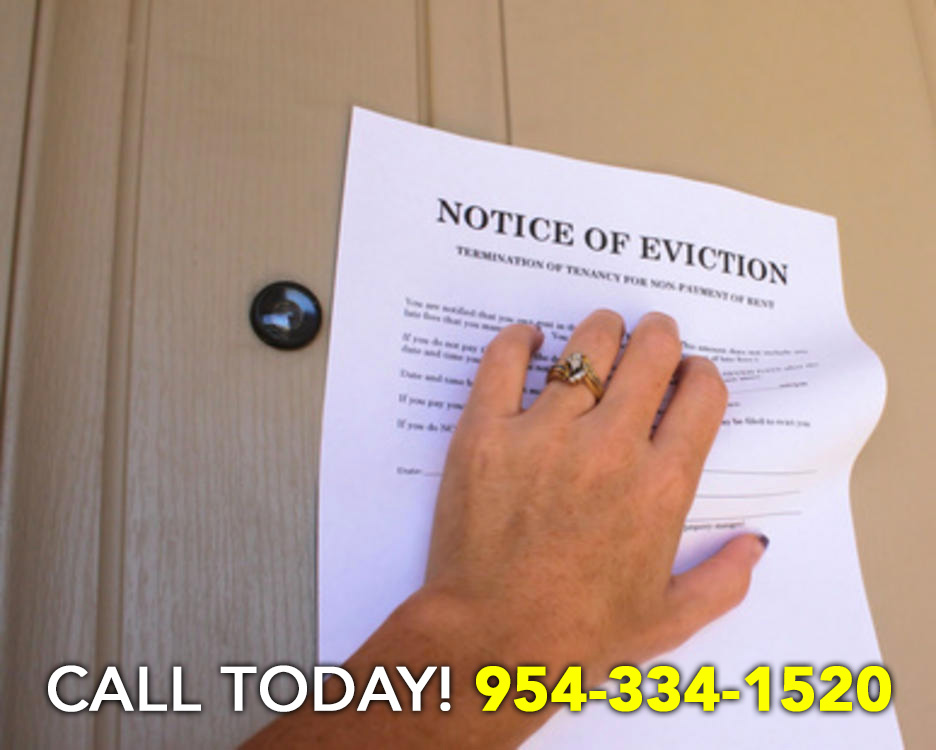
Can You Handle an Eviction Without an Attorney in Florida?

Coral-Springs-Eviction-Attorney


Yes, a landlord or tenant can handle some Florida eviction cases without an attorney. Florida law does not require a lawyer in every eviction proceeding. But an eviction still involves specific notice requirements, court filings, service of process, deadlines, and rules governing defenses and possession. A mistake at any of those stages can affect the outcome of the case.

For landlords, the process generally begins with the legally required notice and can proceed to a county court action if the tenant does not leave. For tenants, receiving an eviction lawsuit creates deadlines for responding and, in some cases, requirements for paying disputed rent into the court registry.

The issue matters in Broward County, where there were 16,666 eviction filings in 2025 and 7,955 more during the first six months of 2026.

So when is an eviction simple enough to handle on your own, and when does the situation call for legal assistance? The answer usually depends on the reason for the eviction, the lease, the notice, and whether the other side contests the case.


Can You Handle an Eviction Without an Attorney?

Yes.

Florida does not require every landlord or tenant to hire an attorney for an eviction. Broward County provides self service information and forms for people handling certain eviction matters themselves. The Clerk also explains that its deputy clerks can provide procedural information, but cannot prepare legal forms or give legal advice.

The complexity of the case matters.

A straightforward dispute involving unpaid rent may be different from a case involving:

  • A disputed lease violation.
  • Questions about whether the required notice was valid.
  • A commercial lease.
  • A disagreement about the amount of rent actually owed.
  • A claim that the landlord failed to maintain the property.
  • A retaliation defense.
  • A security deposit dispute.
  • A lease renewal or termination dispute.
  • A claim for damages in addition to possession.

An eviction can also become more complicated when the parties disagree about basic facts.

That is where legal advice may become useful.


Why Does the Eviction Process Matter?

Florida provides a summary procedure for eviction cases. The purpose is to provide a more direct procedure for resolving possession disputes.

“Summary” does not mean informal.

Florida law still requires the landlord to establish the legal basis for possession and follow the applicable requirements. The Broward County Clerk describes the basic local process as:

  1. Issue the required notice.
  2. Complete and file the required forms.
  3. Properly serve the tenant.
  4. Obtain a judgment and, when appropriate, a writ of possession.

Each stage can raise separate issues.

A defective notice can create a problem before the case even reaches a judge.

A service problem can affect whether the case can proceed.

A tenant who fails to respond properly can lose important defenses.

A landlord who tries to bypass the court process can create a different legal problem altogether.

Eviction law has very little patience for the idea that everyone can simply improvise.


What Notice Does a Landlord Have to Give?

The required notice depends on the reason for ending the tenancy.

For example, Florida law provides specific procedures for nonpayment of rent and for certain lease violations. The notice requirements are contained in section 83.56 of the Florida Statutes and are not simply optional language that the parties can rewrite in a lease.

For nonpayment cases, the applicable notice period and calculation depend on the tenancy and the circumstances. Florida’s statutory framework also specifies how certain periods are calculated.

For other violations, the landlord may need to give the tenant an opportunity to correct the problem when the law provides a cure period.

This distinction matters because an eviction notice is not interchangeable with every other type of demand letter.

The reason for the termination affects what the landlord may need to do next.

A notice can become a legal issue in itself

Consider a tenant who receives a notice claiming that rent was not paid.

The tenant might disagree about:

  • Whether the rent was actually due.
  • How much was owed.
  • Whether payment was made.
  • Whether the notice was properly served.
  • Whether the notice contained the required information.
  • Whether the landlord complied with the applicable statutory requirements.

Those questions can affect what happens after the notice.

The notice is therefore more than a warning. It can become part of the legal record.


What Happens After the Notice?

If the tenant does not leave and the landlord has the legal basis to seek possession, the landlord can file an action for possession.

Florida Statute §83.59 governs actions to recover possession. The landlord must proceed through the court rather than simply taking possession personally.

Broward County’s Clerk describes the next stages as filing the required documents and serving the tenant. The tenant then has to follow the instructions in the summons and respond within the applicable time.

This is one reason an eviction should not be treated like an ordinary argument between a landlord and tenant.

Once a lawsuit has been filed, deadlines and procedural rules become part of the dispute.


What Can a Tenant Do After Receiving an Eviction Lawsuit?

A tenant is not automatically removed simply because a landlord files an eviction case.

Florida law permits tenants to raise certain legal and equitable defenses. Depending on the circumstances, those defenses can involve alleged landlord noncompliance, defective notices, retaliation, payment disputes, or other issues recognized by law.

But there is an important procedural requirement that tenants should understand.

When a tenant raises a defense other than payment in a nonpayment case, section 83.60 generally requires the tenant to pay the accrued rent into the court registry or timely file a motion asking the court to determine the amount that must be deposited.

Failure to comply can result in waiver of defenses other than payment and can allow the landlord to obtain an immediate default judgment for possession.

That is not a minor technicality.

It can change the course of the case.


A Broward County case shows why this matters

In Muscella v. Johnson, a 2024 Fourth District Court of Appeal decision arising from Broward County, the tenants did not pay the rent into the court registry or timely move to determine the amount as required by section 83.60(2).

The Fourth DCA reversed the county court and explained that, under the circumstances, the landlord was entitled to the writ of possession.

The court stated that when the statutory requirement is not met, the landlord can be entitled to possession without another hearing.

That case illustrates the practical importance of understanding procedural requirements.


But the Same Rules Can Protect a Tenant Who Responds Properly

A different Broward County case demonstrates the other side.

In Kaufman v. High Seas, LLC, the landlord sought possession for alleged nonpayment of rent. The tenant disputed the landlord’s allegations, raised defenses, and timely filed a motion asking the court to determine the amount of rent that should be deposited into the court registry.

The trial court entered an eviction judgment without resolving that motion.

The Fourth DCA reversed and remanded, holding that the trial court needed to address the pending motion before entering the eviction judgment.

The case is useful because it shows why neither side should assume that an eviction case is automatic.

The landlord had procedural requirements.

The tenant had procedural requirements.

And the court had to apply the statute to what actually happened in the case.


Landlord vs. Tenant: What Is at Stake?

The obligations are different depending on which side of the dispute you are on.

IssueLandlordTenant
Before filingMust establish the basis for termination and provide the required noticeShould understand what the notice alleges and what deadline applies
LeaseMust establish the contractual or statutory basis for possessionMay dispute the interpretation or enforcement of the lease
Court filingMust file the appropriate action and supporting documentsMust respond according to the summons and applicable rules
Rent disputeMay seek possession and, where legally available, damagesMay have court registry requirements when raising certain defenses
DefensesMust respond to defenses raised by the tenantMay raise legal or equitable defenses recognized by Florida law
PossessionCannot simply bypass the court processHas statutory protections against certain forms of self help
After judgmentMay obtain a writ of possession through the courtMust comply with a valid writ while retaining whatever legal remedies remain available

The table is not a substitute for the statute or legal advice. It simply illustrates why an eviction case involves obligations on both sides.


Can a Landlord Change the Locks Instead?

No.

For residential properties covered by Florida’s landlord tenant law, section 83.67 prohibits a landlord from preventing a tenant from obtaining reasonable access to the dwelling, including by changing the locks or using a bootlock.

The statute also prohibits a landlord from interrupting utility services as a way of dealing with the tenancy.

That means a landlord generally cannot avoid the eviction process by deciding to remove the tenant personally.

The lawful process is different.

After a judgment in the landlord’s favor, Florida law provides for a writ of possession issued to the sheriff. The sheriff then executes the writ after the statutory notice period. Section 83.62 currently provides for 24 hours’ notice posted on the premises before the sheriff puts the landlord in possession.

In other words:

A court judgment and writ of possession are not the same thing as a landlord changing the locks on their own.

That distinction matters.


What If the Dispute Is About More Than Rent?

Not every landlord tenant dispute is really a simple nonpayment eviction.

The underlying disagreement might involve:

  • A commercial lease.
  • An assignment or sublease.
  • A disputed renewal option.
  • Property damage.
  • A security deposit.
  • Alleged nuisance.
  • A claim of constructive eviction.
  • Abandonment of personal property.
  • Lease provisions concerning rent increases.
  • Claims for damages in addition to possession.

Some of these matters may arise alongside an eviction. Others may require separate legal analysis.

A recent Fourth DCA case illustrates the point.

In Destiny Fulfilled Outreach Ministries v. Investments SWK, the dispute involved a commercial tenancy and disagreement over the nature and duration of the parties’ lease arrangement. The Fourth DCA affirmed the eviction judgment after the lower court determined that the parties had not established the claimed lease term.

The lesson is not that every commercial eviction looks like that case.

It is that the right to possession can depend on questions about the lease itself.


What About Attorney’s Fees?

Attorney’s fees can also become part of an eviction dispute when a statute, lease, or other applicable legal authority permits an award.

A 2025 Fourth DCA case arising from Broward County illustrates that even a fee award following an eviction judgment can create a separate appellate issue.

In Gordon v. Pinoargotty, the Fourth DCA reversed an attorney’s fee award because the trial court had not made the required findings concerning reasonable hours and the reasonable hourly rate. The underlying eviction judgment was not what the appeal addressed.

This is another reason to avoid thinking of an eviction as simply:

notice → tenant leaves → finished.

Depending on the case, possession, rent, damages, attorney’s fees, and other issues can all require separate attention.


When Does an Eviction Become More Complicated?

There is no single point at which every eviction suddenly requires an attorney.

Some situations, however, deserve closer attention.

Legal advice may be particularly useful when:

  • The tenant disputes the facts.
  • The landlord is unsure which notice applies.
  • The tenant claims the notice was defective.
  • There are questions about rent payments or the amount owed.
  • The lease contains complicated provisions.
  • The property is commercial.
  • There are counterclaims or substantial damages.
  • A tenant alleges retaliation.
  • The case involves habitability or property condition issues.
  • The landlord and tenant disagree about whether the lease has ended.
  • A prior eviction case or judgment is involved.
  • A party has received court papers and is unsure how to respond.

The more issues that exist beyond straightforward possession, the less useful a generic eviction form becomes.


What About Coral Springs and Broward County?

For someone in Coral Springs, an eviction case does not take place in a legal vacuum.

Coral Springs is part of Broward County and the Seventeenth Judicial Circuit, so local filing and court procedures matter in addition to the statewide landlord tenant statutes.

The Broward County Clerk’s current eviction information identifies the required sequence of notice, filing, service, judgment, and writ of possession. It also directs filers to the applicable Seventeenth Judicial Circuit administrative order for the location where county civil actions are filed.

Broward’s numbers show why this is not an obscure area of law.

The county recorded:

  • 15,588 eviction filings in 2019
  • 17,657 in 2022
  • 18,670 in 2023
  • 18,335 in 2024
  • 16,666 in 2025

The 2023 figure was the highest in that series. The 2025 total represented a decline from the prior year, but still amounted to more than 16,000 filings.

During the first six months of 2026, Broward recorded 7,955 filings, including 1,562 in January and 1,426 in June.

There is no reliable public source in the data reviewed here that isolates eviction filings specifically for Coral Springs. It is therefore more accurate to use Broward County as the local statistical measure rather than assigning a countywide number to Coral Springs.


What If You Cannot Afford an Attorney?

A private attorney is not the only possible source of help.

The Legal Aid Service of Broward County provides civil legal assistance to eligible low income Broward residents and specifically identifies landlord tenant matters and eviction assistance among its housing services. Eligibility requirements apply.

Broward County also provides self service information for people handling certain eviction matters without counsel.

That does not mean every case is appropriate for self representation.

It does mean that someone facing an eviction should not assume the only choices are hiring a private lawyer immediately or doing nothing.


What Should You Do If You Receive an Eviction Notice?

Start by determining exactly what you received.

An eviction notice is different from an eviction lawsuit.

If you have received only a notice from the landlord, review the reason stated and the deadline carefully.

If you have received a court summons or complaint, the situation is more urgent because the court’s procedural deadlines now matter.

Keep copies of:

  • The lease.
  • The eviction notice.
  • Proof of rent payments.
  • Communications with the landlord.
  • Repair requests.
  • Photographs or videos of relevant property conditions.
  • Court documents.
  • Receipts and other supporting records.

Do not assume that an unanswered court document will simply disappear.

It will not.


What Should a Landlord Do Before Filing?

A landlord should similarly organize the underlying record before beginning an eviction case.

That can include:

  • The signed lease.
  • Payment records.
  • The applicable notice.
  • Proof of delivery or service.
  • Communications with the tenant.
  • Records concerning alleged lease violations.
  • Property inspection records.
  • Photographs where relevant.
  • Documentation supporting any claimed damages.

The landlord should also make sure that the legal basis for possession matches the notice and the facts.

An eviction is not improved by filing quickly with the wrong theory.


The Bigger Point: Eviction Is a Process, Not a Threat

The old idea that an eviction is simply a landlord versus tenant argument misses what actually happens in court.

  • Florida law creates a process.
  • The landlord has to establish a basis for possession.
  • The tenant may have defenses.
  • Both sides have procedural obligations.
  • The court applies the governing law.
  • And if the landlord ultimately obtains judgment, possession is transferred through the statutory process rather than by private force.

The recent Broward cases make that clear from opposite directions.

In Muscella, the tenants’ failure to comply with the rent registry requirement had immediate consequences.

In Kaufman, the tenant’s timely motion to determine rent meant that the trial court could not simply enter the eviction judgment without addressing the pending issue.

Neither case establishes that every landlord needs an attorney or that every tenant will successfully defend an eviction.

They demonstrate something more practical:

The details matter.


Frequently Asked Questions

Can I evict a tenant without an attorney in Florida?

  • Mostly. Florida does not require every landlord to hire an attorney for an eviction. However, the landlord must still comply with the applicable statutes, court rules, notice requirements, filing requirements, and service requirements.

Could a tenant fight an eviction without an attorney?

  • Yes. Tenants can represent themselves and may raise defenses permitted by Florida law. But some defenses trigger specific procedural requirements, including requirements concerning rent paid into the court registry.

Can my landlord change the locks instead of evicting me?

  • For residential tenancies governed by Florida’s landlord tenant law, a landlord generally may not prevent a tenant from accessing the dwelling by changing the locks or using similar devices. Florida law also prohibits certain utility shutoffs used to interfere with a tenancy.

How long does an eviction take in Florida?

  • There is no single answer. Timing depends on the type of case, the notice, whether the tenant responds, whether defenses are raised, court scheduling, service, and other circumstances. Florida uses a summary procedure for eviction cases, but summary does not mean automatic.

What happens after a landlord wins an eviction?

  • After a judgment for the landlord, the clerk issues a writ of possession to the sheriff. Florida law provides for 24 hours’ notice to be posted before the sheriff puts the landlord in possession.

Can a tenant raise defenses to an eviction?

  • Yes. Florida law permits certain legal and equitable defenses. In nonpayment cases, however, a tenant raising defenses other than payment generally must comply with the rent registry requirements in section 83.60.

Does an eviction case always involve unpaid rent?

  • No. Eviction disputes can involve alleged lease violations, expiration or termination of a tenancy, possession disputes, and other issues. Commercial cases can also involve questions about lease terms and renewal rights.

Where are eviction cases handled in Broward County?

  • Eviction matters are handled through the county civil system within the Seventeenth Judicial Circuit. The Broward County Clerk provides current filing information and directs filers to the applicable administrative order concerning filing locations.

Is there legal help for tenants in Broward County who cannot afford a lawyer?

  • Legal Aid Service of Broward County provides civil legal services to eligible low income residents and offers housing and eviction assistance subject to its eligibility requirements.

Eviction and Landlord Tenant Disputes in Coral Springs

An eviction can look simple from the outside.

A landlord wants the property back. A tenant wants to remain there. A notice is delivered. A lawsuit may follow.

The actual legal process can be more complicated.

For landlords and tenants in Coral Springs, Broward County, and throughout South Florida, understanding the applicable Florida law is the first step. The next question is whether the particular dispute is straightforward enough to handle without legal assistance or whether the consequences of a procedural mistake make professional advice worthwhile.

Reinfeld & Cabrera represents landlords and tenants in eviction and landlord tenant disputes, including residential and commercial matters, lease disputes, security deposit claims, wrongful or constructive eviction claims, and other related issues.

If you are dealing with an eviction notice, an eviction lawsuit, or a dispute concerning possession of property, the specific documents and facts of the case matter more than a generic checklist ever could.

Facing Bankruptcy?

Bankruptcy-AttorneyAre you facing bankruptcy? Do you have a professional bankruptcy attorney who you can rely on? Do you understand what it means to face bankruptcy? As an experienced bankruptcy attorney, Reinfeld & Cabrera, P.A. will answer all your bankruptcy questions as and when you need. Here are a few questions that you can ponder in order to give you a head start on bankruptcy and bankruptcy attorneys.

What is bankruptcy?
Very basically bankruptcy is a legal status of a person or entity that cannot repay its debts owed to creditors. Bankruptcy is often imposed by a court order initiated by the debtor. Here in Florida the Bankruptcy Code located at Title 11 of the United States Code governs us. There are six types of bankruptcy under the Bankruptcy Code. The most commonly used types of bankruptcy are Chapter 7: basic liquidation for individuals and businesses and Chapter 13: rehabilitation with a payment plan for individuals with a regular source of income. Chapter 7 (also known as straight bankruptcy) is the simplest and quickest type of bankruptcy in existence, while chapter 13 (also known as Wage Earner Bankruptcy) permits individuals with regular income to develop a means of paying off their debt through a repayment plan.

What is a bankruptcy attorney?
A bankruptcy attorney is in charge of helping you through the intricate bankruptcy process. An experienced bankruptcy attorney such as Reinfeld & Cabrera, P.A. will ensure that you make no mistakes in preparing your petition. Experienced bankruptcy attorneys are better prepared to deal with any questions, concerns, or requests from the court than ordinary attorneys. A bankruptcy attorney will also appear with you at your Meeting of Creditors and help you to prepare and submit any additional documentation required until your case is discharged.

What should you do when facing bankruptcy?
As we have mentioned bankruptcy is a complicated and intricate process. With many forms to fill in and file, and potentially problematic procedures to navigate, facing bankruptcy on your own is not advisable. Arguably the wisest move you could make the moment you realise you may be facing bankruptcy is to contact an experienced bankruptcy attorney. Having a bankruptcy attorney such as Reinfeld & Cabrera, P.A. assist you through bankruptcy will ensure that you are in the best of hands when it comes to the complex bankruptcy process. If you are facing bankruptcy please contact at your soonest opportunity to ensure that you have the support you need during the bankruptcy process.

How To Avoid Probate

Probate-Attorney

Having discussed the probate process and the importance of a probate attorney, we at Reinfeld & Cabrera, P.A. have decided to put together a quick list of some of the ways on how to avoid probate in Florida. By making use of an experienced probate attorney you will be able to avoid probate with relative ease. As the saying goes prevention is better than cure – especially with the guidance of a probate attorney from Reinfeld & Cabrera, P.A.

1. Name a beneficiary:
Property that lists a transfer on death beneficiary (TOD), or a pay on death beneficiary (POD), passes directly to the named beneficiary. Therefore naming a beneficiary is a frequently used method of avoiding probate. You may name anyone you choose as a TOD or POD on each of your vehicles, your checking and savings accounts, and any annuities, retirement savings, CDs, or other investments that you have. With the guidance of an experienced probate attorney such as Reinfeld & Cabrera, P.A. you will easily be able navigate your way through this process.

2. Create a revocable living trust:
Simply put a revocable living trust is a changeable or revocable legal agreement, in which you name someone as trustee/executor of your affairs description. Upon your death, your chosen trustee/executor will acquire legal title. They will then be able to decide what to do with your property and possessions. In this manner you will be able to avoid many aspects of a traditional will. Naming your trustee must be done through extensive consideration, as they will have a big effect on how your property and possessions are handled after death. A living trust is alterable and assists in avoiding probate. However, a living trust does have some disadvantages. In order to set up a trust and to discuss advantages and disadvantages of revocable living trusts contact a probate attorney such as Reinfeld & Cabrera, P.A.

3. Share ownership:
Share ownership means to take title of property with someone else. If you have joint ownership of property or possessions with another person such as a spouse you can avoid probate. When one of the owners dies, the title will simply pass on to the other owner thus circumventing probate. Contact a probate attorney at Reinfeld & Cabrera, P.A. to discuss setting up joint ownership as well as the potential the advantages and drawbacks of creating joint ownership.

4. Gifting items:
A simple way to avoid probate is to give away items that you don’t want caught up in probate proceedings. By gifting away your property or possession (especially more expensive items) it cannot go into probate.

There are various other ways to avoid probate, many of which are state specific. Consult a probate attorney such as Reinfeld & Cabrera, P.A. for comprehensive guidance on how to best avoid probate in Florida.

It Makes Sense To Use A Real Estate Attorney When Buying A House

It makes sense to use a real estate attorney when buying a house

Congratulations on the finding the property of your dreams! But before you go any further, let the experienced attorneys at Reinfeld & Cabrera, P.A. tell you why it makes sense to use a real estate attorney when buying a house.

Firstly, there is always a lot of official paperwork that surrounds the selling and purchasing of any property. In order for a sale to be legitimate, there needs to be a well-documented and legally binding contract. From sales contracts and financing agreements to title deeds you will have paperwork coming out of your ears! Often these contracts will be filled with legalese (fancy lawyer speak) and complicated processes and clauses. A real estate attorney will be there to relieve you of this headache and to explain the things you may not understand.

Real estate attorneys such as Reinfeld & Cabrera are experienced in dealing with these contracts and because they are familiar with the procedures they will be able to process everything much faster and more efficiently than an estate agent or you will be able to. They will also make sure that there are no possible glitches or issues for the buyer of the property and that all parts of the transaction follow state law. This includes your real estate attorney doing a title search to ensure that there are no liens or judgements against the perfect little place you plan to make your home. A title search ensures that the property owners have a legal right to sell the house. A real estate attorney will always have your best interests in mind.

Aside from all the paperwork flying around, there are other parts of your transaction that will need to be dealt with. Inspections and negotiations on the sales, repairs or maintenance will undoubtedly come about. You will want to have an experienced real estate attorney on your side to make sure that your property is received in top condition and that you are getting what you pay for and no less. During the negotiations and inspections it often happens that certain issues will occur. For instance you may find some structural damage to the property that makes it unsafe or the electrical system needs to be repaired. You won’t want to have to deal with these extra expenses once you have already purchased the property. A real estate attorney will guarantee that all issues are either compensated for in the price or that the seller is contractually obligated to repair any problems.

Hopefully with a knowledgeable real estate attorney on your side, you will never have to go into the process of litigation. However, if a dispute does arise and the issue is taken to court, you will be eternally thankful that you have a skilled real estate attorney to represent your interests. So don’t let your new home be tainted by any possible problems that may occur during the process, make sure that you start off on a stress-free and happy foot when buying your house – call a real estate attorney from Reinfeld & Cabrera today!

Family Owned and Operated Attorneys in Coral Springs

We at Reinfeld & Cabrera, P.A. take pride in the fact that we are family owned and operated attorneys in Coral Springs. With so many law firms around, we believe that by being family owned and operated we are able to offer something unique to our clients as opposed to the regular attorney in Coral Springs. Being an attorney in Coral Springs should include a strong focus on what is important to a family. So what exactly does it mean when we say we are family owned and operated, and why should this make us stand out as an attorney in Coral Springs?

Choosing family owned and operated attorneys in Coral Springs means that the attorneys you will be working with are more likely to have greater diligence and understanding of the intricacies behind your family structure. This understanding becomes incredibly important for an attorney in Coral Springs in that they will already be in touch with the nuances that drive each distinctive family as opposed to an attorney who does not have a flair for family dynamics. Bringing this exclusive element into your client/attorney relationship is what sets an attorney in Coral Springs, such as Reinfeld & Cabrera, P.A., apart from most other non-family owned and operated attorneys in Coral Springs.

The attorneys at Reinfeld & Cabrera, P.A. hail from diverse backgrounds that allows us to relate to all our clients needs. While we are confident in representing both domestic and international companies, we are also able to identify with and provide affordable legal representation for everyone including families, children and elders. Choosing Reinfeld & Cabrera, P.A as your attorney in Coral Springs means that you can rest assured that all your legal affairs, from your businesses to your intimate family matters, will be in the best of hands with our family owned and operated attorneys in Coral Springs.

At Reinfeld & Cabrera, P.A., we think of our clients as family and strive to provide the very best in legal services. That is we go out of our way to accommodate our clients and their distinctive family dynamics. From home consultations to weekend meetings, we at Reinfeld & Cabrera, P.A. are available or on-call for all your legal needs.

If you are in need of an attorney but have been worried about not being able to find an attorney in Coral Springs who will understand what you and your family require, look no further than the attorneys at Reinfeld & Cabrera, P.A. – family owned and operated attorneys in Coral Springs.