
Quick Summary:
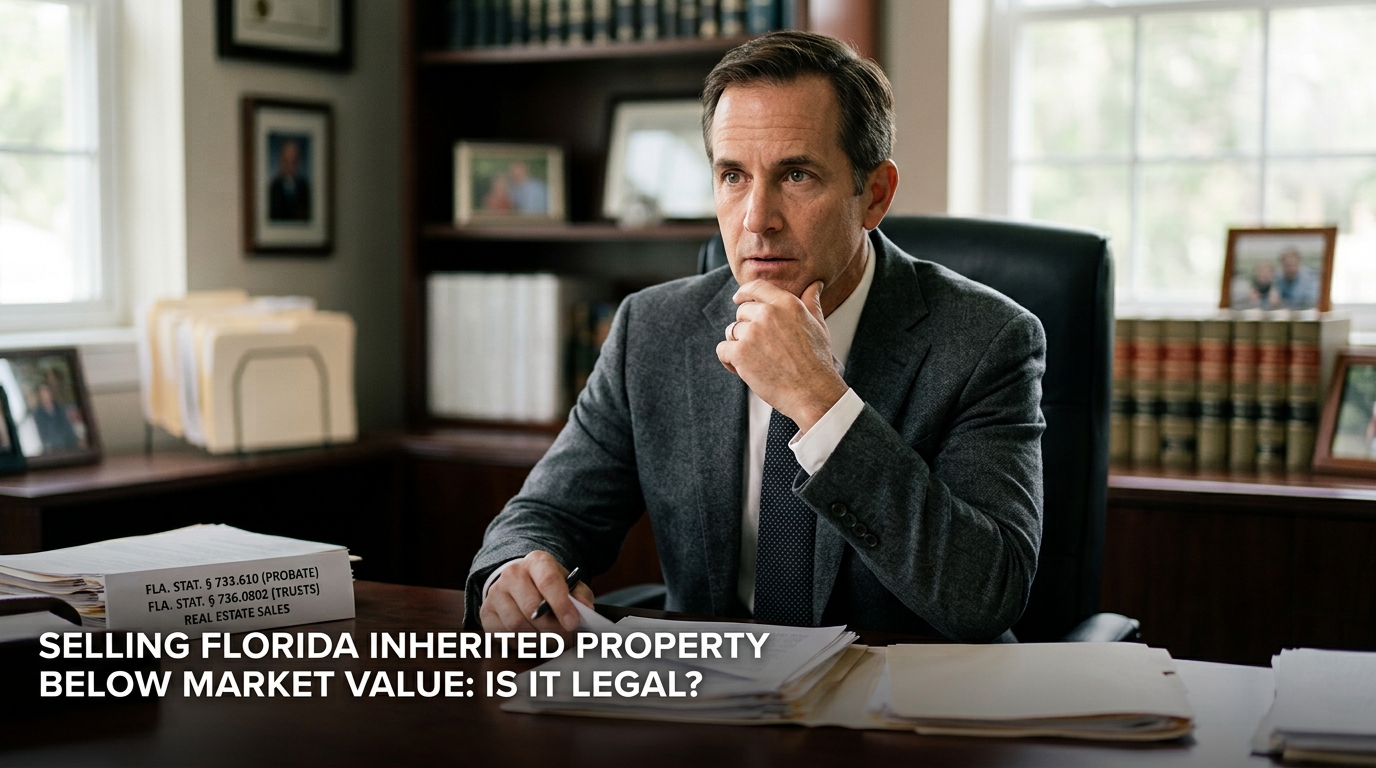
No. Under Fla. Stat. § 733.610 (Probate) and Fla. Stat. § 736.0802 (Trusts), a fiduciary must administer real estate solely in the best interests of the beneficiaries. A court can void transactions affected by a conflict of interest, such as off-market sales below market value or self-purchases. However, the transaction remains valid if the documents authorize it or if the court approves it after notice to beneficiaries.
What Constitutes Self Dealing in Florida Estate Real Estate?
Self-dealing occurs whenever a Personal Representative or Trustee puts personal financial interests above their duties to estate beneficiaries. This conflict also applies when they prioritize the interests of family, friends, or business associates.
In South Florida real estate litigation, self dealing and fiduciary misconduct typically take several distinct forms:
- Direct Self Purchases. A Personal Representative buys estate property directly from the estate without court approval or written consent from all qualified beneficiaries.
- Insider Sales Below Fair Market Value. Selling property to family, business partner, or closely held LLC at a steep discount compared to a local market appraisals.
- Kickbacks and Dual Agency. A fiduciary violates their duty by accepting unapproved commissions or under-the-table benefits from a buyer or real estate agent. In return, they accept a lower purchase offer that harms the estate
- Failure to Expose Property to the Open Market. A fiduciary commits self-dealing when they refuse to hire a licensed broker or list property on the MLS. Instead, they choose a hasty cash sale that transfers the asset at a fraction of its true market value.
The Legal Framework: Fla. Stat. § 733.610 and § 736.0802
Florida statutory law treats conflicts of interest in real estate transfers with severe scrutiny:
- Fla. Stat. § 733.610 (Probate Estates): Any real estate sale or transaction affected by a conflict of interest is voidable by any interested person. Furthermore, the sale stands only if the will expressly authorizes it or the probate judge approves it after notice.
- Fla. Stat. § 736.0802 (Express Trusts): Establishes the duty of loyalty. A sale of trust property by a trustee for personal account or involving family or associates is presumed affected by a conflict and is voidable by affected beneficiaries.
- Fla. Stat. § 733.609 (Fiduciary Liability): Holds Personal Representatives personally liable for monetary damages resulting from improper exercise of power or breach of fiduciary duty.
How Beneficiaries Can Stop or Void Unlawful Real Estate Sales
If you suspect a Personal Representative or Trustee is preparing to sell, or has already sold, estate real estate in violation of their duties, immediate legal action is required before the property transfers to a third party.
- Emergency Injunctions and Temporary Restraining Orders
If the property is under contract but has not closed, your attorney can file an emergency motion in the Probate Division of the Circuit Court, such as the 17th Judicial Circuit in Broward County, seeking an injunction to freeze the pending transaction. - Recording a Notice of Lis Pendens (Fla. Stat. § 48.23)
Filing a Notice of Lis Pendens in the public land records where the real estate is located alerts title companies, buyers, and lenders that ownership of the property is subject to ongoing litigation. This effectively clouds the title and halts any pending sale or refinancing. - Action to Void the Deed and Quiet Title
If an unauthorized transaction has already closed, beneficiaries can petition the circuit court to declare the deed void under Fla. Stat. § 733.610 or § 736.0802 and return property title to the estate. - Surcharge Claims Against the Fiduciary
When real estate has been transferred to a bona fide purchaser and cannot be recovered, the court can enter a surcharge order against the Personal Representative or Trustee personally. A surcharge forces the fiduciary to pay out of pocket for the difference between the actual sale price and the true fair market value of the property.
Frequently Asked Questions
Can a Personal Representative sell real estate without all beneficiaries agreeing in Florida?
Yes, if the decedent will grants the Personal Representative a broad power of sale or if the probate court grants an order authorizing the sale under Fla. Stat. § 733.613. However, even with authority to sell, the PR remains legally obligated to obtain fair market value and cannot engage in self dealing.
What happens if a Trustee sells trust real estate to a family member?
Under Fla. Stat. § 736.0802(3), a transaction entered into by a trustee with a spouse, sibling, parent, descendant, or agent is legally presumed to be affected by a conflict of interest. Affected beneficiaries can petition the court to void the sale and recover attorney fees from the trustee.
Protect Estate Real Estate with South Florida Counsel
Challenging an improper real estate transaction requires a rapid combination of probate litigation expertise and real estate title knowledge. Reinfeld Cabrera Tison represents beneficiaries, heirs, and interested parties in estate litigation and property disputes across Broward, Miami Dade, Palm Beach, and Monroe counties.
- Office Address: 9625 W Sample Rd, Coral Springs, FL 33065
- Contact Phone: (954) 866.4878 or 954.866.HURT
- Court Venues Served: 17th Judicial Circuit Court (Broward County Courthouse), 11th Judicial Circuit (Miami Dade), and 15th Judicial Circuit (Palm Beach).