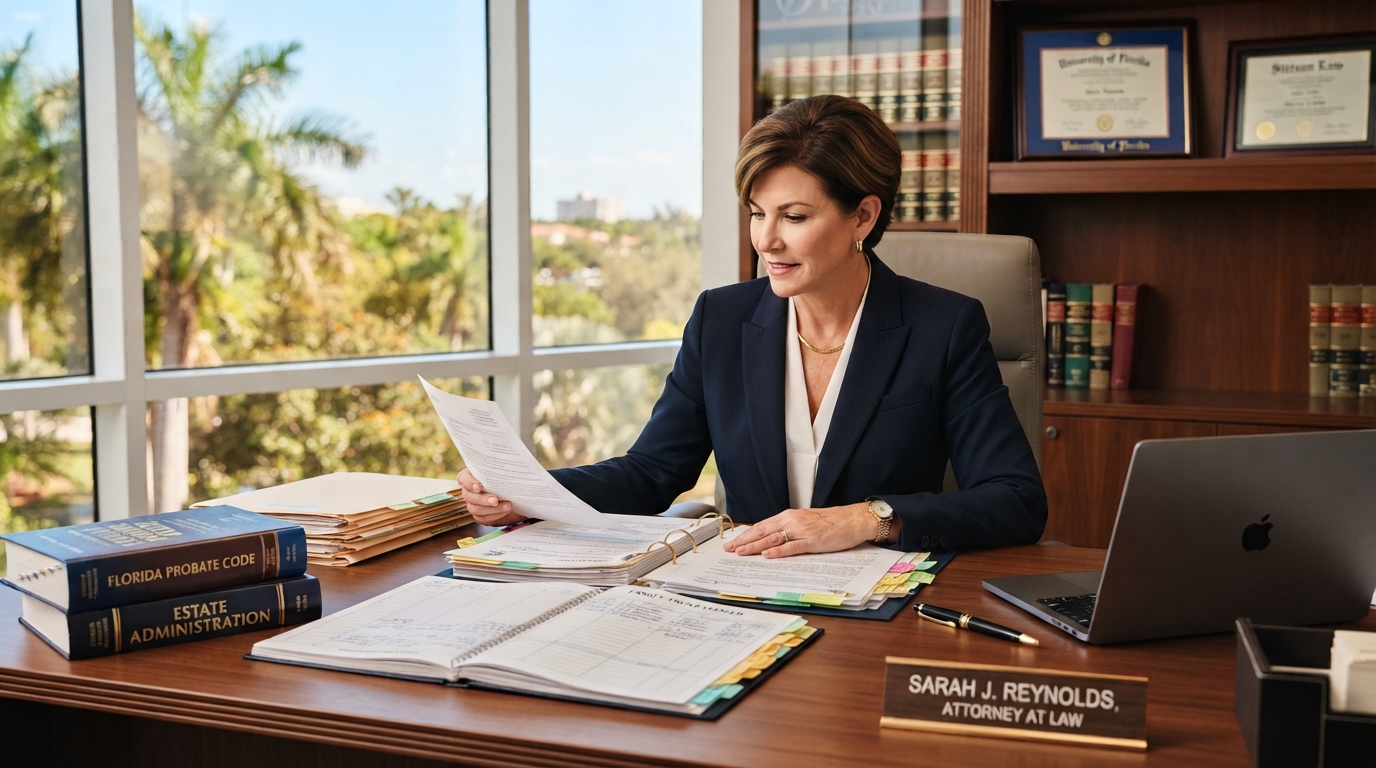
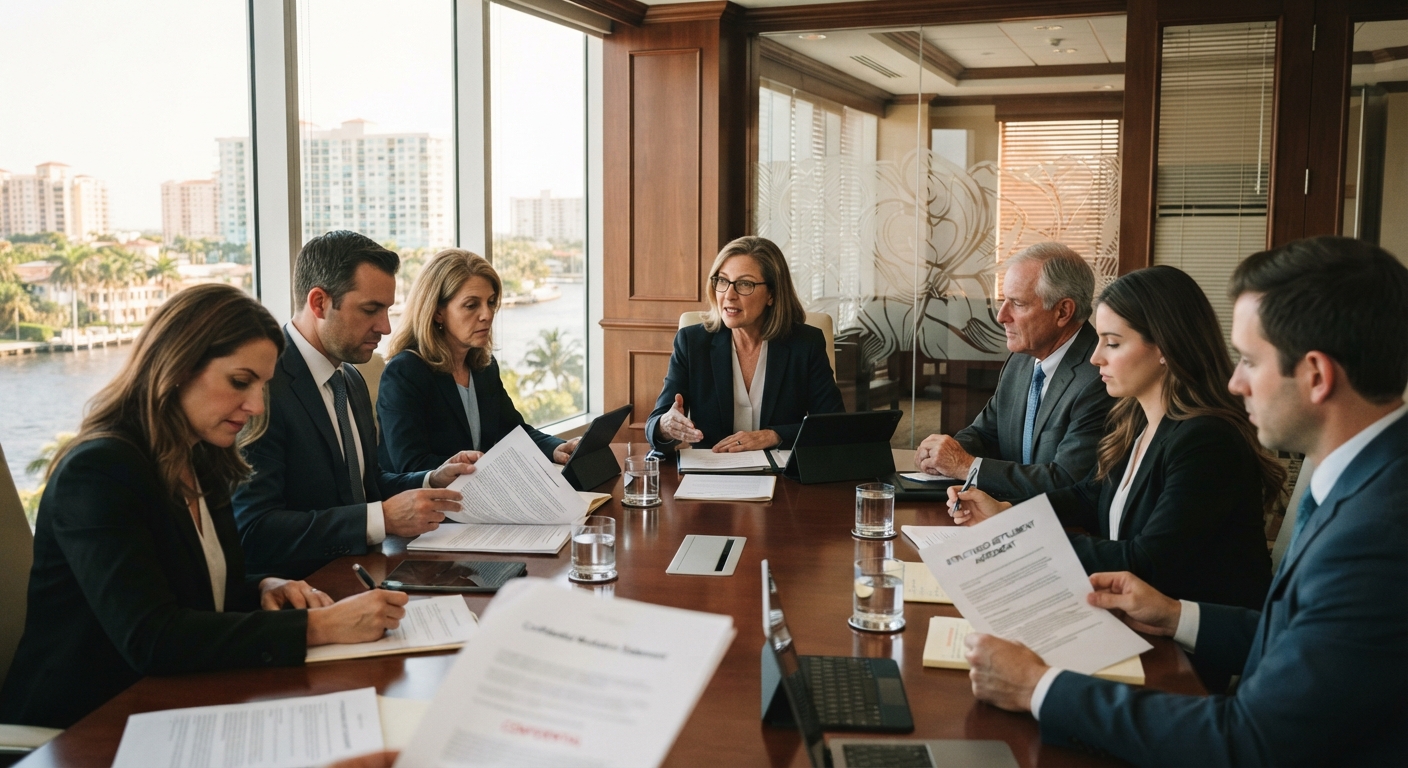
Commercial litigation encompasses legal disputes arising from business operations, corporate governance, and commercial transactions. In Florida, when a breach of contract or business dispute cannot be resolved through pre-suit negotiation, parties litigate through the civil court system or pursue alternative dispute resolution (ADR) under Florida Statutes and 17th Judicial Circuit local rules.
Running a business in Coral Springs and throughout South Florida involves the constant creation and execution of agreements, vendor partnerships, and financial transactions. When a business partner breaches an operating agreement, a key supplier fails to deliver, or a corporate client withholds payment on a substantial invoice, the operational and financial impact can threaten the viability of your enterprise.
For business owners facing a serious dispute, understanding how commercial litigation functions within the 17th Judicial Circuit (Broward County) is critical to protecting corporate assets and mitigating damages.
Many business owners assume commercial litigation is reserved exclusively for Fortune 500 corporations. In practice, commercial litigation covers any civil dispute arising directly from business and commercial activities.
In Broward County courts, commercial litigation typically involves several distinct categories of legal action:
Breach of Written and Oral Contracts: When a party fails to perform any material term of a commercial lease, vendor agreement, service contract, or promissory note without a lawful legal excuse.
Corporate and Partnership Governance Disputes: Internal deadlocks between shareholders, members of a Limited Liability Company (LLC), or partners regarding management control, profit distribution, breach of fiduciary duty, or involuntary dissolution.
Business Torts and Unfair Competition: Claims involving tortious interference with contractual relationships, fraudulent misrepresentation, civil theft, or violations of non-compete and trade secret agreements.
Commercial Debt Recovery and Foreclosure: Pursuing high-value unpaid business accounts receivable, enforcing security interests under the Uniform Commercial Code (UCC), or foreclosing on commercial mortgages.
2. The Statutory Framework: Governing Florida Business Disputes
Commercial litigation in Florida is governed by a combination of statutory frameworks, civil procedure rules, and common law precedent. Two critical statutory pillars govern most commercial actions in the state:
Florida Statutes Chapter 95 (Statutes of Limitations)
Timing is everything in commercial litigation. Waiting too long to address a breach can permanently bar your claim. Under Florida law:
Written Contracts: Actions for breach of a written contract generally carry a 5-year statute of limitations (F.S. 95.11(2)(b)).
Oral Agreements: Actions based on unwritten or oral contracts carry a shortened 4-year statute of limitations (F.S. 95.11(3)(k)).
Open Accounts: Actions to recover on an open account or unstated business debt also carry a 4-year limit (F.S. 95.11(3)(f)).
Florida Statutes Chapter 607 and Chapter 605
For corporate and LLC disputes in Coral Springs, litigation frequently hinges on the interpretation of Florida’s Business Corporation Act (Chapter 607) and Florida Revised Limited Liability Company Act (Chapter 605), which dictate voting rights, derivative actions, and member dissociation standards.
3. The Lifecycle of a Commercial Lawsuit in Broward County
When a business dispute escalates to formal litigation in the 17th Judicial Circuit, the case generally moves through several distinct procedural phases:
Step One: Pre-Suit Demand and Strategic Positioning
Before a complaint is filed, experienced counsel will typically issue a formal commercial demand letter. This document outlines the legal basis of the breach, details damages, and sets a strict deadline for cure or settlement. Under many Florida contracts, sending a proper demand letter is a statutory or contractual prerequisite to recovering attorney’s fees.
Phase Two: Pleadings and Motion Practice
If the dispute is not resolved pre-suit, the plaintiff files a formal Complaint in County or Circuit Civil court, depending on the amount in controversy. The defendant has 20 calendar days to respond, often filing motions to dismiss or asserting affirmative defenses (such as waiver, estoppel, or failure of consideration).
Part Three: Discovery and Expert Analysis
Commercial litigation is document-heavy. During discovery, both sides exchange emails, financial statements, ledgers, and corporate records through Requests for Production, Interrogatories, and Depositions. In complex cases, forensic accountants or industry experts are retained to calculate lost profits and business valuation.
Phase Four: Court-Mandated Mediation
Before a judge will permit a commercial case to proceed to trial in Broward County, the court will universally order the parties to attend mediation. Mediation is a confidential settlement conference overseen by a certified mediator. A high percentage of commercial disputes successfully resolve at this juncture, saving companies substantial trial expenses.
Phase Five: Trial and Judgment Enforcement
If mediation fails, the case proceeds to a bench or jury trial. Once a Final Judgment is secured, the prevailing party utilizes post-judgment discovery, writs of garnishment, or execution sales to collect the awarded funds.
4. Why Pro Se Representation is Prohibited for Florida Businesses
A common and costly mistake made by small business owners is attempting to represent their LLC or corporation pro se (without an attorney) in court.
Under established Florida law and court rules, a corporation or LLC is a distinct legal entity whose owner, member, or officer cannot represent it in court unless that individual is a licensed attorney.. Any pleading or court appearance filed by a non-attorney on behalf of an entity is subject to immediate striking and dismissal, leaving the business entirely unprotected.
5. Shareholder and Partnership Deadlock: When Internal Disputes Threaten Corporate Survival
While breach of contract actions make up a large portion of commercial litigation, they are not the only problem. Some of the most complex and emotionally charged disputes happen internally between business partners, co-founders, or corporate shareholders.
In Florida, when two 50/50 owners disagree fundamentally on corporate direction, financial management, or operational strategy, a corporate deadlock occurs. Left unresolved, deadlock can paralyze the business, drain operating capital, and expose the company to severe operational risks.
Judicial Dissolution and Involuntary Buyouts under Florida Law
When governance breaks down and dispute-resolution clauses fail, owners have to resort to court intervention under Statutes 607 (for Corporations). Or Chapter 605 (for LLCs).
Depending on the corporate structure and governing documents, litigation remedies can include:
Judicial Dissolution: Petitioning the 17th Judicial Circuit to order the formal winding down and liquidation of the company’s assets.
Involuntary Buyout Rights: Forcing a statutory buyout where one faction purchases the shares of the departing member at a court-determined fair value.
Claims for Breach of Fiduciary Duty: Pursuing damages against a managing partner who engaged in self-dealing or excluded co-owners from corporate records.
Having professionally drafted operating agreements with pre-established buyout formulas or tie-breaking mechanisms is the best defense against crippling partnership litigation. However, when those safeguards are missing, aggressive legal strategy in Broward County courts becomes essential to protect your financial investment.
Frequently Asked Questions
What is the difference between a breach of contract and a business tort?
A breach of contract involves the failure to perform a specific promise outlined in a binding agreement. Courts generally limit damages to economic losses contemplated by the contract.. A business tort (such as fraudulent misrepresentation) arises from a breach of a legal duty independent of the contract. This may allow for the recovery of punitive damages.
Can my business recover attorney’s fees if we win a contract lawsuit?
In Florida, the “American Rule” dictates that each party pays its own attorney’s fees unless a fee-shifting provision is explicitly written into the contract or authorized by a specific statute. Ensuring your business agreements contain robust attorney’s fees clauses is essential.
How are commercial disputes handled if my contract has an arbitration clause?
If your agreement includes a mandatory arbitration clause, the dispute will bypass the public court system entirely. Instead, it is submitted to an independent arbitration provider (such as the American Arbitration Association) where an appointed arbitrator hears evidence and issues a binding decision.
Schedule a Consultation with Our Coral Springs Business Attorneys
Protecting your enterprise from breach of contract, partnership deadlock, or commercial disputes requires decisive legal strategy.