

Estate planning is the process of deciding how your property, financial affairs, and health care decisions should be handled during your lifetime, during periods of incapacity, and after your death.
For families in Coral Springs and throughout Broward County, an estate plan may include a will, revocable trust, durable power of attorney, health care surrogate designation, living will, preneed guardian designation, or other documents depending on the person’s circumstances.
There is no single set of documents that every person needs. The important question is whether the plan addresses the situations that could actually affect you and your family.
What Does an Estate Plan Actually Do?
A basic estate plan addresses two different periods of life.
- During your lifetime, it can establish who may manage financial matters or make health care decisions if you become unable to make those decisions yourself.
- After your death, it can determine who receives your property, who administers your estate, who manages assets held in trust, and how certain property should be transferred.
Those functions are handled by different documents. A will, for example, does not give someone authority to manage your finances while you are alive. A health care surrogate designation does not determine who inherits your house. A durable power of attorney does not replace a will.
Understanding those distinctions is one of the foundations of effective estate planning.
1. Last Will and Testament
A last will and testament allows you to state how certain property should be distributed after your death and nominate a personal representative to administer your estate.
A will can also address other matters, including the nomination of a guardian for minor children.
But there is an important misconception to avoid:
Having a will does not automatically avoid probate.
A will generally becomes effective through the probate process when it governs probate assets. Property may instead pass outside probate through mechanisms such as joint ownership, beneficiary designations, or a properly funded trust.
Recent Florida litigation illustrates how specific the probate process can become. In Property Solutions Powerhouse, LLC v. Nelson, decided by Florida’s Second District Court of Appeal in 2025, the court addressed a dispute involving a lost will, probate, notice to interested persons, and Florida homestead. The court ultimately upheld the administration and concluded that the decedent, who had no surviving spouse or children, could devise her homestead to the named beneficiary.
The case is a useful reminder that having a will does not mean every question about an estate is automatically settled. The validity of the will, the identity of interested persons, the nature of the property, and Florida’s homestead rules can all matter.
2. Revocable Living Trust
A revocable living trust allows a person to place assets into a trust during life and establish instructions for how those assets should be managed during incapacity and distributed after death.
The person creating the trust can generally retain control while capable and can name a successor trustee to take over management if necessary.
A revocable trust can also help keep properly funded trust assets outside ordinary probate administration. But the trust has to be properly funded. Simply signing a trust agreement does not automatically transfer every asset into it.
The trust is therefore only one part of an estate plan. Its effectiveness depends on how the document is structured, which assets are transferred to it, and how the rest of the estate plan is coordinated.
For a more detailed explanation, see What Is a Revocable Living Trust in Florida?
3. Durable Power of Attorney
A durable power of attorney allows you to authorize another person, called an agent, to act on your behalf within the authority granted by the document.
In Florida, a power of attorney is durable when it contains language showing that the authority continues despite the principal’s subsequent incapacity. Florida law also establishes specific execution requirements, including signing by the principal and two subscribing witnesses and acknowledgment before a notary in the circumstances specified by statute.
The scope of an agent’s authority depends on the powers granted in the document and Florida law.
This is why simply assuming that a spouse or adult child can handle everything for you can create problems. Ownership of a bank account or property does not automatically give another person authority to act on your behalf concerning assets or legal matters that belong to you individually.
A properly prepared power of attorney can be particularly important when someone becomes incapacitated and needs another person to handle financial or legal matters without waiting for a guardianship proceeding.
4. Health Care Surrogate Designation
A health care surrogate designation allows you to name someone to make health care decisions for you if you become unable to make those decisions yourself.
Florida law provides that a designated surrogate may have authority to make health care decisions during the principal’s incapacity, subject to the principal’s instructions and any limitations placed on the surrogate’s authority.
The designation is different from a living will.
- A health care surrogate designation identifies who may make health care decisions.
- A living will communicates your wishes concerning life prolonging procedures in specified medical circumstances.
Those documents can work together.
Florida law also provides a mechanism for judicial review when an interested person believes, among other things, that a surrogate’s decision conflicts with the patient’s known wishes, that the advance directive is ambiguous, or that the surrogate has abused their authority.
5. Living Will
A Florida living will allows a competent adult to state preferences concerning life prolonging procedures if the person later has a terminal condition, end stage condition, or is in a persistent vegetative state.
Florida law establishes specific execution requirements and provides that a properly executed living will creates a rebuttable presumption of clear and convincing evidence of the person’s wishes.
A living will therefore serves a different purpose from a health care surrogate designation.
The surrogate is the person who may make health care decisions within the authority granted.
The living will communicates your own instructions about life prolonging treatment in the circumstances covered by the document.
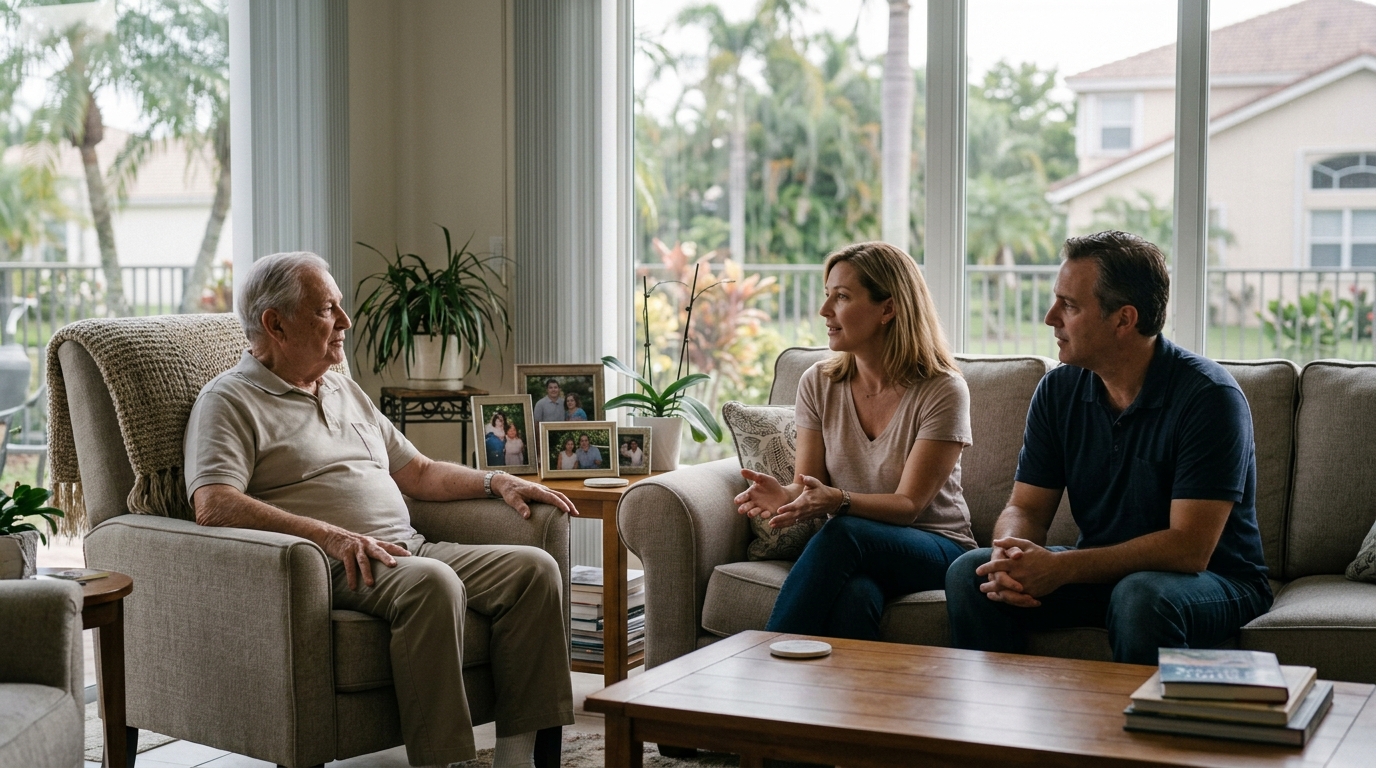
6. Preneed Guardian Designation
Florida law also allows a competent adult to name a preferred guardian in advance.
A preneed guardian designation is a written declaration naming the person the individual wants to serve as guardian if a court later determines that the individual is incapacitated. Florida law requires the declaration to be signed in the presence of at least two witnesses. If an incapacity proceeding is later filed, the declaration creates a rebuttable presumption that the designated person should serve, although the court is not required to appoint someone who is unqualified.
The distinction is important: a preneed guardian designation does not eliminate the possibility of a guardianship proceeding. Instead, it allows the individual to express a preference before incapacity occurs.
When Estate Planning Documents Have to Work Together
Estate planning documents are most useful when they form a coordinated plan rather than a collection of unrelated forms.
For example:
- A will can address probate assets and nominate a personal representative.
- A revocable trust can govern assets properly transferred to the trust.
- A durable power of attorney can authorize an agent to handle financial and legal matters during incapacity.
- A health care surrogate designation can identify someone to make health care decisions.
- A living will can communicate wishes concerning life prolonging procedures.
- A preneed guardian designation can identify a preferred guardian if a guardianship proceeding becomes necessary.
The documents can also interact with beneficiary designations, jointly owned property, retirement accounts, insurance policies, business interests, and real estate.
That is why changing one document without reviewing the rest of the plan can create unintended results.
A Florida Case Shows Why Advance Planning Matters
A recent Florida appellate decision provides an unusually clear example of how these documents can operate together.
In Frank v. Frank, decided by Florida’s Fourth District Court of Appeal in 2026, a woman had executed a durable power of attorney, health care surrogate designation, trust, and will before a guardianship dispute arose. The documents named her daughter, Alicia, to manage her affairs and established her intentions concerning the family home and estate.
The trial court later appointed a different person despite those prior designations. The Fourth District Court of Appeal reversed because the lower court had failed to make the specific findings required to overcome the statutory presumption supporting the woman’s previously expressed choice. The appellate court emphasized that the record showed she had repeatedly confirmed her estate planning decisions before the guardianship dispute.
The case does not mean that a person’s chosen agent or guardian can never be replaced. It demonstrates something more practical: advance planning can provide evidence of a person’s wishes before a family dispute reaches court.
An older Florida Fourth District case, Martinez v. The Guardianship of J. Alan Smith, similarly involved a person who had executed a health care surrogate designation, preneed guardian designation, and durable power of attorney before suffering a serious injury.
The appellate court reversed because the trial court had not made the required finding that the person’s chosen representative was contrary to the ward’s best interests.
What Happens If You Do Nothing?
If you die without a valid will, Florida’s intestacy laws determine who inherits property subject to those laws.
If you become incapacitated without appropriate planning, family members may have to rely on whatever legal mechanisms are available under the circumstances. A guardianship proceeding may become necessary for some decisions, although Florida law recognizes advance directives and other planning tools that can sometimes provide alternatives or affect the scope of a guardianship.
The important point is not that everyone needs every available document.
It is that leaving the decisions entirely to default legal rules may produce a result different from the one you would have chosen yourself.
Estate Planning After Marriage, Divorce, or Other Major Changes
An estate plan should not necessarily remain unchanged for decades.
A major life event may require a review of:
- Your will
- Revocable trust
- Beneficiary designations
- Durable power of attorney
- Health care surrogate
- Living will
- Preneed guardian designation
- Ownership of real estate
- Retirement accounts
- Life insurance
- Business interests
Divorce is a particularly important example. Florida law contains rules affecting fiduciary appointments and certain estate planning documents after dissolution proceedings begin or a final judgment is entered. The Florida Bar has noted that durable powers of attorney and health care surrogate designations require particular attention during divorce planning.
A plan should also be reviewed when a beneficiary or fiduciary dies, a child reaches adulthood, substantial assets are acquired or sold, or the person’s family circumstances change.
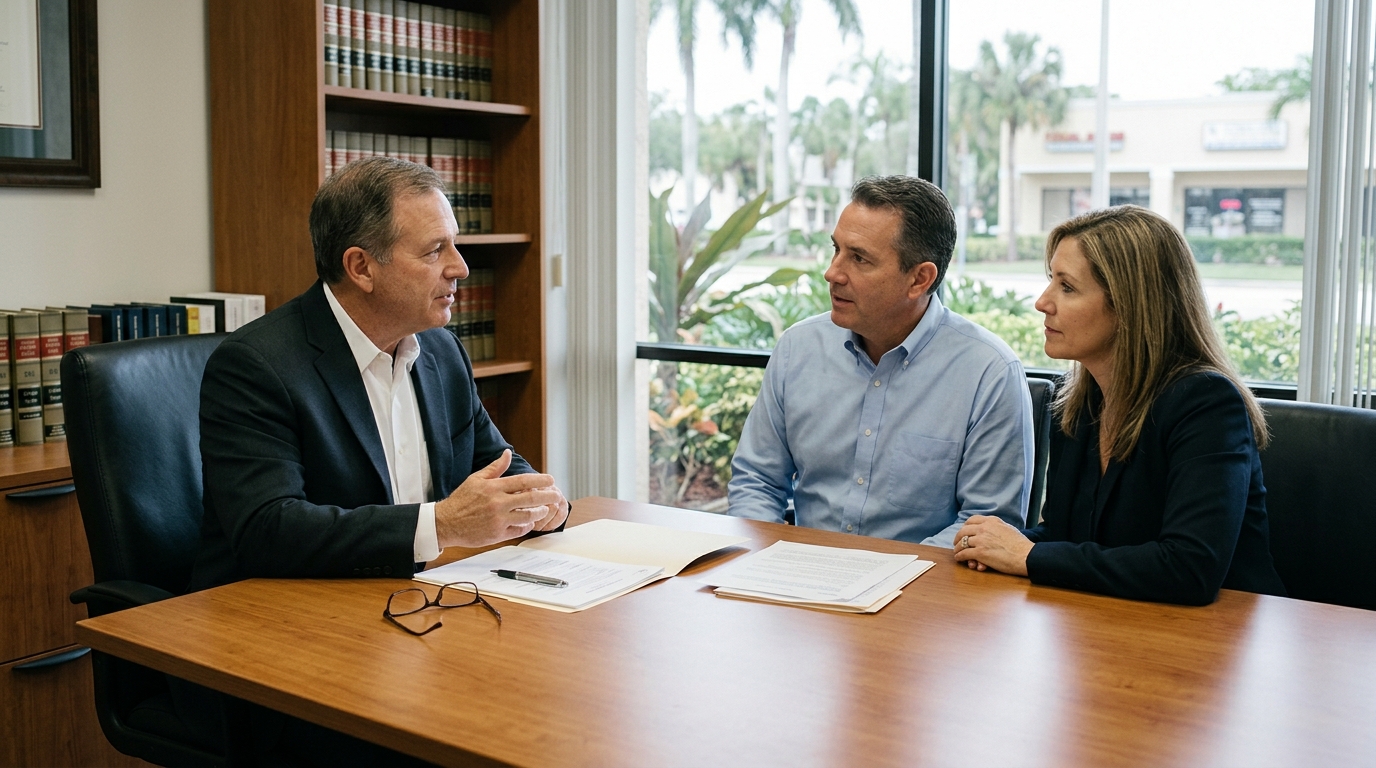
A Word From Stuart G. Reinfeld
“The best estate plan is one that makes the owner’s intentions clear before the family is forced to interpret them under pressure. A trust can provide that structure, but the document and the ownership of the assets need to work together.”
That principle applies beyond trusts. Estate planning works best when the documents, property ownership, beneficiary designations, and the person’s actual wishes are coordinated.
Common Estate Planning Questions
Do I need a will if I have a revocable living trust?
- Often, yes. A will can serve purposes that a revocable trust does not, including addressing assets that were never transferred to the trust and nominating a personal representative or guardian where appropriate. The specific documents needed depend on the estate plan.
Does a will avoid probate in Florida?
- No. A will generally directs the distribution of probate assets through the probate process. Some property may pass outside probate through trusts, beneficiary designations, joint ownership, or other mechanisms.
What is the difference between a living will and a health care surrogate?
- A health care surrogate designation identifies someone who can make health care decisions within the authority granted when you cannot make them yourself. A living will communicates your wishes concerning life prolonging procedures in the circumstances covered by Florida law.
Does my spouse automatically have authority to manage everything if I become incapacitated?
- Not necessarily. Marriage and joint ownership do not automatically give one spouse every legal authority that a properly executed power of attorney or health care designation can provide.
Can I choose who I want as my guardian?
- Florida allows a competent adult to designate a preferred preneed guardian. The designation creates a rebuttable presumption in favor of the named person, but the court can decline to appoint someone who is unqualified or whose appointment is otherwise contrary to the applicable legal standard.
When should I review my estate plan?
- Reviewing an estate plan after marriage, divorce, a death in the family, the birth or maturation of children, a major change in assets, a change in beneficiaries, or a significant change in your circumstances can help keep the plan consistent with your current wishes.
Estate Planning for Families in Coral Springs and Broward County
Estate planning is not limited to deciding who receives your property after death. For families in Coral Springs, Broward County, and surrounding South Florida communities, an effective plan can also address incapacity, health care decisions, financial management, real estate, beneficiary designations, trusts, and the administration of an estate.
The appropriate documents depend on the person’s family circumstances, property, financial affairs, and wishes.
A review of an existing plan can also be useful when the documents were prepared years ago or when major changes have occurred in the family or the assets involved.
If you are creating or reviewing an estate plan in Coral Springs or Broward County, an attorney can help evaluate how the different documents and ownership arrangements fit together under Florida law.