

You moved to Florida. Your will is still in a drawer in New Jersey, your power of attorney names your brother in Pennsylvania, and your new house is in Coral Springs.
Do you need to start your estate plan over?
Usually, that is not the right way to think about it.
Florida recognizes certain wills executed in another state if they were valid where they were signed. The same is true for certain powers of attorney executed elsewhere. Trusts can also remain valid after a move, depending on how and where the trust was created and what its terms provide.
The more useful question is different:
Does the estate plan you created before moving to Florida still work the way you intended?
That matters because your documents may have been written around a different home, different state laws, different property, different family circumstances, and different people serving as fiduciaries.
For someone who has recently settled in Coral Springs, Broward County, or elsewhere in South Florida, the move itself may be the least important part of the review. What matters is what changed along with it.
Your old will may still be valid
Moving from another state does not automatically mean that your will has to be rewritten.
Florida law provides that a will executed by a nonresident can be valid in Florida if it was valid under the law of the state or country where it was executed, subject to the statute’s exceptions.
That answers one question.
It does not answer the more important one.
Imagine that you signed your will fifteen years ago while living in New Jersey. At the time, you owned a house there, your children were young, your sister lived nearby, and you expected your estate to be handled there.
Now you live in Coral Springs. You sold the New Jersey house. You own a Florida home. One child lives in Georgia and another lives in California. Your sister has retired and no longer wants to serve as your personal representative.
The old will may still be a valid document.
It may also be a poor description of the life you have now.
Those are two different issues.
The Florida house can change the analysis
One of the biggest reasons a Florida move deserves an estate planning review is the home itself.
Florida’s homestead rules are unusually important in estate planning. The Florida Constitution restricts the ability of a homeowner to devise homestead property when the owner is survived by a spouse or minor child. Florida law contains corresponding restrictions on the devise of homestead.
That can create a problem for someone who arrives in Florida with an estate plan designed around the rules of another state.
Consider a simple example.
A person moves to Coral Springs, buys a home, and updates a will saying that the house should pass to a particular child. The person is married and has a minor child.
The sentence in the will may look perfectly clear.
That does not necessarily mean the person can dispose of the Florida homestead in that manner.
Florida’s homestead rules can control what happens to the property regardless of what the old estate plan appears to say.
This is one reason an estate plan should be reviewed after a move rather than simply filed away because the documents themselves remain technically valid.
What if your power of attorney was signed somewhere else?
The same question comes up with powers of attorney.
Florida law provides that an out-of-state power of attorney can be valid in Florida when it complied with the law of the state where it was executed.
So an older power of attorney is not automatically worthless because you crossed the Florida border.
But there is a practical issue that is easy to overlook.
The person you appointed may no longer be the person you want handling your affairs.
Your power of attorney might name a sibling who lives 1,200 miles away. Your adult child might now be the person who actually helps you with financial matters. Or the person you originally chose may have become unavailable, died, or simply no longer be the right choice.
There is also a difference between an instrument being legally valid and a particular bank, title company, or other institution being willing to accept it without additional questions.
That distinction matters when the power of attorney may be used for Florida real estate or other significant transactions. Florida’s statute specifically addresses the acceptance of certain out-of-state powers of attorney and permits a third party to request a legal opinion in some circumstances.
A move to Florida is therefore a good reason to find the original document, identify the current agent and successor agents, and determine whether the document still gives them the authority you intended.
You already have a trust. Does Florida change it?
Trusts require a little more care because there is no single answer that applies to every trust.
Florida law recognizes certain trusts created under the law of another jurisdiction. A trust that was not created by a will can generally be validly created if its creation complied with the law of the jurisdiction where the trust instrument was executed or where the settlor was domiciled when the trust was created.
But the question of which state’s law governs the trust can be separate from the question of whether the trust was validly created.
Florida law looks first to the governing-law provisions in the trust when they are valid and supported by a sufficient connection to the designated jurisdiction. If the trust does not contain a controlling designation, other rules determine the applicable law.
The trust’s principal place of administration can matter too. Florida law addresses how that location is determined and allows certain trusts to change their principal place of administration when the statutory requirements are satisfied.
In practical terms, someone who moves to Florida should not assume either of these things:
“My old trust is invalid now.”
or
“Nothing about my trust needs to be examined.”
The actual trust document matters.
So does the property inside it, the trustee, the beneficiaries, the governing-law clause, and where the trust is now being administered.

The bigger problem may be the people named in your documents
Sometimes the move to Florida exposes a problem that has nothing to do with state law.
Look at the names in the documents.
Who is your personal representative?
Who is the successor personal representative?
Where is your trustee?
Who takes over if your first choice cannot serve?
Which one has your financial power of attorney?
Who receives your property?
These choices can become outdated surprisingly quickly.
A will written when your children were teenagers may still contain their correct names but give responsibility to a relative who is now elderly. A trust created before a second marriage may still refer to a former family structure. A beneficiary designation on a retirement account may tell a completely different story from the will sitting in your safe.
That last point is particularly important because an estate plan is not contained in one document.
Your will may control some property. A trust may control other property. Beneficiary designations can control retirement accounts, life insurance, and other assets. Joint ownership can affect what happens to property after death.
Moving states is therefore a useful moment to compare the documents against the actual ownership of your assets.
What if you still own property in the state you left?
Florida may be your new home without being the only place where you own property.
You might have kept a rental property in New York, a vacation home in North Carolina, land in Georgia, or a family property that has been in your name for decades.
That creates a different question.
Where is the property, and how is it owned?
A Florida estate plan may need to account for property located elsewhere. Depending on the property and how it is titled, administration in another jurisdiction may still be necessary after death.
This is one reason a new Florida resident should bring the actual asset picture into the estate planning review. Looking only at the will can miss the problem.
A person can have a perfectly coherent will and still have an estate that is difficult to administer because the ownership of the assets does not match the plan.
What should you actually review after moving to Florida?
You do not necessarily need to replace every document.
Start with the documents and facts that changed.
- Your will: Check the beneficiaries, personal representative, backup choices, and the way your property is described.
- Your Florida home: Determine whether the property is your homestead and whether Florida’s homestead restrictions affect the plan.
- Your trust: Check its governing law, trustee, beneficiaries, assets, and principal place of administration.
- Your power of attorney: Confirm that the agent and successor agents are still the people you want making financial decisions.
- Your beneficiary designations: Compare retirement accounts, insurance policies, and other accounts with the plan in your will and trust.
- Your family: Marriage, divorce, new children, deaths, and changes in relationships can matter just as much as the change of address.
- Your other property: Identify real estate and significant assets that remain outside Florida.
The goal is not to produce a new stack of documents simply because you have a new address.
The goal is to make sure the documents, ownership of your property, and your current circumstances are telling the same story.
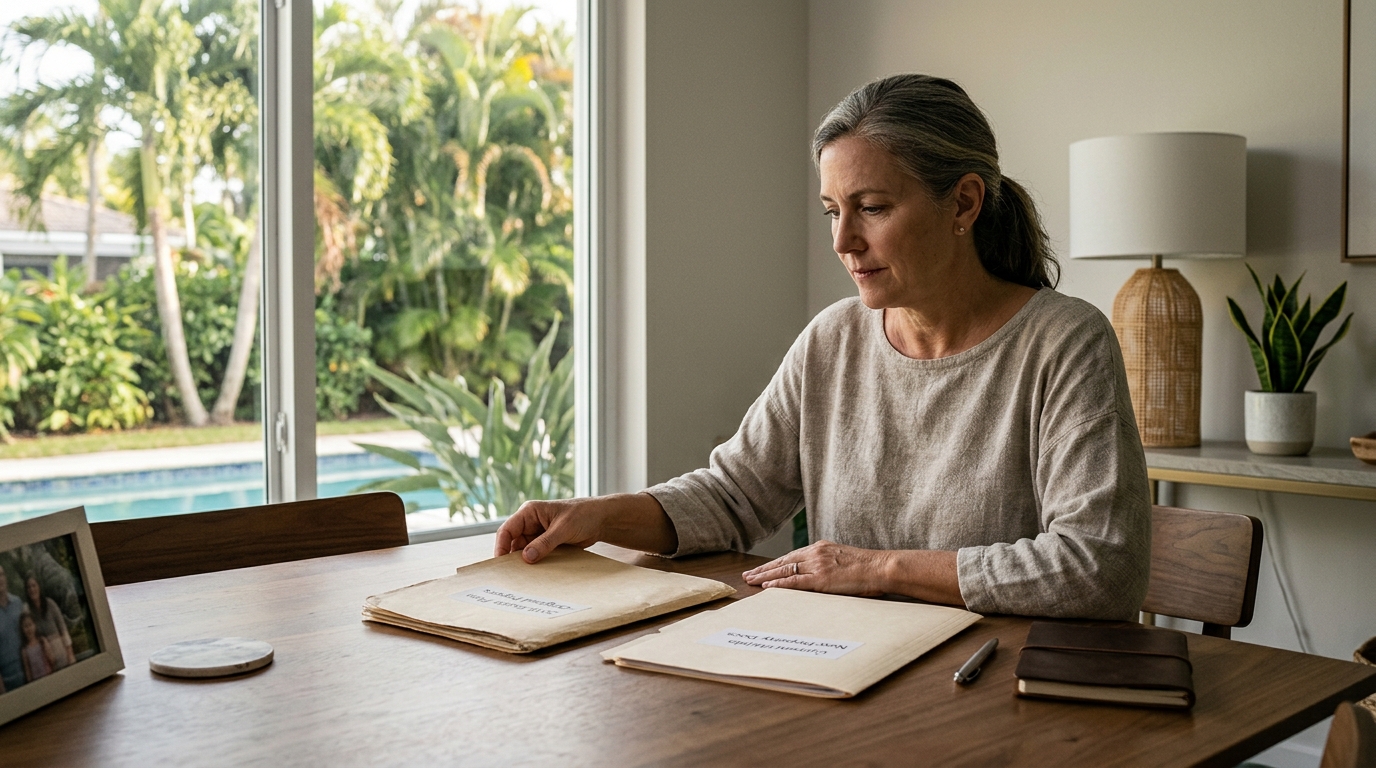
A Florida move is a good time to ask a different question
People often ask, “Is my old will still valid in Florida?”
That is a reasonable starting point.
It is not where the review should end.
Florida law gives substantial recognition to properly executed estate planning documents from other jurisdictions. But validity is only one piece of the problem. A document can survive a move perfectly well while becoming less useful because the people, property, or circumstances behind it have changed.
For a new Florida resident, the most important question is usually whether the existing plan still matches the life that exists now.
That is particularly worth examining when you have purchased a Florida homestead, married or divorced, had children, changed fiduciaries, acquired substantial property, or retained real estate in another state.
Frequently Asked Questions
Does moving to Florida invalidate an out-of-state will?
- Not necessarily. Florida law recognizes certain wills executed by nonresidents when the will was valid under the law of the state or country where it was executed.
Do I need a new will after moving to Florida?
- Not automatically. Whether a new will is appropriate depends on the existing document, your family circumstances, your property, and Florida-specific issues such as homestead.
Can Florida recognize a power of attorney from another state?
- Florida law provides for recognition of certain powers of attorney executed in another state when they complied with the law of the state where they were executed.
Does my trust remain valid if I move to Florida?
- It may. Florida recognizes certain trusts created under the law of another jurisdiction. The trust’s governing-law provisions, creation, administration, and assets can all matter.
Does buying a Florida home affect my estate plan?
- It can, especially if the property qualifies as your Florida homestead. Florida’s Constitution and statutes place restrictions on the devise of homestead in certain family situations.
What should I do with my estate plan after moving to Florida?
- Have the existing documents reviewed against your current circumstances. Pay particular attention to your Florida home, beneficiaries, fiduciaries, beneficiary designations, trusts, and property that remains in another state.