Selecting an estate planning and probate attorney in Coral Springs requires evaluating local Broward County courtroom experience, mastery of Florida trust statutes (Fla. Stat. Chapter 736), and integrated knowledge of Florida constitutional homestead laws (Fla. Const. art. X, § 4).
A qualified local attorney ensures wills, revocable trusts, and powers of attorney comply with strict execution requirements while guiding personal representatives through formal or summary probate proceedings in the 17th Judicial Circuit Court of Broward County.
Critical Evaluation Framework for Local Legal Counsel
Florida Statutory Compliance
Fla. Stat. Chapter 736 (Trust Code)
Fla. Stat. Chapter 709 (Durable Power of Attorney)
Fla. Stat. Chapter 765 (Health Care Directives)
Broward Judicial Experience
17th Judicial Circuit Court Rules
Local Broward Clerk Filing Protocols
Probate Division Judicial Orders
Reinfeld & Cabrera Legal Representation Hub
Securing your family’s financial future, protecting physical property, and ensuring seamless asset distribution requires thoughtful legal strategy. While online document assembly services promise cheap, automated legal templates, generic forms regularly fail under Florida probate court scrutiny.
Florida estate law involves intricate statutory execution rules, unique real estate protections, and strict probate filings across Broward County. Understanding how to choose an experienced local attorney is the single most important step in protecting your life savings and preserving your legacy.
5 Essential Standards When Evaluating Coral Springs Estate Legal Counsel
1. Direct Mastery of Florida Specific Estate and Trust Statutes
Florida law does not follow generic federal templates or out of state legal norms. Your legal counsel must maintain a daily transactional practice grounded in specific Florida legislation:
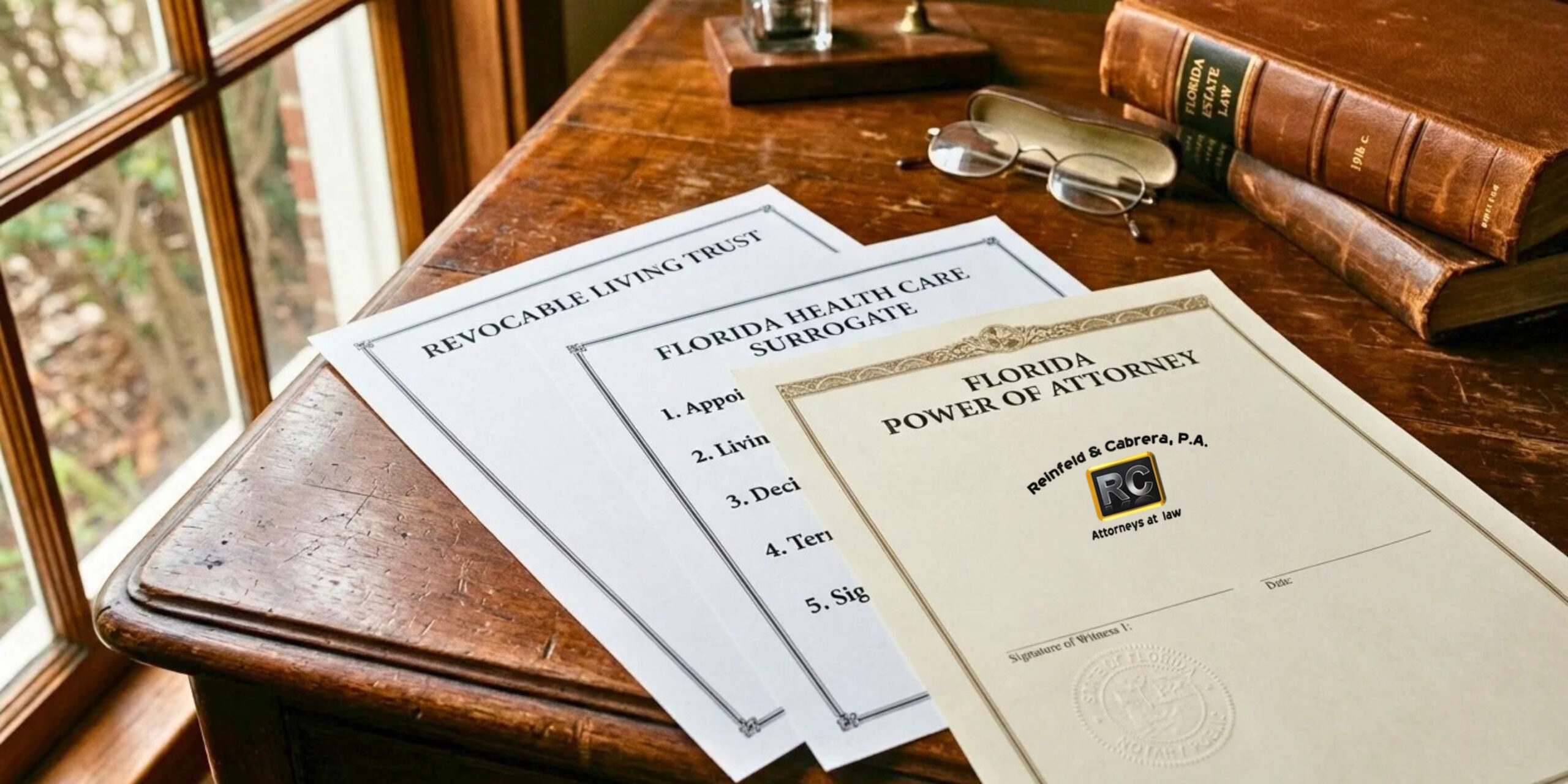
Florida Trust Code (Fla. Stat. Chapter 736): Regulates the creation, amendment, revoking, and administration of revocable and irrevocable trusts. It establishes strict fiduciary standards for named trustees and protects beneficiary distribution rights.
Florida Power of Attorney Act (Fla. Stat. Chapter 709): Governs financial durable powers of attorney. Under Florida law, general sweeping clauses are ineffective unless specific statutory superpowers under Fla. Stat. § 709.2114 are explicitly initialed by the principal.
Florida Probate Code (Fla. Stat. Chapters 731 through 735): Controls the judicial validation of wills, opening of estates, creditor notification periods, and final asset distribution.
Florida Health Care Advance Directives (Fla. Stat. Chapter 765): Outlines the legal appointment of health care surrogates, living wills, and anatomical gifts.
2. Local Courtroom and Judicial Experience in Broward County
Estate planning and probate are deeply localized practice areas. An attorney who regularly represents clients before the 17th Judicial Circuit Court in Fort Lauderdale understands local judicial preferences, divisional filing protocols, and clerk processing workflows.
When a loved one passes away, local judicial experience ensures that petitions for administration, orders appointing personal representatives, and letters of administration move through the Broward County probate court system without administrative rejections or unnecessary delays.
For the vast majority of Coral Springs and Parkland homeowners, primary residential real estate represents their largest asset. Under Florida Constitution Article X, Section 4, primary residential property enjoys unique protection from forced sale by creditors.
However, Florida homestead devise restrictions strictly limit how a primary home can be left in a Will or Trust if the owner is survived by a spouse or minor children. An experienced Coral Springs attorney knows how to structure deeds, trusts, and spousal waivers to preserve homestead protections while avoiding title clouding or unintended tax consequences.
Florida Constitutional Homestead Advantages
Creditor Exemption ProtectionProtects primary residential equity from forced sale by judgment creditors under Florida law.
Property Tax Cap LimitsLocks annual assessed property value increases under Florida Save Our Homes assessment caps.
Strict Devise RestrictionsProtects rights of surviving spouses and minor children regarding real estate transfers.
4. Comprehensive Probate Avoidance and Administration Capabilities
A complete legal counselor does not simply hand you a stack of paper and send you on your way. Your attorney must possess expertise across both proactive planning and reactive administration:
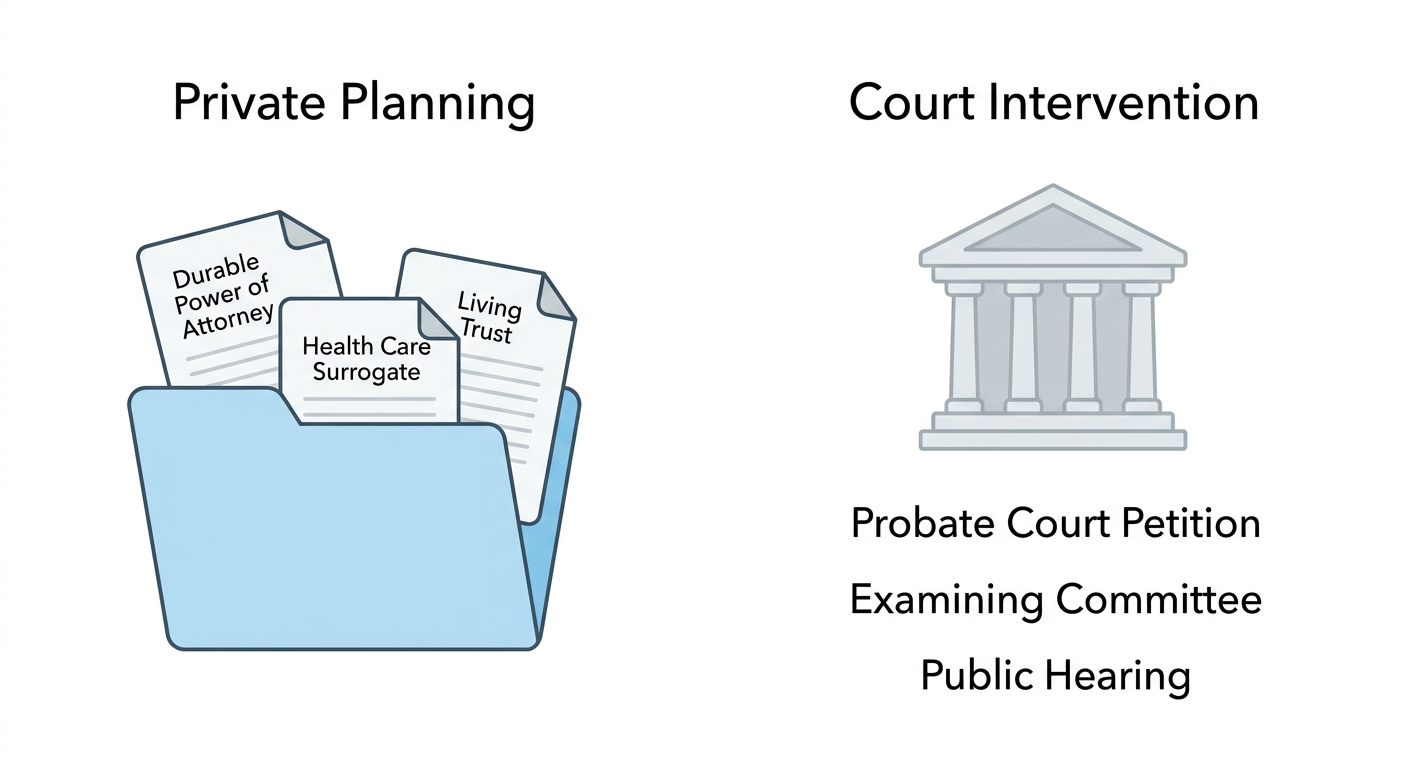
Incapacity Avoidance: Structuring financial durable powers of attorney and health care surrogates to prevent involuntary adult guardianship court hearings under Fla. Stat. Chapter 744.
Summary Probate Administration: Navigating expedited court proceedings under Fla. Stat. Chapter 735 for estates under $75,000 or where the decedent has been deceased for more than two years.
Formal Probate Administration: Managing complex court supervised estates requiring personal representative appointments, formal notice to creditors, estate accounting, and tax releases.
5. Proven Community Reputation and Legal Continuity
Estate planning is an ongoing lifetime relationship. As your family grows, assets change, and Florida tax laws evolve, your estate plan requires periodic reviews.
Recognized over the years by local Coral Springs community awards, Reinfeld & Cabrera, P.A. has established a decade long legacy of personal legal representation across Broward County. Choosing a stable, locally rooted firm ensures that the attorneys who drafted your trust will be available decades later to guide your loved ones through its execution.
Comparing Online DIY Legal Forms vs. Local Attorney Representation
Operational Feature
Online DIY Document Generator
Local Coral Springs Legal Counsel
Florida Execution Compliance
High risk of improper witnessing or notarization
Strict compliance with Fla. Stat. § 732.502
Homestead Protection Integration
Generic forms ignore Florida constitutional restrictions
Customized deed drafting and tax cap protection
Local Probate Court Knowledge
Zero court presence or regional administrative support
Direct filing experience in 17th Judicial Circuit Court
Fiduciary Guidance
No legal advice on selecting agents or trustees
Professional counseling on trustee appointment
Custom Contingency Planning
Rigid templates that fail during complex family changes
Bespoke trust structures adapted to family dynamics
Frequently Asked Questions
Why shouldn’t I use a basic online Will template in Florida?
Florida law requires strict execution formalities under Fla. Stat. § 732.502, including execution in the presence of two signing witnesses and a qualifying notary public. Online templates routinely miss unique Florida requirements, such as statutory power of attorney superpowers or constitutional homestead devise limits, rendering documents invalid or triggering expensive probate disputes.
What is the difference between summary administration and formal probate in Broward County?
Summary administration is an abbreviated court proceeding available if the total value of probate assets subject to administration is $75,000 or less, or if the decedent has been deceased for over two years. Formal administration is required for larger estates and involves appointing a personal representative to marshal assets, clear creditor claims, and manage distributions.
How often should I review my Coral Springs estate plan with an attorney?
You should review your estate plan every three to five years, or immediately following major life events such as marriage, divorce, the birth of a child, purchase of new real estate, significant changes in financial assets, or relocation to Florida from another state.
Can an out of state Will be used in Florida?
A Will executed in another state can be valid in Florida if it strictly met the execution laws of the state where it was signed. However, out of state Wills often name non resident personal representatives who may not qualify under Florida eligibility rules (Fla. Stat. § 733.304) or fail to utilize Florida specific probate shortcuts.
Dedicated Estate Planning and Probate Counsel in Coral Springs
At Reinfeld & Cabrera, P.A., lead attorney Alan J. Reinfeld and our legal team deliver tailored estate planning and probate solutions to South Florida families. We take the time to understand your personal goals, protect your real estate assets, and provide clear legal guidance through every stage of life.
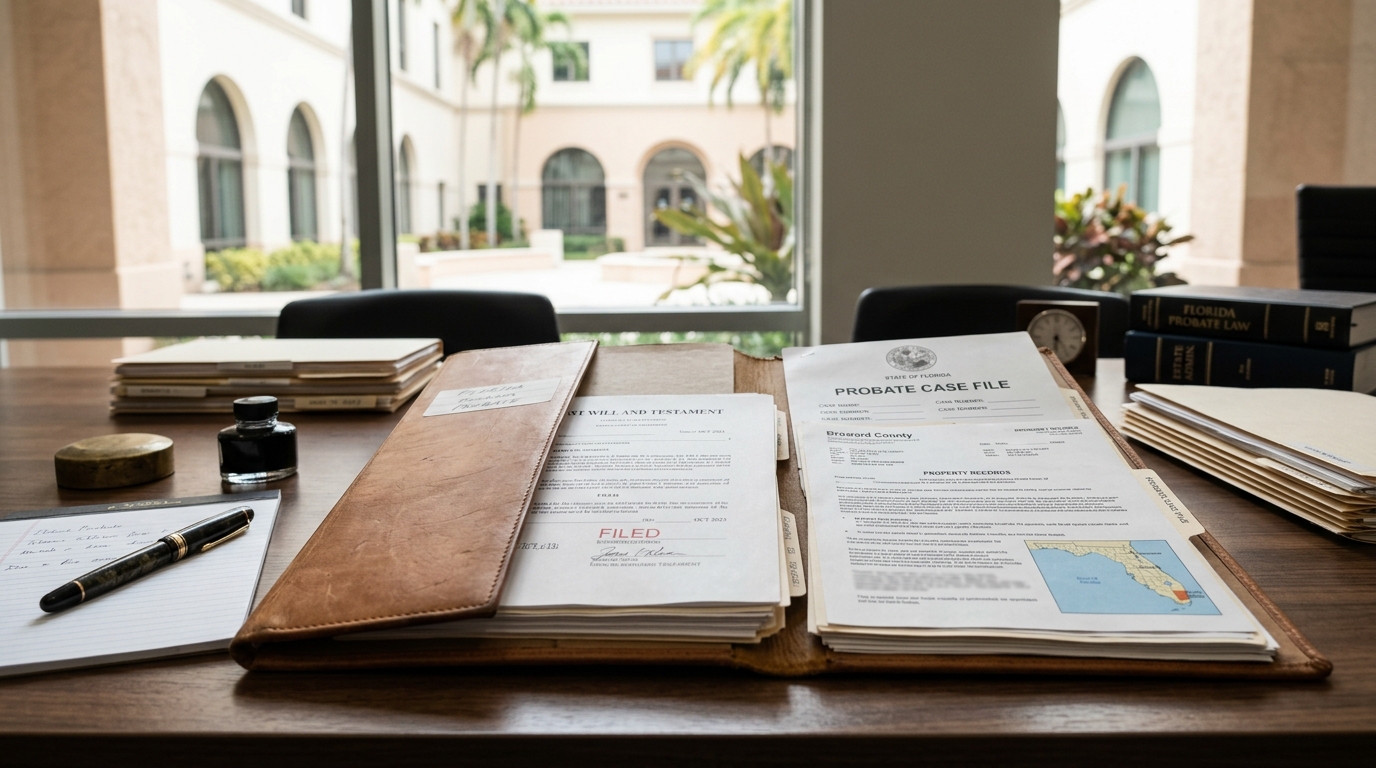
When someone dies, their family may need to go through probate before certain assets can be transferred to the people entitled to receive them. Probate is a court supervised process used to identify and gather probate assets, address valid debts and creditor claims, and distribute the remaining property according to the will or Florida law.
For families in Coral Springs, Broward County, and throughout South Florida, the process can raise practical questions quickly. Which assets have to go through probate? Who handles the estate? How are creditors paid? How long does the process take? And does every estate requi3re the same type of probate administration?
The answers depend on the assets involved, the existence and terms of a will, the value of the estate, creditor issues, and other circumstances.
What Is Probate in Florida?
Probate is a legal process for administering a deceased person’s probate estate. Florida courts describe probate as a court supervised process for identifying and gathering assets, paying debts, and distributing assets to beneficiaries. Probate generally applies only to probate assets, rather than everything the deceased person owned.
A probate asset may include a bank or investment account held solely in the deceased person’s name, or certain real property owned individually by the deceased. Assets with a valid mechanism for passing automatically to another person may not need to be administered through probate.
This distinction matters because a person’s total property does not necessarily equal the property that must be handled through a probate proceeding.
What Are the Steps in the Florida Probate Process?
Although every estate is different, a probate administration commonly involves several stages.
1. The probate case is opened
The proceeding is generally filed with the clerk of the circuit court in the appropriate Florida county. Venue is ordinarily based on the deceased person’s domicile at the time of death.
The documents required at the beginning of the case depend on the circumstances, including whether the deceased person left a will and which type of administration is appropriate.
2. The will is submitted to the court, if there is one
If the deceased left a will, it must be presented to the probate court and admitted according to Florida law.
A will does not, by itself, transfer every asset immediately to the people named in it. Probate may still be necessary to establish the authority to administer probate assets and complete the estate administration.
If there is no valid will governing the property, Florida’s intestacy laws determine who is entitled to inherit.
3. A personal representative is appointed
Florida generally uses the term personal representative for the person appointed to administer a probate estate.
The personal representative’s responsibilities can include identifying estate assets, dealing with creditors, protecting estate property, paying authorized expenses and obligations, and eventually distributing assets to the appropriate beneficiaries or heirs.
The personal representative is a fiduciary. Florida law requires that person to administer and distribute the estate consistently with the will and the law and to act in the best interests of the estate and interested persons.
The person nominated in a will may have priority for appointment, although the court must still apply Florida’s statutory requirements concerning who may serve.
4. The estate’s assets are identified and gathered
The personal representative must determine what property belongs to the probate estate and take the steps necessary to administer those assets.
This can involve locating financial accounts, real property, personal property, business interests, or other assets. It can also require determining whether particular assets pass outside probate because of joint ownership, beneficiary designations, trusts, or other arrangements.
This is one reason a probate case cannot always be understood simply by looking at the deceased person’s will.
5. Creditors are given an opportunity to file claims
An estate may have outstanding debts when someone dies. Florida law provides procedures for notifying creditors and establishing deadlines for claims against the estate.
A creditor’s claim generally must be filed within the applicable statutory period. Under Florida Statutes section 733.702, many claims must be filed no later than the later of three months after the first publication of the notice to creditors or 30 days after service of the notice on a creditor who is required to receive it. Untimely claims can be barred, subject to limited statutory exceptions.
The personal representative may also have to evaluate and respond to claims filed against the estate. A disputed claim can create additional proceedings and delay the administration.
6. Valid expenses and obligations are paid
Not every debt or expense is treated identically.
Florida law establishes an order of priority for paying expenses and obligations of an estate. Administration expenses, certain funeral expenses, specified taxes and debts, certain medical expenses, family allowances, and other obligations fall into statutory classes.
This means that simply finding a debt does not necessarily answer the question of whether, when, or how it will be paid.
7. Remaining assets are distributed
After the estate’s obligations have been addressed and the requirements for distribution have been satisfied, the remaining probate assets can be distributed to the beneficiaries named in the will or to the heirs entitled to receive property under Florida’s intestacy laws.
The personal representative must follow the governing legal documents and Florida law rather than simply distributing property according to informal family agreements.
8. The estate is closed
The final stage involves completing the administration and taking the steps required to close the probate estate.
The timing varies considerably. A straightforward estate with few assets and no disputes can be very different from an estate involving contested claims, difficult-to-value property, creditor disputes, litigation, or disagreements among beneficiaries.
Does Every Florida Estate Go Through the Same Probate Process?
No.
Florida recognizes formal administration and summary administration, along with limited circumstances in which certain personal property can be transferred without a formal administration.
Formal Administration
Formal administration is the more extensive probate procedure. It can involve the appointment of a personal representative, administration of estate assets, creditor procedures, payment of obligations, and distribution of the remaining property.
It is generally used when the circumstances of the estate require a full administration.
Summary Administration
Summary administration is a shorter procedure available when the statutory requirements are met.
Under current Florida law, summary administration may be available when the value of the estate subject to administration, after accounting for property exempt from creditor claims, does not exceed $150,000, or when the deceased person has been dead for more than two years.
The court can enter an order directing distribution of the estate’s assets, but summary administration still involves legal requirements concerning beneficiaries, assets, and creditors.
A smaller estate is therefore not automatically the same thing as an estate that requires no probate.
How Long Does Probate Take in Florida?
There is no single timeline that applies to every Florida probate case.
The length of an estate administration can depend on:
The type of probate administration
The number and nature of the estate’s assets
Whether real estate must be transferred or sold
Whether creditors file claims
Whether a claim is disputed
Whether beneficiaries disagree
Whether litigation becomes necessary
Whether assets are difficult to locate or value
Whether tax or other financial issues require additional work
Creditor procedures can also create important timing requirements. For example, Florida law establishes specific periods for filing and objecting to creditor claims and provides rules governing when certain claims may be paid.
For that reason, estimates based solely on the size of an estate can be misleading.
What Happens If Family Members Disagree During Probate?
Probate does not automatically prevent disputes between beneficiaries, heirs, creditors, or the personal representative.
Disagreements can involve the validity or interpretation of a will, the identification or valuation of assets, creditor claims, the conduct of the personal representative, or the proposed distribution of estate property.
Some issues can be resolved without extended litigation. Others require court intervention.
The personal representative has fiduciary duties during administration, and Florida law provides procedures for addressing problems involving the administration of an estate.
Does Having a Will Avoid Probate in Florida?
Not necessarily.
A will tells the court how the deceased person wants certain property distributed, but having a will does not automatically eliminate the need for probate.
Whether an asset passes through probate depends on how that asset is owned and whether another legal mechanism controls its transfer at death.
This is why estate planning and probate are related but distinct subjects. A person can have a carefully prepared will and still have a probate estate requiring court administration.
When Should You Speak With a Probate Attorney?
Professional advice can be particularly important when an estate includes significant assets, real property, creditor issues, business interests, disputed claims, beneficiary disagreements, or questions about the personal representative’s conduct.
The right approach also depends on whether the estate qualifies for summary administration or requires formal administration.
For families in Coral Springs, Broward County, and South Florida, understanding the type of estate involved is often the first step toward understanding what the probate process will actually require.
Frequently Asked Questions About the Florida Probate Process
What is the first step in probate in Florida?
The first step depends on the circumstances of the estate, but probate generally begins with filing the appropriate documents with the circuit court in the proper county. If there is a will, it is submitted to the court as part of the probate process.
How long does probate take in Florida?
There is no fixed timeline for every estate. The length depends on the type of administration, the assets involved, creditor issues, disputes, and other circumstances.
What is the difference between formal and summary probate in Florida?
Formal administration is the more extensive probate procedure. Summary administration is a shorter procedure available when statutory requirements are satisfied, including the current $150,000 estate value threshold or the alternative two year period after death.
Does every asset have to go through probate?
No. Probate generally applies to probate assets. Certain jointly owned assets, beneficiary designated accounts, and other property may pass outside probate depending on how they are structured.
What does a personal representative do?
A personal representative administers the estate. Duties can include gathering assets, dealing with creditor claims, paying authorized expenses and obligations, and distributing property according to the will and Florida law. The personal representative also has fiduciary duties to the estate and interested persons.
Can probate become a lawsuit?
Yes. Probate is a court proceeding, and disputes concerning wills, assets, creditor claims, beneficiaries, or estate administration can require litigation or other contested proceedings.
Can a Florida estate avoid formal probate?
Sometimes. Florida law provides summary administration for qualifying estates and limited procedures for disposing of certain personal property without administration. Whether one of these alternatives applies depends on the specific facts of the estate.
Probate Guidance for Families in Coral Springs and Broward County
Probate is not one identical process for every Florida family. The appropriate procedure depends on the person’s assets, debts, estate planning documents, beneficiaries, and other circumstances.