Why Use a Real Estate Attorney in Florida? What Legal Counsel Adds to a Transaction

A Florida real estate attorney knows the rules that govern property transactions, from contract requirements and title issues to closing procedures and the remedies available when something goes wrong. A buyer or seller generally does not have that knowledge. There is no reason to expect them to.

You know the property. What you want to pay or receive. You know the circumstances that brought you to the transaction. Your attorney brings something different: a working knowledge of Florida real estate law and the experience to recognize legal problems that may not be obvious from the face of a document.

The Florida Bar recommends consulting an experienced Florida licensed real estate lawyer before signing a purchase contract. That timing gives the attorney an opportunity to examine the agreement while its terms can still be negotiated.

For someone buying or selling property in Coral Springs, Broward County, or elsewhere in South Florida, that is often the most useful place to begin.


Who Represents Your Interests?

A property transaction can involve real estate agents, brokers, lenders, title professionals, inspectors, surveyors, insurance professionals, and attorneys.

Each person has a different responsibility.

A closing agent may coordinate documents, funds, title requirements, and the mechanics of completing the transaction. That person may also be a lawyer. The Florida Bar cautions consumers that a closing agent does not necessarily represent the buyer’s personal legal interests.

Your own attorney has a different assignment. The lawyer is there to advise you about your legal position, explain what you are agreeing to, identify problems, and negotiate or respond when necessary.


Alan Reinfeld puts it this way:

“A closing can look perfectly organized from the outside while still containing terms that deserve a closer legal review. The question is whether someone is specifically looking at the transaction from your legal point of view.”

That can matter when a contract contains unusual obligations, a title commitment raises questions, a condominium has complicated restrictions, or the parties disagree about what was promised.


Start With the Contract

The purchase agreement establishes the framework for the transaction.

Price is one provision. Deadlines, deposits, financing, inspections, repairs, default provisions, closing conditions, property disclosures, and special agreements can all affect what happens after the contract is signed.

The Florida Bar advises buyers to have a lawyer review the purchase contract before signing. Its consumer guidance also notes that contractual terms may become difficult to change once the agreement has been executed.

Florida Realtors has likewise advised consumers to read contracts carefully, including the particular version being used and provisions dealing with default and disputes. Familiarity with a standard form does not answer every question raised by an individual transaction.


A lawyer reviewing the agreement may examine

Contract issueQuestions legal review can address
DepositWhere is it held? When can it be released?
InspectionWhat rights exist if defects are discovered?
FinancingWhat deadlines and conditions apply?
Closing dateWhat happens if either side cannot close on time?
RepairsWhich obligations have actually been agreed to?
DefaultWhat remedies may become available?
Special provisionsDo unusual terms create additional obligations?
DisputesWhat procedures or remedies does the agreement provide?

A provision can look harmless when read by itself and have a very different effect when considered alongside the rest of the agreement. An attorney is trained to look for those connections.


Title Problems Can Follow the Property

Title work is another central part of a real estate transaction.

A title examination can involve years of recorded documents, previous transfers, liens, easements, restrictions, and other matters affecting ownership. The title insurance commitment identifies requirements that must be satisfied before the policy is issued as well as exceptions to coverage.

Consider a buyer who discovers an easement affecting part of the property. The existence of an easement does not automatically make the transaction unacceptable. Its location, purpose, language, and effect on the buyer’s intended use of the property are the questions that need attention.

The same applies to liens, restrictions, unresolved ownership questions, and other title matters.

A title commitment may identify an exception. The attorney’s job is to explain what that exception means and whether it creates a legal problem for the client.

Florida’s Department of Financial Services recognizes Florida attorneys in good standing as professionals who may handle real estate closings involving title insurance and escrow.


Negotiating the Terms

Real estate negotiations rarely stop at the number written on the first page.

A buyer may want additional time for financing. A seller may agree to repairs in exchange for a particular closing date. The parties may negotiate responsibility for an existing lien or an issue discovered during inspection. A condominium transaction may involve documents and restrictions that require attention before the buyer proceeds.

The lawyer brings legal knowledge to those negotiations.

That knowledge can be useful when a proposed change sounds reasonable but creates an obligation elsewhere in the contract. It can also help a client understand what is worth negotiating and what may create unnecessary complications.

Florida Realtors has emphasized that contract terms can be negotiated and that parties have a right to seek legal review.

A standard contract form is a starting point. The property, the parties, and the circumstances determine whether its provisions actually work for the transaction at hand.


What Happens at Closing?

Closing is where the contractual decisions, title work, financing, and other requirements come together.

The deed must transfer the property properly. Required documents must be completed. The closing figures must correspond with the transaction. Title requirements must be satisfied or addressed. Funds need to reach the correct destination.

A lawyer handling the transaction understands the legal significance of those documents and requirements. The client does not need to become a temporary expert in Florida property law simply because they are buying a house.

There is also a distinctly modern hazard: wire fraud.

The Florida Bar advises consumers to verify wire instructions independently rather than relying solely on an email or other electronic communication.

That advice deserves serious attention. Real estate transactions can involve hundreds of thousands of dollars moving electronically. A fraudulent change to wiring instructions can turn an ordinary closing into a serious financial problem.

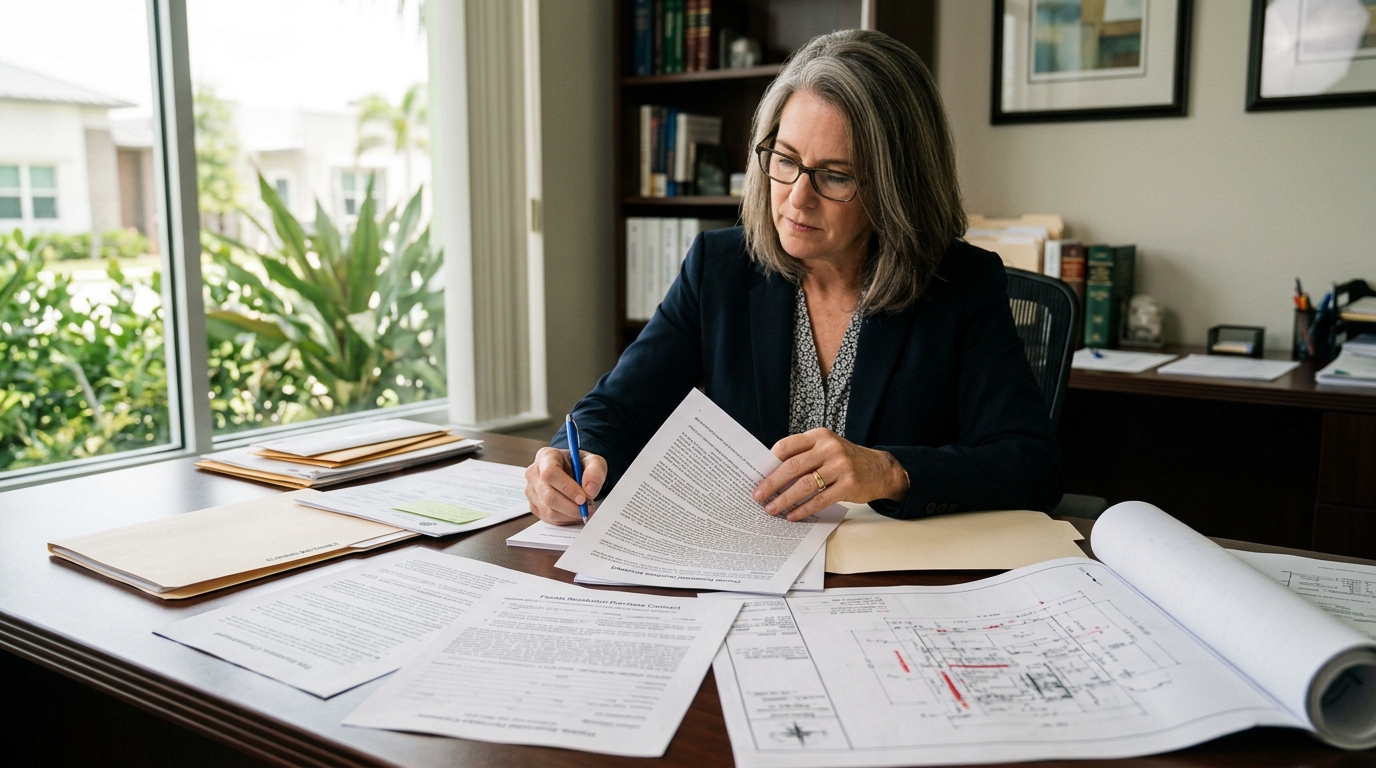
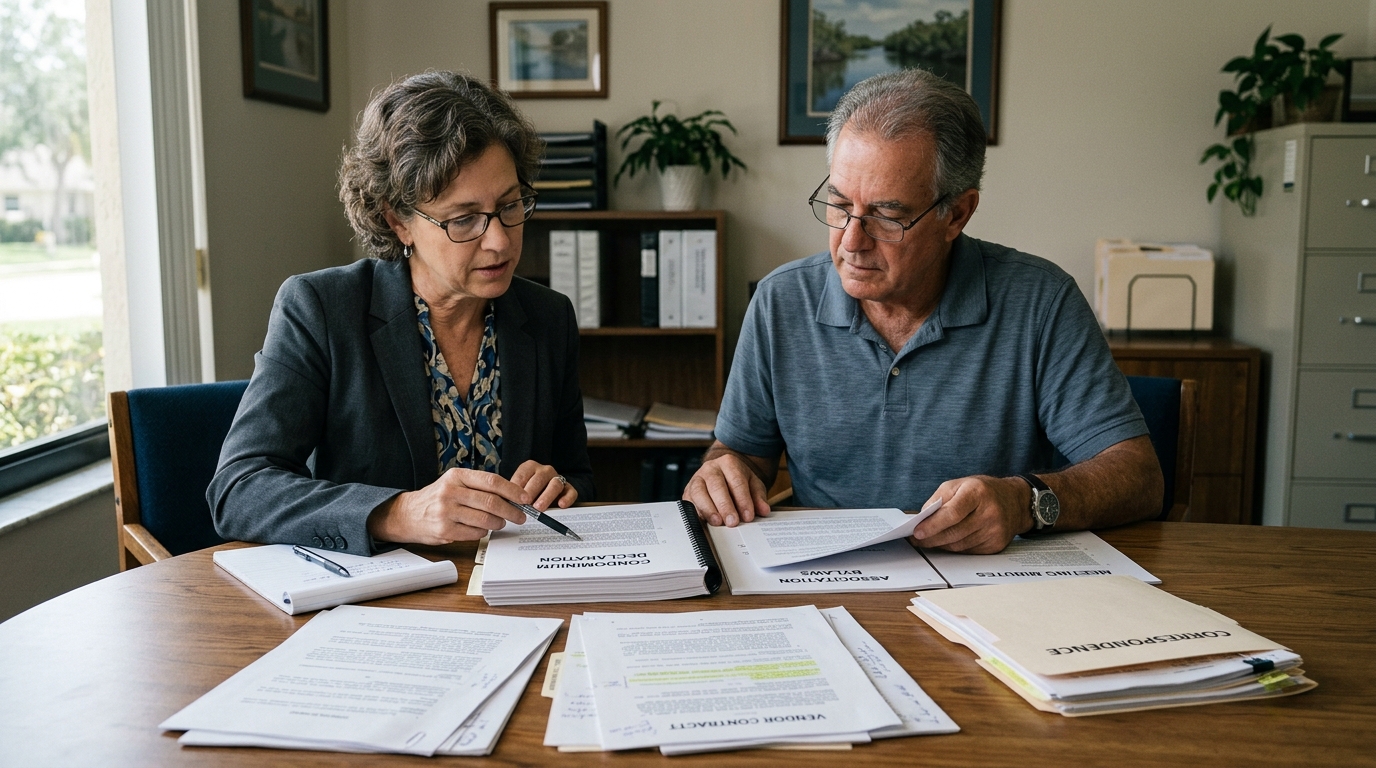
Real estate attorney reviewing a Florida purchase contract and title documents

When a Transaction Starts to Fall Apart

Some legal questions do not appear until the deal is already under pressure.

The inspection may reveal significant damage. Financing may fail. A title defect may appear shortly before closing. The seller may refuse to perform an agreed obligation. The buyer may want to withdraw. The parties may disagree about the deposit.

Once that happens, the contract becomes the starting point for determining what each party is required to do and what remedies may exist.

Florida Realtors notes that a failed closing does not cause the underlying contract to disappear. The circumstances surrounding the failure can determine whether a breach occurred and what consequences follow.

This is where knowing the details of the agreement matters. Deadlines, contingencies, default provisions, notice requirements, and other clauses can determine what a party can do next.

An attorney who has reviewed the transaction from the beginning also has the benefit of knowing how the dispute developed, rather than trying to reconstruct the deal after the parties have reached an impasse.


Florida’s Property Market

Florida’s real estate market gives these transactions considerable financial weight.

Florida Realtors reported 26,036 single-family home closings in June 2026, up 9.3% from June 2025. Condo and townhouse sales totaled 8,900, an increase of 14%. The statewide median price was $432,000 for single-family homes and $305,000 for condos and townhouses.

By August 2026, the statewide median price was $415,000 for single-family homes and $298,000 for condos and townhouses. Inventory stood at 4.3 months for single-family homes and 7.7 months for condos and townhouses.

Florida residential market, August 2026Median priceInventory
Single-family homes$415,0004.3 months
Condos and townhouses$298,0007.7 months

A transaction involving a property worth several hundred thousand dollars can turn on a few sentences in a contract or a title document. Understanding those sentences is part of the attorney’s job.


Do You Need a Real Estate Attorney in Florida?

Florida does not require an attorney for every real estate transaction.

The Florida Bar nevertheless recommends consulting an experienced Florida licensed real estate lawyer before signing a purchase contract.

There is nothing strange about that distinction. People routinely hire professionals for matters that fall within those professionals’ expertise.

You probably would not expect a title examiner to negotiate your purchase agreement or a real estate agent to give you a complete analysis of Florida contract law. An attorney occupies a different place in the transaction.

The lawyer knows the statutes, regulations, contractual principles, title rules, and legal remedies that can affect the deal. The client brings knowledge of the property and their own objectives. Good representation connects the two.


Questions to Ask a Real Estate Attorney

If you are considering legal representation for a Florida property transaction, useful questions include:

  • Will you review the purchase contract before I sign it?
  • Will you review the title commitment and exceptions?
  • Who will represent my interests during closing?
  • Can you negotiate changes to the contract?
  • Will you review condominium or homeowners’ association documents when relevant?
  • What happens if the other party refuses to close?
  • What should I do if a title problem appears?
  • How will you communicate with the title company, lender, broker, or opposing counsel?

The answers can tell you how involved the attorney expects to be and whether the representation fits the transaction.


Why Use a Real Estate Attorney?

You do not need to memorize Florida’s real estate laws to buy a house.

You do need to understand the agreement you are signing and the legal consequences of the transaction. That is where an attorney’s knowledge becomes useful.

A real estate lawyer works with the statutes, contracts, title records, closing requirements, and disputes that surround property transactions. The lawyer can recognize legal issues that an ordinary buyer or seller may never have encountered before.

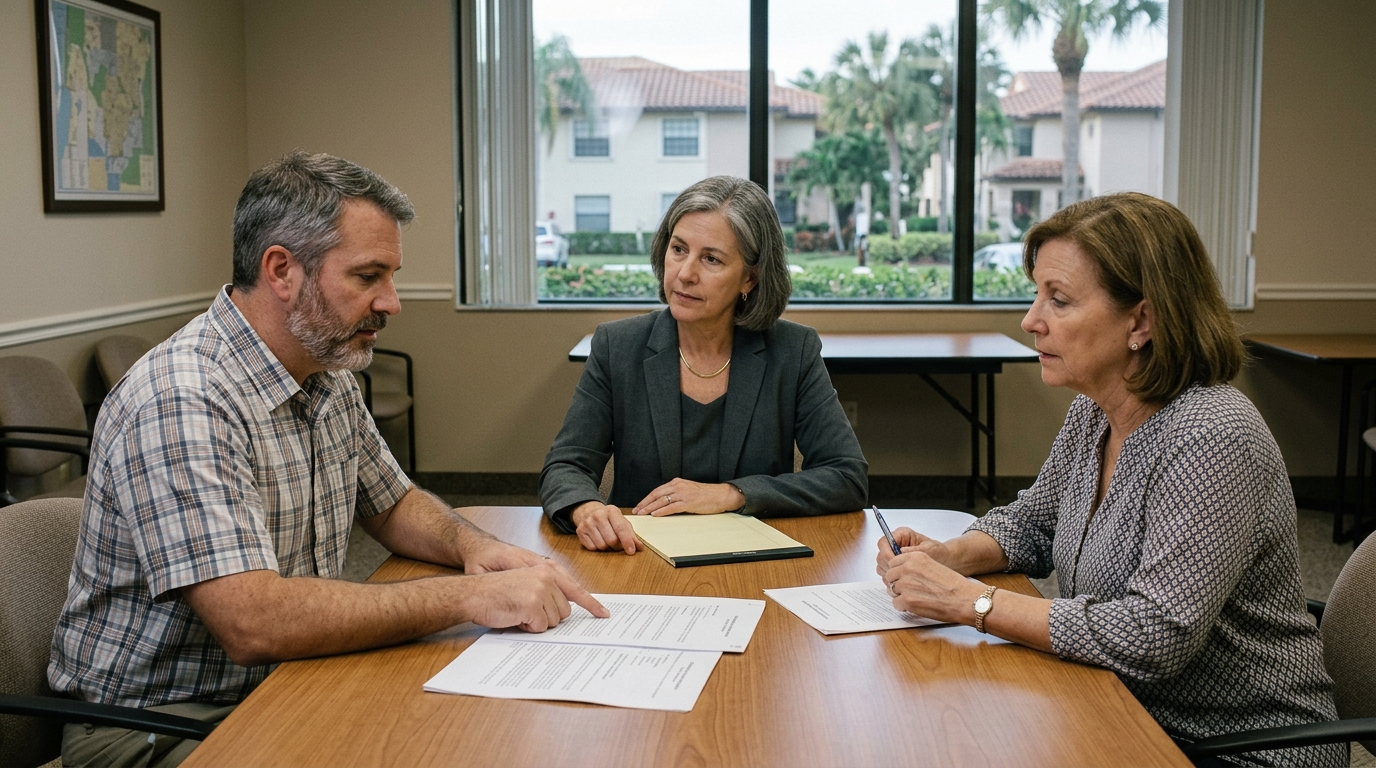
Florida real estate attorney reviewing a property transaction with clients in Coral Springs

Stuart Reinfeld describes the objective this way:

As he states: “A successful closing depends on documents that accurately reflect the agreement and on careful attention to the client’s legal interests throughout the transaction.”

Reinfeld & Cabrera represents clients in Coral Springs, Broward County, and throughout South Florida in real estate matters, including contract review, transactions, title issues, and real estate disputes.

If you are buying or selling property, refinancing, dealing with a title issue, or facing a disagreement over a real estate contract, contact Reinfeld & Cabrera to discuss your situation.


Frequently Asked Questions

Is a real estate attorney required in Florida?

  • No. Florida does not require an attorney for every real estate transaction. The Florida Bar recommends consulting an experienced Florida licensed real estate lawyer before signing a purchase contract.

When should I hire a real estate attorney?

  • Before signing the purchase contract is generally the most useful time. Early review allows potential contractual problems to be addressed while the terms remain open to negotiation.

What does a Florida real estate attorney do?

  • Depending on the transaction, an attorney may review contracts, investigate title issues, explain closing documents, negotiate terms, advise on property restrictions, and represent a client when a transaction develops into a dispute.

Does the closing agent represent the buyer?

  • Not necessarily. A closing agent can coordinate the transaction without representing the buyer’s individual legal interests.

Can a real estate attorney resolve title problems?

  • An attorney can investigate the legal significance of title defects, liens, easements, restrictions, and other title issues and advise the client about available options.

What happens when a Florida real estate transaction does not close?

  • The answer depends on the contract and the circumstances. The parties may have rights and obligations involving deposits, default, damages, deadlines, or other remedies. The contract and the facts need to be examined before determining what follows.

What Does a Real Estate Attorney Do at a Florida Closing?

Real estate attorney reviewing a property closing with clients in Coral Springs, Florida

A real estate closing can look deceptively simple. The buyer signs documents, the seller signs documents, money changes hands, and the property changes ownership.

The legal work behind that moment is considerably less simple.

A Florida real estate attorney can review the purchase contract, examine title issues, address liens and other encumbrances, review the closing documents, and advise a buyer or seller when the transaction does not proceed exactly as expected. That work may begin weeks before the closing date.

For someone who already has a real estate agent, lender, title company, or closing agent, it is reasonable to ask what a separate attorney actually does. The answer depends on the transaction, but the attorney’s role is generally to provide legal advice to the client whose interests the attorney represents.

The Florida Bar recommends consulting a Florida licensed real estate lawyer before signing a purchase contract. It also points out that the closing agent may be an attorney without representing the individual buyer’s or seller’s interests.


The Lawyer’s Work Often Starts Before the Closing

The closing is the final stage of a transaction that began with a contract.

That contract determines the purchase price, deposit, financing arrangements, inspection rights, title requirements, closing date, possession, closing costs, and the obligations of both parties. It can also establish what happens when one side fails to perform.

Those provisions matter when the transaction develops a problem.

Suppose the seller discovers that an old mortgage was never properly released. Or the buyer learns that a title objection has not been resolved. Perhaps the parties disagree about whether a repair was required under the contract, or whether a closing deadline can be extended.

Those questions cannot be answered by looking only at the documents being signed on closing day. The purchase agreement, amendments, correspondence, title documents, and applicable Florida law may all matter.

That is one reason the Florida Bar recommends having a lawyer review the purchase contract before it is signed. Standard forms contain many provisions, but the parties can negotiate terms and add provisions that change their rights and obligations.


What Does a Real Estate Attorney Review?

The attorney may review the purchase agreement and the documents generated during the transaction. Depending on the property and the circumstances, that can include:

  • The purchase and sale agreement
  • Addenda and amendments
  • Title commitments and title evidence
  • Deeds
  • Mortgages and other recorded instruments
  • Liens and judgments
  • Easements and restrictions
  • Survey issues and possible encroachments
  • Closing statements
  • Tax and other prorations
  • Repair credits and other concessions
  • Financing documents
  • Possession provisions
  • Documents prepared for signing at closing

The attorney is also looking at how these documents fit together.

For example, a closing statement might contain a credit that was negotiated in an amendment to the purchase contract. A title commitment might identify an exception that needs to be addressed before the buyer can receive the title insurance coverage expected under the transaction. A survey might reveal an encroachment that was not apparent when the contract was signed.

The point is not to read every document in isolation. The documents have to be consistent with the transaction the parties actually agreed to.


Why Title Problems Can Delay a Closing

Title is one of the biggest legal issues in a real estate transaction because ownership is not established simply by the seller saying that the property belongs to them.

A title examination can reveal mortgages, tax liens, judgments, easements, restrictions, probate issues, prior conveyances, or other matters affecting the property. The Florida Bar notes that a title examination may involve records going back many years and that problems can originate in areas such as probate, divorce, foreclosure, inheritance, and previous financing.

Some problems are relatively easy to correct. Others require additional documents, negotiations, or legal proceedings.

The purchase contract also matters because it may give the buyer a specific period to examine the title and notify the seller of objections.

Florida courts have enforced those contractual deadlines. In Davis v. Ivey, 984 So. 2d 571 (Fla. 5th DCA 2008), the buyers had 15 days after receiving title evidence to examine the title and notify the seller of defects. The seller provided the title evidence only one day before the scheduled closing. The appellate court held that the contractual examination period still applied.

That kind of dispute illustrates why a closing date does not tell the entire story. The contract may give the parties rights that continue to operate as the closing approaches.


Is the Closing Agent Your Attorney?

Not necessarily.

A title company or settlement agent may handle many of the practical steps required to complete the transaction. That can include preparing or coordinating documents, receiving and disbursing funds, recording documents, satisfying title requirements, and communicating with the parties.

The closing agent’s role does not automatically create an attorney-client relationship with the buyer or seller.

The Florida Bar specifically warns consumers that a closing agent may be a lawyer but may not represent their individual interests.

This distinction becomes important when the parties have competing interests. If the buyer and seller disagree about a contractual provision, for example, the buyer may need independent legal advice rather than assuming that the person conducting the closing is there to advise the buyer.


What Happens When the Closing Statement Changes?

The money being exchanged at closing has to match the transaction.

The settlement statement can include the purchase price, deposit, loan proceeds, taxes, insurance, title charges, recording fees, commissions, credits, prorations, payoff amounts, and other expenses.

Some of these figures are routine. Others may require explanation.

A repair credit negotiated after the original contract was signed should appear consistently in the closing documents. A mortgage payoff should correspond with the amount required to satisfy the seller’s loan. Property taxes may need to be prorated according to the terms of the transaction and the relevant tax period.

A lawyer reviewing the closing documents can compare them with the contract and identify discrepancies that need to be resolved before signing.


Be Careful With Wire Instructions

Wire fraud deserves particular attention during a real estate transaction because large sums of money are commonly transferred shortly before or at closing.

The Florida Bar advises consumers to independently and personally verify wire instructions rather than relying on an email containing payment information.

That advice is worth taking literally. If someone sends new instructions shortly before closing, call the intended recipient using a telephone number you already know to be legitimate. Do not assume that an email is genuine because it contains familiar names, logos, or details from the transaction.


Florida Homestead Law Can Affect the Documents

Florida’s homestead rules create additional legal considerations for qualifying homestead property.

Section 196.031 of the Florida Statutes addresses the homestead exemption for qualifying permanent residences. Florida law also contains specific rules concerning the conveyance and mortgaging of homestead property. Section 689.111 addresses circumstances involving a married owner’s spouse.

These rules can affect the documents required for a transaction and whether a deed or mortgage has been properly executed.

Homestead status can also intersect with estate planning, ownership, and family circumstances. An attorney therefore needs to look at the property and the people involved rather than assuming that every Florida residential closing follows the same set of rules.


What If Something Goes Wrong at Closing?

A closing does not automatically become a lawsuit because a problem appears.

The parties may be able to correct a document, obtain a lien release, resolve a title objection, amend the contract, adjust the closing figures, or agree on another solution. The appropriate response depends on the nature of the problem and the rights established by the contract.

The legal question may become more serious when one party refuses to perform.

If a seller cannot deliver the title required by the agreement, a buyer may have contractual remedies. Maybe a buyer fails to provide required funds or financing, the seller may have rights under the contract. If the parties disagree about whether a condition has been satisfied, the language of the agreement can become central to the dispute.

This is why the purchase contract deserves attention before closing rather than being treated as paperwork that has already served its purpose.

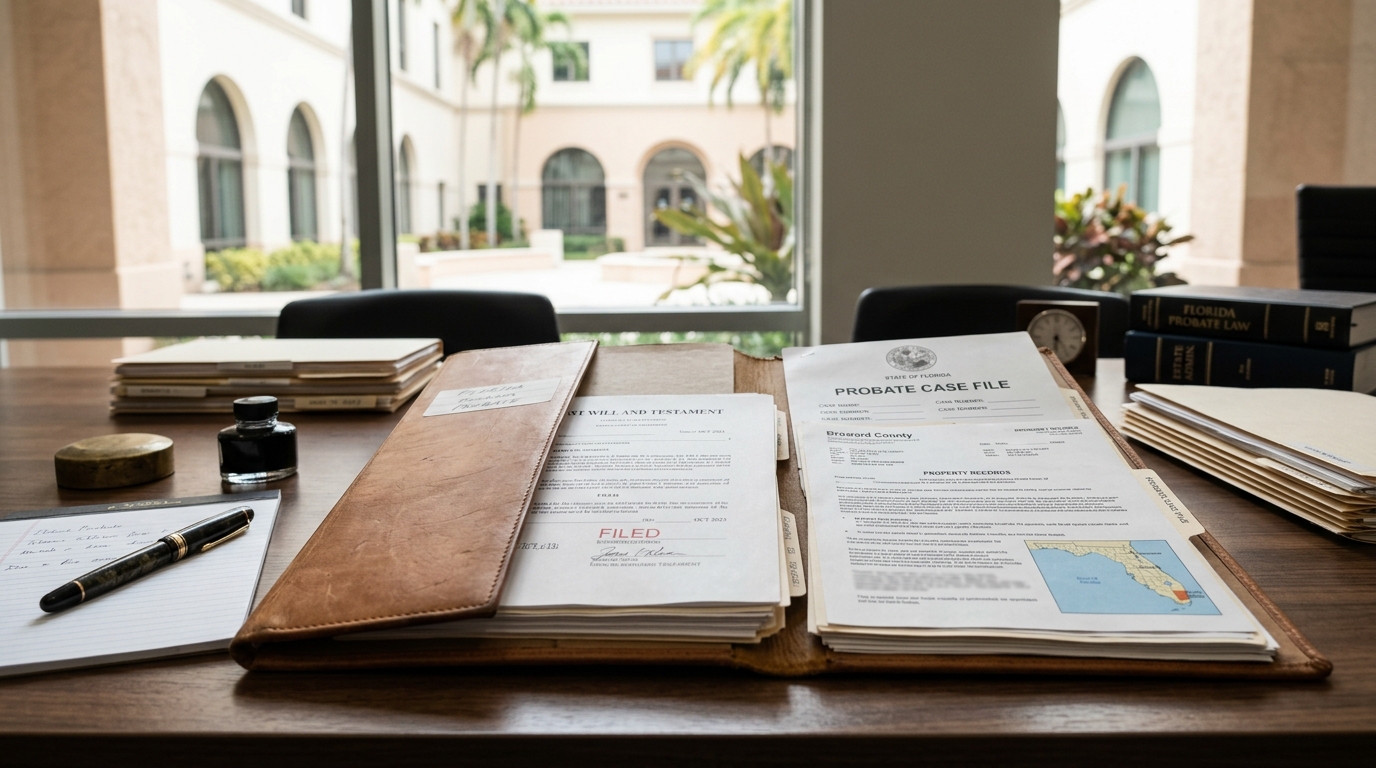
Real estate attorney reviewing a property with clients in Coral Springs, Florida

Do You Need a Real Estate Attorney for a Florida Closing?

There is no single answer for every transaction.

A straightforward residential purchase may involve relatively few legal complications. Other transactions can involve title defects, probate issues, divorces, liens, boundary disputes, unusual financing arrangements, commercial property, seller financing, significant contract amendments, or disagreements between the parties.

Those circumstances can change the legal work required.

The Florida Bar recommends having a qualified Florida real estate lawyer review a purchase contract before it is signed, particularly because standard contracts can be modified and because the consequences of contractual language can be significant.

If you are considering hiring an attorney, ask what the attorney will actually review and what representation includes. You should know whether the lawyer will examine the purchase agreement, communicate with the title company, review title issues, examine the closing documents, and advise you about disputes that arise before closing.


Real Estate Closings in Coral Springs and Broward County

A Coral Springs real estate transaction follows Florida law, but the property itself has its own history.

The relevant records can include prior deeds, mortgages, liens, easements, tax information, surveys, condominium or homeowners’ association documents, and other records affecting the property.

That history matters because two properties in the same neighborhood can have completely different title issues.

For buyers and sellers in Coral Springs and Broward County, a real estate attorney can review the particular property and transaction rather than relying on assumptions about how a typical closing should proceed.


Questions to Ask a Real Estate Attorney

Before hiring a Florida real estate attorney, ask specific questions about the work you need:

  1. Will you review my purchase contract before I sign it?
  2. Will you review the title commitment and identify title problems?
  3. Who will communicate with the title company or closing agent?
  4. Will you review the final closing statement?
  5. What happens if a lien or other title defect appears?
  6. What happens if the other party misses a contractual deadline?
  7. Will you review the documents before I sign them?
  8. Who will handle my matter?
  9. How will the legal fees be calculated?

The answers should give you a clear idea of what the attorney will actually do during the transaction.


Talk With a Coral Springs Real Estate Attorney

Reinfeld & Cabrera, P.A. represents clients in Coral Springs and throughout Broward County in real estate matters.

If you are buying or selling property and want legal advice about the contract, title, closing documents, or another issue affecting the transaction, contact the firm to discuss your circumstances with an attorney.


What Happens to Your Business If You Die or Become Incapacitated?

Business succession planning attorney meeting with a business owner in Coral Springs, Florida

Fast Answer: If a Florida business owner dies or becomes incapacitated, what happens to the business depends on the business structure, governing documents, estate plan, and applicable Florida law. Ownership may pass to heirs or other beneficiaries, while management authority may remain with other owners or designated decision makers. A business succession plan can establish what happens to the owner’s interest and who can manage the company when the owner can no longer do so.

Business owners spend years building companies that depend on their judgment, relationships, skills, and decisions.

Then life does what life does.

An owner dies. An illness leaves someone unable to work. A business partner suddenly has to deal with an estate. Family members inherit an ownership interest without knowing how the company operates. Employees are left wondering who can sign contracts, access accounts, or make decisions.

These situations raise two separate questions:

Who owns the business interest, and who has authority to run the business?

Those answers do not always point to the same person.

A Florida business succession plan addresses what happens to ownership and management when an owner dies, becomes incapacitated, retires, or otherwise can no longer participate in the company. Depending on the business, that plan may involve an operating agreement, shareholder agreement, buy-sell agreement, trust, power of attorney, estate plan, or several of these documents working together.


What Happens to a Business When the Owner Dies?

The answer depends heavily on the type of business and its governing documents.

If a person owns an interest in a Florida LLC, the ownership interest does not necessarily give the person’s heirs an automatic right to step into the owner’s management role.

Florida’s LLC statute distinguishes between a transferable interest and the rights of a member. A transferee generally receives the economic rights associated with the transferred interest but does not automatically acquire the right to participate in management or access company records.

Death can also cause an individual to cease being a member under Florida’s LLC statute, while the consequences of that dissociation depend on the governing law and the company’s operating agreement.

That can create a surprisingly awkward situation.

Imagine a company owned by two siblings. One dies and leaves everything to a spouse who has never worked in the business. The spouse may inherit an economic interest, while the surviving sibling continues operating the company.

Now everyone has a legitimate interest in what happens next.

The spouse wants to know what the inherited interest is worth. The surviving sibling wants to know who has authority to make business decisions. The company needs to continue operating.

An operating agreement or buy-sell arrangement can address those questions before anyone has to improvise.


What Happens If a Business Owner Becomes Incapacitated?

Death and incapacity create different legal problems.

When an owner dies, the estate and succession process becomes relevant. When an owner becomes incapacitated, the business may need someone with legal authority to act while the owner is still alive.

Florida’s Power of Attorney Act defines incapacity in part as the inability to take actions necessary to obtain, administer, and dispose of property, including business property.

A properly drafted durable power of attorney can allow an agent to continue exercising specified authority despite the principal’s later incapacity.

The document needs to grant the authority actually required. Florida law provides that an agent may exercise authority specifically granted in the power of attorney, and certain powers require specific enumeration.

That makes the details important for a business owner.

A document authorizing someone to handle personal banking does not necessarily answer every question involving ownership interests, company management, securities, contracts, or other business decisions.

A succession plan should therefore consider incapacity separately from death.


Does a Will Control My Business After I Die?

A will can determine who receives assets that pass through the estate, including an ownership interest in a business.

But the will does not automatically rewrite the company’s governing documents.

An LLC’s operating agreement governs important aspects of the company’s internal affairs. Florida law expressly provides that an LLC is bound by its operating agreement and that a person who becomes a member is generally bound by it as well.

Corporations have their own governing documents and statutory rules concerning shareholders, shares, directors, officers, and shareholder agreements. Florida’s Business Corporation Act separately addresses restrictions on share transfers and shareholder agreements.

This creates an important planning issue:


Your estate plan and your business documents need to work together.

Suppose a business owner leaves the company to three children in equal shares. The will may produce three equal ownership interests.

But what happens if one child wants to run the company, another wants to sell, and the third wants cash rather than an operating role?

The will alone may not provide a practical answer.


Can a Trust Own a Business Interest?

Yes. A trust can hold certain business interests, and trusts can be part of a broader estate and succession plan.

That does not mean putting an LLC interest into a trust automatically solves the succession problem.

The trust document has to address who controls the trust, who benefits from it, and what the trustee can do with the property. Florida law gives trustees significant powers, including powers to acquire and sell trust property, subject to the terms of the trust and the trustee’s fiduciary duties.

The business documents also have to be considered.

For example, an LLC operating agreement may contain restrictions or requirements concerning transfers, membership, voting, management, or the admission of new members.

A trust can therefore be one component of a succession plan rather than a substitute for the entire plan.


What Is a Buy-Sell Agreement?

A buy-sell agreement establishes rules for what happens to an owner’s business interest when a specified event occurs.

Depending on how it is drafted, the triggering event might include death, disability, retirement, divorce, termination of employment, or another circumstance affecting ownership.

A typical arrangement might give the company or the remaining owners the right, or sometimes the obligation, to purchase the departing owner’s interest.

The agreement can also address valuation and payment terms.

Consider the three-sibling example again.

If one sibling dies, the agreement might provide a mechanism for the surviving owners to purchase that sibling’s interest at a defined valuation methodology. The estate receives value, while the remaining owners retain control of the company.

That is a very different outcome from leaving three people to negotiate ownership after the death.

The details matter. Valuation formulas that seemed reasonable five years ago may produce strange results after the business has grown substantially. Funding also needs consideration. A purchase obligation is useful only if the parties have a realistic way to pay for it.


What Happens to a Family Business When the Owner Dies?

Family businesses create another succession problem: inheritance and management can point in different directions.

A child may inherit an ownership interest without having any experience running the company. Another child may have spent twenty years working in the business and expect to continue operating it.

Those interests can coexist, but the documents need to account for them.

A useful succession plan can address:

  • Who can own the business
  • Who can manage the business
  • Whether family members can transfer their interests
  • Whether existing owners have purchase rights
  • How an owner’s interest will be valued
  • How a purchase will be funded
  • What happens if an heir does not want to participate in the company
  • What happens if the owners disagree
  • What happens if an owner becomes incapacitated

As Alan Reinfeld puts it:

“A 50/50 split sounds wonderfully democratic until two people have a 50/50 disagreement.”

That problem becomes considerably harder when one of the two owners has died and the surviving owner is now dealing with the deceased owner’s estate.

Attorney discussing business continuity and incapacity planning with a Broward County business owner

Who Runs the Business While the Estate Is Being Settled?

This is one of the practical questions business owners often overlook.

A business does not necessarily stop operating because its owner has died. Employees still need to be paid. Customers still expect service. Contracts still need attention. Taxes and other obligations continue.

But the legal authority to make decisions can become complicated depending on the company’s structure and the owner’s role.

An LLC may be member-managed or manager-managed. Florida law provides different management structures, with management generally vested in the members of a member-managed LLC and in the managers of a manager-managed LLC.

That means the succession plan should account for management authority, not merely inheritance.

The same principle applies to corporations, partnerships, and other business structures.

The person who inherits the business and the person who runs the business do not necessarily have to be the same person.


What Documents Should a Business Owner Have in Place?

There is no universal package that works for every business.

Depending on the circumstances, a Florida business owner may need to coordinate several documents:

Operating agreement

For an LLC, the operating agreement can establish rules concerning ownership, management, voting, transfers, and other internal matters. Florida law gives operating agreements an important role in governing the company’s affairs.

Shareholder agreement

Corporations may use shareholder agreements to establish rules concerning ownership and the relationship among shareholders.

Buy-sell agreement

This can establish what happens when an owner dies, becomes disabled, retires, or experiences another specified triggering event.

Will

A will can address assets that pass through the estate, including business interests that are part of the probate estate.

Trust

A trust may hold business interests and establish rules for their administration and eventual distribution.

Durable power of attorney

A properly drafted durable power of attorney can address authority during incapacity, subject to the powers actually granted in the document.

These documents should be coordinated.

A business succession plan can become surprisingly fragile when the operating agreement says one thing, the buy-sell agreement says another, and the estate plan was drafted years earlier without considering the company.


What If the Business Has Multiple Owners?

Multiple-owner businesses need succession planning even when everyone is getting along.

Especially when everyone is getting along.

The difficult provisions are often the ones people are least interested in discussing when the company is doing well.

  • What happens if one owner dies?
  • What if an owner’s spouse inherits the interest?
  • What if one owner wants out?
  • What if an owner becomes unable to work?
  • What if two owners disagree about selling the company?
  • What if the business becomes significantly more valuable?

These are business questions, but they also become estate-planning questions when ownership changes because of death or incapacity.


Stuart Reinfeld puts it this way:

“Most business partnerships start with optimism. The operating agreement is where you discuss what happens when optimism takes a day off.”

That conversation can be uncomfortable. It is also considerably easier to have while everyone is alive, healthy, and still speaking to one another.


How Do You Plan for Business Succession in Florida?

Start by identifying the business interest itself.

Is the company an LLC, corporation, partnership, or another structure? Who owns it? Who manages it? What does the governing agreement say about transfers and management?

Then consider the two events that tend to create the biggest disruption: death and incapacity.

For death, determine how ownership should transfer and whether the remaining owners should have a purchase right or obligation.

For incapacity, determine who can exercise the necessary authority while the owner is alive.

Then coordinate those decisions with the owner’s estate plan.

The goal is not necessarily to create a complicated stack of documents. It is to make sure the documents already governing the business and the documents governing the owner’s estate do not contradict one another.

South Florida business attorney discussing ownership and management succession with business partners

Business Succession Planning in Coral Springs and Broward County

For business owners in Coral Springs, succession planning can involve both business law and estate planning.

A company may have an operating agreement, shareholder agreement, employment arrangements, commercial contracts, and financial obligations. The owner may separately have a will, trust, power of attorney, and other estate-planning documents.

Those pieces should be reviewed together when ownership of the business represents a significant part of the owner’s estate.

The same considerations apply throughout Broward County and South Florida.

A succession plan drafted when a company has two owners and $200,000 in annual revenue may need substantial revision after the company has ten employees, several million dollars in revenue, and three generations of family members involved.


Frequently Asked Questions

What happens to my LLC if I die in Florida?

  • The result depends on the LLC’s operating agreement, ownership structure, and applicable Florida law. Death can cause an individual member to dissociate, while the economic interest and management rights associated with the business interest can be treated differently.

Can my children inherit my business?

  • They may inherit a business interest depending on the business structure, estate plan, governing agreements, and applicable law. Inheriting an ownership interest does not necessarily mean inheriting the right to manage the company.

Does a will determine who runs my business?

  • Not necessarily. A will can address ownership passing through the estate, but management may be governed by the company’s operating agreement, corporate documents, or other applicable rules.

Can a trust own my LLC interest?

  • A trust can hold certain business interests, but the trust terms and the company’s governing documents need to be considered together.

What happens to my business if I become incapacitated?

  • The answer depends on the business structure and the authority available to someone else to act for you. A properly drafted durable power of attorney can provide authority that continues despite later incapacity, subject to its terms and Florida law.

Do I need a buy-sell agreement if I have business partners?

  • It can be useful when the owners need predetermined rules for what happens after death, disability, retirement, or another triggering event. Whether one is appropriate depends on the business and the owners’ objectives.

Planning for the Future of a Florida Business

A business succession plan answers a very practical question:

What happens to the company when the person who currently controls it cannot continue doing so?

For some owners, the answer may involve an operating agreement. For others, it may require a buy-sell agreement, trust, durable power of attorney, revised estate plan, or several documents working together.

The important part is making those decisions while the owner can still make them.

Reinfeld & Cabrera P.A. assists business owners in Coral Springs, Broward County, and throughout South Florida with business planning, estate planning, and legal matters involving ownership and succession. Contact the firm to discuss how your business interests fit into your broader estate and succession plan.

This article provides general information about Florida law and is not a substitute for legal advice concerning a particular business or estate.

When Does a Landlord Have to Return a Security Deposit in Florida?


How Long Does a Landlord Have to Return a Security Deposit?

Florida Statute §83.49 creates two different timelines.

If the landlord is not making a claim against the security deposit, the deposit generally must be returned within 15 days after the tenancy ends.

If the landlord intends to keep some or all the deposit, the landlord has 30 days to notify the tenant. He provides a copy in writing of the intention to impose a claim and the reason for it. The notice must be sent as required by the statute. This by certified mail to the tenant’s last known mailing address or, when the parties have properly agreed to electronic notices, by email.

That difference is important. The 15-day rule is about returning a deposit when there is no claim. The 30-day rule gives the landlord time to notify the former tenant about a claim against the deposit.


What If the Landlord Wants to Keep Part of the Deposit?

A landlord cannot simply decide that the security deposit has become a convenient repair fund.

When a landlord intends to impose a claim, the required notice must state the amount claimed and the reason for the claim. The tenant then has 15 days after receiving the notice to object in writing.

If the tenant does not object within that period, things change. The landlord may deduct the claim and must send the remaining balance within the time required by the statute.

A late objection does not necessarily eliminate every possible legal claim by the tenant. Florida law expressly says that failing to object within the 15-day period does not waive the tenant’s right to seek damages in a separate action.


What Can a Landlord Deduct From a Security Deposit in Florida?

A security deposit exists to secure the tenant’s obligations under the rental agreement. A dispute can arise over unpaid rent, damage to the property, or other amounts the landlord claims are owed under the lease.

The recurring fight, however, is usually about damage versus ordinary wear and tear.

A tenant who has lived in an apartment for several years should not expect the property to look exactly as it did on move-in day. Faded paint, ordinary aging, and normal deterioration are different from a broken fixture, a damaged door, or other physical damage caused during the tenancy.

The lease, the property’s condition, and the evidence surrounding the claimed damage all matter.

For that reason, both sides should preserve useful records:

  • The lease and any amendments
  • Move-in and move-out photographs
  • Inspection reports
  • Messages about repairs
  • Photographs of claimed damage
  • Repair invoices or estimates
  • Proof of rent payments
  • The tenant’s forwarding address
  • The landlord’s deposit correspondence

A photograph taken on moving day can be considerably more useful than an argument six months later about what the carpet looked like.


What Happens If the Landlord Misses the 30-Day Deadline?

This is one of the most important Florida security deposit rules.

If a landlord fails to give the required notice within the 30-day period, the landlord forfeits the right to impose a claim against the security deposit. The statute still allows the landlord to bring an action for damages after returning the deposit.

That does not mean every late notice automatically ends every dispute between the parties. It means the landlord cannot use the security deposit itself as a setoff after missing the statutory notice deadline.

For a tenant who has been waiting for a deposit, the date the tenancy ended and the date the landlord sent the notice can therefore become important evidence.


What If the Tenant Disagrees With the Deduction?

A tenant who receives a claim against the deposit has 15 days after receiving the notice to object in writing.

The objection should address the actual dispute. If the landlord claims $2,000 for repairs and the tenant believes the property suffered ordinary wear and tear, the tenant can explain that disagreement and preserve the relevant evidence.

Photographs, inspection records, repair communications, and the condition of the property at move-in can all become useful.

If the dispute cannot be resolved, either party can bring an action to determine who is entitled to the security deposit. Florida law provides that the prevailing party is entitled to court costs and a reasonable attorney fee in an action concerning the deposit.

That can make the size and strength of the claim relevant when deciding how to proceed.


Does a Florida Security Deposit Earn Interest?

It can.

Florida law allows a landlord to hold a security deposit in a separate non-interest-bearing account, a separate interest-bearing account, or under certain circumstances through a surety bond.

When the deposit is held in an interest-bearing account, the tenant must receive interest calculated under the formula in §83.49. The statute also provides a 5% simple-interest requirement when the landlord uses the specified surety-bond option.

The landlord must also give the tenant written information about how the deposit is being held and whether the tenant is entitled to interest, subject to the statutory exceptions.


What If I Paid a Fee Instead of a Security Deposit?

Florida law now recognizes a separate arrangement in which a landlord may offer a tenant the option to pay a fee in lieu of a security deposit.

That fee is legally different from a traditional security deposit. The arrangement has its own disclosure requirements and rules concerning claims for unpaid rent, fees, and property damage. The statute applies to rental agreements entered into or renewed on or after July 1, 2023.

So if the money paid at the beginning of the tenancy was called a “deposit waiver fee,” “deposit alternative,” or something similar, the first step is to determine what agreement the tenant actually signed.

The ordinary security-deposit rules should not automatically be applied to a different arrangement.


What If the Tenant Never Gave a Forwarding Address?

Give the landlord one.

Florida’s statutory security-deposit notice specifically tells tenants to provide a new address after moving out so the landlord can send notices concerning the deposit. Section 83.49 also contains separate rules concerning a tenant who vacates or abandons a property without giving the required notice.

A forwarding address also removes one very unnecessary source of confusion.

If there is a dispute over the deposit, keep proof that the new address was provided and keep copies of the communication.


Security Deposit Disputes in Coral Springs and Broward County

A security deposit dispute in Coral Springs is governed primarily by Florida’s statewide landlord-tenant law. Florida expressly preempts local regulation of matters covered by Part II of Chapter 83, including security deposits and landlord-tenant notice requirements.

The same statutory framework applies across Broward County and South Florida, whether the rental property is in Coral Springs, Tamarac, Fort Lauderdale, Parkland, or another community.

The facts of the dispute will still be local: the rental property, the lease, the inspection records, the communications between the parties, and the evidence supporting the claimed deduction.


Landlord or tenant? Get the deposit dispute reviewed before it gets bigger.

If you are a tenant and your security deposit was withheld, bring the lease, the landlord’s notice, photographs, and your move-out records to an attorney who can evaluate whether the deduction and notice complied with Florida law.

If you are a landlord, have the lease, deposit records, photographs, invoices, and notice reviewed before assuming a deduction is enforceable. A mistake in the notice or timing can affect your ability to claim against the deposit.

Reinfeld & Cabrera, P.A. represents both landlords and tenants in South Florida landlord-tenant disputes, including security deposit claims. Contact the firm in Coral Springs to discuss the circumstances, review the relevant documents, and determine what legal options may be available.


Frequently Asked Questions

How long does a landlord have to return a security deposit in Florida?

  • Generally, 15 days after the tenancy ends if the landlord does not intend to make a claim against the deposit. If the landlord intends to make a claim, the landlord generally has 30 days to provide the required notice.

Can a landlord keep a security deposit for damages in Florida?

  • A landlord may have a claim against a security deposit for amounts the tenant owes under the rental agreement, including qualifying damage. The landlord must follow Florida’s statutory notice procedure when making a claim.

What is the 30-day rule for security deposits in Florida?

  • If a landlord intends to impose a claim against the security deposit, the landlord generally must give the tenant written notice of the claim and its reason within 30 days after the tenancy ends.

How long does a tenant have to dispute a security deposit deduction in Florida?

  • A tenant generally has 15 days after receiving the landlord’s claim notice to object in writing.

What happens if a landlord does not return a security deposit in Florida?

  • The answer depends on whether the landlord made a claim and whether the required statutory notices were provided on time. A landlord who misses the 30-day claim-notice deadline forfeits the right to impose a claim against the deposit itself, although the statute allows a later action for damages after the deposit is returned.

This article provides general information about Florida landlord-tenant law and security deposits. It is not legal advice for a particular landlord or tenant, and the outcome of a dispute depends on the lease, the facts, and the applicable law.