
How Long Does a Landlord Have to Return a Security Deposit?
Florida Statute §83.49 creates two different timelines.
If the landlord is not making a claim against the security deposit, the deposit must be returned within 15 days after the tenancy ends.
If the landlord intends to keep some or all the deposit, the landlord has 30 days to notify the tenant. He provides a copy in writing of the intention to impose a claim and the reason for it. The notice must be sent as required by the statute. This by certified mail to the tenant’s last known mailing address or, when the parties have properly agreed to electronic notices, by email.
That difference is important. The 15-day rule is about returning a deposit when there is no claim. The 30-day rule gives the landlord time to notify the former tenant about a claim against the deposit.
What If the Landlord Wants to Keep Part of the Deposit?
A landlord cannot simply decide that the security deposit has become a convenient repair fund.
When a landlord intends to impose a claim, the required notice must state the amount claimed. It should also state the reason for the claim. The tenant then has 15 days after receiving the notice to object in writing.
If the tenant does not object within that period, things change. The landlord may deduct the claim and must send the remaining balance within the time required by the statute.
A late objection does not necessarily eliminate every possible legal claim by the tenant. Florida law says that failing to object within the 15-day period doesn’t waive the right to seek damages.
What Can a Landlord Deduct From a Security Deposit in Florida?
A security deposit exists to secure the tenant’s obligations under the rental agreement. A dispute can arise over unpaid rent, damage to the property, or other amounts the landlord claims are owed under the lease.
The recurring fight, however, is usually about damage versus ordinary wear and tear.
A tenant who has lived in an apartment for several years shouldn’t expect it to look as it did on move-in day. Normal deterioration is different from a broken fixture, a damaged door, or other physical damage caused during the tenancy.
The lease, the property’s condition, and the evidence surrounding the claimed damage all matter.
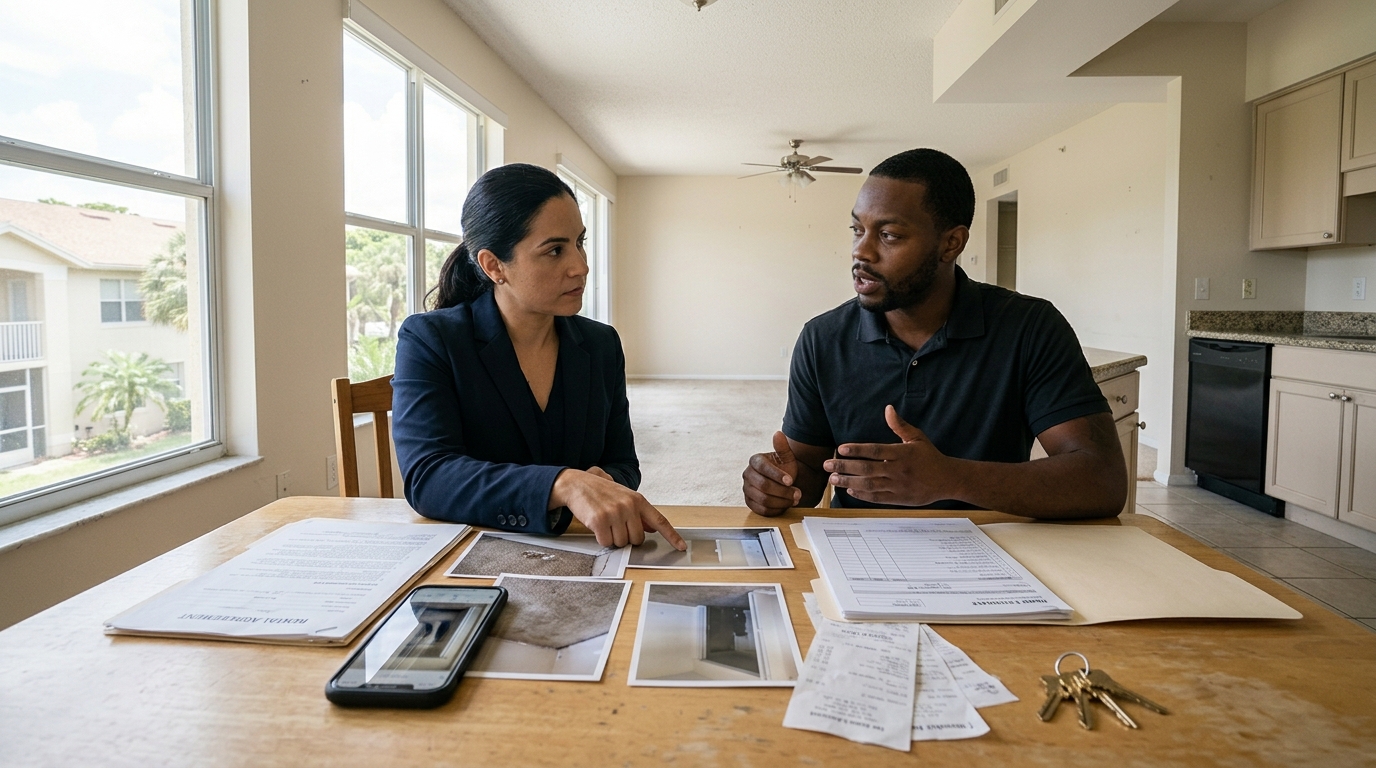
For that reason, both sides should preserve useful records:
- The lease and any amendments
- Move-in and move-out photographs
- Inspection reports
- Messages about repairs
- Photographs of claimed damage
- Repair invoices or estimates
- Proof of rent payments
- The tenant’s forwarding address
- The landlord’s deposit correspondence
A photograph taken on moving day can be considerably more useful than an argument six months later about what the carpet looked like.
What Happens If the Landlord Misses the 30-Day Deadline?
This is one of the most important Florida security deposit rules.
If a landlord fails to give the required notice within the 30-day period, the landlord forfeits the right to impose a claim against the security deposit. The statute still allows the landlord to bring an action for damages after returning the deposit.
That does not mean every late notice automatically ends every dispute between the parties. It means the landlord cannot use the security deposit itself as a setoff after missing the statutory notice deadline.
For a tenant who has been waiting for a deposit, the date the tenancy ended and the date the landlord sent the notice can therefore become important evidence.
What If the Tenant Disagrees With the Deduction?
A tenant who receives a claim against the deposit has 15 days after receiving the notice to object in writing.
The objection should address the actual dispute. If the landlord claims $2,000 for repairs and the tenant believes the property suffered ordinary wear and tear, thing vary. The tenant can explain that disagreement and preserve the relevant evidence.
Photographs, inspection records, repair communications, and the condition of the property at move-in can all become useful.
If the dispute cannot be resolved, either party can bring an action to determine who is entitled to the security deposit. Florida law provides that the prevailing party is entitled to court costs and a reasonable attorney fee in an action concerning the deposit.
That can make the size and strength of the claim relevant when deciding how to proceed.
Does a Florida Security Deposit Earn Interest?
It can.
Florida law allows a landlord to hold a security deposit in a separate non-interest-bearing account, a separate interest-bearing account, or under certain circumstances through a surety bond.
When the deposit is held in an interest-bearing account, the tenant must receive interest calculated under the formula in §83.49. The statute also provides a 5% simple-interest requirement when the landlord uses the specified surety-bond option.
The landlord must also give the tenant written information about how the deposit is being held and whether the tenant is entitled to interest, subject to the statutory exceptions.

What If I Paid a Fee Instead of a Security Deposit?
Florida law now recognizes a separate arrangement in which a landlord may offer a tenant the option to pay a fee in lieu of a security deposit.
That fee is legally different from a traditional security deposit. The arrangement has its own disclosure requirements and rules concerning claims for unpaid rent, fees, and property damage. The statute applies to rental agreements entered into or renewed on or after July 1, 2023.
So if the money paid at the beginning of the tenancy was called a “deposit waiver fee,” “deposit alternative,” or something similar, the first step is to determine what agreement the tenant actually signed.
The ordinary security-deposit rules should not automatically be applied to a different arrangement.
What If the Tenant Never Gave a Forwarding Address?
Give the landlord one.
Florida’s statutory security-deposit notice specifically tells tenants to provide a new address after moving out so the landlord can send notices concerning the deposit. Section 83.49 also contains separate rules concerning a tenant who vacates or abandons a property without giving the required notice.
A forwarding address also removes one very unnecessary source of confusion.
If there is a dispute over the deposit, keep proof that the new address was provided and keep copies of the communication.
Security Deposit Disputes in Coral Springs and Broward County
A security deposit dispute in Coral Springs is governed primarily by Florida’s statewide landlord-tenant law. Florida expressly preempts local regulation of matters covered by Part II of Chapter 83, including security deposits and landlord-tenant notice requirements.
The same statutory framework applies across Broward County and South Florida, whether the rental property is in Coral Springs, Tamarac, Fort Lauderdale, Parkland, or another community.
The facts of the dispute will still be local: the rental property, the lease, the inspection records, the communications between the parties, and the evidence supporting the claimed deduction.
Landlord or tenant? Get the deposit dispute reviewed before it gets bigger.
If you are a tenant and your security deposit was withheld, bring the lease, the landlord’s notice, photographs, and your move-out records to an attorney who can evaluate whether the deduction and notice complied with Florida law.
If you are a landlord, have the lease, deposit records, photographs, invoices, and notice reviewed before assuming a deduction is enforceable. A mistake in the notice or timing can affect your ability to claim against the deposit.
Reinfeld & Cabrera, P.A. represents both landlords and tenants in South Florida landlord-tenant disputes, including security deposit claims. Contact the firm in Coral Springs to discuss the circumstances, review the relevant documents, and determine what legal options may be available.
Frequently Asked Questions
How long does a landlord have to return a security deposit in Florida?
- Generally, 15 days after the tenancy ends if the landlord does not intend to make a claim against the deposit. If the landlord intends to make a claim, the landlord generally has 30 days to provide the required notice.
Can a landlord keep a security deposit for damages in Florida?
- A landlord may have a claim against a security deposit for amounts the tenant owes under the rental agreement, including qualifying damage. The landlord must follow Florida’s statutory notice procedure when making a claim.
What is the 30-day rule for security deposits in Florida?
- If a landlord intends to impose a claim against the security deposit, the landlord generally must give the tenant written notice of the claim and its reason within 30 days after the tenancy ends.
How long does a tenant have to dispute a security deposit deduction in Florida?
- A tenant generally has 15 days after receiving the landlord’s claim notice to object in writing.
What happens if a landlord does not return a security deposit in Florida?
- The answer depends on whether the landlord made a claim and whether the required statutory notices were provided on time. A landlord who misses the 30-day claim-notice deadline forfeits the right to impose a claim against the deposit itself, although the statute allows a later action for damages after the deposit is returned.
This article provides general information about Florida landlord-tenant law and security deposits. It is not legal advice for a particular landlord or tenant, and the outcome of a dispute depends on the lease, the facts, and the applicable law.