
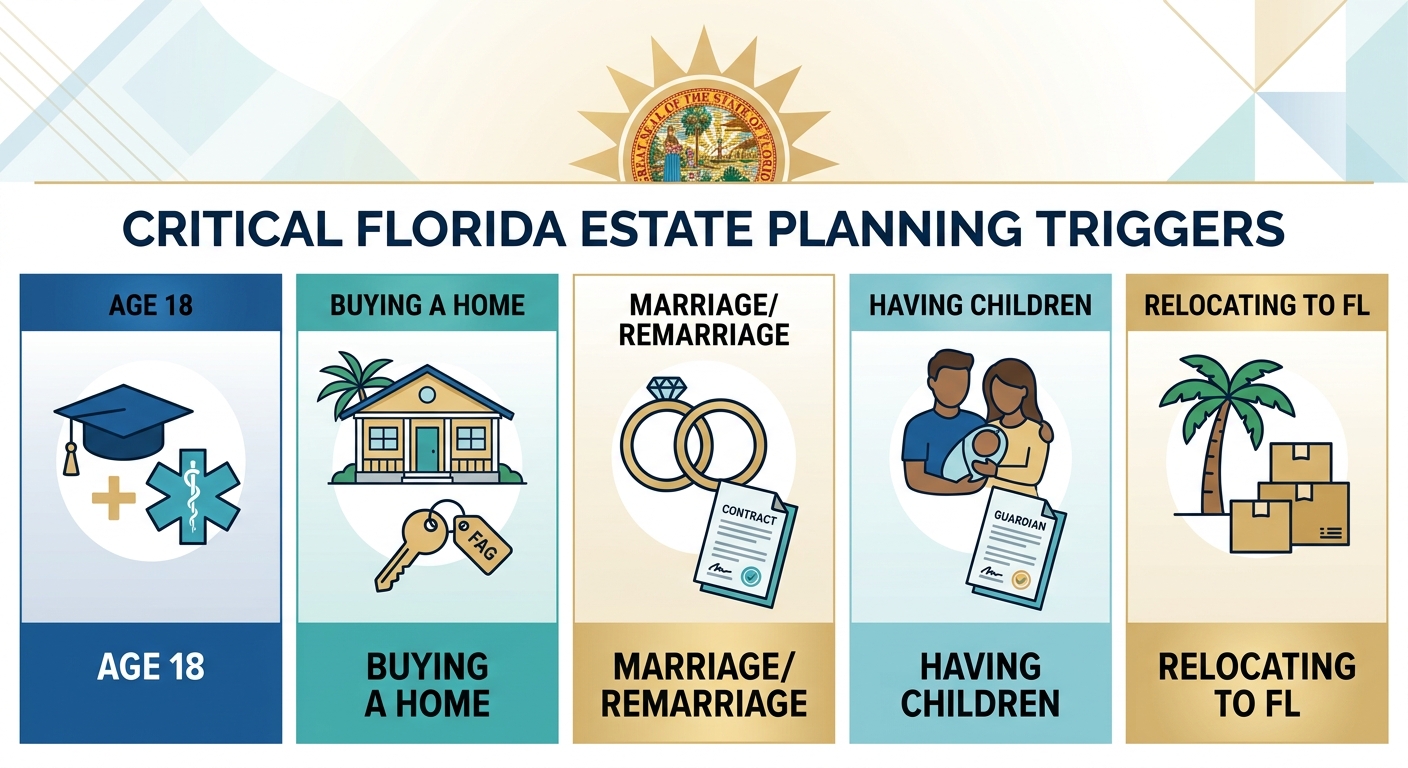
The best time to create or update an estate plan in Florida is immediately upon reaching legal adulthood (age 18) or directly following major life changes, such as acquiring real estate, getting married, having children, or relocating to Florida.
While many people assume estate planning is an end-of-life task triggered by age or net worth, Florida law operates on specific triggers—such as constitutional homestead rules, healthcare decision rights, and asset titling—that take effect regardless of your wealth.
Estate Planning Triggers Matrix: What to Secure & When
Rather than treating estate planning as a single document created at one point in time, effective planning responds to specific life milestones:
| Life Trigger | Primary Focus | Critical Florida Legal Instruments |
| Turning 18 | Medical & Financial Decision-Making | Healthcare Surrogate Designation, Living Will, Durable Power of Attorney |
| Buying Property / Moving to FL | Homestead Protection & Probate Avoidance | Lady Bird Deed (Enhanced Life Estate Deed), Revocable Living Trust |
| Marriage or Remarriage | Asset Coordination & Elective Share Planning | Marital Agreements, Updated Beneficiary Designations, Revocable Trust |
| Having / Adopting Children | Parental Guardianship & Asset Protection | Standby Guardianship Designation, Testamentary/Minor Trusts |
| Career / Business Expansion | Succession & Creditor Protection | Business Power of Attorney, Transfer-on-Death Structures |
Why Timing Matters Under Florida Law
Waiting to create or update an estate plan leaves critical decisions to default state statutes and court procedures. In Florida, three specific factors highlight why early planning is essential:
1. Healthcare Rights at Age 18
- Once a child turns 18, parents no longer have automatic legal authority to view their medical records or make emergency healthcare decisions. Establishing a Healthcare Surrogate and Durable Power of Attorney ensures loved ones can act in a crisis without requiring court-ordered guardianship.
2. Florida Constitutional Homestead Rules
- Florida’s constitutional homestead protections (Fla. Const. art. X, § 4) restrict how a primary residence can be transferred if a homeowner dies while survived by a spouse or minor child. Planning early prevents unintended devises that conflict with state homestead law.
3. Coordinating Assets Beyond a Will
- A will alone does not avoid probate court in Florida. Assets with direct beneficiary designations (like life insurance or retirement accounts) or property titled with rights of survivorship bypass a will entirely. Coordinating asset titles and trust funding early prevents conflicting inheritance outcomes.
Incapacity vs. After-Death Planning: The Hidden Gap in Timing
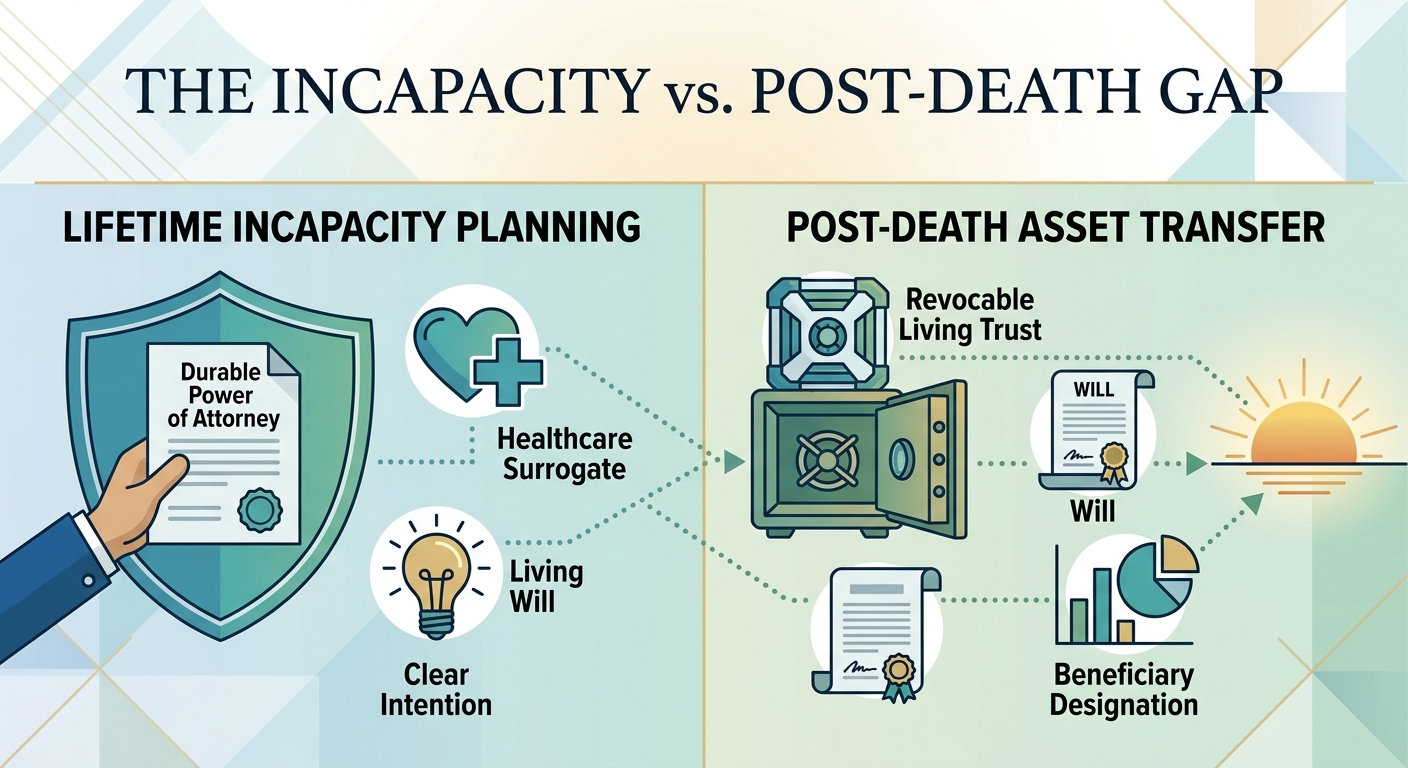
Most people assume estate planning only dictates what happens after death. However, the most urgent reason to plan early is managing sudden incapacity during your lifetime.
In Florida, if an unexpected illness or injury leaves you unable to communicate or handle financial decisions, loved ones cannot automatically sign documents or manage accounts on your behalf—even if you are legally married.
Without proactive planning, your family must petition the court for a costly, time-consuming legal guardianship.
┌────────────────────────────────────────────────────────────────────────┐
│                        TWO PATHS OF ESTATE PLANNING                    │
├───────────────────────────────────┬────────────────────────────────────┤
│         LIFETIME INCAPACITY       │          POST-DEATH TRANSFERS      │
├───────────────────────────────────┼────────────────────────────────────┤
│ • Durable Power of Attorney       │ • Revocable Living Trust           │
│ • Healthcare Surrogate            │ • Last Will and Testament          │
│ • Living Will                     │ • Lady Bird (Life Estate) Deeds    │
│ • Pre-Need Guardian Designation   │ • Pay-on-Death (POD) Designations  │
└───────────────────────────────────┴────────────────────────────────────┘
By putting lifetime incapacity documents in place early, you ensure trusted individuals can manage your healthcare and financial affairs immediately without judicial intervention.
Take Control of Your Future Today
You do not need a massive fortune or decades of preparation to protect your family—you simply need an estate plan that aligns with Florida law and responds to your life’s milestones.
Whether you are securing your first property, starting a family, or relocating to South Florida, waiting until “someday” leaves critical decisions to courts and rigid default laws.
Protect what matters most before life forces an unexpected decision. Contact Reinfeld Cabrera P.A today at (954) 866-4878 or schedule a consultation online to review your estate plan with our experienced Broward County legal team.
Frequently Asked Questions
What happens if I move to Florida with an estate plan created in another state?
- While Florida law generally recognizes out-of-state wills, specific instruments (like real estate deeds, durable powers of attorney, and healthcare directives) must strictly comply with Florida statutes to function properly. Additionally, out-of-state plans rarely account for Florida’s unique constitutional homestead restrictions.
Can I change my estate plan after it is created?
- Yes. Most foundational estate plans utilize revocable living trusts and alterable wills. As long as you maintain legal capacity, you can update, amend, or completely revoke your documents whenever major family or financial life triggers occur.
How does a Revocable Living Trust help during my lifetime?
- A properly funded revocable trust acts as both a lifetime management tool and an estate transfer vehicle. If you become incapacitated, your designated successor trustee can seamlessly step in to manage trust assets without needing court permission.
Is a Last Will and Testament sufficient on its own in Florida?
- A will is essential for nominating personal representatives and naming legal guardians for minor children. However, a will alone does not avoid probate court or manage assets during lifetime incapacity. Complete plans combine wills with trusts and incapacity directives.