
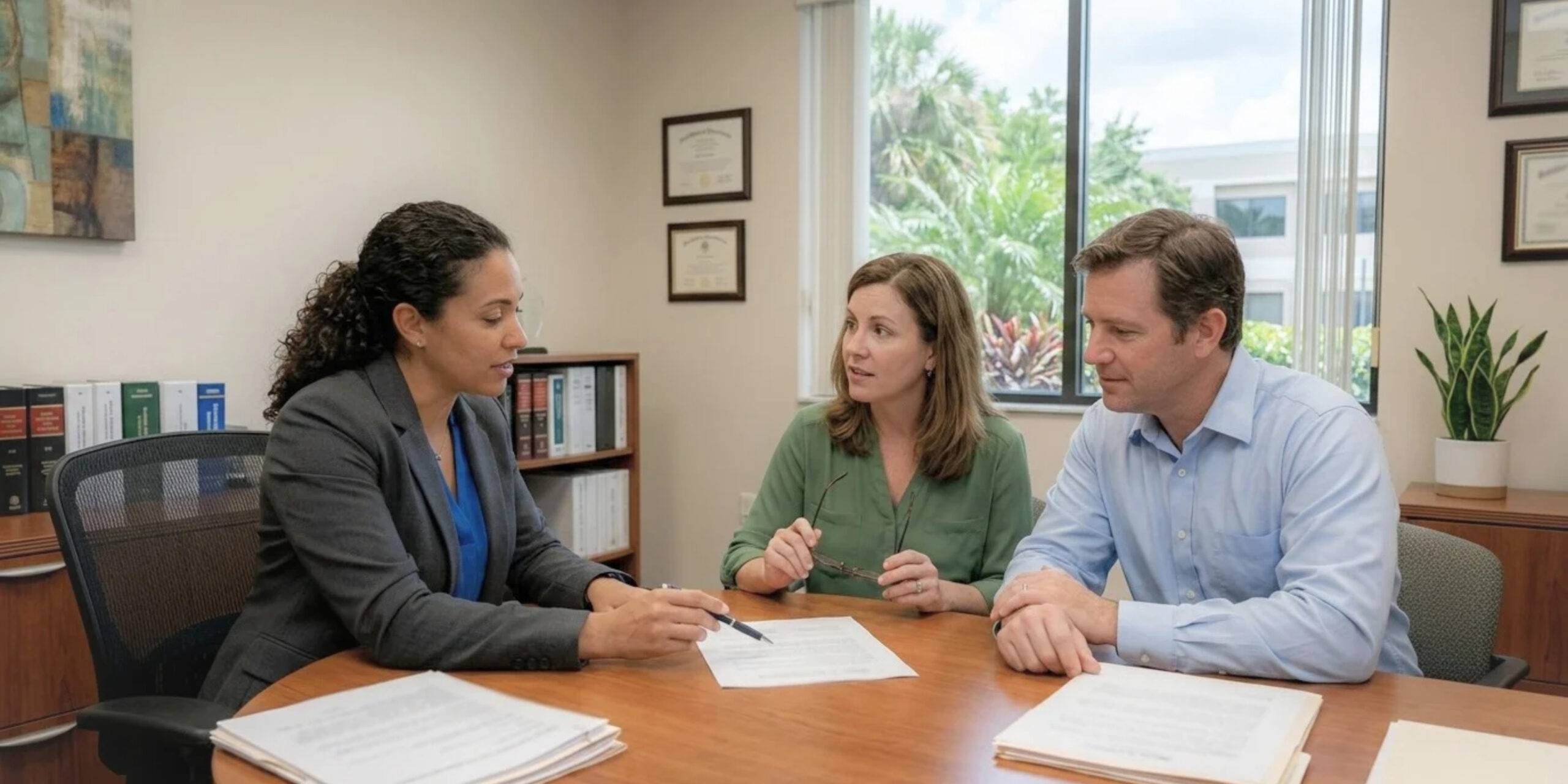
A real estate closing can look deceptively simple. The buyer signs documents, the seller signs documents, money changes hands, and the property changes ownership.
The legal work behind that moment is considerably less simple.
A Florida real estate attorney can review the purchase contract, examine title issues, address liens and other encumbrances, review the closing documents, and advise a buyer or seller when the transaction does not proceed exactly as expected. That work may begin weeks before the closing date.
For someone who already has a real estate agent, lender, title company, or closing agent, it is reasonable to ask what a separate attorney actually does. The answer depends on the transaction, but the attorney’s role is generally to provide legal advice to the client whose interests the attorney represents.
The Florida Bar recommends consulting a Florida licensed real estate lawyer before signing a purchase contract. It also points out that the closing agent may be an attorney without representing the individual buyer’s or seller’s interests.
The Lawyer’s Work Often Starts Before the Closing
The closing is the final stage of a transaction that began with a contract.
That contract determines the purchase price, deposit, financing arrangements, inspection rights, title requirements, closing date, possession, closing costs, and the obligations of both parties. It can also establish what happens when one side fails to perform.
Those provisions matter when the transaction develops a problem.
Suppose the seller discovers that an old mortgage was never properly released. Or the buyer learns that a title objection has not been resolved. Perhaps the parties disagree about whether a repair was required under the contract, or whether a closing deadline can be extended.
Those questions cannot be answered by looking only at the documents being signed on closing day. The purchase agreement, amendments, correspondence, title documents, and applicable Florida law may all matter.
That is one reason the Florida Bar recommends having a lawyer review the purchase contract before it is signed. Standard forms contain many provisions, but the parties can negotiate terms and add provisions that change their rights and obligations.
What Does a Real Estate Attorney Review?
The attorney may review the purchase agreement and the documents generated during the transaction. Depending on the property and the circumstances, that can include:
- The purchase and sale agreement
- Addenda and amendments
- Title commitments and title evidence
- Deeds
- Mortgages and other recorded instruments
- Liens and judgments
- Easements and restrictions
- Survey issues and possible encroachments
- Closing statements
- Tax and other prorations
- Repair credits and other concessions
- Financing documents
- Possession provisions
- Documents prepared for signing at closing
The attorney is also looking at how these documents fit together.
For example, a closing statement might contain a credit that was negotiated in an amendment to the purchase contract. A title commitment might identify an exception that needs to be addressed before the buyer can receive the title insurance coverage expected under the transaction. A survey might reveal an encroachment that was not apparent when the contract was signed.
The point is not to read every document in isolation. The documents have to be consistent with the transaction the parties actually agreed to.
Why Title Problems Can Delay a Closing
Title is one of the biggest legal issues in a real estate transaction because ownership is not established simply by the seller saying that the property belongs to them.
A title examination can reveal mortgages, tax liens, judgments, easements, restrictions, probate issues, prior conveyances, or other matters affecting the property. The Florida Bar notes that a title examination may involve records going back many years and that problems can originate in areas such as probate, divorce, foreclosure, inheritance, and previous financing.
Some problems are relatively easy to correct. Others require additional documents, negotiations, or legal proceedings.
The purchase contract also matters because it may give the buyer a specific period to examine the title and notify the seller of objections.
Florida courts have enforced those contractual deadlines. In Davis v. Ivey, 984 So. 2d 571 (Fla. 5th DCA 2008), the buyers had 15 days after receiving title evidence to examine the title and notify the seller of defects. The seller provided the title evidence only one day before the scheduled closing. The appellate court held that the contractual examination period still applied.
That kind of dispute illustrates why a closing date does not tell the entire story. The contract may give the parties rights that continue to operate as the closing approaches.

Is the Closing Agent Your Attorney?
Not necessarily.
A title company or settlement agent may handle many of the practical steps required to complete the transaction. That can include preparing or coordinating documents, receiving and disbursing funds, recording documents, satisfying title requirements, and communicating with the parties.
The closing agent’s role does not automatically create an attorney-client relationship with the buyer or seller.
The Florida Bar specifically warns consumers that a closing agent may be a lawyer but may not represent their individual interests.
This distinction becomes important when the parties have competing interests. If the buyer and seller disagree about a contractual provision, for example, the buyer may need independent legal advice rather than assuming that the person conducting the closing is there to advise the buyer.
What Happens When the Closing Statement Changes?
The money being exchanged at closing has to match the transaction.
The settlement statement can include the purchase price, deposit, loan proceeds, taxes, insurance, title charges, recording fees, commissions, credits, prorations, payoff amounts, and other expenses.
Some of these figures are routine. Others may require explanation.
A repair credit negotiated after the original contract was signed should appear consistently in the closing documents. A mortgage payoff should correspond with the amount required to satisfy the seller’s loan. Property taxes may need to be prorated according to the terms of the transaction and the relevant tax period.
A lawyer reviewing the closing documents can compare them with the contract and identify discrepancies that need to be resolved before signing.
Be Careful With Wire Instructions
Wire fraud deserves particular attention during a real estate transaction because large sums of money are commonly transferred shortly before or at closing.
The Florida Bar advises consumers to independently and personally verify wire instructions rather than relying on an email containing payment information.
That advice is worth taking literally. If someone sends new instructions shortly before closing, call the intended recipient using a telephone number you already know to be legitimate. Do not assume that an email is genuine because it contains familiar names, logos, or details from the transaction.
Florida Homestead Law Can Affect the Documents
Florida’s homestead rules create additional legal considerations for qualifying homestead property.
Section 196.031 of the Florida Statutes addresses the homestead exemption for qualifying permanent residences. Florida law also contains specific rules concerning the conveyance and mortgaging of homestead property. Section 689.111 addresses circumstances involving a married owner’s spouse.
These rules can affect the documents required for a transaction and whether a deed or mortgage has been properly executed.
Homestead status can also intersect with estate planning, ownership, and family circumstances. An attorney therefore needs to look at the property and the people involved rather than assuming that every Florida residential closing follows the same set of rules.
What If Something Goes Wrong at Closing?
A closing does not automatically become a lawsuit because a problem appears.
The parties may be able to correct a document, obtain a lien release, resolve a title objection, amend the contract, adjust the closing figures, or agree on another solution. The appropriate response depends on the nature of the problem and the rights established by the contract.
The legal question may become more serious when one party refuses to perform.
If a seller cannot deliver the title required by the agreement, a buyer may have contractual remedies. Maybe a buyer fails to provide required funds or financing, the seller may have rights under the contract. If the parties disagree about whether a condition has been satisfied, the language of the agreement can become central to the dispute.
This is why the purchase contract deserves attention before closing rather than being treated as paperwork that has already served its purpose.

Do You Need a Real Estate Attorney for a Florida Closing?
There is no single answer for every transaction.
A straightforward residential purchase may involve relatively few legal complications. Other transactions can involve title defects, probate issues, divorces, liens, boundary disputes, unusual financing arrangements, commercial property, seller financing, significant contract amendments, or disagreements between the parties.
Those circumstances can change the legal work required.
The Florida Bar recommends having a qualified Florida real estate lawyer review a purchase contract before it is signed, particularly because standard contracts can be modified and because the consequences of contractual language can be significant.
If you are considering hiring an attorney, ask what the attorney will actually review and what representation includes. You should know whether the lawyer will examine the purchase agreement, communicate with the title company, review title issues, examine the closing documents, and advise you about disputes that arise before closing.
Real Estate Closings in Coral Springs and Broward County
A Coral Springs real estate transaction follows Florida law, but the property itself has its own history.
The relevant records can include prior deeds, mortgages, liens, easements, tax information, surveys, condominium or homeowners’ association documents, and other records affecting the property.
That history matters because two properties in the same neighborhood can have completely different title issues.
For buyers and sellers in Coral Springs and Broward County, a real estate attorney can review the particular property and transaction rather than relying on assumptions about how a typical closing should proceed.
Questions to Ask a Real Estate Attorney
Before hiring a Florida real estate attorney, ask specific questions about the work you need:
- Will you review my purchase contract before I sign it?
- Will you review the title commitment and identify title problems?
- Who will communicate with the title company or closing agent?
- Will you review the final closing statement?
- What happens if a lien or other title defect appears?
- What happens if the other party misses a contractual deadline?
- Will you review the documents before I sign them?
- Who will handle my matter?
- How will the legal fees be calculated?
The answers should give you a clear idea of what the attorney will actually do during the transaction.
Talk With a Coral Springs Real Estate Attorney
Reinfeld & Cabrera, P.A. represents clients in Coral Springs and throughout Broward County in real estate matters.
If you are buying or selling property and want legal advice about the contract, title, closing documents, or another issue affecting the transaction, contact the firm to discuss your circumstances with an attorney.