
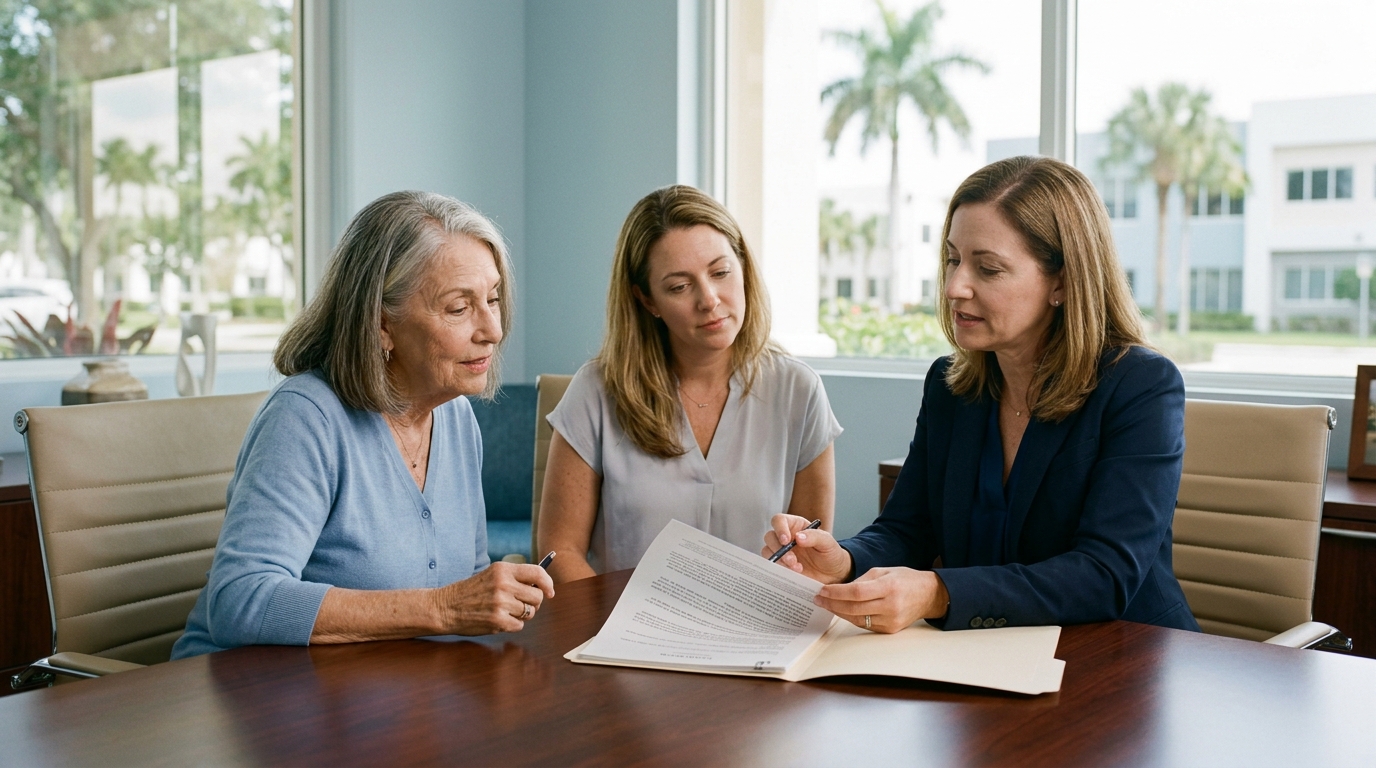
Elder law can sound like a narrow area of practice. It is anything but.
A family may encounter elder law because a parent is beginning to lose the ability to manage finances. It may arise when someone needs long term care and the family is trying to understand how that care will be paid for. It may involve a power of attorney, a guardianship, Medicaid planning, financial exploitation, or a disagreement over who should be making important decisions.
Sometimes the legal issue is obvious. Sometimes it is not.
That is part of what makes elder law different from simply hiring an attorney to handle a single document or transaction. The lawyer may need to look at capacity, health care, finances, public benefits, property, family relationships, and the legal authority that one person has to act for another.
The Florida Bar’s own definition of elder law reflects that breadth. The specialty includes planning for aging, illness and incapacity, along with estate planning, probate, guardianship, nursing home claims, public benefits, elder abuse and related litigation.
When Is an Elder Law Attorney the Right Lawyer to Call?
The easiest way to understand elder law is to forget the label for a moment and look at the problem in front of you.
Consider a few situations.
- Your mother is still living independently, but you are becoming concerned about what would happen if she could no longer manage her finances or make medical decisions.
- Your father needs nursing home care, and the family is trying to understand what Medicaid will cover and what financial consequences may follow.
- An older relative has given someone access to bank accounts, and money appears to be disappearing.
- A parent never created a durable power of attorney, and now family members disagree about who should handle financial affairs.
- A family is considering guardianship because an older adult can no longer manage certain aspects of daily life.
These are very different problems. They can nevertheless fall within the same legal specialty.
Choosing an elder law attorney is not about finding someone who handles one particular document. Look for someone who understands how these issues interact.
If You Are Planning Before There Is a Crisis
The best time to confront many elder law issues is before a crisis makes the decisions for you.
Florida law provides several tools for planning around incapacity, including durable powers of attorney and advance health care directives. A health care surrogate can play an important role in medical decision making, while other planning documents can establish who has authority to act when a person can no longer do so independently. The Florida Bar identifies these instruments as part of the broader field of elder law.
The important point is not simply having paperwork.
The documents need to reflect the person’s wishes and circumstances. They also need to work together with the person’s financial and estate planning.
That is where an elder law attorney can provide something more substantial than a stack of forms. The attorney can examine what authority exists. He or she can see what authority may be needed, and what could happen if the person later loses capacity.
Capacity is more than often the dividing line.
While someone can make and change important decisions for themselves, planning may be available. Once capacity becomes seriously impaired, the family may have to rely on existing documents or turn to a court.
When a Parent or Spouse Is Losing Capacity
This is where elder law becomes particularly important.
Families sometimes assume that a spouse or adult child automatically has the legal authority to take over when an older person can no longer manage affairs. That is not necessarily how the law works.
If there is no adequate planning in place, guardianship may become an issue.
Florida guardianship proceedings are handled through the circuit courts under Chapter 744. A court may determine that a person is incapacitated and appoint a guardian to exercise particular legal rights. Importantly, Florida law recognizes that guardianship should be the least restrictive appropriate alternative. Most the time it sustains that an incapacitated person retains rights consistent with his or her abilities.
That difference matters.
Guardianship is not simply a legal mechanism for giving one family member control over another. It is a court supervised process involving the removal and delegation of specific rights.
Florida law also protects the rights of people who have been determined incapacitated. This includes rights involving dignity, independence, access to the courts, counsel, and continuing review of restrictions on their rights.
An elder law attorney may therefore become involved before a guardianship proceeding, during the proceeding. Or in disputes concerning an existing guardianship.
When Long Term Care Becomes a Financial Problem
Long term care can turn an ordinary family financial plan into a complicated legal problem surprisingly quickly.
Medicaid planning is one of the better known areas of elder law because eligibility for long term care benefits involves detailed federal and Florida rules concerning income, assets, transfers, exemptions, and other circumstances.
The Florida Bar’s current elder law education materials specifically describe Medicaid planning as an area in which elder law attorneys use federal and state rules to help clients legally and ethically protect assets and income when skilled long term care may be necessary.
This is also an area where timing affects the results.
A family that waits until admission to a nursing facility may be dealing with a very different set of circumstances from a family that begins planning years earlier. The appropriate strategy depends on the person’s assets, income, health situation, family circumstances, existing documents, and the applicable Medicaid rules.
For that reason, Medicaid planning should not be reduced to a simple question of whether someone is “over the limit.” Eligibility is a legal analysis, not a single number.

When Someone May Be Taking Advantage of an Older Adult
Not every elder law problem begins with a hospital, nursing facility, or court.
Sometimes it begins with a bank statement.
A caregiver starts using an older person’s money. A relative suddenly changes ownership of property. Someone with access to a power of attorney begins making transactions that appear to benefit themselves. An older adult may also be pressured into giving away assets or signing documents they do not fully understand.
Florida law specifically addresses exploitation of elderly persons and disabled adults. Section 825.103 includes conduct involving the unauthorized use of an older person’s funds, assets, or property, including circumstances involving people in positions of trust and confidence and certain breaches of fiduciary duty by guardians, trustees, and agents acting under powers of attorney.
The law also provides a civil cause of action for an injunction to protect a vulnerable adult from exploitation in qualifying circumstances.
These matters can require more than identifying that something feels wrong. The relevant documents, financial transactions, authority granted under a power of attorney, property records, and relationships between the people involved may all need to be examined.
Where Elder Law Meets Estate Planning and Probate
Elder law also overlaps naturally with estate planning and probate.
That does not mean every estate planning matter is an elder law matter. A straightforward will or trust may have little to do with elder law.
The overlap becomes more significant when planning involves incapacity, long term care, public benefits, special needs, guardianship, fiduciary responsibilities, or protecting an older person’s ability to control property and financial decisions.
This is also why the old idea that elder law is primarily about “estate taxes” misses the modern picture.
Florida does not impose a separate state estate tax on people who died after December 31, 2004. The Florida Department of Revenue confirms that the state no longer requires the former Florida estate tax affidavits for estates subject to the current rules.
Estate planning remains relevant to elder law, but the important questions are broader: who can act, when can they act, what authority do they have, what happens if capacity changes, and how should assets and responsibilities be handled?
What Should You Ask an Elder Law Attorney?
If you are meeting with an elder law attorney for the first time, the most useful questions are usually practical.
Ask whether the attorney regularly handles the type of problem you are facing. Ask what legal authority currently exists and what happens if the person’s capacity changes. If Medicaid or long term care is involved, ask what information the attorney needs before discussing eligibility or planning.
It is also reasonable to ask about experience with guardianship, powers of attorney, public benefits, exploitation, probate, or other areas that may overlap with your situation.
Board certification can provide another useful credential to investigate. The Florida Bar’s elder law certification requires at least five years of legal practice, substantial involvement in elder law, continuing legal education, peer review, and a written examination.
Certification is not the only measure of an attorney’s experience. But where it exists, it is a meaningful indication of specialized training and practice.
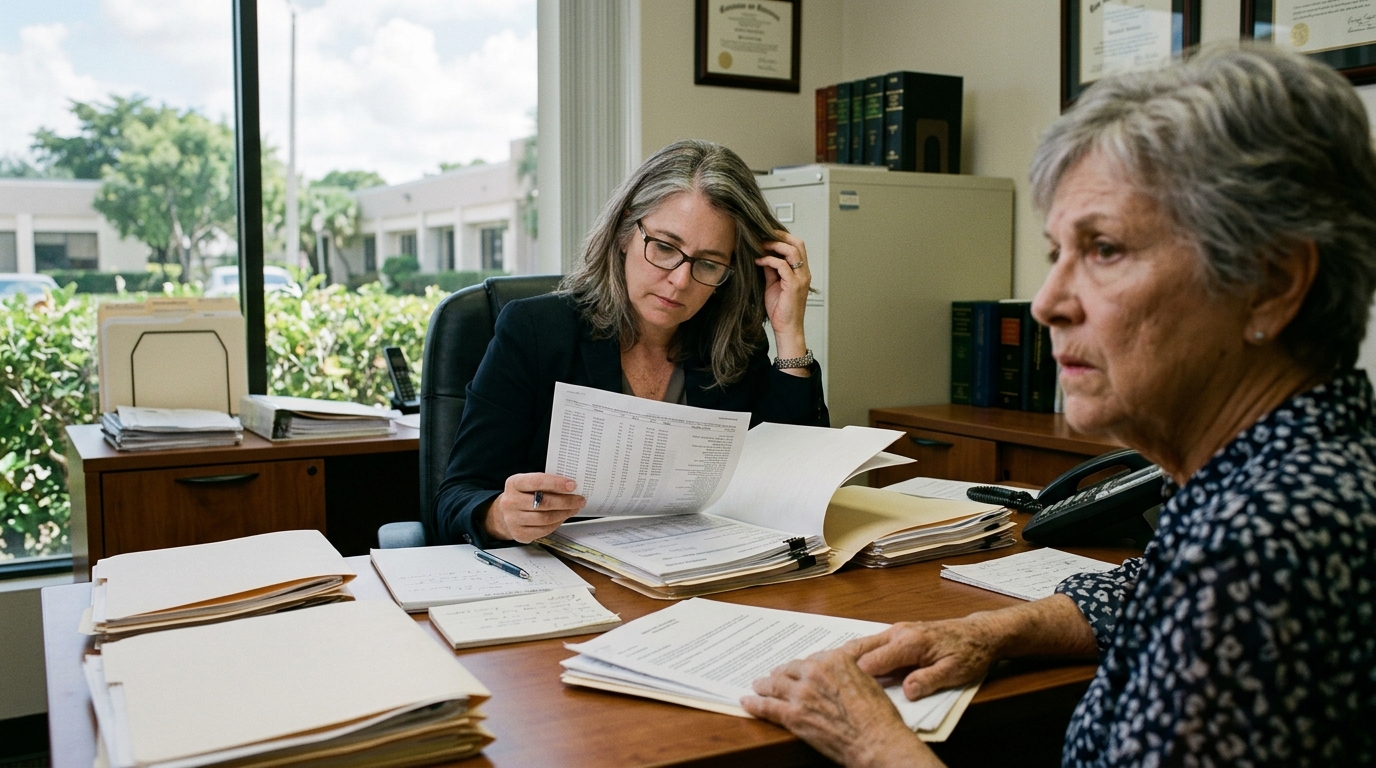
The Right Question May Be “What Happens Next?”
If you are reading about elder law because something has already happened in your family, you probably do not need a textbook definition of the field.
You need to understand what kind of legal problem you are looking at.
Is this a planning issue? A capacity issue? A Medicaid or long term care problem? A guardianship matter? A dispute over someone’s authority to act? Possible financial exploitation? A probate or estate planning issue that has become more complicated because of age, illness, or incapacity?
Those distinctions matter because the legal response can be very different.
At Reinfeld & Cabrera, our elder law practice helps families address the legal issues that arise as people age, including incapacity planning, guardianship, long term care and Medicaid planning, and related financial and estate concerns. The goal is to understand the circumstances first, identify the legal issues that actually matter, and then determine what needs to be done.
If an older family member’s finances, health care decisions, capacity, or long term care has created a legal problem, contact Reinfeld & Cabrera in Coral Springs to discuss the circumstances with an elder law attorney.
Frequently Asked Questions
What does an elder law attorney do in Florida?
- An elder law attorney may handle incapacity planning, powers of attorney, health care directives, guardianship, Medicaid and long term care planning, elder exploitation matters, estate planning, probate, and related disputes.
When should I contact an elder law attorney?
- You can contact an elder law attorney before a crisis, particularly when planning for incapacity or future long term care. An attorney may also become important when a person is already losing capacity, facing guardianship, applying for long term care benefits, or experiencing possible financial exploitation.
Is guardianship always necessary when an older person loses capacity?
- No. Florida law requires consideration of less restrictive alternatives when appropriate. Existing planning documents, including a durable power of attorney, advance health care directives, or certain trusts, may affect whether guardianship is necessary.
Does elder law include Medicaid planning?
- Yes. Medicaid planning for long term care is a recognized part of elder law practice, and the applicable rules can be highly fact specific.
Can an elder law attorney help if someone is exploiting an older relative?
- Potentially. Florida law addresses financial exploitation of elderly persons and disabled adults, including certain misuse of property and breaches of fiduciary duty. The appropriate legal response depends on the facts and the authority involved.