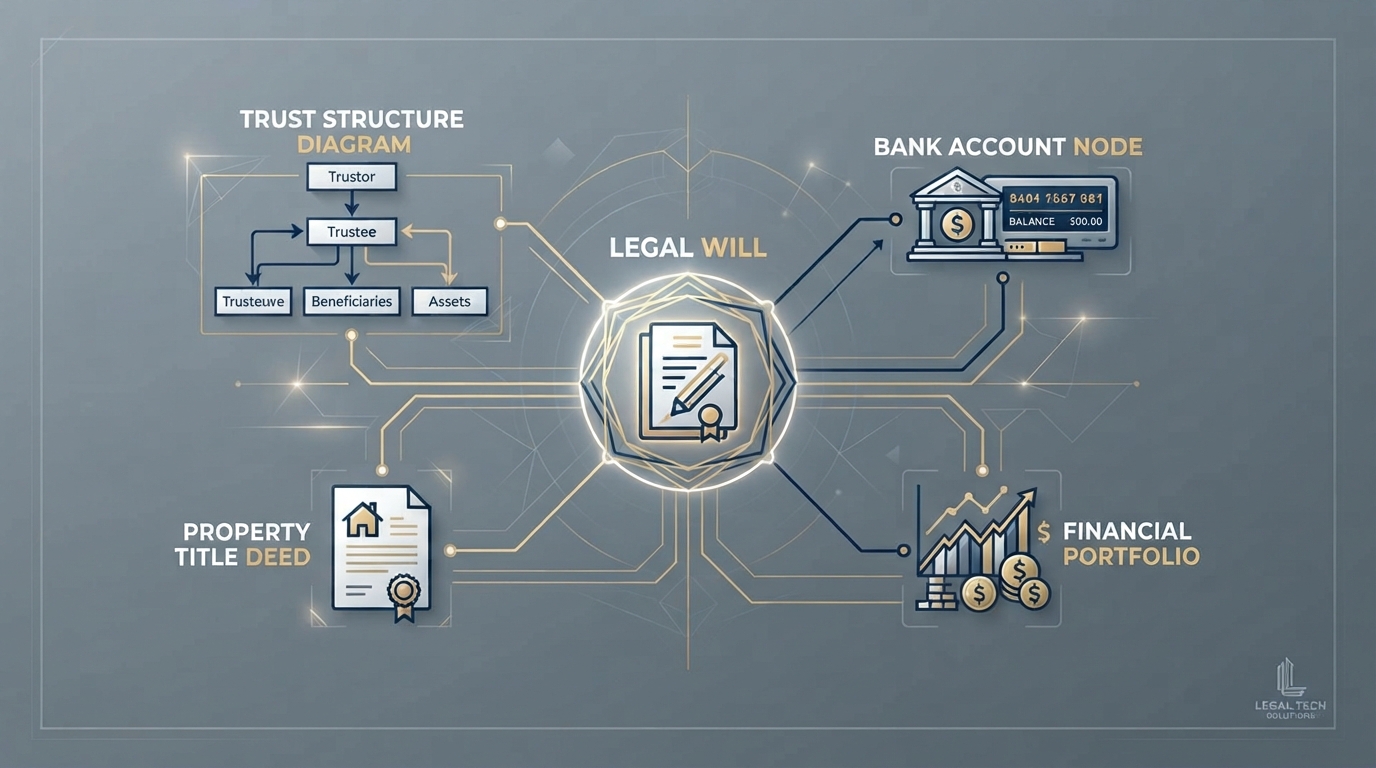
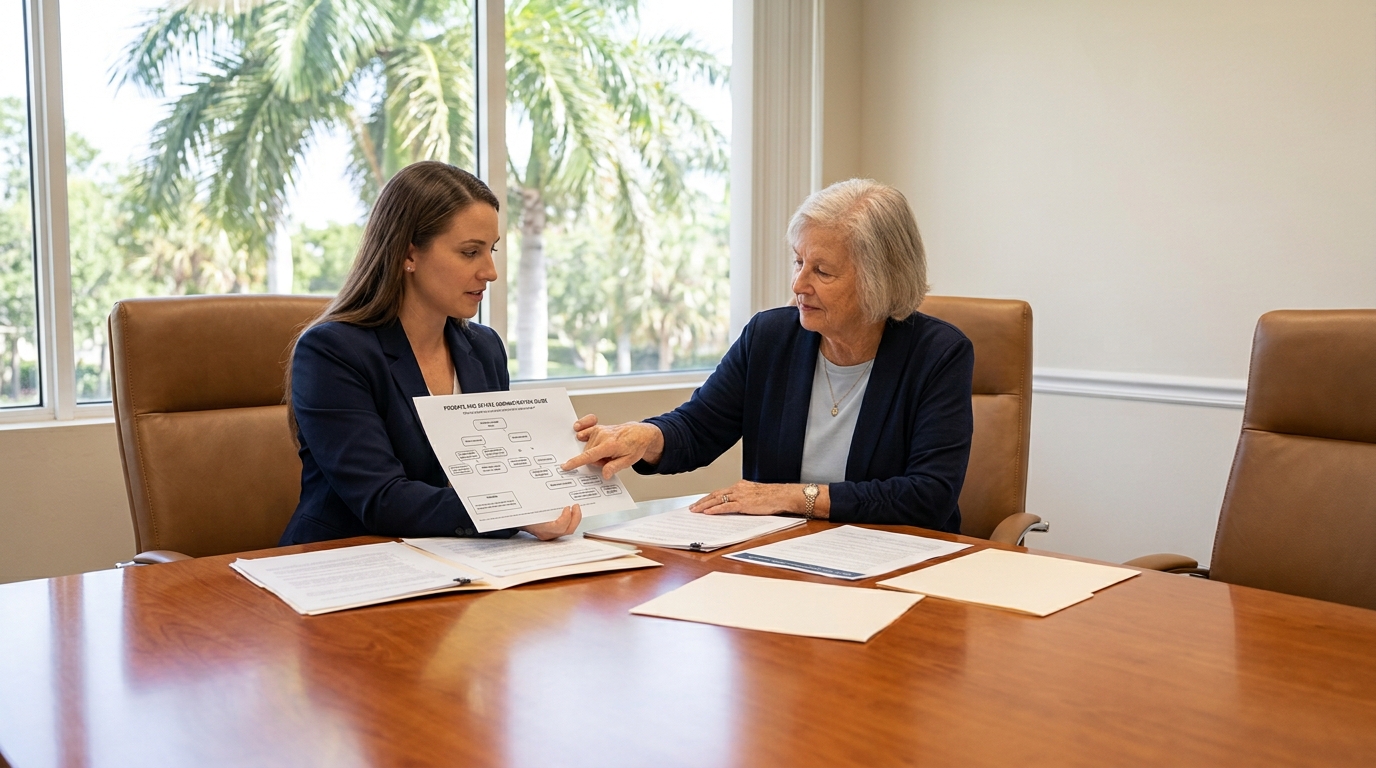
Estate planning is the process of deciding how your property, financial affairs, and health care decisions should be handled during your lifetime, during periods of incapacity, and after your death.
For families in Coral Springs and throughout Broward County, an estate plan may include a will, revocable trust, durable power of attorney, health care surrogate designation, living will, preneed guardian designation, or other documents depending on the person’s circumstances.
There is no single set of documents that every person needs. The important question is whether the plan addresses the situations that could actually affect you and your family.
What Does an Estate Plan Actually Do?
A basic estate plan addresses two different periods of life.
During your lifetime, it can establish who may manage financial matters or make health care decisions if you become unable to make those decisions yourself.
After your death, it can determine who receives your property, who administers your estate, who manages assets held in trust, and how certain property should be transferred.
Those functions are handled by different documents. A will, for example, does not give someone authority to manage your finances while you are alive. A health care surrogate designation does not determine who inherits your house. A durable power of attorney does not replace a will.
Understanding those distinctions is one of the foundations of effective estate planning.
1. Last Will and Testament
A last will and testament allows you to state how certain property should be distributed after your death and nominate a personal representative to administer your estate.
A will can also address other matters, including the nomination of a guardian for minor children.
But there is an important misconception to avoid:
Having a will does not automatically avoid probate.
A will generally becomes effective through the probate process when it governs probate assets. Property may instead pass outside probate through mechanisms such as joint ownership, beneficiary designations, or a properly funded trust.
Recent Florida litigation illustrates how specific the probate process can become. In Property Solutions Powerhouse, LLC v. Nelson, decided by Florida’s Second District Court of Appeal in 2025, the court addressed a dispute involving a lost will, probate, notice to interested persons, and Florida homestead. The court ultimately upheld the administration and concluded that the decedent, who had no surviving spouse or children, could devise her homestead to the named beneficiary.
The case is a useful reminder that having a will does not mean every question about an estate is automatically settled. The validity of the will, the identity of interested persons, the nature of the property, and Florida’s homestead rules can all matter.
2. Revocable Living Trust
A revocable living trust allows a person to place assets into a trust during life and establish instructions for how those assets should be managed during incapacity and distributed after death.
The person creating the trust can generally retain control while capable and can name a successor trustee to take over management if necessary.
A revocable trust can also help keep properly funded trust assets outside ordinary probate administration. But the trust has to be properly funded. Simply signing a trust agreement does not automatically transfer every asset into it.
The trust is therefore only one part of an estate plan. Its effectiveness depends on how the document is structured, which assets are transferred to it, and how the rest of the estate plan is coordinated.
For a more detailed explanation, see What Is a Revocable Living Trust in Florida?
3. Durable Power of Attorney
A durable power of attorney allows you to authorize another person, called an agent, to act on your behalf within the authority granted by the document.
In Florida, a power of attorney is durable when it contains language showing that the authority continues despite the principal’s subsequent incapacity. Florida law also establishes specific execution requirements, including signing by the principal and two subscribing witnesses and acknowledgment before a notary in the circumstances specified by statute.
The scope of an agent’s authority depends on the powers granted in the document and Florida law.
This is why simply assuming that a spouse or adult child can handle everything for you can create problems. Ownership of a bank account or property does not automatically give another person authority to act on your behalf concerning assets or legal matters that belong to you individually.
A properly prepared power of attorney can be particularly important when someone becomes incapacitated and needs another person to handle financial or legal matters without waiting for a guardianship proceeding.
4. Health Care Surrogate Designation
A health care surrogate designation allows you to name someone to make health care decisions for you if you become unable to make those decisions yourself.
Florida law provides that a designated surrogate may have authority to make health care decisions during the principal’s incapacity, subject to the principal’s instructions and any limitations placed on the surrogate’s authority.
The designation is different from a living will.
A health care surrogate designation identifies who may make health care decisions.
A living will communicates your wishes concerning life prolonging procedures in specified medical circumstances.
Those documents can work together.
Florida law also provides a mechanism for judicial review when an interested person believes, among other things, that a surrogate’s decision conflicts with the patient’s known wishes, that the advance directive is ambiguous, or that the surrogate has abused their authority.
5. Living Will
A Florida living will allows a competent adult to state preferences concerning life prolonging procedures if the person later has a terminal condition, end stage condition, or is in a persistent vegetative state.
Florida law establishes specific execution requirements and provides that a properly executed living will creates a rebuttable presumption of clear and convincing evidence of the person’s wishes.
A living will therefore serves a different purpose from a health care surrogate designation.
The surrogate is the person who may make health care decisions within the authority granted.
The living will communicates your own instructions about life prolonging treatment in the circumstances covered by the document.
6. Preneed Guardian Designation
Florida law also allows a competent adult to name a preferred guardian in advance.
A preneed guardian designation is a written declaration naming the person the individual wants to serve as guardian if a court later determines that the individual is incapacitated. Florida law requires the declaration to be signed in the presence of at least two witnesses. If an incapacity proceeding is later filed, the declaration creates a rebuttable presumption that the designated person should serve, although the court is not required to appoint someone who is unqualified.
The distinction is important: a preneed guardian designation does not eliminate the possibility of a guardianship proceeding. Instead, it allows the individual to express a preference before incapacity occurs.
When Estate Planning Documents Have to Work Together
Estate planning documents are most useful when they form a coordinated plan rather than a collection of unrelated forms.
For example:
A will can address probate assets and nominate a personal representative.
A revocable trust can govern assets properly transferred to the trust.
A durable power of attorney can authorize an agent to handle financial and legal matters during incapacity.
A health care surrogate designation can identify someone to make health care decisions.
A living will can communicate wishes concerning life prolonging procedures.
A preneed guardian designation can identify a preferred guardian if a guardianship proceeding becomes necessary.
The documents can also interact with beneficiary designations, jointly owned property, retirement accounts, insurance policies, business interests, and real estate.
That is why changing one document without reviewing the rest of the plan can create unintended results.
A Florida Case Shows Why Advance Planning Matters
A recent Florida appellate decision provides an unusually clear example of how these documents can operate together.
InFrank v. Frank, decided by Florida’s Fourth District Court of Appeal in 2026, a woman had executed a durable power of attorney, health care surrogate designation, trust, and will before a guardianship dispute arose. The documents named her daughter, Alicia, to manage her affairs and established her intentions concerning the family home and estate.
The trial court later appointed a different person despite those prior designations. The Fourth District Court of Appeal reversed because the lower court had failed to make the specific findings required to overcome the statutory presumption supporting the woman’s previously expressed choice. The appellate court emphasized that the record showed she had repeatedly confirmed her estate planning decisions before the guardianship dispute.
The case does not mean that a person’s chosen agent or guardian can never be replaced. It demonstrates something more practical: advance planning can provide evidence of a person’s wishes before a family dispute reaches court.
An older Florida Fourth District case, Martinez v. The Guardianship of J. Alan Smith, similarly involved a person who had executed a health care surrogate designation, preneed guardian designation, and durable power of attorney before suffering a serious injury.
The appellate court reversed because the trial court had not made the required finding that the person’s chosen representative was contrary to the ward’s best interests.
What Happens If You Do Nothing?
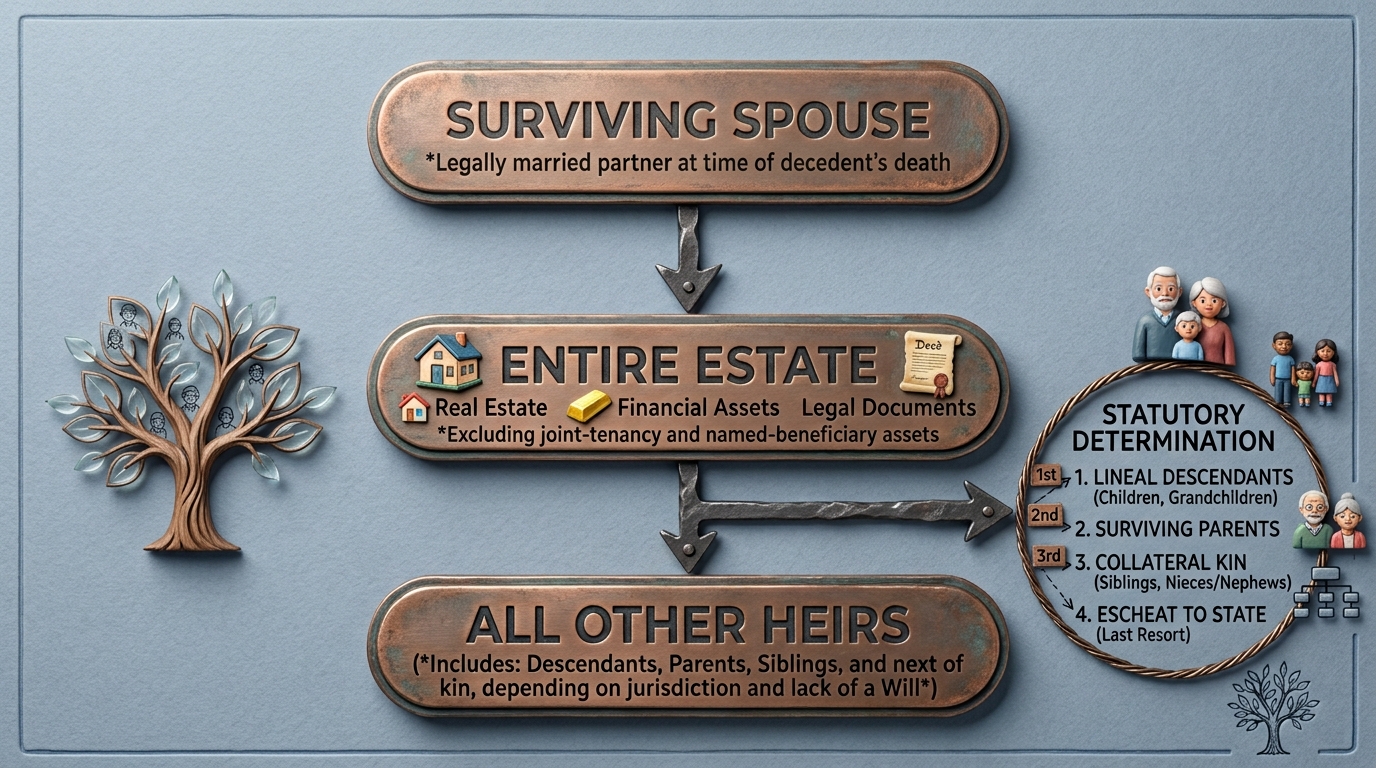
If you die without a valid will, Florida’s intestacy laws determine who inherits property subject to those laws.
If you become incapacitated without appropriate planning, family members may have to rely on whatever legal mechanisms are available under the circumstances. A guardianship proceeding may become necessary for some decisions, although Florida law recognizes advance directives and other planning tools that can sometimes provide alternatives or affect the scope of a guardianship.
The important point is not that everyone needs every available document.
It is that leaving the decisions entirely to default legal rules may produce a result different from the one you would have chosen yourself.
Estate Planning After Marriage, Divorce, or Other Major Changes
An estate plan should not necessarily remain unchanged for decades.
A major life event may require a review of:
Your will
Revocable trust
Beneficiary designations
Durable power of attorney
Health care surrogate
Living will
Preneed guardian designation
Ownership of real estate
Retirement accounts
Life insurance
Business interests
Divorce is a particularly important example. Florida law contains rules affecting fiduciary appointments and certain estate planning documents after dissolution proceedings begin or a final judgment is entered. The Florida Bar has noted that durable powers of attorney and health care surrogate designations require particular attention during divorce planning.
A plan should also be reviewed when a beneficiary or fiduciary dies, a child reaches adulthood, substantial assets are acquired or sold, or the person’s family circumstances change.
“The best estate plan is one that makes the owner’s intentions clear before the family is forced to interpret them under pressure. A trust can provide that structure, but the document and the ownership of the assets need to work together.”
That principle applies beyond trusts. Estate planning works best when the documents, property ownership, beneficiary designations, and the person’s actual wishes are coordinated.
Common Estate Planning Questions
Do I need a will if I have a revocable living trust?
Often, yes. A will can serve purposes that a revocable trust does not, including addressing assets that were never transferred to the trust and nominating a personal representative or guardian where appropriate. The specific documents needed depend on the estate plan.
Does a will avoid probate in Florida?
No. A will generally directs the distribution of probate assets through the probate process. Some property may pass outside probate through trusts, beneficiary designations, joint ownership, or other mechanisms.
What is the difference between a living will and a health care surrogate?
A health care surrogate designation identifies someone who can make health care decisions within the authority granted when you cannot make them yourself. A living will communicates your wishes concerning life prolonging procedures in the circumstances covered by Florida law.
Does my spouse automatically have authority to manage everything if I become incapacitated?
Not necessarily. Marriage and joint ownership do not automatically give one spouse every legal authority that a properly executed power of attorney or health care designation can provide.
Can I choose who I want as my guardian?
Florida allows a competent adult to designate a preferred preneed guardian. The designation creates a rebuttable presumption in favor of the named person, but the court can decline to appoint someone who is unqualified or whose appointment is otherwise contrary to the applicable legal standard.
When should I review my estate plan?
Reviewing an estate plan after marriage, divorce, a death in the family, the birth or maturation of children, a major change in assets, a change in beneficiaries, or a significant change in your circumstances can help keep the plan consistent with your current wishes.
Estate Planning for Families in Coral Springs and Broward County
Estate planning is not limited to deciding who receives your property after death. For families in Coral Springs, Broward County, and surrounding South Florida communities, an effective plan can also address incapacity, health care decisions, financial management, real estate, beneficiary designations, trusts, and the administration of an estate.
The appropriate documents depend on the person’s family circumstances, property, financial affairs, and wishes.
A review of an existing plan can also be useful when the documents were prepared years ago or when major changes have occurred in the family or the assets involved.
When a married couple creates an estate plan, most of the attention naturally goes toward what happens after both spouses have died. But there is another moment that can be just as important: the death of the first spouse.
That event can change ownership of assets, activate provisions in a trust, affect beneficiary designations, create tax filing opportunities, and alter the plan the surviving spouse will eventually leave behind.
For families in Coral Springs and throughout Broward County, this is one reason an estate plan should be reviewed after a spouse dies. The documents may still be valid, but the circumstances they were designed to address have changed.
And that can make a surprisingly big difference under Florida law.
The First Death Is a Turning Point, Not the End of the Plan
An estate plan for a married couple is usually built around two different deaths.
The first death determines what happens to the deceased spouse’s property and what the surviving spouse receives or controls. The second death determines what ultimately passes to children, other beneficiaries, charities, or other intended recipients.
Those two events are connected.
For example, a couple may have arranged their assets so that the surviving spouse has financial security while certain property remains subject to a particular trust structure. Another couple may have arranged for most assets to pass directly to the surviving spouse.
Both plans can be legally sound. But they can produce very different results later.
The important question after the first death is therefore not simply, “Who inherited?”
It is:
“What did the first death activate, and what does the surviving spouse’s estate now look like?”
What Happens to the Assets After the First Spouse Dies?
The answer depends on how each asset was owned and how the estate plan directed it.
Some property may pass under a will. Some may pass according to a trust. Other assets may pass through beneficiary designations or forms of joint ownership.
This is why looking only at the will is rarely enough.
The surviving spouse and the estate’s attorney may need to review:
Real estate ownership
Bank and investment accounts
Retirement accounts
Life insurance
Business interests
Jointly owned property
Beneficiary designations
Trust assets
Debts and obligations
Prior gifts
Property that may be included in the deceased spouse’s taxable estate
The practical problem is that these pieces do not necessarily follow the same path.
A beneficiary designation can control an account without sending it through the will. A jointly owned asset can operate differently from separately owned property. A trust can contain instructions that become relevant immediately after death.
This is one reason the death of a spouse should trigger a full review of the estate plan in South Florida, rather than simply checking off the probate process and moving on.
The Estate Tax Question Begins With the First Death
Estate tax planning can become especially important when a married couple has substantial assets.
For deaths occurring in 2026, the federal basic exclusion amount is $15 million. (It is worth noting that Florida does not currently levy a state level estate tax). An estate generally must file Form 706 when the applicable federal filing threshold is exceeded. But there is another important reason to file: the executor can use Form 706 to elect portability of the deceased spouse’s unused exclusion for the surviving spouse.
That second point is easy to overlook.
Suppose one spouse dies with an estate substantially below the federal exclusion amount. It might appear that there is no reason to think about an estate tax return because no federal estate tax is due.
That conclusion can be premature.
A properly filed estate tax return can allow the surviving spouse to receive the deceased spouse’s deceased spousal unused exclusion amount, commonly called DSUE. The surviving spouse may then be able to use that amount against certain later taxable transfers during life or at death.
In other words, “No estate tax is due” and “there is nothing worth filing” are not necessarily the same thing.
What Is Portability?
Portability allows a deceased spouse’s unused federal estate tax exclusion to be transferred to the surviving spouse.
The surviving spouse does not receive the unused exclusion automatically. The deceased spouse’s estate must make the portability election through a properly prepared Form 706.
That deadline is one of the reasons the issue deserves attention soon after the first spouse dies.
The family may be dealing with grief, probate, property transfers, insurance claims, financial accounts, and a long list of practical problems. The tax filing may feel like something that can wait.
Sometimes it cannot.
Why the Surviving Spouse’s Future Estate Matters
Imagine a married couple with substantial assets.
The first spouse dies. Most of the property passes to the surviving spouse, who continues living in the family home, maintains the investment portfolio, and eventually receives additional assets.
Years later, the surviving spouse dies.
At that point, the estate is measured again.
The surviving spouse’s estate may look very different from the estate that existed at the first death. Investments may have appreciated. Real estate may have increased substantially in value. Retirement accounts may have changed. The surviving spouse may have received additional property or made significant gifts.
That means the planning opportunity at the first death can have consequences years later.
“The surviving spouse should not assume that the estate plan is finished simply because the first estate was administered. The first death can change the legal and financial circumstances that the original plan was built around.”
That review does not necessarily mean rewriting everything.
It means determining whether the structure still accomplishes what the couple originally intended.
Does a Trust Automatically Save Estate Taxes?
No.
This is an important distinction because older estate planning materials sometimes make trusts sound like tax saving machines.
A revocable living trust can be an important part of an estate plan, but simply placing assets in a revocable trust does not automatically eliminate federal estate tax.
The tax consequences depend on the actual structure, ownership, applicable exclusions, elections, deductions, beneficiary arrangements, and the circumstances surrounding the transfer.
The more useful question is therefore:
How does the trust operate after the first spouse dies, and what does that structure accomplish?
In some estate plans, trust provisions may help determine who controls property, who benefits from it, and how it is treated after the first death. In others, assets may pass directly to the surviving spouse.
The answer depends on the plan.
That is why copying a trust structure from another family is a particularly bad form of estate planning.
When the First Death Changes the Tax Strategy
A married couple may have several potential ways to structure property at the first death.
One approach may leave property directly to the surviving spouse. The federal marital deduction can generally allow qualifying property passing to a surviving U.S. citizen spouse to be deducted from the deceased spouse’s gross estate.
That can defer estate tax rather than necessarily eliminate it.
Other arrangements can involve trusts or other structures designed to address control, beneficiary protection, tax planning, or a combination of these concerns.
The appropriate structure depends on the family’s circumstances.
For example, a couple with a relatively straightforward estate may have different concerns from a couple who owns several properties, a closely held business, significant investments, or substantial assets expected to appreciate.
Alan Reinfeld explains the practical point this way:
“The first spouse’s death is often the moment when the surviving spouse’s estate plan needs to be reconsidered. The plan was created for two people. After one dies, it is a plan for one.”
That is especially important when the family’s wealth is likely to change substantially over time.
Case Study: When “Everything Went to My Spouse” Was Not the Whole Story
Consider a hypothetical couple living in Coral Springs, Michael and Laura.
They own their home, investment accounts, several retirement accounts, and other assets with a combined value of approximately $10 million.
Michael dies first.
The immediate result appears simple. Laura receives the property intended for her, the family home remains in her hands, and there is no federal estate tax bill because the estate is below the 2026 $15 million basic exclusion amount.
The family assumes the tax issue is finished.
But Laura’s attorney asks a different question:
Was portability elected?
Michael’s estate may have had unused federal exclusion available for Laura. If the executor makes the appropriate election, that unused amount may become available to Laura for later taxable transfers.
Now consider what happens over the next decade.
Laura’s investments appreciate. She sells one property and reinvests the proceeds. The family home increases substantially in value. She also receives additional assets.
By the time Laura dies, her estate is considerably larger than the estate Michael left behind.
The first death did not produce an immediate estate tax problem. But decisions made at that time could still affect the tax position of Laura’s eventual estate.
The lesson is not that every couple needs a complicated trust structure.
The lesson is that the first death can create decisions whose consequences will not become visible until years later.
What Should the Surviving Spouse Review?
After the first spouse dies, a surviving spouse should consider reviewing at least the following:
How each asset passed: Determine which assets passed through a will, trust, beneficiary designation, joint ownership, or another mechanism.
Whether an estate tax return should be filed: Even when no estate tax is immediately owed, filing may be important if the estate wants to elect portability.
Whether portability was elected: If the surviving spouse may benefit from the deceased spouse’s unused exclusion, confirm whether the election was made and whether the return was properly prepared.
The surviving spouse’s new asset picture: The surviving spouse may now own or control assets that were previously divided between two estates.
Future appreciation: An asset’s value today is not necessarily the value that will matter at the surviving spouse’s death.
Beneficiary designations: Retirement accounts, insurance policies, and other accounts should be reviewed to determine whether their beneficiary designations still reflect the family’s intentions.
Trust provisions: If a trust was involved, determine what happened to the trust at the first death and what rights and obligations now apply.
The surviving spouse’s own estate plan: The surviving spouse is now the person whose eventual estate plan will determine what happens to the remaining assets.
That last step is often overlooked.
The estate plan should evolve because the family has changed.
What If the Surviving Spouse Remarries?
Remarriage can introduce another layer of planning.
Federal portability rules contain a last deceased spouse limitation. Generally, a surviving spouse’s DSUE amount is tied to the spouse who was most recently deceased at the relevant time. The IRS rules also address how remarriage can affect the use of a previously received DSUE amount.
That means remarriage should prompt another estate planning review.
The same is true if the surviving spouse:
Has additional children
Changes beneficiaries
Acquires or sells major assets
Starts or sells a business
Makes significant gifts
Moves assets into different ownership structures
Experiences a major change in financial circumstances
Estate plans have a bad habit of becoming outdated quietly.
What If Nobody Thought About Portability?
There is a useful safety net, but it should not become the planning strategy.
For certain estates that were not otherwise required to file Form 706, IRS procedures provide a simplified method for making a late portability election. Under Revenue Procedure 2022-32, qualifying estates can generally use the procedure by filing a complete Form 706 on or before the fifth anniversary of the decedent’s death.
That does not mean families should wait.
Eligibility requirements matter, and estates that were already required to file a return can face different rules concerning the deadline.
The practical lesson is simple: if the first spouse died without a portability election being considered, ask about it rather than assuming the opportunity is gone.
The First Death Should Trigger a Review, Not a Filing Frenzy
Estate administration can involve a remarkable amount of paperwork.
That does not mean every surviving spouse needs to rebuild an entire estate plan immediately.
The better approach is to identify what changed first.
What assets moved? Have assets remained in trust? What tax elections are available? Do deadlines apply? What does the surviving spouse now own? What will eventually pass from the surviving spouse’s estate?
Once those questions are answered, the family can determine whether the existing plan still makes sense.
For families in Coral Springs, Broward County, and throughout South Florida, an attorney can help review the documents, asset ownership, tax filings, and beneficiary arrangements together rather than treating each document as an isolated problem.
Because the first spouse’s death may be the point where the estate plan changes from a two person plan into a one person plan.
And that is a pretty important change to leave sitting in a filing cabinet.
Frequently Asked Questions
Could a spouse automatically receive the deceased spouse’s unused estate tax exemption?
No. Portability generally requires the deceased spouse’s estate to make an election by filing Form 706. The surviving spouse may then be able to use the deceased spouse’s unused exclusion amount against certain later taxable transfers.
Does an estate tax return have to be filed if no estate tax is owed?
Not necessarily. For a 2026 death, the normal federal filing threshold is $15 million for a U.S. citizen or resident decedent, subject to applicable rules. However, Form 706 may also be filed to elect portability, even when the estate is below that threshold.
Does Florida have a state level estate tax when a spouse dies?
No. Florida does not currently impose a state estate tax or inheritance tax. Estate tax planning for families in Coral Springs and Broward County focuses entirely on federal estate tax rules, portability elections, and asset management structures.
How long does a family have to elect portability?
The normal federal deadline is nine months after death, with a possible six month extension. Certain estates that were not otherwise required to file may qualify for a simplified late election procedure within five years of the decedent’s death.
Does a living trust automatically reduce estate taxes?
No. A revocable living trust does not automatically eliminate federal estate tax. The tax consequences depend on how the assets, trust provisions, elections, deductions, and other parts of the estate plan interact.
Should the surviving spouse change the estate plan immediately?
Not necessarily. The first priority is understanding what changed after the death and identifying any deadlines or tax elections. Once the surviving spouse’s new financial and legal position is clear, the estate plan can be reviewed and changed where appropriate.
What happens to the surviving spouse’s estate when that spouse later dies?
The surviving spouse’s estate is evaluated based on the assets and applicable tax rules at that later death. The value of assets may have changed significantly since the first spouse died, which is one reason planning decisions made after the first death can have long term consequences.
Can a surviving spouse lose the benefit of a deceased spouse’s unused exclusion?
The rules are technical. Portability, later taxable transfers, and the identity of the surviving spouse’s last deceased spouse can all matter. Remarriage can also affect the use of a previously received DSUE amount.
Schedule a Consultation with Our Coral Springs Estate Planning Attorneys
If you are navigating the administration of an estate after the death of a spouse in Coral Springs, Broward County, or anywhere in South Florida, you do not have to sort through asset titles, tax elections, and trust provisions alone.
Preplanning your final arrangements is one of the most effective ways to lift an emotional and financial burden from your family. Documenting your wishes ensures that your funeral or cremation is handled according to your exact preferences. And without forcing grieving relatives to guess or overspend.
However, moving from preplanning (recording your wishes) to prepaying (funding those arrangements through a preneed contract) introduces complex financial and legal regulations.
For seniors and families in Coral Springs and throughout Broward County, navigating Florida’s preneed laws requires careful oversight. Without proper legal structuring, prepaying can expose your money to provider insolvency. It can also create inflexibility if you relocate, or unintended tax and Medicaid complications.
The Critical Legal Distinction: Preplanning vs. Preneed Contracts
Under Florida law, terminology matters significantly:
Preplanning (Preneed without funds): This is simply documenting your choices. Things as casket types, service locations, and disposition preferences—with a licensed funeral home, with zero money changing hands upfront.
Preneed Contract: This is a legally binding agreement where you pay for goods and services in advance.
Under Florida Statutes Chapter 497, preneed contracts are heavily regulated to protect consumers. But the specific funding mechanism dictates how secure your money actually is.
How Florida Law Protects (and Exposes) Your Prepaid Funds
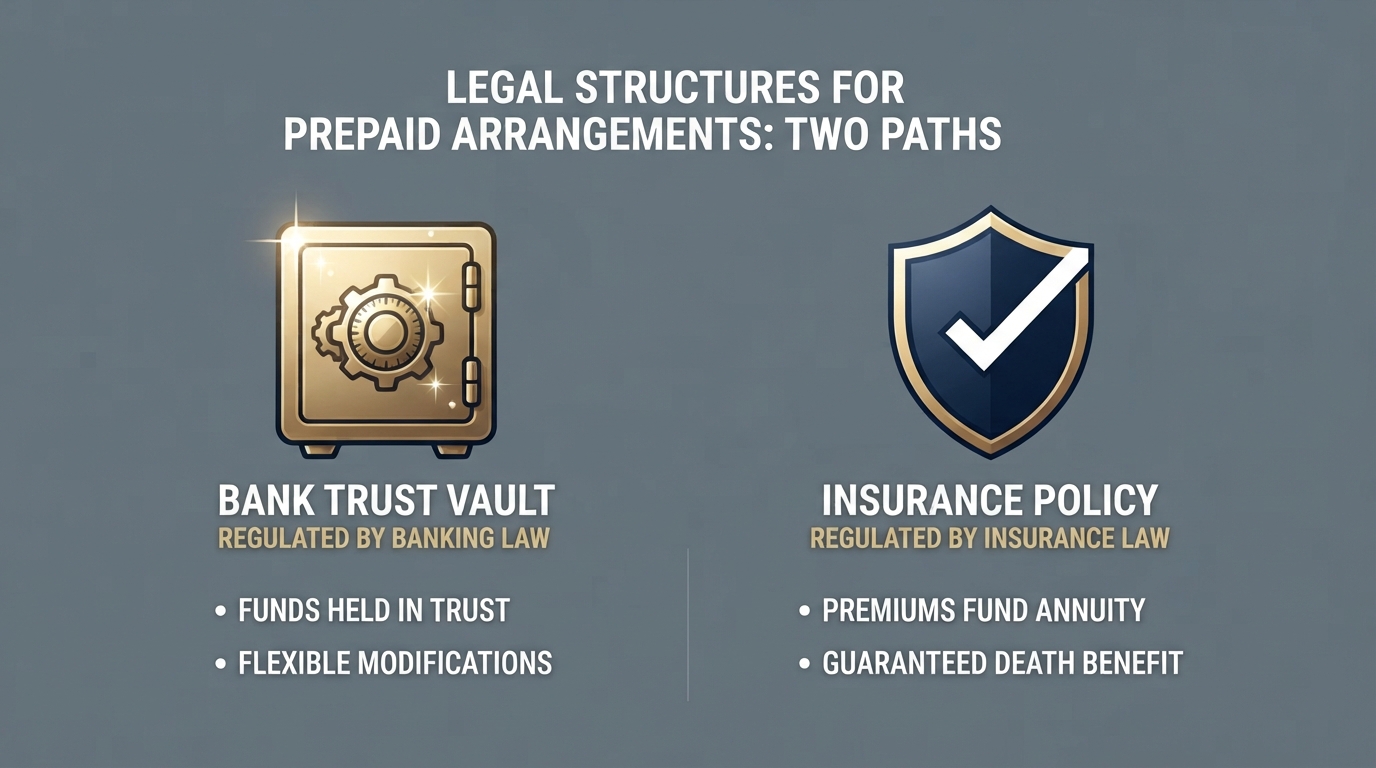
When you purchase a preneed contract from a licensed funeral home in Florida, the provider must handle your money using one of two primary statutory methods:
Under a trust arrangement, a portion of your payment (at least 70% of the service portion and specific percentages for merchandise) must be deposited into an independent trust. It should be managed by a financial institution, not kept in the funeral home’s operating account.
The Risk: Legally, trust-funded monies can leave the purchaser or their estate treated as an unsecured creditor. Especially if the funeral home faces financial distress or closes down.
2. Life-Insurance-Funded Preplans
An alternative approach involves funding the preneed agreement through a specialized final expense. Another option can be a whole life insurance policy where the funeral home is named as the beneficiary upon death.
Preneed Contracts and Medicaid Planning in South Florida
For many older adults in Broward County, preplanning intersects directly with Medicaid long-term care planning.
To qualify for Medicaid, applicants must meet strict asset limits (typically $2,000 for an individual). Florida law permits individuals to prepay funeral and burial expenses to reduce countable assets legally.
However, to count as an exempt asset for Medicaid purposes, a preneed funeral contract must be irrevocable.
The Trade-Off: Making a contract irrevocable means you permanently surrender the right to cash it out or change your mind for a refund.
The Legal Role: An experienced elder law attorney ensures that irrevocable burial trusts or preneed contracts are structured precisely to satisfy Department of Children and Families (DCF) guidelines without triggering unintended penalties.
Key Protections Every Consumer Must Demand
Before signing any preneed agreement or paying a funeral home in advance, protect your interests by verifying these statutory requirements:
Insist on the General Price List (GPL): Federal Trade Commission (FTC) rules and Florida law require providers to give you itemized price lists before you commit.
Review Portability Terms: If you move out of South Florida or wish to switch providers later, check whether your contract can be transferred cleanly without severe financial penalties.
Understand the Cancellation Window: Florida law provides a statutory right to cancel a preneed contract within 30 days of execution for a full refund. After that, cancellation terms depend strictly on whether the contract is revocable or irrevocable.
Get Price Guarantees in Writing: Ensure the contract specifies whether it is a “guaranteed” plan (meaning no additional out-of-pocket costs for your family at the time of death for the items listed) or a non-guaranteed plan that leaves families exposed to inflation gaps.
Frequently Asked Questions
Can I get my money back if I prepay my funeral in Florida?
If your preneed contract is revocable, you may cancel it, though refunds are subject to statutory formulas and trust rules under Chapter 497. If the contract was made irrevocable for Medicaid planning purposes, it cannot be canceled or refunded.
What happens if my prepaid funeral home goes out of business?
Florida maintains the Preneed Funeral Contract Consumer Protection Trust Fund to provide a safety net and claims process for consumers if a licensed preneed seller fails or closes. Working with an established, financially stable provider minimizes this risk.
Is there a limit to how much I can prepay for burial arrangements under Medicaid?
While Medicaid allows unlimited pre-funding through properly structured irrevocable preneed burial contracts, separate designated burial cash accounts are typically capped at $2,500. Every dollar must comply strictly with Florida Medicaid asset rules.
Can a preneed funeral plan be transferred to another funeral home?
It depends on the funding mechanism. Insurance-funded plans are often portable nationwide, whereas trust-funded contracts tied to a specific local funeral home can involve transfer hurdles or administrative fees.
Schedule a Consultation with Our Coral Springs Elder Law Attorneys
Integrating funeral preplanning into a comprehensive estate or Medicaid plan requires balancing emotional peace of mind with strict financial protection.
Commercial litigation encompasses legal disputes arising from business operations, corporate governance, and commercial transactions. In Florida, when a breach of contract or business dispute cannot be resolved through pre-suit negotiation, parties litigate through the civil court system or pursue alternative dispute resolution (ADR) under Florida Statutes and 17th Judicial Circuit local rules.
Running a business in Coral Springs and throughout South Florida involves the constant creation and execution of agreements, vendor partnerships, and financial transactions. When a business partner breaches an operating agreement, a key supplier fails to deliver, or a corporate client withholds payment on a substantial invoice, the operational and financial impact can threaten the viability of your enterprise.
For business owners facing a serious dispute, understanding how commercial litigation functions within the 17th Judicial Circuit (Broward County) is critical to protecting corporate assets and mitigating damages.
Many business owners assume commercial litigation is reserved exclusively for Fortune 500 corporations. In practice, commercial litigation covers any civil dispute arising directly from business and commercial activities.
In Broward County courts, commercial litigation typically involves several distinct categories of legal action:
Breach of Written and Oral Contracts: When a party fails to perform any material term of a commercial lease, vendor agreement, service contract, or promissory note without a lawful legal excuse.
Corporate and Partnership Governance Disputes: Internal deadlocks between shareholders, members of a Limited Liability Company (LLC), or partners regarding management control, profit distribution, breach of fiduciary duty, or involuntary dissolution.
Business Torts and Unfair Competition: Claims involving tortious interference with contractual relationships, fraudulent misrepresentation, civil theft, or violations of non-compete and trade secret agreements.
Commercial Debt Recovery and Foreclosure: Pursuing high-value unpaid business accounts receivable, enforcing security interests under the Uniform Commercial Code (UCC), or foreclosing on commercial mortgages.
2. The Statutory Framework: Governing Florida Business Disputes
Commercial litigation in Florida is governed by a combination of statutory frameworks, civil procedure rules, and common law precedent. Two critical statutory pillars govern most commercial actions in the state:
Florida Statutes Chapter 95 (Statutes of Limitations)
Timing is everything in commercial litigation. Waiting too long to address a breach can permanently bar your claim. Under Florida law:
Written Contracts: Actions for breach of a written contract generally carry a 5-year statute of limitations (F.S. 95.11(2)(b)).
Oral Agreements: Actions based on unwritten or oral contracts carry a shortened 4-year statute of limitations (F.S. 95.11(3)(k)).
Open Accounts: Actions to recover on an open account or unstated business debt also carry a 4-year limit (F.S. 95.11(3)(f)).
Florida Statutes Chapter 607 and Chapter 605
For corporate and LLC disputes in Coral Springs, litigation frequently hinges on the interpretation of Florida’s Business Corporation Act (Chapter 607) and Florida Revised Limited Liability Company Act (Chapter 605), which dictate voting rights, derivative actions, and member dissociation standards.
3. The Lifecycle of a Commercial Lawsuit in Broward County
When a business dispute escalates to formal litigation in the 17th Judicial Circuit, the case generally moves through several distinct procedural phases:
Step One: Pre-Suit Demand and Strategic Positioning
Before a complaint is filed, experienced counsel will typically issue a formal commercial demand letter. This document outlines the legal basis of the breach, details damages, and sets a strict deadline for cure or settlement. Under many Florida contracts, sending a proper demand letter is a statutory or contractual prerequisite to recovering attorney’s fees.
Phase Two: Pleadings and Motion Practice
If the dispute is not resolved pre-suit, the plaintiff files a formal Complaint in County or Circuit Civil court, depending on the amount in controversy. The defendant has 20 calendar days to respond, often filing motions to dismiss or asserting affirmative defenses (such as waiver, estoppel, or failure of consideration).
Part Three: Discovery and Expert Analysis
Commercial litigation is document-heavy. During discovery, both sides exchange emails, financial statements, ledgers, and corporate records through Requests for Production, Interrogatories, and Depositions. In complex cases, forensic accountants or industry experts are retained to calculate lost profits and business valuation.
Phase Four: Court-Mandated Mediation
Before a judge will permit a commercial case to proceed to trial in Broward County, the court will universally order the parties to attend mediation. Mediation is a confidential settlement conference overseen by a certified mediator. A high percentage of commercial disputes successfully resolve at this juncture, saving companies substantial trial expenses.
Phase Five: Trial and Judgment Enforcement
If mediation fails, the case proceeds to a bench or jury trial. Once a Final Judgment is secured, the prevailing party utilizes post-judgment discovery, writs of garnishment, or execution sales to collect the awarded funds.
4. Why Pro Se Representation is Prohibited for Florida Businesses
A common and costly mistake made by small business owners is attempting to represent their LLC or corporation pro se (without an attorney) in court.
Under established Florida law and court rules, a corporation or LLC is a distinct legal entity whose owner, member, or officer cannot represent it in court unless that individual is a licensed attorney.. Any pleading or court appearance filed by a non-attorney on behalf of an entity is subject to immediate striking and dismissal, leaving the business entirely unprotected.
5. Shareholder and Partnership Deadlock: When Internal Disputes Threaten Corporate Survival
While breach of contract actions make up a large portion of commercial litigation, they are not the only problem. Some of the most complex and emotionally charged disputes happen internally between business partners, co-founders, or corporate shareholders.
In Florida, when two 50/50 owners disagree fundamentally on corporate direction, financial management, or operational strategy, a corporate deadlock occurs. Left unresolved, deadlock can paralyze the business, drain operating capital, and expose the company to severe operational risks.
Judicial Dissolution and Involuntary Buyouts under Florida Law
When governance breaks down and dispute-resolution clauses fail, owners have to resort to court intervention under Statutes 607 (for Corporations). Or Chapter 605 (for LLCs).
Depending on the corporate structure and governing documents, litigation remedies can include:
Judicial Dissolution: Petitioning the 17th Judicial Circuit to order the formal winding down and liquidation of the company’s assets.
Involuntary Buyout Rights: Forcing a statutory buyout where one faction purchases the shares of the departing member at a court-determined fair value.
Claims for Breach of Fiduciary Duty: Pursuing damages against a managing partner who engaged in self-dealing or excluded co-owners from corporate records.
Having professionally drafted operating agreements with pre-established buyout formulas or tie-breaking mechanisms is the best defense against crippling partnership litigation. However, when those safeguards are missing, aggressive legal strategy in Broward County courts becomes essential to protect your financial investment.
Frequently Asked Questions
What is the difference between a breach of contract and a business tort?
A breach of contract involves the failure to perform a specific promise outlined in a binding agreement. Courts generally limit damages to economic losses contemplated by the contract.. A business tort (such as fraudulent misrepresentation) arises from a breach of a legal duty independent of the contract. This may allow for the recovery of punitive damages.
Can my business recover attorney’s fees if we win a contract lawsuit?
In Florida, the “American Rule” dictates that each party pays its own attorney’s fees unless a fee-shifting provision is explicitly written into the contract or authorized by a specific statute. Ensuring your business agreements contain robust attorney’s fees clauses is essential.
How are commercial disputes handled if my contract has an arbitration clause?
If your agreement includes a mandatory arbitration clause, the dispute will bypass the public court system entirely. Instead, it is submitted to an independent arbitration provider (such as the American Arbitration Association) where an appointed arbitrator hears evidence and issues a binding decision.
Schedule a Consultation with Our Coral Springs Business Attorneys
Protecting your enterprise from breach of contract, partnership deadlock, or commercial disputes requires decisive legal strategy.
Filing for bankruptcy in the Fort Lauderdale Division can trigger an automatic stay. This generally stops foreclosure proceedings, wage garnishments, collection lawsuits, and other efforts to collect qualifying debts. The effect depends on the type of bankruptcy filed and the debtor’s circumstances. Chapter 7 can discharge certain unsecured debts relatively quickly. On the othersidem, Chapter 13 allows eligible debtors to repay some obligations through a court supervised plan and may provide a way to address mortgage arrears.
Debt problems can develop for very different reasons. A sudden medical expense may leave someone relying on credit cards. On the flipside a decline in business income can make previously manageable obligations difficult to maintain. For a homeowner facing foreclosure, receiving a notice from a lender can turn a financial problem into a legal concern.
For residents of Coral Springs and elsewhere in Broward County, understanding how bankruptcy affects creditor collection and secured debts is therefore important before deciding whether to file. Bankruptcy is not automatically appropriate for every financial situation, and filing can have significant legal and financial consequences. It is a federal legal process that can, however, provide qualifying debtors with protection from collection activity. It is a mechanism for resolving debts under the Bankruptcy Code.
The process is handled through the U.S. Bankruptcy Court for the Southern District of Florida. Understanding how the automatic stay works, which debts may be discharged, and how Chapter 7 differs from Chapter 13 can make the legal consequences of filing easier to evaluate.
1. The Immediate Relief: The Automatic Stay
The very day you file a bankruptcy petition with the court, a legal order called the automatic stay kicks in.
Think of it as a legal force field around you and your finances. The moment it goes into effect, the law legally bars creditors from touching you:
Foreclosure stops dead in its tracks, halting scheduled auctions on your home.
Wage garnishments and bank levies must stop immediately, letting you keep your paycheck.
Collection calls, harassing letters, and lawsuits have to cease.
For anyone in Florida staring down a sheriff sale or a creditor lawsuit, that automatic stay provides instant breathing room. This is crucial so you can figure out your next move without panic.
2. Chapter 7: The Clean Slate
Chapter 7 is what most people picture when they think of bankruptcy. The main aspect of Chapter 7 is a straightforward liquidation process designed for individuals and families whose income simply does not provide enough room to dig out from under their debts.
Passing the Means Test
To qualify for Chapter 7 in Florida, your household income is measured against the state median income for a family of your size. If you fall below that median, or can show through standard calculations that your disposable income is tapped out, you qualify.
What Happens to What You Own?
A common fear is that filing for Chapter 7 means losing everything you have worked for. But Florida has some of the strongest debtor protection laws in the country:
Your Home: Under Florida constitutional homestead exemption, your primary residence is overwhelmingly protected from general unsecured creditors.
Your Belongings: State law exempts essential personal property, vehicle equity limits, and certain wages.
For many clients who qualify, Chapter 7 successfully wipes the slate clean on unsecured debts, like credit cards, medical bills, and personal loans, usually within four to six months.
3. Chapter 13: Reorganizing and Protecting Your Assets
Sometimes, Chapter 7 is not the right fit. If you have a steady income, own non-exempt property you cannot afford to lose, or are behind on your mortgage payments, Chapter 13 offers a structured way forward.
Instead of wiping everything out quickly, Chapter 13 lets you put together a court-approved repayment plan lasting three to five years. You make one manageable monthly payment to a trustee, who handles distribution to your creditors.
Saving Your Home from Foreclosure: If you have fallen behind on mortgage payments, Chapter 13 lets you roll those past-due arrears into your monthly plan over time, allowing you to catch up while keeping your home.
Keeping Control: It gives you breathing room to deal with priority debts, like certain taxes or support obligations, without having your assets sold off.
4. Critical Warnings: Traps to Avoid Before Filing
When financial pressure mounts, people often make impulsive moves that inadvertently trigger severe legal consequences. Before filing for bankruptcy in Broward County, keep these major statutory traps in mind:
The 1215 Day Homestead Rule: Federal bankruptcy law imposes a strict rule on Florida homestead exemptions. If you purchased your home or moved substantial equity into it less than 1,215 days (roughly three years and four months) before filing, your homestead protection may be capped under federal statute, regardless of Florida constitutional rules.
Do Not Transfer Assets to Family: Giving a car to a relative or putting a sibling name on a bank account right before filing is viewed by trustees as a fraudulent transfer. Courts can claw those assets back and even deny your discharge entirely.
Avoid Sudden Credit Card Ramping: Running up luxury charges or cash advances on credit cards just months before filing can lead creditors to file adversary proceedings claiming fraud, making those specific debts non dischargeable.
5. Real World Application: Stopping a Broward County Foreclosure
To see how these laws function in practice, consider a typical scenario handled by our firm.
A homeowner in Coral Springs fell twelve months behind on their mortgage after a sudden business interruption. The bank scheduled a foreclosure auction date through the 17th Judicial Circuit Court. By filing an emergency Chapter 13 petition on the eve of the sale, the automatic stay stopped the auction instantly.
Instead of losing their family home, the debtor utilized a three year Chapter 13 repayment plan to cure the missed mortgage arrears incrementally while resuming regular monthly payments. The plan saved the home and managed unsecured credit card debt. This secured long term financial stability for the family without displacement.
6. Attorney Perspective: Why Local Experience Matters
“Clients often walk into our Coral Springs office feeling like bankruptcy is a personal failure. Our job is to reframe it. It is a federally protected economic tool. When aggressive creditors or foreclosure dates are moving fast in the Fort Lauderdale division, you need a strategy that respects local court nuances and strict filing schedules so you can protect what matters most.”
7. How the Process Works in the Fort Lauderdale Division
For residents across Coral Springs, Tamarac, and Pompano Beach, the U.S. Bankruptcy Court handles your case. Bankruptcy Court for the Southern District of Florida Fort Lauderdale Division downtown.
While the court process is formal, having an experienced guide makes it manageable:
The Meeting of Creditors: About a month after filing, you and your attorney attend a short meeting with the bankruptcy trustee. In the Fort Lauderdale division, these are often handled smoothly via video or phone. We prepare you thoroughly so there are no surprises.
Guidance Every Step of the Way: From mandatory credit counseling to filing your paperwork correctly the first time, our goal is to keep you out of procedural trouble and moving toward your fresh start.
Frequently Asked Questions
Will I lose my house or car if I file?
In most cases, no. Florida homestead exemption protects your primary home, and Chapter 13 is explicitly designed to help you catch up on missed mortgage payments. For cars, specific vehicle exemptions or straightforward reaffirmation agreements often allow you to keep driving.
What debts do not go away in bankruptcy?
While credit cards, medical bills, and personal loans are wiped out, certain obligations survive. These include most student loans, recent tax debts, child support, alimony, and debts resulting from fraud.
Can a business file for bankruptcy?
Yes. Local businesses, LLCs, and corporations can file for Chapter 7 to wind down or Chapter 11 to restructure. Keep in mind that a business entity does not receive a personal debt discharge the way an individual does, but it provides an orderly way to handle corporate liabilities.
What is the 341 meeting of creditors in the Fort Lauderdale division?
The 341 meeting of creditors is a mandatory proceeding where the bankruptcy trustee questions you under oath about your financial affairs, assets, and debts. For residents of Coral Springs and Broward County, the Fort Lauderdale division typically conducts these hearings via video or phone, and your attorney prepares you thoroughly so you know exactly what to expect.
Can I file for bankruptcy in Florida if I just moved here from another state?
You can file in Florida, but federal law requires you to have lived in the state for the greater part of the 180 days preceding the filing—specifically, the 730 days (two years) prior—before you can use Florida specific property exemptions. If you moved within the last two years, federal rules dictate that you may have to use the exemption laws of your previous home state.
Carrying heavy financial stress does not mean you have to figure it out alone. Whether you are looking at Chapter 7 relief or trying to save your home through Chapter 13 in Coral Springs, Broward County, or South Florida, Alan Reinfeld and Stuart Reinfeld are here to help you sort through your options honestly and without judgment. Contact our office today to take back control of your future.
There is something different about dealing with a family business. The people answering the phone may know the people making the decisions. The person whose name is on the door may still be around when you have a question six months later. And when something goes wrong, there usually isn’t an impressive chain of departments available to explain why nobody knows who is responsible.
A family owned law firm can have some of those same characteristics.
That does not make family ownership a substitute for legal experience. If you need an attorney in Coral Springs, you still want someone who knows the relevant area of Florida law. You need someone who understands your particular problem, and can explain what your options actually are. The fact that a law firm is owned by a family does not magically accomplish any of those things.
What it can change is the relationship you have with the firm.
What Does Family Owned and Operated Actually Mean?
In a family owned and operated business, the people behind the company have a personal connection to what happens there. Their reputation is attached to the business. Their relationships with clients can continue for years. And the people who own the firm may also be involved in the day to day work.
For a law firm, that can be valuable. Legal matters are rarely as simple as handing someone a document, collecting a fee, and saying goodbye. A client may have questions later, another legal issue may come up. Perhaps a matter that seemed straightforward at the beginning may take an unexpected turn. Knowing who to call can make a real difference.
This is one reason some people prefer working with family owned businesses. They want to know who they are dealing with. People want to have a sense that the relationship matters to the people on the other side of the desk.
A Relationship That Can Continue Over Time
For clients in Coral Springs and throughout Broward County, that kind of relationship can be useful. Especially when legal needs extend over ongoing estate planning and business succession strategies with a local family in Broward County.me. Estate planning, probate, real estate transactions, business matters, and other legal issues can bring people back to the same law firm at different stages of their lives. Having attorneys who already understand the background can save everyone from starting the story from page one.
There is also a practical advantage to knowing how a firm is structured. Before hiring any attorney in Coral Springs, it is reasonable to ask who will actually handle your matter. You want to see how directly you can communicate with the attorney. There needs to be consistency – and whether the same people will remain involved as the case or transaction develops.
Those questions matter regardless of whether a firm is family owned. But they can be especially relevant when a firm’s owners are also actively involved in its work.
Managing Local Legal Matters Across Broward County
For families and business owners living in Coral Springs, Parkland, Fort Lauderdale, and surrounding South Florida communities, legal challenges rarely exist in a vacuum. An estate planning decision can directly impact a commercial real estate holding, and a family business succession plan can intersect directly with probate or guardianship administration.
Working with an established local firm means your legal team understands the specific procedural tendencies of the 17th Judicial Circuit Court and regional municipal codes. Rather than treating your matter as a routine transaction processed by an anonymous case manager in a distant corporate hub, a boutique local practice evaluates how your legal choices affect your daily life, your business balance sheet, and your long term family security in Broward County.
Family Businesses Understand Some Familiar Problems
Family ownership can also matter to people who run their own businesses. A family owned business often understands that legal decisions can affect relationships as well as balance sheets. Ownership, contracts, real estate, succession planning, and disputes can sometimes overlap with personal concerns.
For business owners in Coral Springs and the surrounding Broward County community, having a law firm that understands that overlap can be useful.
Family Owned Does Not Mean Every Firm Works the Same Way
None of this means that every family owned law firm operates in exactly the same way. Some are small. Many have several attorneys and staff. Some owners are heavily involved in client matters, while others have a more traditional management role. The label itself tells you only part of the story.
The better question is what the firm’s family ownership actually means for you as a client.
You can look at the firm’s practice areas and experience, but you can also ask how the attorneys work, who you will deal with, how communication is handled, and whether the firm is built around relationships that continue after one legal matter is finished.
You Know Who You Are Calling
One of the less glamorous advantages of a family owned law firm is also one of the easiest to appreciate: knowing who you are dealing with.
When a legal issue comes up, clients generally do not want to spend half their morning explaining the same situation to a new person. They want to reach someone who knows the matter, understands the history, and can tell them what happens next.
A family owned and operated firm can be well suited to that kind of continuity. The attorneys who own the business may remain closely involved with clients and their legal matters over time. For someone dealing with an estate, a property transaction, a business concern, or another ongoing legal issue, having a familiar point of contact can make the process considerably easier to navigate.
It also gives clients an opportunity to develop a relationship with the attorneys they rely on. You may initially contact a lawyer about one issue and return years later with another. By then, you are no longer starting with a blank page. The attorney may already understand your circumstances, your priorities, and the history behind the new question.
Direct Attorney Accountability Versus Corporate Law Factories
The modern legal landscape is increasingly dominated by large institutional law firms featuring multi tiered phone trees, layers of paralegals, and shifting case managers. When clients call with urgent questions about a probate timeline or a real estate closing, they are often forced to re-explain their entire situation to a stranger.
A family owned law firm operates on a completely different model of accountability:
Direct Communication Lines: You speak directly with the attorneys whose names are on the door and who actively manage your legal filings.
Institutional Memory: Because the firm builds multi generational relationships with local families, your historical legal context is preserved for future needs.
Aligned Interests: The firm’s local reputation in Northwest Broward County depends entirely on transparent communication, reliable case preparation, and dedicated client advocacy.
Talk With Our Attorneys
If you are considering a family owned law firm in Coral Springs, the easiest way to see whether the relationship feels right is to have a conversation.
Yes, creditors can sometimes take money from a trust in Florida, but their rights depend on who owes the debt and how the trust is structured. Florida law generally allows creditors to reach assets in a revocable trust during the creator’s lifetime. A valid spendthrift provision in an irrevocable trust can protect a beneficiary’s undistributed interest from many ordinary creditors, although statutory exceptions apply.
When can creditors reach trust assets in Florida?
Revocable trusts: Creditors can generally pursue assets in a revocable trust when the person who created it owes the debt.
Spendthrift trusts: A valid spendthrift provision can protect a beneficiary’s undistributed interest from many ordinary creditors.
Distributed inheritances: Once the trustee pays the beneficiary, the funds may become subject to ordinary collection procedures.
Exceptions: Certain support claims and other legally recognized circumstances can permit creditors to reach otherwise protected interests.
Fraudulent transfers: Florida law allows qualifying transfers intended to hinder, delay, or defraud creditors to be challenged.
These rules are governed primarily by Part V of Florida’s Trust Code, including the provisions addressing spendthrift trusts and claims against revocable trust assets. The sections below explain how each rule works and what it means for beneficiaries and trustees in Coral Springs and Broward County.
Key points for Florida residents:
A creditor generally has broader access to assets in a revocable trust while its creator is alive.
A valid spendthrift provision can restrict a beneficiary’s creditors from reaching an undistributed trust interest.
Certain claims, including qualifying support obligations, may fall within statutory exceptions.
Money distributed to a beneficiary may lose some or all of its protection under trust law.
Transfers designed to hinder existing creditors can be challenged under Florida’s voidable transfer laws.
These rules matter when someone is planning an inheritance, administering a deceased relative’s estate, or responding to a creditor claim in Coral Springs or elsewhere in Broward County.
1. Can Creditors Reach Assets in a Florida Trust?
The first step is identifying whose debt is involved. Florida law does not treat the trust creator and the beneficiary as interchangeable.
When the person who created the trust owes the debt
A revocable living trust generally does not protect its assets from the creator’s creditors during the creator’s lifetime. Under Florida Statute § 736.0505, property in a revocable trust remains available to satisfy the claims of the settlor’s creditors.
A settlor is the person who creates and funds a trust. If that person can revoke the trust and recover its assets, the trust ordinarily does not place those assets beyond the reach of legitimate creditor claims.
Example: A Coral Springs homeowner transfers investment accounts into a revocable living trust. The homeowner later defaults on a substantial personal loan. The transfer alone does not prevent the lender from pursuing trust assets that remain subject to the homeowner’s control.
The analysis can change after the creator dies or when a trust is genuinely irrevocable. Even then, the specific statutory rules and the circumstances surrounding the transfer must be examined.
When a beneficiary owes the debt
The rules can be considerably more protective when the debtor is a beneficiary of an irrevocable trust created by someone else.
Under Florida Statute § 736.0502, a valid spendthrift provision can prevent a beneficiary from voluntarily transferring the protected interest. It can also prevent most creditors from attaching that interest before the trustee distributes the money.
Example: A father establishes an irrevocable trust for his adult daughter. The trust contains an enforceable spendthrift provision. The daughter later falls behind on credit card payments. A card issuer generally cannot seize her undistributed beneficial interest merely because she owes money.
That does not mean the trust is immune from every claim. Florida law recognizes exceptions, and a creditor may have other remedies depending on the facts.
2. What Is a Spendthrift Trust in Florida?
A spendthrift trust contains language restricting a beneficiary’s ability to transfer the beneficiary’s interest. The restriction also limits the ability of creditors to reach that interest before the trustee distributes it.
Florida Statute § 736.0502 establishes the requirements for an enforceable spendthrift provision. The provision must restrain both voluntary and involuntary transfers of the beneficiary’s interest.
This distinction matters. A clause that merely expresses the creator’s hope that a beneficiary will manage money responsibly does not necessarily establish the statutory protection.
How spendthrift protection works
Suppose a trust holds $400,000 for a beneficiary who has accumulated substantial unsecured debt. The trustee must follow the trust’s terms when deciding whether and when to distribute funds.
If the trust contains an enforceable spendthrift provision, the beneficiary generally cannot assign the protected interest to a creditor. The creditor ordinarily cannot attach that undistributed interest either, subject to the exceptions established by law.
The trustee must still administer the trust according to its terms and applicable fiduciary duties. Spendthrift language does not give a trustee unlimited discretion to disregard the beneficiary’s rights.
Does every irrevocable trust provide creditor protection?
No. Irrevocability alone does not guarantee that trust assets are protected from every creditor.
The trust’s language matters. So does the identity of the debtor. A trust created by a third party for a beneficiary presents a different legal situation from a trust a debtor creates for personal benefit.
A transfer into an irrevocable trust can also be challenged if it violates Florida’s voidable transfer laws. The relevant provisions appear in Florida Statutes Chapter 726.
The source of the money matters as well. A court will examine the actual arrangement rather than rely exclusively on the label attached to the trust.
3. Revocable Trusts vs. Irrevocable Trusts
The difference between revocable and irrevocable trusts is central to creditor protection.
Feature
Revocable trust
Irrevocable trust
Can the creator generally revoke it?
Yes, subject to the instrument and law
Generally not unilaterally, although some arrangements permit modification
Creditor access to the creator’s assets
Generally available during the creator’s lifetime
Depends on the creator’s retained rights and applicable law
Protection for a beneficiary
Depends on the arrangement and stage of administration
A valid spendthrift provision can protect an undistributed interest from many creditors
Can every creditor claim be blocked?
No
No
Can the transfer be challenged?
Depending on the circumstances
Yes, including under voidable transfer laws
Revocable Living Trusts
Revocable living trusts are popular for good reason. They let people decide how their property will be handled after death without necessarily putting their families through probate. They can also make things easier if the person who created the trust becomes unable to manage their own affairs.
But there’s an important limitation when creditors are involved. Under Florida Statute § 736.0505, assets in a revocable trust are generally available to the creator’s creditors during their lifetime. The creator can still revoke the trust and take the property back, so the transfer does little to separate those assets from their personal financial obligations.
This is where people can get caught out. A revocable trust may be perfectly suitable for managing an estate, yet do very little to protect the creator’s property from a creditor pursuing an unpaid debt. Those are two different goals, and a trust designed for one should not be mistaken for a solution to the other.
Irrevocable Trusts
Irrevocable trusts work differently because the person who creates one generally gives up the ability to take the assets back whenever they want. Depending on the trust’s terms, the property may be managed for beneficiaries who cannot demand an immediate distribution. That separation can make it harder for certain creditors to reach the assets.
Of course, the details matter. A trust does not become immune to creditors simply because its creator calls it irrevocable. The rights retained by the creator can affect the protection available, and Florida law allows creditors to challenge certain transfers.
Consider someone who moves valuable property into an irrevocable trust after learning that a lawsuit may be coming. Under Florida’s Uniform Voidable Transactions Act, Chapter 726, a creditor may challenge the transfer if the legal requirements are satisfied. A court can look at the circumstances and determine whether the arrangement was used to put assets beyond a creditor’s reach.
For anyone planning an estate, the distinction matters. An irrevocable trust may provide stronger creditor protection, but that protection comes with restrictions on what the creator can do with the property later. It is worth understanding those restrictions before transferring assets that may be difficult or impossible to recover.
4. Which Creditors Can Reach a Beneficiary’s Trust Interest?
Florida law provides meaningful protection for many trust beneficiaries, but it does not make every trust interest unreachable.
Ordinary unsecured creditors
Credit card companies and personal loan lenders generally cannot attach a beneficiary’s interest before distribution when an enforceable spendthrift provision applies.
That protection is not a blanket defense against every legal action. A creditor may still investigate whether an exception applies or whether the trust arrangement can be challenged.
Child support and spousal support
Florida Statute § 736.0503 establishes exceptions to spendthrift protection for certain claims. These include qualifying claims for support or maintenance of a beneficiary’s child, spouse, or former spouse.
The statute also addresses certain services that protect the beneficiary’s interest in the trust.
The precise claim and the statutory requirements matter. A creditor cannot assume that every family law judgment automatically overrides a spendthrift provision.
Government claims
Government claims require separate analysis. The availability of trust assets depends on the governing statute, the type of obligation, and the beneficiary’s rights under the trust.
For example, a claim involving taxes should not be analyzed as though it were an ordinary credit card debt. Federal collection rules may also be relevant.
Judgments and lawsuits
A creditor with a judgment does not automatically gain unrestricted access to every trust asset. The judgment establishes a legal claim, but collection still depends on the property involved and the law governing that property.
A court may need to determine whether the debtor has a present right to receive money or only a protected interest in future distributions.
5. What Happens When the Trustee Distributes the Money?
Distribution can change the analysis significantly.
Spendthrift protection generally applies to the beneficiary’s interest before the trustee transfers the money. Once funds reach the beneficiary, the creditor may be able to pursue them under ordinary collection law.
The outcome depends on where the money goes and whether another legal protection applies.
Money deposited into a personal bank account
Suppose a trustee distributes $50,000 to a beneficiary with outstanding credit card debt. The beneficiary deposits the money into a personal checking account.
The beneficiary should not assume that the original trust provision continues to protect the funds indefinitely. A judgment creditor may be able to pursue money in the account through lawful collection procedures.
Florida law provides exemptions for certain property and income. Those exemptions must be evaluated independently from the trust’s spendthrift clause.
Money used to buy another asset
Converting a distribution into another asset does not automatically preserve trust protection.
The result depends on the asset purchased and any applicable exemption. For example, Florida’s homestead protections may be relevant to a qualifying primary residence, but those rules have specific requirements and exceptions.
A beneficiary should not assume that purchasing a home with trust money makes the funds untouchable. The source of the money, the property’s use, and the applicable legal requirements all matter.
Money retained by the trustee
When the trustee has not distributed the money, the beneficiary’s creditors may have fewer collection options. The creditor must account for the trust terms and any applicable statutory exceptions.
The trustee should not make an improper distribution simply because a beneficiary is facing collection pressure. The trustee must follow the instrument and applicable law.
6. Can a Trustee Refuse to Distribute Money Because of a Creditor?
The answer depends on the trust’s distribution terms and the trustee’s legal duties.
Some trusts require distributions when specified conditions are met. Others give the trustee discretion to decide when distributions are appropriate.
A trustee cannot automatically withhold a mandatory distribution merely because the beneficiary has creditors. The trust instrument and Florida law determine what the trustee must do.
Discretionary distributions
Under Florida Statute § 736.0504, a creditor generally cannot compel a distribution that remains within the trustee’s discretion, subject to statutory exceptions.
For example, a trust may authorize distributions for a beneficiary’s health or education. The trustee must exercise that discretion according to the trust’s terms and fiduciary obligations.
A creditor generally cannot force the trustee to exercise discretion in the creditor’s favor simply because the beneficiary owes money.
Mandatory distributions
A trust may require a trustee to distribute a fixed amount at a specified age or on a defined date.
When a distribution becomes due, the legal position can differ from a situation in which the trustee has discretion. Florida Statute § 736.0506 addresses creditor claims involving certain overdue mandatory distributions.
The timing and wording of the trust are important. A beneficiary should not assume that an enforceable right to a distribution receives the same treatment as a purely discretionary interest.
What trustees should avoid
A trustee should not invent new restrictions simply to prevent a beneficiary’s creditor from collecting. The trustee should also avoid making an unauthorized distribution based on informal pressure from a beneficiary or creditor.
When a demand arrives, the trustee should review the instrument and determine whether the claimant has a legally enforceable right to the funds.
7. Can Creditors Challenge a Transfer Into an Irrevocable Trust?
Yes. Florida law permits certain transfers to be challenged when the transfer meets the legal requirements for a voidable transaction.
Under Florida Statutes Chapter 726, a court may examine the circumstances surrounding a transfer to determine whether it was made with actual intent to hinder, delay, or defraud a creditor. The statute also addresses certain transfers made without reasonably equivalent value when the debtor meets specified financial conditions.
A transfer made before financial trouble
A person who creates an irrevocable trust as part of a legitimate estate plan before any creditor dispute arises may present a different case from someone who transfers assets after receiving a lawsuit or collection demand.
Timing is relevant, but timing alone does not decide the outcome. The court may examine the debtor’s financial condition and other evidence surrounding the transaction.
A transfer made after a lawsuit begins
Suppose a business owner faces a substantial judgment and then transfers most personal assets into a trust for a family member.
The creditor may investigate whether the transfer was designed to obstruct collection. If the evidence supports a claim under Chapter 726, the creditor may seek a remedy through the court.
The trust’s irrevocable status does not automatically defeat that challenge.
A debtor who transfers property while concealing assets or giving misleading information may create additional legal exposure. The precise consequences depend on the conduct and the applicable law.
Anyone considering a trust transfer during an existing creditor dispute should obtain legal advice before moving property. A transfer that appears protective at first can become the basis of further litigation.
8. Florida Court Decisions That Help Explain Creditor Access
Statutory language establishes the basic rules, while court decisions illustrate how those rules operate in actual disputes.
Miller v. Kresser: Practical control did not defeat spendthrift protection
In Miller v. Kresser, 34 So. 3d 172 (Fla. 4th DCA 2010), Gary Kresser obtained a judgment of approximately $1.02 million against James Miller and his construction company. Unable to collect, Kresser pursued assets held in an irrevocable trust established for James by his mother. The trust contained a spendthrift clause and named James’s brother, Jerry, as trustee.
Although Jerry held formal authority over distributions, the trial court found that James effectively controlled the trust’s investments and operations. It invalidated the spendthrift protection and allowed Kresser to pursue trust assets, including the trust’s interest in property in Islamorada.
The Fourth District Court of Appeal reversed. It found that Jerry retained the legal authority to decide whether to distribute trust property. James could influence decisions, but he could not compel distributions. His practical involvement therefore did not, by itself, make the undistributed assets available to his creditor.
Why it matters: A creditor cannot necessarily seize trust assets because a beneficiary appears to control their management. The trust’s terms and the beneficiary’s enforceable rights are central to determining whether assets remain protected.
Zlatkiss v. All America Team Concepts: A valid judgment does not guarantee access to trust funds
In Zlatkiss v. All America Team Concepts, LLC, 116 So. 3d 525 (Fla. 5th DCA 2013), Robert and Linda Zlatkiss lent $350,000 to a company whose principal, Louis Steinmetz, personally guaranteed the loan. Steinmetz had represented that he had approximately $6.85 million available through a trust. When the loan went unpaid, the Zlatkisses sought recovery and challenged the constitutionality of Florida’s spendthrift trust protections after the trustee refused to release funds to satisfy the debt.
The Fifth District Court of Appeal upheld the protections. It explained that the constitutional right to access the courts allows creditors to pursue legal claims, but does not guarantee collection from every asset belonging to a debtor. Florida’s recognition of valid spendthrift trusts also predated the statutes challenged in the case.
Why it matters: A creditor may obtain a judgment against a debtor without gaining access to the debtor’s trust interest. For lenders, the case underscores the importance of determining whether a borrower can actually access trust assets before relying on them as a source of repayment.
In re Brown: A debtor could not shield an income interest in a trust she created
In In re Brown, 303 F.3d 1261 (11th Cir. 2002), Jane McLean Brown used an inheritance of approximately $250,000 to establish an irrevocable charitable remainder unitrust. She retained the right to receive annual payments equal to 7% of the trust’s value, while the remaining assets were designated for charitable beneficiaries. The trust included a spendthrift clause.
When Brown filed for Chapter 7 bankruptcy, she argued that the clause protected her interest from creditors. The Eleventh Circuit rejected that argument. Because Brown had created the trust for her own benefit and retained a right to income, she could not use the spendthrift provision to shield that interest in bankruptcy. Her retained income rights were available to the bankruptcy estate, although the trust principal itself was not available to satisfy her personal debts.
Why it matters: An irrevocable trust does not automatically protect every interest held by the person who created it. Courts may distinguish between property transferred irrevocably to others and income rights the creator retained for personal benefit.
What these decisions mean for Florida creditors and beneficiaries
These cases illustrate different limits on creditor access to trust assets. Miller examines practical control over a discretionary trust. Zlatkiss addresses the limits of collecting a judgment from protected trust interests. In re Brown concerns a debtor who created a trust while retaining an income interest.
The outcome depends on the trust agreement, the debtor’s legal rights, and the applicable law. Bankruptcy can introduce additional rules, so a decision arising under federal bankruptcy law should not automatically be treated as controlling every Florida collection dispute.
9. Household Debt and the Risk to Inheritances
An inheritance can arrive at an awkward time: a beneficiary may be dealing with unpaid debts just as money or property passes into their hands. The scale of household debt in the United States helps explain why this issue matters.
According to the Federal Reserve Bank of New York’s February 2026 household debt report, Americans owed approximately $18.8 trillion in household debt at the end of 2025. That balance grew by roughly $191 billion in a single quarter. The report also found that 4.8% of outstanding household debt was in some stage of delinquency.
These figures show the scale of the debt burden facing American households. They do not tell us how many Florida beneficiaries face collection claims, or how often creditors successfully reach trust assets. They do, however, provide context for a practical concern: when someone with unpaid debts inherits money, the legal protection surrounding that inheritance can make a substantial difference.
What these numbers mean for trust beneficiaries
A debt does not automatically give a creditor the right to seize trust assets. Florida law distinguishes between assets held in a trust and property a debtor owns or has the legal right to receive. A properly drafted spendthrift provision may protect a beneficiary’s undistributed interest from many creditors, subject to statutory exceptions.
That protection can change when a trustee distributes the funds. Once the inheritance reaches the beneficiary, it may become available to creditors under ordinary collection rules, depending on the circumstances and any applicable exemptions.
The figures above establish the financial context, not the legal outcome. Whether a creditor can reach an inheritance ultimately depends on the trust’s terms, the beneficiary’s rights, and the protections Florida law provides.
10. Common Misconceptions About Trusts and Creditors in Florida
Misconception 1: An irrevocable trust is immune from every creditor
Reality: Irrevocability does not eliminate all creditor rights. The creator’s retained interests, statutory exceptions, and potential challenges to the original transfer can affect the outcome.
Misconception 2: A revocable living trust protects the creator’s assets from personal debts
Reality: Florida Statute § 736.0505 generally allows creditors to reach assets in a revocable trust during the settlor’s lifetime.
A revocable trust may serve important estate planning purposes, but it should not be treated as a substitute for a valid creditor protection strategy.
Misconception 3: A beneficiary’s inheritance is protected forever
Reality: Spendthrift protection generally concerns the beneficiary’s interest before distribution. After receiving money, the beneficiary may face ordinary collection proceedings unless another protection applies.
Misconception 4: A creditor with a judgment can seize anything connected to the debtor
Reality: A judgment does not eliminate statutory protections. The creditor must still identify property that can legally be reached.
Misconception 5: A trustee can always refuse payment to keep creditors away
Reality: The trustee must follow the trust instrument. A mandatory distribution cannot automatically be withheld because the beneficiary has debts.
Misconception 6: Moving money into a trust after a lawsuit begins solves the problem
Reality: A creditor may challenge a transfer under Florida’s voidable transfer laws. The transaction can create further legal disputes rather than resolve the original debt.
Misconception 7: Trust protection and Florida homestead protection are the same
Reality: They are separate legal concepts. Florida’s homestead protections are governed by distinct constitutional and statutory rules, and the requirements depend on the property and circumstances.
11. Florida Homestead, Exemptions, and Other Protections
Trust law is only one part of the creditor analysis. Other Florida laws may protect particular assets or income, but those protections should not be assumed to apply automatically to inherited money.
Florida Homestead: When a Home Gets Special Protection
Florida’s homestead exemption is one of the state’s strongest forms of asset protection. Under the Florida Constitution, qualifying primary residences receive substantial protection against forced sale by many creditors. That can make a significant difference when someone faces a judgment and owns a home.
The protection has specific requirements and exceptions. In Havoco of America, Ltd. v. Hill (2001), a creditor argued that a debtor had used funds to acquire a homestead with the intent to keep those assets beyond creditors’ reach. The Florida Supreme Court concluded that the homestead exemption still applied under the circumstances, even though the purchase was allegedly motivated by creditor avoidance. The court explained that the constitutional protection could not be denied on that basis alone when the transaction did not fall within an established exception.
That ruling is powerful, but it is not a blanket permission to move any asset into a home and declare it untouchable. The property must qualify as homestead, and the legal circumstances matter. Nor does the decision mean that money held in a trust automatically receives homestead protection. The rules governing trust assets and those governing a qualifying residence are distinct.
Wage Exemptions: Your Paycheck May Have Protection of Its Own
Florida law also protects certain earnings from creditors. Under Florida Statute § 222.11, qualifying head of family earnings receive specific protections, subject to the statute’s requirements and exceptions.
These rules matter when a creditor seeks to garnish wages. They do not automatically extend to every dollar that later enters the same bank account. A beneficiary who receives a trust distribution should not assume that the payment qualifies as protected earnings simply because it will be used to cover ordinary living expenses.
The source of the money and the legal requirements for the exemption both matter. When wages and other funds are mixed together, identifying the protected portion may become more complicated.
Bankruptcy: A Different Set of Rules Can Change the Outcome
When a debtor files for bankruptcy, the analysis moves beyond ordinary state court collection procedures. Federal bankruptcy law determines what enters the bankruptcy estate and provides mechanisms for challenging certain transfers made before filing.
A trust that limits a creditor’s access under Florida law does not necessarily produce the same result in bankruptcy. The outcome depends on the debtor’s interest in the trust and the applicable bankruptcy rules. Transfers made before filing may also face scrutiny under federal law.
This is particularly important when someone creates a trust, transfers property into it, or retains rights to receive payments before seeking bankruptcy protection. The word irrevocable does not settle the question. The actual arrangement and the timing of the transactions must be examined.
Debt Collection Rights: Creditors Have Rules to Follow Too
Trust disputes are not the only legal issue a beneficiary may face. Collection communications can raise separate questions about what a debt collector is allowed to say or do.
However, rules governing collection conduct do not determine whether a creditor can legally reach a particular trust interest. A collector may be restricted in how it pursues a debt while still having a valid claim against assets available under applicable law. Conversely, a creditor’s right to collect a debt does not give it unlimited authority to seize protected property.
The important distinction: Asset protection and debt collection conduct are separate questions. A beneficiary needs to understand both the legal status of the assets and the limits on the creditor’s collection methods.
12. Practical Procedures When a Creditor Targets Trust Assets
A creditor demand involving a trust should be handled carefully. The trustee and beneficiary may have different rights and obligations, so each should understand their own position before responding.
Step 1: Identify the debtor
Determine whether the debt belongs to the trust creator, the beneficiary, or another person.
This is the first legal distinction to establish. A creditor pursuing the settlor may have rights that would not apply to an ordinary creditor of a beneficiary.
Step 2: Obtain and review the trust instrument
Locate the complete trust document and any amendments. Identify whether the trust is revocable or irrevocable and whether it contains a spendthrift provision.
Review the distribution terms as well. The trustee’s authority may differ depending on whether distributions are mandatory or discretionary.
Step 3: Determine whether the money has been distributed
Establish whether the assets remain in the trust or have already been transferred to the beneficiary.
This distinction may determine which creditor remedies are available. Keep records of the distribution date and the destination of the funds.
Step 4: Identify the creditor’s legal claim
Review the demand letter, judgment, court order, or other documents identifying the debt.
Determine whether the claim involves ordinary consumer debt, a support obligation, a tax liability, or another category that may trigger different rules. Do not assume every creditor has the same collection rights.
Step 5: Preserve relevant records
Keep copies of the trust instrument, account statements, distribution records, creditor correspondence, and any relevant court filings.
Do not destroy or alter records in response to a collection demand. Accurate documentation can help establish the nature and timing of the trust arrangement.
Step 6: Avoid informal promises or unauthorized distributions
A beneficiary should not promise a creditor access to trust money without understanding the legal position. A trustee should not make a distribution that conflicts with the trust instrument or applicable law.
If the creditor has served formal legal papers, observe the stated deadlines. Ignoring a court order or legal notice can create additional problems.
Step 7: Obtain legal advice when the claim is disputed
A Florida estate planning or trust litigation attorney can review the instrument and determine whether the creditor has a valid route to the assets.
Legal advice is particularly important when the trust creator retained control, a distribution is overdue, or the creditor alleges a fraudulent transfer.
Operational checklist for trustees
Before responding to a creditor demand, a trustee should:
Confirm the identity of the debtor and the nature of the claim.
Review the trust instrument and relevant amendments.
Determine whether the interest is subject to a valid spendthrift provision.
Establish whether the requested funds remain in trust.
Check whether a statutory exception may apply.
Preserve relevant records and comply with valid legal process.
Obtain advice before taking action that could breach fiduciary duties.
This checklist is intended to organize the initial review. It does not replace a legal determination about the particular trust or claim.
13. Hypothetical Situations: What Happens When Creditors Come Knocking?
Trust protection can sound wonderfully reassuring until a creditor comes looking for money. The details matter, though, and a creditor’s determination to get paid does not automatically give them the right to raid a trust. Here is how the rules might play out in everyday situations.
Scenario A: Credit card debt and an inheritance still in trust
Daniel owes $35,000 on his credit cards. His mother leaves him an inheritance through an irrevocable trust with a valid spendthrift provision. The trustee has not released the money, and Daniel has no right to demand an immediate payout.
His credit card companies cannot simply call the trustee and request a transfer. Under Florida Statute § 736.0502, ordinary creditors generally cannot attach a beneficiary’s protected interest before distribution. Certain exceptions and successful legal challenges can change that result.
Daniel’s debts have not vanished, of course. His creditors can still pursue other assets available under collection law.
The takeaway: Knowing someone is due an inheritance does not mean a creditor can collect it on demand. An inheritance still held in a protected trust is a very different proposition from money sitting in Daniel’s checking account.
Scenario B: The inheritance has already hit the bank
Maria receives $80,000 from a spendthrift trust and deposits it into her personal account. Unfortunately, she also has an unpaid judgment against her.
Once the trustee distributes the funds, the spendthrift provision generally stops protecting the money from ordinary collection remedies. Maria’s creditor may pursue the account, subject to applicable exemptions.
Maria might wish the trust’s protection came with the money. Unfortunately, legal protections do not always travel as well as cash.
The takeaway: Before distribution, the money may be protected inside the trust. After distribution, Maria may have to deal with creditors under the ordinary collection rules.
Scenario C: The person who created the trust owes money
Robert transfers $400,000 in investments into a revocable living trust. He remains in control and can take the assets back whenever he revokes the trust. Later, he defaults on a personal loan, and the lender obtains a judgment.
Robert argues that the investments belong to the trust. Florida law has an inconvenient answer for that strategy. Under Florida Statute § 736.0505, assets in a revocable trust are generally available to the creator’s creditors during the creator’s lifetime.
In other words, Robert cannot usually put his money in a legal box, keep the key in his pocket, and expect creditors to forget the box exists.
The takeaway: A revocable trust can serve important estate planning purposes. Shielding the creator’s assets from their own creditors generally is not one of them.
Scenario D: A beneficiary falls behind on child support
Elena receives financial support through an irrevocable trust established by her grandparents. She falls behind on court ordered child support, and the other parent seeks to enforce the obligation against her trust interest.
This is not necessarily treated like an unpaid credit card bill. Florida Statute § 736.0503 recognizes exceptions to spendthrift protection for certain claims, including qualifying child support obligations. The available remedy depends on the legal requirements and the trust’s terms.
Elena cannot assume that the spendthrift provision ends the discussion. The other parent cannot assume they are entitled to the entire trust balance, either.
The takeaway: Spendthrift protection can be powerful without being absolute. Certain support obligations receive special treatment under Florida law.
Scenario E: The trust appears just as a lawsuit looms
Michael learns that a former business partner intends to sue him over an unpaid debt. He transfers an investment property into an irrevocable trust for a relative, hoping the creditor will no longer be able to reach it.
The timing is likely to attract attention. Under Florida’s Uniform Voidable Transactions Act, Chapter 726, a creditor may challenge a transfer that meets the statutory requirements for being voidable. A court may consider when the transfer occurred and whether Michael retained control over the property.
Putting the property in an irrevocable trust does not automatically settle the matter in Michael’s favor. If the transfer violates the law, the creditor may seek remedies against it.
The takeaway: An irrevocable trust is not a legal reset button. Transferring property when a creditor is already on the horizon can leave the debtor fighting over the original debt and the transfer itself.
The common thread
A trust can protect an inheritance from certain creditors, but the protection has boundaries. Money still held in a qualifying spendthrift trust may receive different treatment from funds already paid to a beneficiary. A revocable trust generally offers little protection against the creator’s own creditors.
The useful question is what rights the debtor actually has over the assets. That answer usually matters far more than what the trust is called.
14. Frequently Asked Questions About Trusts and Creditors in Florida
Can credit card companies take money from a trust in Florida?
Generally, a credit card company cannot attach a beneficiary’s undistributed interest in a trust with an enforceable spendthrift provision, subject to statutory exceptions. The result may be different if the debtor created a revocable trust or has already received the funds.
Could creditors take money from an irrevocable trust?
Sometimes. An irrevocable trust can protect certain interests, but the result depends on the identity of the debtor, the trust terms, statutory exceptions, and whether the transfer can be challenged.
Can creditors reach a revocable living trust?
Florida Statute § 736.0505 generally permits creditors to reach the assets of a revocable trust during the settlor’s lifetime. The trust’s estate planning benefits do not automatically create creditor protection.
Does a spendthrift clause prevent every creditor from collecting?
No. Florida law recognizes exceptions to spendthrift protection. Certain support claims may qualify, and other legal doctrines may affect the result.
Can a creditor take money after the trustee distributes it?
Potentially. After distribution, the funds may be subject to ordinary collection procedures. Other exemptions may apply depending on the asset and circumstances.
Could a trustee refuse a distribution because the beneficiary owes money?
Not automatically. The trustee must follow the trust instrument and applicable law. A mandatory distribution may be treated differently from a discretionary one.
Can I put my assets in a trust to avoid paying existing debts?
A transfer made to hinder, delay, or defraud creditors may be challenged under Florida’s voidable transfer laws. Anyone considering a transfer while facing a claim should obtain legal advice before acting.
Are trust assets protected during bankruptcy?
Not automatically. Federal bankruptcy law contains rules concerning trust interests and certain transfers. The outcome depends on the trust arrangement and the bankruptcy circumstances.
Does Florida homestead protection apply to money inherited from a trust?
Not automatically. Homestead protection concerns qualifying property under a separate legal framework. Money received from a trust does not become protected merely because the beneficiary intends to use it to buy a home.
Can a creditor force a trustee to make a discretionary distribution?
Generally, a creditor cannot compel a distribution that remains within the trustee’s discretion, subject to statutory exceptions. The terms of the trust and the applicable law determine the trustee’s obligations.
What should I do if a creditor sends a demand involving my inheritance?
Keep the correspondence and obtain the complete trust document. Determine whether the demand concerns an undistributed interest or money already paid to you. If formal court papers arrive, pay attention to the response deadline and obtain legal advice promptly.
Can a creditor challenge a trust created by a deceased parent?
A creditor may examine whether the trust or a transfer into it is subject to a valid legal challenge. The creditor’s rights depend on the trust structure, the relevant statutes, and the facts of the transaction.
15. Trust Creditor Questions in Coral Springs and Broward County
For families in Coral Springs and Broward County, trust creditor disputes can arise during estate administration or after an inheritance becomes available. The applicable Florida statutes remain central regardless of the beneficiary’s city of residence.
A local review may be useful when a trustee receives a creditor demand, when beneficiaries disagree about a proposed distribution, or when a creditor alleges that assets were transferred to frustrate collection.
The location of the trust assets and the parties may affect procedural questions, but geography alone does not determine whether a creditor can reach a beneficiary’s interest.
Final Thoughts
Florida law distinguishes between assets controlled by the person who created a trust and a beneficiary’s interest in a trust established by someone else. A valid spendthrift provision can protect an undistributed beneficiary interest from many ordinary creditors, but statutory exceptions and the terms of the trust matter.
Revocable trusts generally do not protect a living settlor’s assets from that person’s creditors. Distributions can also change the analysis, and transfers intended to obstruct legitimate claims may be challenged.
If the original will is missing in Florida, the court may still admit it to probate if the person seeking probate can prove its contents and establish that it was not revoked. Under Florida Statutes § 733.207, one disinterested witness can establish the contents when a correct copy exists. If no correct copy is available, two disinterested witnesses are required.
But finding a copy does not necessarily solve the problem. Florida courts may presume that a will was revoked if the original was last known to be in the deceased person’s possession and cannot be found after death. That presumption can be challenged with evidence about the document’s disappearance and the person’s intentions.
For families in Coral Springs and Broward County, the stakes can be substantial. A missing will may determine who inherits a family home, receives financial assets, or benefits from an estate plan. Understanding the evidence Florida law requires is the first step toward determining whether the missing document can still be honored.
Can a missing will still be admitted to probate in Florida?
Yes. Florida law allows a lost or destroyed will to be established and admitted to probate under specific conditions. The fact that the original cannot be located does not, by itself, mean the deceased person’s wishes must be disregarded.
The difficult part is proving the document’s terms and addressing whether it remained legally effective at death. Those are separate questions, and a family can have strong evidence on one without having enough evidence on the other.
A photocopy, for instance, might show exactly how the estate was supposed to be distributed. It does not necessarily explain why the original disappeared. That distinction becomes especially important when someone stands to inherit substantially more under the missing will than they would under Florida’s intestacy laws.
What if the family has a photocopy of the will?
A photocopy can be a very useful starting point. It may preserve the exact wording of the will and help identify the people who were supposed to inherit. Florida law expressly accounts for this situation.
Under § 733.207, a correct copy allows the will’s contents to be established through one disinterested witness. Without a correct copy, two disinterested witnesses are required to establish those contents.
There is a catch, however. A document that looks convincing is not necessarily a correct copy of the executed will. A draft saved by the drafting attorney might contain nearly all the same provisions while omitting a final change. An older version might name a beneficiary who was later removed.
In In re Estate of Parker, the Florida Supreme Court distinguished an identical reproduction from a draft that merely reflected the contents of the missing will. That distinction may sound technical until an inheritance depends on whether a document qualifies under the statute.
The practical lesson is simple: preserve every version you find, even if some appear incomplete or outdated. An attorney can assess which documents may help establish the final will and which require further proof.
Who can testify about a missing will?
The law does not simply ask whether someone remembers the will. It matters what that person knows and whether they have an interest in the outcome.
A neighbor might remember that the deceased kept a will in a particular drawer. A relative might recall a conversation about leaving the house to one child. The attorney who prepared the document might have a draft in the firm’s records. Each person could provide useful information, but their testimony would not necessarily establish the precise contents of the missing will.
Florida requires disinterested witnesses to establish those contents under § 733.207. A witness who stands to benefit from the outcome may not qualify for that purpose.
This distinction became important in Pilak v. Reigel. The dispute involved a will and two codicils, which are documents that amend an existing will. A witness named as a beneficiary in a codicil could not establish the documents’ contents. The appellate court reversed the order admitting the documents to probate because the statutory requirements had not been satisfied.
The case offers a useful warning for families. A person may know the deceased extremely well and still be unable to provide the specific testimony the court needs. Familiarity with someone’s wishes is not the same as proof of the terms of a legal document.
The difficult question: Was the will revoked?
Finding a copy can feel like a breakthrough. It gives the family something concrete to work with, and it may settle arguments about what the deceased wanted. But the original’s disappearance can raise another question that a copy alone cannot answer.
Did the deceased intend to revoke the will?
Florida courts recognize a rebuttable presumption of revocation in certain circumstances. If the original will was last known to be in the testator’s possession and cannot be found after death, the court may presume that the testator destroyed it intending to revoke it.
The presumption does not mean that every missing will has been revoked. People misplace documents. Homes are sold, files are moved, and important papers occasionally disappear for reasons nobody can reconstruct. The court must consider the evidence surrounding the particular case.
What evidence can help show that the will remained valid?
There is no universal checklist that guarantees a successful petition. The usefulness of any particular piece of evidence depends on what happened to the document and what the court needs to determine.
Still, a few categories deserve attention.
Statements by the deceased may help establish whether they continued to regard the will as valid. Records from the attorney who prepared the document may help explain which version was final. Evidence about who had access to the original can also matter, particularly if the document disappeared from a location where other people could reach it.
The circumstances surrounding the disappearance deserve careful examination. A will that vanished during a house clearance presents different questions from one that was kept by an attorney and cannot now be located.
These details do not automatically prove that the deceased never revoked the will. They can, however, help the court evaluate competing explanations for what happened.
Two Florida cases show why the evidence matters
In Balboni v. LaRocque, the Fourth District Court of Appeal found the evidence insufficient to overcome the presumption that the deceased had intentionally revoked the missing will.
The result illustrates a difficult reality for families. Being convinced that a loved one would never have changed their mind is not necessarily enough to establish that conclusion in court. The relevant question is what the evidence supports.
A different outcome followed in Walton v. Estate of Walton. The Third District Court of Appeal found sufficient evidence to rebut the presumption. The evidence included a copy of the will and testimony about the deceased person’s wishes, along with circumstances involving the person’s final illness and another individual’s access to the home.
The contrast between these decisions is worth understanding. Florida law does not require families to give up whenever an original disappears. It does require them to establish their position with evidence that meets the applicable legal standard.
When a missing will puts a family home at stake
The consequences become especially tangible when the missing document controls who inherits real estate.
In Property Solutions Powerhouse, LLC v. Nelson, decided in June 2025, the dispute involved Margaret Templeton’s missing will and her homestead. The will purported to leave the property to a friend. After a foreclosure sale, surplus proceeds remained at issue, creating a dispute over who was entitled to the money.
The trial court admitted the lost will to probate. The appellate court affirmed the relevant orders, rejecting arguments concerning notice and the treatment of the homestead.
This kind of dispute helps explain why a missing will should not be treated as a minor paperwork problem. A document that appears to have vanished from a file cabinet can affect ownership of a valuable home or determine who receives the proceeds from its sale.
It also shows why the interests of other potential heirs matter. Someone who expects to inherit under Florida’s default rules may have a very different position from the person named in the missing will. Both may have legitimate reasons to pay close attention to the proceeding.
How to establish a lost will in Florida
Florida has a specific procedure for establishing and admitting a lost or destroyed will. The process involves proving the document’s contents and giving the appropriate people an opportunity to participate.
The practical work usually begins before a petition reaches the court. A family that spends time gathering records and understanding the history of the document may be better prepared to address the questions that arise during the proceeding.
1. Search for the original before treating it as lost
Start with the obvious places, even if someone has already checked them once. Look through personal files, home safes, safe deposit records, and correspondence from the attorney who prepared the will.
Ask whether the deceased gave the original to someone for safekeeping. A relative might have been asked to store it during a move. The drafting attorney may have retained records that help explain which version was signed.
Keep a record of what was searched and what was found. This is useful for organizing the family’s efforts and may help explain the circumstances to counsel.
2. Preserve every version of the document
A photocopy may be the best available evidence, but it should not be the only thing the family considers.
Keep scans, drafts, correspondence, codicils, and related estate planning documents. Do not discard an older version just because someone believes a newer will existed. The older document may help establish the history of the estate plan, even if it ultimately cannot govern the estate.
A codicil deserves particular attention. It may amend a will without replacing the entire document, and its disappearance can create a separate problem when the court tries to determine the deceased person’s final instructions.
3. Identify witnesses who can establish the actual terms
The next task is to determine who can testify about the contents of the will. The answer may involve the drafting attorney or another person who has direct knowledge of the final document.
Remember that the law distinguishes between knowing the contents and simply remembering the signing. A person who watched the deceased execute the will may be unable to say what its provisions actually were.
Under § 733.207, the number of disinterested witnesses required depends on whether a correct copy is available. Establishing that the appropriate witnesses exist is an important part of assessing the case.
4. Investigate why the original disappeared
The family should be prepared to explain what is known about the original’s whereabouts. Was it last kept at home? Did an attorney retain it? Did the deceased move shortly before death? Were other people able to access the place where it was stored?
The answers may help clarify whether the presumption of revocation applies and what evidence is available to address it.
This is also a point where assumptions can become counterproductive. If the family suspects that someone removed the will, it should preserve relevant information and discuss the circumstances with counsel rather than presenting an unproven suspicion as an established fact.
5. File the petition and give formal notice
The petition must explain the basis for establishing the lost will and state its contents or include a copy when one is available. The proceeding must comply with the applicable evidentiary requirements.
Formal notice must be given to people who would inherit if the missing will were not admitted. This can include heirs who would receive property under Florida’s intestacy laws.
Notice is important because the court is not simply resolving a private disagreement between relatives. The outcome can affect the legal rights of people whose interests may conflict with those of the petitioner.
6. Present the evidence to the court
The court considers the evidence about the contents of the missing will and whether the document remained effective at death. Interested parties may challenge the petition.
If the court admits the will, the final order states its terms. The estate can then proceed under the established will, subject to the other requirements of Florida probate law.
A successful petition does not eliminate every issue that may arise during administration. Questions about assets, creditor claims, ownership, or the distribution of particular property may still need to be resolved.
What happens if the court cannot admit the missing will?
If the court cannot establish the missing will, the next step depends on whether another valid will exists and how the deceased’s property is owned.
An earlier will may still be relevant. Some assets may also pass outside probate because of joint ownership or beneficiary designations. If no effective will governs the property, Florida’s intestacy rules generally determine who inherits it.
That can produce a result the deceased would not have chosen.
Imagine someone who intended to leave a house to a close friend while leaving other assets to relatives. If the missing will cannot be established, the friend may not receive the house under the rules that apply without an effective will. The actual outcome depends on the ownership arrangements and the applicable law.
It is important not to assume that every asset follows the same route. A will generally does not control property that passes automatically to another owner or beneficiary under a valid arrangement. The family may need to examine the title and beneficiary records before drawing conclusions about what is at stake.
For readers who want to understand the alternative, see MyPersonalAttorneys’ article on Florida intestate succession, which explains who may inherit when a person dies without an effective will.
What if someone finds the will after probate has started?
Sometimes the original turns up after the family has already begun the probate process. It might be discovered among old papers, in a storage box, or in records that were not available when the estate was opened.
Finding it can change the situation, but it does not automatically undo everything that has happened.
Florida Statutes § 733.208 addresses the discovery of a later will or codicil. It allows an interested person to petition concerning the later discovered document, subject to the statute’s requirements. It also restricts offering a will after the estate has been completely administered and the personal representative discharged.
The timing can be important. If a document is found after probate has begun, the family should not assume that it can simply be substituted for the will already being administered. Nor should anyone assume that a discovered document will necessarily change the outcome.
The appropriate response is to preserve the document and obtain legal advice promptly. Counsel can assess its status and explain what procedure may be available at that stage of the estate.
Common mistakes families make with a missing will
The law can be difficult enough without avoidable assumptions getting in the way. A few mistakes deserve particular attention.
Assuming a photocopy guarantees probate
A photocopy can help establish the contents, but the court must still apply the statutory requirements. The circumstances surrounding the original’s disappearance may raise a separate question about revocation.
Asking a beneficiary to prove the will
A person who expects to receive property under the document may not qualify as a disinterested witness. Even a close relative who remembers the deceased’s wishes may be unable to provide the required testimony.
Confusing the signing ceremony with proof of the contents
Someone may remember witnessing the will’s execution without knowing what it said. The law requires evidence of the document’s actual provisions, not simply proof that a signing occurred.
Treating suspicion as proof of interference
A missing will can create understandable mistrust. One relative may suspect another of taking the document, particularly when the inheritance would change significantly if the will were admitted.
The family should distinguish what it knows from what it suspects. Evidence about access, storage, and the document’s disappearance may be relevant, but an accusation alone does not establish what happened.
Waiting until the estate is almost finished
Families sometimes postpone dealing with a missing will because they expect the original to turn up eventually. That can be risky.
Section 733.208 restricts offering a will after the estate has been completely administered and the personal representative discharged. The applicable timing rules depend on the situation, so a family should not wait for a document to appear without understanding the potential consequences.
Why keeping a reliable copy matters
A missing will dispute is a good reminder that preparing an estate plan and preserving it are two different tasks.
A person may take considerable care when choosing beneficiaries and arranging their affairs, yet leave family members uncertain about where the final signed documents are kept. That uncertainty can create difficulties at precisely the moment when relatives are trying to settle the estate.
Keeping estate planning records organized and making sure the appropriate people know how to locate them can help. A copy stored securely with the drafting attorney may also prove useful if the original cannot be found.
Still, a copy is not a complete substitute for careful document management. The family needs to know which version was actually executed and whether a later will or codicil changed it.
The broader picture is worth considering, too. A 2025 Pew Research Center survey found that 32% of U.S. adults reported having created a will. That figure does not measure how often wills go missing, but it illustrates that many adults have not documented their wishes in a will at all.
For families who have already prepared a will, preserving the final version is a sensible next step. It may spare loved ones from having to reconstruct an estate plan from old emails, incomplete drafts, and conflicting memories.
When should you speak with a Florida probate attorney?
It is worth seeking legal advice if the original will cannot be located, if the available copy may not be the final version, or if relatives disagree about what happened to the document.
A probate attorney can review the evidence and assess whether the requirements for establishing the will may be met. The attorney can also help identify interested parties who must receive notice and evaluate whether the circumstances raise a question about revocation.
For families in Coral Springs and Broward County, it helps to gather the records already available before the first consultation. Bring any copies, drafts, correspondence with the drafting attorney, and information about where the original was last kept. Even documents that appear incomplete may help explain the history of the estate plan.
Frequently asked questions about missing wills in Florida
Can a photocopy of a will be used in Florida probate?
Yes. A correct copy may be used to establish the contents of a lost will if the statutory requirements are satisfied. Under § 733.207, one disinterested witness can establish the contents when a correct copy is available.
The copy does not automatically resolve whether the will remained valid at death. The circumstances surrounding the original’s disappearance may still matter.
Does Florida presume that a missing will was revoked?
Florida courts recognize a rebuttable presumption of revocation when an original will was last known to be in the testator’s possession and cannot be found after death. The presumption may be overcome with sufficient evidence, depending on the circumstances.
Can a family member testify about the contents of a lost will?
Potentially, provided the witness meets the legal requirements. The court considers whether the witness is disinterested and can establish the document’s precise terms.
A relative’s familiarity with the deceased’s wishes is not necessarily enough. The testimony must address what the will actually said.
What if the only document available is an unsigned draft?
An unsigned draft is not automatically a correct copy of an executed will. In In re Estate of Parker, the Florida Supreme Court distinguished an accurate draft from an identical reproduction of the missing document.
The draft may still provide useful evidence about the estate plan’s history. Whether it can help establish the will depends on the available evidence and the applicable legal requirements.
Do all heirs have to agree before a lost will can be admitted?
No. Unanimous agreement among heirs is not the statutory test. The proceeding must satisfy Florida’s evidentiary requirements, and formal notice must be given to people who would inherit if the will were not admitted.
Interested parties may challenge the petition if they dispute the document’s contents or continued validity.
What happens if the will is found after the estate has been distributed?
The answer depends on the stage of administration and the applicable law. Section 733.208 addresses later discovered wills and codicils, but it restricts offering a will after the estate has been completely administered and the personal representative discharged.
Anyone who discovers a will at this stage should seek legal advice promptly. The document’s discovery does not automatically reverse completed proceedings.
Is a lost will case the same as a will contest?
No. A lost will proceeding seeks to establish and admit a document that cannot be located. A will contest challenges a will’s validity on grounds such as lack of testamentary capacity or undue influence.
The issues can overlap. A dispute over a missing will may involve both the contents of the document and whether it remained effective at death.
Should I contact a probate attorney if I have a copy but not the original?
Seeking advice early is sensible, especially if the will affects a home or a substantial inheritance. An attorney can review the copy, assess the available evidence, and explain the procedure that may apply.
Final thoughts
A missing will can leave a family with an uncomfortable mixture of certainty and doubt. Everyone may remember that an estate plan existed, and someone may even have a copy. Yet the court still needs to determine what the document said and whether it remained legally effective.
Florida law provides a way to establish a lost or destroyed will, but the process depends on evidence rather than family recollection alone. The distinction between proving the contents and addressing possible revocation is often the most important part of the case.
For families in Coral Springs and throughout Broward County, the best place to start is with the documents and facts already available. A careful review can help clarify whether the missing will may still be admitted to probate and what steps are worth considering next.
A legal guide to judicial dissolution, member deadlock, and disputes over business ownership
Yes, you can force an LLC to close in Florida without the other members’ consent, but you must prove that a legal ground for judicial dissolution exists. Under Florida Statutes § 605.0702, a court can dissolve an LLC when, for example, the members are trapped in a management deadlock that threatens irreparable injury, controlling members or managers engage in certain illegal or fraudulent conduct, or company assets are misappropriated or wasted in a way that causes the required injury. Depending on the circumstances, the court may also allow the dispute to end through a buyout of the member seeking dissolution rather than closing the company.
How Can a Florida Court Force an LLC to Close?
The answer depends on why the LLC can no longer function properly and what the evidence shows. A disagreement between business partners is not automatically enough. A serious deadlock, financial misconduct, or an operating structure that can no longer function under the company’s governing documents may create a stronger basis for judicial dissolution.
That distinction matters when a business relationship has become impossible to manage. One owner may control the finances while the other cannot get a satisfactory explanation for missing money. Two equal owners may be unable to approve a decision the company urgently needs to make. An operating agreement that seemed perfectly adequate when everyone got along can become a rather expensive reminder that optimism is not a governance strategy.
Florida law gives members a path through these disputes, but there is no legal button marked “shut it all down.” The court looks at the statutory requirements, the evidence supporting the claim, and the remedies available under the circumstances. In some cases, the better outcome may be a buyout rather than dissolution.
This guide explains when you can force an LLC to close in Florida, what qualifies as an LLC member deadlock, how alleged misconduct can affect a dissolution claim, and what can happen when another member wants to keep the business operating.
1. When can a Florida court dissolve an LLC?
Florida’s Revised Limited Liability Company Act establishes the rules for judicial dissolution in Chapter 605. Under § 605.0702(1)(b), a member or manager can ask a circuit court to dissolve an LLC when at least one of the specified statutory grounds is established. A difficult relationship between owners is not, by itself, enough.
The statute identifies five grounds.
The company’s activities are unlawful. A court may dissolve an LLC when all or substantially all of its activities and affairs are unlawful. This concerns the company’s operations, not simply an unpopular decision or a dispute over how the business should be run.
The business cannot reasonably operate under its governing documents. Dissolution may be available when it is no longer reasonably practicable to carry on the company’s activities in conformity with its articles of organization and operating agreement. This ground can become important when the company’s governance arrangements have broken down.
Controlling members or managers have acted illegally or fraudulently. The statute covers qualifying past conduct, ongoing conduct, and conduct reasonably expected in the future. A member may therefore have grounds to seek relief without waiting for further harm if the evidence supports the statutory requirements.
Company assets are being misappropriated or wasted. The statute addresses misuse or waste that injures the LLC. In a proceeding brought by a member, it also covers qualifying injury to one or more members.
Management has reached a harmful deadlock. Managers or members must reach an unbreakable deadlock over company operations, threatening or causing irreparable injury to the business.. All these requirements matter. A stalemate alone is not enough.
These are separate legal grounds, not five ways of describing a business relationship that has deteriorated. A member alleging fraud needs evidence relevant to the alleged conduct. A member relying on deadlock must establish the particular conditions that the statute requires.
That is why the first question should not be whether a business partner has been unreasonable. It should be which statutory ground fits the facts, and what evidence supports it.
2. Can you force an LLC to close if your business partner refuses?
Yes, potentially. The other members do not have an absolute veto over judicial dissolution. If the petitioner establishes a statutory ground, a court may order dissolution despite their opposition. But a member cannot force closure merely by announcing that the partnership is over.
Consider a consulting company owned equally by two members. One wants to take out a large loan to expand the business. The other refuses. If the operating agreement requires both members to approve the loan, the company may be unable to proceed.
That is a disagreement. Whether it becomes a legally actionable deadlock depends on what happens next.
If the loan is optional and the company can continue operating, the dispute may not justify dissolution. If the members cannot approve essential expenses, the business begins missing obligations, and the impasse threatens irreparable injury, the circumstances may be materially different.
Now suppose the operating agreement gives one member authority to make the decision alone. The other member may be furious about the loan, but the company may still have a functioning decision making process. Disliking a decision is not the same as being unable to make one.
The same caution applies to ownership percentages. A member with a 50 percent interest does not automatically have the right to dissolve the LLC. Equal ownership can create a deadlock, but the court must examine the company’s actual governance arrangements and the consequences of the impasse.
The practical question is whether the business can continue operating under its existing structure, not whether its owners still enjoy each other’s company. The law does not require business partners to be friends. Instead, petitioners must establish all legal requirements for their requested remedy..
3. What counts as a management deadlock?
A management deadlock occurs when the people responsible for running an LLC cannot resolve a decision making impasse. For judicial dissolution under § 605.0702(1)(b)(5), the statute requires more than disagreement. The members must be unable to break the deadlock, and irreparable injury to the company must be threatened or already occurring.
Consider two members who cannot agree on whether to hire another employee. If the operating agreement gives one member final authority over staffing, the company may still be able to function. If both members must approve the hire, the disagreement may be harder to resolve. But the court will still need to examine the consequences.
A company that delays a discretionary hire is in a different position from one that cannot approve essential payments because neither member will authorize them. This situation supports a deadlock claim when you satisfy all other statutory requirements.
Why does irreparable injury matter?
The requirement prevents every internal disagreement from becoming a potential dissolution case. The petitioner must connect the deadlock to serious harm that cannot adequately be addressed through ordinary business decisions or other available remedies.
Evidence could show that the company cannot meet essential obligations because the members cannot authorize payments. A business might also be losing a critical contract because the owners cannot approve a decision before a deadline.
A falling company valuation alone does not necessarily establish irreparable injury. The court will want to understand why the injury is occurring and how it relates to the unresolved impasse.
What does the operating agreement change?
The operating agreement may assign decision making authority to a manager or establish a procedure for breaking a deadlock. Those provisions can determine whether a genuine impasse exists in the first place.
In Kertesz v. Spa Floral, LLC, 994 So. 2d 473 (Fla. 3d DCA 2008), the Third District Court of Appeal rejected a dissolution claim based on alleged deadlock where the majority members had authority to replace the plaintiff as managing member. The decision illustrates the distinction between a management decision made by an authorized majority and a genuine inability to resolve a company’s affairs.
The case predates the current Revised LLC Act, which took effect in 2014. Therefore, treat this case as historical guidance rather than a complete interpretation of current statutory language.
The lesson is straightforward. A member who loses a vote has not necessarily established a deadlock. The court must examine the company’s actual governance arrangements and the harm caused by the alleged impasse.
4. Can you force an LLC to close because a member is taking company money?
Potentially. Section 605.0702 addresses the misappropriation or waste of company assets when the required injury exists. It separately addresses illegal or fraudulent conduct by managers or members who control the company. Depending on the facts, both grounds may be relevant.
Imagine a managing member transferring company money into a personal account without an obvious business purpose. The other member asks for an explanation and receives nothing useful in return. The transaction is suspicious, but the legal analysis cannot end there.
The transfer might be an unauthorized withdrawal. It might instead be a documented loan repayment or a legitimate distribution. Bank records show where the money went, but supporting documents reveal whether the transaction was improper.
What evidence matters?
A member alleging misappropriation should preserve relevant financial records and communications. Bank statements may show the disputed transfers. Accounting records may reveal how they were classified. Written requests for an explanation can help establish what information was sought and how the managing member responded.
The evidence should also explain the injury. Did the company lose money it needed to operate? Was an obligation left unpaid? Did the conduct harm a member in a way covered by the statute?
These questions matter because a court needs evidence supporting the statutory ground, not simply proof that the members distrust each other.
Is dissolution the only remedy for suspected misconduct?
No. Florida law allows a court in a dissolution proceeding to consider an injunction, a receiver or custodian, and other appropriate relief.
That flexibility matters when the business itself remains viable. If the immediate problem is the risk of further unauthorized transfers, preserving the company’s assets may be more urgent than shutting it down. If the misconduct has made continued operation untenable, dissolution may be a more relevant remedy.
A member should not assume that alleging fraud guarantees closure. The court will assess the evidence and the legal basis for the relief requested.
5. Can a court dissolve an LLC that has become impossible to operate?
Yes. Section 605.0702(1)(b)(2) allows judicial dissolution when it is no longer reasonably practicable to carry on the company’s activities and affairs in conformity with its articles of organization and operating agreement. This ground is distinct from the more specific test for management deadlock.
Suppose an operating agreement requires the members to cooperate on essential company functions. Their relationship deteriorates so badly that the arrangement no longer works in practice. One member may technically retain authority over certain decisions, yet the business may still be unable to function as the governing documents contemplate.
Whether that situation justifies dissolution depends on the actual agreement and the evidence. Personal hostility alone does not establish that it is no longer reasonably practicable to operate the company.
A petitioner should identify the provisions that have become unworkable and explain why the company cannot reasonably continue under them. The court needs to understand the operational problem, not simply hear that the owners cannot stand each other.
This ground is important because business disputes do not always fit neatly into a deadlock claim. Sometimes the deeper problem is that the company’s governance structure no longer provides a workable way to conduct its affairs.
6. Can the other members buy you out instead of closing the LLC?
Yes. A member who files for judicial dissolution may find that the company or the other members elect to purchase that member’s entire interest instead. Florida Statutes § 605.0706 establishes this procedure. This process results in a court-supervised ownership transfer rather than business dissolution..
This is one of the most important consequences to understand before filing. A member may enter the case seeking to close the company and leave it after a purchase order that allows the business to continue without them.
How does the statutory buyout work?
Under § 605.0706, the company generally has 90 days after the petition is filed to elect to purchase the petitioner’s interest, unless the court permits a later election. If the company does not elect to purchase, one or more other members may elect to do so. The company must notify other members within 10 days of a filed election. Members who wish to participate generally have 30 days after the notice takes effect to file their intention to join.
If the parties agree on fair value and the purchase terms within 60 days after the first election, the court can enter an order reflecting their agreement, subject to the statute. If they cannot agree, the court can determine fair value. The court may also establish payment terms, including installments where appropriate.
These deadlines are consequential. After filing an election, the petitioner generally cannot discontinue the proceeding or sell their interest without court approval. The statute sets conditions for that approval.
How is the member’s interest valued?
However, fair value does not automatically match a member’s original investment. Furthermore, courts do not calculate this figure by multiplying ownership percentage by gross assets.
The court determines fair value under the statutory framework, generally using the day before the petition was filed as the valuation date unless another date is appropriate under the circumstances. The purchase terms may also require attention to the company’s financial position and the rights attached to the interest.
Valuation can become a substantial dispute in its own right. A company may have valuable intellectual property or recurring revenue even if its tangible assets are modest. Another business may have significant debts that affect what the ownership interest is worth.
The important point is that a buyout is not merely an informal offer that the petitioner can ignore while the dissolution case continues unchanged. It is a statutory process with deadlines and consequences.
Before filing, a member should consider what they actually want. If the main objective is to leave the business at a fair price, a negotiated exit may be preferable to a fight over whether the entire company should close. When facing ongoing misconduct, parties must prioritize protecting company assets while resolving the dispute.
7. Can an operating agreement prevent judicial dissolution?
An operating agreement can significantly affect an LLC dispute, but it cannot simply remove the statutory grounds for judicial dissolution. Section 605.0105(3)(i) prohibits an operating agreement from varying the grounds specified in § 605.0702.
The agreement may still provide a way to resolve a deadlock before the court orders dissolution.
Deadlock sale provisions
Section 605.0702(2) addresses an operating agreement that contains a qualifying deadlock sale provision. Such a provision may provide for the purchase of a member’s interest, a change in governance, or the sale of the company or substantially all its assets. If the statutory conditions are met and the mechanism is initiated before the court determines that the deadlock grounds exist, the provision can apply instead of a judicial dissolution order or a statutory purchase order.
Timing is important. Filing a dissolution petition does not automatically eliminate the right to initiate an available deadlock mechanism. Therefore, attorneys must examine the provision carefully to understand how it operates and whether the case meets all requirements.
What if the agreement requires arbitration?
Therefore, an arbitration clause dictates where parties must resolve a dispute. Its scope and wording matter, and it should not be assumed that every dissolution claim is automatically subject to arbitration.
In Pro Play Games, LLC v. Roger, No. 3D23 1458 (Fla. 3d DCA 2024), the Third District held that a dispute concerning a member’s removal fell within the operating agreement’s arbitration provision. The appellate court reversed the denial of a motion to compel arbitration. Instead, the court reached no final decision on dissolving the LLC.
The case illustrates why the operating agreement should be reviewed before a member chooses a litigation strategy. A party who files in court without considering a binding arbitration clause may face a motion that changes the forum for the dispute.
8. How do you file for judicial dissolution in Florida?
Litigants must file judicial dissolution claims directly in circuit court.. The petition should identify the applicable statutory ground and explain the facts supporting it. General accusations that a partner is dishonest or impossible to work with will not substitute for the legal requirements.
Under § 605.0703, venue generally lies in the circuit court of the county where the LLC’s principal office is or was last located, as shown in the Department of State’s records. If the company has no principal office in Florida, the statute provides for venue in the county where its registered office is or was last located.
Before filing, a member should review the articles of organization and the operating agreement, including any amendments. Those documents help establish who has authority to make decisions and whether a contractual dispute resolution process applies.
Counsel must then align the available evidence with each specific claim.. A deadlock case needs proof of the impasse and the threatened or actual irreparable injury. A claim involving misappropriation needs records showing what happened to the assets and why the conduct caused the injury required by the statute.
What if the company needs protection before the case is decided?
A member might worry that insiders will siphoning off company assets or inflict further damage on the business during the lawsuit.. Section 605.0703 authorizes the court to issue injunctions or appoint a receiver or custodian while the case proceeds. The court can also step in to preserve company assets and keep the business operating until the full hearing.
This relief is not automatic. The requested intervention must be supported by the circumstances. A member seeking emergency relief should be prepared to explain the immediate risk and why waiting for a final hearing may be inadequate.
Can the court choose a different remedy?
Yes. Florida law does not limit the court to either dissolving the LLC or dismissing the case. Where the statutory requirements are met, the court may appoint a receiver or custodian, order a purchase of the petitioner’s interest, or grant another appropriate remedy upon a showing of good cause.
This makes it important to identify the real objective before filing. Someone seeking to stop ongoing asset transfers may need immediate protection. A member seeking an exit may be primarily concerned with valuation. A petitioner who believes the business cannot lawfully continue may need dissolution itself.
There is also a litigation risk. Section 605.0703 provides that § 57.105 applies to a dissolution proceeding. That does not mean attorney fees or sanctions automatically follow whenever a petitioner loses. The petitioner must fulfill every statutory requirement.
Judicial dissolution is therefore a serious step, not a harmless way to get a reluctant business partner to negotiate. As the Florida Bar Journal’s discussion of LLC disputes explains, seeking dissolution can put substantial control of the business in the court’s hands.
9. What happens after an LLC is dissolved?
A court order for dissolution does not make the company disappear overnight. The LLC generally enters a winding up process under Chapter 605, during which its remaining affairs must be concluded.
The company may need to collect money owed to it and address its outstanding obligations.The company must manage its remaining assets under statutory rules before distributing anything to members.
This is where an important misconception arises. Dissolution does not erase company debts. Creditors may still have claims, and the winding up process must account for the company’s liabilities. If the business owes more than it owns, members may receive little or nothing from the remaining assets.
Members should also distinguish the court’s dissolution order from the administrative steps required to update the company’s status with the Florida Department of State. The legal process for winding up and the records maintained by the state serve different purposes.
The details depend on the company’s financial position and the applicable provisions of Chapter 605. A business with significant assets and few liabilities presents different practical questions from one facing insolvency.
10. Common mistakes in LLC dissolution disputes
Assuming equal ownership guarantees dissolution. A 50 percent interest may contribute to deadlock, but it does not establish every element required by the statute.
Treating a bad business decision as fraud. A decision that loses money is not automatically fraudulent or unlawful. The claimant must support each allegation with evidence directly tied to the legal ground.
Ignoring the operating agreement. The agreement may allocate decision making authority or establish a process for resolving deadlock. It may also contain an arbitration clause that affects the proper forum.
Assuming dissolution is the only remedy. The court may consider a buyout or other relief where the statutory requirements are met.
Using dissolution as a negotiating threat. A petition can bring the court into the company’s affairs and create statutory buyout rights. That can change the dispute in ways the petitioner did not anticipate.
Failing to preserve evidence. Financial records and written communications may become harder to obtain as the conflict escalates. Relevant records should be preserved lawfully, especially when a member suspects that assets are being misused.
11. Evidence to gather before seeking dissolution
The documents needed will depend on the legal ground, but a member should start by identifying what the evidence must prove.
Issue
Potentially relevant evidence
Governance and authority
Articles of organization, operating agreement, amendments, voting records
Deadlock
Written communications about unresolved decisions, records of votes, evidence of business harm
Misappropriation
Bank statements, accounting records, invoices, records of disputed transfers
Records of missed obligations, lost contracts, or other consequences of the dispute
This is not a complete list of everything a case may require. Some disputes need expert valuation evidence or testimony about company operations. A lawyer can help determine which documents matter and how to obtain them without violating legal obligations.
12. Frequently asked questions
Could one LLC member dissolve a Florida LLC without the others agreeing?
A member can petition for judicial dissolution without the other members’ consent. The court must still find that a statutory ground has been established.
Can a 50 percent owner force an LLC to close?
Not automatically. Equal ownership may create a deadlock, but the petitioner must establish the additional statutory requirements. For a deadlock claim, the members must be unable to break the impasse, and irreparable injury to the company must be threatened or occurring.
Can I force my business partner out instead of closing the LLC?
Possibly. The operating agreement may provide a way to remove or buy out a member, depending on its terms and the circumstances. Florida’s statutory purchase process may also apply when a member seeks judicial dissolution. The available routes have different legal requirements.
What if my partner is taking money from the LLC?
Misappropriation or waste of company assets may support dissolution if the statutory injury requirement is met. Illegal or fraudulent conduct by controlling members or managers may provide another ground. The evidence must establish the applicable legal requirements rather than merely raise suspicion.
Can an operating agreement prevent a judge from dissolving an LLC?
It cannot simply eliminate the statutory grounds for judicial dissolution. It may establish a deadlock resolution mechanism that affects how a particular dispute is resolved. Arbitration provisions may also affect where related claims must be heard.
How long does judicial dissolution take in Florida?
There is no single timeline for every case. The duration depends on the complexity of the dispute and whether the parties contest the evidence or seek interim relief. A statutory buyout election may introduce additional deadlines and valuation proceedings. The 90 day election period is not a guarantee that the entire case will end within 90 days.
Will I receive my ownership share after dissolution?
Not necessarily in the amount you expect. The company must address its obligations during winding up before remaining assets can be distributed as permitted by law. If the company has substantial liabilities, the amount available to members may be reduced or eliminated.
Can I recover attorney fees if I win?
Section 605.0706 permits the court to award certain expenses to a petitioner who had probable grounds for relief in a qualifying purchase proceeding. Section 57.105 also applies to dissolution proceedings. Neither provision makes attorney fees automatic in every successful case.
Can I seek dissolution if the LLC is profitable?
Potentially. Profitability does not rule out every statutory ground. A profitable company may still face qualifying unlawful conduct or misappropriation. A deadlock may also threaten irreparable injury even if the company remains profitable at the time the petition is filed.
What if the court refuses to dissolve the LLC?
The company may continue operating, depending on the court’s ruling and any other relief granted. A member may still have other claims or remedies if the facts support them. The available options depend on the claims raised and the terms of the decision.
13. The real question is what Florida law allows you to accomplish
A member who wants to force an LLC to close in Florida needs more than proof that the business relationship has failed. The member must establish a statutory ground for judicial dissolution and should understand that the court may consider a different remedy.
The operating agreement is often the best place to begin. It can clarify who has authority to make decisions and whether the members agreed on a way to resolve deadlock. Financial records become particularly important when the dispute involves alleged misuse of company assets. The legal strategy should follow the evidence rather than the other way around.
For business owners in Coral Springs and across Broward County, these distinctions can matter before a dispute reaches court. The same principles apply elsewhere in South Florida, subject to the governing law and the facts of each case.
The goal is not necessarily to win the argument over who was the worse business partner. It is to identify a remedy that Florida law permits and that addresses the actual problem.
Who inherits when someone dies without a will in Florida?
The answer depends on the decedent’s surviving relatives and on which property is actually part of the intestate estate. Under Florida Statute § 732.101, property that is not effectively disposed of by a will passes to the decedent’s heirs under Florida’s intestacy laws. The right to that intestate property vests at death.
Florida’s rules do not give every relative an inheritance claim. A surviving spouse may receive the entire intestate estate in some families, while the spouse receives one half when certain descendants or blended family circumstances exist. If no spouse inherits the property, Florida law turns to descendants, parents, siblings, and progressively more remote relatives according to the hierarchy in § 732.103.
Florida Intestate Succession Hierarchy Structure
That hierarchy can produce results that surprise families. A half sibling can receive a different share from a whole blood sibling. A child who died before the decedent can leave a branch of descendants who inherit under the per stirpes rule. An alleged heir may have to prove the claimed family relationship before receiving anything. A distant relative may discover that being biologically related to the decedent does not place that person within a statutory class of heirs.
Florida law also treats some property differently from ordinary intestate assets. A jointly owned asset may pass through survivorship rights. A trust can control property outside the probate estate. A beneficiary designation can determine who receives certain financial assets. Florida homestead has its own inheritance rules that can change the analysis when a surviving spouse and descendants are involved.
The result is a legal question with several layers:
Who qualifies as an heir?
What share does that heir receive?
Is the property subject to intestate succession at all?
Those questions become particularly important when a Florida estate involves a blended family, disputed heirship, distant relatives, or a home owned by the decedent.
What Is Intestate Succession in Florida?
Intestate succession is the statutory process used to determine who inherits property that a Florida decedent did not effectively dispose of through a will.
Florida’s principal intestacy rules appear in Part I of Chapter 732 of the Florida Statutes. The provisions address the intestate estate, the surviving spouse’s share, the shares of other heirs, per stirpes inheritance, half blood relatives, afterborn heirs, escheat, adopted persons, children born outside marriage, and termination of parental rights.
The term therefore has a narrower legal meaning than “everything a person owned when they died.”
A person can die without a will while some assets pass through another legal mechanism. The intestacy statutes become relevant to property that remains subject to the statutory inheritance scheme.
Can someone have a will and still have an intestate estate?
Yes.
Florida Statute § 732.101 applies when part of an estate has not been effectively disposed of by will. A person can therefore leave a valid will while some property passes to heirs under intestate succession.
This is known as partial intestacy.
For example, a will might dispose of several assets but fail to provide an effective disposition for a particular piece of property. That property can pass under the intestacy statutes even though the decedent left a will.
That distinction matters throughout probate.
The relevant question is not simply whether a document called a will exists. The question is whether the will effectively disposes of the property at issue.
What Is Intestate Succession in Florida?
Florida intestate succession is the legal system that determines who receives property when a person dies without an effective will. Under Florida Statute § 732.101, property that is not effectively disposed of by a will passes to the decedent’s heirs under the intestacy statutes. The heirs’ rights to that intestate property vest at death.
The absence of a will does not mean that the estate has no legal rules governing inheritance. It means the legislature has supplied those rules.
Florida Statute § 732.102 addresses the surviving spouse. Section 732.103 determines who inherits the remaining estate when there is no surviving spouse or when the spouse does not receive the entire intestate estate. The result depends heavily on the decedent’s family relationships at the time of death.
That distinction matters because intestate succession applies only to property that actually belongs in the intestate estate. A person can die without a will while some assets pass through another legal mechanism. The ownership structure or beneficiary designation attached to an asset may determine what happens to it without applying the intestacy hierarchy.
Which Property Is Subject to Intestate Succession?
The first question in an intestate estate is not simply who the relatives are. It is whether the particular property passes through intestacy at all.
Florida Statute § 732.101 applies to property that was not effectively disposed of by will. This can include property that the decedent owned individually and that does not have another valid method of passing at death.
An asset may therefore fall outside the intestate estate because of the way it was owned or because another legal arrangement controls its transfer. For example, property held with another person in a form that carries a right of survivorship may pass to the surviving owner. Certain accounts and insurance policies may pass according to a valid beneficiary designation.
This distinction becomes particularly important when someone says that a deceased relative had “no will.” The absence of a will does not automatically mean that every asset must be divided under Chapter 732.
It is possible to have an estate with both intestate property and property that passes outside intestacy.
That situation is sometimes called partial intestacy. A will may also create partial intestacy if it fails to dispose effectively of some property. Florida law addresses the property that remains undisposed of through the intestacy statutes.
Who Inherits First Under Florida Intestacy Law?
The surviving spouse receives special treatment under Florida law.
If the decedent leaves no surviving descendants, the surviving spouse receives the entire intestate estate. The same result generally applies when every surviving descendant is also a descendant of the surviving spouse and the spouse has no descendant from another relationship.
The result changes when the family structure is different.
If the decedent has a surviving descendant who is not also a lineal descendant of the surviving spouse, the spouse receives one half of the intestate estate. The other half passes according to the rules governing the decedent’s descendants.
Florida law also addresses a less obvious blended family situation. Even if every surviving child of the decedent is also the spouse’s child, the spouse receives one half when the spouse has a descendant from another relationship who is not a descendant of the decedent.
Example: A Married Person With Children From Another Relationship
Suppose Maria dies without an effective will. She leaves a husband and two children. Both children are also her husband’s children.
If her husband has another child from a previous relationship, the statute treats the family differently from a marriage in which the surviving spouse has no children outside the marriage.
Under § 732.102, Maria’s husband receives one half of the intestate estate. The remaining half passes under the rules for Maria’s descendants.
This is one reason a simple statement such as “the spouse inherits everything” can be legally misleading.
What Happens If There Is No Surviving Spouse?
When there is no surviving spouse, Florida Statute § 732.103 supplies the succession rules.
The estate first passes to the decedent’s descendants. If the decedent has no descendants, the statute moves to the parents.
In some cases if neither parent survives, the statute reaches the decedent’s brothers and sisters and the descendants of deceased siblings.
If those relatives do not exist, the statute moves farther into the family tree. Florida divides this stage between the decedent’s paternal and maternal kindred. Grandparents receive priority within those branches. If the relevant grandparents are not living, the statute addresses aunts and uncles and the descendants of deceased aunts and uncles.
The statute does not continue indefinitely through every person who can establish some biological connection to the decedent.
That limitation became important in a recent Broward County case.
How Far Does Florida Intestacy Law Reach?
In State of Florida, Department of Legal Affairs v. Estate of Kyle William Bruening, the Fourth District Court of Appeal considered an intestate estate involving distant relatives.
Kyle Bruening died without a will. No spouse or children survived him. His parents and grandparents had also died, and there were no surviving siblings or aunts and uncles within the categories recognized by the statute. Several distant relatives claimed the estate because they shared great grandparents with Bruening.
The trial court treated those relatives as heirs. The Fourth District reversed.
The appellate court held that sharing great grandparents with the decedent did not place those relatives within a class of heirs recognized by § 732.103. The court explained that the statute identifies the relatives who inherit through intestacy and does not create a general right of inheritance for every distant blood relative.
The case arose in Broward County, which makes it particularly relevant to probate disputes in Coral Springs and elsewhere in South Florida.
The practical point is straightforward. A family connection is not enough by itself. The relationship must fall within a category recognized by Florida intestacy law.
What Does Per Stirpes Mean in Florida?
Florida Statute § 732.104 provides that intestate descent is per stirpes. The rule applies to descendants and to collateral heirs.
The concept becomes important when an heir who would have inherited directly has already died.
Consider a decedent who has two children. One child survives the decedent. The other child died before the decedent but left two children of their own.
The surviving child does not simply take the entire estate. The deceased child’s branch remains relevant. The descendants of that deceased child can receive the share attributable to that branch under the per stirpes rule.
This can produce a different result from dividing an estate equally among every living descendant. Florida law preserves the deceased heir’s branch when the statute reaches that branch of the family.
A family tree can therefore matter at several generations.
Can One Side of the Family Receive the Entire Estate?
Yes.
People sometimes miss this point because they assume that intestate property must always be divided equally between the maternal and paternal sides of the family.
Section 732.103 does not require that result when one side has no qualifying heirs.
In Faskowitz v. Department of Legal Affairs, the decedent had no surviving descendants. His will had attempted to leave his property to his wife, but she died before him and the will did not provide an alternate beneficiary. Relatives on the paternal side established their status as heirs. The probate court had treated half of the property as potentially belonging to unknown maternal relatives.
The Second District Court of Appeal rejected that approach. Under § 732.103, if there is no qualifying kindred on one side, the surviving kindred on the other side can receive the entire estate.
The case demonstrates why determining heirship requires more than locating one relative and assuming the estate will be divided along a simple family line.
What Happens If Family Members Disagree About Who Is an Heir?
Disputes over family relationships can easily turn an intestate estate contentious.
Florida Statute § 733.105 allows an interested person to ask the probate court to determine who is entitled to receive property or what share a person should receive when there is doubt about the proper beneficiaries.
That proceeding can require evidence about the decedent’s family history.
The Florida Supreme Court addressed this problem in State v. Rudawski, a case involving the estate of Jacob Tim. Tim died intestate in Miami Beach. More than fifty people appeared claiming different degrees of relationship to him. The court ultimately held that the claimants had failed to establish their entitlement to the estate.
The case illustrates a basic probate principle that can become decisive in an intestate estate: a person claiming inheritance must establish the legal basis for that claim.
A surname is not enough. A family story is not enough. The evidence must establish the relationship required by the applicable law.
Do Adopted Children Inherit Under Florida Intestacy Law?
Yes. Florida law generally treats an adopted person as a descendant of the adopting parent for purposes of intestate succession.
Section 732.108 provides that an adopted person becomes a descendant of the adopting parent and a member of that family for intestate succession purposes. The statute also contains specific exceptions involving certain adoptions by a natural parent’s spouse and other family relationships.
The details can matter when an adoption changes the legal relationship between the child and the natural family.
For that reason, a probate court may need to examine the adoption itself rather than relying on a family description used informally during the decedent’s lifetime.
What Happens With a Half Sibling?
Florida has a specific rule for half blood relatives.
When property passes to collateral relatives and some are related to the decedent by whole blood while others are related by half blood, the half blood relatives receive half as much as the whole blood relatives. If all of the relevant collateral relatives are half blood relatives, they receive equal shares.
This rule can matter when an estate reaches the sibling portion of the intestacy hierarchy.
For example, assume an intestate estate reaches the decedent’s siblings. When a surviving full sibling and a surviving half sibling both inherit, the statute does not automatically give them equal shares.
Therefore, you should calculate the shares under § 732.105 rather than treating every sibling as having the same statutory relationship.
Can a Child Born After the Parent’s Death Inherit?
Florida law expressly addresses this situation.
Under § 732.106, an heir who was conceived before the decedent’s death but born afterward inherits intestate property as though the child had been born during the decedent’s lifetime.
The timing of the birth therefore does not by itself eliminate the child’s inheritance rights.
Other legal questions can arise when parentage is disputed. Those questions should be addressed under the statutes governing the particular relationship rather than assumed from the family’s understanding of who the child’s parent was.
What Happens to a Florida Homestead When There Is No Will?
Florida homestead property requires separate attention because constitutional protections and Florida statutes impose special rules.
Section 732.401 provides that homestead generally descends under the intestacy rules when it has not been validly devised. When the decedent leaves a surviving spouse and descendants, however, the surviving spouse receives a life estate with a vested remainder in the descendants who were living at the decedent’s death. The spouse may instead elect an undivided one half interest as a tenant in common, with the remaining half passing to the descendants per stirpes.
This means a family home cannot always be treated like an ordinary asset in an intestate estate.
A surviving spouse may have rights that differ substantially from the result produced by simply dividing the home according to the general intestacy hierarchy.
The homestead rules also make property ownership particularly important. Before assuming that a house must be distributed through intestacy, the probate lawyer must determine how the property was titled and whether Florida’s homestead protections apply.
Can Intestate Succession Create Problems With a Family Home?
Yes.
Suppose a person dies in Coral Springs without a will and leaves a house to several descendants. Those heirs may acquire ownership interests in the property rather than receiving an automatic cash distribution.
The situation can become difficult when one heir wants to sell and another wants to keep the property. The heirs may also disagree about maintenance or the use of the house.
The problem can become larger with later deaths. An heir who receives an interest can later die without a will, causing that interest to pass through another estate. Over time, ownership can become divided among a growing number of relatives.
This is one reason intestate succession can have consequences long after the initial probate administration.
What Happens If No Legal Heir Can Be Found?
Florida law provides for escheat when a person dies without leaving anyone entitled to the estate.
Under § 732.107, property that has no person entitled to receive it can escheat to the State of Florida. The statute provides a procedure for handling the property and permits a person with a valid claim to seek the proceeds within the statutory period.
Escheat is not the first step merely because relatives are difficult to locate.
The question is whether a person legally entitled to inherit exists under the applicable statutes. Bruening demonstrates that a court will not expand the statutory categories simply because a distant relative can establish a biological connection.
Faskowitz demonstrates the other side of the problem. When qualifying heirs exist on one side of the family, the absence of qualifying heirs on the other side does not automatically send half the estate to the State.
Who Handles an Estate When There Is No Will?
An intestate estate still requires administration.
Florida law establishes a preference for appointment as personal representative in an intestate estate. The surviving spouse has the first preference. The statute then addresses selection by the heirs and the heir nearest in degree.
The personal representative is responsible for administering the estate under Florida probate law.
That role does not give the representative ownership of the estate. The representative administers property that belongs to the estate and distributes it according to the law after the required probate process has been completed.
A dispute over who should serve as personal representative can therefore be separate from a dispute over who inherits.
What If Nobody Knows Exactly Who the Heirs Are?
Florida provides a court procedure for this problem.
Under § 733.105, an interested person can petition the probate court to determine the beneficiaries or their respective shares when property passes through intestate succession and there is uncertainty about entitlement.
This can become relevant when relatives have incomplete records or when different family members provide conflicting accounts of the decedent’s family history.
The evidence may include civil records and other documentation establishing the claimed relationship. In a difficult estate, a genealogical investigation may also become necessary.
The objective is not to identify every person who might be related to the decedent. The objective is to establish the relatives who fall within the statutory categories of heirs.
What If the Person Had a Will That Did Not Cover Everything?
A person does not have to die completely intestate for the intestacy statutes to matter.
Section 732.101 applies to any part of an estate that was not effectively disposed of by will.
Imagine a will that leaves a particular bank account to one beneficiary but does not effectively dispose of the remainder of the estate.
The undisposed property can pass under Florida intestacy law.
This distinction matters when reviewing an older will after a death. The question is not simply whether the decedent signed a document called a will. The question is whether that document actually controls the property now at issue.
Why Intestate Succession Can Produce Surprising Results
Florida intestacy law follows statutory categories rather than the family’s idea of what would have been fair.
A decedent may have been especially close to a niece while having little contact with a sibling. That does not allow the niece to inherit simply because the relationship was closer.
A person may have supported one child financially during life while providing little support to another. Intestacy law does not generally adjust the statutory inheritance share because the family considers one relationship stronger.
The statute applies the legal relationships recognized by the Probate Code.
That is why the consequences can feel unexpected when a family has never discussed estate planning.
What Should a Family Do After Someone Dies Without a Will?
The first step is to determine what property actually belongs in the probate estate.
The next question is who may have inheritance rights under Florida law. That inquiry should account for the surviving spouse and the decedent’s descendants before moving farther into the family tree.
The family should also determine whether the decedent owned a Florida homestead. That property can be subject to special rules that change the ordinary intestacy analysis.
If relatives disagree about heirship, the probate court can determine who is entitled to the property and what share each person should receive. Section 733.105 specifically provides a procedure for resolving that uncertainty.
In Coral Springs and elsewhere in Broward County, these questions can arise in estates involving a family home, multiple generations, or relatives who have lived in different states for many years.
Waiting can make the factual investigation harder. Birth records may be difficult to locate. Family members may have incomplete information. Property may remain titled in the decedent’s name while relatives disagree about what should happen next.
A Florida probate attorney can review the ownership records and family relationships against the applicable statutes before the estate is distributed.
Frequently Asked Questions About Florida Intestate Succession
Who inherits if someone dies without a will in Florida?
The answer depends on the decedent’s surviving relatives and the property involved. A surviving spouse may receive the entire intestate estate or one half, depending on the family structure. If no spouse survives, descendants generally take priority under § 732.103.
Does the oldest child inherit more under Florida intestacy law?
No. Age does not give the oldest child a larger intestate share. When descendants inherit directly, Florida applies its statutory distribution rules.
Does a surviving spouse always inherit everything?
No. The surviving spouse receives the entire intestate estate in several situations, but § 732.102 reduces the spouse’s share to one half in specified family structures involving descendants.
Do grandchildren inherit if their parent is alive?
Generally, the inheritance hierarchy reaches the decedent’s descendants directly before moving to more remote relatives. The per stirpes rule becomes particularly important when a descendant who would have inherited has already died.
Can a niece or nephew inherit from an aunt or uncle who dies without a will?
A niece or nephew may inherit when the intestacy hierarchy reaches the descendants of a deceased sibling. The exact result depends on which relatives survive the decedent and how the statutory branches apply.
Can a second cousin inherit under Florida intestacy law?
Usually not merely because the person is a second cousin. In Bruening, the Fourth District held that relatives who shared great grandparents with the decedent did not fall within the statutory class of heirs applicable to that estate.
Do adopted children inherit from their adoptive parents?
Yes. Florida generally treats an adopted child as a descendant of the adopting parent for intestate succession. The statute contains specific exceptions that can affect relationships with natural family members.
Does a half sibling inherit the same amount as a full sibling?
Not always. When the relevant collateral heirs include both whole blood and half blood relatives, Florida law gives a half blood relative half the share of a whole blood relative.
What happens to a Florida house when the owner dies without a will?
The answer depends on the ownership of the property and the circumstances of the family. Florida homestead law contains special inheritance rules when a surviving spouse and descendants exist.
Can the State of Florida inherit an intestate estate?
Yes, but only when the statutory conditions for escheat are satisfied. If someone legally entitled to the estate exists under Florida law, the property does not simply pass to the State because the family is difficult to identify.
What if family members disagree about who should inherit?
An interested person can ask the probate court to determine who is entitled to the property or what share each person should receive. Florida Statute § 733.105 provides the procedure for that determination.
Florida Intestate Succession Requires a Property and Family Analysis
Dying without a will does not leave an estate without rules. Florida law supplies a statutory inheritance system that begins with the surviving spouse and descendants before reaching more remote relatives.
The difficult cases arise when the family structure is complicated or the property does not fit neatly into the ordinary probate estate. Homestead property can require a separate analysis. A distant relative may have a biological connection without having a statutory right to inherit. A surviving relative on one side of the family may receive the entire estate when the other side has no qualifying heirs.
For families in Coral Springs and Broward County, an intestate estate should be examined under the current Florida statutes before property is distributed. The right heir may not be the person the family expects, and the property that appears to belong to the estate may not all be subject to intestate succession.