Can You Handle an Eviction Without an Attorney in Florida?

Coral-Springs-Eviction-Attorney


Yes, a landlord or tenant can handle some Florida eviction cases without an attorney. Florida law does not require a lawyer in every eviction proceeding. But an eviction still involves specific notice requirements, court filings, service of process, deadlines, and rules governing defenses and possession. A mistake at any of those stages can affect the outcome of the case.

For landlords, the process generally begins with the legally required notice and can proceed to a county court action if the tenant does not leave. For tenants, receiving an eviction lawsuit creates deadlines for responding and, in some cases, requirements for paying disputed rent into the court registry.

The issue matters in Broward County, where there were 16,666 eviction filings in 2025 and 7,955 more during the first six months of 2026.

So when is an eviction simple enough to handle on your own, and when does the situation call for legal assistance? The answer usually depends on the reason for the eviction, the lease, the notice, and whether the other side contests the case.


Can You Handle an Eviction Without an Attorney?

Yes.

Florida does not require every landlord or tenant to hire an attorney for an eviction. Broward County provides self service information and forms for people handling certain eviction matters themselves. The Clerk also explains that its deputy clerks can provide procedural information, but cannot prepare legal forms or give legal advice.

The complexity of the case matters.

A straightforward dispute involving unpaid rent may be different from a case involving:

  • A disputed lease violation.
  • Questions about whether the required notice was valid.
  • A commercial lease.
  • A disagreement about the amount of rent actually owed.
  • A claim that the landlord failed to maintain the property.
  • A retaliation defense.
  • A security deposit dispute.
  • A lease renewal or termination dispute.
  • A claim for damages in addition to possession.

An eviction can also become more complicated when the parties disagree about basic facts.

That is where legal advice may become useful.


Why Does the Eviction Process Matter?

Florida provides a summary procedure for eviction cases. The purpose is to provide a more direct procedure for resolving possession disputes.

“Summary” does not mean informal.

Florida law still requires the landlord to establish the legal basis for possession and follow the applicable requirements. The Broward County Clerk describes the basic local process as:

  1. Issue the required notice.
  2. Complete and file the required forms.
  3. Properly serve the tenant.
  4. Obtain a judgment and, when appropriate, a writ of possession.

Each stage can raise separate issues.

A defective notice can create a problem before the case even reaches a judge.

A service problem can affect whether the case can proceed.

A tenant who fails to respond properly can lose important defenses.

A landlord who tries to bypass the court process can create a different legal problem altogether.

Eviction law has very little patience for the idea that everyone can simply improvise.


What Notice Does a Landlord Have to Give?

The required notice depends on the reason for ending the tenancy.

For example, Florida law provides specific procedures for nonpayment of rent and for certain lease violations. The notice requirements are contained in section 83.56 of the Florida Statutes and are not simply optional language that the parties can rewrite in a lease.

For nonpayment cases, the applicable notice period and calculation depend on the tenancy and the circumstances. Florida’s statutory framework also specifies how certain periods are calculated.

For other violations, the landlord may need to give the tenant an opportunity to correct the problem when the law provides a cure period.

This distinction matters because an eviction notice is not interchangeable with every other type of demand letter.

The reason for the termination affects what the landlord may need to do next.

A notice can become a legal issue in itself

Consider a tenant who receives a notice claiming that rent was not paid.

The tenant might disagree about:

  • Whether the rent was actually due.
  • How much was owed.
  • Whether payment was made.
  • Whether the notice was properly served.
  • Whether the notice contained the required information.
  • Whether the landlord complied with the applicable statutory requirements.

Those questions can affect what happens after the notice.

The notice is therefore more than a warning. It can become part of the legal record.


What Happens After the Notice?

If the tenant does not leave and the landlord has the legal basis to seek possession, the landlord can file an action for possession.

Florida Statute §83.59 governs actions to recover possession. The landlord must proceed through the court rather than simply taking possession personally.

Broward County’s Clerk describes the next stages as filing the required documents and serving the tenant. The tenant then has to follow the instructions in the summons and respond within the applicable time.

This is one reason an eviction should not be treated like an ordinary argument between a landlord and tenant.

Once a lawsuit has been filed, deadlines and procedural rules become part of the dispute.


What Can a Tenant Do After Receiving an Eviction Lawsuit?

A tenant is not automatically removed simply because a landlord files an eviction case.

Florida law permits tenants to raise certain legal and equitable defenses. Depending on the circumstances, those defenses can involve alleged landlord noncompliance, defective notices, retaliation, payment disputes, or other issues recognized by law.

But there is an important procedural requirement that tenants should understand.

When a tenant raises a defense other than payment in a nonpayment case, section 83.60 generally requires the tenant to pay the accrued rent into the court registry or timely file a motion asking the court to determine the amount that must be deposited.

Failure to comply can result in waiver of defenses other than payment and can allow the landlord to obtain an immediate default judgment for possession.

That is not a minor technicality.

It can change the course of the case.


A Broward County case shows why this matters

In Muscella v. Johnson, a 2024 Fourth District Court of Appeal decision arising from Broward County, the tenants did not pay the rent into the court registry or timely move to determine the amount as required by section 83.60(2).

The Fourth DCA reversed the county court and explained that, under the circumstances, the landlord was entitled to the writ of possession.

The court stated that when the statutory requirement is not met, the landlord can be entitled to possession without another hearing.

That case illustrates the practical importance of understanding procedural requirements.


But the Same Rules Can Protect a Tenant Who Responds Properly

A different Broward County case demonstrates the other side.

In Kaufman v. High Seas, LLC, the landlord sought possession for alleged nonpayment of rent. The tenant disputed the landlord’s allegations, raised defenses, and timely filed a motion asking the court to determine the amount of rent that should be deposited into the court registry.

The trial court entered an eviction judgment without resolving that motion.

The Fourth DCA reversed and remanded, holding that the trial court needed to address the pending motion before entering the eviction judgment.

The case is useful because it shows why neither side should assume that an eviction case is automatic.

The landlord had procedural requirements.

The tenant had procedural requirements.

And the court had to apply the statute to what actually happened in the case.


Landlord vs. Tenant: What Is at Stake?

The obligations are different depending on which side of the dispute you are on.

IssueLandlordTenant
Before filingMust establish the basis for termination and provide the required noticeShould understand what the notice alleges and what deadline applies
LeaseMust establish the contractual or statutory basis for possessionMay dispute the interpretation or enforcement of the lease
Court filingMust file the appropriate action and supporting documentsMust respond according to the summons and applicable rules
Rent disputeMay seek possession and, where legally available, damagesMay have court registry requirements when raising certain defenses
DefensesMust respond to defenses raised by the tenantMay raise legal or equitable defenses recognized by Florida law
PossessionCannot simply bypass the court processHas statutory protections against certain forms of self help
After judgmentMay obtain a writ of possession through the courtMust comply with a valid writ while retaining whatever legal remedies remain available

The table is not a substitute for the statute or legal advice. It simply illustrates why an eviction case involves obligations on both sides.


Can a Landlord Change the Locks Instead?

No.

For residential properties covered by Florida’s landlord tenant law, section 83.67 prohibits a landlord from preventing a tenant from obtaining reasonable access to the dwelling, including by changing the locks or using a bootlock.

The statute also prohibits a landlord from interrupting utility services as a way of dealing with the tenancy.

That means a landlord generally cannot avoid the eviction process by deciding to remove the tenant personally.

The lawful process is different.

After a judgment in the landlord’s favor, Florida law provides for a writ of possession issued to the sheriff. The sheriff then executes the writ after the statutory notice period. Section 83.62 currently provides for 24 hours’ notice posted on the premises before the sheriff puts the landlord in possession.

In other words:

A court judgment and writ of possession are not the same thing as a landlord changing the locks on their own.

That distinction matters.


What If the Dispute Is About More Than Rent?

Not every landlord tenant dispute is really a simple nonpayment eviction.

The underlying disagreement might involve:

  • A commercial lease.
  • An assignment or sublease.
  • A disputed renewal option.
  • Property damage.
  • A security deposit.
  • Alleged nuisance.
  • A claim of constructive eviction.
  • Abandonment of personal property.
  • Lease provisions concerning rent increases.
  • Claims for damages in addition to possession.

Some of these matters may arise alongside an eviction. Others may require separate legal analysis.

A recent Fourth DCA case illustrates the point.

In Destiny Fulfilled Outreach Ministries v. Investments SWK, the dispute involved a commercial tenancy and disagreement over the nature and duration of the parties’ lease arrangement. The Fourth DCA affirmed the eviction judgment after the lower court determined that the parties had not established the claimed lease term.

The lesson is not that every commercial eviction looks like that case.

It is that the right to possession can depend on questions about the lease itself.


What About Attorney’s Fees?

Attorney’s fees can also become part of an eviction dispute when a statute, lease, or other applicable legal authority permits an award.

A 2025 Fourth DCA case arising from Broward County illustrates that even a fee award following an eviction judgment can create a separate appellate issue.

In Gordon v. Pinoargotty, the Fourth DCA reversed an attorney’s fee award because the trial court had not made the required findings concerning reasonable hours and the reasonable hourly rate. The underlying eviction judgment was not what the appeal addressed.

This is another reason to avoid thinking of an eviction as simply:

notice → tenant leaves → finished.

Depending on the case, possession, rent, damages, attorney’s fees, and other issues can all require separate attention.


When Does an Eviction Become More Complicated?

There is no single point at which every eviction suddenly requires an attorney.

Some situations, however, deserve closer attention.

Legal advice may be particularly useful when:

  • The tenant disputes the facts.
  • The landlord is unsure which notice applies.
  • The tenant claims the notice was defective.
  • There are questions about rent payments or the amount owed.
  • The lease contains complicated provisions.
  • The property is commercial.
  • There are counterclaims or substantial damages.
  • A tenant alleges retaliation.
  • The case involves habitability or property condition issues.
  • The landlord and tenant disagree about whether the lease has ended.
  • A prior eviction case or judgment is involved.
  • A party has received court papers and is unsure how to respond.

The more issues that exist beyond straightforward possession, the less useful a generic eviction form becomes.


What About Coral Springs and Broward County?

For someone in Coral Springs, an eviction case does not take place in a legal vacuum.

Coral Springs is part of Broward County and the Seventeenth Judicial Circuit, so local filing and court procedures matter in addition to the statewide landlord tenant statutes.

The Broward County Clerk’s current eviction information identifies the required sequence of notice, filing, service, judgment, and writ of possession. It also directs filers to the applicable Seventeenth Judicial Circuit administrative order for the location where county civil actions are filed.

Broward’s numbers show why this is not an obscure area of law.

The county recorded:

  • 15,588 eviction filings in 2019
  • 17,657 in 2022
  • 18,670 in 2023
  • 18,335 in 2024
  • 16,666 in 2025

The 2023 figure was the highest in that series. The 2025 total represented a decline from the prior year, but still amounted to more than 16,000 filings.

During the first six months of 2026, Broward recorded 7,955 filings, including 1,562 in January and 1,426 in June.

There is no reliable public source in the data reviewed here that isolates eviction filings specifically for Coral Springs. It is therefore more accurate to use Broward County as the local statistical measure rather than assigning a countywide number to Coral Springs.


What If You Cannot Afford an Attorney?

A private attorney is not the only possible source of help.

The Legal Aid Service of Broward County provides civil legal assistance to eligible low income Broward residents and specifically identifies landlord tenant matters and eviction assistance among its housing services. Eligibility requirements apply.

Broward County also provides self service information for people handling certain eviction matters without counsel.

That does not mean every case is appropriate for self representation.

It does mean that someone facing an eviction should not assume the only choices are hiring a private lawyer immediately or doing nothing.


What Should You Do If You Receive an Eviction Notice?

Start by determining exactly what you received.

An eviction notice is different from an eviction lawsuit.

If you have received only a notice from the landlord, review the reason stated and the deadline carefully.

If you have received a court summons or complaint, the situation is more urgent because the court’s procedural deadlines now matter.

Keep copies of:

  • The lease.
  • The eviction notice.
  • Proof of rent payments.
  • Communications with the landlord.
  • Repair requests.
  • Photographs or videos of relevant property conditions.
  • Court documents.
  • Receipts and other supporting records.

Do not assume that an unanswered court document will simply disappear.

It will not.


What Should a Landlord Do Before Filing?

A landlord should similarly organize the underlying record before beginning an eviction case.

That can include:

  • The signed lease.
  • Payment records.
  • The applicable notice.
  • Proof of delivery or service.
  • Communications with the tenant.
  • Records concerning alleged lease violations.
  • Property inspection records.
  • Photographs where relevant.
  • Documentation supporting any claimed damages.

The landlord should also make sure that the legal basis for possession matches the notice and the facts.

An eviction is not improved by filing quickly with the wrong theory.


The Bigger Point: Eviction Is a Process, Not a Threat

The old idea that an eviction is simply a landlord versus tenant argument misses what actually happens in court.

  • Florida law creates a process.
  • The landlord has to establish a basis for possession.
  • The tenant may have defenses.
  • Both sides have procedural obligations.
  • The court applies the governing law.
  • And if the landlord ultimately obtains judgment, possession is transferred through the statutory process rather than by private force.

The recent Broward cases make that clear from opposite directions.

In Muscella, the tenants’ failure to comply with the rent registry requirement had immediate consequences.

In Kaufman, the tenant’s timely motion to determine rent meant that the trial court could not simply enter the eviction judgment without addressing the pending issue.

Neither case establishes that every landlord needs an attorney or that every tenant will successfully defend an eviction.

They demonstrate something more practical:

The details matter.


Frequently Asked Questions

Can I evict a tenant without an attorney in Florida?

  • Mostly. Florida does not require every landlord to hire an attorney for an eviction. However, the landlord must still comply with the applicable statutes, court rules, notice requirements, filing requirements, and service requirements.

Could a tenant fight an eviction without an attorney?

  • Yes. Tenants can represent themselves and may raise defenses permitted by Florida law. But some defenses trigger specific procedural requirements, including requirements concerning rent paid into the court registry.

Can my landlord change the locks instead of evicting me?

  • For residential tenancies governed by Florida’s landlord tenant law, a landlord generally may not prevent a tenant from accessing the dwelling by changing the locks or using similar devices. Florida law also prohibits certain utility shutoffs used to interfere with a tenancy.

How long does an eviction take in Florida?

  • There is no single answer. Timing depends on the type of case, the notice, whether the tenant responds, whether defenses are raised, court scheduling, service, and other circumstances. Florida uses a summary procedure for eviction cases, but summary does not mean automatic.

What happens after a landlord wins an eviction?

  • After a judgment for the landlord, the clerk issues a writ of possession to the sheriff. Florida law provides for 24 hours’ notice to be posted before the sheriff puts the landlord in possession.

Can a tenant raise defenses to an eviction?

  • Yes. Florida law permits certain legal and equitable defenses. In nonpayment cases, however, a tenant raising defenses other than payment generally must comply with the rent registry requirements in section 83.60.

Does an eviction case always involve unpaid rent?

  • No. Eviction disputes can involve alleged lease violations, expiration or termination of a tenancy, possession disputes, and other issues. Commercial cases can also involve questions about lease terms and renewal rights.

Where are eviction cases handled in Broward County?

  • Eviction matters are handled through the county civil system within the Seventeenth Judicial Circuit. The Broward County Clerk provides current filing information and directs filers to the applicable administrative order concerning filing locations.

Is there legal help for tenants in Broward County who cannot afford a lawyer?

  • Legal Aid Service of Broward County provides civil legal services to eligible low income residents and offers housing and eviction assistance subject to its eligibility requirements.

Eviction and Landlord Tenant Disputes in Coral Springs

An eviction can look simple from the outside.

A landlord wants the property back. A tenant wants to remain there. A notice is delivered. A lawsuit may follow.

The actual legal process can be more complicated.

For landlords and tenants in Coral Springs, Broward County, and throughout South Florida, understanding the applicable Florida law is the first step. The next question is whether the particular dispute is straightforward enough to handle without legal assistance or whether the consequences of a procedural mistake make professional advice worthwhile.

Reinfeld & Cabrera represents landlords and tenants in eviction and landlord tenant disputes, including residential and commercial matters, lease disputes, security deposit claims, wrongful or constructive eviction claims, and other related issues.


If you are dealing with an eviction notice, an eviction lawsuit, or a dispute concerning possession of property, the specific documents and facts of the case matter more than a generic checklist ever could.

How to Avoid Probate in Florida: Planning How Your Assets Pass After Death

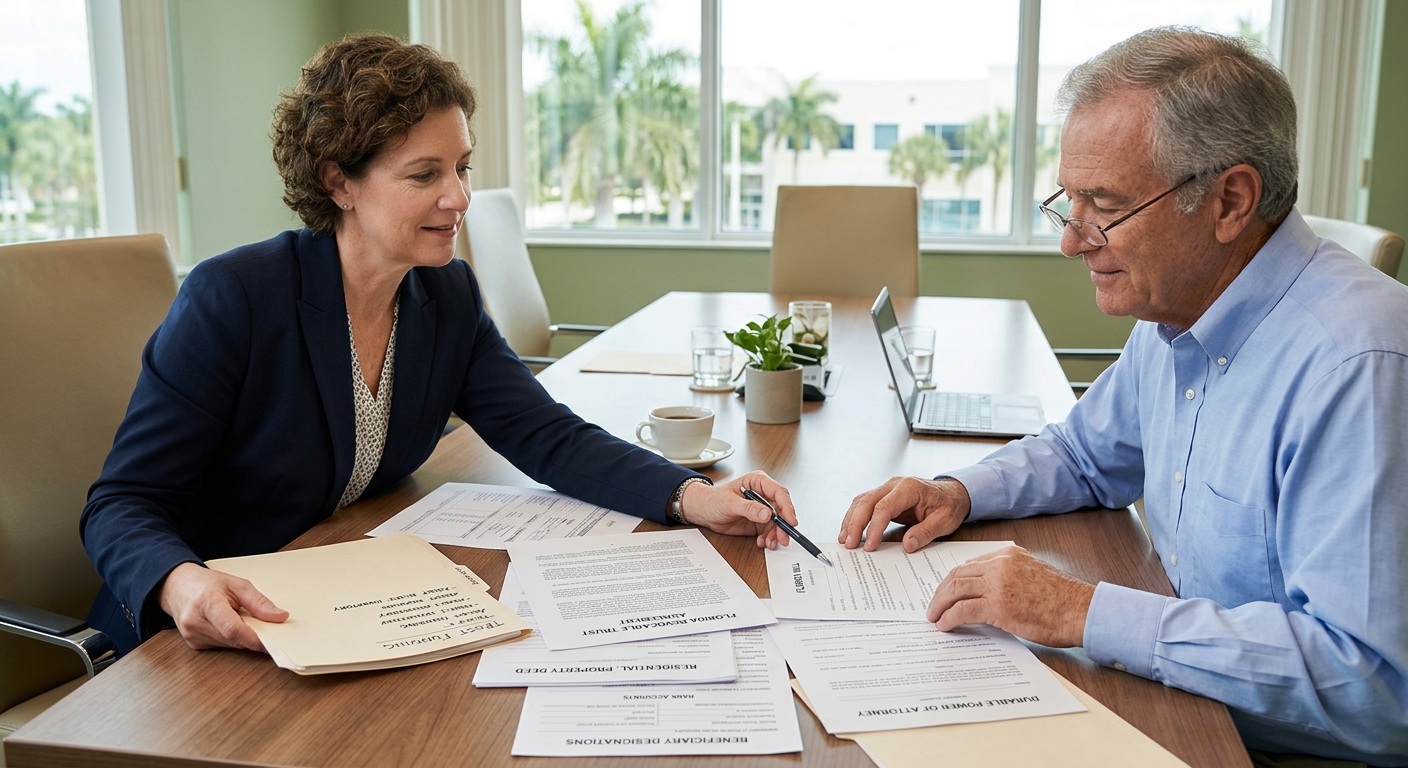
Florida estate planning documents for avoiding probate in Coral Springs

Most people think of an estate plan as a set of documents: a will, perhaps a trust, powers of attorney, and other papers kept somewhere safe.

But there is another part of estate planning that matters just as much: how each asset is actually owned and what happens to it when you die.

A bank account can pass directly to a named beneficiary. A retirement account can do the same. Property owned with rights of survivorship may pass to the surviving owner. Assets properly transferred to a revocable trust can pass through the trust rather than through probate.

Other property may still become part of the probate estate.

So avoiding probate is not usually about finding one document or legal trick that makes the entire estate disappear from court supervision. It is about deciding, asset by asset, how ownership should change when you die.


Probate Is Not One Destination for Everything You Own

Imagine someone dies owning a house, a checking account, a retirement account, an investment account, and a life insurance policy.

It would be easy to think of all of these as “the estate” and assume they follow the same process.

They do not.

The legal mechanism attached to each asset can determine what happens next.

Asset or arrangementPossible transfer mechanismMay avoid probate?Main consideration
Life insurance with beneficiaryBeneficiary designationYesKeep the designation current
Retirement accountBeneficiary designationYesThe account designation matters
Bank account with POD designationPay on death designationYesFlorida law governs the transfer
Securities registered in beneficiary formTransfer on death registrationYesRegistration must comply with applicable requirements
Joint property with survivorshipSurvivorship rightsYesThe form of ownership matters
Properly funded revocable trustTrust administrationYesAssets must actually be transferred to the trust
Solely owned property without another mechanismProbate administrationGenerally noProbate may be required
Florida homesteadSpecial rulesDependsFamily and ownership circumstances matter

Florida law specifically provides for pay on death accounts and allows qualifying securities registered in beneficiary form to pass to surviving beneficiaries rather than becoming part of the deceased owner’s estate.

That is why estate planning is better understood as a system of ownership and transfer than simply a collection of documents.


Start With the Asset, Not the Will

A will is important, but it does not necessarily control every asset you own.

If a retirement account names a beneficiary, that designation can determine who receives it. A valid pay on death designation can cause funds in a qualifying account to pass directly to the surviving beneficiary. Securities registered in beneficiary form can likewise pass according to that registration.

The more useful question is therefore:

Does the way this asset is titled or designated actually match the estate plan?

A will can say one thing while an outdated beneficiary designation says another.

Marriage, divorce, the birth of children, the death of a beneficiary, remarriage, or a major change in financial circumstances can all be reasons to review these arrangements.


Beneficiary Designations: Simple, but Worth Reviewing

Beneficiary designations are among the most straightforward ways to arrange for certain assets to pass outside probate.

Florida’s pay on death statute covers deposit accounts including checking accounts, savings accounts, certificates of deposit, and similar accounts. When the relevant account owner dies, the funds generally pass according to the valid designation.

Florida also has a separate statutory system for securities registered in beneficiary form. Under §711.507, ownership passes to beneficiaries who survive the owner or owners, subject to the statutory requirements.

Reviewing beneficiary designations and financial assets for probate planning in Broward County

Similar arrangements are common with:

  • Life insurance
  • Retirement accounts
  • Annuities
  • Certain investment accounts
  • Pay on death bank accounts

The important word is designation.

An estate plan may have been carefully prepared years ago, but the financial institution generally follows the designation governing the account or policy.

That makes beneficiary review an important part of estate planning.


A Revocable Trust Can Avoid Probate, but It Has to Be Funded

A revocable living trust is one of the best-known probate avoidance tools.

During the owner’s lifetime, assets are transferred to the trust and managed by the trustee. After death, the successor trustee can administer trust property without requiring a probate appointment for those particular assets.

But signing the trust is only part of the process.

The Florida Bar puts it plainly: “The ‘funding’ of a revocable trust is critical to successfully avoid probate.”

A trust document does not automatically place every asset you own into the trust.

If assets remain titled solely in the deceased person’s name, those assets may still require probate. The Florida Bar notes that an incompletely funded trust can result in both probate administration for assets outside the trust and trust administration for assets held by the trust.

The documents and the ownership records therefore need to agree.


Joint Ownership Can Avoid Probate. It Can Also Change Your Rights Now.

Joint ownership with survivorship rights can allow property to pass automatically to the surviving owner.

That can be useful. It is also more consequential than simply naming someone as a beneficiary.

Adding another person as a joint owner can give that person legal rights during your lifetime. Depending on the asset and ownership arrangement, joint ownership can also create complications involving creditors, taxes, estate expenses, simultaneous deaths, or unequal treatment among heirs.

The Florida Bar warns that joint ownership can sometimes “cause more problems than it solves.”

The point is not that joint ownership is inherently problematic. It is that avoiding probate should not be the only consideration when deciding who should own an asset.

“People often think avoiding probate requires something complicated. In many cases, it starts with a few simple decisions about how your property is owned and who should receive it. A little planning can make things much easier for the people you leave behind.”


Florida Homestead Is Different

A Florida home deserves special attention because homestead does not always follow the same rules as an ordinary investment account.

Florida law establishes specific rules governing the descent of homestead. When a decedent is survived by a spouse and descendants, for example, §732.401 provides for a life estate in the surviving spouse with a vested remainder in the descendants, while also giving the spouse an option to elect an undivided one-half interest instead. That election generally must be made within six months and is irrevocable.

The statute also expressly excludes certain property owned as tenancy by the entireties or joint tenancy with rights of survivorship from its operation.

Florida also has separate rules governing lifetime transfers of homestead, including transfers involving trusts.

In other words, the family home should not simply be treated as another asset on a generic probate avoidance checklist.


Giving Property Away Is Not the Same as Avoiding Probate

The simplest version of this strategy is also the most misleading: give property away before you die and it cannot enter your probate estate.

Technically, transferring ownership during life can accomplish that.

But it also means giving up ownership during life.

That can affect control over the property, creditors, taxes, family relationships, eligibility for certain benefits, and what happens if the recipient later dies, divorces, becomes incapacitated, or experiences financial problems.

Sometimes a lifetime gift makes sense. Sometimes another estate planning mechanism accomplishes the intended result without transferring ownership immediately.

“Avoids probate” is therefore not enough reason, by itself, to give something away.


The Real Problem: When the Plan and the Assets Disagree

Consider an estate with:

  • A house titled individually
  • A retirement account naming a former spouse
  • A bank account with a current beneficiary
  • An investment account owned jointly with one child
  • A revocable trust that was signed but never funded
  • A will dividing the estate equally among three children

The documents may all look reasonable in isolation.

Together, they could produce a very different result.

The former spouse may still receive the retirement account. The joint account may pass to one child. The bank account may pass to another beneficiary. The unfunded trust may not control the assets its creator expected it to control. The house may require a separate analysis because of Florida’s homestead rules.

The will may ultimately govern only the property that remains subject to probate.

This is why estate planning is not simply a question of:

“Do I have a will?”

It is also:

“Do my assets actually pass the way I think they will?”

Florida revocable trust and estate assets being coordinated to avoid probate in Coral Springs

+

A Practical Probate Avoidance Review

A useful review begins with the assets themselves.

For each significant asset, ask:

  1. Who owns it now?
  2. How is it titled?
  3. Does it have a beneficiary designation?
  4. Does it have survivorship rights?
  5. Is it owned by a trust?
  6. What happens if the named beneficiary dies first?
  7. Does the arrangement conflict with the will or trust?
  8. Are there special Florida rules governing the asset?

That review can reveal that an estate plan needs only a few updates.

It can also reveal several different transfer mechanisms working against one another.


Avoiding Probate Does Not Mean Avoiding Every Legal Process

Probate is not inherently a failure of estate planning. It is a legal mechanism for administering property that falls within the probate estate.

Avoiding probate can reduce court involvement for particular assets, and trust planning can sometimes prevent additional probate proceedings in another state when someone owns property outside Florida.

But a trust does not make administration disappear.

A successor trustee still has responsibilities involving assets, debts, beneficiaries, and distribution. The Florida Bar notes that many of the practical tasks performed by a personal representative must also be performed by a trustee administering a revocable trust.

The goal, then, is not simply less paperwork.

It is a transfer plan that matches the person’s wishes, family circumstances, assets, and Florida law.


Probate Avoidance in Coral Springs and Broward County

For families in Coral Springs and Broward County, probate planning ultimately comes down to the relationship between Florida law and the way the family’s assets are actually owned.

A homeowner may have very different planning considerations from someone whose estate consists primarily of retirement and investment accounts. A married couple may face different issues from an unmarried person. Someone with children from a previous relationship may need to coordinate beneficiary designations and ownership structures particularly carefully.

There is no single “avoid probate” document that produces the same result for every Florida estate.

The better question is which legal mechanism should govern each significant asset and whether those mechanisms work together.


When an Estate Planning Attorney Can Help

If you are planning your estate in Coral Springs, Broward County, or elsewhere in South Florida, an estate planning attorney can review more than whether you have a will.

The review can include how assets are titled, whether beneficiary designations match your wishes, whether a revocable trust is appropriate and properly funded, and whether Florida’s homestead rules affect the plan.

The objective is not to avoid probate at all costs.

It is to understand which assets will pass through probate, which can pass outside it, and whether the overall plan produces the result you actually intend.


Reinfeld & Cabrera P.A. assists clients with estate planning, trusts, probate, and related matters in Coral Springs, Broward County, and throughout South Florida.

If you are reviewing an existing estate plan or creating one for the first time, contact Reinfeld & Cabrera P.A. to discuss how your assets are owned and how Florida law may affect their transfer after death.


Questions People Often Ask

Can I avoid probate completely in Florida?

  • Some estates can be structured so that significant assets pass outside probate. Whether that is appropriate depends on the assets, ownership structures, beneficiary designations, family circumstances, and Florida law.

Does having a will avoid probate?

  • No. A will generally directs the distribution of property that remains subject to probate. It does not, by itself, remove those assets from the probate process.

Does a revocable trust avoid probate in Florida?

  • It can, but the relevant assets must be properly transferred to the trust or otherwise coordinated with it. An unfunded trust may leave assets subject to probate.

Can a beneficiary designation avoid probate?

  • A valid beneficiary designation can allow certain assets to pass outside probate. Florida law specifically recognizes pay on death accounts and beneficiary registrations for qualifying securities.

Can I put my Florida home in a trust to avoid probate?

  • Florida homestead is subject to special constitutional and statutory rules. A trust may be appropriate in some circumstances, but homestead should not be treated like an ordinary investment asset.

Is avoiding probate always the best option?

  • Not necessarily. Probate serves legitimate purposes, including administration of assets that fall within the probate estate. The appropriate estate plan depends on the circumstances rather than on avoiding court involvement as an end in itself.

Elder Law in Florida: What Does an Elder Law Attorney Actually Handle?

Elder law attorney meeting with a family about an older adult's legal and financial concerns in Coral Springs, Florida

Elder law can sound like a narrow area of practice. It is anything but.

A family may encounter elder law because a parent is beginning to lose the ability to manage finances. It may arise when someone needs long term care and the family is trying to understand how that care will be paid for. It may involve a power of attorney, a guardianship, Medicaid planning, financial exploitation, or a disagreement over who should be making important decisions.

Sometimes the legal issue is obvious. Sometimes it is not.

That is part of what makes elder law different from simply hiring an attorney to handle a single document or transaction. The lawyer may need to look at capacity, health care, finances, public benefits, property, family relationships, and the legal authority that one person has to act for another.

The Florida Bar’s own definition of elder law reflects that breadth. The specialty includes planning for aging, illness and incapacity, along with estate planning, probate, guardianship, nursing home claims, public benefits, elder abuse and related litigation.


When Is an Elder Law Attorney the Right Lawyer to Call?

The easiest way to understand elder law is to forget the label for a moment and look at the problem in front of you.

Consider a few situations.

  • Your mother is still living independently, but you are becoming concerned about what would happen if she could no longer manage her finances or make medical decisions.
  • Your father needs nursing home care, and the family is trying to understand what Medicaid will cover and what financial consequences may follow.
  • An older relative has given someone access to bank accounts, and money appears to be disappearing.
  • A parent never created a durable power of attorney, and now family members disagree about who should handle financial affairs.
  • A family is considering guardianship because an older adult can no longer manage certain aspects of daily life.

These are very different problems. They can nevertheless fall within the same legal specialty.

Choosing an elder law attorney is not about finding someone who handles one particular document. Look for someone who understands how these issues interact.


If You Are Planning Before There Is a Crisis

The best time to confront many elder law issues is before a crisis makes the decisions for you.

Florida law provides several tools for planning around incapacity, including durable powers of attorney and advance health care directives. A health care surrogate can play an important role in medical decision making, while other planning documents can establish who has authority to act when a person can no longer do so independently. The Florida Bar identifies these instruments as part of the broader field of elder law.

The important point is not simply having paperwork.

The documents need to reflect the person’s wishes and circumstances. They also need to work together with the person’s financial and estate planning.

That is where an elder law attorney can provide something more substantial than a stack of forms. The attorney can examine what authority exists. He or she can see what authority may be needed, and what could happen if the person later loses capacity.

Capacity is more than often the dividing line.

While someone can make and change important decisions for themselves, planning may be available. Once capacity becomes seriously impaired, the family may have to rely on existing documents or turn to a court.


When a Parent or Spouse Is Losing Capacity

This is where elder law becomes particularly important.

Families sometimes assume that a spouse or adult child automatically has the legal authority to take over when an older person can no longer manage affairs. That is not necessarily how the law works.

If there is no adequate planning in place, guardianship may become an issue.

Florida guardianship proceedings are handled through the circuit courts under Chapter 744. A court may determine that a person is incapacitated and appoint a guardian to exercise particular legal rights. Importantly, Florida law recognizes that guardianship should be the least restrictive appropriate alternative. Most the time it sustains that an incapacitated person retains rights consistent with his or her abilities.

That difference matters.

Guardianship is not simply a legal mechanism for giving one family member control over another. It is a court supervised process involving the removal and delegation of specific rights.

Florida law also protects the rights of people who have been determined incapacitated. This includes rights involving dignity, independence, access to the courts, counsel, and continuing review of restrictions on their rights.

An elder law attorney may therefore become involved before a guardianship proceeding, during the proceeding. Or in disputes concerning an existing guardianship.


When Long Term Care Becomes a Financial Problem

Long term care can turn an ordinary family financial plan into a complicated legal problem surprisingly quickly.

Medicaid planning is one of the better known areas of elder law because eligibility for long term care benefits involves detailed federal and Florida rules concerning income, assets, transfers, exemptions, and other circumstances.

The Florida Bar’s current elder law education materials specifically describe Medicaid planning as an area in which elder law attorneys use federal and state rules to help clients legally and ethically protect assets and income when skilled long term care may be necessary.

This is also an area where timing affects the results.

A family that waits until admission to a nursing facility may be dealing with a very different set of circumstances from a family that begins planning years earlier. The appropriate strategy depends on the person’s assets, income, health situation, family circumstances, existing documents, and the applicable Medicaid rules.

For that reason, Medicaid planning should not be reduced to a simple question of whether someone is “over the limit.” Eligibility is a legal analysis, not a single number.

Florida elder law attorney reviewing incapacity planning and power of attorney documents with a client in Broward County

When Someone May Be Taking Advantage of an Older Adult

Not every elder law problem begins with a hospital, nursing facility, or court.

Sometimes it begins with a bank statement.

A caregiver starts using an older person’s money. A relative suddenly changes ownership of property. Someone with access to a power of attorney begins making transactions that appear to benefit themselves. An older adult may also be pressured into giving away assets or signing documents they do not fully understand.

Florida law specifically addresses exploitation of elderly persons and disabled adults. Section 825.103 includes conduct involving the unauthorized use of an older person’s funds, assets, or property, including circumstances involving people in positions of trust and confidence and certain breaches of fiduciary duty by guardians, trustees, and agents acting under powers of attorney.

The law also provides a civil cause of action for an injunction to protect a vulnerable adult from exploitation in qualifying circumstances.

These matters can require more than identifying that something feels wrong. The relevant documents, financial transactions, authority granted under a power of attorney, property records, and relationships between the people involved may all need to be examined.


Where Elder Law Meets Estate Planning and Probate

Elder law also overlaps naturally with estate planning and probate.

That does not mean every estate planning matter is an elder law matter. A straightforward will or trust may have little to do with elder law.

The overlap becomes more significant when planning involves incapacity, long term care, public benefits, special needs, guardianship, fiduciary responsibilities, or protecting an older person’s ability to control property and financial decisions.

This is also why the old idea that elder law is primarily about “estate taxes” misses the modern picture.

Florida does not impose a separate state estate tax on people who died after December 31, 2004. The Florida Department of Revenue confirms that the state no longer requires the former Florida estate tax affidavits for estates subject to the current rules.

Estate planning remains relevant to elder law, but the important questions are broader: who can act, when can they act, what authority do they have, what happens if capacity changes, and how should assets and responsibilities be handled?


What Should You Ask an Elder Law Attorney?

If you are meeting with an elder law attorney for the first time, the most useful questions are usually practical.

Ask whether the attorney regularly handles the type of problem you are facing. Ask what legal authority currently exists and what happens if the person’s capacity changes. If Medicaid or long term care is involved, ask what information the attorney needs before discussing eligibility or planning.

It is also reasonable to ask about experience with guardianship, powers of attorney, public benefits, exploitation, probate, or other areas that may overlap with your situation.

Board certification can provide another useful credential to investigate. The Florida Bar’s elder law certification requires at least five years of legal practice, substantial involvement in elder law, continuing legal education, peer review, and a written examination.

Certification is not the only measure of an attorney’s experience. But where it exists, it is a meaningful indication of specialized training and practice.

Elder law attorney reviewing financial records in a possible exploitation dispute in Broward County, Florida

The Right Question May Be “What Happens Next?”

If you are reading about elder law because something has already happened in your family, you probably do not need a textbook definition of the field.

You need to understand what kind of legal problem you are looking at.

Is this a planning issue? A capacity issue? A Medicaid or long term care problem? A guardianship matter? A dispute over someone’s authority to act? Possible financial exploitation? A probate or estate planning issue that has become more complicated because of age, illness, or incapacity?

Those distinctions matter because the legal response can be very different.

At Reinfeld & Cabrera, our elder law practice helps families address the legal issues that arise as people age, including incapacity planning, guardianship, long term care and Medicaid planning, and related financial and estate concerns. The goal is to understand the circumstances first, identify the legal issues that actually matter, and then determine what needs to be done.

If an older family member’s finances, health care decisions, capacity, or long term care has created a legal problem, contact Reinfeld & Cabrera in Coral Springs to discuss the circumstances with an elder law attorney.


Frequently Asked Questions

What does an elder law attorney do in Florida?

  • An elder law attorney may handle incapacity planning, powers of attorney, health care directives, guardianship, Medicaid and long term care planning, elder exploitation matters, estate planning, probate, and related disputes.

When should I contact an elder law attorney?

  • You can contact an elder law attorney before a crisis, particularly when planning for incapacity or future long term care. An attorney may also become important when a person is already losing capacity, facing guardianship, applying for long term care benefits, or experiencing possible financial exploitation.

Is guardianship always necessary when an older person loses capacity?

  • No. Florida law requires consideration of less restrictive alternatives when appropriate. Existing planning documents, including a durable power of attorney, advance health care directives, or certain trusts, may affect whether guardianship is necessary.

Does elder law include Medicaid planning?

  • Yes. Medicaid planning for long term care is a recognized part of elder law practice, and the applicable rules can be highly fact specific.

Can an elder law attorney help if someone is exploiting an older relative?

  • Potentially. Florida law addresses financial exploitation of elderly persons and disabled adults, including certain misuse of property and breaches of fiduciary duty. The appropriate legal response depends on the facts and the authority involved.

Why Use a Real Estate Attorney in Florida? What Legal Counsel Adds to a Transaction

A Florida real estate attorney knows the rules that govern property transactions, from contract requirements and title issues to closing procedures and the remedies available when something goes wrong. A buyer or seller generally does not have that knowledge. There is no reason to expect them to.

You know the property. What you want to pay or receive. You know the circumstances that brought you to the transaction. Your attorney brings something different: a working knowledge of Florida real estate law and the experience to recognize legal problems that may not be obvious from the face of a document.

The Florida Bar recommends consulting an experienced Florida licensed real estate lawyer before signing a purchase contract. That timing gives the attorney an opportunity to examine the agreement while its terms can still be negotiated.

For someone buying or selling property in Coral Springs, Broward County, or elsewhere in South Florida, that is often the most useful place to begin.


Who Represents Your Interests?

A property transaction can involve real estate agents, brokers, lenders, title professionals, inspectors, surveyors, insurance professionals, and attorneys.

Each person has a different responsibility.

A closing agent may coordinate documents, funds, title requirements, and the mechanics of completing the transaction. That person may also be a lawyer. The Florida Bar cautions consumers that a closing agent does not necessarily represent the buyer’s personal legal interests.

Your own attorney has a different assignment. The lawyer is there to advise you about your legal position, explain what you are agreeing to, identify problems, and negotiate or respond when necessary.


Alan Reinfeld puts it this way:

“A closing can look perfectly organized from the outside while still containing terms that deserve a closer legal review. The question is whether someone is specifically looking at the transaction from your legal point of view.”

That can matter when a contract contains unusual obligations, a title commitment raises questions, a condominium has complicated restrictions, or the parties disagree about what was promised.


Start With the Contract

The purchase agreement establishes the framework for the transaction.

Price is one provision. Deadlines, deposits, financing, inspections, repairs, default provisions, closing conditions, property disclosures, and special agreements can all affect what happens after the contract is signed.

The Florida Bar advises buyers to have a lawyer review the purchase contract before signing. Its consumer guidance also notes that contractual terms may become difficult to change once the agreement has been executed.

Florida Realtors has likewise advised consumers to read contracts carefully, including the particular version being used and provisions dealing with default and disputes. Familiarity with a standard form does not answer every question raised by an individual transaction.


A lawyer reviewing the agreement may examine

Contract issueQuestions legal review can address
DepositWhere is it held? When can it be released?
InspectionWhat rights exist if defects are discovered?
FinancingWhat deadlines and conditions apply?
Closing dateWhat happens if either side cannot close on time?
RepairsWhich obligations have actually been agreed to?
DefaultWhat remedies may become available?
Special provisionsDo unusual terms create additional obligations?
DisputesWhat procedures or remedies does the agreement provide?

A provision can look harmless when read by itself and have a very different effect when considered alongside the rest of the agreement. An attorney is trained to look for those connections.


Title Problems Can Follow the Property

Title work is another central part of a real estate transaction.

A title examination can involve years of recorded documents, previous transfers, liens, easements, restrictions, and other matters affecting ownership. The title insurance commitment identifies requirements that must be satisfied before the policy is issued as well as exceptions to coverage.

Consider a buyer who discovers an easement affecting part of the property. The existence of an easement does not automatically make the transaction unacceptable. Its location, purpose, language, and effect on the buyer’s intended use of the property are the questions that need attention.

The same applies to liens, restrictions, unresolved ownership questions, and other title matters.

A title commitment may identify an exception. The attorney’s job is to explain what that exception means and whether it creates a legal problem for the client.

Florida’s Department of Financial Services recognizes Florida attorneys in good standing as professionals who may handle real estate closings involving title insurance and escrow.


Negotiating the Terms

Real estate negotiations rarely stop at the number written on the first page.

A buyer may want additional time for financing. A seller may agree to repairs in exchange for a particular closing date. The parties may negotiate responsibility for an existing lien or an issue discovered during inspection. A condominium transaction may involve documents and restrictions that require attention before the buyer proceeds.

The lawyer brings legal knowledge to those negotiations.

That knowledge can be useful when a proposed change sounds reasonable but creates an obligation elsewhere in the contract. It can also help a client understand what is worth negotiating and what may create unnecessary complications.

Florida Realtors has emphasized that contract terms can be negotiated and that parties have a right to seek legal review.

A standard contract form is a starting point. The property, the parties, and the circumstances determine whether its provisions actually work for the transaction at hand.


What Happens at Closing?

Closing is where the contractual decisions, title work, financing, and other requirements come together.

The deed must transfer the property properly. Required documents must be completed. The closing figures must correspond with the transaction. Title requirements must be satisfied or addressed. Funds need to reach the correct destination.

A lawyer handling the transaction understands the legal significance of those documents and requirements. The client does not need to become a temporary expert in Florida property law simply because they are buying a house.

There is also a distinctly modern hazard: wire fraud.

The Florida Bar advises consumers to verify wire instructions independently rather than relying solely on an email or other electronic communication.

That advice deserves serious attention. Real estate transactions can involve hundreds of thousands of dollars moving electronically. A fraudulent change to wiring instructions can turn an ordinary closing into a serious financial problem.

Real estate attorney reviewing a Florida purchase contract and title documents

When a Transaction Starts to Fall Apart

Some legal questions do not appear until the deal is already under pressure.

The inspection may reveal significant damage. Financing may fail. A title defect may appear shortly before closing. The seller may refuse to perform an agreed obligation. The buyer may want to withdraw. The parties may disagree about the deposit.

Once that happens, the contract becomes the starting point for determining what each party is required to do and what remedies may exist.

Florida Realtors notes that a failed closing does not cause the underlying contract to disappear. The circumstances surrounding the failure can determine whether a breach occurred and what consequences follow.

This is where knowing the details of the agreement matters. Deadlines, contingencies, default provisions, notice requirements, and other clauses can determine what a party can do next.

An attorney who has reviewed the transaction from the beginning also has the benefit of knowing how the dispute developed, rather than trying to reconstruct the deal after the parties have reached an impasse.


Florida’s Property Market

Florida’s real estate market gives these transactions considerable financial weight.

Florida Realtors reported 26,036 single-family home closings in June 2026, up 9.3% from June 2025. Condo and townhouse sales totaled 8,900, an increase of 14%. The statewide median price was $432,000 for single-family homes and $305,000 for condos and townhouses.

By August 2026, the statewide median price was $415,000 for single-family homes and $298,000 for condos and townhouses. Inventory stood at 4.3 months for single-family homes and 7.7 months for condos and townhouses.

Florida residential market, August 2026Median priceInventory
Single-family homes$415,0004.3 months
Condos and townhouses$298,0007.7 months

A transaction involving a property worth several hundred thousand dollars can turn on a few sentences in a contract or a title document. Understanding those sentences is part of the attorney’s job.


Do You Need a Real Estate Attorney in Florida?

Florida does not require an attorney for every real estate transaction.

The Florida Bar nevertheless recommends consulting an experienced Florida licensed real estate lawyer before signing a purchase contract.

There is nothing strange about that distinction. People routinely hire professionals for matters that fall within those professionals’ expertise.

You probably would not expect a title examiner to negotiate your purchase agreement or a real estate agent to give you a complete analysis of Florida contract law. An attorney occupies a different place in the transaction.

The lawyer knows the statutes, regulations, contractual principles, title rules, and legal remedies that can affect the deal. The client brings knowledge of the property and their own objectives. Good representation connects the two.


Questions to Ask a Real Estate Attorney

If you are considering legal representation for a Florida property transaction, useful questions include:

  • Will you review the purchase contract before I sign it?
  • Will you review the title commitment and exceptions?
  • Who will represent my interests during closing?
  • Can you negotiate changes to the contract?
  • Will you review condominium or homeowners’ association documents when relevant?
  • What happens if the other party refuses to close?
  • What should I do if a title problem appears?
  • How will you communicate with the title company, lender, broker, or opposing counsel?

The answers can tell you how involved the attorney expects to be and whether the representation fits the transaction.


Why Use a Real Estate Attorney?

You do not need to memorize Florida’s real estate laws to buy a house.

You do need to understand the agreement you are signing and the legal consequences of the transaction. That is where an attorney’s knowledge becomes useful.

A real estate lawyer works with the statutes, contracts, title records, closing requirements, and disputes that surround property transactions. The lawyer can recognize legal issues that an ordinary buyer or seller may never have encountered before.

Florida real estate attorney reviewing a property transaction with clients in Coral Springs

Stuart Reinfeld describes the objective this way:

As he states: “A successful closing depends on documents that accurately reflect the agreement and on careful attention to the client’s legal interests throughout the transaction.”

Reinfeld & Cabrera represents clients in Coral Springs, Broward County, and throughout South Florida in real estate matters, including contract review, transactions, title issues, and real estate disputes.

If you are buying or selling property, refinancing, dealing with a title issue, or facing a disagreement over a real estate contract, contact Reinfeld & Cabrera to discuss your situation.


Frequently Asked Questions

Is a real estate attorney required in Florida?

  • No. Florida does not require an attorney for every real estate transaction. The Florida Bar recommends consulting an experienced Florida licensed real estate lawyer before signing a purchase contract.

When should I hire a real estate attorney?

  • Before signing the purchase contract is generally the most useful time. Early review allows potential contractual problems to be addressed while the terms remain open to negotiation.

What does a Florida real estate attorney do?

  • Depending on the transaction, an attorney may review contracts, investigate title issues, explain closing documents, negotiate terms, advise on property restrictions, and represent a client when a transaction develops into a dispute.

Does the closing agent represent the buyer?

  • Not necessarily. A closing agent can coordinate the transaction without representing the buyer’s individual legal interests.

Can a real estate attorney resolve title problems?

  • An attorney can investigate the legal significance of title defects, liens, easements, restrictions, and other title issues and advise the client about available options.

What happens when a Florida real estate transaction does not close?

  • The answer depends on the contract and the circumstances. The parties may have rights and obligations involving deposits, default, damages, deadlines, or other remedies. The contract and the facts need to be examined before determining what follows.

Avoiding Probate in Florida: Estate Planning Mistakes to Watch For

Estate planning attorney reviewing probate avoidance options with a client in Coral Springs, Florida

Can avoiding probate create problems?

Yes. An estate plan can keep an asset out of probate while creating a different problem involving ownership, inheritance, control, or family disputes.

Joint accounts, beneficiary designations, trusts, and survivorship ownership can all be useful estate-planning tools. Problems arise when one of those arrangements is created without considering how it fits with the rest of the estate plan.

A person may add a child to a bank account because the child will receive it automatically at death. Someone else may name a beneficiary on a retirement account and never update it. A homeowner may add a child to a deed to make a future transfer easier.

Each decision can accomplish its immediate purpose. It can also produce an unintended result elsewhere.


When Probate Avoidance Changes the Intended Inheritance

The central problem is coordination.

Suppose a parent wants three children to inherit equally. The will reflects that intention, but one child is the beneficiary of a bank account, another is the beneficiary of a life insurance policy, and the house is jointly owned with the third.

The probate estate may then tell only part of the story.

Florida recognizes numerous arrangements that allow assets to pass outside probate. Some nonprobate assets can nevertheless remain relevant for other estate-planning purposes. For example, Florida’s elective-share statute includes certain payable-on-death, transfer-on-death, in-trust-for, and survivorship accounts when calculating a surviving spouse’s elective estate.

Avoiding probate and determining who should ultimately receive an estate are therefore separate questions.


Can Adding Someone to a Bank Account Cause an Inheritance Problem?

It can.

Adding a child or other person to an account may be intended to provide convenience during the owner’s lifetime or allow the account to pass automatically at death.

But joint ownership can affect both control and inheritance.

The Florida Bar warns that joint ownership can produce unintended consequences involving creditor exposure, unequal treatment of heirs, estate expenses, and other issues.

For example, a parent might add one child to an account because that child helps manage the parent’s finances. If the account carries survivorship rights, the arrangement may also determine who receives the money when the parent dies.

That result may be completely different from an intention to divide the estate equally among several children.


Can a Beneficiary Designation Conflict With a Will?

Yes.

A beneficiary designation can determine who receives certain assets without the asset passing through probate.

That can be useful until an old designation conflicts with a later estate plan.

Suppose someone signs a new will leaving the estate equally to two children. A retirement account still names one child as the sole beneficiary.

The new will does not necessarily change that beneficiary designation.

Beneficiary designations should therefore be reviewed whenever the overall estate plan changes and after major life events such as marriage, divorce, or the death of a beneficiary.


What If I Create a Trust but Forget to Transfer an Asset?

A trust document does not automatically place every asset into the trust.

If someone creates a revocable trust intending for it to hold an investment account, but the account remains solely in that person’s individual name, the trust may not control the account simply because the trust document says it should.

The same issue can arise with real estate, business interests, and other significant property.

The planning documents and ownership records need to match.


Can Putting a Child on Your House Cause Problems?

It can.

Adding a child to real estate can affect ownership and control during the parent’s lifetime as well as what happens after death.

The parent may have intended to make the eventual transfer easier. Instead, the arrangement can create a co-ownership relationship that affects decisions about selling, refinancing, or managing the property.

Florida homestead adds another layer of rules. Florida law places restrictions on the devise of homestead when a surviving spouse or minor child is involved, and separate provisions address certain lifetime transfers.

An ownership change intended to avoid probate therefore needs to be considered under the homestead rules as well.

Broward County estate planning attorney reviewing conflicting beneficiary and ownership arrangements

What Happens When Estate Documents Disagree?

Consider a simple example:

  • The will divides the estate equally among three children.
  • A bank account names Child A as beneficiary.
  • A life insurance policy names Child B.
  • The house is jointly owned with Child C.
  • A trust was created to hold the house, but the deed was never transferred to the trust.

There is no single document explaining the entire estate.

Each asset may have its own transfer mechanism. The family may then have to determine which arrangement controls each asset and whether any of them create additional legal rights.

The underlying problem is coordination.


Should Every Asset Be Arranged to Avoid Probate?

No.

Some assets may appropriately pass through probate. Others may be better handled through a trust, beneficiary designation, survivorship arrangement, or another structure.

The useful planning exercise is to identify the major assets, determine how each is currently owned, and ask how each will pass at death.

Then compare that result with the intended distribution.

That review can reveal inconsistencies before they become disputes.


Avoiding Probate in Coral Springs and Broward County

For families in Coral Springs and Broward County, these issues can arise when an estate includes a Florida homestead, investment accounts, business interests, jointly owned property, or multiple beneficiaries.

They can also arise when someone moves to Florida with estate documents and account arrangements created years earlier in another state.

A will, trust, beneficiary designation, deed, and account title can each serve a legitimate purpose. Problems arise when they produce different results.


Frequently Asked Questions

Can avoiding probate cause problems?

  • Yes. Probate avoidance can create unintended ownership, inheritance, control, or family issues if the arrangement is inconsistent with the rest of the estate plan.

Can adding someone to my bank account change who inherits the money?

  • Yes. Depending on the account’s ownership and survivorship terms, adding another person can affect who receives the account at death.

Could a beneficiary designation conflict with my will?

  • Yes. Certain beneficiary designations control the transfer of assets outside probate and may produce a different result from a later will.

Can I create a trust but still have assets go through probate?

  • Yes. An asset that remains outside the trust and is otherwise a probate asset may still require probate administration.

Can putting my child on my house cause problems?

  • Yes. Adding a child as an owner can affect control and ownership during life, while Florida homestead law imposes additional rules on certain transfers and inheritance.

Should every asset be arranged to avoid probate?

  • No. The appropriate treatment depends on the asset, the owner’s objectives, family circumstances, and applicable Florida law.

When Probate Avoidance Becomes an Estate-Planning Problem

Keeping an asset out of probate can be useful. It can also change who owns it, who controls it, and who receives it.

The important question is whether the way an asset avoids probate produces the result the owner actually intended.

Reinfeld & Cabrera P.A. assists clients in Coral Springs, Broward County, and throughout South Florida with estate planning, trusts, probate, and related matters. If you are considering changing ownership, adding beneficiaries, creating a trust, or restructuring your estate to avoid probate, the firm can review the arrangement alongside the rest of your estate plan.

This article provides general information about Florida law and is not a substitute for legal advice concerning a particular estate.