
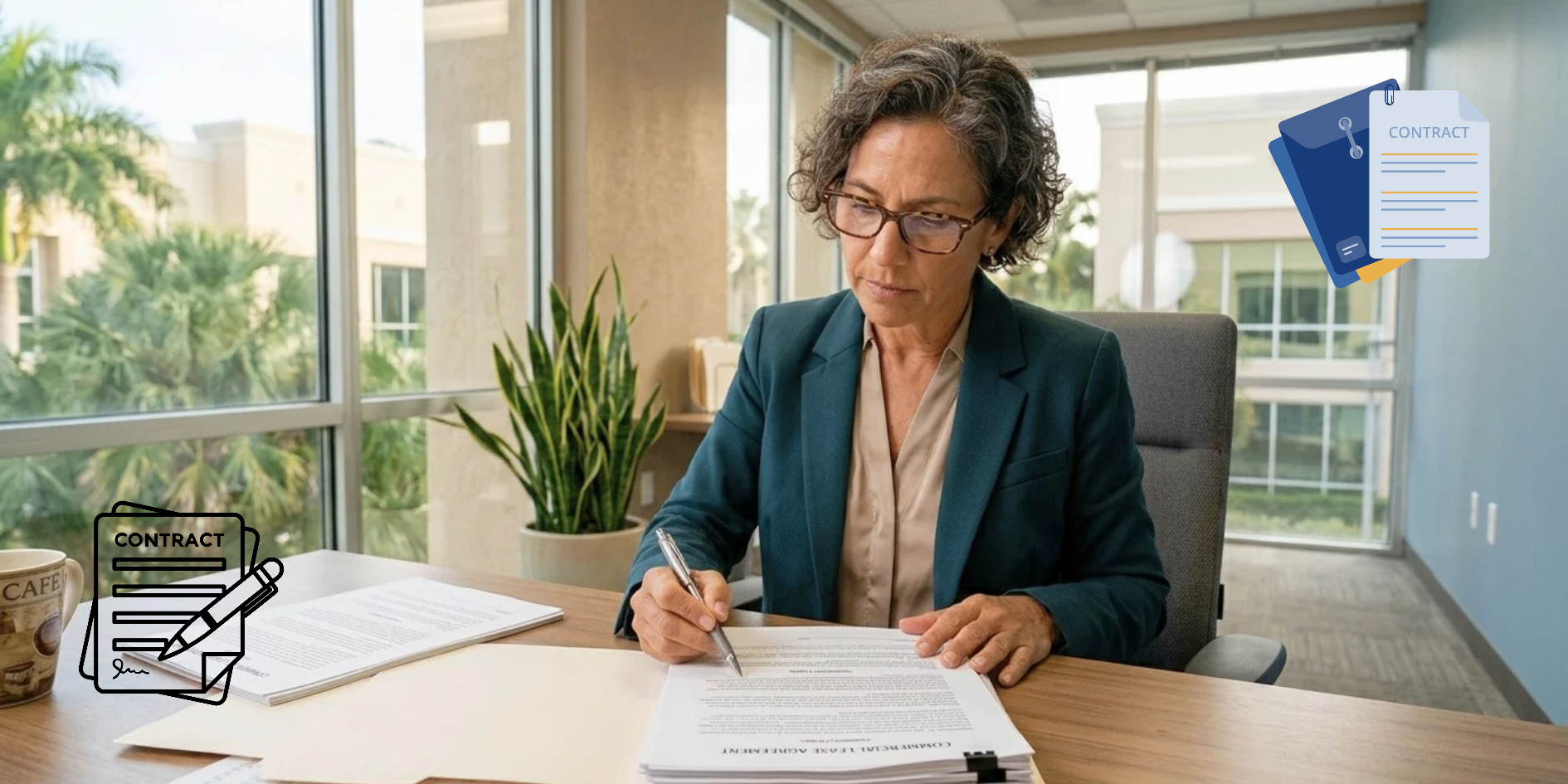
A signed contract can look perfectly straightforward until something goes wrong. A business owner discovers that important information was misrepresented before signing. A contractor realizes that an agreement contains a provision that shifts nearly every financial risk onto them. Someone else is told that a promise they relied on cannot be enforced.
Does that mean the contract is invalid? Not necessarily. Florida law recognizes several situations in which an agreement, or part of it, may be challenged or may not be enforceable. The legal consequences depend on what happened when the contract was formed and what its terms actually require.
As Alan Reinfeld explains:
“A signed contract can create a false sense of security. People often assume that once an agreement is documented, its terms are automatically enforceable. In reality, the circumstances surrounding its creation and the obligations it establishes can make an enormous legal difference.”
For businesses and individuals in Coral Springs and throughout Broward County, these distinctions makes a significant difference when negotiating an agreement or responding to a contractual dispute.
Void, voidable, and unenforceable: what is the difference?
These terms are sometimes used interchangeably in everyday conversation. Legally, however, they describe different problems.
A void contract has no legal effect from the outset. This can happen when an agreement involves an illegal purpose or when a fundamental legal requirement is missing. Because the agreement is treated as invalid, neither party can ordinarily rely on it as an enforceable contract.
A voidable contract, on the other hand, may initially appear valid but can be challenged by a party entitled to avoid it. Fraudulent inducement is one example. If someone signs an agreement after being deliberately misled about an important fact, that person may have grounds to seek rescission or other legal relief.
An unenforceable contract presents a different situation. The agreement may otherwise be valid, but a legal rule or defense prevents a court from enforcing it.
Why do these specigfic distinctions matter? Well, discovering a problem does not automatically give someone permission to walk away from every obligation. A contract might remain valid while one minor provision is challenged. In another situation, a party may have grounds to cancel the agreement altogether. The gravity of each provision means a lot when calculating the outcomes.
You Signed It. Did You Actually Read It?
Most people have accepted an online agreement without reading every word. We click the boxand get on with wha tever we were trying to do. That habit becomes considerably more expensive when the document involves a business transaction or a substantial financial commitment.
A service agreement might look harmless until you discover an automatic renewal clause or an early termination fee. A commercial contract might contain a liability limitation that changes who pays when something goes wrong. Those provisions can matter long after the signature. This may sound obvious, but for the love of god, read what you sign.
When in doubt, have an attorney read it first
Failing to read a contract generally does not provide a legal defense against its terms. There are exceptions involving fraud, concealment, pressure, or unconscionable provisions, but simply overlooking a clause is rarely enough to escape an obligation.
If an agreement carries significant financial consequences, consider having an attorney review it before signing. You can agree on the scope and cost of that review beforehand. A limited review may be considerably less expensive than fighting over a contract after a dispute develops.
Being cheap at precisely the wrong moment can become a very expensive hobby.
And if the other party tells you that nobody reads that section anyway, that is probably a good reason to read it twice.
When fraud or misrepresentation affects an agreement
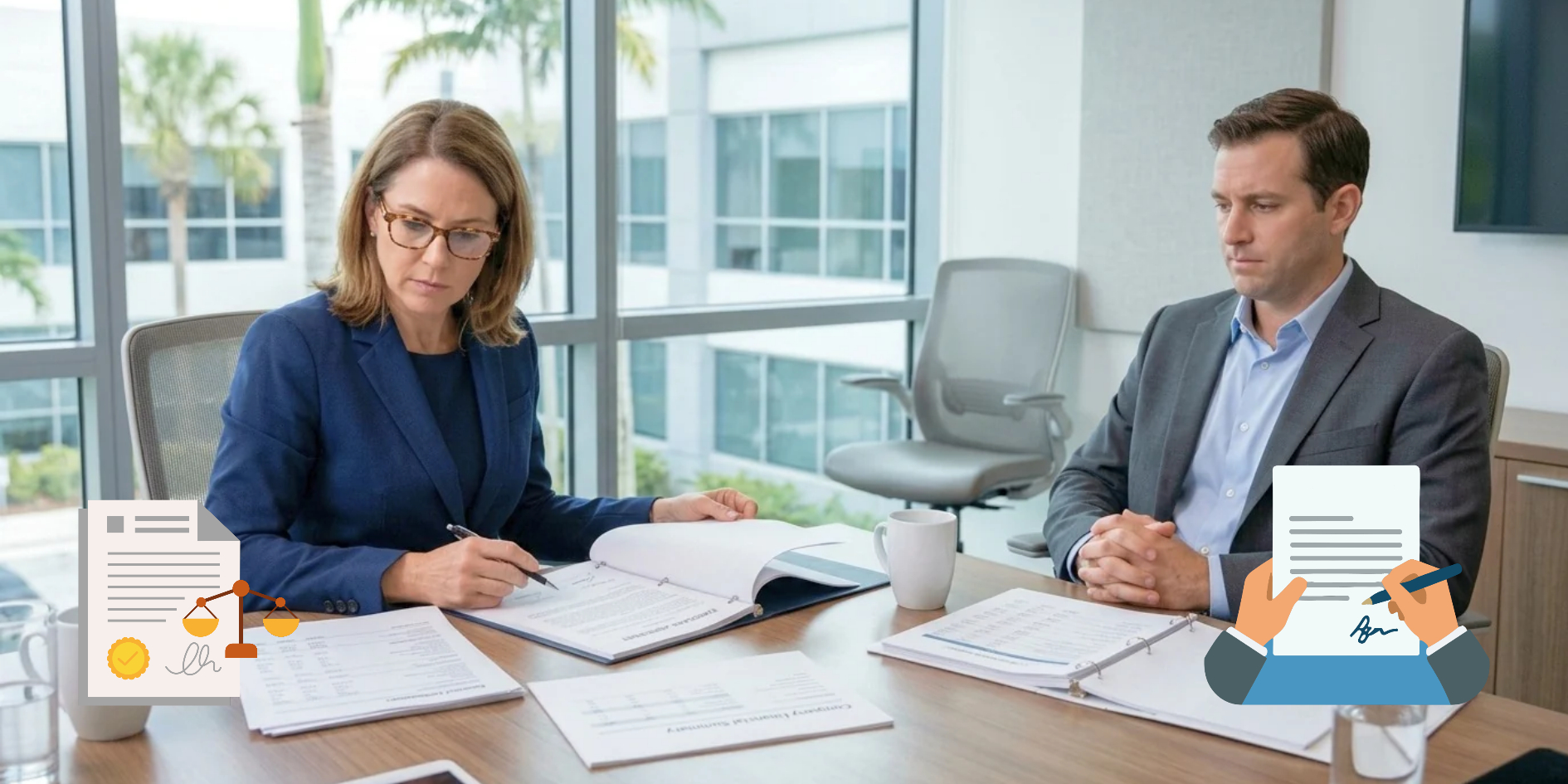
Imagine that a business owner is considering the purchase of a small company. During negotiations, the seller presents financial information showing steady revenue and claims that several major clients have signed long term service agreements. After the purchase, the buyer discovers that those figures were fabricated.
That is not an ordinary disagreement over how a contract should be interpreted. If the buyer relied on a material false statement when agreeing to the transaction, fraudulent inducement may provide grounds to challenge the agreement.
Under Florida law, fraudulent inducement generally involves a false statement about a material fact, knowledge or awareness of its falsity, an intention to induce reliance, and actual justifiable reliance that causes harm. The Florida Supreme Court addressed the distinction between fraud and contractual breach in HTP, Ltd. v. Lineas Aereas Costarricenses, explaining that fraudulent inducement is a separate claim when it rests on facts distinct from the alleged breach itself.
This distinction is the core of the subject. A seller who fails to deliver something promised may have breached the agreement. A seller who knowingly invents information to persuade someone to sign may have, and more than likely, committed fraud as well.
Not every inaccurate statement qualifies. People can say something without malicious intent. An optimistic prediction about future profits, for instance, is not automatically fraudulent just because the business later performs poorly. The nature of the statement and the evidence behind it must be examined. But yes, don’t take everything at face value, never.
Pressure, threats, and agreements signed under duress
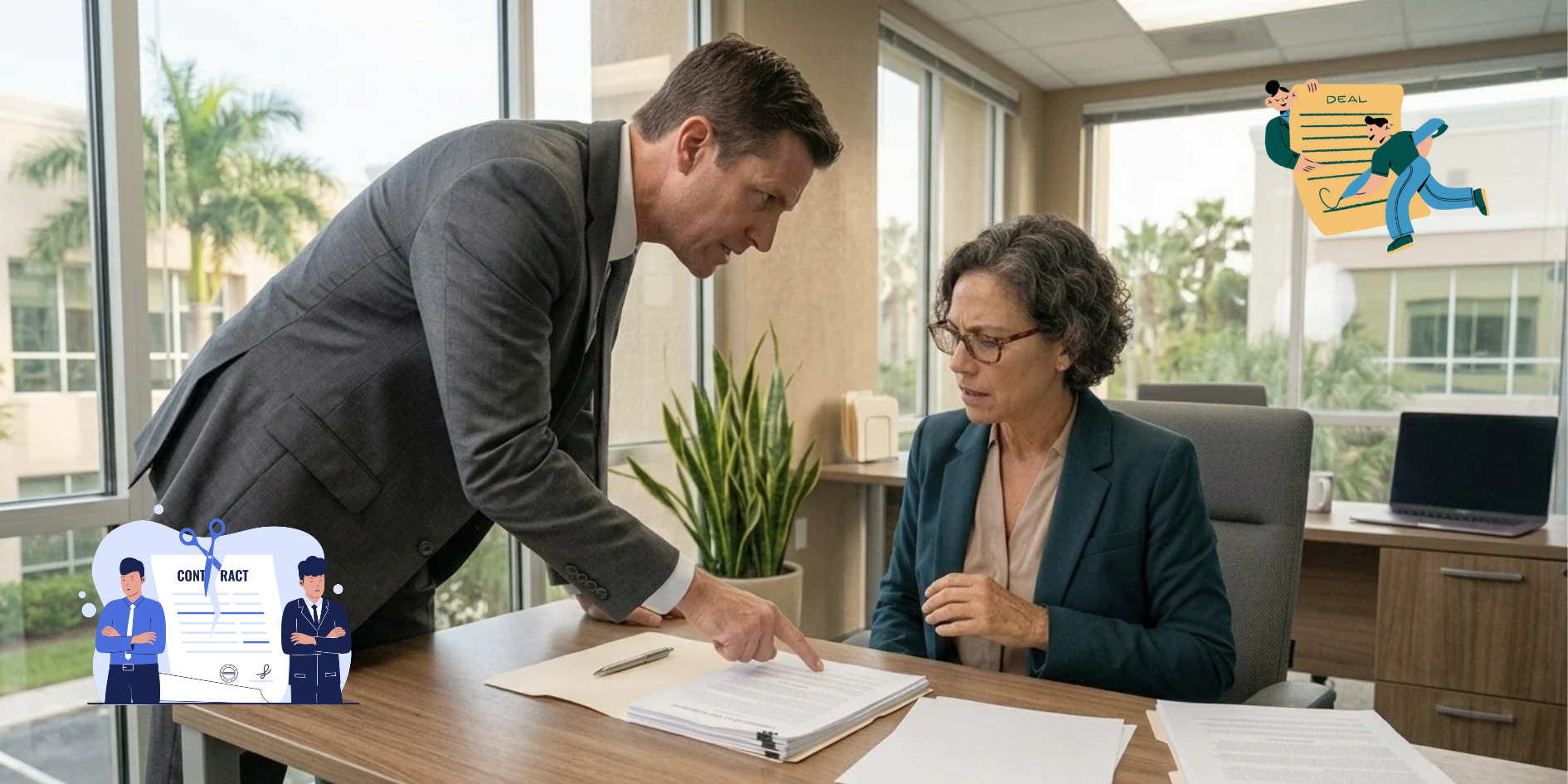
Contracts are often signed under pressure. No one just lays down a document and tells you to take your time and come back when you are ready. A supplier may impose a tight deadline, a landlord may refuse to negotiate further, or a business partner may insist that an offer will expire by the end of the day. These circumstances are pure marketing and psychological tactctics that can be frustrating, but they do not automatically amount to legal duress.
Duress generally involves improper pressure that leaves a person without a reasonable alternative and causes them to enter an agreement they otherwise would not have accepted. But don’t worry, these don’t all have to be someone pointing a gun to your head and telling you to sign the papers. For example, a threat to take unlawful action can be particularly significant.
Consider a business partner who threatens to withhold money that is already owed unless the other partner signs an agreement surrendering valuable ownership rights. Depending on the circumstances, that conduct may support a challenge based on duress. Hell, it might even open the doors for a blackmail case.
Undue influence can also become relevant when someone exploits a relationship of trust or a position of authority to obtain an agreement. This may arise in family business arrangements or situations involving an individual who depends heavily on another person’s assistance.
The important distinction to look for is between an agreement reached through difficult negotiation and one obtained through legally improper pressure. Courts do not invalidate contracts simply because one party later regrets accepting a demanding deal.
Mistakes that affect the agreement
Mistakes in the way the contact is ultimate frame are not mere linguistic interpetation mattern. They can create serious contractual disputes, particularly when the parties believed they were agreeing to the same transaction but were actually working from different assumptions.
A mutual mistake occurs when both parties share an incorrect understanding of a material fact. For example, a commercial property agreement might describe a particular parcel or feature that both sides mistakenly believe is included in the transaction. If the error concerns a fundamental assumption and materially affects the exchange, it may support a request for rescission or other relief.
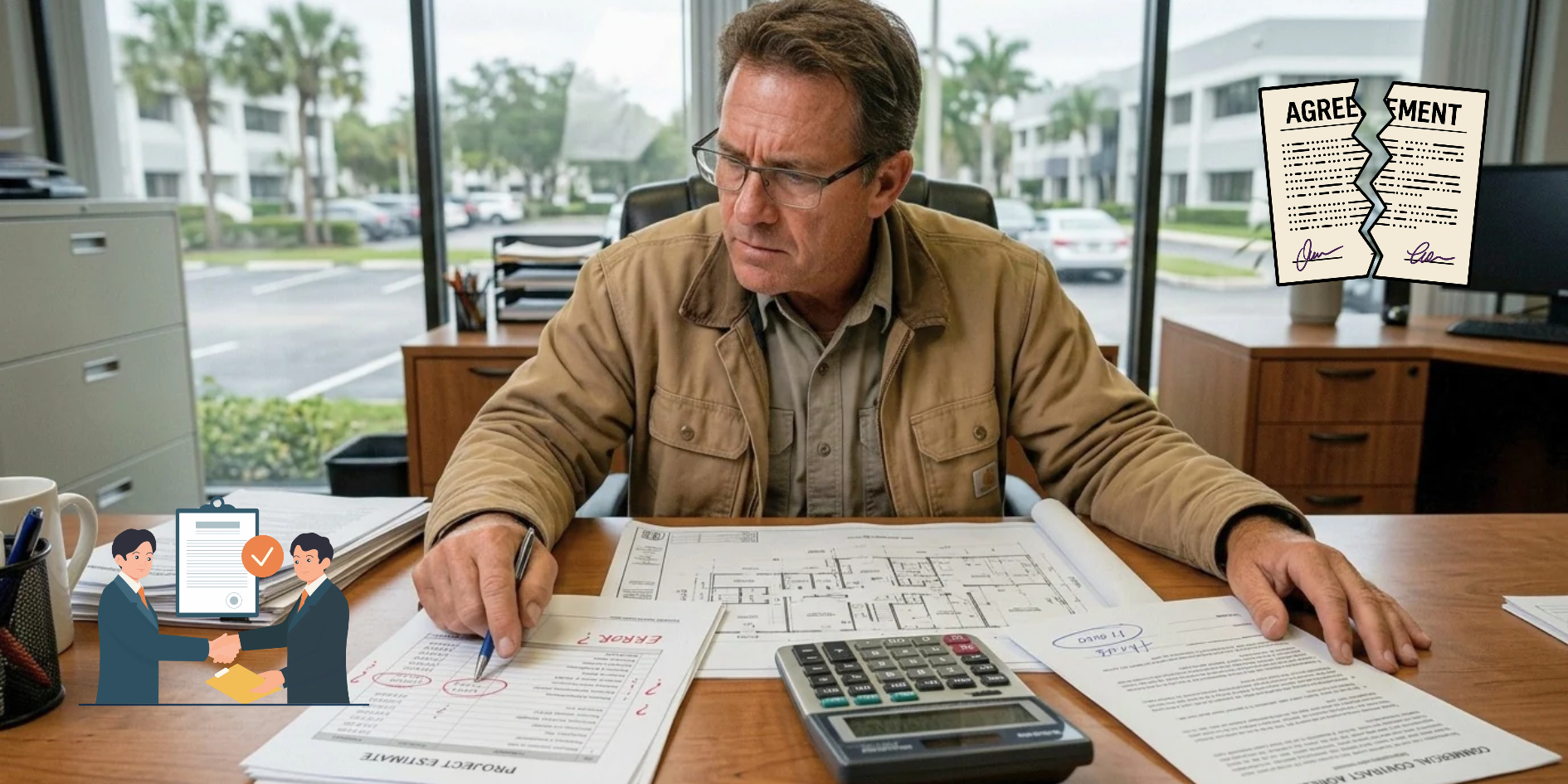
A unilateral mistake is different because only one party is mistaken. Suppose a contractor submits a bid with a substantial calculation error and the customer accepts it. The contractor may feel that the agreement should be corrected immediately. Unfortunately, arithmetic errors do not automatically give someone a legal escape route.
The court may consider whether the mistake was material, whether the other party knew or should have known about it, and whether enforcing the agreement would create an inequitable result. The contract’s language and the circumstances surrounding its formation also matter.
In some cases, the appropriate remedy may be correction of the agreement rather than cancellation. In others, the party seeking relief may not have a sufficient legal basis to avoid the bargain.
Illegal terms and unconscionable agreements
An agreement cannot always be enforced simply because both parties signed it. If its purpose or a particular provision violates the law, public policy may prevent enforcement.
For example, a business agreement that requires someone to carry out an unlawful activity cannot become legitimate through a signature. Certain contractual provisions may also conflict with specific statutory protections.
Unconscionability is another possible defense, although it is not a general remedy for an agreement that feels unfair after the fact. Florida courts examine both the circumstances in which the contract was made and the fairness of the disputed terms.
In Basulto v. Hialeah Automotive, the Florida Supreme Court explained that procedural and substantive unconscionability must both be present, although they do not have to exist to the same degree. Procedural unconscionability concerns how the agreement was presented and whether the affected party had a meaningful choice. Substantive unconscionability concerns the terms themselves and whether they are unreasonably oppressive.
Imagine a consumer who is rushed through a complicated agreement without a meaningful opportunity to understand its provisions. The document then contains an unusually oppressive arbitration clause that heavily favors the business that prepared it. Those circumstances may deserve judicial scrutiny.
However, an agreement is not unconscionable merely because one party negotiated more effectively or obtained better terms. Commercial contracts often involve unequal bargaining positions. The surrounding circumstances and the actual provision must support the defense.
Can one problematic clause invalidate the entire contract?
Not always. This is one of the most important distinctions in a contractual dispute.
An agreement may contain a provision that cannot legally be enforced while the remaining terms continue to operate. This can happen when a court determines that a particular clause violates the law or is otherwise unenforceable, but the rest of the agreement can function independently.
For example, a business services contract might contain an excessively broad restriction on a former contractor. Even if that restriction cannot be enforced as written, the payment obligations and other valid provisions may remain in effect.
Severability clauses are often included to address this possibility. They state that if one provision is found invalid or unenforceable, the remaining terms should continue to apply where legally possible. However, including such a clause does not guarantee that every defective provision can be removed without affecting the rest of the agreement.
As Stuart Reinfeld observes:
“One problematic provision does not necessarily invalidate an entire agreement. Sometimes the legal issue concerns whether that particular clause can be enforced while the remaining contractual obligations stay intact.”
A dispute over one section should not lead anyone to assume that the entire contract has disappeared.
When the contract limits your rights or obligations
Some contractual disputes involve agreements that are valid but do not provide the protection one party expected.
A limitation of liability clause may restrict the amount of damages a party can recover if something goes wrong. An indemnification provision may require one party to cover certain losses or claims. A warranty disclaimer may narrow the promises made about a product or service.
These provisions can have significant financial consequences. A company that expects to recover its full losses after a supplier’s failure may discover that the contract contains a liability cap. Whether that limitation applies depends on its wording and any applicable legal restrictions.
For a business owner in Broward County, these terms deserve attention before signing. A contract can be legally valid while still placing obligations on one party that they did not anticipate.
Contract disputes in Coral Springs and Broward
Businesses regularly rely on written agreements when dealing with suppliers, commercial landlords, contractors, customers, and business partners. When a disagreement develops, the consequences can extend beyond the amount stated in the contract. Operations may be interrupted, payments withheld, or important business relationships placed at risk.
For companies in Coral Springs and throughout Broward County, resolving a contract dispute starts with examining the agreement alongside the circumstances surrounding it. The relevant evidence will depend on the nature of the problem. Emails and negotiation records may help establish whether a party was misled. Payment records and performance documents may clarify whether an obligation was fulfilled. The contract itself may reveal whether a disputed provision can be enforced.
Don’t let contractual conflicts ruin your Business
Depending on the circumstances, available options may include negotiation, seeking a declaration about the parties’ rights, pursuing damages, or asking a court to set aside an agreement or refuse to enforce a particular provision.
The appropriate response depends on the facts and the remedy available under Florida law. A party should not assume that a questionable clause makes the entire agreement worthless. Nor should anyone assume that a signature eliminates every possible defense.
MyPersonalAttorneys assists individuals and businesses with Florida business law matters, including contractual concerns and business disputes. If you are being asked to honor an agreement that you believe was obtained improperly, or you have discovered provisions that may expose your business to unexpected obligations, an attorney can review the document and explain the options available under the circumstances.
Frequently Asked Questions (And main points you should take from this post)
Can a signed contract be invalid in Florida?
- Yes. A signature does not automatically make every agreement legally valid. Fraud, duress, illegality, certain capacity issues, and other recognized defenses may provide grounds to challenge an agreement or particular provisions.
What is the difference between a void and a voidable contract?
- A void contract has no legal effect from the outset. A voidable contract is generally treated as valid unless the party entitled to challenge it takes appropriate legal action to avoid it.
Can I cancel a contract if the other party lied to me?
- Possibly. If the other party made a material false statement intending to induce you to sign, and you justifiably relied on that statement, fraudulent inducement may provide grounds for relief. The available remedy depends on the evidence and circumstances.
Is an unfair contract potentially unenforceable?
- Sometimes, but an unfavorable bargain is not automatically unconscionable. Florida courts examine the circumstances surrounding the agreement and the fairness of the disputed terms.
Can a court invalidate only one clause?
- Yes, where the law and the structure of the agreement permit it. A court may refuse to enforce a particular provision while leaving the remaining contractual obligations intact.