
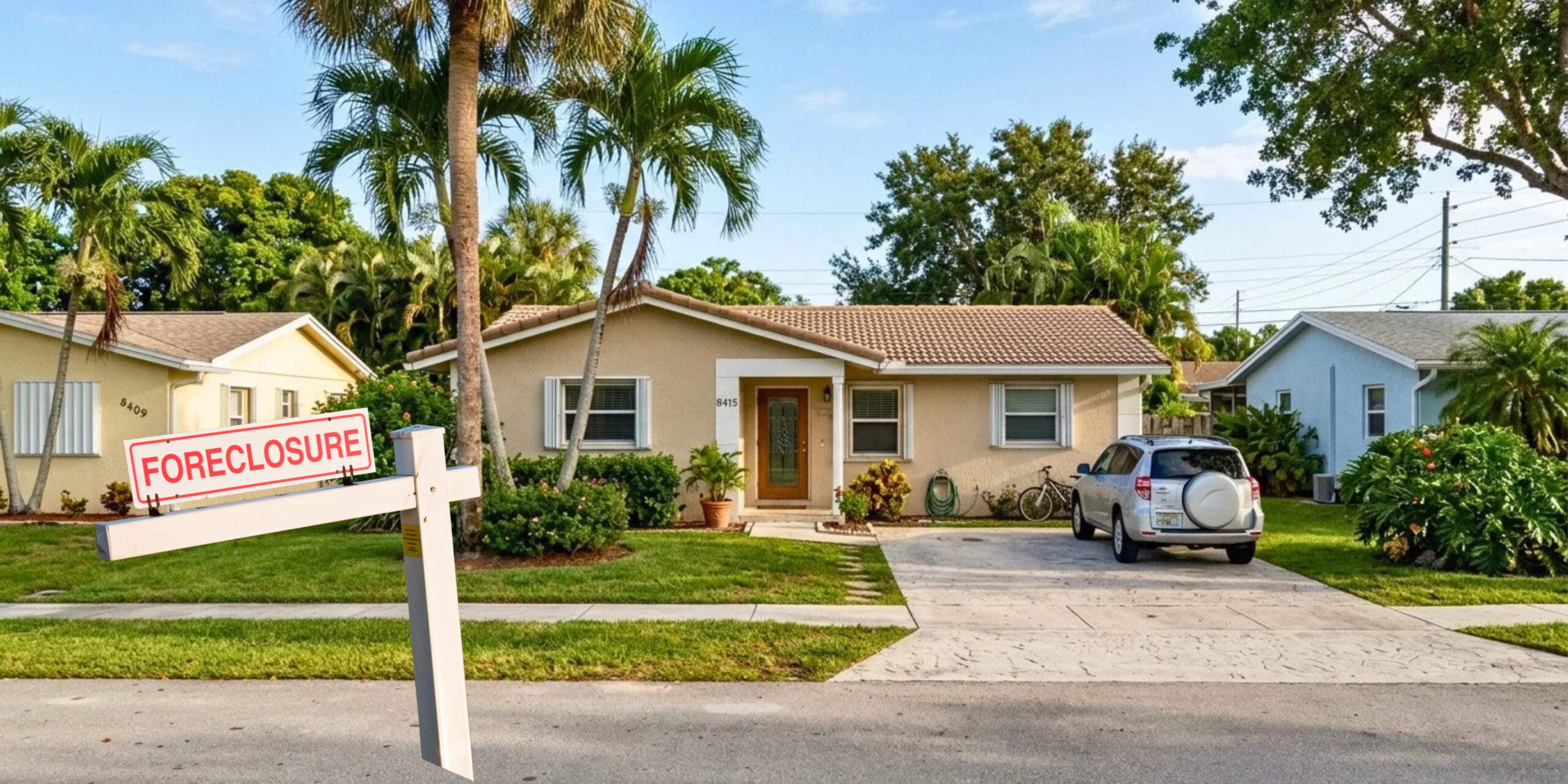
Missing mortgage payments is frightening enough. Then a letter arrives from the lender. Soon, a document from an attorney may land in your mailbox, turning a financial problem into a legal one.
If you own a home in Coral Springs or elsewhere in Broward County, you probably want to know one thing first: how much time do I have before I lose my house?
The honest answer is that it depends on where you are in the process. Florida generally requires lenders to go through the courts before foreclosing on a home. That gives you an opportunity to respond. It does not mean you can afford to ignore the paperwork while hoping the problem goes away.
And yes, the paperwork matters. A lot.
A foreclosure does not happen the moment you miss a payment. The lender must follow a legal process before the property can be sold. You may have options along the way, even if a lawsuit has already begun. What you needs is understanding where you stand before the clock runs out.
What does foreclosure actually mean in Florida?
Foreclosure is the legal process a lender uses to enforce its mortgage lien against a property. When a borrower defaults, the lender can ask a court to authorize the sale of the home to satisfy the debt.
Florida uses a judicial foreclosure system. In plain English, the lender generally has to take you to court. It cannot simply change the locks because you fell behind on your payments.
The main rules appear in Chapter 702 of the Florida Statutes. The exact procedure depends on the loan documents and the facts of your case.
Here is the important distinction: missing a payment is not the same as losing your home. Even a foreclosure lawsuit does not mean the property has already been sold.
That said, the situation gets harder to control as the case progresses. Early on, you may have time to discuss payment arrangements. Later, you could be dealing with court deadlines and a scheduled sale date. Those are very different conversations.
Step 1: You fall behind on the mortgage
Financial trouble rarely waits for a convenient moment. Perhaps your income dropped unexpectedly. Maybe an expense you did not see coming swallowed the money set aside for the mortgage. Whatever happened, the payment is now late, and the lender has noticed.
Your loan becomes delinquent when you miss a required payment. Depending on your mortgage terms, late fees may follow. The servicer will usually begin contacting you about the overdue amount.
This is the point where many homeowners start avoiding the phone. Understandable? Absolutely. Helpful? Not particularly.
Contact your mortgage servicer when you realize you may struggle to keep up with payments. Ask what assistance might be available. Get the answer in writing if possible, especially when the conversation involves a payment arrangement.
You may qualify for a repayment plan or a loan modification. Some borrowers can also request temporary forbearance, depending on their circumstances.
Federal rules generally restrict the first foreclosure filing until a borrower is more than 120 days delinquent, subject to exceptions. That period is not a free pass to put everything off until next month. Use the time to find out what you can do.
Step 2: The lender may send a notice of default
At some point, you may receive a formal notice stating that the loan is in default. The notice may demand payment of the overdue amount by a particular date.
Your mortgage agreement matters here. It may require the lender to give you an opportunity to cure the default before demanding the entire remaining balance. That demand is known as acceleration.
Read the notice instead of tossing it onto the kitchen counter with the other unpleasant mail. Check the amount claimed. Look at the deadline. If the figures do not match your records, ask the servicer to explain the difference.
Maybe a payment was not credited correctly. Perhaps the amount includes fees you do not understand. You need answers before deciding what to do.
A default notice is not a foreclosure judgment. Still, it is a good time to speak with an attorney. If the lender has failed to follow a requirement in your mortgage, that could matter later. The details need to be checked against the actual documents.

Step 3: The lender takes you to court
If the default remains unresolved, the lender may file a foreclosure complaint. This starts a lawsuit seeking to enforce the mortgage.
The complaint identifies the property and explains why the lender believes it has the right to foreclose. Florida Statute 702.015 sets requirements for residential foreclosure complaints, including allegations about the lender’s right to enforce the note.
You will generally receive a summons along with the complaint. This is the moment to stop treating the situation like an ordinary billing dispute. You are now involved in a court case.
For homeowners in Broward County, the Broward County Clerk of Courts case search can help you locate public case information. But an online search will not explain what you should file or when you must file it.
What should you do when the lawsuit arrives?
Start by checking when you were served. The deadline for responding generally runs from the date of service, although the circumstances of a particular case can affect the calculation.
Under Florida Rule of Civil Procedure 1.140, a defendant generally has 20 days after service of the summons and complaint to respond. Do not rely on that number without checking your actual papers.
Contact a foreclosure attorney promptly. The attorney can review the complaint and explain what needs to happen next.
Please do not put the documents in a drawer because you feel overwhelmed. The court will not know that you needed a few weeks to get your head around everything. Deadlines keep running unless the applicable rules or a court order provide otherwise.
Step 4: You respond to the foreclosure complaint
Your response is where you formally address the lender’s allegations. Some statements may be correct. Others may need to be disputed.
An attorney can examine whether the lender has established its right to enforce the loan. The payment records may also deserve a closer look if the claimed balance seems wrong.
There may be other defenses. For example, the lender might have failed to meet a requirement in the mortgage agreement. Whether that argument helps depends on the evidence and the applicable law.
Here is why ignoring the complaint can be so costly. If you fail to respond, the lender may seek a default. That can make it much harder to contest the case later.
Already missed the deadline? Do not assume there is nothing left to do. Get legal advice immediately. Your options will depend on what has happened in the case, so an attorney needs to examine the record.
Step 5: You may still be able to reach an agreement
A foreclosure lawsuit does not automatically end negotiations. The lender may still consider a solution that addresses the default. Approval is not guaranteed, and some options may be unsuitable for your financial situation.
A loan modification changes the terms of the mortgage. It may reduce the payment or extend the repayment period. You need to check whether the revised terms are genuinely affordable.
A repayment plan spreads overdue amounts across future payments. That can help if your financial difficulty was temporary. It may be unrealistic if you are already struggling to cover the regular mortgage.
A short sale is another possibility. Under an approved arrangement, the property is sold for less than the outstanding mortgage balance. Before agreeing, make sure you understand what happens to the remaining debt.
There is also a deed in lieu of foreclosure. This involves transferring the property to the lender under an agreement rather than proceeding to a foreclosure sale.
These arrangements are not interchangeable. Each has financial and legal consequences. Never assume that handing over the keys will automatically erase the debt.
If you apply for mortgage assistance, keep records of what you submit. Respond to requests for additional documents. Missing paperwork can delay the review or complicate your application.
The CFPB’s guide to avoiding foreclosure explains how to work with your mortgage servicer. A HUD approved housing counselor may also be able to help at little or no cost.
One final warning: be suspicious of anyone who guarantees they can save your home. A company demanding a large upfront fee in exchange for a promised foreclosure rescue deserves particular scrutiny. Before signing anything that transfers your property, get independent legal advice.

Step 6: The court decides how the case proceeds
If no agreement is reached, the lawsuit continues. The court may consider motions before deciding whether the lender is entitled to foreclose.
The lender must establish its legal right to enforce the loan. You have an opportunity to challenge the claim when a valid defense exists. Depending on the case, the dispute may be resolved through motions or proceed to trial.
Some Florida cases may use an expedited procedure under Florida Statute 702.10. This process has specific requirements. If you receive an order to show cause, pay close attention to its instructions because the response period may be short.
Not every foreclosure case ends in a courtroom trial. A judge may be able to decide the matter based on the filings and evidence. That does not make the process unimportant. It means the documents and deadlines can carry enormous weight.
This is also where a lawyer’s work may become especially important. A detail that looks insignificant to someone unfamiliar with foreclosure law may affect the case. You want to know about that detail before the judge rules, not afterward.
Step 7: The court may issue a final judgment
If the lender wins, the court may enter a final judgment of foreclosure. The judgment establishes the amount owed under the court’s findings and authorizes the sale of the property under the applicable procedure.
At this point, you are dealing with a formal court ruling rather than a demand from the lender. The judgment will contain information that matters to the next stage of the case.
Read it carefully with your attorney. Pay attention to the amount the court has determined is due. The scheduled sale date matters too.
A final judgment does not mean the property has already been sold. But the time available to prevent the sale may now be limited.
If you are still negotiating with the lender, get clear confirmation of any agreement that affects the case. Do not assume a phone conversation has postponed the sale. Make sure the necessary arrangements are actually in place.
Step 8: The property goes to foreclosure sale
If the case reaches this stage, the property is scheduled for sale through the court authorized process. In Broward County, the Clerk of Courts website provides official information about court services.
The sale date deserves your full attention. If you hope to resolve the debt before the property is sold, you need to know exactly how much time remains.
There may be legal grounds to challenge a sale or request relief in certain circumstances. Such relief is not automatic. The facts matter, and timing can be decisive.
Florida law provides a right of redemption, but the deadline is easy to misunderstand. Under Florida Statute 45.0315, a homeowner may generally redeem the property by paying the amount required under the judgment. The deadline is the later of the time specified in the judgment or the filing of the certificate of sale.
In practical terms, do not assume that the scheduled auction is your only deadline. The judgment may set a specific cutoff, and the certificate of sale affects the calculation. Once a foreclosure sale is approaching, ask an attorney to confirm the exact deadline in your case. This is not a situation where guessing a date is worth the risk.
Step 9: What happens after the foreclosure sale?
After the sale, the clerk generally issues a certificate of sale. The process may then lead to a certificate of title, transferring ownership to the successful purchaser after the applicable period and subject to any timely objections.
The former owner may eventually have to leave the property. The timing depends on the legal proceedings and any applicable orders. Do not assume that you must leave the moment the sale occurs, but take any court order seriously.
There is another issue that can follow you beyond the property itself: the remaining debt.
If the foreclosure sale does not cover the amount owed, the lender may ask the court for a deficiency judgment. Under Florida Statute 702.06, the court has discretion over whether to grant one.
For an owner occupied home, the law also limits the amount of a deficiency judgment. The calculation is based on the judgment amount, or the outstanding debt in a short sale, minus the property’s fair market value on the date of sale. A homestead tax exemption can create a rebuttable presumption that the property qualifies as owner occupied.
So, the unpaid balance on your mortgage does not automatically become the amount of a deficiency judgment. The court must apply the relevant legal rules. Whether the lender pursues a deficiency is another question entirely.
Before signing a settlement or surrender agreement, ask what happens to any remaining debt. That answer may matter long after you have moved out.
What happens if the homeowner has died?
A foreclosure can become more complicated when the borrower dies before the case is resolved. The mortgage does not disappear with the homeowner.
The next steps depend on how the property was titled. A surviving family member may have an interest in the home without being personally responsible for the mortgage debt. Those are separate questions that need to be examined.
If the property belongs to a probate estate, the personal representative may need to address the home as part of estate administration. Florida probate law governs the estate’s authority and responsibilities, while the mortgage lien remains a separate concern.
This can be especially difficult for a family already dealing with a death. Relatives may assume that the house can simply be sold or transferred to keep it out of foreclosure. That may not be possible without first resolving who has legal authority to act.
A lawyer familiar with Florida probate and real estate matters can help clarify the situation. If the family hopes to keep the property, getting that advice early is particularly important.
What if you own a business too?
A business owner facing foreclosure may have another financial problem hiding in the background. Perhaps the business has lost income, leaving less money available for the mortgage. In some cases, a personal guarantee on a business loan can add another layer of financial exposure.
These circumstances do not change the basic foreclosure procedure. They may affect the decisions you make about the home, however.
Before agreeing to sell the property or use other assets to settle a debt, have the relevant obligations reviewed. When a business loan and a home mortgage affect the same household finances, advice from a business attorney may need to be coordinated with foreclosure counsel.
The point is not to turn a mortgage problem into a bigger legal project than necessary. It is to avoid making a rushed decision about the house without understanding the obligations attached to it.
Why getting legal advice early can matter
Many homeowners wait until the lawsuit arrives before calling an attorney. Some hope the problem will be temporary. Others feel embarrassed about falling behind. A few simply do not know where to start.
There is no need to feel ashamed about asking for help. Financial trouble can happen to people who have worked hard for years. The lender is still entitled to enforce a valid mortgage, but you are entitled to understand the process and consider your legal options.
Early advice can help you understand the loan documents before deadlines become urgent. It may also reveal problems with the lender’s figures or the notices it sent.
Once the lawsuit begins, an attorney can help you respond properly. If a settlement is possible, the terms need to be reviewed before you commit.
No lawyer can promise that you will keep your home. Anyone who guarantees that outcome is promising something beyond their control. Good legal advice means knowing where you stand and deciding what to do with that information.
For homeowners in Coral Springs and throughout Broward County, the earlier you get a clear picture of your situation, the more useful that advice may be.
Frequently asked questions about Florida home foreclosure
How long does foreclosure take in Florida?
- There is no fixed timeline for every case. The court’s schedule and the circumstances of the dispute can affect how long the process lasts. A contested case may take considerably longer than one in which the borrower does not respond.
Can a lender foreclose without going to court in Florida?
- Residential mortgage foreclosure generally requires a judicial proceeding. The lender must obtain the necessary court relief before the property can be sold through foreclosure.
Can I stop foreclosure after the lawsuit has been filed?
- Possibly. A lender may agree to a resolution through loss mitigation. A valid legal defense may also affect the outcome. The available options depend on the stage of the case and the facts.
Do I have to leave my home as soon as the lender files a lawsuit?
- No. Filing the complaint does not itself transfer ownership. The case must proceed through the applicable legal process, and you should follow any court orders that apply to your situation.
Can the lender still seek money after the foreclosure sale?
- Yes, in some circumstances. If the sale proceeds fall short of the debt, the lender may seek a deficiency judgment. The court has discretion over whether to grant one. For an owner occupied home, Florida law limits the amount using the property’s fair market value on the date of sale. The precise calculation depends on the circumstances.
What should I do if I receive foreclosure papers in Broward County?
- Read the documents immediately and identify the response deadline. Contact a foreclosure attorney as soon as possible. You can use the Broward County Clerk’s case search to find public case information, but the search tool cannot tell you how to defend the lawsuit.
Talk to an attorney about your situation
A foreclosure notice can make it feel as though the outcome has already been decided. It has not. The legal process still has to run its course, and your options depend on the facts.
Reinfeld & Cabrera, P.A. serves clients in Coral Springs and across Broward County. If you are facing foreclosure, the firm can help you understand the legal process and assess what may be possible in your circumstances.