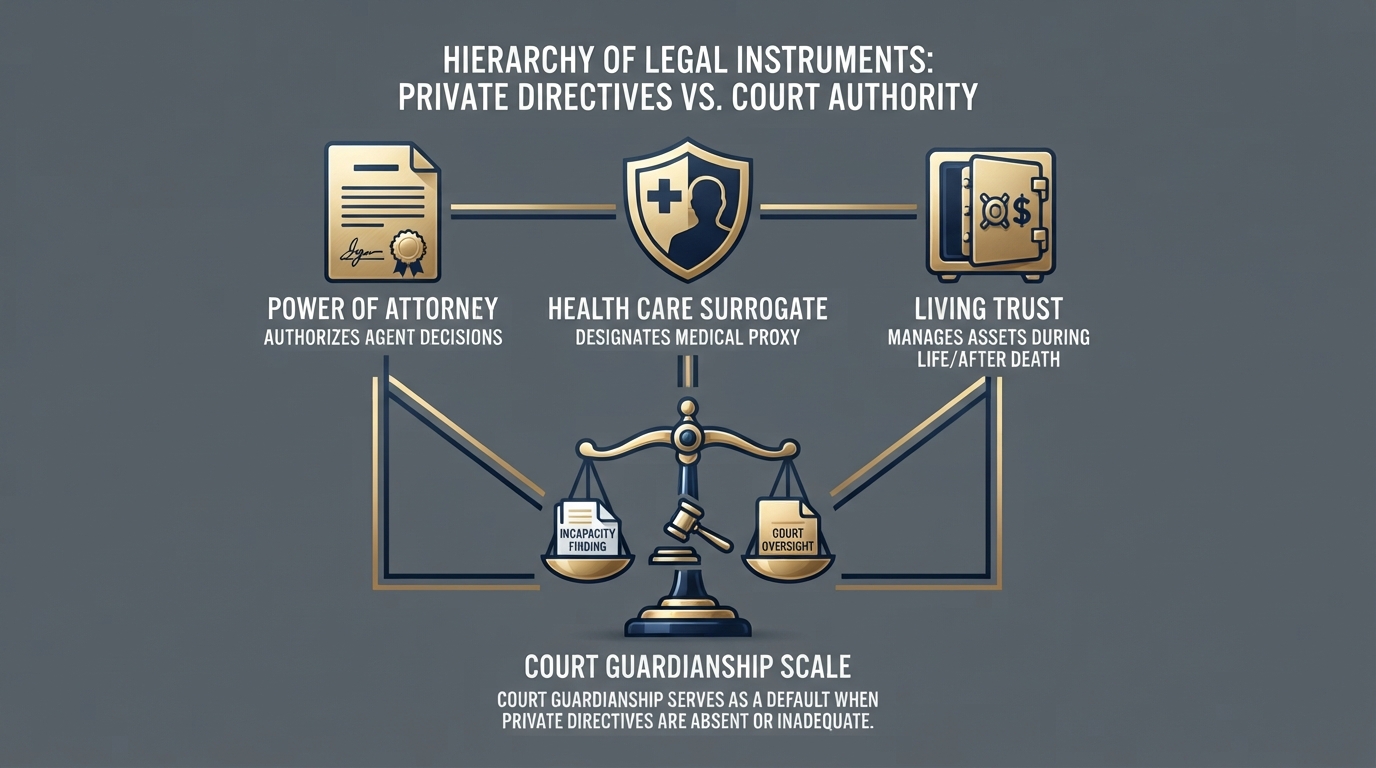
Under Florida Statutes Section 744.2005, a court is legally prohibited from appointing a guardian if any less restrictive alternative, such as a valid Durable Power of Attorney, Health Care Surrogate, or Living Trust, can adequately protect the individual. If a family petitions for guardianship without proving those alternatives failed or were impossible, the 17th Judicial Circuit can dismiss the case.
When an aging parent, spouse, or adult relative begins showing signs of cognitive decline, severe memory loss, or an inability to manage daily affairs, families frequently experience an immediate sense of panic. In Broward County, people often rush to court looking to file an emergency petition for guardianship to secure total legal control.
However, Florida guardianship law is built on a rigid legislative principle. Guardianship is an absolute measure of last resort, not a first response.
Understanding how courts evaluate these petitions ensures families pursue the right legal mechanism from the start, avoiding costly court dismissals.
The Statutory Mandate of Least Restrictive Alternatives
Before a Broward County probate judge will enter an order determining incapacity and appointing a guardian of the person or property, the petitioner carries the burden of proving by clear and convincing evidence that no lesser alternative is viable.
The Florida Legislature enacted these protections specifically to prevent unnecessary intrusions on personal liberty. Under Chapter 744, courts must actively explore whether the individual previously executed documents. They also see for established arrangements that render a court-supervised guardianship unnecessary.
These legally recognized alternatives include:
Durable Powers of Attorney (F.S. Chapter 709): A properly drafted and executed financial power of attorney allows a designated agent to handle banking. He can also manage real estate, and financial transactions without court intervention.
Designated Health Care Surrogates: Medical and end-of-life decisions can be governed by a designated surrogate under a health care proxy rather than a court-appointed guardian.
Revocable Living Trusts: Assets placed into a trust are managed seamlessly by a successor trustee upon the grantor’s incapacity. Therefore bypassing court oversight entirely.
Representative Payeeship: Administrative mechanisms through agencies like the Social Security Administration to manage specific benefit funds.
If an individual signed these instruments while they still possessed legal capacity, a court will generally reject a guardianship petition because a less restrictive legal structure is already functioning.
Why Existing Documents Fail: The Real-World Exception
Florida law strictly favors less restrictive alternatives. But real-world family dynamics in South Florida frequently create breakdowns that render those alternatives useless.
A primary reason guardianship petitions succeed – even when a power of attorney or trust exists – is that unresolvable family conflict or agent misconduct paralyzes the instrument. Common scenarios include:
Conflicting Agents: If a parent named co-agents who are actively fighting, locking accounts, or countermanding each other’s medical decisions, the power of attorney becomes gridlocked.
Financial Exploitation: When an agent abuses their fiduciary duty, drains accounts, or acts against the principal’s best interests, the court must intervene to suspend the power of attorney and appoint an independent guardian.
Total Lack of Prior Planning: If an individual suffered a sudden stroke or advanced dementia before executing any estate planning documents, no alternative exists, making a formal court guardianship the only viable path.
In these contentious cases, guardianship becomes legally necessary. And precisely because informal or delegated tools have broken down under the weight of dispute or abuse.
The Broward County Examining Committee Process
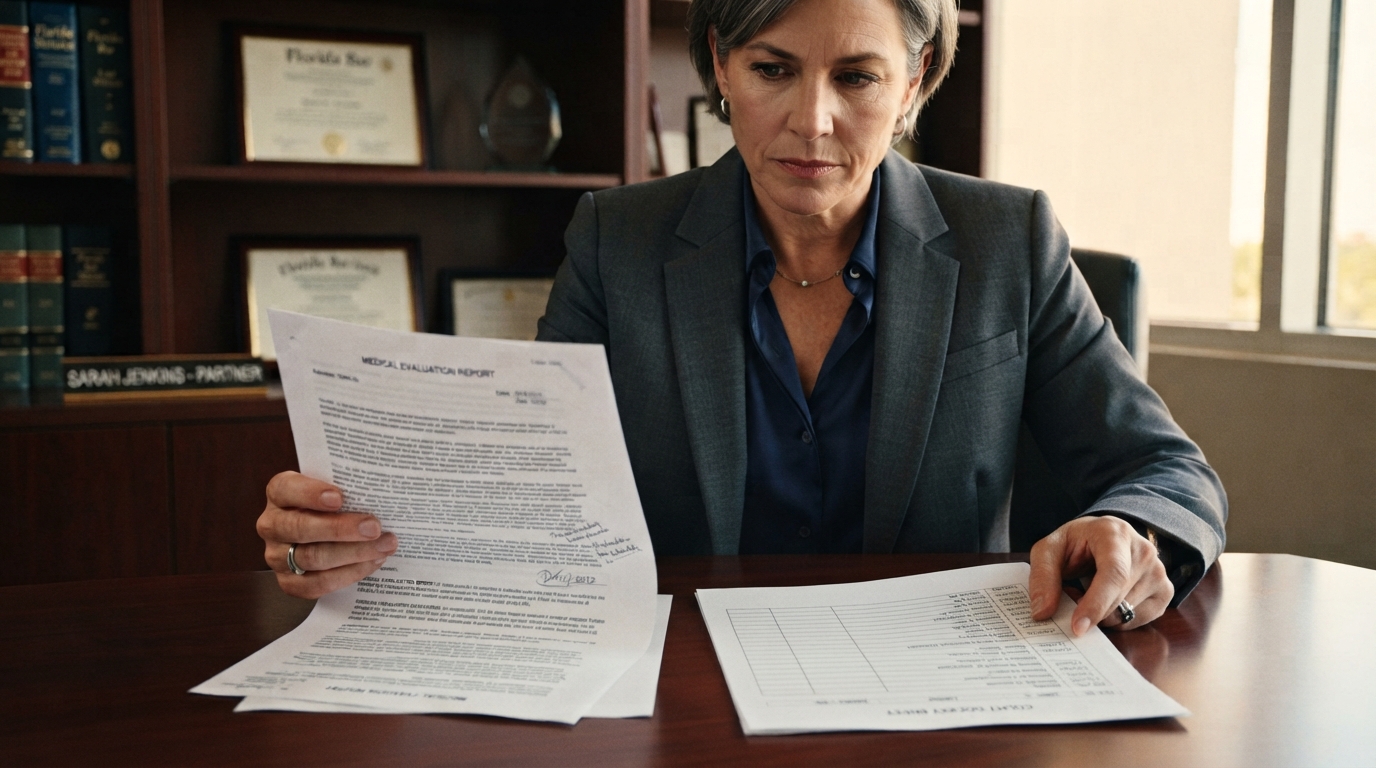
If a guardianship petition moves forward in the 17th Judicial Circuit, the court appoints an Examining Committee to evaluate the alleged incapacitated person. This committee typically consists of three professionals: a psychiatrist or physician, a psychologist or gerontologist, and a layperson or attorney.
The committee’s statutory role is rigorous:
Each member conducts an independent physical, mental, and functional evaluation and files a formal report with the court.
If a majority of the examining committee concludes that the individual is not incapacitated in the specific areas evaluated, Florida law mandates the immediate dismissal of the petition.
Families cannot override the medical and psychological findings simply out of frustration or disagreement over lifestyle choices.
Strategic Steps Before Filing in South Florida
Jumping straight to the courthouse without conducting a comprehensive legal audit is an expensive gamble. Before filing for guardianship in Broward County, experienced counsel evaluates:
The Vault Check: Determining whether an unexecuted or forgotten durable power of attorney, health care surrogate, or trust exists.
Capacity Timeline: Analyzing whether the individual had legal capacity when current documents were signed, or if those documents are legally vulnerable to undue influence challenges.
Alternative Remedies: Weighing whether an injunction, a trust accounting lawsuit, or a revocation of agency under F.S. 709 can resolve the dispute faster and with less financial drain than a full incapacity proceeding.
Frequently Asked Questions
What is the difference between a “limited” guardianship and a “plenary” guardianship in Florida?
Under Florida law, courts favor limited guardianships whenever an individual lacks capacity in certain specific areas (such as managing real estate or complex investments) but retains the ability to make sound decisions in others (such as medical choices or daily living). A plenary guardianship is a full, blanket appointment where the court removes all delegable rights of the individual.
Can a person contest a guardianship petition filed against them?
Yes. An alleged incapacitated person has an absolute right to be represented by independent legal counsel of their own choosing in Florida. If they cannot afford an attorney, the court will appoint court-appointed counsel to advocate for their rights throughout the proceedings.
What is a “Preneed Guardian” designation under Florida law?
A preneed guardian is a legal document where a competent adult names who they want to act as their guardian if they ever become incapacitated in the future. Florida courts are legally required to give great weight to this prior written preference, avoiding family battles over who should take charge.
How long does a guardianship proceeding take in the 17th Judicial Circuit?
Timelines vary based on court docket congestion, whether the petition is contested by family members, and the scheduling of the examining committee. Contested guardianship litigation can take several months or longer to resolve.
Schedule a Consultation with Our Coral Springs Elder Law Attorneys
Navigating incapacity, family disputes, and court oversight in Coral Springs, Broward County, or South Florida requires precise legal navigation.