Elder law can sound like a narrow area of practice. It is anything but.
A family may encounter elder law because a parent is beginning to lose the ability to manage finances. It may arise when someone needs long term care and the family is trying to understand how that care will be paid for. It may involve a power of attorney, a guardianship, Medicaid planning, financial exploitation, or a disagreement over who should be making important decisions.
Sometimes the legal issue is obvious. Sometimes it is not.
That is part of what makes elder law different from simply hiring an attorney to handle a single document or transaction. The lawyer may need to look at capacity, health care, finances, public benefits, property, family relationships, and the legal authority that one person has to act for another.
The Florida Bar’s own definition of elder law reflects that breadth. The specialty includes planning for aging, illness and incapacity, along with estate planning, probate, guardianship, nursing home claims, public benefits, elder abuse and related litigation.
When Is an Elder Law Attorney the Right Lawyer to Call?
The easiest way to understand elder law is to forget the label for a moment and look at the problem in front of you.
Consider a few situations.
Your mother is still living independently, but you are becoming concerned about what would happen if she could no longer manage her finances or make medical decisions.
Your father needs nursing home care, and the family is trying to understand what Medicaid will cover and what financial consequences may follow.
An older relative has given someone access to bank accounts, and money appears to be disappearing.
A parent never created a durable power of attorney, and now family members disagree about who should handle financial affairs.
A family is considering guardianship because an older adult can no longer manage certain aspects of daily life.
These are very different problems. They can nevertheless fall within the same legal specialty.
Choosing an elder law attorney is not about finding someone who handles one particular document. Look for someone who understands how these issues interact.
If You Are Planning Before There Is a Crisis
The best time to confront many elder law issues is before a crisis makes the decisions for you.
Florida law provides several tools for planning around incapacity, including durable powers of attorney and advance health care directives. A health care surrogate can play an important role in medical decision making, while other planning documents can establish who has authority to act when a person can no longer do so independently. The Florida Bar identifies these instruments as part of the broader field of elder law.
The important point is not simply having paperwork.
The documents need to reflect the person’s wishes and circumstances. They also need to work together with the person’s financial and estate planning.
That is where an elder law attorney can provide something more substantial than a stack of forms. The attorney can examine what authority exists. He or she can see what authority may be needed, and what could happen if the person later loses capacity.
Capacity is more than often the dividing line.
While someone can make and change important decisions for themselves, planning may be available. Once capacity becomes seriously impaired, the family may have to rely on existing documents or turn to a court.
When a Parent or Spouse Is Losing Capacity
This is where elder law becomes particularly important.
Families sometimes assume that a spouse or adult child automatically has the legal authority to take over when an older person can no longer manage affairs. That is not necessarily how the law works.
If there is no adequate planning in place, guardianship may become an issue.
Florida guardianship proceedings are handled through the circuit courts under Chapter 744. A court may determine that a person is incapacitated and appoint a guardian to exercise particular legal rights. Importantly, Florida law recognizes that guardianship should be the least restrictive appropriate alternative. Most the time it sustains that an incapacitated person retains rights consistent with his or her abilities.
That difference matters.
Guardianship is not simply a legal mechanism for giving one family member control over another. It is a court supervised process involving the removal and delegation of specific rights.
Florida law also protects the rights of people who have been determined incapacitated. This includes rights involving dignity, independence, access to the courts, counsel, and continuing review of restrictions on their rights.
An elder law attorney may therefore become involved before a guardianship proceeding, during the proceeding. Or in disputes concerning an existing guardianship.
When Long Term Care Becomes a Financial Problem
Long term care can turn an ordinary family financial plan into a complicated legal problem surprisingly quickly.
Medicaid planning is one of the better known areas of elder law because eligibility for long term care benefits involves detailed federal and Florida rules concerning income, assets, transfers, exemptions, and other circumstances.
The Florida Bar’s current elder law education materials specifically describe Medicaid planning as an area in which elder law attorneys use federal and state rules to help clients legally and ethically protect assets and income when skilled long term care may be necessary.
This is also an area where timing affects the results.
A family that waits until admission to a nursing facility may be dealing with a very different set of circumstances from a family that begins planning years earlier. The appropriate strategy depends on the person’s assets, income, health situation, family circumstances, existing documents, and the applicable Medicaid rules.
For that reason, Medicaid planning should not be reduced to a simple question of whether someone is “over the limit.” Eligibility is a legal analysis, not a single number.
When Someone May Be Taking Advantage of an Older Adult
Not every elder law problem begins with a hospital, nursing facility, or court.
Sometimes it begins with a bank statement.
A caregiver starts using an older person’s money. A relative suddenly changes ownership of property. Someone with access to a power of attorney begins making transactions that appear to benefit themselves. An older adult may also be pressured into giving away assets or signing documents they do not fully understand.
Florida law specifically addresses exploitation of elderly persons and disabled adults. Section 825.103 includes conduct involving the unauthorized use of an older person’s funds, assets, or property, including circumstances involving people in positions of trust and confidence and certain breaches of fiduciary duty by guardians, trustees, and agents acting under powers of attorney.
The law also provides a civil cause of action for an injunction to protect a vulnerable adult from exploitation in qualifying circumstances.
These matters can require more than identifying that something feels wrong. The relevant documents, financial transactions, authority granted under a power of attorney, property records, and relationships between the people involved may all need to be examined.
Where Elder Law Meets Estate Planning and Probate
Elder law also overlaps naturally with estate planning and probate.
That does not mean every estate planning matter is an elder law matter. A straightforward will or trust may have little to do with elder law.
The overlap becomes more significant when planning involves incapacity, long term care, public benefits, special needs, guardianship, fiduciary responsibilities, or protecting an older person’s ability to control property and financial decisions.
This is also why the old idea that elder law is primarily about “estate taxes” misses the modern picture.
Florida does not impose a separate state estate tax on people who died after December 31, 2004. The Florida Department of Revenue confirms that the state no longer requires the former Florida estate tax affidavits for estates subject to the current rules.
Estate planning remains relevant to elder law, but the important questions are broader: who can act, when can they act, what authority do they have, what happens if capacity changes, and how should assets and responsibilities be handled?
What Should You Ask an Elder Law Attorney?
If you are meeting with an elder law attorney for the first time, the most useful questions are usually practical.
Ask whether the attorney regularly handles the type of problem you are facing. Ask what legal authority currently exists and what happens if the person’s capacity changes. If Medicaid or long term care is involved, ask what information the attorney needs before discussing eligibility or planning.
It is also reasonable to ask about experience with guardianship, powers of attorney, public benefits, exploitation, probate, or other areas that may overlap with your situation.
Board certification can provide another useful credential to investigate. The Florida Bar’s elder law certification requires at least five years of legal practice, substantial involvement in elder law, continuing legal education, peer review, and a written examination.
Certification is not the only measure of an attorney’s experience. But where it exists, it is a meaningful indication of specialized training and practice.
The Right Question May Be “What Happens Next?”
If you are reading about elder law because something has already happened in your family, you probably do not need a textbook definition of the field.
You need to understand what kind of legal problem you are looking at.
Is this a planning issue? A capacity issue? A Medicaid or long term care problem? A guardianship matter? A dispute over someone’s authority to act? Possible financial exploitation? A probate or estate planning issue that has become more complicated because of age, illness, or incapacity?
Those distinctions matter because the legal response can be very different.
If an older family member’s finances, health care decisions, capacity, or long term care has created a legal problem, contact Reinfeld & Cabrera in Coral Springs to discuss the circumstances with an elder law attorney.
Frequently Asked Questions
What does an elder law attorney do in Florida?
An elder law attorney may handle incapacity planning, powers of attorney, health care directives, guardianship, Medicaid and long term care planning, elder exploitation matters, estate planning, probate, and related disputes.
When should I contact an elder law attorney?
You can contact an elder law attorney before a crisis, particularly when planning for incapacity or future long term care. An attorney may also become important when a person is already losing capacity, facing guardianship, applying for long term care benefits, or experiencing possible financial exploitation.
Is guardianship always necessary when an older person loses capacity?
No. Florida law requires consideration of less restrictive alternatives when appropriate. Existing planning documents, including a durable power of attorney, advance health care directives, or certain trusts, may affect whether guardianship is necessary.
Does elder law include Medicaid planning?
Yes. Medicaid planning for long term care is a recognized part of elder law practice, and the applicable rules can be highly fact specific.
Can an elder law attorney help if someone is exploiting an older relative?
Potentially. Florida law addresses financial exploitation of elderly persons and disabled adults, including certain misuse of property and breaches of fiduciary duty. The appropriate legal response depends on the facts and the authority involved.
Finding an attorney in Coral Springs is not particularly difficult. There are law firms, directories, referral services, advertisements, reviews, and search results ready to give you names.
The harder part comes afterward.
You have a legal problem. You may have several attorneys in front of you who appear qualified. Their websites may use similar language. Their credentials may look impressive. Their reviews may all be positive. One office may be five minutes away while another is across Broward County.
So how do you decide?
The useful place to start is not with the attorney. Start with the problem you need to solve.
What Kind of Legal Problem Do You Have?
A lawyer’s practice area is a useful starting point, but it should not be the end of your research.
A probate dispute is different from preparing an estate plan. A personal injury claim is different from a real estate transaction. A divorce raises different legal questions from a business dispute.
Even within a single area of law, experience can vary considerably.
Someone looking for an attorney after a serious automobile accident may want to know whether the lawyer regularly handles personal injury claims involving insurance disputes, serious injuries, contested liability, or litigation. Someone dealing with an estate dispute may need an attorney who regularly handles probate litigation rather than someone whose practice consists primarily of drafting wills.
The first question to ask is therefore fairly simple:
Does this attorney regularly handle problems like mine?
The Florida Bar recommends asking prospective lawyers whether they have handled cases like yours before, how frequently they do so, and how much experience they have with that type of matter.
That is considerably more useful than counting how many different practice areas appear on a firm’s website.
Experience Should Be Specific
“Experienced attorney” is one of those phrases that appears on an enormous number of law firm websites.
By itself, it tells you very little.
A lawyer may have practiced for twenty years without spending much of that time on the particular kind of matter you are facing. Another lawyer may have concentrated heavily on a particular area for a shorter period.
That is why it is worth asking about relevant experience, rather than simply years in practice.
You can ask:
How often do you handle cases like mine?
Have you handled cases involving circumstances similar to mine?
Will my matter probably require litigation?
If so, how much experience does the firm have with that type of litigation?
Who will actually handle my case?
The last question deserves particular attention.
Who Will Actually Handle Your Case?
You may meet one attorney during your initial consultation and later discover that another lawyer, associate, paralegal, or other member of the firm will be doing much of the work.
That arrangement is not necessarily a problem. A law firm is a team, and different people can have different responsibilities.
You should simply know what you are agreeing to.
The Florida Bar specifically recommends asking what support resources an attorney has available and who will work on the matter. Its consumer guidance also recommends asking about how and how often you will communicate with the attorney.
A reasonable question at the beginning is:
Who will be my primary contact, and who will be doing the legal work on my matter?
There is nothing awkward about asking. You are considering a professional relationship, and you should understand how that relationship will work.
Pay Attention to How the Lawyer Explains Things
Legal problems can be complicated. Your lawyer does not have to make them sound simple when they are not.
But you should be able to leave a consultation with a clearer understanding of what you are dealing with.
A good consultation should give you an opportunity to explain what happened, ask questions, hear the relevant legal issues, and understand what may happen next.
That does not mean the attorney can predict the outcome.
In many legal disputes, important facts are still unknown. The other side may take a position you cannot predict. Evidence may change the analysis. A court may ultimately have to decide an issue.
Be cautious of anyone who seems to know the result before knowing the facts.
A useful attorney can explain the strengths and weaknesses of your position without turning the consultation into either a sales pitch or a lecture you cannot follow.
Communication Is Part of the Representation
You may not need your lawyer to call you every afternoon.
You do need to know how communication will work.
Ask whether communication will generally happen by telephone, email, a client portal, or some combination. Ask who you should contact with routine questions. Ask how frequently you should expect updates.
The Florida Bar specifically recommends discussing both the means and frequency of communication during the initial meeting.
This is one area where client reviews can provide useful information. If numerous clients independently describe a firm as responsive, organized, or difficult to reach, that can tell you something about the client experience.
Reviews still have limits, though.
A collection of five-star reviews cannot tell you whether an attorney has handled your particular legal problem. Likewise, a lawyer with substantial experience in a specialized area may not have hundreds of online reviews.
Reputation and legal experience answer different questions.
Understand the Fee Before You Hire the Lawyer
Money is an uncomfortable subject until you receive a bill you did not expect.
It is better to discuss fees early.
Lawyers may charge fixed or flat fees, hourly fees, contingency fees, or other arrangements depending on the type of legal work. The Florida Bar recommends discussing prospective charges at the first meeting and understanding other costs that may arise.
Ask:
How are your fees calculated?
Is there a fee for the initial consultation?
Are there costs separate from the attorney’s fees?
What circumstances could cause the cost to increase?
For litigation and other matters where the amount of work depends heavily on what happens next, an attorney may not be able to give you an exact final number. That does not mean the financial conversation should be vague.
You should understand the basic fee arrangement before deciding whether to proceed.
Do You Need the Lawyer Who Is Closest to You?
If you live in Coral Springs, having an attorney nearby can certainly be convenient.
There may be times when you need to attend a meeting, review documents in person, sign something, or discuss an issue face to face. Local familiarity can also be useful depending on the nature of the legal matter.
But distance should not become a substitute for relevant experience.
Someone searching for a Coral Springs attorney may reasonably want a lawyer who understands the local area and can serve clients in Broward County. At the same time, the best geographical match is not necessarily the attorney whose office happens to be closest to your front door.
If the legal problem is specialized, experience with that problem deserves serious consideration alongside convenience.
What About Lawyer Referral Services?
You do not have to find an attorney entirely on your own.
The Florida Bar operates a statewide Lawyer Referral Service designed to connect consumers with verified attorneys based on their legal needs and location. The service is available online, and eligible referrals can receive an initial 30-minute consultation for no more than $25. Local bar associations also operate referral services in parts of Florida.
Referral services can be particularly useful if you know you have a legal problem but are unsure which type of attorney you need.
They are one starting point.
You should still use the consultation to decide whether the attorney is appropriate for your particular matter.
Check the Basics
There is also nothing wrong with checking the basic professional information available about an attorney.
The Florida Bar’s public resources allow consumers to search for an attorney and review information such as membership status and public disciplinary history.
That is not a substitute for evaluating experience or having a conversation with the lawyer.
It is simply sensible due diligence.
What Should You Bring to the First Meeting?
The quality of an initial consultation depends partly on how much useful information you can give the attorney.
The Florida Bar recommends organizing relevant documents and correspondence before the appointment and preparing a timeline when one would help explain what happened.
Depending on the matter, that might include:
Contracts or other agreements
Court papers
Letters or emails
Medical records or bills
Insurance correspondence
Property records
Financial documents
A written timeline of important events
You do not need to become your own lawyer before meeting the lawyer.
You simply want to give the attorney enough information to understand what happened.
And tell the truth, including the uncomfortable parts. Your attorney can deal with a fact you disclose. A surprise is harder to deal with after the other side has already found it.
Questions to Ask an Attorney in Coral Springs
If you are comparing several attorneys, you can ask each of them the same basic questions.
Have you handled matters like mine before?
How frequently do you handle them?
Who will actually work on my case?
What do you see as the main legal issues?
What information or documents do you need from me?
How will we communicate?
How often should I expect updates?
How are your fees calculated?
Are there additional costs I should understand?
What happens after this consultation?
The answers will not tell you everything. They will, however, give you something considerably more useful than a search-results page full of law firm names.
Finding the Right Attorney Is About Fit, Experience, and the Problem in Front of You
There is no single characteristic that makes an attorney the right choice for every client.
A large firm may be appropriate for one matter and unnecessary for another. A lawyer with decades of experience may be exactly what one case requires. Another client may need someone whose practice is highly concentrated in a particular area.
Location matters. Reviews matter. Professional experience matters. Communication matters. Fees matter.
What matters most is how those factors fit the legal problem you actually have.
If you are looking for an attorney in Coral Springs, start by identifying the type of legal help you need. Then look closely at the lawyers you are considering. Find out whether they regularly handle matters like yours, who will be working on your case, how communication will work, and what the financial arrangement will look like.
You are not expected to know Florida law before you hire a Florida lawyer. That is the lawyer’s job.
Your job is to ask enough questions to understand who you are hiring and what you can reasonably expect from the relationship.
Frequently Asked Questions
How do I choose an attorney in Coral Springs?
Start by identifying the type of legal problem you have and looking for attorneys who regularly handle that kind of matter. Then ask about relevant experience, who will handle your case, communication, fees, and the likely next steps.
What should I ask a lawyer before hiring them?
Ask whether they have handled matters like yours, how frequently they do so, who will work on your case, how communication will work, how fees are calculated, and what other costs may arise. The Florida Bar recommends discussing these issues during the initial meeting.
How can I find a lawyer in Coral Springs?
You can search directly for local attorneys, ask people you trust for recommendations, or use a lawyer referral service. The Florida Bar Lawyer Referral Service can match consumers with attorneys based on their legal needs and location.
Should I choose a lawyer based on online reviews?
Reviews can provide useful information about client experience, particularly communication and responsiveness. They should be considered alongside relevant legal experience and the attorney’s ability to handle the specific type of matter you have.
Does the closest attorney make the best choice?
Not necessarily. Convenience can matter, particularly when in-person meetings are useful, but relevant experience with your particular legal problem should also be considered.
How much does an attorney in Coral Springs cost?
There is no single standard fee. Florida attorneys may use different fee arrangements depending on the type and complexity of the legal matter. Discuss the consultation fee, attorney’s fees, and other anticipated costs before retaining counsel.
Looking for an Attorney in Coral Springs?
Reinfeld & Cabrera, P.A. represents clients in Coral Springs and throughout Broward County in a range of probate legal matters.
How can you protect your finances during a divorce in Florida? Start by documenting your assets and debts, understanding which property qualifies as marital or nonmarital, and reviewing the financial consequences of any proposed settlement before signing.
To protect your interests during a Florida divorce:
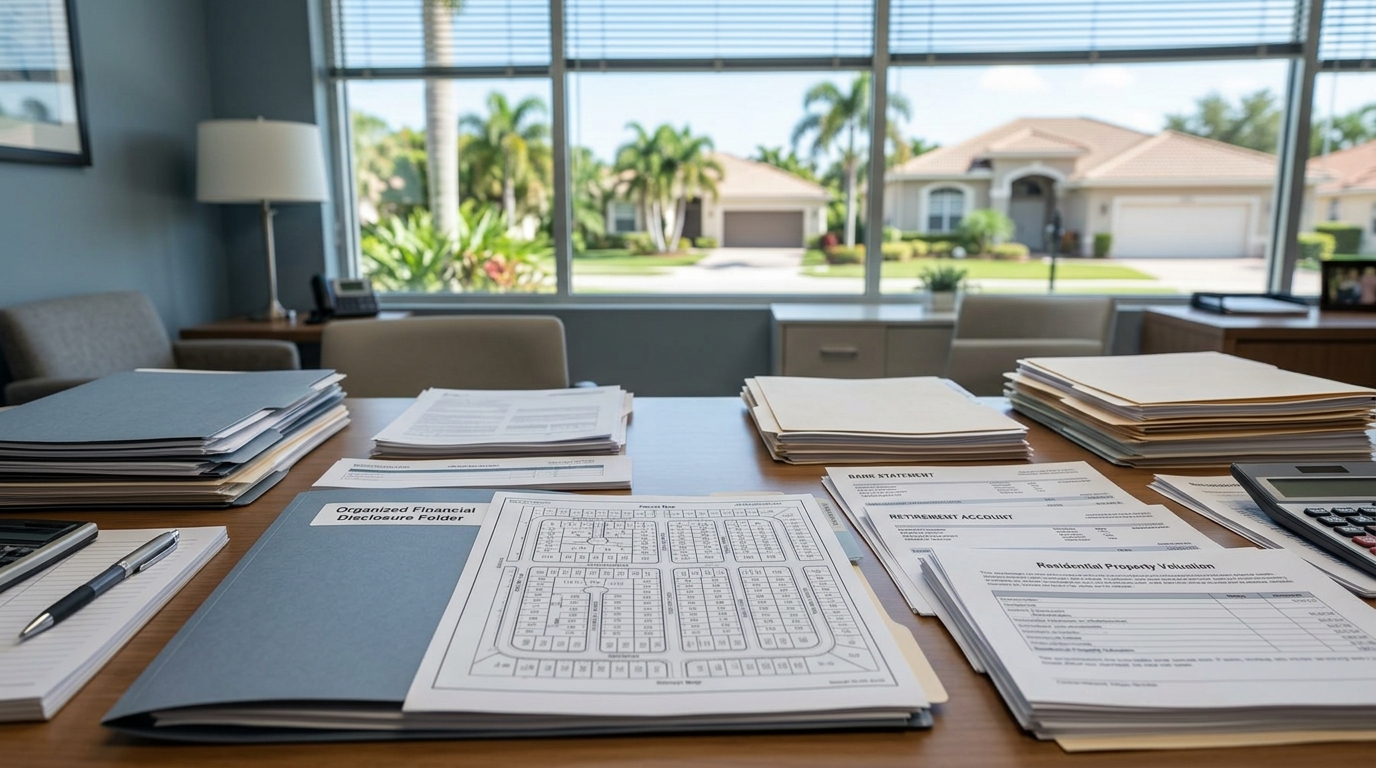
Document your finances. Gather bank statements, tax returns, retirement account records, property documents, and outstanding debt information.
Understand your legal position. Identify which assets and liabilities may be marital before negotiating a settlement.
Avoid costly financial mistakes. Do not conceal assets or make questionable transfers that could damage your legal position.
Evaluate settlement terms carefully. Consider mortgage obligations, taxes, retirement benefits, and the practical consequences of your parenting plan.
Seek appropriate legal advice. Consult a qualified Florida divorce attorney before making major financial decisions or signing an agreement you do not fully understand.
The biggest divorce mistakes often begin with assumptions about what the law allows. Some spouses expect everything to be divided equally. Others believe that keeping the house automatically means keeping its full value, or that a divorce judgment removes their name from a joint mortgage.
Unfortunately, the legal system does not award compensation for misplaced confidence.
This guide explains how Florida divorce law works, which financial risks deserve attention, and what you can do to protect your interests. It also examines the decisions that should ideally happen before marriage, when financial arrangements are generally easier to negotiate and nobody has yet started arguing over who gets the dining room furniture.
1. The Most Important Advice Comes Before the Wedding
The best time to discuss financial protection during a marriage is often before the marriage begins.
That advice may arrive too late for someone already considering divorce. Still, it deserves attention because the decisions couples make before marrying can affect their finances for years.
Before getting married, discuss existing debts, income differences, property ownership, retirement savings, business interests, and expectations about future expenses. These conversations can reveal disagreements that might otherwise remain hidden until the relationship deteriorates.
Consider a prenuptial agreement
A prenuptial agreement can establish certain financial arrangements before marriage. Under Florida Statutes § 61.079, a premarital agreement must be written and signed by both parties. Florida law also establishes requirements and circumstances that can affect enforceability.
Depending on its terms and applicable law, an agreement may address the treatment of property, responsibility for certain obligations, and rights that would otherwise arise upon divorce.
It is not a magic document. An agreement may face a legal challenge if the circumstances surrounding its execution or the applicable statutory requirements create grounds for doing so. The Florida Supreme Court’s decision inCasto v. Casto, 508 So. 2d 330 (Fla. 1987), discusses circumstances in which a marital agreement may be challenged, including overreaching and issues involving financial disclosure.
A prenuptial agreement also cannot simply override every legal obligation involving children.
If you are already married, ask a Florida family law attorney whether a postnuptial agreement or another lawful arrangement could address your circumstances. Do not assume that an agreement signed after a dispute begins will have the same legal effect as one negotiated before marriage.
2. Understand What Florida Actually Divides
Florida follows an equitable distribution system. That does not mean a judge can divide everything however they please.
Under Florida Statutes § 61.075, the court must identify and set apart each spouse’s nonmarital assets and liabilities. It then determines how to distribute marital property and marital debts. Equal distribution is the starting point, although statutory factors can justify a different result.
The classification of property matters because ownership, timing, financial contributions, and other circumstances can affect how an asset is treated.
Marital property is not limited to items with both names on them
Depending on the circumstances, marital property can include assets acquired during the marriage, certain retirement benefits earned during that period, and increases in the value of particular assets.
An asset held in one spouse’s name is not automatically excluded from equitable distribution. Conversely, an asset acquired before marriage does not automatically become marital property simply because the couple later divorces.
Florida law contains specific rules for identifying marital and nonmarital assets. The details matter, particularly when one spouse owned a business before marriage or received an inheritance that was later mixed with marital funds.
Make a complete financial inventory
Start gathering records before negotiations become complicated. Keep lawful copies of relevant documents, including:
Bank and investment account statements.
Tax returns and income records.
Retirement plan statements and pension information.
Mortgage documents, property deeds, and home valuation records.
Business ownership documents and financial statements.
Credit card balances, personal loans, and other liabilities.
Records showing when property was acquired or inherited.
Florida’s Family Law Rule of Procedure 12.285 establishes financial disclosure requirements in many family law cases, subject to applicable exceptions and court orders.
Do not access accounts you are not authorized to use or obtain records through unlawful means. If important financial information is unavailable, ask your attorney about lawful discovery procedures.
Understand the difference between ownership and value
Suppose one spouse owns a business that increased in value during the marriage. The business’s original purchase price may tell only part of the story. Its current valuation, the source of the investment, the contributions made during the marriage, and the applicable legal classification may all matter.
The same principle applies to real estate and investment accounts.
A financial inventory should therefore identify both the asset and the evidence supporting its valuation. Guessing at values during settlement negotiations can leave you with a misleading picture of your actual financial position.
3. Do Not Hide Money or Drain Accounts
When a marriage breaks down, one spouse may be tempted to transfer money, withdraw large sums, sell property, or move assets into a relative’s name.
The distinction between ordinary spending and intentional dissipation matters.
InMiller v. Miller, 2016, Florida’s Fourth District Court of Appeal explained that a finding of dissipation requires evidence of intentional misconduct. Ordinary mismanagement or spending that a spouse simply dislikes does not automatically satisfy that standard.
The case is a useful reminder that suspicious spending and legally established dissipation are not the same thing.
What should you do if money appears to be disappearing?
Preserve the records you can lawfully access. Make a note of unexplained withdrawals or transfers, including dates and amounts. Keep copies of account statements and other relevant documents.
Avoid retaliatory financial decisions. Emptying an account because you suspect your spouse has done the same thing can complicate your position rather than protect it.
If you believe assets are being concealed or deliberately depleted, discuss the evidence with your attorney. Depending on the circumstances, the appropriate response may involve formal financial disclosure, discovery, or a request for court intervention.
A practical example
Imagine that a couple has joint savings of $80,000. During the breakdown of the marriage, one spouse transfers $30,000 to an undisclosed account and refuses to explain the transaction.
That transfer deserves investigation. However, the legal outcome depends on the source of the money, the purpose of the transfer, the available evidence, and the applicable law.
A transfer made to conceal marital funds is different from a documented payment for legitimate household expenses. Establishing the facts is more useful than making accusations without supporting evidence.
The decision inRabbath v. Farid, 34 So. 3d 1270 (Fla. 1st DCA 2009) illustrates how financial evidence, allegations of concealed assets, and questions about income can become significant in divorce litigation. The court also emphasized the need for adequate evidentiary support when determining income for support awards.
4. Think Carefully Before Giving Up the Marital Home
For many couples, the family home is their most valuable asset. It can also be their largest financial obligation.
The decision to keep or leave the property should not be based exclusively on emotional attachment or the desire to maintain familiar surroundings.
Before agreeing to keep the house, determine its approximate market value. Obtain the current mortgage balance and estimate the costs of ownership, including insurance, property taxes, maintenance, and any applicable association fees.
Then calculate the equity.
For example, a home valued at $500,000 with a $300,000 mortgage has approximately $200,000 in gross equity before selling costs or other adjustments. That does not mean either spouse can automatically claim $100,000. The legal classification of the property and the overall settlement affect the analysis.
Keeping the house does not necessarily mean you can afford it
A settlement might award the home to one spouse while requiring that spouse to compensate the other for an agreed share of the equity.
That arrangement may work if the spouse retaining the property can refinance the mortgage or otherwise meet the financial obligations. It can become a problem if the necessary financing is unavailable.
If both spouses remain borrowers, the lender may still pursue either borrower according to the loan agreement. A promise in a divorce settlement is not the same as a release from the lender.
Compare your options before deciding
Depending on the circumstances, the options may include selling the property and dividing the proceeds, refinancing so one spouse retains the home, or negotiating another arrangement that accounts for the property’s value and associated obligations.
Florida law also addresses credits and setoffs associated with the marital home. Florida Statutes § 61.077 identifies factors relevant to these issues, including possession of the property and certain housing expenses.
The right decision depends on the numbers and the legal circumstances. A house that looks like a valuable settlement asset can become a financial burden if the mortgage and maintenance costs exceed what the new household can reasonably afford.
5. Understand Child Support and Alimony Separately
Support payments can significantly affect both spouses’ financial futures. They should be evaluated separately from property division.
Alimony depends on the applicable legal standards
Florida law recognizes several forms of alimony, including temporary, bridge the gap, rehabilitative, and durational alimony. The applicable requirements and potential award depend on the circumstances described in Florida Statutes § 61.08.
A spouse should not assume that alimony is automatic after a long marriage. Nor should a higher earning spouse assume that support can never be awarded to someone who has an independent income.
The court considers statutory factors when determining whether an award is appropriate. Relevant considerations include the parties’ financial circumstances and the duration of the marriage.
Florida’s 2023 legislative reforms eliminated permanent alimony for new awards. Current law governs the forms of alimony available in a particular proceeding.
Before agreeing to a settlement, examine the proposed payment amount and duration. Consider how your income, housing costs, employment prospects, and other obligations may change after the divorce.
Child support follows separate rules
Child support is calculated under the guidelines in Florida Statutes § 61.30. The calculation considers factors including parental income and other legally relevant information.
Parents should not assume that the person with less time sharing will necessarily receive a particular amount. Nor should they treat support as a reward for one parent or a penalty against the other.
A parenting arrangement and a support obligation address different legal questions. Under Florida Statutes § 61.13, parenting plans and time sharing are governed by the child’s best interests and the applicable statutory framework.
Do not agree to an informal financial arrangement that leaves major questions unresolved. If a support order already exists, follow it unless it is modified through an appropriate legal process.
Account for taxes
Support and property transfers can have different federal tax consequences.
The Internal Revenue Service’s guidance on filing taxes after divorce or separation explains several issues that can arise, including the treatment of child support and certain property transfers. For divorce or separation agreements executed after 2018, alimony generally is not deductible by the payer or taxable to the recipient for federal income tax purposes.
Do not assume that a settlement’s stated dollar amounts represent their full economic value. If a proposed agreement involves substantial property or support payments, ask a qualified tax professional to evaluate the consequences.
6. Protect Your Relationship With Your Children
When children are involved, decisions made during divorce can affect family life long after the legal proceedings end.
Florida uses the term time sharing rather than relying exclusively on the older concept of custody. Parenting plans address the schedule and the responsibilities each parent will undertake.
Under Florida Statutes § 61.13, the child’s best interests are central to parenting decisions. The statute establishes a rebuttable presumption that equal time sharing is in the child’s best interests, subject to the law’s requirements and the facts of the case.
That presumption does not mean every family will receive an identical schedule. A child’s needs and the parents’ circumstances remain important.
Make the parenting plan specific
A workable plan should address ordinary practical questions. Where will the child stay during the school week? How will holidays be divided? Who will handle school decisions and medical appointments? What happens when a parent needs to change the schedule?
The more precisely an agreement addresses foreseeable situations, the less room there may be for disputes about its meaning.
A parent should also avoid making promises about a schedule that they cannot realistically maintain. Travel time, employment hours, school commitments, and the child’s needs all affect whether a proposed arrangement is workable.
Do not use the child as a negotiating tool
Withholding time sharing because support payments are late can violate an existing order. Florida law addresses the independence of these obligations in § 61.13(4).
Likewise, a parent should not stop paying court ordered support because the other parent has failed to follow the schedule. Seek legal enforcement or modification rather than attempting to resolve the dispute through retaliation.
If safety concerns exist, document them and seek appropriate legal advice. The child’s welfare must remain central to the response.
7. Do Not Sign a Settlement You Do Not Understand
A settlement can resolve disputes without requiring every issue to be decided at trial. However, signing an agreement without understanding its consequences can create problems that are difficult or expensive to correct.
Read the proposed agreement carefully. Make sure the financial terms match the parties’ intentions and that the document addresses the obligations each person will assume.
Check the details behind the headline numbers
A proposed settlement might award one spouse the house and the other spouse a retirement account. The apparent values could be similar, yet the assets may have very different tax implications, liquidity, and future costs.
Before agreeing, consider:
Whether the property valuations are reliable.
Whether the proposed division accounts for outstanding debts.
Whether retirement assets require a qualified domestic relations order.
Whether a mortgage lender must approve refinancing or another change.
Whether the agreement establishes clear deadlines and enforcement mechanisms.
Whether the support provisions reflect the parties’ actual circumstances.
The IRS guidance on retirement plans and divorce explains that many employer sponsored retirement plans require a qualified domestic relations order, commonly called a QDRO, before benefits can be paid to a former spouse.
A divorce judgment alone may not complete the administrative steps required to divide a retirement account. Ask the plan administrator and your legal adviser what documents are necessary.
Do not confuse an agreement with a completed transaction
Suppose a settlement states that one spouse will retain the home and take responsibility for the mortgage. If the loan remains in both names, the other spouse may still face financial exposure.
The agreement may create obligations between the former spouses, but it does not necessarily change the lender’s rights. Similar implementation problems can arise with vehicle loans, joint credit accounts, and retirement benefits.
A settlement should explain how these obligations will be completed. Where necessary, it should establish realistic deadlines and address what happens if a required transaction cannot be completed.
If you do not understand a provision, ask questions before signing. A short delay to clarify an obligation is usually preferable to discovering its meaning after the agreement becomes binding.
8. Common Divorce Mistakes That Can Cost You
Some financial mistakes are obvious. Others arise from seemingly reasonable decisions made without understanding their legal consequences.
Moving out without considering the practical consequences
Moving out does not automatically mean you surrender ownership of the home. However, leaving can affect household expenses, access to personal belongings, and the practical arrangements surrounding children.
Before making a major change, consider the immediate financial implications and obtain advice if ownership or parenting issues are disputed.
Do not remain in an unsafe environment merely to protect a financial position. Safety concerns require appropriate action and should take priority.
Making major purchases or taking on new debt
Large discretionary purchases during a separation can complicate the financial picture. The effect depends on the source of funds, the timing, the purpose, and the applicable legal standards.
Avoid assuming that your spouse will automatically be responsible for a debt simply because it was incurred during the marriage. Ask your attorney how the obligation may be classified and addressed.
Ignoring retirement savings
Retirement accounts can represent a substantial portion of a couple’s accumulated wealth. Focusing exclusively on the house or bank accounts may leave important assets out of settlement discussions.
Review the account balance and the legal classification of the benefits. If an employer sponsored plan is involved, confirm the process for implementing any agreed division with the plan administrator and review the IRS guidance on QDROs.
Overlooking the cost of starting over
The financial effect of divorce does not end when assets are divided. Each household may need to cover separate housing costs, utilities, insurance, transportation, and other expenses.
Prepare a realistic post divorce budget before accepting a settlement. Include recurring costs and reasonable contingency funds. A settlement that looks attractive on paper may not provide enough cash flow to support your actual needs.
Treating litigation as a contest to win at any cost
Some disputes require a judge to make a decision. Others can be resolved through negotiation or mediation.
The objective should be a legally sound outcome that protects your interests. Spending substantial sums to contest an issue with limited financial significance may be counterproductive.
That does not mean you should accept an unfair agreement simply to avoid conflict. It means evaluating the likely costs, benefits, evidence, and alternatives before choosing how to proceed.
9. How to Approach the Divorce Process
A structured approach can help you make better decisions under pressure.
Step 1: Establish your financial baseline.
List your income, regular expenses, assets, and debts. Gather records showing account balances and ownership. Identify missing information that needs to be obtained lawfully.
Step 2: Identify the urgent issues.
Consider housing, access to funds, ongoing household bills, parenting arrangements, and any immediate safety concerns. Ask a lawyer whether temporary court orders or other protective measures may be appropriate.
Step 3: Understand the applicable legal rules.
Review how equitable distribution, support, and time sharing may apply to your situation. Florida’s Chapter 61 statutes provide the statutory framework for dissolution of marriage and related matters.
One spouse must generally have resided in Florida for at least six months before the petition is filed, as provided by Florida Statutes § 61.021.
Step 4: Evaluate negotiation and mediation.
Consider whether the disputed issues can be resolved through negotiation. Mediation may help the parties explore settlement options with the assistance of a neutral mediator.
Mediation does not guarantee agreement. It also does not eliminate the need to understand the legal and financial implications of any proposed settlement.
Step 5: Review the proposed outcome in practical terms.
Calculate what you are likely to own and owe after the divorce. Consider housing expenses, support obligations, taxes, retirement benefits, and the time required to complete transactions.
Step 6: Confirm that the agreement is implemented.
After the judgment, complete any necessary transfers, refinancing, account changes, or retirement plan paperwork. Review deadlines and preserve copies of the final documents.
An agreement is only as useful as the practical arrangements that carry it out.
10. When Professional Legal Help Matters Most
Not every divorce requires the same level of legal intervention. A straightforward, uncontested case may involve fewer disputed issues than a divorce involving a business, substantial property, hidden assets, or complex parenting concerns.
Legal advice becomes particularly important when you cannot determine which assets are marital, when financial disclosures appear incomplete, or when a proposed agreement could affect your long term financial security.
A lawyer can help you understand the applicable law and identify issues that deserve closer examination. A financial professional or tax adviser may also be useful when the settlement involves complicated assets or significant tax consequences.
If you cannot afford full representation, ask whether limited scope legal services or other assistance may be available. Do not assume that the only options are full representation or handling every issue alone.
The Florida Courts’ family law resources provide information for people navigating family law matters. These resources can help you understand court procedures, although they do not replace advice about your particular circumstances.
11. The Final Checklist Before You Commit
Before filing for divorce or agreeing to settlement terms, review the following questions.
Have you gathered reliable records of your assets and debts?
Do you understand which property may be classified as marital?
Have you reviewed the mortgage and other joint financial obligations?
Have you considered retirement accounts and any required QDRO?
Do you understand the potential effect of alimony and child support?
Is the parenting plan realistic for your family’s circumstances?
Have you reviewed the tax implications of the proposed settlement?
Are there unexplained transfers or missing financial records that require investigation?
Does the agreement establish clear obligations and deadlines?
Have you obtained legal advice about provisions you do not understand?
You do not need to answer every question immediately. You do need to recognize which questions remain unresolved before making an irreversible decision.
Frequently Asked Questions About Conducting a Divorce in Florida
1. Does Florida automatically divide marital property equally?
Equal distribution is the starting point under Florida Statutes § 61.075. A court may order an unequal distribution when justified by the relevant statutory factors. The classification of property as marital or nonmarital must also be addressed.
2. Can my spouse take half of everything I own?
Not automatically. Florida law distinguishes marital property from nonmarital property. Assets acquired before marriage, inheritances, gifts, and property that has been mixed with marital assets may require closer examination. The outcome depends on the applicable legal rules and the evidence.
3. Can I keep the house if I get divorced?
Possibly. The spouses may negotiate for one person to retain the property, or a court may address the home as part of the proceedings. The arrangement must account for the property’s value and associated obligations. If the mortgage remains in both names, the other borrower may remain liable to the lender unless the loan is changed or the lender releases that borrower.
4. Can I be required to pay alimony in Florida?
Yes, when the applicable legal requirements are satisfied. Florida law permits several forms of alimony under § 61.08. Whether an award is appropriate depends on the parties’ circumstances and the statutory factors.
5. Does equal time sharing mean neither parent pays child support?
No. Parenting arrangements and child support are separate legal questions. Support is determined under the applicable guidelines in Florida Statutes § 61.30, while parenting decisions are governed by the law addressing the child’s best interests.
6. What happens if my spouse hides money during a divorce?
You can raise the issue through appropriate legal procedures and seek the relevant financial records. A court may consider intentional dissipation of marital assets when determining equitable distribution under § 61.075. The evidence must support the claim, and suspicious activity does not automatically establish wrongdoing.
7. Should I sign a divorce settlement to avoid going to court?
Only after you understand the agreement and its consequences. Settlement can reduce conflict and legal expense, but an agreement that leaves important obligations unresolved may create problems later. Obtain legal advice when the terms are unclear or the financial consequences are significant.
8. How long do I have to live in Florida before filing for divorce?
Generally, one spouse must have resided in Florida for at least six months before filing the petition for dissolution of marriage. This requirement appears in Florida Statutes § 61.021.
Considering Divorce in Coral Springs or Broward County?
If you are unsure what divorce would mean for your family, finances, or future, a consultation can help you understand your options before you file. Contact My Personal Attorneys to discuss your circumstances with a Florida family law attorney.
You cannot control every outcome of a divorce. You can take steps to understand your position before committing to a settlement.
Once you understand what is at stake, proceeding without appropriate advice is a risk you should take with your eyes open.
If the original will is missing in Florida, the court may still admit it to probate if the person seeking probate can prove its contents and establish that it was not revoked. Under Florida Statutes § 733.207, one disinterested witness can establish the contents when a correct copy exists. If no correct copy is available, two disinterested witnesses are required.
But finding a copy does not necessarily solve the problem. Florida courts may presume that a will was revoked if the original was last known to be in the deceased person’s possession and cannot be found after death. That presumption can be challenged with evidence about the document’s disappearance and the person’s intentions.
For families in Coral Springs and Broward County, the stakes can be substantial. A missing will may determine who inherits a family home, receives financial assets, or benefits from an estate plan. Understanding the evidence Florida law requires is the first step toward determining whether the missing document can still be honored.
Can a missing will still be admitted to probate in Florida?
Yes. Florida law allows a lost or destroyed will to be established and admitted to probate under specific conditions. The fact that the original cannot be located does not, by itself, mean the deceased person’s wishes must be disregarded.
The difficult part is proving the document’s terms and addressing whether it remained legally effective at death. Those are separate questions, and a family can have strong evidence on one without having enough evidence on the other.
A photocopy, for instance, might show exactly how the estate was supposed to be distributed. It does not necessarily explain why the original disappeared. That distinction becomes especially important when someone stands to inherit substantially more under the missing will than they would under Florida’s intestacy laws.
What if the family has a photocopy of the will?
A photocopy can be a very useful starting point. It may preserve the exact wording of the will and help identify the people who were supposed to inherit. Florida law expressly accounts for this situation.
Under § 733.207, a correct copy allows the will’s contents to be established through one disinterested witness. Without a correct copy, two disinterested witnesses are required to establish those contents.
There is a catch, however. A document that looks convincing is not necessarily a correct copy of the executed will. A draft saved by the drafting attorney might contain nearly all the same provisions while omitting a final change. An older version might name a beneficiary who was later removed.
In In re Estate of Parker, the Florida Supreme Court distinguished an identical reproduction from a draft that merely reflected the contents of the missing will. That distinction may sound technical until an inheritance depends on whether a document qualifies under the statute.
The practical lesson is simple: preserve every version you find, even if some appear incomplete or outdated. An attorney can assess which documents may help establish the final will and which require further proof.
Who can testify about a missing will?
The law does not simply ask whether someone remembers the will. It matters what that person knows and whether they have an interest in the outcome.
A neighbor might remember that the deceased kept a will in a particular drawer. A relative might recall a conversation about leaving the house to one child. The attorney who prepared the document might have a draft in the firm’s records. Each person could provide useful information, but their testimony would not necessarily establish the precise contents of the missing will.
Florida requires disinterested witnesses to establish those contents under § 733.207. A witness who stands to benefit from the outcome may not qualify for that purpose.
This distinction became important in Pilak v. Reigel. The dispute involved a will and two codicils, which are documents that amend an existing will. A witness named as a beneficiary in a codicil could not establish the documents’ contents. The appellate court reversed the order admitting the documents to probate because the statutory requirements had not been satisfied.
The case offers a useful warning for families. A person may know the deceased extremely well and still be unable to provide the specific testimony the court needs. Familiarity with someone’s wishes is not the same as proof of the terms of a legal document.
The difficult question: Was the will revoked?
Finding a copy can feel like a breakthrough. It gives the family something concrete to work with, and it may settle arguments about what the deceased wanted. But the original’s disappearance can raise another question that a copy alone cannot answer.
Did the deceased intend to revoke the will?
Florida courts recognize a rebuttable presumption of revocation in certain circumstances. If the original will was last known to be in the testator’s possession and cannot be found after death, the court may presume that the testator destroyed it intending to revoke it.
The presumption does not mean that every missing will has been revoked. People misplace documents. Homes are sold, files are moved, and important papers occasionally disappear for reasons nobody can reconstruct. The court must consider the evidence surrounding the particular case.
What evidence can help show that the will remained valid?
There is no universal checklist that guarantees a successful petition. The usefulness of any particular piece of evidence depends on what happened to the document and what the court needs to determine.
Still, a few categories deserve attention.
Statements by the deceased may help establish whether they continued to regard the will as valid. Records from the attorney who prepared the document may help explain which version was final. Evidence about who had access to the original can also matter, particularly if the document disappeared from a location where other people could reach it.
The circumstances surrounding the disappearance deserve careful examination. A will that vanished during a house clearance presents different questions from one that was kept by an attorney and cannot now be located.
These details do not automatically prove that the deceased never revoked the will. They can, however, help the court evaluate competing explanations for what happened.
Two Florida cases show why the evidence matters
In Balboni v. LaRocque, the Fourth District Court of Appeal found the evidence insufficient to overcome the presumption that the deceased had intentionally revoked the missing will.
The result illustrates a difficult reality for families. Being convinced that a loved one would never have changed their mind is not necessarily enough to establish that conclusion in court. The relevant question is what the evidence supports.
A different outcome followed in Walton v. Estate of Walton. The Third District Court of Appeal found sufficient evidence to rebut the presumption. The evidence included a copy of the will and testimony about the deceased person’s wishes, along with circumstances involving the person’s final illness and another individual’s access to the home.
The contrast between these decisions is worth understanding. Florida law does not require families to give up whenever an original disappears. It does require them to establish their position with evidence that meets the applicable legal standard.
When a missing will puts a family home at stake
The consequences become especially tangible when the missing document controls who inherits real estate.
In Property Solutions Powerhouse, LLC v. Nelson, decided in June 2025, the dispute involved Margaret Templeton’s missing will and her homestead. The will purported to leave the property to a friend. After a foreclosure sale, surplus proceeds remained at issue, creating a dispute over who was entitled to the money.
The trial court admitted the lost will to probate. The appellate court affirmed the relevant orders, rejecting arguments concerning notice and the treatment of the homestead.
This kind of dispute helps explain why a missing will should not be treated as a minor paperwork problem. A document that appears to have vanished from a file cabinet can affect ownership of a valuable home or determine who receives the proceeds from its sale.
It also shows why the interests of other potential heirs matter. Someone who expects to inherit under Florida’s default rules may have a very different position from the person named in the missing will. Both may have legitimate reasons to pay close attention to the proceeding.
How to establish a lost will in Florida
Florida has a specific procedure for establishing and admitting a lost or destroyed will. The process involves proving the document’s contents and giving the appropriate people an opportunity to participate.
The practical work usually begins before a petition reaches the court. A family that spends time gathering records and understanding the history of the document may be better prepared to address the questions that arise during the proceeding.
1. Search for the original before treating it as lost
Start with the obvious places, even if someone has already checked them once. Look through personal files, home safes, safe deposit records, and correspondence from the attorney who prepared the will.
Ask whether the deceased gave the original to someone for safekeeping. A relative might have been asked to store it during a move. The drafting attorney may have retained records that help explain which version was signed.
Keep a record of what was searched and what was found. This is useful for organizing the family’s efforts and may help explain the circumstances to counsel.
2. Preserve every version of the document
A photocopy may be the best available evidence, but it should not be the only thing the family considers.
Keep scans, drafts, correspondence, codicils, and related estate planning documents. Do not discard an older version just because someone believes a newer will existed. The older document may help establish the history of the estate plan, even if it ultimately cannot govern the estate.
A codicil deserves particular attention. It may amend a will without replacing the entire document, and its disappearance can create a separate problem when the court tries to determine the deceased person’s final instructions.
3. Identify witnesses who can establish the actual terms
The next task is to determine who can testify about the contents of the will. The answer may involve the drafting attorney or another person who has direct knowledge of the final document.
Remember that the law distinguishes between knowing the contents and simply remembering the signing. A person who watched the deceased execute the will may be unable to say what its provisions actually were.
Under § 733.207, the number of disinterested witnesses required depends on whether a correct copy is available. Establishing that the appropriate witnesses exist is an important part of assessing the case.
4. Investigate why the original disappeared
The family should be prepared to explain what is known about the original’s whereabouts. Was it last kept at home? Did an attorney retain it? Did the deceased move shortly before death? Were other people able to access the place where it was stored?
The answers may help clarify whether the presumption of revocation applies and what evidence is available to address it.
This is also a point where assumptions can become counterproductive. If the family suspects that someone removed the will, it should preserve relevant information and discuss the circumstances with counsel rather than presenting an unproven suspicion as an established fact.
5. File the petition and give formal notice
The petition must explain the basis for establishing the lost will and state its contents or include a copy when one is available. The proceeding must comply with the applicable evidentiary requirements.
Formal notice must be given to people who would inherit if the missing will were not admitted. This can include heirs who would receive property under Florida’s intestacy laws.
Notice is important because the court is not simply resolving a private disagreement between relatives. The outcome can affect the legal rights of people whose interests may conflict with those of the petitioner.
6. Present the evidence to the court
The court considers the evidence about the contents of the missing will and whether the document remained effective at death. Interested parties may challenge the petition.
If the court admits the will, the final order states its terms. The estate can then proceed under the established will, subject to the other requirements of Florida probate law.
A successful petition does not eliminate every issue that may arise during administration. Questions about assets, creditor claims, ownership, or the distribution of particular property may still need to be resolved.
What happens if the court cannot admit the missing will?
If the court cannot establish the missing will, the next step depends on whether another valid will exists and how the deceased’s property is owned.
An earlier will may still be relevant. Some assets may also pass outside probate because of joint ownership or beneficiary designations. If no effective will governs the property, Florida’s intestacy rules generally determine who inherits it.
That can produce a result the deceased would not have chosen.
Imagine someone who intended to leave a house to a close friend while leaving other assets to relatives. If the missing will cannot be established, the friend may not receive the house under the rules that apply without an effective will. The actual outcome depends on the ownership arrangements and the applicable law.
It is important not to assume that every asset follows the same route. A will generally does not control property that passes automatically to another owner or beneficiary under a valid arrangement. The family may need to examine the title and beneficiary records before drawing conclusions about what is at stake.
For readers who want to understand the alternative, see MyPersonalAttorneys’ article on Florida intestate succession, which explains who may inherit when a person dies without an effective will.
What if someone finds the will after probate has started?
Sometimes the original turns up after the family has already begun the probate process. It might be discovered among old papers, in a storage box, or in records that were not available when the estate was opened.
Finding it can change the situation, but it does not automatically undo everything that has happened.
Florida Statutes § 733.208 addresses the discovery of a later will or codicil. It allows an interested person to petition concerning the later discovered document, subject to the statute’s requirements. It also restricts offering a will after the estate has been completely administered and the personal representative discharged.
The timing can be important. If a document is found after probate has begun, the family should not assume that it can simply be substituted for the will already being administered. Nor should anyone assume that a discovered document will necessarily change the outcome.
The appropriate response is to preserve the document and obtain legal advice promptly. Counsel can assess its status and explain what procedure may be available at that stage of the estate.
Common mistakes families make with a missing will
The law can be difficult enough without avoidable assumptions getting in the way. A few mistakes deserve particular attention.
Assuming a photocopy guarantees probate
A photocopy can help establish the contents, but the court must still apply the statutory requirements. The circumstances surrounding the original’s disappearance may raise a separate question about revocation.
Asking a beneficiary to prove the will
A person who expects to receive property under the document may not qualify as a disinterested witness. Even a close relative who remembers the deceased’s wishes may be unable to provide the required testimony.
Confusing the signing ceremony with proof of the contents
Someone may remember witnessing the will’s execution without knowing what it said. The law requires evidence of the document’s actual provisions, not simply proof that a signing occurred.
Treating suspicion as proof of interference
A missing will can create understandable mistrust. One relative may suspect another of taking the document, particularly when the inheritance would change significantly if the will were admitted.
The family should distinguish what it knows from what it suspects. Evidence about access, storage, and the document’s disappearance may be relevant, but an accusation alone does not establish what happened.
Waiting until the estate is almost finished
Families sometimes postpone dealing with a missing will because they expect the original to turn up eventually. That can be risky.
Section 733.208 restricts offering a will after the estate has been completely administered and the personal representative discharged. The applicable timing rules depend on the situation, so a family should not wait for a document to appear without understanding the potential consequences.
Why keeping a reliable copy matters
A missing will dispute is a good reminder that preparing an estate plan and preserving it are two different tasks.
A person may take considerable care when choosing beneficiaries and arranging their affairs, yet leave family members uncertain about where the final signed documents are kept. That uncertainty can create difficulties at precisely the moment when relatives are trying to settle the estate.
Keeping estate planning records organized and making sure the appropriate people know how to locate them can help. A copy stored securely with the drafting attorney may also prove useful if the original cannot be found.
Still, a copy is not a complete substitute for careful document management. The family needs to know which version was actually executed and whether a later will or codicil changed it.
The broader picture is worth considering, too. A 2025 Pew Research Center survey found that 32% of U.S. adults reported having created a will. That figure does not measure how often wills go missing, but it illustrates that many adults have not documented their wishes in a will at all.
For families who have already prepared a will, preserving the final version is a sensible next step. It may spare loved ones from having to reconstruct an estate plan from old emails, incomplete drafts, and conflicting memories.
When should you speak with a Florida probate attorney?
It is worth seeking legal advice if the original will cannot be located, if the available copy may not be the final version, or if relatives disagree about what happened to the document.
A probate attorney can review the evidence and assess whether the requirements for establishing the will may be met. The attorney can also help identify interested parties who must receive notice and evaluate whether the circumstances raise a question about revocation.
For families in Coral Springs and Broward County, it helps to gather the records already available before the first consultation. Bring any copies, drafts, correspondence with the drafting attorney, and information about where the original was last kept. Even documents that appear incomplete may help explain the history of the estate plan.
Frequently asked questions about missing wills in Florida
Can a photocopy of a will be used in Florida probate?
Yes. A correct copy may be used to establish the contents of a lost will if the statutory requirements are satisfied. Under § 733.207, one disinterested witness can establish the contents when a correct copy is available.
The copy does not automatically resolve whether the will remained valid at death. The circumstances surrounding the original’s disappearance may still matter.
Does Florida presume that a missing will was revoked?
Florida courts recognize a rebuttable presumption of revocation when an original will was last known to be in the testator’s possession and cannot be found after death. The presumption may be overcome with sufficient evidence, depending on the circumstances.
Can a family member testify about the contents of a lost will?
Potentially, provided the witness meets the legal requirements. The court considers whether the witness is disinterested and can establish the document’s precise terms.
A relative’s familiarity with the deceased’s wishes is not necessarily enough. The testimony must address what the will actually said.
What if the only document available is an unsigned draft?
An unsigned draft is not automatically a correct copy of an executed will. In In re Estate of Parker, the Florida Supreme Court distinguished an accurate draft from an identical reproduction of the missing document.
The draft may still provide useful evidence about the estate plan’s history. Whether it can help establish the will depends on the available evidence and the applicable legal requirements.
Do all heirs have to agree before a lost will can be admitted?
No. Unanimous agreement among heirs is not the statutory test. The proceeding must satisfy Florida’s evidentiary requirements, and formal notice must be given to people who would inherit if the will were not admitted.
Interested parties may challenge the petition if they dispute the document’s contents or continued validity.
What happens if the will is found after the estate has been distributed?
The answer depends on the stage of administration and the applicable law. Section 733.208 addresses later discovered wills and codicils, but it restricts offering a will after the estate has been completely administered and the personal representative discharged.
Anyone who discovers a will at this stage should seek legal advice promptly. The document’s discovery does not automatically reverse completed proceedings.
Is a lost will case the same as a will contest?
No. A lost will proceeding seeks to establish and admit a document that cannot be located. A will contest challenges a will’s validity on grounds such as lack of testamentary capacity or undue influence.
The issues can overlap. A dispute over a missing will may involve both the contents of the document and whether it remained effective at death.
Should I contact a probate attorney if I have a copy but not the original?
Seeking advice early is sensible, especially if the will affects a home or a substantial inheritance. An attorney can review the copy, assess the available evidence, and explain the procedure that may apply.
Final thoughts
A missing will can leave a family with an uncomfortable mixture of certainty and doubt. Everyone may remember that an estate plan existed, and someone may even have a copy. Yet the court still needs to determine what the document said and whether it remained legally effective.
Florida law provides a way to establish a lost or destroyed will, but the process depends on evidence rather than family recollection alone. The distinction between proving the contents and addressing possible revocation is often the most important part of the case.
For families in Coral Springs and throughout Broward County, the best place to start is with the documents and facts already available. A careful review can help clarify whether the missing will may still be admitted to probate and what steps are worth considering next.
If you have started looking into estate planning, you have probably run into the same question in several different forms: Should I have a will, or should I have a trust?
The internet tends to make this sound like a simple contest. Trusts avoid probate. Wills are cheaper. Trusts are for wealthy people. Wills are for everyone else.
Real estate, family circumstances, and the way you want an inheritance handled can make the answer considerably less tidy.
For many Florida families, there is no reason to think of a will and a trust as competing choices. An estate plan can use both. The better question is what you want each document to accomplish.
You May Not Need to Choose One
A will and a revocable living trust operate differently.
A will generally takes effect at death. It can name beneficiaries, nominate a personal representative to handle the estate, and nominate a guardian for minor children. Florida law also imposes specific requirements for creating a valid will, including the signatures of the person making the will and two witnesses.
A revocable living trust can operate during your lifetime and continue after your death. Depending on its terms and how it is set up, it can provide instructions for managing trust property if you become incapacitated and for distributing that property after you die.
There is nothing unusual about having both.
A person might place certain assets into a revocable trust while keeping a will to handle matters that belong there. Other assets may pass through beneficiary designations, joint ownership, or other arrangements.
That is why simply asking, “Will or trust?” can lead you down the wrong path.
When a Will May Be the Practical Starting Point
For some people, a will may cover the central things they want their estate plan to accomplish.
Perhaps your estate is relatively straightforward. You know who should inherit your property. You want to nominate someone you trust to handle the estate. If you have minor children, you want your wishes concerning their guardianship documented.
A will can address those matters.
It can also work alongside other arrangements. Your retirement account, for example, may have its own beneficiary designation. A jointly owned asset may pass according to the form of ownership. Those assets do not necessarily follow the instructions in your will.
That distinction is easy to overlook.
A will governs property that passes through the estate under the will. It does not magically change the legal ownership of everything you possess.
Florida law also gives considerable importance to the person nominated as personal representative in a will, subject to the qualifications and other requirements governing appointment.
For someone with a relatively uncomplicated estate, a carefully prepared will can therefore be an important part of a sensible estate plan.
When a Trust Starts Making More Sense
A trust becomes worth serious consideration when you want the estate plan to do things that a will does not handle as well.
Imagine that you become unable to manage your finances because of an accident or illness. A revocable living trust can contain instructions for who takes over management of trust property and how that management should occur.
Or imagine that you do not want a child to receive a large inheritance outright at a particular age. A trust can establish rules for when and how that beneficiary receives the money.
The same idea can apply when a beneficiary is young, financially inexperienced, disabled, or otherwise likely to need continuing management of inherited property.
A trust can also be useful when avoiding probate for particular assets is an important objective. Property properly transferred into a revocable trust can generally be administered under the trust rather than through the ordinary probate process.
There is an important catch: the trust has to own the property you expect it to control.
A Trust in a Drawer Does Not Control Your House
This is one of the least glamorous parts of estate planning, which may be why people forget about it.
You can have a beautifully drafted trust sitting in your desk drawer. If the house, investment account, or other asset that was supposed to be controlled by that trust was never properly transferred into it, the document alone does not accomplish the intended ownership change.
Trust funding is therefore a practical part of trust planning.
Some assets may need to be retitled. Others may be handled through beneficiary designations or separate arrangements. An attorney can help determine which approach makes sense for each asset rather than treating the entire estate as though every asset follows the same rules.
This is also why two people with seemingly similar trusts can have very different estate administration experiences.
What If Incapacity Is the Concern?
This is another area where the difference between the two documents becomes important.
A will is generally a document for what happens after death. It does not manage your property during your lifetime simply because you have signed one.
A properly structured revocable living trust can contain instructions for managing trust property while you are alive. If you become unable to act, a successor trustee can potentially assume the responsibilities described in the trust.
That does not mean a trust takes the place of every other incapacity planning document. Powers of attorney and health care directives can serve separate purposes.
Good estate planning tends to involve several documents working together rather than asking one document to do everything.
What About Probate?
Probate is probably the subject that creates the most confusion in the will versus trust debate.
A will generally does not eliminate probate. When property is part of the probate estate, the will provides instructions for its administration.
A properly funded revocable trust can keep trust owned assets out of the probate estate. That can affect how those assets are administered and how quickly they can be distributed.
But avoiding probate does not mean that nobody has to administer the estate.
A successor trustee still has responsibilities. Debts, taxes, beneficiary rights, property issues, and other legal matters may still need attention. Florida law also imposes duties and notice requirements on trustees in appropriate circumstances.
So when someone says, “A trust avoids probate,” the next question should be: Which assets are actually in the trust?
That is usually a more useful question than debating whether trusts are inherently better.
Florida Homestead Changes the Conversation
Florida residents also have something else to consider: their home.
Florida’s constitutional homestead protections can restrict how homestead property is devised when the owner is survived by a spouse or minor child. Those protections are unusually important in Florida estate planning and can affect how a home should be handled.
Putting a house into a trust does not simply erase those rules.
The Florida Trust Code contains provisions addressing homestead in revocable trusts, while Florida’s Constitution establishes protections that can affect the disposition of homestead property.
This is one reason a generic article written for “wills and trusts in America” can be a poor guide for a Florida family. The same estate planning document can have different consequences depending on the state, the property, and the family involved.
Does a Trust Cost More?
Often, there is more work involved in establishing and maintaining a trust.
Someone may need to transfer real estate, review account ownership, coordinate beneficiary designations, and revisit the plan when circumstances change. Those steps can involve additional legal and administrative costs.
But comparing a will and a trust by looking only at the initial price of the documents misses the purpose of the planning.
If your estate needs lifetime management, incapacity planning, continuing control over an inheritance, or probate avoidance for properly funded trust assets, those objectives may justify the additional work involved in establishing a trust.
For someone with a straightforward estate and different priorities, a will may play a larger role.
The point is to build the plan around the circumstances rather than starting with the price tag.
A Simple Florida Decision Framework
If your priority is…
A will may help with…
A trust may help with…
Naming beneficiaries
Instructions for property passing through the estate
Distribution instructions for trust property
Minor children
Nominating a guardian
Managing assets for children after your death
Incapacity
Limited role
Lifetime management provisions
Probate
Does not generally avoid it
Properly funded trust assets can generally avoid it
Privacy
Probate proceedings are generally public
Trust administration can offer greater privacy
Continuing control
Limited after death
Can establish continuing distribution terms
Straightforward estate
May address many core needs
May still be appropriate depending on circumstances
Florida homestead
Subject to Florida’s homestead rules
Also subject to Florida’s homestead rules
There is no checklist that can tell every Florida resident which documents to sign.
Your property, family relationships, existing beneficiary designations, debts, business interests, and plans for your beneficiaries can all change the answer.
So, Which Is Better: A Trust or a Will?
The better starting point is to forget the idea that one document has to win.
A will can establish important instructions for what happens after death. A revocable living trust can provide a framework for managing property during life, planning for incapacity, and distributing trust assets after death.
Many estate plans use both.
You probably know your property, your family, and the people you want to protect. You are not expected to know every Florida rule governing probate, trusts, homestead, asset ownership, and inheritance.
Your attorney is.
That is where individualized estate planning earns its keep. The goal is to understand how the pieces fit together before your family has to deal with them under difficult circumstances.
Frequently Asked Questions
Is a trust better than a will in Florida?
There is no universal answer. The appropriate estate planning documents depend on your property, family circumstances, goals, and the kind of management you want during your lifetime and after your death.
Do I still need a will if I have a trust?
Often, yes. A will can address matters that the trust does not, including certain property that remains outside the trust and the nomination of a guardian for minor children.
Does a trust avoid probate in Florida?
Property properly transferred to a revocable trust can generally pass under the trust rather than through probate. Property left outside the trust may still require probate or another form of administration.
Does a trust help with incapacity?
A properly structured revocable living trust can contain instructions for managing trust property if the person who created the trust becomes unable to manage it personally.
Does creating a trust automatically put my property into it?
No. Trust funding and asset ownership need to be handled properly. A trust document does not automatically retitle every asset you own.
Can a trust control when beneficiaries receive an inheritance?
Yes. A trust can establish terms governing when and how beneficiaries receive trust property, subject to the terms of the trust and applicable law.
Can a trust control my Florida homestead?
Florida homestead is subject to constitutional and statutory rules that can restrict how the property is devised. Trust planning involving a Florida homestead requires careful attention to those rules.
Talk With a Florida Estate Planning Attorney
If you are trying to decide whether your estate plan should include a will, a revocable living trust, or both, start with the actual estate rather than with a generic checklist.
An experienced Florida estate planning attorney can review your property, existing documents, family circumstances, and intended beneficiaries and explain how the available planning tools fit together.
A real estate closing can look deceptively simple. The buyer signs documents, the seller signs documents, money changes hands, and the property changes ownership.
The legal work behind that moment is considerably less simple.
A Florida real estate attorney can review the purchase contract, examine title issues, address liens and other encumbrances, review the closing documents, and advise a buyer or seller when the transaction does not proceed exactly as expected. That work may begin weeks before the closing date.
For someone who already has a real estate agent, lender, title company, or closing agent, it is reasonable to ask what a separate attorney actually does. The answer depends on the transaction, but the attorney’s role is generally to provide legal advice to the client whose interests the attorney represents.
The Florida Bar recommends consulting a Florida licensed real estate lawyer before signing a purchase contract. It also points out that the closing agent may be an attorney without representing the individual buyer’s or seller’s interests.
The Lawyer’s Work Often Starts Before the Closing
The closing is the final stage of a transaction that began with a contract.
That contract determines the purchase price, deposit, financing arrangements, inspection rights, title requirements, closing date, possession, closing costs, and the obligations of both parties. It can also establish what happens when one side fails to perform.
Those provisions matter when the transaction develops a problem.
Suppose the seller discovers that an old mortgage was never properly released. Or the buyer learns that a title objection has not been resolved. Perhaps the parties disagree about whether a repair was required under the contract, or whether a closing deadline can be extended.
Those questions cannot be answered by looking only at the documents being signed on closing day. The purchase agreement, amendments, correspondence, title documents, and applicable Florida law may all matter.
That is one reason the Florida Bar recommends having a lawyer review the purchase contract before it is signed. Standard forms contain many provisions, but the parties can negotiate terms and add provisions that change their rights and obligations.
What Does a Real Estate Attorney Review?
The attorney may review the purchase agreement and the documents generated during the transaction. Depending on the property and the circumstances, that can include:
The purchase and sale agreement
Addenda and amendments
Title commitments and title evidence
Deeds
Mortgages and other recorded instruments
Liens and judgments
Easements and restrictions
Survey issues and possible encroachments
Closing statements
Tax and other prorations
Repair credits and other concessions
Financing documents
Possession provisions
Documents prepared for signing at closing
The attorney is also looking at how these documents fit together.
For example, a closing statement might contain a credit that was negotiated in an amendment to the purchase contract. A title commitment might identify an exception that needs to be addressed before the buyer can receive the title insurance coverage expected under the transaction. A survey might reveal an encroachment that was not apparent when the contract was signed.
The point is not to read every document in isolation. The documents have to be consistent with the transaction the parties actually agreed to.
Why Title Problems Can Delay a Closing
Title is one of the biggest legal issues in a real estate transaction because ownership is not established simply by the seller saying that the property belongs to them.
A title examination can reveal mortgages, tax liens, judgments, easements, restrictions, probate issues, prior conveyances, or other matters affecting the property. The Florida Bar notes that a title examination may involve records going back many years and that problems can originate in areas such as probate, divorce, foreclosure, inheritance, and previous financing.
Some problems are relatively easy to correct. Others require additional documents, negotiations, or legal proceedings.
The purchase contract also matters because it may give the buyer a specific period to examine the title and notify the seller of objections.
Florida courts have enforced those contractual deadlines. In Davis v. Ivey, 984 So. 2d 571 (Fla. 5th DCA 2008), the buyers had 15 days after receiving title evidence to examine the title and notify the seller of defects. The seller provided the title evidence only one day before the scheduled closing. The appellate court held that the contractual examination period still applied.
That kind of dispute illustrates why a closing date does not tell the entire story. The contract may give the parties rights that continue to operate as the closing approaches.
Is the Closing Agent Your Attorney?
Not necessarily.
A title company or settlement agent may handle many of the practical steps required to complete the transaction. That can include preparing or coordinating documents, receiving and disbursing funds, recording documents, satisfying title requirements, and communicating with the parties.
The closing agent’s role does not automatically create an attorney-client relationship with the buyer or seller.
The Florida Bar specifically warns consumers that a closing agent may be a lawyer but may not represent their individual interests.
This distinction becomes important when the parties have competing interests. If the buyer and seller disagree about a contractual provision, for example, the buyer may need independent legal advice rather than assuming that the person conducting the closing is there to advise the buyer.
What Happens When the Closing Statement Changes?
The money being exchanged at closing has to match the transaction.
The settlement statement can include the purchase price, deposit, loan proceeds, taxes, insurance, title charges, recording fees, commissions, credits, prorations, payoff amounts, and other expenses.
Some of these figures are routine. Others may require explanation.
A repair credit negotiated after the original contract was signed should appear consistently in the closing documents. A mortgage payoff should correspond with the amount required to satisfy the seller’s loan. Property taxes may need to be prorated according to the terms of the transaction and the relevant tax period.
A lawyer reviewing the closing documents can compare them with the contract and identify discrepancies that need to be resolved before signing.
Be Careful With Wire Instructions
Wire fraud deserves particular attention during a real estate transaction because large sums of money are commonly transferred shortly before or at closing.
The Florida Bar advises consumers to independently and personally verify wire instructions rather than relying on an email containing payment information.
That advice is worth taking literally. If someone sends new instructions shortly before closing, call the intended recipient using a telephone number you already know to be legitimate. Do not assume that an email is genuine because it contains familiar names, logos, or details from the transaction.
Florida Homestead Law Can Affect the Documents
Florida’s homestead rules create additional legal considerations for qualifying homestead property.
Section 196.031 of the Florida Statutes addresses the homestead exemption for qualifying permanent residences. Florida law also contains specific rules concerning the conveyance and mortgaging of homestead property. Section 689.111 addresses circumstances involving a married owner’s spouse.
These rules can affect the documents required for a transaction and whether a deed or mortgage has been properly executed.
Homestead status can also intersect with estate planning, ownership, and family circumstances. An attorney therefore needs to look at the property and the people involved rather than assuming that every Florida residential closing follows the same set of rules.
What If Something Goes Wrong at Closing?
A closing does not automatically become a lawsuit because a problem appears.
The parties may be able to correct a document, obtain a lien release, resolve a title objection, amend the contract, adjust the closing figures, or agree on another solution. The appropriate response depends on the nature of the problem and the rights established by the contract.
The legal question may become more serious when one party refuses to perform.
If a seller cannot deliver the title required by the agreement, a buyer may have contractual remedies. Maybe a buyer fails to provide required funds or financing, the seller may have rights under the contract. If the parties disagree about whether a condition has been satisfied, the language of the agreement can become central to the dispute.
This is why the purchase contract deserves attention before closing rather than being treated as paperwork that has already served its purpose.
Do You Need a Real Estate Attorney for a Florida Closing?
There is no single answer for every transaction.
A straightforward residential purchase may involve relatively few legal complications. Other transactions can involve title defects, probate issues, divorces, liens, boundary disputes, unusual financing arrangements, commercial property, seller financing, significant contract amendments, or disagreements between the parties.
Those circumstances can change the legal work required.
The Florida Bar recommends having a qualified Florida real estate lawyer review a purchase contract before it is signed, particularly because standard contracts can be modified and because the consequences of contractual language can be significant.
If you are considering hiring an attorney, ask what the attorney will actually review and what representation includes. You should know whether the lawyer will examine the purchase agreement, communicate with the title company, review title issues, examine the closing documents, and advise you about disputes that arise before closing.
Real Estate Closings in Coral Springs and Broward County
A Coral Springs real estate transaction follows Florida law, but the property itself has its own history.
The relevant records can include prior deeds, mortgages, liens, easements, tax information, surveys, condominium or homeowners’ association documents, and other records affecting the property.
That history matters because two properties in the same neighborhood can have completely different title issues.
For buyers and sellers in Coral Springs and Broward County, a real estate attorney can review the particular property and transaction rather than relying on assumptions about how a typical closing should proceed.
Questions to Ask a Real Estate Attorney
Before hiring a Florida real estate attorney, ask specific questions about the work you need:
Will you review my purchase contract before I sign it?
Will you review the title commitment and identify title problems?
Who will communicate with the title company or closing agent?
Will you review the final closing statement?
What happens if a lien or other title defect appears?
What happens if the other party misses a contractual deadline?
Will you review the documents before I sign them?
Who will handle my matter?
How will the legal fees be calculated?
The answers should give you a clear idea of what the attorney will actually do during the transaction.
Talk With a Coral Springs Real Estate Attorney
Reinfeld & Cabrera, P.A. represents clients in Coral Springs and throughout Broward County in real estate matters.
If you are buying or selling property and want legal advice about the contract, title, closing documents, or another issue affecting the transaction, contact the firm to discuss your circumstances with an attorney.
Yes. An online will can be legally valid in Florida, provided it satisfies the state’s requirements for execution and complies with the law governing the type of will being used. A document generated by a website does not become valid simply because it looks official or contains the right language.
The more difficult question is whether the document actually accomplishes what its creator intends. A DIY will may be signed incorrectly, overlook how certain assets transfer at death, or fail to account for a family situation that does not fit the template. Some of these problems may remain invisible until the person who created the will can no longer explain what they meant.
For people in Coral Springs and Broward County, the practical decision is not necessarily whether to use an online service or hire an attorney for every task. It is whether the proposed document fits the person’s circumstances and whether the consequences of a drafting or execution error justify professional review.
Key points to know:
Florida generally requires a conventional will to be in writing and signed under specific witness formalities.
Notarization alone does not replace the required witnesses.
A valid will does not necessarily control every asset or avoid probate.
Florida recognizes electronic wills, but they must follow a separate statutory framework.
A will that is legally valid can still be unsuitable for the person’s family or financial circumstances.
Are Online Wills Legal in Florida?
Florida law does not prohibit someone from using an online service to prepare a will. The source of the document is not the decisive issue. The important questions are whether the will meets Florida’s legal requirements and whether its provisions work as intended.
Someone may use a website to prepare a conventional paper will, print it, and sign it in accordance with Florida law. That is different from signing a document electronically and assuming that a saved PDF qualifies as a valid electronic will.
Florida has a separate legal framework for electronic wills under sections 732.521 through 732.525 of the Florida Statutes. That framework addresses electronic signatures and the procedures used to execute and preserve an electronic will. The requirements are more specific than simply typing a name into a document or storing it online.
The distinction matters because an online will service may offer a document that looks complete while leaving the user responsible for the legal steps that make it effective. The user must understand which execution process applies to the document they have prepared.
The American Bar Association’s Section of Real Property, Trust and Estate Law has warned that DIY estate planning can create a false sense of security. Its concern is not that every online will is invalid. The risk is that a person may believe an estate plan is finished without recognizing that an important legal or practical issue remains unresolved.
What Does Florida Require for a Valid Will?
Florida’s conventional will requirements are set out in section 732.502 of the Florida Statutes. The rules are formal because a will is intended to determine how property is handled after its maker has died, when that person can no longer clarify their wishes.
In general, a person making a conventional Florida will must:
Put the will in writing.
Sign at the end of the document, subject to the statutory alternative involving another person signing at the testator’s direction and in the testator’s presence.
Sign the will, or acknowledge the existing signature, in the presence of at least two attesting witnesses.
Have the witnesses sign in the presence of the testator and each other.
Florida law also generally requires the person making the will to be at least 18 years old or an emancipated minor and to be of sound mind when signing.
These requirements are not decorative formalities. They determine whether the document can function as a will under Florida law. A website can generate suitable wording, but the user must still follow the execution rules that apply to the document.
Does a Florida will have to be notarized?
A conventional Florida will does not become valid simply by being notarized. The required witnessing process remains essential.
Notarization is commonly used as part of the self-proving procedure. Under section 732.503, the testator and witnesses can complete the required acknowledgments and affidavits before an authorized officer. A properly self-proved will can generally be admitted to probate without the additional proof otherwise required from a witness, subject to statutory exceptions.
Self-proving status can make the later probate process easier. It does not replace the normal signing and witnessing requirements.
This is an important distinction for someone following online instructions. Having a notary stamp a document does not automatically correct a failure to execute the will properly.
Can a relative or beneficiary witness a will?
Florida law addresses who may serve as a witness under section 732.504. An interested witness does not automatically invalidate a will merely because that person may benefit from it.
That does not mean choosing a beneficiary as a witness is always a good practical decision. When a family member stands to receive property under a will, the circumstances can invite questions about influence or the testator’s intentions. Independent witnesses may help avoid unnecessary disputes.
A person using a DIY form should not assume that a witness arrangement is safe merely because a website allows the names to be entered.
What Can Go Wrong With a DIY Will?
The most consequential mistakes are often not obvious grammatical errors. They involve the legal effect of the document or a gap between what the person intended and what the document actually accomplishes.
1. The will is never executed correctly
A document may be carefully prepared and still fail because the testator or witnesses did not follow the statutory procedure.
Florida Supreme Court case law illustrates why this matters. In Allen v. Dalk, 877 So. 2d 800 (Fla. 2002), the court considered a will that had not been validly executed. The document expressed the deceased person’s apparent intention, but the court rejected the argument that a constructive trust could be imposed to give effect to the intended disposition.
The case did not concern an online will service. Its relevance is more fundamental: clear evidence of what someone wanted does not automatically cure a will’s failure to meet Florida’s execution requirements.
Imagine a person prepares a will using an online template and leaves most of their estate to a close friend. The friend knows the person intended to sign the document, and other relatives agree that the plan reflected those wishes. If the will was not executed in the manner required by law, those facts may not be enough to make it valid.
The resulting dispute can require court proceedings while the estate remains unresolved. The intended beneficiary may ultimately receive nothing under the defective document.
2. The document does not fit the person’s family
Many templates ask users to select beneficiaries and name a personal representative. Those fields may not adequately address a complicated family situation.
A second marriage can create competing expectations between a surviving spouse and children from an earlier relationship. A person with minor children may also need to consider who should serve as guardian if a court appointment becomes necessary.
Florida law contains specific rules affecting wills after events such as marriage or divorce. Section 732.507 addresses certain effects of these changes, but the result depends on the circumstances. A person should not assume that an old will will operate exactly as originally written after a major family change.
The problem may not be an invalid document. It may be a document that remains legally effective while producing a result the testator no longer wants.
3. The will does not control the assets the person expects
A will generally governs property that forms part of the probate estate. Certain assets may pass under a separate legal arrangement.
For example, life insurance or a retirement account may transfer according to its beneficiary designation. Property held with a valid right of survivorship may pass to the surviving owner. Assets held in a properly funded trust may be governed by the trust rather than by the will.
This creates a practical risk for someone who prepares a will without reviewing how their assets are titled. They may name one person as the beneficiary in the will while an older beneficiary designation directs an account to someone else.
The will may be valid, yet the overall plan may not produce the intended result.
4. The person assumes that a will avoids probate
A will provides instructions for the disposition of property covered by the will. It does not automatically remove that property from probate.
When probate administration is required, the court oversees the applicable process. The personal representative must be appointed and obtain the authority required to administer the estate. A will may help direct that process, but it is not a substitute for it.
Someone whose main goal is to avoid probate should understand which assets are likely to pass through the probate estate. A will alone may not achieve that goal.
5. The person changes the signed document informally
After signing a will, someone might cross out a beneficiary’s name, write in a new one, or add a handwritten instruction in the margin.
The Florida Bar’s consumer guidance warns that writing on an executed will can invalidate part or all of it. Changes generally need to be made through a properly executed new will or codicil, which is a formal amendment to an existing will.
The safer approach is not to assume that a handwritten correction will be honored. The change should be made using a method that complies with Florida law.
6. The will ignores undue influence or other challenges
Florida Statutes section 732.5165 addresses wills or portions of wills procured by fraud, duress, mistake, or undue influence.
A DIY document does not automatically create these problems. However, a will that significantly changes an established estate plan may attract scrutiny if the circumstances surrounding its preparation are questionable.
Consider an older adult who depends on a relative for daily assistance. The relative helps prepare an online will and receives a substantial gift under the new document. If other family members later challenge the will, the circumstances may become relevant to whether the document was procured through improper influence.
The statutory issue is fact specific. A family disagreement by itself does not prove undue influence, and a large gift is not automatically unlawful. The point is that a template cannot resolve the underlying questions that may arise when a will is challenged.
What Do the Statistics Say About Estate Planning?
National survey data helps explain why online wills appeal to people who have not completed an estate plan. It also shows why convenience and completion are separate issues.
According to Caring.com’s 2025 Wills and Estate Planning Survey, conducted with YouGov, 24% of surveyed American adults reported having a will. The survey included more than 2,500 adults and was conducted online from January 3 to 6, 2025. Among respondents without a will, 43% said they simply had not gotten around to making one.
These are national survey findings, not estimates for Florida residents or proof that online wills are less reliable than attorney-prepared wills. They do, however, illustrate a practical obstacle: many people delay estate planning even when they recognize its importance.
Cost and perceived need can also affect the decision. Caring.com’s 2024 survey reported that 40% of respondents without a will cited having insufficient assets as a reason. That figure should be understood in the context of that survey’s sample and questions, rather than treated as a universal explanation.
The assumption that estate planning matters only to wealthy people can be misleading. A person with modest assets may still want to direct the distribution of property or nominate a personal representative. Parents may also want to express their preferences regarding a guardian for minor children.
The more useful question is not whether a person has a large estate. It is whether the consequences of leaving decisions to default legal rules are acceptable to that person.
When Might an Online Will Be Insufficient?
An online will may be a reasonable starting point for someone with a straightforward situation. For example, a person with modest assets who wants to leave probate property to a close relative may have fewer issues to resolve than someone with a blended family or a complex asset structure.
Even then, the document must be executed correctly. Simplicity does not remove Florida’s legal requirements.
Professional review becomes particularly useful when the estate plan must account for circumstances such as:
Children from different relationships or a recent marriage.
A beneficiary who is a minor or may need assistance managing an inheritance.
Property held jointly with another person.
A business interest or real estate ownership arrangement.
A significant change to an earlier will.
Concerns that someone may challenge the document.
These circumstances do not automatically make an online will invalid. They can, however, make a standard template less likely to address the person’s needs fully.
The American Bar Association’s guidance on DIY estate planning recognizes that self-prepared documents may work in limited situations. It also warns that generic forms may overlook state law details or fail to coordinate assets that pass outside a will.
The issue is not that every person needs the most elaborate estate plan available. It is that a document should be judged by how well it fits the person’s circumstances, rather than by how quickly a website can generate it.
Can You Make an Electronic Will in Florida?
Yes. Florida law recognizes electronic wills, but the rules differ from those governing conventional paper wills.
Sections 732.521 through 732.525 of the Florida Statutes address electronic wills and related requirements. The statutory framework includes electronic signatures and the use of a qualified custodian under the circumstances specified by law.
An electronic will should not be confused with a paper will that was drafted online. Printing a website-generated document and signing it as a conventional will invokes the rules for a paper will. Signing electronically invokes the separate electronic-will framework, which must be followed as applicable.
A person considering an electronic will should confirm that the service supports Florida’s legal requirements. They should also understand how the executed document will be preserved and made available after death.
Keeping a PDF in an email account or cloud folder is not, by itself, proof that an electronic will has been validly executed or preserved under Florida law.
What Happens to a Will After the Person Dies?
Preparing a will is only one part of the process. The document must be available when needed, and the estate may still require probate administration.
Florida Statutes section 732.901 addresses the delivery of a will to the appropriate clerk of court. A person who has custody of a will must generally deposit it within 10 days after receiving information that the testator has died. Depositing the will is not the same thing as completing probate or distributing the estate.
The next steps depend on the estate and the applicable procedure. In a formal administration, the court determines whether the will can be admitted to probate and appoints a personal representative. That representative then receives the authority needed to administer the estate.
A self-proved will can generally be admitted without further proof of execution, subject to legal exceptions. If the will is not self-proved, additional proof may be required under the applicable rules.
This is one reason it is important to keep the executed will safe and make sure someone knows where to find it. A document that cannot be located when needed can create avoidable complications for the people left to administer the estate.
How to Check a DIY Will Before Relying on It
Someone who has already prepared an online will can use the following questions as a preliminary review. This checklist cannot certify that a will is valid, but it can help identify issues that deserve attention.
Execution: Was the document signed in accordance with the rules that apply to a conventional or electronic will?
Witnesses: For a conventional will, did the required witnesses participate in the manner prescribed by Florida law?
Beneficiaries: Do the intended recipients match the person’s current wishes?
Assets: Are there beneficiary designations, survivorship arrangements, or trust assets that may pass outside the will?
Personal representative: Is the named person eligible and willing to serve?
Family circumstances: Has a marriage, divorce, birth, adoption, or other major change affected the plan?
Storage: Can the executed document be found when it is needed?
Updates: Have any changes been made through a legally appropriate process rather than informal handwritten edits?
If any answer is uncertain, the person should avoid assuming that the document will work as intended. Reviewing the issue before a death occurs is generally more practical than leaving the question for relatives to resolve during probate.
Should You Use an Online Will or Consult an Estate Planning Attorney?
The decision depends on the person’s circumstances and tolerance for risk.
An online service may offer a convenient way to prepare a basic document. It cannot guarantee that the will has been executed properly, that every asset is coordinated with the plan, or that the document addresses an unusual family situation.
A lawyer can review the legal effect of the proposed provisions and identify issues that a generic form may not address. That review may be especially valuable when the person owns real estate, has children from different relationships, or wants to make a significant change to an existing estate plan.
Preparing for a consultation can also help control the time involved. A person can gather information about their assets and liabilities, locate existing estate documents, and think through whom they want to benefit. Having those materials available gives the attorney a clearer starting point.
For residents of Coral Springs and Broward County, the sensible approach is to assess the actual estate plan rather than assume that every online will is defective or that every estate requires a complex legal arrangement.
Frequently Asked Questions
Can I make a will in Florida without hiring a lawyer?
Yes. Florida law does not generally require a person to hire an attorney to prepare a conventional will. The document must still comply with the applicable legal requirements. Whether a DIY document is suitable depends on the person’s circumstances and the plan’s intended effect.
Is an online will legally binding in Florida?
It can be. A website-generated will must satisfy the requirements that apply to the type of document being used. A conventional paper will must follow Florida’s signing and witnessing rules. An electronic will must comply with the separate statutory framework for electronic wills.
Does a Florida will have to be notarized?
Notarization alone is not enough to make a conventional Florida will valid. The will must satisfy the applicable execution requirements, including the witness formalities. Notarization may be part of the additional procedure used to make a will self-proving.
What if I signed my will incorrectly?
The effect depends on what went wrong and the applicable facts. A defect may prevent the document from being admitted as a valid will. In Allen v. Dalk, the Florida Supreme Court rejected an attempt to use a constructive trust to carry out the intended disposition under an invalidly executed will. A person who suspects an execution problem should have the document reviewed rather than assume the defect can be corrected after death.
Can I change an online will after signing it?
You can generally change your estate plan while you have the legal capacity to do so, but the change must follow the applicable formalities. Florida’s consumer guidance warns against relying on handwritten edits or crossed-out provisions in an executed will. A new will or properly executed codicil may be appropriate, depending on the situation.
Does having a will let my family avoid probate?
No. A will generally directs the disposition of property that is part of the probate estate, but it does not automatically eliminate probate. Whether an asset passes through probate depends on how it is owned and whether a separate transfer arrangement applies.
What is the difference between a paper will prepared online and an electronic will?
A paper will prepared online is printed and executed under the rules for a conventional will. An electronic will is executed electronically under Florida’s specific statutory framework. Saving a document as a PDF does not, by itself, establish that it qualifies as a valid electronic will.
Should I have an attorney review a will I already made online?
A review can be useful if you are uncertain about the signing procedure or if your circumstances have changed since you prepared the document. It may also help identify assets or family arrangements that the will does not address. The need for review depends on the details of the plan.
Review Your Estate Plan Before Your Family Has to Rely on It
An online will can be a legitimate starting point, but generating a document is not the same as confirming that it will carry out your wishes. Execution errors can undermine an otherwise carefully prepared will. A plan can also leave important questions unresolved even when the document is legally valid.
Who inherits when someone dies without a will in Florida?
The answer depends on the decedent’s surviving relatives and on which property is actually part of the intestate estate. Under Florida Statute § 732.101, property that is not effectively disposed of by a will passes to the decedent’s heirs under Florida’s intestacy laws. The right to that intestate property vests at death.
Florida’s rules do not give every relative an inheritance claim. A surviving spouse may receive the entire intestate estate in some families, while the spouse receives one half when certain descendants or blended family circumstances exist. If no spouse inherits the property, Florida law turns to descendants, parents, siblings, and progressively more remote relatives according to the hierarchy in § 732.103.
Florida Intestate Succession Hierarchy Structure
That hierarchy can produce results that surprise families. A half sibling can receive a different share from a whole blood sibling. A child who died before the decedent can leave a branch of descendants who inherit under the per stirpes rule. An alleged heir may have to prove the claimed family relationship before receiving anything. A distant relative may discover that being biologically related to the decedent does not place that person within a statutory class of heirs.
Florida law also treats some property differently from ordinary intestate assets. A jointly owned asset may pass through survivorship rights. A trust can control property outside the probate estate. A beneficiary designation can determine who receives certain financial assets. Florida homestead has its own inheritance rules that can change the analysis when a surviving spouse and descendants are involved.
The result is a legal question with several layers:
Who qualifies as an heir?
What share does that heir receive?
Is the property subject to intestate succession at all?
Those questions become particularly important when a Florida estate involves a blended family, disputed heirship, distant relatives, or a home owned by the decedent.
What Is Intestate Succession in Florida?
Intestate succession is the statutory process used to determine who inherits property that a Florida decedent did not effectively dispose of through a will.
Florida’s principal intestacy rules appear in Part I of Chapter 732 of the Florida Statutes. The provisions address the intestate estate, the surviving spouse’s share, the shares of other heirs, per stirpes inheritance, half blood relatives, afterborn heirs, escheat, adopted persons, children born outside marriage, and termination of parental rights.
The term therefore has a narrower legal meaning than “everything a person owned when they died.”
A person can die without a will while some assets pass through another legal mechanism. The intestacy statutes become relevant to property that remains subject to the statutory inheritance scheme.
Can someone have a will and still have an intestate estate?
Yes.
Florida Statute § 732.101 applies when part of an estate has not been effectively disposed of by will. A person can therefore leave a valid will while some property passes to heirs under intestate succession.
This is known as partial intestacy.
For example, a will might dispose of several assets but fail to provide an effective disposition for a particular piece of property. That property can pass under the intestacy statutes even though the decedent left a will.
That distinction matters throughout probate.
The relevant question is not simply whether a document called a will exists. The question is whether the will effectively disposes of the property at issue.
What Is Intestate Succession in Florida?
Florida intestate succession is the legal system that determines who receives property when a person dies without an effective will. Under Florida Statute § 732.101, property that is not effectively disposed of by a will passes to the decedent’s heirs under the intestacy statutes. The heirs’ rights to that intestate property vest at death.
The absence of a will does not mean that the estate has no legal rules governing inheritance. It means the legislature has supplied those rules.
Florida Statute § 732.102 addresses the surviving spouse. Section 732.103 determines who inherits the remaining estate when there is no surviving spouse or when the spouse does not receive the entire intestate estate. The result depends heavily on the decedent’s family relationships at the time of death.
That distinction matters because intestate succession applies only to property that actually belongs in the intestate estate. A person can die without a will while some assets pass through another legal mechanism. The ownership structure or beneficiary designation attached to an asset may determine what happens to it without applying the intestacy hierarchy.
Which Property Is Subject to Intestate Succession?
The first question in an intestate estate is not simply who the relatives are. It is whether the particular property passes through intestacy at all.
Florida Statute § 732.101 applies to property that was not effectively disposed of by will. This can include property that the decedent owned individually and that does not have another valid method of passing at death.
An asset may therefore fall outside the intestate estate because of the way it was owned or because another legal arrangement controls its transfer. For example, property held with another person in a form that carries a right of survivorship may pass to the surviving owner. Certain accounts and insurance policies may pass according to a valid beneficiary designation.
This distinction becomes particularly important when someone says that a deceased relative had “no will.” The absence of a will does not automatically mean that every asset must be divided under Chapter 732.
It is possible to have an estate with both intestate property and property that passes outside intestacy.
That situation is sometimes called partial intestacy. A will may also create partial intestacy if it fails to dispose effectively of some property. Florida law addresses the property that remains undisposed of through the intestacy statutes.
Who Inherits First Under Florida Intestacy Law?
The surviving spouse receives special treatment under Florida law.
If the decedent leaves no surviving descendants, the surviving spouse receives the entire intestate estate. The same result generally applies when every surviving descendant is also a descendant of the surviving spouse and the spouse has no descendant from another relationship.
The result changes when the family structure is different.
If the decedent has a surviving descendant who is not also a lineal descendant of the surviving spouse, the spouse receives one half of the intestate estate. The other half passes according to the rules governing the decedent’s descendants.
Florida law also addresses a less obvious blended family situation. Even if every surviving child of the decedent is also the spouse’s child, the spouse receives one half when the spouse has a descendant from another relationship who is not a descendant of the decedent.
Example: A Married Person With Children From Another Relationship
Suppose Maria dies without an effective will. She leaves a husband and two children. Both children are also her husband’s children.
If her husband has another child from a previous relationship, the statute treats the family differently from a marriage in which the surviving spouse has no children outside the marriage.
Under § 732.102, Maria’s husband receives one half of the intestate estate. The remaining half passes under the rules for Maria’s descendants.
This is one reason a simple statement such as “the spouse inherits everything” can be legally misleading.
What Happens If There Is No Surviving Spouse?
When there is no surviving spouse, Florida Statute § 732.103 supplies the succession rules.
The estate first passes to the decedent’s descendants. If the decedent has no descendants, the statute moves to the parents.
In some cases if neither parent survives, the statute reaches the decedent’s brothers and sisters and the descendants of deceased siblings.
If those relatives do not exist, the statute moves farther into the family tree. Florida divides this stage between the decedent’s paternal and maternal kindred. Grandparents receive priority within those branches. If the relevant grandparents are not living, the statute addresses aunts and uncles and the descendants of deceased aunts and uncles.
The statute does not continue indefinitely through every person who can establish some biological connection to the decedent.
That limitation became important in a recent Broward County case.
How Far Does Florida Intestacy Law Reach?
In State of Florida, Department of Legal Affairs v. Estate of Kyle William Bruening, the Fourth District Court of Appeal considered an intestate estate involving distant relatives.
Kyle Bruening died without a will. No spouse or children survived him. His parents and grandparents had also died, and there were no surviving siblings or aunts and uncles within the categories recognized by the statute. Several distant relatives claimed the estate because they shared great grandparents with Bruening.
The trial court treated those relatives as heirs. The Fourth District reversed.
The appellate court held that sharing great grandparents with the decedent did not place those relatives within a class of heirs recognized by § 732.103. The court explained that the statute identifies the relatives who inherit through intestacy and does not create a general right of inheritance for every distant blood relative.
The case arose in Broward County, which makes it particularly relevant to probate disputes in Coral Springs and elsewhere in South Florida.
The practical point is straightforward. A family connection is not enough by itself. The relationship must fall within a category recognized by Florida intestacy law.
What Does Per Stirpes Mean in Florida?
Florida Statute § 732.104 provides that intestate descent is per stirpes. The rule applies to descendants and to collateral heirs.
The concept becomes important when an heir who would have inherited directly has already died.
Consider a decedent who has two children. One child survives the decedent. The other child died before the decedent but left two children of their own.
The surviving child does not simply take the entire estate. The deceased child’s branch remains relevant. The descendants of that deceased child can receive the share attributable to that branch under the per stirpes rule.
This can produce a different result from dividing an estate equally among every living descendant. Florida law preserves the deceased heir’s branch when the statute reaches that branch of the family.
A family tree can therefore matter at several generations.
Can One Side of the Family Receive the Entire Estate?
Yes.
People sometimes miss this point because they assume that intestate property must always be divided equally between the maternal and paternal sides of the family.
Section 732.103 does not require that result when one side has no qualifying heirs.
In Faskowitz v. Department of Legal Affairs, the decedent had no surviving descendants. His will had attempted to leave his property to his wife, but she died before him and the will did not provide an alternate beneficiary. Relatives on the paternal side established their status as heirs. The probate court had treated half of the property as potentially belonging to unknown maternal relatives.
The Second District Court of Appeal rejected that approach. Under § 732.103, if there is no qualifying kindred on one side, the surviving kindred on the other side can receive the entire estate.
The case demonstrates why determining heirship requires more than locating one relative and assuming the estate will be divided along a simple family line.
What Happens If Family Members Disagree About Who Is an Heir?
Disputes over family relationships can easily turn an intestate estate contentious.
Florida Statute § 733.105 allows an interested person to ask the probate court to determine who is entitled to receive property or what share a person should receive when there is doubt about the proper beneficiaries.
That proceeding can require evidence about the decedent’s family history.
The Florida Supreme Court addressed this problem in State v. Rudawski, a case involving the estate of Jacob Tim. Tim died intestate in Miami Beach. More than fifty people appeared claiming different degrees of relationship to him. The court ultimately held that the claimants had failed to establish their entitlement to the estate.
The case illustrates a basic probate principle that can become decisive in an intestate estate: a person claiming inheritance must establish the legal basis for that claim.
A surname is not enough. A family story is not enough. The evidence must establish the relationship required by the applicable law.
Do Adopted Children Inherit Under Florida Intestacy Law?
Yes. Florida law generally treats an adopted person as a descendant of the adopting parent for purposes of intestate succession.
Section 732.108 provides that an adopted person becomes a descendant of the adopting parent and a member of that family for intestate succession purposes. The statute also contains specific exceptions involving certain adoptions by a natural parent’s spouse and other family relationships.
The details can matter when an adoption changes the legal relationship between the child and the natural family.
For that reason, a probate court may need to examine the adoption itself rather than relying on a family description used informally during the decedent’s lifetime.
What Happens With a Half Sibling?
Florida has a specific rule for half blood relatives.
When property passes to collateral relatives and some are related to the decedent by whole blood while others are related by half blood, the half blood relatives receive half as much as the whole blood relatives. If all of the relevant collateral relatives are half blood relatives, they receive equal shares.
This rule can matter when an estate reaches the sibling portion of the intestacy hierarchy.
For example, assume an intestate estate reaches the decedent’s siblings. When a surviving full sibling and a surviving half sibling both inherit, the statute does not automatically give them equal shares.
Therefore, you should calculate the shares under § 732.105 rather than treating every sibling as having the same statutory relationship.
Can a Child Born After the Parent’s Death Inherit?
Florida law expressly addresses this situation.
Under § 732.106, an heir who was conceived before the decedent’s death but born afterward inherits intestate property as though the child had been born during the decedent’s lifetime.
The timing of the birth therefore does not by itself eliminate the child’s inheritance rights.
Other legal questions can arise when parentage is disputed. Those questions should be addressed under the statutes governing the particular relationship rather than assumed from the family’s understanding of who the child’s parent was.
What Happens to a Florida Homestead When There Is No Will?
Florida homestead property requires separate attention because constitutional protections and Florida statutes impose special rules.
Section 732.401 provides that homestead generally descends under the intestacy rules when it has not been validly devised. When the decedent leaves a surviving spouse and descendants, however, the surviving spouse receives a life estate with a vested remainder in the descendants who were living at the decedent’s death. The spouse may instead elect an undivided one half interest as a tenant in common, with the remaining half passing to the descendants per stirpes.
This means a family home cannot always be treated like an ordinary asset in an intestate estate.
A surviving spouse may have rights that differ substantially from the result produced by simply dividing the home according to the general intestacy hierarchy.
The homestead rules also make property ownership particularly important. Before assuming that a house must be distributed through intestacy, the probate lawyer must determine how the property was titled and whether Florida’s homestead protections apply.
Can Intestate Succession Create Problems With a Family Home?
Yes.
Suppose a person dies in Coral Springs without a will and leaves a house to several descendants. Those heirs may acquire ownership interests in the property rather than receiving an automatic cash distribution.
The situation can become difficult when one heir wants to sell and another wants to keep the property. The heirs may also disagree about maintenance or the use of the house.
The problem can become larger with later deaths. An heir who receives an interest can later die without a will, causing that interest to pass through another estate. Over time, ownership can become divided among a growing number of relatives.
This is one reason intestate succession can have consequences long after the initial probate administration.
What Happens If No Legal Heir Can Be Found?
Florida law provides for escheat when a person dies without leaving anyone entitled to the estate.
Under § 732.107, property that has no person entitled to receive it can escheat to the State of Florida. The statute provides a procedure for handling the property and permits a person with a valid claim to seek the proceeds within the statutory period.
Escheat is not the first step merely because relatives are difficult to locate.
The question is whether a person legally entitled to inherit exists under the applicable statutes. Bruening demonstrates that a court will not expand the statutory categories simply because a distant relative can establish a biological connection.
Faskowitz demonstrates the other side of the problem. When qualifying heirs exist on one side of the family, the absence of qualifying heirs on the other side does not automatically send half the estate to the State.
Who Handles an Estate When There Is No Will?
An intestate estate still requires administration.
Florida law establishes a preference for appointment as personal representative in an intestate estate. The surviving spouse has the first preference. The statute then addresses selection by the heirs and the heir nearest in degree.
The personal representative is responsible for administering the estate under Florida probate law.
That role does not give the representative ownership of the estate. The representative administers property that belongs to the estate and distributes it according to the law after the required probate process has been completed.
A dispute over who should serve as personal representative can therefore be separate from a dispute over who inherits.
What If Nobody Knows Exactly Who the Heirs Are?
Florida provides a court procedure for this problem.
Under § 733.105, an interested person can petition the probate court to determine the beneficiaries or their respective shares when property passes through intestate succession and there is uncertainty about entitlement.
This can become relevant when relatives have incomplete records or when different family members provide conflicting accounts of the decedent’s family history.
The evidence may include civil records and other documentation establishing the claimed relationship. In a difficult estate, a genealogical investigation may also become necessary.
The objective is not to identify every person who might be related to the decedent. The objective is to establish the relatives who fall within the statutory categories of heirs.
What If the Person Had a Will That Did Not Cover Everything?
A person does not have to die completely intestate for the intestacy statutes to matter.
Section 732.101 applies to any part of an estate that was not effectively disposed of by will.
Imagine a will that leaves a particular bank account to one beneficiary but does not effectively dispose of the remainder of the estate.
The undisposed property can pass under Florida intestacy law.
This distinction matters when reviewing an older will after a death. The question is not simply whether the decedent signed a document called a will. The question is whether that document actually controls the property now at issue.
Why Intestate Succession Can Produce Surprising Results
Florida intestacy law follows statutory categories rather than the family’s idea of what would have been fair.
A decedent may have been especially close to a niece while having little contact with a sibling. That does not allow the niece to inherit simply because the relationship was closer.
A person may have supported one child financially during life while providing little support to another. Intestacy law does not generally adjust the statutory inheritance share because the family considers one relationship stronger.
The statute applies the legal relationships recognized by the Probate Code.
That is why the consequences can feel unexpected when a family has never discussed estate planning.
What Should a Family Do After Someone Dies Without a Will?
The first step is to determine what property actually belongs in the probate estate.
The next question is who may have inheritance rights under Florida law. That inquiry should account for the surviving spouse and the decedent’s descendants before moving farther into the family tree.
The family should also determine whether the decedent owned a Florida homestead. That property can be subject to special rules that change the ordinary intestacy analysis.
If relatives disagree about heirship, the probate court can determine who is entitled to the property and what share each person should receive. Section 733.105 specifically provides a procedure for resolving that uncertainty.
In Coral Springs and elsewhere in Broward County, these questions can arise in estates involving a family home, multiple generations, or relatives who have lived in different states for many years.
Waiting can make the factual investigation harder. Birth records may be difficult to locate. Family members may have incomplete information. Property may remain titled in the decedent’s name while relatives disagree about what should happen next.
A Florida probate attorney can review the ownership records and family relationships against the applicable statutes before the estate is distributed.
Frequently Asked Questions About Florida Intestate Succession
Who inherits if someone dies without a will in Florida?
The answer depends on the decedent’s surviving relatives and the property involved. A surviving spouse may receive the entire intestate estate or one half, depending on the family structure. If no spouse survives, descendants generally take priority under § 732.103.
Does the oldest child inherit more under Florida intestacy law?
No. Age does not give the oldest child a larger intestate share. When descendants inherit directly, Florida applies its statutory distribution rules.
Does a surviving spouse always inherit everything?
No. The surviving spouse receives the entire intestate estate in several situations, but § 732.102 reduces the spouse’s share to one half in specified family structures involving descendants.
Do grandchildren inherit if their parent is alive?
Generally, the inheritance hierarchy reaches the decedent’s descendants directly before moving to more remote relatives. The per stirpes rule becomes particularly important when a descendant who would have inherited has already died.
Can a niece or nephew inherit from an aunt or uncle who dies without a will?
A niece or nephew may inherit when the intestacy hierarchy reaches the descendants of a deceased sibling. The exact result depends on which relatives survive the decedent and how the statutory branches apply.
Can a second cousin inherit under Florida intestacy law?
Usually not merely because the person is a second cousin. In Bruening, the Fourth District held that relatives who shared great grandparents with the decedent did not fall within the statutory class of heirs applicable to that estate.
Do adopted children inherit from their adoptive parents?
Yes. Florida generally treats an adopted child as a descendant of the adopting parent for intestate succession. The statute contains specific exceptions that can affect relationships with natural family members.
Does a half sibling inherit the same amount as a full sibling?
Not always. When the relevant collateral heirs include both whole blood and half blood relatives, Florida law gives a half blood relative half the share of a whole blood relative.
What happens to a Florida house when the owner dies without a will?
The answer depends on the ownership of the property and the circumstances of the family. Florida homestead law contains special inheritance rules when a surviving spouse and descendants exist.
Can the State of Florida inherit an intestate estate?
Yes, but only when the statutory conditions for escheat are satisfied. If someone legally entitled to the estate exists under Florida law, the property does not simply pass to the State because the family is difficult to identify.
What if family members disagree about who should inherit?
An interested person can ask the probate court to determine who is entitled to the property or what share each person should receive. Florida Statute § 733.105 provides the procedure for that determination.
Florida Intestate Succession Requires a Property and Family Analysis
Dying without a will does not leave an estate without rules. Florida law supplies a statutory inheritance system that begins with the surviving spouse and descendants before reaching more remote relatives.
The difficult cases arise when the family structure is complicated or the property does not fit neatly into the ordinary probate estate. Homestead property can require a separate analysis. A distant relative may have a biological connection without having a statutory right to inherit. A surviving relative on one side of the family may receive the entire estate when the other side has no qualifying heirs.
For families in Coral Springs and Broward County, an intestate estate should be examined under the current Florida statutes before property is distributed. The right heir may not be the person the family expects, and the property that appears to belong to the estate may not all be subject to intestate succession.
Do You Have to Pay a Deceased Parent’s Debts in Florida?
No. In Florida, children generally do not have to pay a deceased parent’s debts from their own money simply because they are family members. Valid debts are usually paid from the deceased parent’s estate during probate. If the estate lacks sufficient assets, unpaid debts do not automatically become the children’s personal responsibility.
The estate: Generally pays valid debts from available estate assets.
The personal representative: Handles creditor claims and pays debts according to Florida probate law.
The children or other heirs: Generally are not personally liable unless a separate legal obligation applies.
Secured creditors: May retain rights against property securing a debt, such as a mortgaged home.
When must you pay a deceased parent’s debt?
You may be personally responsible if you:
Co-signed a loan or other credit agreement.
Are legally liable for a joint credit account.
Separately agreed to assume the debt.
Received an improper estate distribution that you may be legally required to return.
Inheriting property does not automatically make you personally responsible for every debt your parent owed. However, a mortgage or another valid lien may remain attached to inherited property.
If a credit card company, hospital, or debt collector contacts you after your parent’s death, determine whether the claim is against the estate or against you personally. A demand for payment does not, by itself, establish that you owe the debt.
Who Pays a Parent’s Debts After Death?
In most cases, the deceased person’s estate is responsible for valid debts. The estate consists of assets and property available to settle the deceased person’s affairs under the applicable law.
When a Florida probate case is opened, the personal representative is responsible for administering the estate. This includes identifying assets, reviewing creditor claims, paying obligations in the legally required order, and distributing any remaining property to beneficiaries.
The personal representative does not automatically become personally liable for the deceased person’s debts. Their role is to handle the estate according to Florida law.
Consider a parent who dies with $25,000 in credit card debt and leaves $10,000 in available estate assets. The credit card company may seek payment from the estate, but the deceased person’s child does not automatically owe the remaining $15,000. If the estate cannot cover all its valid debts, some creditors may receive partial payment or nothing at all.
This is the general rule described by the Federal Trade Commission. The important exceptions arise when a relative has an independent legal obligation or when estate property has been handled improperly.
When Can You Be Personally Responsible for a Parent’s Debt?
Your relationship with the deceased does not ordinarily make you responsible for their debts. Certain financial arrangements, however, can create personal liability.
You co-signed a loan
If you co-signed your parent’s car loan or personal loan, you may remain responsible for the balance after their death. Your obligation comes from the agreement you signed, not from being their child.
Review the contract before assuming you owe the balance. If a creditor claims you co-signed an account and you dispute that assertion, ask for documentation supporting its position.
You were a joint account holder
A person who is legally responsible for a joint credit account may remain liable after the other account holder dies. That situation differs from being an authorized user on someone else’s credit card. An authorized user generally does not become responsible for the debt solely by having permission to use the account.
If a collector says you owe the balance, ask which agreement or account status creates that obligation.
You agreed to assume the debt
You may have a separate obligation if you signed a contract or made an enforceable agreement to pay the debt. Helping a parent manage their finances, handling paperwork after their death, or being named in their will does not by itself establish personal liability.
This distinction matters when a family member has been helping with a parent’s care or finances for years. Managing someone else’s bills is not the same as agreeing to become the borrower.
You mishandled estate assets
A separate issue arises if you receive money from an estate before the applicable debts and expenses have been addressed.
Florida Statutes § 733.812 allows recovery of certain improper distributions. Depending on the circumstances, a beneficiary may have to return property or funds distributed improperly. A personal representative may also face liability for failing to perform their legal duties.
That does not mean every mistake makes a child responsible for all a parent’s debts. It does mean that anyone distributing estate property should understand which claims must be addressed first.
What Happens If the Estate Cannot Pay All Its Debts?
When an estate has insufficient assets to pay every valid claim, Florida law determines which obligations receive payment first.
Under Florida Statutes § 733.707, estate expenses and obligations are divided into statutory priority classes. Administration expenses come first, followed by specified funeral and interment expenses. Other categories include certain preferred debts and taxes, qualifying medical expenses from the final illness, and other claims.
Ordinary unsecured debts generally fall behind claims with higher statutory priority. If the estate cannot pay all claims within a class, the available funds may have to be distributed proportionately among those claims.
For example, suppose a parent leaves a small bank account but owes substantially more than the account contains. The personal representative cannot necessarily pay whichever creditor calls first. They must evaluate the claims and follow the applicable payment priorities.
An estate with insufficient funds does not automatically pass the shortfall to the children. The result depends on the assets available, the claims filed, and any separate legal obligations held by family members.
For families in Broward County, this is one reason to be cautious about paying a creditor immediately just because it demands payment. The estate’s financial position and the applicable priorities need to be reviewed first.
How Long Do Creditors Have to Claim a Debt in Florida?
Florida law establishes deadlines for claims against a deceased person’s estate. Missing the applicable deadline can prevent a creditor from enforcing its claim against the estate.
Under Florida Statutes § 733.702, the usual deadline is three months after the first publication of the notice to creditors. For a creditor required to receive individual service, the deadline is generally 30 days after service if that date falls later.
A separate provision, § 733.710, generally bars claims against the estate, personal representative, and beneficiaries two years after the person’s death, subject to the statute’s exceptions. It also preserves certain recorded mortgages and security interests.
These deadlines should not be treated as interchangeable. The relevant dates, the creditor’s status, and the type of claim can affect the result. A creditor who was known or reasonably ascertainable but did not receive required notice may raise a different legal issue from one that had proper notice.
If you are administering an estate, keep records of creditor communications and obtain legal advice before deciding that a claim is too late to matter.
Can a Debt Collector Make You Pay Your Parent’s Bills?
A debt collector cannot make you personally responsible for a parent’s debt simply by demanding payment. If you did not co-sign the obligation, become legally responsible for the account, or otherwise incur liability, being the deceased person’s child is generally not enough.
Federal law also restricts how debt collectors communicate about deceased consumers’ debts. Collectors may contact certain people to locate the person authorized to administer an estate. That does not give them permission to misrepresent who owes the money.
If a collector insists that you must pay, ask for the legal basis of that claim. Keep copies of letters and messages, and make a record of calls where appropriate. If the collector threatens to sue you personally, or continues to demand payment despite a clear dispute about your liability, consider seeking legal advice.
Do You Have to Use Your Inheritance to Pay a Parent’s Debts?
Not necessarily. The answer depends on how the property passes to you, whether it is available to satisfy estate claims, and whether a lien or another legal obligation applies.
Some assets pass directly to a named beneficiary rather than through the ordinary probate process. Life insurance with a valid beneficiary designation is a common example. Other assets may be part of the probate estate and subject to its administration.
The distinction is important, but it does not mean that every asset passing outside probate is automatically protected from every creditor. Florida law includes specific rules governing creditor claims, trusts, and exempt property. The result can depend on the ownership arrangement and the type of asset involved.
If you expect to receive money or property from a parent’s estate, establish how the asset passes before assuming that it must be used to pay a debt—or that creditors have no possible claim against it.
What If You Inherit a House With a Mortgage?
Inheriting a home does not necessarily eliminate the mortgage or another valid lien attached to the property. A lender may retain enforcement rights even after the borrower dies.
Florida’s two-year limitation on certain estate claims expressly preserves specified recorded mortgages and security interests. A deadline that bars an ordinary claim does not automatically remove a mortgage lien.
The property’s status under Florida homestead law can also affect the probate process and the rights of surviving family members. Protected homestead property is treated differently from other estate assets. Whether a particular home qualifies depends on the facts and applicable legal requirements.
Before selling, transferring, or making major financial decisions about an inherited home, determine whether a mortgage or another lien remains in place. It is also important to establish how ownership passes and whether any homestead protections apply.
Can Creditors Take Money From a Living Trust?
A living trust does not automatically make every asset unavailable to creditors after the person who created it dies.
Florida Statutes § 736.0505 addresses creditor claims against a trust settlor. The law generally makes property in a revocable trust subject to the settlor’s creditors during the settlor’s lifetime to the extent the property would not otherwise be exempt if owned directly. Florida probate law also contains provisions addressing certain trust assets when the probate estate is insufficient to pay expenses and obligations.
The outcome depends on the trust’s terms, the assets it holds, applicable exemptions, and the circumstances of the estate. A trust can affect how property is transferred and administered, but its existence alone does not establish that creditors have no rights.
If your parent used a revocable living trust, review the trust documents and determine whether any statutory obligations apply before assuming the assets are beyond the reach of valid claims.
Are There Special Rules for Medicaid and Medical Debts?
Medical bills are generally handled as claims against the deceased person’s estate. A child does not automatically become responsible for a parent’s medical expenses simply because they are related.
Florida also has a Medicaid Estate Recovery Act. Under Florida Statutes § 409.9101, the state may pursue recovery for qualifying Medicaid assistance provided after the recipient reached age 55, subject to applicable federal and state requirements.
The law contains exceptions and protections. The type of property involved can also affect whether recovery is available. If the estate received Medicaid benefits, or if a substantial medical claim appears after a parent’s death, it is worth determining exactly what kind of claim has been made.
A private medical bill and a Medicaid estate recovery claim are not the same thing. Each must be assessed under the rules that apply to it.
What Should You Do Before Paying a Parent’s Debt?
If a creditor contacts you after a parent’s death, take a moment to establish what is being requested and why.
Find out who owes the money. Ask whether the creditor is making a claim against the estate or alleging that you are personally liable.
Review any agreement you signed. A co-signed loan or joint credit obligation may create liability that a family relationship alone would not.
Keep estate money separate from your own. If you are the personal representative, do not distribute estate assets or pay selected creditors before understanding the applicable probate rules.
Do not ignore formal notices. A demand letter is different from a court document. If you receive legal papers, pay attention to the stated deadlines.
If the claim is disputed, the estate has limited assets, or an inherited home is involved, get advice before committing your own money. A payment made under pressure can complicate an already difficult situation.
When Should You Speak With a Probate Attorney?
Legal guidance can be especially useful when the estate has insufficient assets, a creditor disputes the handling of its claim, or family members disagree about whether property should be sold or distributed.
An attorney can review the estate’s assets and liabilities, determine which creditor deadlines apply, and help the personal representative follow Florida’s payment priorities. Advice may also be necessary when a family home is involved or a trust holds substantial property.
Families in Coral Springs and elsewhere in Broward County may need to determine which assets are available to pay creditors, whether a claim was filed on time, and whether an heir has any personal responsibility for the balance. A probate attorney can review those questions under Florida law before the family pays a disputed debt or distributes estate property.
Children generally do not become personally responsible for a parent’s debts simply because the parent dies. Valid debts are usually handled through the estate, although a child may be liable under a separate agreement, such as a co-signed loan.
Can a credit card company make me pay my deceased parent’s credit card debt?
Generally, no, unless you have an independent legal obligation, such as liability as a joint account holder or under a separate agreement. The company may still submit a valid claim against the parent’s estate through the applicable probate process.
What happens if my parent dies with more debt than assets?
The estate’s assets are used to pay valid claims according to Florida’s statutory priorities. If the estate cannot pay every claim, lower-priority creditors may receive partial payment or nothing. A child does not automatically have to cover the shortfall with personal funds.
Do I have to use my inheritance to pay my parent’s debts?
Not automatically. The answer depends on whether the asset is part of the probate estate, how it passes to you, and whether any lien or other legal obligation applies. Some assets pass directly to beneficiaries, but that does not guarantee protection from every creditor claim.
Can I keep my parent’s house if they still owe a mortgage?
Possibly, but inheriting the house does not automatically remove the mortgage. The lender may retain rights against the property. The outcome depends on the loan, the property’s ownership and homestead status, and the circumstances of the inheritance.
How long do creditors have to claim a debt after someone dies in Florida?
The usual probate claim deadline is three months after the first publication of the notice to creditors. For a creditor entitled to individual service, the deadline is generally 30 days after service if that date falls later. Florida also has a separate two-year limitation measured from death, subject to statutory exceptions. The correct deadline depends on the claim and the circumstances.
Can I be sued for distributing my parent’s money before paying creditors?
Potentially. If you receive an improper distribution from an estate, Florida law may permit recovery of the property or funds. A personal representative may also face consequences for failing to follow their legal duties. The outcome depends on the facts and the applicable statutes.
Does a living trust protect my parent’s assets from creditors?
Not automatically. Florida law allows certain creditor claims involving revocable trusts, and some trust assets may be subject to estate obligations when probate assets are insufficient. The trust documents and applicable law must be reviewed to determine what protections exist.
Can Florida Medicaid recover money after a parent dies?
In some cases. Florida’s Medicaid Estate Recovery Act allows recovery for qualifying Medicaid assistance provided after the recipient reached age 55, subject to legal requirements and exceptions. Whether recovery can be made from particular property depends on the facts and applicable protections.
This article provides general information about Florida law and is not legal advice for a specific estate or debt. Deadlines, exemptions, and personal liability depend on the facts of the case.
Setting up a pet trust in Coral Springs is one of the most effective ways for pet owners to ensure their companions receive lifelong care if they are ever orphaned or separated due to illness or incapacity.
Many pet parents assume that simply leaving a verbal instruction or naming a pet in a traditional Will is enough. However, under Florida law, animals are legally classified as personal property. A simple Will provisions money to a person with the hope they care for the pet, but it offers zero legal oversight.
By contrast, a Florida Pet Trust created under Fla. Stat. § 736.0408 creates a legally binding fiduciary obligation that protects your funds and ensures your precise instructions for food, shelter, veterinary care, and daily routines are strictly followed.
Florida was among the pioneering states to formally codify pet trust protections. Under Florida Trust Code, a trust created for the care of an animal living during the settlor’s lifetime is valid and legally enforceable.
The statutory framework provides three critical guarantees:
Duration: The trust continues until the death of the last surviving animal covered by the trust agreement.
Fund Protection:Caregivers must spend trust funds exclusively on the designated animals, preventing any personal misuse.
Court Oversight: If the trustee or caregiver fails to perform their duties, a Florida court can appoint an enforcer or replace the trustee to safeguard the animal.
3 Essential Elements of a Florida Pet Trust
1. Choosing the Right Caregiver (and Alternates)
Your designated caregiver steps directly into your shoes as a surrogate parent to your animals. Because caring for a pet requires continuous commitment, select someone who shares your values regarding animal care.
Critical Step: Always name at least one alternate caregiver. If your primary choice is unable or unwilling to assume responsibility when the time comes, the court will appoint a replacement if no backup is specified in the trust agreement.
2. Appointing an Independent Trustee
A pet trust divides responsibilities between two distinct roles:
The Caregiver: Provides physical day-to-day care, food, housing, and attention.
The Trustee: Holds and manages the trust funds, distributing money to the caregiver upon receiving receipts or budget requests for pet expenses.
Separating the role of trustee and caregiver establishes an essential checks-and-balances system. The trustee monitors the caregiver to ensure proper care and approves expenses solely for the pet’s welfare.
3. Calculating Funding Needs
Determining how much money to dedicate to a pet trust depends on several individual factors:
Life Expectancy & Species: Calculating lifetime care costs varies significantly between a senior dog, a young cat, or long-lived exotics like parrots or tortoises.
Standard of Living: Include allowance for premium nutrition, grooming, pet insurance, boarding, recreational activities, and routine health maintenance.
Veterinary Budget: Account for potential chronic conditions, surgeries, and emergency veterinary care as your pet ages.
How to Set Up a Florida Pet Trust: A Step-by-Step Checklist
Establishing a legally binding pet trust under Fla. Stat. § 736.0408 requires careful planning to ensure the document withstands judicial scrutiny and provides immediate protection. Below is the complete roadmap utilized by estate planning attorneys in South Florida:
1. Detail Daily Care Standards & Pet Identifiers:
Avoid ambiguity regarding pet identity and care requirements.
As a result, you must document your pet’s precise profile, including microchip numbers, veterinary records, dietary restrictions, preferred medical providers, and end-of-life care preferences.. Specifying these details prevents potential disputes regarding the pet’s identity or standard of living.
2. Structure the Financial Model & Funding Mechanism:
Calculate lifetime costs and select an appropriate funding vehicle.
Determine total funding by multiplying estimated annual care expenses (food, grooming, routine/emergency veterinary care, boarding) by your pet’s maximum remaining life expectancy. Next, decide whether to fund the trust immediately (inter vivos) or upon death via a pour-over Will, life insurance policy, or transfer-on-death financial account.
3. Appoint Fiduciaries & Enforcement Roles:
Separate operational duties to establish checks and balances.
Designate a Caregiver for daily custody, a Trustee to manage distributions and audit receipts, and an optional Trust Enforcer (under Fla. Stat. § 736.0408(2)) who holds legal standing to petition the 17th Judicial Circuit Court if the trustee or caregiver fails to meet statutory standards.
4. Execute in Accordance with Florida Trust Formalities:
Ensure compliance with legal signature and notarization standards.
To ensure full legal validity under the Florida Trust Code, the trust agreement must be signed by the settlor in the presence of two attesting witnesses and a Florida Notary Public, adhering to execution standards similar to those for testamentary instruments.
Frequently Asked Questions
Why isn’t leaving my pet to someone in my Will enough in Florida?
A Will only takes effect after probate court validation, which can take months. Furthermore, a Will cannot enforce ongoing behavior. Once a beneficiary inherits money designated for a pet via a Will, they have no statutory legal obligation to use those funds on the animal.
What happens to leftover money in the trust after my pet passes away?
When drafting your trust, you name a remainder beneficiary. Once the last surviving animal covered by the trust passes, any remaining funds are distributed directly to your chosen heirs, family members, or a designated animal charity.
Can a court reduce the amount of money in a pet trust?
Yes. Under Fla. Stat. § 736.0408(3), a Florida court may reduce the trust property if it determines that the amount substantially exceeds what is required for the animal’s care. Excess funds are then returned to the settlor or distributed to remainder beneficiaries.
Can a Florida Pet Trust cover pets born after the document is executed?
Yes. Under Fla. Stat. § 736.0408(1), a pet trust can cover animals living at the time of the settlor’s death, including offspring born during the settlor’s lifetime or gestating at the time of passing.
What happens if the designated caregiver in Coral Springs moves out of state?
A well-drafted pet trust specifies whether the pet may relocate out of Florida with the caregiver. Some also clear whether custody transfers to an alternate local caregiver in Broward County to keep the pet in its familiar environment.
Protect Every Member of Your Family
Your pets depend on you entirely. Incorporating a legally binding Pet Trust into your estate plan guarantees that your companions will never be left without housing. Also proper medical care, or affection.