

Estate planning involves several legal terms that can be confusing if you are encountering them for the first time. Will, trust, and probate are among the most important.
Although these concepts are related, they serve different purposes. Understanding the basic differences can help you determine what questions to discuss with an estate planning attorney in Coral Springs and throughout South Florida.
What Is a Will?
A will is a legal document that provides instructions for what should happen to certain property after a person dies. In Florida, a valid will must meet specific legal requirements concerning its execution and witnessing.
A will can identify the beneficiaries who should receive probate assets and can name the person who should serve as the estate’s personal representative, which is Florida’s term for what many people call an executor.
A will can also be used to nominate a guardian for minor children.
Importantly, a will does not necessarily control every asset a person owns. Certain assets may pass outside probate through beneficiary designations, joint ownership, or other arrangements.
A will also does not take effect during the person’s lifetime. It becomes operative at death.
What Is a Trust?
A trust is a legal arrangement in which property is held and managed by a trustee for the benefit of one or more beneficiaries.
Unlike a will, a trust can operate during a person’s lifetime. For example, a revocable living trust can allow someone to continue managing property during life while establishing instructions for what should happen if that person becomes incapacitated or dies.
A trust can therefore serve purposes that go beyond distributing property after death. Depending on how it is structured and funded, it may provide a framework for managing assets during incapacity, distributing property to beneficiaries over time, and avoiding probate for assets properly transferred to the trust.
A useful way to think about a trust is as an ongoing legal arrangement for managing property. The person who creates the trust establishes its terms, a trustee manages the trust property, and beneficiaries receive the benefits according to those terms.
What Is Probate?
Probate is the court-supervised legal process used to administer a deceased person’s probate estate.
In Florida, probate generally involves identifying and gathering the decedent’s probate assets, addressing valid debts and expenses, and distributing the remaining assets to the appropriate beneficiaries.
Probate does not necessarily involve every asset a person owned. Some property may pass outside probate through a trust, beneficiary designation, joint ownership, or another legal mechanism.
Florida has different probate procedures depending on the circumstances of the estate, including formal administration and summary administration.
Will vs. Trust: What Is the Difference?
A will and a trust can both be part of an estate plan, but they work differently.
The most basic distinction is that a will generally operates after death, while a properly created and funded trust can operate during a person’s lifetime as well as after death.
Other differences may also matter when deciding how an estate plan should be structured.
Probate
Assets that are distributed through a will generally pass through probate. Assets properly held in a trust may generally be distributed by the trustee without going through the probate process for those assets.
This distinction is one reason some people use trusts as part of a broader plan to simplify the transfer of assets after death.
Privacy
Probate is a court process, while the administration of a private trust generally does not operate in exactly the same public court process.
For people who place a high value on privacy, this can be an important consideration when discussing a trust with an estate planning attorney.
Incapacity Planning
A will does not provide a mechanism for managing a person’s property while that person is alive but unable to manage it because of incapacity.
A properly structured trust can provide instructions for who will manage trust property if the person who created the trust becomes unable to do so.
Other estate planning documents, including powers of attorney and advance directives, may also be important for incapacity planning.
Minor Children and Beneficiaries
A will can be used to nominate a guardian for minor children.
A trust can provide instructions for how and when trust assets should be distributed to children, grandchildren, or other beneficiaries. For example, the trust may establish that assets should be managed for a beneficiary rather than distributed to that person all at once.
Cost and Administration
A trust can involve greater upfront planning and administration than a basic will. Particularly because assets generally need to be properly transferred to and managed through the trust.
That does not mean a trust is always more expensive overall. The appropriate comparison depends on the person’s circumstances. For example the type of trust involved, the assets being managed, and the complexity of the estate plan.
Management of Assets
A will provides instructions for property at death, while a trust involves the ongoing management of property placed into the trust.
This distinction is important. Simply creating a trust does not automatically place every asset a person owns into that trust. Proper funding and coordination with the rest of the estate plan are essential.
How Do Wills, Trusts, and Probate Work in Florida?
Florida law governs the creation and administration of estates for people whose estates are subject to Florida jurisdiction. Florida also uses the term personal representative for the person appointed to administer a probate estate.
The Florida probate process can take different forms depending on the circumstances of the estate. For example, formal administration may be used for more complex estates, while summary administration may be available when the estate meets certain requirements.
Florida residents may also use trusts and other estate planning tools to determine how property will be managed and transferred. Whether a particular strategy is appropriate depends on the person’s assets, family circumstances, and estate planning goals.
For someone in Coral Springs, Fort Lauderdale, or elsewhere in Broward County, an estate plan should therefore be evaluated under the laws and procedures that apply in Florida rather than relying solely on general estate planning information from another state.
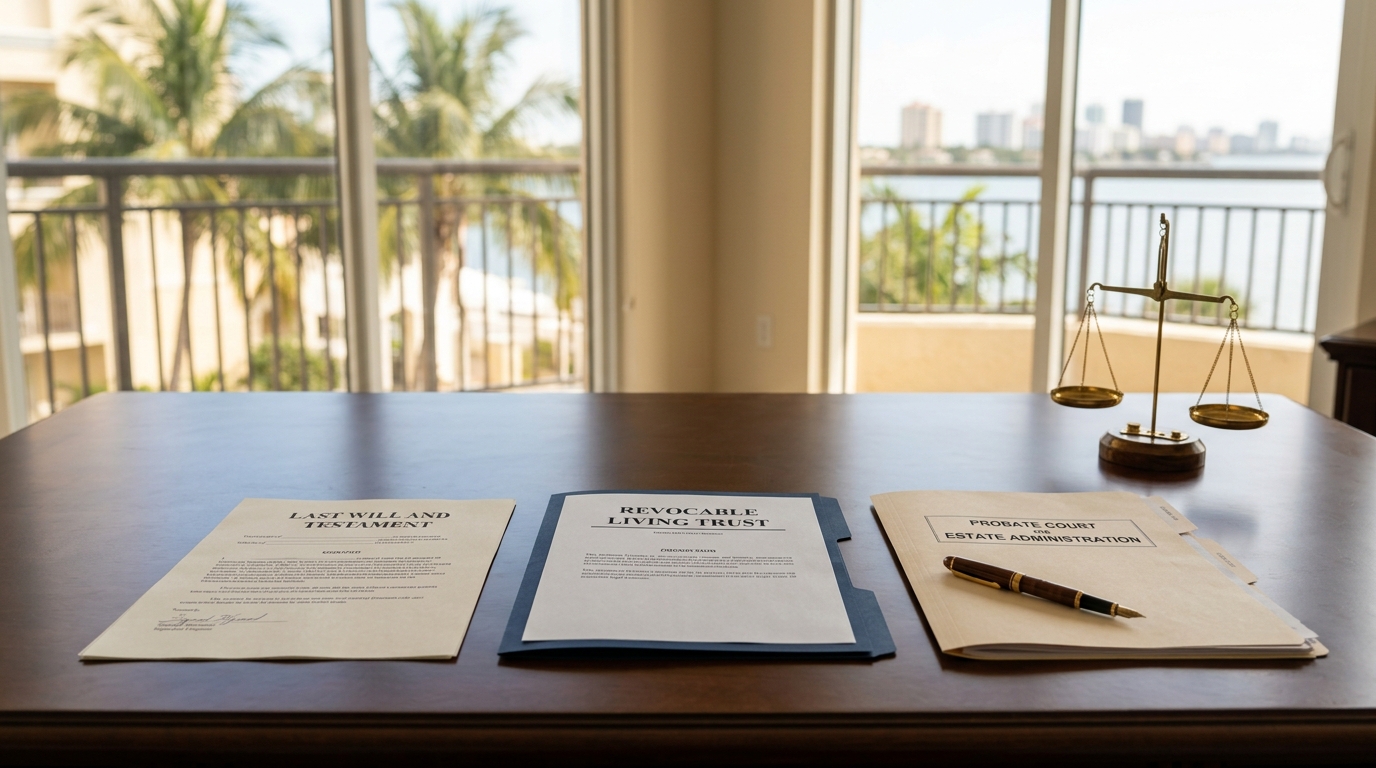
Can You Have Both a Will and a Trust?
Yes.
A trust and a will are not necessarily competing alternatives. Many estate plans use both.
For example, a person may establish a revocable living trust to hold and manage certain assets while also maintaining a will that addresses matters the trust does not cover, including the nomination of a guardian for minor children.
The way these documents work together depends on the individual’s circumstances and the structure of the estate plan.
Which Is Better: A Will or a Trust?
There is no single answer that applies to every family.
For some people, a will may address their primary estate planning needs. Others may benefit from a trust because they want a plan for managing assets during incapacity, controlling how beneficiaries receive property, or keeping certain assets outside the probate process.
The answer can depend on factors such as:
- The type and value of your assets
- Whether you own real estate
- Whether you have minor children
- Your family circumstances
- Whether you want a plan for possible incapacity
- How you want beneficiaries to receive their inheritance
- Whether avoiding probate is an important goal
- The complexity of your estate
An estate planning attorney can review these factors and explain which documents may be appropriate for your circumstances.
Frequently Asked Questions About Wills, Trusts, and Probate in Florida
Does a Will Avoid Probate in Florida?
- Generally, no. Assets that pass under a will are typically subject to the Florida probate process unless another legal arrangement causes those assets to pass outside probate.
Does a Trust Avoid Probate in Florida?
- A properly created and funded trust can generally allow assets held by the trust to pass to beneficiaries without going through probate. However, creating a trust alone does not automatically place all of a person’s assets into the trust.
Do I Need Both a Will and a Trust in Florida?
- Not necessarily. Some people may have estate planning needs that can be addressed primarily through a will, while others may benefit from a trust and additional estate planning documents. The appropriate combination depends on the person’s circumstances and goals.
Estate Planning in Coral Springs and South Florida
Wills, trusts, and probate are closely related, but they solve different legal problems. Understanding the terminology is a useful first step, but creating an effective estate plan requires looking at how the different documents and assets work together.
Call our Coral Springs probate and estate planning attorneys at 954-334-1520.