Finding a divorce attorney is rarely something people put on their calendar because they have nothing better to do. Usually, something has happened. A marriage has reached a point where staying together no longer seems workable, a spouse has already filed, or a conversation about property, money, or children has suddenly become a legal question.
If you are looking for a divorce attorney in Coral Springs, online reviews can be a useful place to begin. They can tell you something about how previous clients experienced an attorney’s communication, responsiveness, and representation. A strong reputation matters. So does looking more closely at the attorney’s experience, familiarity with Broward County family courts, and experience with cases resembling your own.
The goal is not to find a lawyer who sounds impressive in an advertisement. It is to find someone whose experience makes sense for the situation that brought you to the search in the first place.
How Do I Choose a Divorce Attorney in Coral Springs?
Start with your circumstances.
A divorce involving a house, retirement accounts, a business, substantial income, or disputed parenting arrangements can raise very different questions from an uncontested dissolution in which both spouses have already agreed on the major issues.
Sometimes the central problem is financial. Others it is the children. Sometimes the spouses agree about almost everything except one issue that has become impossible to resolve. And sometimes the person searching for an attorney is not even sure yet what the other spouse intends to do.
Those differences matter when choosing counsel
An attorney who regularly handles cases involving substantial marital assets may approach your situation differently from someone whose practice consists primarily of straightforward uncontested divorces. Experience with parenting disputes, alimony, business interests, or complex property division can matter for the same reason.
Florida law also imposes specific requirements on dissolution proceedings. At least one spouse, for example, must have resided in Florida for six months before the petition is filed.
That part is relatively straightforward. The questions that follow can be considerably more complicated.
“Choosing a divorce attorney is about more than finding someone who handles family law. You want someone who understands the particular problems your case may present and can explain your options clearly before important decisions are made.”
If your divorce is being handled in Broward County, your attorney will be working within the Seventeenth Judicial Circuit of Florida. Its Family Division handles dissolution of marriage along with matters involving parenting, support, alimony, paternity, and other family law proceedings.
There is a practical difference between knowing that a court exists and regularly practicing within its system.
An attorney familiar with Broward County family law will encounter the local procedures, filing requirements, mediation process, scheduling issues, and courtroom practices that shape how cases move forward. That experience does not guarantee a particular result, but it can make a meaningful difference in how a case is prepared and managed.
The Seventeenth Judicial Circuit also provides family mediation services in appropriate cases. Divorce does not always have to end with a trial, and knowing when negotiation or mediation is productive can be just as important as knowing how to litigate when an agreement cannot be reached.
What Should I Ask a Divorce Attorney?
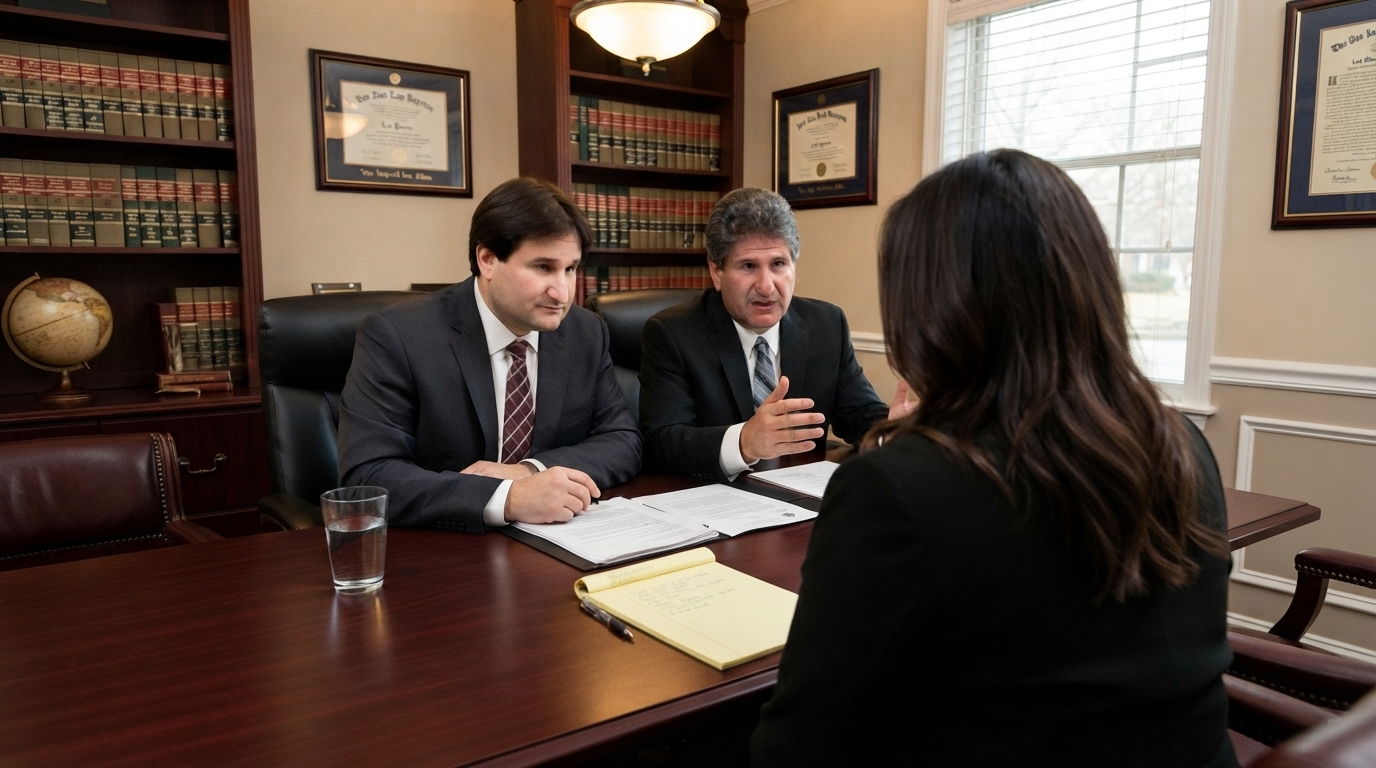
The first consultation is where the search becomes much more concrete.
You may already know the basic facts of your situation. You may also arrive with a much longer list of questions: What happens to the house? What about the children? Can my spouse take money from our accounts? How does alimony work? What happens if we cannot agree?
The Florida Bar recommends discussing an attorney’s experience, fees, communication practices, and the work the case is likely to require before hiring counsel.
That does not mean you need to arrive with a perfectly organized questionnaire.
Explain what has happened. Bring the information you have. Then see how the attorney approaches the problems in front of you.
Does the attorney identify issues you had not considered? Are complicated legal questions explained in language you can actually follow? Does the attorney tell you when something is uncertain rather than pretending every case has an easy answer?
It is also reasonable to ask who will handle the day-to-day work, how you will communicate with the firm, how billing works, and what additional costs you should expect.
A consultation should leave you with a better understanding of your situation than you had when you walked in.
How Much Does a Divorce Attorney Cost in Florida?
There is no universal price for a Florida divorce because there is no universal Florida divorce.
An uncontested matter may be handled for a fixed fee. A contested case involving extensive discovery, financial issues, parenting disputes, hearings, or trial preparation can require considerably more legal work and may involve hourly billing or another fee arrangement.
The Florida Bar notes that the total cost of a contested divorce can be difficult to predict in advance because the amount of work depends on how the case develops.
Florida also does not permit contingency fees for obtaining a divorce or for compensation based on alimony, support, or a property settlement.
The useful question, therefore, is not simply “How much does a divorce cost?”
Ask what the attorney’s fee covers, how the attorney bills, what expenses are separate, and what circumstances could cause the cost of the case to change.
A clear conversation about fees at the beginning is much better than discovering halfway through a case that you and your attorney had very different ideas about what the original estimate meant.
Should You Consider Online Reviews When Choosing a Divorce Attorney?
Yes.
Online reviews cannot tell you everything about a lawyer, but they can provide valuable insight into the experience of people who have actually worked with the firm.
Pay attention to recurring themes. Do clients describe the attorney as responsive? Have they mentioned clear explanations? Do they describe the firm as attentive during a difficult process? A consistent pattern across many reviews can tell you something that a professional biography cannot.
At the same time, reviews are most useful when considered alongside the attorney’s qualifications and experience.
A person who went through an uncontested divorce may have had a very different legal experience from someone involved in a contested dispute over property, parenting, or support. The point is not to discount either experience. It is to understand what the reviews are telling you.
Credentials deserve attention as well.
Florida offers board certification in Marital and Family Law. Among other requirements, certification requires at least five years of law practice, substantial involvement in marital and family law, and experience handling at least 25 contested marital and family law cases, including at least seven trials.
Board certification is one credential. Experience, reputation, communication, and the way an attorney actually handles a client’s case matter too.
What Should You Look for in a Divorce Attorney?
By the time you have narrowed your choices, the comparison becomes fairly straightforward:
What to consider
What to find out
Experience
Has the attorney handled cases resembling yours?
Reputation
What do previous clients consistently say about the firm?
Local practice
Does the attorney regularly work in Broward County?
Communication
Will you understand what is happening as the case develops?
Fees
Is the billing arrangement clear from the beginning?
Approach
Can the attorney negotiate when appropriate and litigate when necessary?
Credentials
Can the attorney’s qualifications be independently verified?
You may find several attorneys who look good on paper. That is a good problem to have.
At that point, the decision often comes down to a combination of experience, reputation, communication, and your own sense of whether you trust the attorney to handle what lies ahead.
When Should You Hire a Divorce Attorney?
People sometimes wait because they are hoping the situation will settle down.
Sometimes it does.
Other times, important decisions are being made during that period about money, property, living arrangements, or children. An informal agreement between spouses can also become much more consequential once one of the parties decides to file.
If you are seriously considering divorce, have been served with papers, are negotiating an agreement, or have been asked to sign something involving your marriage or property, obtaining legal advice before taking the next step can be valuable.
It can also help before the situation becomes openly adversarial.
And hiring a divorce attorney does not mean that your case is destined for a courtroom. Negotiation and mediation can resolve many disputes. Litigation remains important when the parties cannot reach a fair or workable agreement.
The important thing is having counsel who understands the difference.
“A divorce can change much more than a marital status. It can affect property, taxes, estate plans, and the way assets are ultimately passed to a family. The right legal advice should take that larger picture into account.”
Stuart Reinfeld, Reinfeld & Cabrera P.A. Draft quote for attorney approval.
Divorce Attorneys in Coral Springs and Broward County
Perhaps you have already started searching for a divorce attorney and found yourself with a long list of names.
At some point, the search needs to become more personal.
Who has handled cases like yours? Does he have a reputation you can verify? Who practices regularly in the court where your case will be heard? Who takes the time to explain the situation rather than rushing through the consultation?
And perhaps most importantly, who do you feel comfortable trusting with information about your marriage, finances, children, and future?
Reinfeld & Cabrera P.A. represents clients in Coral Springs and throughout Broward County in divorce and other family law matters. The firm brings local experience to cases involving the issues that can make divorce legally and personally complicated.
If you are considering divorce or already facing a family law dispute, contact Reinfeld & Cabrera to discuss your circumstances and the legal options available to you.
Frequently Asked Questions
How do I choose a divorce attorney in Coral Springs?
Look at experience, reputation, local practice, communication, fees, and the attorney’s experience with cases similar to yours. A consultation is often the best way to determine whether the attorney is a good fit for your circumstances.
Does my divorce attorney need to practice in Broward County?
There is no general requirement that your attorney maintain an office in Broward County. However, familiarity with the Seventeenth Judicial Circuit and its Family Division can be useful when your case is being handled there.
How much does a divorce attorney cost in Florida?
The cost depends on the circumstances of the divorce and the attorney’s fee arrangement. Uncontested matters may involve a fixed fee, while contested cases can require substantially more legal work. Discuss fees and anticipated costs before hiring an attorney.
Should I hire a divorce attorney before filing?
It can be useful to obtain legal advice before filing, particularly when property, children, support, business interests, or other significant issues are involved. Early advice can help you understand your legal position before important decisions are made.
Are online reviews useful when choosing a divorce attorney?
Yes. Reviews can provide useful information about previous clients’ experiences with a firm. They are most helpful when considered alongside the attorney’s experience, qualifications, local practice, and the specific circumstances of your case.
Talk With a Coral Springs Divorce Attorney
A divorce attorney is going to become involved in some of the most personal and consequential decisions you have made in years. The choice deserves more thought than picking the first name that appears in a search result.
Look at the firm’s reputation. Look at its experience. Read what former clients have to say. Then sit down with the attorney and see how they approach the problems you are actually facing.
Commercial litigation encompasses legal disputes arising from business operations, corporate governance, and commercial transactions. In Florida, when a breach of contract or business dispute cannot be resolved through pre-suit negotiation, parties litigate through the civil court system or pursue alternative dispute resolution (ADR) under Florida Statutes and 17th Judicial Circuit local rules.
Running a business in Coral Springs and throughout South Florida involves the constant creation and execution of agreements, vendor partnerships, and financial transactions. When a business partner breaches an operating agreement, a key supplier fails to deliver, or a corporate client withholds payment on a substantial invoice, the operational and financial impact can threaten the viability of your enterprise.
For business owners facing a serious dispute, understanding how commercial litigation functions within the 17th Judicial Circuit (Broward County) is critical to protecting corporate assets and mitigating damages.
Many business owners assume commercial litigation is reserved exclusively for Fortune 500 corporations. In practice, commercial litigation covers any civil dispute arising directly from business and commercial activities.
In Broward County courts, commercial litigation typically involves several distinct categories of legal action:
Breach of Written and Oral Contracts: When a party fails to perform any material term of a commercial lease, vendor agreement, service contract, or promissory note without a lawful legal excuse.
Corporate and Partnership Governance Disputes: Internal deadlocks between shareholders, members of a Limited Liability Company (LLC), or partners regarding management control, profit distribution, breach of fiduciary duty, or involuntary dissolution.
Business Torts and Unfair Competition: Claims involving tortious interference with contractual relationships, fraudulent misrepresentation, civil theft, or violations of non-compete and trade secret agreements.
Commercial Debt Recovery and Foreclosure: Pursuing high-value unpaid business accounts receivable, enforcing security interests under the Uniform Commercial Code (UCC), or foreclosing on commercial mortgages.
2. The Statutory Framework: Governing Florida Business Disputes
Commercial litigation in Florida is governed by a combination of statutory frameworks, civil procedure rules, and common law precedent. Two critical statutory pillars govern most commercial actions in the state:
Florida Statutes Chapter 95 (Statutes of Limitations)
Timing is everything in commercial litigation. Waiting too long to address a breach can permanently bar your claim. Under Florida law:
Written Contracts: Actions for breach of a written contract generally carry a 5-year statute of limitations (F.S. 95.11(2)(b)).
Oral Agreements: Actions based on unwritten or oral contracts carry a shortened 4-year statute of limitations (F.S. 95.11(3)(k)).
Open Accounts: Actions to recover on an open account or unstated business debt also carry a 4-year limit (F.S. 95.11(3)(f)).
Florida Statutes Chapter 607 and Chapter 605
For corporate and LLC disputes in Coral Springs, litigation frequently hinges on the interpretation of Florida’s Business Corporation Act (Chapter 607) and Florida Revised Limited Liability Company Act (Chapter 605), which dictate voting rights, derivative actions, and member dissociation standards.
3. The Lifecycle of a Commercial Lawsuit in Broward County
When a business dispute escalates to formal litigation in the 17th Judicial Circuit, the case generally moves through several distinct procedural phases:
Step One: Pre-Suit Demand and Strategic Positioning
Before a complaint is filed, experienced counsel will typically issue a formal commercial demand letter. This document outlines the legal basis of the breach, details damages, and sets a strict deadline for cure or settlement. Under many Florida contracts, sending a proper demand letter is a statutory or contractual prerequisite to recovering attorney’s fees.
Phase Two: Pleadings and Motion Practice
If the dispute is not resolved pre-suit, the plaintiff files a formal Complaint in County or Circuit Civil court, depending on the amount in controversy. The defendant has 20 calendar days to respond, often filing motions to dismiss or asserting affirmative defenses (such as waiver, estoppel, or failure of consideration).
Part Three: Discovery and Expert Analysis
Commercial litigation is document-heavy. During discovery, both sides exchange emails, financial statements, ledgers, and corporate records through Requests for Production, Interrogatories, and Depositions. In complex cases, forensic accountants or industry experts are retained to calculate lost profits and business valuation.
Phase Four: Court-Mandated Mediation
Before a judge will permit a commercial case to proceed to trial in Broward County, the court will universally order the parties to attend mediation. Mediation is a confidential settlement conference overseen by a certified mediator. A high percentage of commercial disputes successfully resolve at this juncture, saving companies substantial trial expenses.
Phase Five: Trial and Judgment Enforcement
If mediation fails, the case proceeds to a bench or jury trial. Once a Final Judgment is secured, the prevailing party utilizes post-judgment discovery, writs of garnishment, or execution sales to collect the awarded funds.
4. Why Pro Se Representation is Prohibited for Florida Businesses
A common and costly mistake made by small business owners is attempting to represent their LLC or corporation pro se (without an attorney) in court.
Under established Florida law and court rules, a corporation or LLC is a distinct legal entity whose owner, member, or officer cannot represent it in court unless that individual is a licensed attorney.. Any pleading or court appearance filed by a non-attorney on behalf of an entity is subject to immediate striking and dismissal, leaving the business entirely unprotected.
5. Shareholder and Partnership Deadlock: When Internal Disputes Threaten Corporate Survival
While breach of contract actions make up a large portion of commercial litigation, they are not the only problem. Some of the most complex and emotionally charged disputes happen internally between business partners, co-founders, or corporate shareholders.
In Florida, when two 50/50 owners disagree fundamentally on corporate direction, financial management, or operational strategy, a corporate deadlock occurs. Left unresolved, deadlock can paralyze the business, drain operating capital, and expose the company to severe operational risks.
Judicial Dissolution and Involuntary Buyouts under Florida Law
When governance breaks down and dispute-resolution clauses fail, owners have to resort to court intervention under Statutes 607 (for Corporations). Or Chapter 605 (for LLCs).
Depending on the corporate structure and governing documents, litigation remedies can include:
Judicial Dissolution: Petitioning the 17th Judicial Circuit to order the formal winding down and liquidation of the company’s assets.
Involuntary Buyout Rights: Forcing a statutory buyout where one faction purchases the shares of the departing member at a court-determined fair value.
Claims for Breach of Fiduciary Duty: Pursuing damages against a managing partner who engaged in self-dealing or excluded co-owners from corporate records.
Having professionally drafted operating agreements with pre-established buyout formulas or tie-breaking mechanisms is the best defense against crippling partnership litigation. However, when those safeguards are missing, aggressive legal strategy in Broward County courts becomes essential to protect your financial investment.
Frequently Asked Questions
What is the difference between a breach of contract and a business tort?
A breach of contract involves the failure to perform a specific promise outlined in a binding agreement. Courts generally limit damages to economic losses contemplated by the contract.. A business tort (such as fraudulent misrepresentation) arises from a breach of a legal duty independent of the contract. This may allow for the recovery of punitive damages.
Can my business recover attorney’s fees if we win a contract lawsuit?
In Florida, the “American Rule” dictates that each party pays its own attorney’s fees unless a fee-shifting provision is explicitly written into the contract or authorized by a specific statute. Ensuring your business agreements contain robust attorney’s fees clauses is essential.
How are commercial disputes handled if my contract has an arbitration clause?
If your agreement includes a mandatory arbitration clause, the dispute will bypass the public court system entirely. Instead, it is submitted to an independent arbitration provider (such as the American Arbitration Association) where an appointed arbitrator hears evidence and issues a binding decision.
Schedule a Consultation with Our Coral Springs Business Attorneys
Protecting your enterprise from breach of contract, partnership deadlock, or commercial disputes requires decisive legal strategy.
Yes, a landlord or tenant can handle some Florida eviction cases without an attorney. Florida law does not require a lawyer in every eviction proceeding. But an eviction still involves specific notice requirements, court filings, service of process, deadlines, and rules governing defenses and possession. A mistake at any of those stages can affect the outcome of the case.
For landlords, the process generally begins with the legally required notice and can proceed to a county court action if the tenant does not leave. For tenants, receiving an eviction lawsuit creates deadlines for responding and, in some cases, requirements for paying disputed rent into the court registry.
The issue matters in Broward County, where there were 16,666 eviction filings in 2025 and 7,955 more during the first six months of 2026.
So when is an eviction simple enough to handle on your own, and when does the situation call for legal assistance? The answer usually depends on the reason for the eviction, the lease, the notice, and whether the other side contests the case.
Can You Handle an Eviction Without an Attorney?
Yes.
Florida does not require every landlord or tenant to hire an attorney for an eviction. Broward County provides self service information and forms for people handling certain eviction matters themselves. The Clerk also explains that its deputy clerks can provide procedural information, but cannot prepare legal forms or give legal advice.
The complexity of the case matters.
A straightforward dispute involving unpaid rent may be different from a case involving:
A disputed lease violation.
Questions about whether the required notice was valid.
A commercial lease.
A disagreement about the amount of rent actually owed.
A claim that the landlord failed to maintain the property.
A retaliation defense.
A security deposit dispute.
A lease renewal or termination dispute.
A claim for damages in addition to possession.
An eviction can also become more complicated when the parties disagree about basic facts.
That is where legal advice may become useful.
Why Does the Eviction Process Matter?
Florida provides a summary procedure for eviction cases. The purpose is to provide a more direct procedure for resolving possession disputes.
“Summary” does not mean informal.
Florida law still requires the landlord to establish the legal basis for possession and follow the applicable requirements. The Broward County Clerk describes the basic local process as:
Issue the required notice.
Complete and file the required forms.
Properly serve the tenant.
Obtain a judgment and, when appropriate, a writ of possession.
Each stage can raise separate issues.
A defective notice can create a problem before the case even reaches a judge.
A service problem can affect whether the case can proceed.
A tenant who fails to respond properly can lose important defenses.
A landlord who tries to bypass the court process can create a different legal problem altogether.
Eviction law has very little patience for the idea that everyone can simply improvise.
What Notice Does a Landlord Have to Give?
The required notice depends on the reason for ending the tenancy.
For example, Florida law provides specific procedures for nonpayment of rent and for certain lease violations. The notice requirements are contained in section 83.56 of the Florida Statutes and are not simply optional language that the parties can rewrite in a lease.
For nonpayment cases, the applicable notice period and calculation depend on the tenancy and the circumstances. Florida’s statutory framework also specifies how certain periods are calculated.
For other violations, the landlord may need to give the tenant an opportunity to correct the problem when the law provides a cure period.
This distinction matters because an eviction notice is not interchangeable with every other type of demand letter.
The reason for the termination affects what the landlord may need to do next.
A notice can become a legal issue in itself
Consider a tenant who receives a notice claiming that rent was not paid.
The tenant might disagree about:
Whether the rent was actually due.
How much was owed.
Whether payment was made.
Whether the notice was properly served.
Whether the notice contained the required information.
Whether the landlord complied with the applicable statutory requirements.
Those questions can affect what happens after the notice.
The notice is therefore more than a warning. It can become part of the legal record.
What Happens After the Notice?
If the tenant does not leave and the landlord has the legal basis to seek possession, the landlord can file an action for possession.
Florida Statute §83.59 governs actions to recover possession. The landlord must proceed through the court rather than simply taking possession personally.
Broward County’s Clerk describes the next stages as filing the required documents and serving the tenant. The tenant then has to follow the instructions in the summons and respond within the applicable time.
This is one reason an eviction should not be treated like an ordinary argument between a landlord and tenant.
Once a lawsuit has been filed, deadlines and procedural rules become part of the dispute.
What Can a Tenant Do After Receiving an Eviction Lawsuit?
A tenant is not automatically removed simply because a landlord files an eviction case.
Florida law permits tenants to raise certain legal and equitable defenses. Depending on the circumstances, those defenses can involve alleged landlord noncompliance, defective notices, retaliation, payment disputes, or other issues recognized by law.
But there is an important procedural requirement that tenants should understand.
When a tenant raises a defense other than payment in a nonpayment case, section 83.60 generally requires the tenant to pay the accrued rent into the court registry or timely file a motion asking the court to determine the amount that must be deposited.
Failure to comply can result in waiver of defenses other than payment and can allow the landlord to obtain an immediate default judgment for possession.
That is not a minor technicality.
It can change the course of the case.
A Broward County case shows why this matters
In Muscella v. Johnson, a 2024 Fourth District Court of Appeal decision arising from Broward County, the tenants did not pay the rent into the court registry or timely move to determine the amount as required by section 83.60(2).
The Fourth DCA reversed the county court and explained that, under the circumstances, the landlord was entitled to the writ of possession.
The court stated that when the statutory requirement is not met, the landlord can be entitled to possession without another hearing.
That case illustrates the practical importance of understanding procedural requirements.
But the Same Rules Can Protect a Tenant Who Responds Properly
A different Broward County case demonstrates the other side.
In Kaufman v. High Seas, LLC, the landlord sought possession for alleged nonpayment of rent. The tenant disputed the landlord’s allegations, raised defenses, and timely filed a motion asking the court to determine the amount of rent that should be deposited into the court registry.
The trial court entered an eviction judgment without resolving that motion.
The Fourth DCA reversed and remanded, holding that the trial court needed to address the pending motion before entering the eviction judgment.
The case is useful because it shows why neither side should assume that an eviction case is automatic.
The landlord had procedural requirements.
The tenant had procedural requirements.
And the court had to apply the statute to what actually happened in the case.
Landlord vs. Tenant: What Is at Stake?
The obligations are different depending on which side of the dispute you are on.
Issue
Landlord
Tenant
Before filing
Must establish the basis for termination and provide the required notice
Should understand what the notice alleges and what deadline applies
Lease
Must establish the contractual or statutory basis for possession
May dispute the interpretation or enforcement of the lease
Court filing
Must file the appropriate action and supporting documents
Must respond according to the summons and applicable rules
Rent dispute
May seek possession and, where legally available, damages
May have court registry requirements when raising certain defenses
Defenses
Must respond to defenses raised by the tenant
May raise legal or equitable defenses recognized by Florida law
Possession
Cannot simply bypass the court process
Has statutory protections against certain forms of self help
After judgment
May obtain a writ of possession through the court
Must comply with a valid writ while retaining whatever legal remedies remain available
The table is not a substitute for the statute or legal advice. It simply illustrates why an eviction case involves obligations on both sides.
Can a Landlord Change the Locks Instead?
No.
For residential properties covered by Florida’s landlord tenant law, section 83.67 prohibits a landlord from preventing a tenant from obtaining reasonable access to the dwelling, including by changing the locks or using a bootlock.
The statute also prohibits a landlord from interrupting utility services as a way of dealing with the tenancy.
That means a landlord generally cannot avoid the eviction process by deciding to remove the tenant personally.
The lawful process is different.
After a judgment in the landlord’s favor, Florida law provides for a writ of possession issued to the sheriff. The sheriff then executes the writ after the statutory notice period. Section 83.62 currently provides for 24 hours’ notice posted on the premises before the sheriff puts the landlord in possession.
In other words:
A court judgment and writ of possession are not the same thing as a landlord changing the locks on their own.
That distinction matters.
What If the Dispute Is About More Than Rent?
Not every landlord tenant dispute is really a simple nonpayment eviction.
The underlying disagreement might involve:
A commercial lease.
An assignment or sublease.
A disputed renewal option.
Property damage.
A security deposit.
Alleged nuisance.
A claim of constructive eviction.
Abandonment of personal property.
Lease provisions concerning rent increases.
Claims for damages in addition to possession.
Some of these matters may arise alongside an eviction. Others may require separate legal analysis.
A recent Fourth DCA case illustrates the point.
In Destiny Fulfilled Outreach Ministries v. Investments SWK, the dispute involved a commercial tenancy and disagreement over the nature and duration of the parties’ lease arrangement. The Fourth DCA affirmed the eviction judgment after the lower court determined that the parties had not established the claimed lease term.
The lesson is not that every commercial eviction looks like that case.
It is that the right to possession can depend on questions about the lease itself.
What About Attorney’s Fees?
Attorney’s fees can also become part of an eviction dispute when a statute, lease, or other applicable legal authority permits an award.
A 2025 Fourth DCA case arising from Broward County illustrates that even a fee award following an eviction judgment can create a separate appellate issue.
In Gordon v. Pinoargotty, the Fourth DCA reversed an attorney’s fee award because the trial court had not made the required findings concerning reasonable hours and the reasonable hourly rate. The underlying eviction judgment was not what the appeal addressed.
This is another reason to avoid thinking of an eviction as simply:
notice → tenant leaves → finished.
Depending on the case, possession, rent, damages, attorney’s fees, and other issues can all require separate attention.
When Does an Eviction Become More Complicated?
There is no single point at which every eviction suddenly requires an attorney.
Some situations, however, deserve closer attention.
Legal advice may be particularly useful when:
The tenant disputes the facts.
The landlord is unsure which notice applies.
The tenant claims the notice was defective.
There are questions about rent payments or the amount owed.
The lease contains complicated provisions.
The property is commercial.
There are counterclaims or substantial damages.
A tenant alleges retaliation.
The case involves habitability or property condition issues.
The landlord and tenant disagree about whether the lease has ended.
A prior eviction case or judgment is involved.
A party has received court papers and is unsure how to respond.
The more issues that exist beyond straightforward possession, the less useful a generic eviction form becomes.
What About Coral Springs and Broward County?
For someone in Coral Springs, an eviction case does not take place in a legal vacuum.
Coral Springs is part of Broward County and the Seventeenth Judicial Circuit, so local filing and court procedures matter in addition to the statewide landlord tenant statutes.
The Broward County Clerk’s current eviction information identifies the required sequence of notice, filing, service, judgment, and writ of possession. It also directs filers to the applicable Seventeenth Judicial Circuit administrative order for the location where county civil actions are filed.
Broward’s numbers show why this is not an obscure area of law.
The county recorded:
15,588 eviction filings in 2019
17,657 in 2022
18,670 in 2023
18,335 in 2024
16,666 in 2025
The 2023 figure was the highest in that series. The 2025 total represented a decline from the prior year, but still amounted to more than 16,000 filings.
During the first six months of 2026, Broward recorded 7,955 filings, including 1,562 in January and 1,426 in June.
There is no reliable public source in the data reviewed here that isolates eviction filings specifically for Coral Springs. It is therefore more accurate to use Broward County as the local statistical measure rather than assigning a countywide number to Coral Springs.
What If You Cannot Afford an Attorney?
A private attorney is not the only possible source of help.
The Legal Aid Service of Broward County provides civil legal assistance to eligible low income Broward residents and specifically identifies landlord tenant matters and eviction assistance among its housing services. Eligibility requirements apply.
Broward County also provides self service information for people handling certain eviction matters without counsel.
That does not mean every case is appropriate for self representation.
It does mean that someone facing an eviction should not assume the only choices are hiring a private lawyer immediately or doing nothing.
What Should You Do If You Receive an Eviction Notice?
Start by determining exactly what you received.
An eviction notice is different from an eviction lawsuit.
If you have received only a notice from the landlord, review the reason stated and the deadline carefully.
If you have received a court summons or complaint, the situation is more urgent because the court’s procedural deadlines now matter.
Keep copies of:
The lease.
The eviction notice.
Proof of rent payments.
Communications with the landlord.
Repair requests.
Photographs or videos of relevant property conditions.
Court documents.
Receipts and other supporting records.
Do not assume that an unanswered court document will simply disappear.
It will not.
What Should a Landlord Do Before Filing?
A landlord should similarly organize the underlying record before beginning an eviction case.
That can include:
The signed lease.
Payment records.
The applicable notice.
Proof of delivery or service.
Communications with the tenant.
Records concerning alleged lease violations.
Property inspection records.
Photographs where relevant.
Documentation supporting any claimed damages.
The landlord should also make sure that the legal basis for possession matches the notice and the facts.
An eviction is not improved by filing quickly with the wrong theory.
The Bigger Point: Eviction Is a Process, Not a Threat
The old idea that an eviction is simply a landlord versus tenant argument misses what actually happens in court.
Florida law creates a process.
The landlord has to establish a basis for possession.
The tenant may have defenses.
Both sides have procedural obligations.
The court applies the governing law.
And if the landlord ultimately obtains judgment, possession is transferred through the statutory process rather than by private force.
The recent Broward cases make that clear from opposite directions.
In Muscella, the tenants’ failure to comply with the rent registry requirement had immediate consequences.
In Kaufman, the tenant’s timely motion to determine rent meant that the trial court could not simply enter the eviction judgment without addressing the pending issue.
Neither case establishes that every landlord needs an attorney or that every tenant will successfully defend an eviction.
They demonstrate something more practical:
The details matter.
Frequently Asked Questions
Can I evict a tenant without an attorney in Florida?
Mostly. Florida does not require every landlord to hire an attorney for an eviction. However, the landlord must still comply with the applicable statutes, court rules, notice requirements, filing requirements, and service requirements.
Could a tenant fight an eviction without an attorney?
Yes. Tenants can represent themselves and may raise defenses permitted by Florida law. But some defenses trigger specific procedural requirements, including requirements concerning rent paid into the court registry.
Can my landlord change the locks instead of evicting me?
For residential tenancies governed by Florida’s landlord tenant law, a landlord generally may not prevent a tenant from accessing the dwelling by changing the locks or using similar devices. Florida law also prohibits certain utility shutoffs used to interfere with a tenancy.
How long does an eviction take in Florida?
There is no single answer. Timing depends on the type of case, the notice, whether the tenant responds, whether defenses are raised, court scheduling, service, and other circumstances. Florida uses a summary procedure for eviction cases, but summary does not mean automatic.
What happens after a landlord wins an eviction?
After a judgment for the landlord, the clerk issues a writ of possession to the sheriff. Florida law provides for 24 hours’ notice to be posted before the sheriff puts the landlord in possession.
Can a tenant raise defenses to an eviction?
Yes. Florida law permits certain legal and equitable defenses. In nonpayment cases, however, a tenant raising defenses other than payment generally must comply with the rent registry requirements in section 83.60.
Does an eviction case always involve unpaid rent?
No. Eviction disputes can involve alleged lease violations, expiration or termination of a tenancy, possession disputes, and other issues. Commercial cases can also involve questions about lease terms and renewal rights.
Where are eviction cases handled in Broward County?
Eviction matters are handled through the county civil system within the Seventeenth Judicial Circuit. The Broward County Clerk provides current filing information and directs filers to the applicable administrative order concerning filing locations.
Is there legal help for tenants in Broward County who cannot afford a lawyer?
Legal Aid Service of Broward County provides civil legal services to eligible low income residents and offers housing and eviction assistance subject to its eligibility requirements.
Eviction and Landlord Tenant Disputes in Coral Springs
An eviction can look simple from the outside.
A landlord wants the property back. A tenant wants to remain there. A notice is delivered. A lawsuit may follow.
The actual legal process can be more complicated.
For landlords and tenants in Coral Springs, Broward County, and throughout South Florida, understanding the applicable Florida law is the first step. The next question is whether the particular dispute is straightforward enough to handle without legal assistance or whether the consequences of a procedural mistake make professional advice worthwhile.
Reinfeld & Cabrera represents landlords and tenants in eviction and landlord tenant disputes, including residential and commercial matters, lease disputes, security deposit claims, wrongful or constructive eviction claims, and other related issues.
Filing for bankruptcy in the Fort Lauderdale Division can trigger an automatic stay. This generally stops foreclosure proceedings, wage garnishments, collection lawsuits, and other efforts to collect qualifying debts. The effect depends on the type of bankruptcy filed and the debtor’s circumstances. Chapter 7 can discharge certain unsecured debts relatively quickly. On the othersidem, Chapter 13 allows eligible debtors to repay some obligations through a court supervised plan and may provide a way to address mortgage arrears.
Debt problems can develop for very different reasons. A sudden medical expense may leave someone relying on credit cards. On the flipside a decline in business income can make previously manageable obligations difficult to maintain. For a homeowner facing foreclosure, receiving a notice from a lender can turn a financial problem into a legal concern.
For residents of Coral Springs and elsewhere in Broward County, understanding how bankruptcy affects creditor collection and secured debts is therefore important before deciding whether to file. Bankruptcy is not automatically appropriate for every financial situation, and filing can have significant legal and financial consequences. It is a federal legal process that can, however, provide qualifying debtors with protection from collection activity. It is a mechanism for resolving debts under the Bankruptcy Code.
The process is handled through the U.S. Bankruptcy Court for the Southern District of Florida. Understanding how the automatic stay works, which debts may be discharged, and how Chapter 7 differs from Chapter 13 can make the legal consequences of filing easier to evaluate.
1. The Immediate Relief: The Automatic Stay
The very day you file a bankruptcy petition with the court, a legal order called the automatic stay kicks in.
Think of it as a legal force field around you and your finances. The moment it goes into effect, the law legally bars creditors from touching you:
Foreclosure stops dead in its tracks, halting scheduled auctions on your home.
Wage garnishments and bank levies must stop immediately, letting you keep your paycheck.
Collection calls, harassing letters, and lawsuits have to cease.
For anyone in Florida staring down a sheriff sale or a creditor lawsuit, that automatic stay provides instant breathing room. This is crucial so you can figure out your next move without panic.
2. Chapter 7: The Clean Slate
Chapter 7 is what most people picture when they think of bankruptcy. The main aspect of Chapter 7 is a straightforward liquidation process designed for individuals and families whose income simply does not provide enough room to dig out from under their debts.
Passing the Means Test
To qualify for Chapter 7 in Florida, your household income is measured against the state median income for a family of your size. If you fall below that median, or can show through standard calculations that your disposable income is tapped out, you qualify.
What Happens to What You Own?
A common fear is that filing for Chapter 7 means losing everything you have worked for. But Florida has some of the strongest debtor protection laws in the country:
Your Home: Under Florida constitutional homestead exemption, your primary residence is overwhelmingly protected from general unsecured creditors.
Your Belongings: State law exempts essential personal property, vehicle equity limits, and certain wages.
For many clients who qualify, Chapter 7 successfully wipes the slate clean on unsecured debts, like credit cards, medical bills, and personal loans, usually within four to six months.
3. Chapter 13: Reorganizing and Protecting Your Assets
Sometimes, Chapter 7 is not the right fit. If you have a steady income, own non-exempt property you cannot afford to lose, or are behind on your mortgage payments, Chapter 13 offers a structured way forward.
Instead of wiping everything out quickly, Chapter 13 lets you put together a court-approved repayment plan lasting three to five years. You make one manageable monthly payment to a trustee, who handles distribution to your creditors.
Saving Your Home from Foreclosure: If you have fallen behind on mortgage payments, Chapter 13 lets you roll those past-due arrears into your monthly plan over time, allowing you to catch up while keeping your home.
Keeping Control: It gives you breathing room to deal with priority debts, like certain taxes or support obligations, without having your assets sold off.
4. Critical Warnings: Traps to Avoid Before Filing
When financial pressure mounts, people often make impulsive moves that inadvertently trigger severe legal consequences. Before filing for bankruptcy in Broward County, keep these major statutory traps in mind:
The 1215 Day Homestead Rule: Federal bankruptcy law imposes a strict rule on Florida homestead exemptions. If you purchased your home or moved substantial equity into it less than 1,215 days (roughly three years and four months) before filing, your homestead protection may be capped under federal statute, regardless of Florida constitutional rules.
Do Not Transfer Assets to Family: Giving a car to a relative or putting a sibling name on a bank account right before filing is viewed by trustees as a fraudulent transfer. Courts can claw those assets back and even deny your discharge entirely.
Avoid Sudden Credit Card Ramping: Running up luxury charges or cash advances on credit cards just months before filing can lead creditors to file adversary proceedings claiming fraud, making those specific debts non dischargeable.
5. Real World Application: Stopping a Broward County Foreclosure
To see how these laws function in practice, consider a typical scenario handled by our firm.
A homeowner in Coral Springs fell twelve months behind on their mortgage after a sudden business interruption. The bank scheduled a foreclosure auction date through the 17th Judicial Circuit Court. By filing an emergency Chapter 13 petition on the eve of the sale, the automatic stay stopped the auction instantly.
Instead of losing their family home, the debtor utilized a three year Chapter 13 repayment plan to cure the missed mortgage arrears incrementally while resuming regular monthly payments. The plan saved the home and managed unsecured credit card debt. This secured long term financial stability for the family without displacement.
6. Attorney Perspective: Why Local Experience Matters
“Clients often walk into our Coral Springs office feeling like bankruptcy is a personal failure. Our job is to reframe it. It is a federally protected economic tool. When aggressive creditors or foreclosure dates are moving fast in the Fort Lauderdale division, you need a strategy that respects local court nuances and strict filing schedules so you can protect what matters most.”
7. How the Process Works in the Fort Lauderdale Division
For residents across Coral Springs, Tamarac, and Pompano Beach, the U.S. Bankruptcy Court handles your case. Bankruptcy Court for the Southern District of Florida Fort Lauderdale Division downtown.
While the court process is formal, having an experienced guide makes it manageable:
The Meeting of Creditors: About a month after filing, you and your attorney attend a short meeting with the bankruptcy trustee. In the Fort Lauderdale division, these are often handled smoothly via video or phone. We prepare you thoroughly so there are no surprises.
Guidance Every Step of the Way: From mandatory credit counseling to filing your paperwork correctly the first time, our goal is to keep you out of procedural trouble and moving toward your fresh start.
Frequently Asked Questions
Will I lose my house or car if I file?
In most cases, no. Florida homestead exemption protects your primary home, and Chapter 13 is explicitly designed to help you catch up on missed mortgage payments. For cars, specific vehicle exemptions or straightforward reaffirmation agreements often allow you to keep driving.
What debts do not go away in bankruptcy?
While credit cards, medical bills, and personal loans are wiped out, certain obligations survive. These include most student loans, recent tax debts, child support, alimony, and debts resulting from fraud.
Can a business file for bankruptcy?
Yes. Local businesses, LLCs, and corporations can file for Chapter 7 to wind down or Chapter 11 to restructure. Keep in mind that a business entity does not receive a personal debt discharge the way an individual does, but it provides an orderly way to handle corporate liabilities.
What is the 341 meeting of creditors in the Fort Lauderdale division?
The 341 meeting of creditors is a mandatory proceeding where the bankruptcy trustee questions you under oath about your financial affairs, assets, and debts. For residents of Coral Springs and Broward County, the Fort Lauderdale division typically conducts these hearings via video or phone, and your attorney prepares you thoroughly so you know exactly what to expect.
Can I file for bankruptcy in Florida if I just moved here from another state?
You can file in Florida, but federal law requires you to have lived in the state for the greater part of the 180 days preceding the filing—specifically, the 730 days (two years) prior—before you can use Florida specific property exemptions. If you moved within the last two years, federal rules dictate that you may have to use the exemption laws of your previous home state.
Carrying heavy financial stress does not mean you have to figure it out alone. Whether you are looking at Chapter 7 relief or trying to save your home through Chapter 13 in Coral Springs, Broward County, or South Florida, Alan Reinfeld and Stuart Reinfeld are here to help you sort through your options honestly and without judgment. Contact our office today to take back control of your future.
Most people think of an estate plan as a set of documents: a will, perhaps a trust, powers of attorney, and other papers kept somewhere safe.
But there is another part of estate planning that matters just as much: how each asset is actually owned and what happens to it when you die.
A bank account can pass directly to a named beneficiary. A retirement account can do the same. Property owned with rights of survivorship may pass to the surviving owner. Assets properly transferred to a revocable trust can pass through the trust rather than through probate.
Other property may still become part of the probate estate.
So avoiding probate is not usually about finding one document or legal trick that makes the entire estate disappear from court supervision. It is about deciding, asset by asset, how ownership should change when you die.
Probate Is Not One Destination for Everything You Own
Imagine someone dies owning a house, a checking account, a retirement account, an investment account, and a life insurance policy.
It would be easy to think of all of these as “the estate” and assume they follow the same process.
They do not.
The legal mechanism attached to each asset can determine what happens next.
Asset or arrangement
Possible transfer mechanism
May avoid probate?
Main consideration
Life insurance with beneficiary
Beneficiary designation
Yes
Keep the designation current
Retirement account
Beneficiary designation
Yes
The account designation matters
Bank account with POD designation
Pay on death designation
Yes
Florida law governs the transfer
Securities registered in beneficiary form
Transfer on death registration
Yes
Registration must comply with applicable requirements
Joint property with survivorship
Survivorship rights
Yes
The form of ownership matters
Properly funded revocable trust
Trust administration
Yes
Assets must actually be transferred to the trust
Solely owned property without another mechanism
Probate administration
Generally no
Probate may be required
Florida homestead
Special rules
Depends
Family and ownership circumstances matter
Florida law specifically provides for pay on death accounts and allows qualifying securities registered in beneficiary form to pass to surviving beneficiaries rather than becoming part of the deceased owner’s estate.
That is why estate planning is better understood as a system of ownership and transfer than simply a collection of documents.
Start With the Asset, Not the Will
A will is important, but it does not necessarily control every asset you own.
If a retirement account names a beneficiary, that designation can determine who receives it. A valid pay on death designation can cause funds in a qualifying account to pass directly to the surviving beneficiary. Securities registered in beneficiary form can likewise pass according to that registration.
The more useful question is therefore:
Does the way this asset is titled or designated actually match the estate plan?
A will can say one thing while an outdated beneficiary designation says another.
Marriage, divorce, the birth of children, the death of a beneficiary, remarriage, or a major change in financial circumstances can all be reasons to review these arrangements.
Beneficiary Designations: Simple, but Worth Reviewing
Beneficiary designations are among the most straightforward ways to arrange for certain assets to pass outside probate.
Florida’s pay on death statute covers deposit accounts including checking accounts, savings accounts, certificates of deposit, and similar accounts. When the relevant account owner dies, the funds generally pass according to the valid designation.
Florida also has a separate statutory system for securities registered in beneficiary form. Under §711.507, ownership passes to beneficiaries who survive the owner or owners, subject to the statutory requirements.
Similar arrangements are common with:
Life insurance
Retirement accounts
Annuities
Certain investment accounts
Pay on death bank accounts
The important word is designation.
An estate plan may have been carefully prepared years ago, but the financial institution generally follows the designation governing the account or policy.
That makes beneficiary review an important part of estate planning.
A Revocable Trust Can Avoid Probate, but It Has to Be Funded
A revocable living trust is one of the best-known probate avoidance tools.
During the owner’s lifetime, assets are transferred to the trust and managed by the trustee. After death, the successor trustee can administer trust property without requiring a probate appointment for those particular assets.
But signing the trust is only part of the process.
The Florida Bar puts it plainly: “The ‘funding’ of a revocable trust is critical to successfully avoid probate.”
A trust document does not automatically place every asset you own into the trust.
If assets remain titled solely in the deceased person’s name, those assets may still require probate. The Florida Bar notes that an incompletely funded trust can result in both probate administration for assets outside the trust and trust administration for assets held by the trust.
The documents and the ownership records therefore need to agree.
Joint Ownership Can Avoid Probate. It Can Also Change Your Rights Now.
Joint ownership with survivorship rights can allow property to pass automatically to the surviving owner.
That can be useful. It is also more consequential than simply naming someone as a beneficiary.
Adding another person as a joint owner can give that person legal rights during your lifetime. Depending on the asset and ownership arrangement, joint ownership can also create complications involving creditors, taxes, estate expenses, simultaneous deaths, or unequal treatment among heirs.
The Florida Bar warns that joint ownership can sometimes “cause more problems than it solves.”
The point is not that joint ownership is inherently problematic. It is that avoiding probate should not be the only consideration when deciding who should own an asset.
“People often think avoiding probate requires something complicated. In many cases, it starts with a few simple decisions about how your property is owned and who should receive it. A little planning can make things much easier for the people you leave behind.”
Florida Homestead Is Different
A Florida home deserves special attention because homestead does not always follow the same rules as an ordinary investment account.
Florida law establishes specific rules governing the descent of homestead. When a decedent is survived by a spouse and descendants, for example, §732.401 provides for a life estate in the surviving spouse with a vested remainder in the descendants, while also giving the spouse an option to elect an undivided one-half interest instead. That election generally must be made within six months and is irrevocable.
The statute also expressly excludes certain property owned as tenancy by the entireties or joint tenancy with rights of survivorship from its operation.
Florida also has separate rules governing lifetime transfers of homestead, including transfers involving trusts.
In other words, the family home should not simply be treated as another asset on a generic probate avoidance checklist.
Giving Property Away Is Not the Same as Avoiding Probate
The simplest version of this strategy is also the most misleading: give property away before you die and it cannot enter your probate estate.
Technically, transferring ownership during life can accomplish that.
But it also means giving up ownership during life.
That can affect control over the property, creditors, taxes, family relationships, eligibility for certain benefits, and what happens if the recipient later dies, divorces, becomes incapacitated, or experiences financial problems.
Sometimes a lifetime gift makes sense. Sometimes another estate planning mechanism accomplishes the intended result without transferring ownership immediately.
“Avoids probate” is therefore not enough reason, by itself, to give something away.
The Real Problem: When the Plan and the Assets Disagree
Consider an estate with:
A house titled individually
A retirement account naming a former spouse
A bank account with a current beneficiary
An investment account owned jointly with one child
A revocable trust that was signed but never funded
A will dividing the estate equally among three children
The documents may all look reasonable in isolation.
Together, they could produce a very different result.
The former spouse may still receive the retirement account. The joint account may pass to one child. The bank account may pass to another beneficiary. The unfunded trust may not control the assets its creator expected it to control. The house may require a separate analysis because of Florida’s homestead rules.
The will may ultimately govern only the property that remains subject to probate.
This is why estate planning is not simply a question of:
“Do I have a will?”
It is also:
“Do my assets actually pass the way I think they will?”
A Practical Probate Avoidance Review
A useful review begins with the assets themselves.
For each significant asset, ask:
Who owns it now?
How is it titled?
Does it have a beneficiary designation?
Does it have survivorship rights?
Is it owned by a trust?
What happens if the named beneficiary dies first?
Does the arrangement conflict with the will or trust?
Are there special Florida rules governing the asset?
That review can reveal that an estate plan needs only a few updates.
It can also reveal several different transfer mechanisms working against one another.
Avoiding Probate Does Not Mean Avoiding Every Legal Process
Probate is not inherently a failure of estate planning. It is a legal mechanism for administering property that falls within the probate estate.
Avoiding probate can reduce court involvement for particular assets, and trust planning can sometimes prevent additional probate proceedings in another state when someone owns property outside Florida.
But a trust does not make administration disappear.
A successor trustee still has responsibilities involving assets, debts, beneficiaries, and distribution. The Florida Bar notes that many of the practical tasks performed by a personal representative must also be performed by a trustee administering a revocable trust.
The goal, then, is not simply less paperwork.
It is a transfer plan that matches the person’s wishes, family circumstances, assets, and Florida law.
Probate Avoidance in Coral Springs and Broward County
For families in Coral Springs and Broward County, probate planning ultimately comes down to the relationship between Florida law and the way the family’s assets are actually owned.
A homeowner may have very different planning considerations from someone whose estate consists primarily of retirement and investment accounts. A married couple may face different issues from an unmarried person. Someone with children from a previous relationship may need to coordinate beneficiary designations and ownership structures particularly carefully.
There is no single “avoid probate” document that produces the same result for every Florida estate.
The better question is which legal mechanism should govern each significant asset and whether those mechanisms work together.
When an Estate Planning Attorney Can Help
If you are planning your estate in Coral Springs, Broward County, or elsewhere in South Florida, an estate planning attorney can review more than whether you have a will.
The review can include how assets are titled, whether beneficiary designations match your wishes, whether a revocable trust is appropriate and properly funded, and whether Florida’s homestead rules affect the plan.
The objective is not to avoid probate at all costs.
It is to understand which assets will pass through probate, which can pass outside it, and whether the overall plan produces the result you actually intend.
Reinfeld & Cabrera P.A. assists clients with estate planning, trusts, probate, and related matters in Coral Springs, Broward County, and throughout South Florida.
If you are reviewing an existing estate plan or creating one for the first time, contact Reinfeld & Cabrera P.A. to discuss how your assets are owned and how Florida law may affect their transfer after death.
Questions People Often Ask
Can I avoid probate completely in Florida?
Some estates can be structured so that significant assets pass outside probate. Whether that is appropriate depends on the assets, ownership structures, beneficiary designations, family circumstances, and Florida law.
Does having a will avoid probate?
No. A will generally directs the distribution of property that remains subject to probate. It does not, by itself, remove those assets from the probate process.
Does a revocable trust avoid probate in Florida?
It can, but the relevant assets must be properly transferred to the trust or otherwise coordinated with it. An unfunded trust may leave assets subject to probate.
Can a beneficiary designation avoid probate?
A valid beneficiary designation can allow certain assets to pass outside probate. Florida law specifically recognizes pay on death accounts and beneficiary registrations for qualifying securities.
Can I put my Florida home in a trust to avoid probate?
Florida homestead is subject to special constitutional and statutory rules. A trust may be appropriate in some circumstances, but homestead should not be treated like an ordinary investment asset.
Is avoiding probate always the best option?
Not necessarily. Probate serves legitimate purposes, including administration of assets that fall within the probate estate. The appropriate estate plan depends on the circumstances rather than on avoiding court involvement as an end in itself.
There is something different about dealing with a family business. The people answering the phone may know the people making the decisions. The person whose name is on the door may still be around when you have a question six months later. And when something goes wrong, there usually isn’t an impressive chain of departments available to explain why nobody knows who is responsible.
A family owned law firm can have some of those same characteristics.
That does not make family ownership a substitute for legal experience. If you need an attorney in Coral Springs, you still want someone who knows the relevant area of Florida law. You need someone who understands your particular problem, and can explain what your options actually are. The fact that a law firm is owned by a family does not magically accomplish any of those things.
What it can change is the relationship you have with the firm.
What Does Family Owned and Operated Actually Mean?
In a family owned and operated business, the people behind the company have a personal connection to what happens there. Their reputation is attached to the business. Their relationships with clients can continue for years. And the people who own the firm may also be involved in the day to day work.
For a law firm, that can be valuable. Legal matters are rarely as simple as handing someone a document, collecting a fee, and saying goodbye. A client may have questions later, another legal issue may come up. Perhaps a matter that seemed straightforward at the beginning may take an unexpected turn. Knowing who to call can make a real difference.
This is one reason some people prefer working with family owned businesses. They want to know who they are dealing with. People want to have a sense that the relationship matters to the people on the other side of the desk.
A Relationship That Can Continue Over Time
For clients in Coral Springs and throughout Broward County, that kind of relationship can be useful. Especially when legal needs extend over ongoing estate planning and business succession strategies with a local family in Broward County.me. Estate planning, probate, real estate transactions, business matters, and other legal issues can bring people back to the same law firm at different stages of their lives. Having attorneys who already understand the background can save everyone from starting the story from page one.
There is also a practical advantage to knowing how a firm is structured. Before hiring any attorney in Coral Springs, it is reasonable to ask who will actually handle your matter. You want to see how directly you can communicate with the attorney. There needs to be consistency – and whether the same people will remain involved as the case or transaction develops.
Those questions matter regardless of whether a firm is family owned. But they can be especially relevant when a firm’s owners are also actively involved in its work.
Managing Local Legal Matters Across Broward County
For families and business owners living in Coral Springs, Parkland, Fort Lauderdale, and surrounding South Florida communities, legal challenges rarely exist in a vacuum. An estate planning decision can directly impact a commercial real estate holding, and a family business succession plan can intersect directly with probate or guardianship administration.
Working with an established local firm means your legal team understands the specific procedural tendencies of the 17th Judicial Circuit Court and regional municipal codes. Rather than treating your matter as a routine transaction processed by an anonymous case manager in a distant corporate hub, a boutique local practice evaluates how your legal choices affect your daily life, your business balance sheet, and your long term family security in Broward County.
Family Businesses Understand Some Familiar Problems
Family ownership can also matter to people who run their own businesses. A family owned business often understands that legal decisions can affect relationships as well as balance sheets. Ownership, contracts, real estate, succession planning, and disputes can sometimes overlap with personal concerns.
For business owners in Coral Springs and the surrounding Broward County community, having a law firm that understands that overlap can be useful.
Family Owned Does Not Mean Every Firm Works the Same Way
None of this means that every family owned law firm operates in exactly the same way. Some are small. Many have several attorneys and staff. Some owners are heavily involved in client matters, while others have a more traditional management role. The label itself tells you only part of the story.
The better question is what the firm’s family ownership actually means for you as a client.
You can look at the firm’s practice areas and experience, but you can also ask how the attorneys work, who you will deal with, how communication is handled, and whether the firm is built around relationships that continue after one legal matter is finished.
You Know Who You Are Calling
One of the less glamorous advantages of a family owned law firm is also one of the easiest to appreciate: knowing who you are dealing with.
When a legal issue comes up, clients generally do not want to spend half their morning explaining the same situation to a new person. They want to reach someone who knows the matter, understands the history, and can tell them what happens next.
A family owned and operated firm can be well suited to that kind of continuity. The attorneys who own the business may remain closely involved with clients and their legal matters over time. For someone dealing with an estate, a property transaction, a business concern, or another ongoing legal issue, having a familiar point of contact can make the process considerably easier to navigate.
It also gives clients an opportunity to develop a relationship with the attorneys they rely on. You may initially contact a lawyer about one issue and return years later with another. By then, you are no longer starting with a blank page. The attorney may already understand your circumstances, your priorities, and the history behind the new question.
Direct Attorney Accountability Versus Corporate Law Factories
The modern legal landscape is increasingly dominated by large institutional law firms featuring multi tiered phone trees, layers of paralegals, and shifting case managers. When clients call with urgent questions about a probate timeline or a real estate closing, they are often forced to re-explain their entire situation to a stranger.
A family owned law firm operates on a completely different model of accountability:
Direct Communication Lines: You speak directly with the attorneys whose names are on the door and who actively manage your legal filings.
Institutional Memory: Because the firm builds multi generational relationships with local families, your historical legal context is preserved for future needs.
Aligned Interests: The firm’s local reputation in Northwest Broward County depends entirely on transparent communication, reliable case preparation, and dedicated client advocacy.
Talk With Our Attorneys
If you are considering a family owned law firm in Coral Springs, the easiest way to see whether the relationship feels right is to have a conversation.
Yes, creditors can sometimes take money from a trust in Florida, but their rights depend on who owes the debt and how the trust is structured. Florida law generally allows creditors to reach assets in a revocable trust during the creator’s lifetime. A valid spendthrift provision in an irrevocable trust can protect a beneficiary’s undistributed interest from many ordinary creditors, although statutory exceptions apply.
When can creditors reach trust assets in Florida?
Revocable trusts: Creditors can generally pursue assets in a revocable trust when the person who created it owes the debt.
Spendthrift trusts: A valid spendthrift provision can protect a beneficiary’s undistributed interest from many ordinary creditors.
Distributed inheritances: Once the trustee pays the beneficiary, the funds may become subject to ordinary collection procedures.
Exceptions: Certain support claims and other legally recognized circumstances can permit creditors to reach otherwise protected interests.
Fraudulent transfers: Florida law allows qualifying transfers intended to hinder, delay, or defraud creditors to be challenged.
These rules are governed primarily by Part V of Florida’s Trust Code, including the provisions addressing spendthrift trusts and claims against revocable trust assets. The sections below explain how each rule works and what it means for beneficiaries and trustees in Coral Springs and Broward County.
Key points for Florida residents:
A creditor generally has broader access to assets in a revocable trust while its creator is alive.
A valid spendthrift provision can restrict a beneficiary’s creditors from reaching an undistributed trust interest.
Certain claims, including qualifying support obligations, may fall within statutory exceptions.
Money distributed to a beneficiary may lose some or all of its protection under trust law.
Transfers designed to hinder existing creditors can be challenged under Florida’s voidable transfer laws.
These rules matter when someone is planning an inheritance, administering a deceased relative’s estate, or responding to a creditor claim in Coral Springs or elsewhere in Broward County.
1. Can Creditors Reach Assets in a Florida Trust?
The first step is identifying whose debt is involved. Florida law does not treat the trust creator and the beneficiary as interchangeable.
When the person who created the trust owes the debt
A revocable living trust generally does not protect its assets from the creator’s creditors during the creator’s lifetime. Under Florida Statute § 736.0505, property in a revocable trust remains available to satisfy the claims of the settlor’s creditors.
A settlor is the person who creates and funds a trust. If that person can revoke the trust and recover its assets, the trust ordinarily does not place those assets beyond the reach of legitimate creditor claims.
Example: A Coral Springs homeowner transfers investment accounts into a revocable living trust. The homeowner later defaults on a substantial personal loan. The transfer alone does not prevent the lender from pursuing trust assets that remain subject to the homeowner’s control.
The analysis can change after the creator dies or when a trust is genuinely irrevocable. Even then, the specific statutory rules and the circumstances surrounding the transfer must be examined.
When a beneficiary owes the debt
The rules can be considerably more protective when the debtor is a beneficiary of an irrevocable trust created by someone else.
Under Florida Statute § 736.0502, a valid spendthrift provision can prevent a beneficiary from voluntarily transferring the protected interest. It can also prevent most creditors from attaching that interest before the trustee distributes the money.
Example: A father establishes an irrevocable trust for his adult daughter. The trust contains an enforceable spendthrift provision. The daughter later falls behind on credit card payments. A card issuer generally cannot seize her undistributed beneficial interest merely because she owes money.
That does not mean the trust is immune from every claim. Florida law recognizes exceptions, and a creditor may have other remedies depending on the facts.
2. What Is a Spendthrift Trust in Florida?
A spendthrift trust contains language restricting a beneficiary’s ability to transfer the beneficiary’s interest. The restriction also limits the ability of creditors to reach that interest before the trustee distributes it.
Florida Statute § 736.0502 establishes the requirements for an enforceable spendthrift provision. The provision must restrain both voluntary and involuntary transfers of the beneficiary’s interest.
This distinction matters. A clause that merely expresses the creator’s hope that a beneficiary will manage money responsibly does not necessarily establish the statutory protection.
How spendthrift protection works
Suppose a trust holds $400,000 for a beneficiary who has accumulated substantial unsecured debt. The trustee must follow the trust’s terms when deciding whether and when to distribute funds.
If the trust contains an enforceable spendthrift provision, the beneficiary generally cannot assign the protected interest to a creditor. The creditor ordinarily cannot attach that undistributed interest either, subject to the exceptions established by law.
The trustee must still administer the trust according to its terms and applicable fiduciary duties. Spendthrift language does not give a trustee unlimited discretion to disregard the beneficiary’s rights.
Does every irrevocable trust provide creditor protection?
No. Irrevocability alone does not guarantee that trust assets are protected from every creditor.
The trust’s language matters. So does the identity of the debtor. A trust created by a third party for a beneficiary presents a different legal situation from a trust a debtor creates for personal benefit.
A transfer into an irrevocable trust can also be challenged if it violates Florida’s voidable transfer laws. The relevant provisions appear in Florida Statutes Chapter 726.
The source of the money matters as well. A court will examine the actual arrangement rather than rely exclusively on the label attached to the trust.
3. Revocable Trusts vs. Irrevocable Trusts
The difference between revocable and irrevocable trusts is central to creditor protection.
Feature
Revocable trust
Irrevocable trust
Can the creator generally revoke it?
Yes, subject to the instrument and law
Generally not unilaterally, although some arrangements permit modification
Creditor access to the creator’s assets
Generally available during the creator’s lifetime
Depends on the creator’s retained rights and applicable law
Protection for a beneficiary
Depends on the arrangement and stage of administration
A valid spendthrift provision can protect an undistributed interest from many creditors
Can every creditor claim be blocked?
No
No
Can the transfer be challenged?
Depending on the circumstances
Yes, including under voidable transfer laws
Revocable Living Trusts
Revocable living trusts are popular for good reason. They let people decide how their property will be handled after death without necessarily putting their families through probate. They can also make things easier if the person who created the trust becomes unable to manage their own affairs.
But there’s an important limitation when creditors are involved. Under Florida Statute § 736.0505, assets in a revocable trust are generally available to the creator’s creditors during their lifetime. The creator can still revoke the trust and take the property back, so the transfer does little to separate those assets from their personal financial obligations.
This is where people can get caught out. A revocable trust may be perfectly suitable for managing an estate, yet do very little to protect the creator’s property from a creditor pursuing an unpaid debt. Those are two different goals, and a trust designed for one should not be mistaken for a solution to the other.
Irrevocable Trusts
Irrevocable trusts work differently because the person who creates one generally gives up the ability to take the assets back whenever they want. Depending on the trust’s terms, the property may be managed for beneficiaries who cannot demand an immediate distribution. That separation can make it harder for certain creditors to reach the assets.
Of course, the details matter. A trust does not become immune to creditors simply because its creator calls it irrevocable. The rights retained by the creator can affect the protection available, and Florida law allows creditors to challenge certain transfers.
Consider someone who moves valuable property into an irrevocable trust after learning that a lawsuit may be coming. Under Florida’s Uniform Voidable Transactions Act, Chapter 726, a creditor may challenge the transfer if the legal requirements are satisfied. A court can look at the circumstances and determine whether the arrangement was used to put assets beyond a creditor’s reach.
For anyone planning an estate, the distinction matters. An irrevocable trust may provide stronger creditor protection, but that protection comes with restrictions on what the creator can do with the property later. It is worth understanding those restrictions before transferring assets that may be difficult or impossible to recover.
4. Which Creditors Can Reach a Beneficiary’s Trust Interest?
Florida law provides meaningful protection for many trust beneficiaries, but it does not make every trust interest unreachable.
Ordinary unsecured creditors
Credit card companies and personal loan lenders generally cannot attach a beneficiary’s interest before distribution when an enforceable spendthrift provision applies.
That protection is not a blanket defense against every legal action. A creditor may still investigate whether an exception applies or whether the trust arrangement can be challenged.
Child support and spousal support
Florida Statute § 736.0503 establishes exceptions to spendthrift protection for certain claims. These include qualifying claims for support or maintenance of a beneficiary’s child, spouse, or former spouse.
The statute also addresses certain services that protect the beneficiary’s interest in the trust.
The precise claim and the statutory requirements matter. A creditor cannot assume that every family law judgment automatically overrides a spendthrift provision.
Government claims
Government claims require separate analysis. The availability of trust assets depends on the governing statute, the type of obligation, and the beneficiary’s rights under the trust.
For example, a claim involving taxes should not be analyzed as though it were an ordinary credit card debt. Federal collection rules may also be relevant.
Judgments and lawsuits
A creditor with a judgment does not automatically gain unrestricted access to every trust asset. The judgment establishes a legal claim, but collection still depends on the property involved and the law governing that property.
A court may need to determine whether the debtor has a present right to receive money or only a protected interest in future distributions.
5. What Happens When the Trustee Distributes the Money?
Distribution can change the analysis significantly.
Spendthrift protection generally applies to the beneficiary’s interest before the trustee transfers the money. Once funds reach the beneficiary, the creditor may be able to pursue them under ordinary collection law.
The outcome depends on where the money goes and whether another legal protection applies.
Money deposited into a personal bank account
Suppose a trustee distributes $50,000 to a beneficiary with outstanding credit card debt. The beneficiary deposits the money into a personal checking account.
The beneficiary should not assume that the original trust provision continues to protect the funds indefinitely. A judgment creditor may be able to pursue money in the account through lawful collection procedures.
Florida law provides exemptions for certain property and income. Those exemptions must be evaluated independently from the trust’s spendthrift clause.
Money used to buy another asset
Converting a distribution into another asset does not automatically preserve trust protection.
The result depends on the asset purchased and any applicable exemption. For example, Florida’s homestead protections may be relevant to a qualifying primary residence, but those rules have specific requirements and exceptions.
A beneficiary should not assume that purchasing a home with trust money makes the funds untouchable. The source of the money, the property’s use, and the applicable legal requirements all matter.
Money retained by the trustee
When the trustee has not distributed the money, the beneficiary’s creditors may have fewer collection options. The creditor must account for the trust terms and any applicable statutory exceptions.
The trustee should not make an improper distribution simply because a beneficiary is facing collection pressure. The trustee must follow the instrument and applicable law.
6. Can a Trustee Refuse to Distribute Money Because of a Creditor?
The answer depends on the trust’s distribution terms and the trustee’s legal duties.
Some trusts require distributions when specified conditions are met. Others give the trustee discretion to decide when distributions are appropriate.
A trustee cannot automatically withhold a mandatory distribution merely because the beneficiary has creditors. The trust instrument and Florida law determine what the trustee must do.
Discretionary distributions
Under Florida Statute § 736.0504, a creditor generally cannot compel a distribution that remains within the trustee’s discretion, subject to statutory exceptions.
For example, a trust may authorize distributions for a beneficiary’s health or education. The trustee must exercise that discretion according to the trust’s terms and fiduciary obligations.
A creditor generally cannot force the trustee to exercise discretion in the creditor’s favor simply because the beneficiary owes money.
Mandatory distributions
A trust may require a trustee to distribute a fixed amount at a specified age or on a defined date.
When a distribution becomes due, the legal position can differ from a situation in which the trustee has discretion. Florida Statute § 736.0506 addresses creditor claims involving certain overdue mandatory distributions.
The timing and wording of the trust are important. A beneficiary should not assume that an enforceable right to a distribution receives the same treatment as a purely discretionary interest.
What trustees should avoid
A trustee should not invent new restrictions simply to prevent a beneficiary’s creditor from collecting. The trustee should also avoid making an unauthorized distribution based on informal pressure from a beneficiary or creditor.
When a demand arrives, the trustee should review the instrument and determine whether the claimant has a legally enforceable right to the funds.
7. Can Creditors Challenge a Transfer Into an Irrevocable Trust?
Yes. Florida law permits certain transfers to be challenged when the transfer meets the legal requirements for a voidable transaction.
Under Florida Statutes Chapter 726, a court may examine the circumstances surrounding a transfer to determine whether it was made with actual intent to hinder, delay, or defraud a creditor. The statute also addresses certain transfers made without reasonably equivalent value when the debtor meets specified financial conditions.
A transfer made before financial trouble
A person who creates an irrevocable trust as part of a legitimate estate plan before any creditor dispute arises may present a different case from someone who transfers assets after receiving a lawsuit or collection demand.
Timing is relevant, but timing alone does not decide the outcome. The court may examine the debtor’s financial condition and other evidence surrounding the transaction.
A transfer made after a lawsuit begins
Suppose a business owner faces a substantial judgment and then transfers most personal assets into a trust for a family member.
The creditor may investigate whether the transfer was designed to obstruct collection. If the evidence supports a claim under Chapter 726, the creditor may seek a remedy through the court.
The trust’s irrevocable status does not automatically defeat that challenge.
A debtor who transfers property while concealing assets or giving misleading information may create additional legal exposure. The precise consequences depend on the conduct and the applicable law.
Anyone considering a trust transfer during an existing creditor dispute should obtain legal advice before moving property. A transfer that appears protective at first can become the basis of further litigation.
8. Florida Court Decisions That Help Explain Creditor Access
Statutory language establishes the basic rules, while court decisions illustrate how those rules operate in actual disputes.
Miller v. Kresser: Practical control did not defeat spendthrift protection
In Miller v. Kresser, 34 So. 3d 172 (Fla. 4th DCA 2010), Gary Kresser obtained a judgment of approximately $1.02 million against James Miller and his construction company. Unable to collect, Kresser pursued assets held in an irrevocable trust established for James by his mother. The trust contained a spendthrift clause and named James’s brother, Jerry, as trustee.
Although Jerry held formal authority over distributions, the trial court found that James effectively controlled the trust’s investments and operations. It invalidated the spendthrift protection and allowed Kresser to pursue trust assets, including the trust’s interest in property in Islamorada.
The Fourth District Court of Appeal reversed. It found that Jerry retained the legal authority to decide whether to distribute trust property. James could influence decisions, but he could not compel distributions. His practical involvement therefore did not, by itself, make the undistributed assets available to his creditor.
Why it matters: A creditor cannot necessarily seize trust assets because a beneficiary appears to control their management. The trust’s terms and the beneficiary’s enforceable rights are central to determining whether assets remain protected.
Zlatkiss v. All America Team Concepts: A valid judgment does not guarantee access to trust funds
In Zlatkiss v. All America Team Concepts, LLC, 116 So. 3d 525 (Fla. 5th DCA 2013), Robert and Linda Zlatkiss lent $350,000 to a company whose principal, Louis Steinmetz, personally guaranteed the loan. Steinmetz had represented that he had approximately $6.85 million available through a trust. When the loan went unpaid, the Zlatkisses sought recovery and challenged the constitutionality of Florida’s spendthrift trust protections after the trustee refused to release funds to satisfy the debt.
The Fifth District Court of Appeal upheld the protections. It explained that the constitutional right to access the courts allows creditors to pursue legal claims, but does not guarantee collection from every asset belonging to a debtor. Florida’s recognition of valid spendthrift trusts also predated the statutes challenged in the case.
Why it matters: A creditor may obtain a judgment against a debtor without gaining access to the debtor’s trust interest. For lenders, the case underscores the importance of determining whether a borrower can actually access trust assets before relying on them as a source of repayment.
In re Brown: A debtor could not shield an income interest in a trust she created
In In re Brown, 303 F.3d 1261 (11th Cir. 2002), Jane McLean Brown used an inheritance of approximately $250,000 to establish an irrevocable charitable remainder unitrust. She retained the right to receive annual payments equal to 7% of the trust’s value, while the remaining assets were designated for charitable beneficiaries. The trust included a spendthrift clause.
When Brown filed for Chapter 7 bankruptcy, she argued that the clause protected her interest from creditors. The Eleventh Circuit rejected that argument. Because Brown had created the trust for her own benefit and retained a right to income, she could not use the spendthrift provision to shield that interest in bankruptcy. Her retained income rights were available to the bankruptcy estate, although the trust principal itself was not available to satisfy her personal debts.
Why it matters: An irrevocable trust does not automatically protect every interest held by the person who created it. Courts may distinguish between property transferred irrevocably to others and income rights the creator retained for personal benefit.
What these decisions mean for Florida creditors and beneficiaries
These cases illustrate different limits on creditor access to trust assets. Miller examines practical control over a discretionary trust. Zlatkiss addresses the limits of collecting a judgment from protected trust interests. In re Brown concerns a debtor who created a trust while retaining an income interest.
The outcome depends on the trust agreement, the debtor’s legal rights, and the applicable law. Bankruptcy can introduce additional rules, so a decision arising under federal bankruptcy law should not automatically be treated as controlling every Florida collection dispute.
9. Household Debt and the Risk to Inheritances
An inheritance can arrive at an awkward time: a beneficiary may be dealing with unpaid debts just as money or property passes into their hands. The scale of household debt in the United States helps explain why this issue matters.
According to the Federal Reserve Bank of New York’s February 2026 household debt report, Americans owed approximately $18.8 trillion in household debt at the end of 2025. That balance grew by roughly $191 billion in a single quarter. The report also found that 4.8% of outstanding household debt was in some stage of delinquency.
These figures show the scale of the debt burden facing American households. They do not tell us how many Florida beneficiaries face collection claims, or how often creditors successfully reach trust assets. They do, however, provide context for a practical concern: when someone with unpaid debts inherits money, the legal protection surrounding that inheritance can make a substantial difference.
What these numbers mean for trust beneficiaries
A debt does not automatically give a creditor the right to seize trust assets. Florida law distinguishes between assets held in a trust and property a debtor owns or has the legal right to receive. A properly drafted spendthrift provision may protect a beneficiary’s undistributed interest from many creditors, subject to statutory exceptions.
That protection can change when a trustee distributes the funds. Once the inheritance reaches the beneficiary, it may become available to creditors under ordinary collection rules, depending on the circumstances and any applicable exemptions.
The figures above establish the financial context, not the legal outcome. Whether a creditor can reach an inheritance ultimately depends on the trust’s terms, the beneficiary’s rights, and the protections Florida law provides.
10. Common Misconceptions About Trusts and Creditors in Florida
Misconception 1: An irrevocable trust is immune from every creditor
Reality: Irrevocability does not eliminate all creditor rights. The creator’s retained interests, statutory exceptions, and potential challenges to the original transfer can affect the outcome.
Misconception 2: A revocable living trust protects the creator’s assets from personal debts
Reality: Florida Statute § 736.0505 generally allows creditors to reach assets in a revocable trust during the settlor’s lifetime.
A revocable trust may serve important estate planning purposes, but it should not be treated as a substitute for a valid creditor protection strategy.
Misconception 3: A beneficiary’s inheritance is protected forever
Reality: Spendthrift protection generally concerns the beneficiary’s interest before distribution. After receiving money, the beneficiary may face ordinary collection proceedings unless another protection applies.
Misconception 4: A creditor with a judgment can seize anything connected to the debtor
Reality: A judgment does not eliminate statutory protections. The creditor must still identify property that can legally be reached.
Misconception 5: A trustee can always refuse payment to keep creditors away
Reality: The trustee must follow the trust instrument. A mandatory distribution cannot automatically be withheld because the beneficiary has debts.
Misconception 6: Moving money into a trust after a lawsuit begins solves the problem
Reality: A creditor may challenge a transfer under Florida’s voidable transfer laws. The transaction can create further legal disputes rather than resolve the original debt.
Misconception 7: Trust protection and Florida homestead protection are the same
Reality: They are separate legal concepts. Florida’s homestead protections are governed by distinct constitutional and statutory rules, and the requirements depend on the property and circumstances.
11. Florida Homestead, Exemptions, and Other Protections
Trust law is only one part of the creditor analysis. Other Florida laws may protect particular assets or income, but those protections should not be assumed to apply automatically to inherited money.
Florida Homestead: When a Home Gets Special Protection
Florida’s homestead exemption is one of the state’s strongest forms of asset protection. Under the Florida Constitution, qualifying primary residences receive substantial protection against forced sale by many creditors. That can make a significant difference when someone faces a judgment and owns a home.
The protection has specific requirements and exceptions. In Havoco of America, Ltd. v. Hill (2001), a creditor argued that a debtor had used funds to acquire a homestead with the intent to keep those assets beyond creditors’ reach. The Florida Supreme Court concluded that the homestead exemption still applied under the circumstances, even though the purchase was allegedly motivated by creditor avoidance. The court explained that the constitutional protection could not be denied on that basis alone when the transaction did not fall within an established exception.
That ruling is powerful, but it is not a blanket permission to move any asset into a home and declare it untouchable. The property must qualify as homestead, and the legal circumstances matter. Nor does the decision mean that money held in a trust automatically receives homestead protection. The rules governing trust assets and those governing a qualifying residence are distinct.
Wage Exemptions: Your Paycheck May Have Protection of Its Own
Florida law also protects certain earnings from creditors. Under Florida Statute § 222.11, qualifying head of family earnings receive specific protections, subject to the statute’s requirements and exceptions.
These rules matter when a creditor seeks to garnish wages. They do not automatically extend to every dollar that later enters the same bank account. A beneficiary who receives a trust distribution should not assume that the payment qualifies as protected earnings simply because it will be used to cover ordinary living expenses.
The source of the money and the legal requirements for the exemption both matter. When wages and other funds are mixed together, identifying the protected portion may become more complicated.
Bankruptcy: A Different Set of Rules Can Change the Outcome
When a debtor files for bankruptcy, the analysis moves beyond ordinary state court collection procedures. Federal bankruptcy law determines what enters the bankruptcy estate and provides mechanisms for challenging certain transfers made before filing.
A trust that limits a creditor’s access under Florida law does not necessarily produce the same result in bankruptcy. The outcome depends on the debtor’s interest in the trust and the applicable bankruptcy rules. Transfers made before filing may also face scrutiny under federal law.
This is particularly important when someone creates a trust, transfers property into it, or retains rights to receive payments before seeking bankruptcy protection. The word irrevocable does not settle the question. The actual arrangement and the timing of the transactions must be examined.
Debt Collection Rights: Creditors Have Rules to Follow Too
Trust disputes are not the only legal issue a beneficiary may face. Collection communications can raise separate questions about what a debt collector is allowed to say or do.
However, rules governing collection conduct do not determine whether a creditor can legally reach a particular trust interest. A collector may be restricted in how it pursues a debt while still having a valid claim against assets available under applicable law. Conversely, a creditor’s right to collect a debt does not give it unlimited authority to seize protected property.
The important distinction: Asset protection and debt collection conduct are separate questions. A beneficiary needs to understand both the legal status of the assets and the limits on the creditor’s collection methods.
12. Practical Procedures When a Creditor Targets Trust Assets
A creditor demand involving a trust should be handled carefully. The trustee and beneficiary may have different rights and obligations, so each should understand their own position before responding.
Step 1: Identify the debtor
Determine whether the debt belongs to the trust creator, the beneficiary, or another person.
This is the first legal distinction to establish. A creditor pursuing the settlor may have rights that would not apply to an ordinary creditor of a beneficiary.
Step 2: Obtain and review the trust instrument
Locate the complete trust document and any amendments. Identify whether the trust is revocable or irrevocable and whether it contains a spendthrift provision.
Review the distribution terms as well. The trustee’s authority may differ depending on whether distributions are mandatory or discretionary.
Step 3: Determine whether the money has been distributed
Establish whether the assets remain in the trust or have already been transferred to the beneficiary.
This distinction may determine which creditor remedies are available. Keep records of the distribution date and the destination of the funds.
Step 4: Identify the creditor’s legal claim
Review the demand letter, judgment, court order, or other documents identifying the debt.
Determine whether the claim involves ordinary consumer debt, a support obligation, a tax liability, or another category that may trigger different rules. Do not assume every creditor has the same collection rights.
Step 5: Preserve relevant records
Keep copies of the trust instrument, account statements, distribution records, creditor correspondence, and any relevant court filings.
Do not destroy or alter records in response to a collection demand. Accurate documentation can help establish the nature and timing of the trust arrangement.
Step 6: Avoid informal promises or unauthorized distributions
A beneficiary should not promise a creditor access to trust money without understanding the legal position. A trustee should not make a distribution that conflicts with the trust instrument or applicable law.
If the creditor has served formal legal papers, observe the stated deadlines. Ignoring a court order or legal notice can create additional problems.
Step 7: Obtain legal advice when the claim is disputed
A Florida estate planning or trust litigation attorney can review the instrument and determine whether the creditor has a valid route to the assets.
Legal advice is particularly important when the trust creator retained control, a distribution is overdue, or the creditor alleges a fraudulent transfer.
Operational checklist for trustees
Before responding to a creditor demand, a trustee should:
Confirm the identity of the debtor and the nature of the claim.
Review the trust instrument and relevant amendments.
Determine whether the interest is subject to a valid spendthrift provision.
Establish whether the requested funds remain in trust.
Check whether a statutory exception may apply.
Preserve relevant records and comply with valid legal process.
Obtain advice before taking action that could breach fiduciary duties.
This checklist is intended to organize the initial review. It does not replace a legal determination about the particular trust or claim.
13. Hypothetical Situations: What Happens When Creditors Come Knocking?
Trust protection can sound wonderfully reassuring until a creditor comes looking for money. The details matter, though, and a creditor’s determination to get paid does not automatically give them the right to raid a trust. Here is how the rules might play out in everyday situations.
Scenario A: Credit card debt and an inheritance still in trust
Daniel owes $35,000 on his credit cards. His mother leaves him an inheritance through an irrevocable trust with a valid spendthrift provision. The trustee has not released the money, and Daniel has no right to demand an immediate payout.
His credit card companies cannot simply call the trustee and request a transfer. Under Florida Statute § 736.0502, ordinary creditors generally cannot attach a beneficiary’s protected interest before distribution. Certain exceptions and successful legal challenges can change that result.
Daniel’s debts have not vanished, of course. His creditors can still pursue other assets available under collection law.
The takeaway: Knowing someone is due an inheritance does not mean a creditor can collect it on demand. An inheritance still held in a protected trust is a very different proposition from money sitting in Daniel’s checking account.
Scenario B: The inheritance has already hit the bank
Maria receives $80,000 from a spendthrift trust and deposits it into her personal account. Unfortunately, she also has an unpaid judgment against her.
Once the trustee distributes the funds, the spendthrift provision generally stops protecting the money from ordinary collection remedies. Maria’s creditor may pursue the account, subject to applicable exemptions.
Maria might wish the trust’s protection came with the money. Unfortunately, legal protections do not always travel as well as cash.
The takeaway: Before distribution, the money may be protected inside the trust. After distribution, Maria may have to deal with creditors under the ordinary collection rules.
Scenario C: The person who created the trust owes money
Robert transfers $400,000 in investments into a revocable living trust. He remains in control and can take the assets back whenever he revokes the trust. Later, he defaults on a personal loan, and the lender obtains a judgment.
Robert argues that the investments belong to the trust. Florida law has an inconvenient answer for that strategy. Under Florida Statute § 736.0505, assets in a revocable trust are generally available to the creator’s creditors during the creator’s lifetime.
In other words, Robert cannot usually put his money in a legal box, keep the key in his pocket, and expect creditors to forget the box exists.
The takeaway: A revocable trust can serve important estate planning purposes. Shielding the creator’s assets from their own creditors generally is not one of them.
Scenario D: A beneficiary falls behind on child support
Elena receives financial support through an irrevocable trust established by her grandparents. She falls behind on court ordered child support, and the other parent seeks to enforce the obligation against her trust interest.
This is not necessarily treated like an unpaid credit card bill. Florida Statute § 736.0503 recognizes exceptions to spendthrift protection for certain claims, including qualifying child support obligations. The available remedy depends on the legal requirements and the trust’s terms.
Elena cannot assume that the spendthrift provision ends the discussion. The other parent cannot assume they are entitled to the entire trust balance, either.
The takeaway: Spendthrift protection can be powerful without being absolute. Certain support obligations receive special treatment under Florida law.
Scenario E: The trust appears just as a lawsuit looms
Michael learns that a former business partner intends to sue him over an unpaid debt. He transfers an investment property into an irrevocable trust for a relative, hoping the creditor will no longer be able to reach it.
The timing is likely to attract attention. Under Florida’s Uniform Voidable Transactions Act, Chapter 726, a creditor may challenge a transfer that meets the statutory requirements for being voidable. A court may consider when the transfer occurred and whether Michael retained control over the property.
Putting the property in an irrevocable trust does not automatically settle the matter in Michael’s favor. If the transfer violates the law, the creditor may seek remedies against it.
The takeaway: An irrevocable trust is not a legal reset button. Transferring property when a creditor is already on the horizon can leave the debtor fighting over the original debt and the transfer itself.
The common thread
A trust can protect an inheritance from certain creditors, but the protection has boundaries. Money still held in a qualifying spendthrift trust may receive different treatment from funds already paid to a beneficiary. A revocable trust generally offers little protection against the creator’s own creditors.
The useful question is what rights the debtor actually has over the assets. That answer usually matters far more than what the trust is called.
14. Frequently Asked Questions About Trusts and Creditors in Florida
Can credit card companies take money from a trust in Florida?
Generally, a credit card company cannot attach a beneficiary’s undistributed interest in a trust with an enforceable spendthrift provision, subject to statutory exceptions. The result may be different if the debtor created a revocable trust or has already received the funds.
Could creditors take money from an irrevocable trust?
Sometimes. An irrevocable trust can protect certain interests, but the result depends on the identity of the debtor, the trust terms, statutory exceptions, and whether the transfer can be challenged.
Can creditors reach a revocable living trust?
Florida Statute § 736.0505 generally permits creditors to reach the assets of a revocable trust during the settlor’s lifetime. The trust’s estate planning benefits do not automatically create creditor protection.
Does a spendthrift clause prevent every creditor from collecting?
No. Florida law recognizes exceptions to spendthrift protection. Certain support claims may qualify, and other legal doctrines may affect the result.
Can a creditor take money after the trustee distributes it?
Potentially. After distribution, the funds may be subject to ordinary collection procedures. Other exemptions may apply depending on the asset and circumstances.
Could a trustee refuse a distribution because the beneficiary owes money?
Not automatically. The trustee must follow the trust instrument and applicable law. A mandatory distribution may be treated differently from a discretionary one.
Can I put my assets in a trust to avoid paying existing debts?
A transfer made to hinder, delay, or defraud creditors may be challenged under Florida’s voidable transfer laws. Anyone considering a transfer while facing a claim should obtain legal advice before acting.
Are trust assets protected during bankruptcy?
Not automatically. Federal bankruptcy law contains rules concerning trust interests and certain transfers. The outcome depends on the trust arrangement and the bankruptcy circumstances.
Does Florida homestead protection apply to money inherited from a trust?
Not automatically. Homestead protection concerns qualifying property under a separate legal framework. Money received from a trust does not become protected merely because the beneficiary intends to use it to buy a home.
Can a creditor force a trustee to make a discretionary distribution?
Generally, a creditor cannot compel a distribution that remains within the trustee’s discretion, subject to statutory exceptions. The terms of the trust and the applicable law determine the trustee’s obligations.
What should I do if a creditor sends a demand involving my inheritance?
Keep the correspondence and obtain the complete trust document. Determine whether the demand concerns an undistributed interest or money already paid to you. If formal court papers arrive, pay attention to the response deadline and obtain legal advice promptly.
Can a creditor challenge a trust created by a deceased parent?
A creditor may examine whether the trust or a transfer into it is subject to a valid legal challenge. The creditor’s rights depend on the trust structure, the relevant statutes, and the facts of the transaction.
15. Trust Creditor Questions in Coral Springs and Broward County
For families in Coral Springs and Broward County, trust creditor disputes can arise during estate administration or after an inheritance becomes available. The applicable Florida statutes remain central regardless of the beneficiary’s city of residence.
A local review may be useful when a trustee receives a creditor demand, when beneficiaries disagree about a proposed distribution, or when a creditor alleges that assets were transferred to frustrate collection.
The location of the trust assets and the parties may affect procedural questions, but geography alone does not determine whether a creditor can reach a beneficiary’s interest.
Final Thoughts
Florida law distinguishes between assets controlled by the person who created a trust and a beneficiary’s interest in a trust established by someone else. A valid spendthrift provision can protect an undistributed beneficiary interest from many ordinary creditors, but statutory exceptions and the terms of the trust matter.
Revocable trusts generally do not protect a living settlor’s assets from that person’s creditors. Distributions can also change the analysis, and transfers intended to obstruct legitimate claims may be challenged.
Elder law can sound like a narrow area of practice. It is anything but.
A family may encounter elder law because a parent is beginning to lose the ability to manage finances. It may arise when someone needs long term care and the family is trying to understand how that care will be paid for. It may involve a power of attorney, a guardianship, Medicaid planning, financial exploitation, or a disagreement over who should be making important decisions.
Sometimes the legal issue is obvious. Sometimes it is not.
That is part of what makes elder law different from simply hiring an attorney to handle a single document or transaction. The lawyer may need to look at capacity, health care, finances, public benefits, property, family relationships, and the legal authority that one person has to act for another.
The Florida Bar’s own definition of elder law reflects that breadth. The specialty includes planning for aging, illness and incapacity, along with estate planning, probate, guardianship, nursing home claims, public benefits, elder abuse and related litigation.
When Is an Elder Law Attorney the Right Lawyer to Call?
The easiest way to understand elder law is to forget the label for a moment and look at the problem in front of you.
Consider a few situations.
Your mother is still living independently, but you are becoming concerned about what would happen if she could no longer manage her finances or make medical decisions.
Your father needs nursing home care, and the family is trying to understand what Medicaid will cover and what financial consequences may follow.
An older relative has given someone access to bank accounts, and money appears to be disappearing.
A parent never created a durable power of attorney, and now family members disagree about who should handle financial affairs.
A family is considering guardianship because an older adult can no longer manage certain aspects of daily life.
These are very different problems. They can nevertheless fall within the same legal specialty.
Choosing an elder law attorney is not about finding someone who handles one particular document. Look for someone who understands how these issues interact.
If You Are Planning Before There Is a Crisis
The best time to confront many elder law issues is before a crisis makes the decisions for you.
Florida law provides several tools for planning around incapacity, including durable powers of attorney and advance health care directives. A health care surrogate can play an important role in medical decision making, while other planning documents can establish who has authority to act when a person can no longer do so independently. The Florida Bar identifies these instruments as part of the broader field of elder law.
The important point is not simply having paperwork.
The documents need to reflect the person’s wishes and circumstances. They also need to work together with the person’s financial and estate planning.
That is where an elder law attorney can provide something more substantial than a stack of forms. The attorney can examine what authority exists. He or she can see what authority may be needed, and what could happen if the person later loses capacity.
Capacity is more than often the dividing line.
While someone can make and change important decisions for themselves, planning may be available. Once capacity becomes seriously impaired, the family may have to rely on existing documents or turn to a court.
When a Parent or Spouse Is Losing Capacity
This is where elder law becomes particularly important.
Families sometimes assume that a spouse or adult child automatically has the legal authority to take over when an older person can no longer manage affairs. That is not necessarily how the law works.
If there is no adequate planning in place, guardianship may become an issue.
Florida guardianship proceedings are handled through the circuit courts under Chapter 744. A court may determine that a person is incapacitated and appoint a guardian to exercise particular legal rights. Importantly, Florida law recognizes that guardianship should be the least restrictive appropriate alternative. Most the time it sustains that an incapacitated person retains rights consistent with his or her abilities.
That difference matters.
Guardianship is not simply a legal mechanism for giving one family member control over another. It is a court supervised process involving the removal and delegation of specific rights.
Florida law also protects the rights of people who have been determined incapacitated. This includes rights involving dignity, independence, access to the courts, counsel, and continuing review of restrictions on their rights.
An elder law attorney may therefore become involved before a guardianship proceeding, during the proceeding. Or in disputes concerning an existing guardianship.
When Long Term Care Becomes a Financial Problem
Long term care can turn an ordinary family financial plan into a complicated legal problem surprisingly quickly.
Medicaid planning is one of the better known areas of elder law because eligibility for long term care benefits involves detailed federal and Florida rules concerning income, assets, transfers, exemptions, and other circumstances.
The Florida Bar’s current elder law education materials specifically describe Medicaid planning as an area in which elder law attorneys use federal and state rules to help clients legally and ethically protect assets and income when skilled long term care may be necessary.
This is also an area where timing affects the results.
A family that waits until admission to a nursing facility may be dealing with a very different set of circumstances from a family that begins planning years earlier. The appropriate strategy depends on the person’s assets, income, health situation, family circumstances, existing documents, and the applicable Medicaid rules.
For that reason, Medicaid planning should not be reduced to a simple question of whether someone is “over the limit.” Eligibility is a legal analysis, not a single number.
When Someone May Be Taking Advantage of an Older Adult
Not every elder law problem begins with a hospital, nursing facility, or court.
Sometimes it begins with a bank statement.
A caregiver starts using an older person’s money. A relative suddenly changes ownership of property. Someone with access to a power of attorney begins making transactions that appear to benefit themselves. An older adult may also be pressured into giving away assets or signing documents they do not fully understand.
Florida law specifically addresses exploitation of elderly persons and disabled adults. Section 825.103 includes conduct involving the unauthorized use of an older person’s funds, assets, or property, including circumstances involving people in positions of trust and confidence and certain breaches of fiduciary duty by guardians, trustees, and agents acting under powers of attorney.
The law also provides a civil cause of action for an injunction to protect a vulnerable adult from exploitation in qualifying circumstances.
These matters can require more than identifying that something feels wrong. The relevant documents, financial transactions, authority granted under a power of attorney, property records, and relationships between the people involved may all need to be examined.
Where Elder Law Meets Estate Planning and Probate
Elder law also overlaps naturally with estate planning and probate.
That does not mean every estate planning matter is an elder law matter. A straightforward will or trust may have little to do with elder law.
The overlap becomes more significant when planning involves incapacity, long term care, public benefits, special needs, guardianship, fiduciary responsibilities, or protecting an older person’s ability to control property and financial decisions.
This is also why the old idea that elder law is primarily about “estate taxes” misses the modern picture.
Florida does not impose a separate state estate tax on people who died after December 31, 2004. The Florida Department of Revenue confirms that the state no longer requires the former Florida estate tax affidavits for estates subject to the current rules.
Estate planning remains relevant to elder law, but the important questions are broader: who can act, when can they act, what authority do they have, what happens if capacity changes, and how should assets and responsibilities be handled?
What Should You Ask an Elder Law Attorney?
If you are meeting with an elder law attorney for the first time, the most useful questions are usually practical.
Ask whether the attorney regularly handles the type of problem you are facing. Ask what legal authority currently exists and what happens if the person’s capacity changes. If Medicaid or long term care is involved, ask what information the attorney needs before discussing eligibility or planning.
It is also reasonable to ask about experience with guardianship, powers of attorney, public benefits, exploitation, probate, or other areas that may overlap with your situation.
Board certification can provide another useful credential to investigate. The Florida Bar’s elder law certification requires at least five years of legal practice, substantial involvement in elder law, continuing legal education, peer review, and a written examination.
Certification is not the only measure of an attorney’s experience. But where it exists, it is a meaningful indication of specialized training and practice.
The Right Question May Be “What Happens Next?”
If you are reading about elder law because something has already happened in your family, you probably do not need a textbook definition of the field.
You need to understand what kind of legal problem you are looking at.
Is this a planning issue? A capacity issue? A Medicaid or long term care problem? A guardianship matter? A dispute over someone’s authority to act? Possible financial exploitation? A probate or estate planning issue that has become more complicated because of age, illness, or incapacity?
Those distinctions matter because the legal response can be very different.
If an older family member’s finances, health care decisions, capacity, or long term care has created a legal problem, contact Reinfeld & Cabrera in Coral Springs to discuss the circumstances with an elder law attorney.
Frequently Asked Questions
What does an elder law attorney do in Florida?
An elder law attorney may handle incapacity planning, powers of attorney, health care directives, guardianship, Medicaid and long term care planning, elder exploitation matters, estate planning, probate, and related disputes.
When should I contact an elder law attorney?
You can contact an elder law attorney before a crisis, particularly when planning for incapacity or future long term care. An attorney may also become important when a person is already losing capacity, facing guardianship, applying for long term care benefits, or experiencing possible financial exploitation.
Is guardianship always necessary when an older person loses capacity?
No. Florida law requires consideration of less restrictive alternatives when appropriate. Existing planning documents, including a durable power of attorney, advance health care directives, or certain trusts, may affect whether guardianship is necessary.
Does elder law include Medicaid planning?
Yes. Medicaid planning for long term care is a recognized part of elder law practice, and the applicable rules can be highly fact specific.
Can an elder law attorney help if someone is exploiting an older relative?
Potentially. Florida law addresses financial exploitation of elderly persons and disabled adults, including certain misuse of property and breaches of fiduciary duty. The appropriate legal response depends on the facts and the authority involved.
Finding an attorney in Coral Springs is not particularly difficult. There are law firms, directories, referral services, advertisements, reviews, and search results ready to give you names.
The harder part comes afterward.
You have a legal problem. You may have several attorneys in front of you who appear qualified. Their websites may use similar language. Their credentials may look impressive. Their reviews may all be positive. One office may be five minutes away while another is across Broward County.
So how do you decide?
The useful place to start is not with the attorney. Start with the problem you need to solve.
What Kind of Legal Problem Do You Have?
A lawyer’s practice area is a useful starting point, but it should not be the end of your research.
A probate dispute is different from preparing an estate plan. A personal injury claim is different from a real estate transaction. A divorce raises different legal questions from a business dispute.
Even within a single area of law, experience can vary considerably.
Someone looking for an attorney after a serious automobile accident may want to know whether the lawyer regularly handles personal injury claims involving insurance disputes, serious injuries, contested liability, or litigation. Someone dealing with an estate dispute may need an attorney who regularly handles probate litigation rather than someone whose practice consists primarily of drafting wills.
The first question to ask is therefore fairly simple:
Does this attorney regularly handle problems like mine?
The Florida Bar recommends asking prospective lawyers whether they have handled cases like yours before, how frequently they do so, and how much experience they have with that type of matter.
That is considerably more useful than counting how many different practice areas appear on a firm’s website.
Experience Should Be Specific
“Experienced attorney” is one of those phrases that appears on an enormous number of law firm websites.
By itself, it tells you very little.
A lawyer may have practiced for twenty years without spending much of that time on the particular kind of matter you are facing. Another lawyer may have concentrated heavily on a particular area for a shorter period.
That is why it is worth asking about relevant experience, rather than simply years in practice.
You can ask:
How often do you handle cases like mine?
Have you handled cases involving circumstances similar to mine?
Will my matter probably require litigation?
If so, how much experience does the firm have with that type of litigation?
Who will actually handle my case?
The last question deserves particular attention.
Who Will Actually Handle Your Case?
You may meet one attorney during your initial consultation and later discover that another lawyer, associate, paralegal, or other member of the firm will be doing much of the work.
That arrangement is not necessarily a problem. A law firm is a team, and different people can have different responsibilities.
You should simply know what you are agreeing to.
The Florida Bar specifically recommends asking what support resources an attorney has available and who will work on the matter. Its consumer guidance also recommends asking about how and how often you will communicate with the attorney.
A reasonable question at the beginning is:
Who will be my primary contact, and who will be doing the legal work on my matter?
There is nothing awkward about asking. You are considering a professional relationship, and you should understand how that relationship will work.
Pay Attention to How the Lawyer Explains Things
Legal problems can be complicated. Your lawyer does not have to make them sound simple when they are not.
But you should be able to leave a consultation with a clearer understanding of what you are dealing with.
A good consultation should give you an opportunity to explain what happened, ask questions, hear the relevant legal issues, and understand what may happen next.
That does not mean the attorney can predict the outcome.
In many legal disputes, important facts are still unknown. The other side may take a position you cannot predict. Evidence may change the analysis. A court may ultimately have to decide an issue.
Be cautious of anyone who seems to know the result before knowing the facts.
A useful attorney can explain the strengths and weaknesses of your position without turning the consultation into either a sales pitch or a lecture you cannot follow.
Communication Is Part of the Representation
You may not need your lawyer to call you every afternoon.
You do need to know how communication will work.
Ask whether communication will generally happen by telephone, email, a client portal, or some combination. Ask who you should contact with routine questions. Ask how frequently you should expect updates.
The Florida Bar specifically recommends discussing both the means and frequency of communication during the initial meeting.
This is one area where client reviews can provide useful information. If numerous clients independently describe a firm as responsive, organized, or difficult to reach, that can tell you something about the client experience.
Reviews still have limits, though.
A collection of five-star reviews cannot tell you whether an attorney has handled your particular legal problem. Likewise, a lawyer with substantial experience in a specialized area may not have hundreds of online reviews.
Reputation and legal experience answer different questions.
Understand the Fee Before You Hire the Lawyer
Money is an uncomfortable subject until you receive a bill you did not expect.
It is better to discuss fees early.
Lawyers may charge fixed or flat fees, hourly fees, contingency fees, or other arrangements depending on the type of legal work. The Florida Bar recommends discussing prospective charges at the first meeting and understanding other costs that may arise.
Ask:
How are your fees calculated?
Is there a fee for the initial consultation?
Are there costs separate from the attorney’s fees?
What circumstances could cause the cost to increase?
For litigation and other matters where the amount of work depends heavily on what happens next, an attorney may not be able to give you an exact final number. That does not mean the financial conversation should be vague.
You should understand the basic fee arrangement before deciding whether to proceed.
Do You Need the Lawyer Who Is Closest to You?
If you live in Coral Springs, having an attorney nearby can certainly be convenient.
There may be times when you need to attend a meeting, review documents in person, sign something, or discuss an issue face to face. Local familiarity can also be useful depending on the nature of the legal matter.
But distance should not become a substitute for relevant experience.
Someone searching for a Coral Springs attorney may reasonably want a lawyer who understands the local area and can serve clients in Broward County. At the same time, the best geographical match is not necessarily the attorney whose office happens to be closest to your front door.
If the legal problem is specialized, experience with that problem deserves serious consideration alongside convenience.
What About Lawyer Referral Services?
You do not have to find an attorney entirely on your own.
The Florida Bar operates a statewide Lawyer Referral Service designed to connect consumers with verified attorneys based on their legal needs and location. The service is available online, and eligible referrals can receive an initial 30-minute consultation for no more than $25. Local bar associations also operate referral services in parts of Florida.
Referral services can be particularly useful if you know you have a legal problem but are unsure which type of attorney you need.
They are one starting point.
You should still use the consultation to decide whether the attorney is appropriate for your particular matter.
Check the Basics
There is also nothing wrong with checking the basic professional information available about an attorney.
The Florida Bar’s public resources allow consumers to search for an attorney and review information such as membership status and public disciplinary history.
That is not a substitute for evaluating experience or having a conversation with the lawyer.
It is simply sensible due diligence.
What Should You Bring to the First Meeting?
The quality of an initial consultation depends partly on how much useful information you can give the attorney.
The Florida Bar recommends organizing relevant documents and correspondence before the appointment and preparing a timeline when one would help explain what happened.
Depending on the matter, that might include:
Contracts or other agreements
Court papers
Letters or emails
Medical records or bills
Insurance correspondence
Property records
Financial documents
A written timeline of important events
You do not need to become your own lawyer before meeting the lawyer.
You simply want to give the attorney enough information to understand what happened.
And tell the truth, including the uncomfortable parts. Your attorney can deal with a fact you disclose. A surprise is harder to deal with after the other side has already found it.
Questions to Ask an Attorney in Coral Springs
If you are comparing several attorneys, you can ask each of them the same basic questions.
Have you handled matters like mine before?
How frequently do you handle them?
Who will actually work on my case?
What do you see as the main legal issues?
What information or documents do you need from me?
How will we communicate?
How often should I expect updates?
How are your fees calculated?
Are there additional costs I should understand?
What happens after this consultation?
The answers will not tell you everything. They will, however, give you something considerably more useful than a search-results page full of law firm names.
Finding the Right Attorney Is About Fit, Experience, and the Problem in Front of You
There is no single characteristic that makes an attorney the right choice for every client.
A large firm may be appropriate for one matter and unnecessary for another. A lawyer with decades of experience may be exactly what one case requires. Another client may need someone whose practice is highly concentrated in a particular area.
Location matters. Reviews matter. Professional experience matters. Communication matters. Fees matter.
What matters most is how those factors fit the legal problem you actually have.
If you are looking for an attorney in Coral Springs, start by identifying the type of legal help you need. Then look closely at the lawyers you are considering. Find out whether they regularly handle matters like yours, who will be working on your case, how communication will work, and what the financial arrangement will look like.
You are not expected to know Florida law before you hire a Florida lawyer. That is the lawyer’s job.
Your job is to ask enough questions to understand who you are hiring and what you can reasonably expect from the relationship.
Frequently Asked Questions
How do I choose an attorney in Coral Springs?
Start by identifying the type of legal problem you have and looking for attorneys who regularly handle that kind of matter. Then ask about relevant experience, who will handle your case, communication, fees, and the likely next steps.
What should I ask a lawyer before hiring them?
Ask whether they have handled matters like yours, how frequently they do so, who will work on your case, how communication will work, how fees are calculated, and what other costs may arise. The Florida Bar recommends discussing these issues during the initial meeting.
How can I find a lawyer in Coral Springs?
You can search directly for local attorneys, ask people you trust for recommendations, or use a lawyer referral service. The Florida Bar Lawyer Referral Service can match consumers with attorneys based on their legal needs and location.
Should I choose a lawyer based on online reviews?
Reviews can provide useful information about client experience, particularly communication and responsiveness. They should be considered alongside relevant legal experience and the attorney’s ability to handle the specific type of matter you have.
Does the closest attorney make the best choice?
Not necessarily. Convenience can matter, particularly when in-person meetings are useful, but relevant experience with your particular legal problem should also be considered.
How much does an attorney in Coral Springs cost?
There is no single standard fee. Florida attorneys may use different fee arrangements depending on the type and complexity of the legal matter. Discuss the consultation fee, attorney’s fees, and other anticipated costs before retaining counsel.
Looking for an Attorney in Coral Springs?
Reinfeld & Cabrera, P.A. represents clients in Coral Springs and throughout Broward County in a range of probate legal matters.
A divorce attorney explains how Florida law applies to your situation. He or she prepares and files legal documents, negotiates with the other side, handles procedural requirements, and represents you in court when necessary.
The work can also involve property and financial issues. As well as parenting plans, child support, mediation, settlement agreements, and other disputes that arise during the divorce.
What a divorce lawyer does depends on the circumstances of the case. An uncontested divorce may involve document preparation, legal review, and a settlement agreement. A contested divorce can involve financial disclosures, discovery, negotiation, mediation, hearings, and trial preparation.
The client still makes the decisions that belong to them. The attorney explains the legal options and consequences, advises the client about the available courses of action, and handles the legal work required to move the case forward.
“By the time someone walks into my office, they have usually spent a considerable amount of time trying to figure out what is going to happen next. Unfortunately, Google can give you a hundred answers to the same divorce question. My job is to figure out which answer actually applies to the person sitting in front of me.”
What Does a Divorce Attorney Do Before the Case Is Filed?
A divorce attorney may become involved before any paperwork reaches the courthouse.
The first stage is usually understanding the client’s circumstances and identifying the legal issues that will have to be resolved. That can include the length of the marriage, children, income, property, debts, retirement accounts, existing agreements, and other facts that could affect the case.
Florida law requires a dissolution proceeding to begin with a petition filed in circuit court. The petition and summons must then be served on the other spouse.
Before filing, an attorney can also explain what the filing will set in motion and what information or documents should be gathered.
That preparation can be especially important when the couple has significant assets, owns a business, has minor children, or disagrees about financial support or the division of property.
What Does a Divorce Lawyer Handle After Filing?
Once the case is filed, the attorney takes responsibility for the legal and procedural work required to move the divorce through the court system.
That can include:
Preparing and filing pleadings and other court documents
Responding to documents filed by the other spouse
Communicating with the other spouse’s attorney
Gathering and reviewing financial information
Requesting documents and other evidence
Preparing settlement proposals
Negotiating disputed issues
Preparing for mediation or other forms of dispute resolution
That is consistent with how many divorce cases actually proceed. A case can involve substantial negotiation without ever reaching a trial.
The attorney’s work therefore changes as the case develops. A straightforward uncontested divorce may involve relatively little litigation. A contested case involving property, support, or parenting issues can require extensive preparation and negotiation.
How Does a Divorce Attorney Deal With the Other Spouse’s Lawyer?
When both spouses have attorneys, much of the communication about the legal case takes place between the lawyers.
That can involve requests for information, settlement proposals, scheduling, procedural matters, discovery, mediation, and disputes about what should happen next.
This has a practical advantage for the client: the attorney can deal with the legal arguments and procedural requirements while the client concentrates on providing accurate information and making decisions about the issues that affect the client’s life.
The attorney does not become the decision-maker.
If the other side proposes a settlement, for example, the lawyer can explain the terms, identify legal consequences, point out potential problems, and advise the client about the available options. The client decides whether to accept the agreement.
What Does a Divorce Attorney Do About Property and Money?
Property division can become one of the most complicated parts of a divorce.
Florida law addresses the equitable distribution of marital assets and liabilities, as well as retirement plans, marital homes, and other financial issues under Chapter 61.
An attorney may therefore need to identify which assets and debts are marital, determine what financial information is necessary, review account statements and other records, and negotiate how property and liabilities should be divided.
The financial side of a divorce can become considerably harder to sort out when the couple owns property, operates a business, or has accumulated substantial financial accounts during the marriage.
A home or other real estate
Businesses or business interests
Retirement accounts
Investment accounts
Valuable personal property
Multiple properties
Significant marital debt
Assets acquired before or during the marriage that have changed in value
The attorney may also need to coordinate with financial professionals, appraisers, accountants, or other experts when the circumstances require specialized analysis.
A spreadsheet showing who owns what is sometimes enough to clarify a case. Sometimes it raises several additional questions.
“You can settle a divorce on paper and still create a disaster for the people who have to live with the agreement. A parenting schedule, for example, has to survive birthdays, school mornings, holidays, sick days and everything else that never appears in a courtroom. That is where the details start to matter.”
What Does a Divorce Attorney Do When Children Are Involved?
When minor children are involved, the divorce case includes issues concerning parental responsibility, time-sharing, child support, and the parenting plan.
Florida requires a written parenting plan in dissolution cases involving children. The plan addresses matters such as parental responsibility, time-sharing, and decision-making concerning the child’s care.
A divorce attorney can help the parent understand these requirements, negotiate proposed parenting terms, prepare the necessary documents, and present the client’s position if the parents cannot reach an agreement.
The attorney can also explain how particular arrangements may affect the client’s legal rights and responsibilities.
Florida law does not treat parenting disputes as a simple question of which parent gets custody. The legal framework addresses parental responsibility and time-sharing, with the child’s best interests guiding the court’s decisions.
Parents in Florida divorce cases involving minor children are also required to complete an approved parenting course. The Florida Bar explains that the course addresses the consequences of divorce for families and children.
Does a Divorce Attorney Have to Take the Case to Court?
No.
A divorce attorney can represent a client in negotiations and settlement discussions without taking every disputed issue to trial.
Florida’s divorce process allows spouses to resolve some or all of their issues by agreement. Those issues can include property division, parenting, support, and attorney’s fees and costs. A written settlement can then be presented to the court for approval.
Mediation is another important part of many Florida family law cases. Florida law authorizes courts to refer contested issues to mediation, including disputes involving parental responsibility, time-sharing, and child support. If the parties reach an agreement, the agreement can be submitted for court approval.
The role of the attorney during mediation is different from that of the mediator.
The mediator is a neutral third party. The divorce attorney represents one spouse and can advise that client about proposed terms, legal rights, and whether an agreement should be accepted.
What Happens When the Case Does Go to Court?
If negotiation and mediation do not resolve the disputed issues, the attorney prepares the case for a hearing or trial.
That preparation can include identifying the disputed issues, gathering evidence, preparing witnesses, reviewing financial records, preparing legal arguments, and determining which documents or testimony will be needed.
The attorney also prepares the client for what will happen in court.
That can involve explaining the procedure, discussing likely questions, reviewing testimony, and making sure the client understands what the court is being asked to decide.
At trial, each side presents evidence and arguments. The judge then decides the disputed issues that remain unresolved.
The resulting judgment can address the dissolution itself and, depending on the circumstances, matters such as property, support, and parenting.
What Happens After the Parties Reach an Agreement?
Reaching an agreement does not necessarily mean the legal work is finished.
The agreement must be documented properly and submitted through the appropriate court process. The attorney reviews the final terms, prepares or reviews the necessary documents, and works toward entry of the final judgment.
This is particularly important when an agreement covers several separate issues.
A settlement might address the marital home, retirement accounts, debts, child support, time-sharing, parental responsibility, alimony, attorney’s fees, and other matters. The final documents need to reflect what the parties actually agreed to.
The Florida Bar notes that spouses who reach an agreement can enter into a written settlement and present it to the court for approval and incorporation into the final judgment.
What Are the Responsibilities of a Divorce Attorney?
A divorce attorney’s responsibilities are broader than filling out forms.
The attorney represents the client’s legal interests, provides legal advice, prepares the necessary documents, communicates with the other side, negotiates when appropriate, and represents the client in court when litigation is necessary.
The attorney also has to work within the rules governing Florida lawyers and the court system.
That does not mean the attorney controls every decision.
A client still decides personal questions such as whether to accept a settlement, what compromises are acceptable, and what priorities should guide negotiations. The lawyer’s role is to provide legal advice so those decisions are made with a clear understanding of their consequences.
That division of responsibility is important in any divorce case.
What Does a Divorce Lawyer Do in a Coral Springs Case?
For someone going through a divorce in Coral Springs, the underlying law is Florida law and the case proceeds through the appropriate Florida court system.
The local setting can still matter.
A divorce may involve a family home in Coral Springs, children attending school in Broward County, local financial institutions, businesses, retirement accounts, or other property and relationships located in South Florida.
An attorney handling the case needs to understand the Florida legal framework while also dealing with the practical details of the client’s circumstances.
For residents of Coral Springs and throughout Broward County, that can include everything from a relatively straightforward uncontested dissolution to a heavily disputed case involving property, support, or parenting.
What Does a Divorce Attorney Actually Do for the Client?
The simplest answer is this:
A divorce attorney handles the legal work required to move a divorce through the Florida court system while advising and representing the client on the issues that must be resolved.
That work can begin before filing and continue through settlement, mediation, hearings, trial, and entry of the final judgment.
Some cases require extensive litigation. Others are resolved through negotiation and agreement.
The attorney’s job changes with the circumstances.
The client’s job is different. You provide information, explain your priorities, consider the options presented by your lawyer, and make the decisions that belong to you.
A good attorney should be able to tell you what Florida law permits, what the other side is asking for, what risks or consequences come with different choices, and what needs to happen next.
Frequently Asked Questions
What does a divorce attorney do in Florida?
A divorce attorney advises the client about Florida family law, prepares and files legal documents, communicates with the other side, negotiates settlements, handles procedural requirements, prepares evidence, and represents the client in court when necessary.
Does a divorce lawyer have to go to court?
No. Many divorce issues can be resolved through negotiation, mediation, or a written settlement. A lawyer can represent a client through those processes without taking every issue to trial.
What does a divorce attorney do if children are involved?
The attorney can advise the parent about parental responsibility, time-sharing, child support, and the parenting plan, negotiate parenting arrangements, prepare the necessary documents, and represent the parent if the dispute has to be decided by a court. Florida requires a written parenting plan in dissolution cases involving children.
Does a divorce attorney handle property division?
Yes. A divorce attorney can address the classification and division of marital assets and liabilities and negotiate or litigate disputes involving property, financial accounts, retirement assets, debts, and other financial interests. Florida’s equitable distribution rules are contained in Chapter 61.
What does a divorce lawyer do during mediation?
The attorney represents the client during the mediation process, reviews proposed terms, explains their legal consequences, negotiates with the other side, and advises the client about whether a proposed settlement should be accepted. The mediator remains a neutral third party.
What happens if my spouse and I agree on everything?
The agreement still needs to be documented and submitted through the appropriate court process. A divorce attorney can review the agreement, prepare or review the necessary documents, and help bring the case to a final judgment.
Talk With a Florida Divorce Attorney
Divorce law involves decisions about property, money, children, support, and the legal end of a marriage. The work required from an attorney depends on which of those issues are present and whether the spouses can resolve them by agreement.