
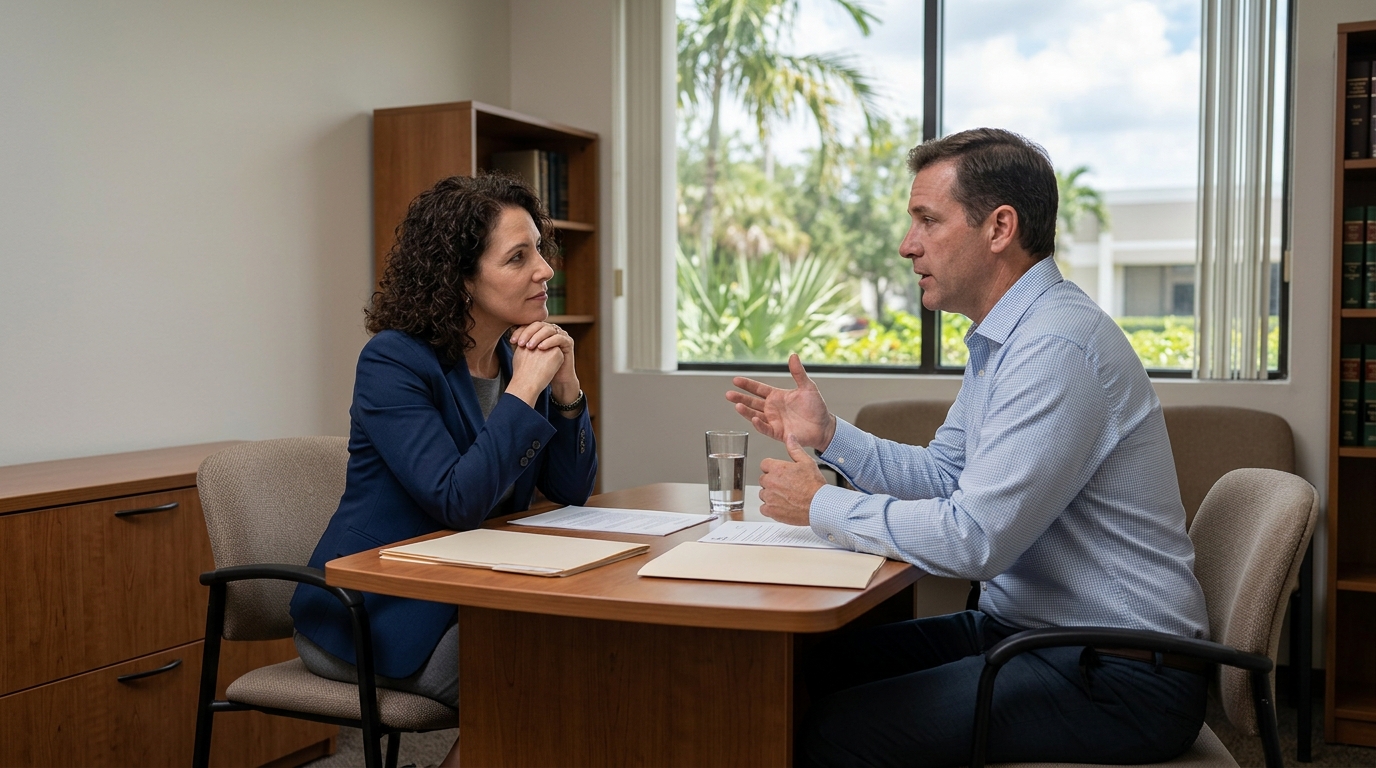
A divorce attorney explains how Florida law applies to your situation. He or she prepares and files legal documents, negotiates with the other side, handles procedural requirements, and represents you in court when necessary.
The work can also involve property and financial issues. As well as parenting plans, child support, mediation, settlement agreements, and other disputes that arise during the divorce.
What a divorce lawyer does depends on the circumstances of the case. An uncontested divorce may involve document preparation, legal review, and a settlement agreement. A contested divorce can involve financial disclosures, discovery, negotiation, mediation, hearings, and trial preparation.
The client still makes the decisions that belong to them. The attorney explains the legal options and consequences, advises the client about the available courses of action, and handles the legal work required to move the case forward.
“By the time someone walks into my office, they have usually spent a considerable amount of time trying to figure out what is going to happen next. Unfortunately, Google can give you a hundred answers to the same divorce question. My job is to figure out which answer actually applies to the person sitting in front of me.”
What Does a Divorce Attorney Do Before the Case Is Filed?
A divorce attorney may become involved before any paperwork reaches the courthouse.
The first stage is usually understanding the client’s circumstances and identifying the legal issues that will have to be resolved. That can include the length of the marriage, children, income, property, debts, retirement accounts, existing agreements, and other facts that could affect the case.
Florida law requires a dissolution proceeding to begin with a petition filed in circuit court. The petition and summons must then be served on the other spouse.
Before filing, an attorney can also explain what the filing will set in motion and what information or documents should be gathered.
That preparation can be especially important when the couple has significant assets, owns a business, has minor children, or disagrees about financial support or the division of property.
What Does a Divorce Lawyer Handle After Filing?
Once the case is filed, the attorney takes responsibility for the legal and procedural work required to move the divorce through the court system.
That can include:
- Preparing and filing pleadings and other court documents
- Responding to documents filed by the other spouse
- Communicating with the other spouse’s attorney
- Gathering and reviewing financial information
- Requesting documents and other evidence
- Preparing settlement proposals
- Negotiating disputed issues
- Preparing for mediation or other forms of dispute resolution
- Preparing for hearings
- Representing the client in court when necessary
Florida’s dissolution statute expressly states that one of the purposes of Chapter 61 is to promote the amicable settlement of disputes arising between spouses.
That is consistent with how many divorce cases actually proceed. A case can involve substantial negotiation without ever reaching a trial.
The attorney’s work therefore changes as the case develops. A straightforward uncontested divorce may involve relatively little litigation. A contested case involving property, support, or parenting issues can require extensive preparation and negotiation.
How Does a Divorce Attorney Deal With the Other Spouse’s Lawyer?
When both spouses have attorneys, much of the communication about the legal case takes place between the lawyers.
That can involve requests for information, settlement proposals, scheduling, procedural matters, discovery, mediation, and disputes about what should happen next.
This has a practical advantage for the client: the attorney can deal with the legal arguments and procedural requirements while the client concentrates on providing accurate information and making decisions about the issues that affect the client’s life.
The attorney does not become the decision-maker.
If the other side proposes a settlement, for example, the lawyer can explain the terms, identify legal consequences, point out potential problems, and advise the client about the available options. The client decides whether to accept the agreement.
What Does a Divorce Attorney Do About Property and Money?
Property division can become one of the most complicated parts of a divorce.
Florida law addresses the equitable distribution of marital assets and liabilities, as well as retirement plans, marital homes, and other financial issues under Chapter 61.
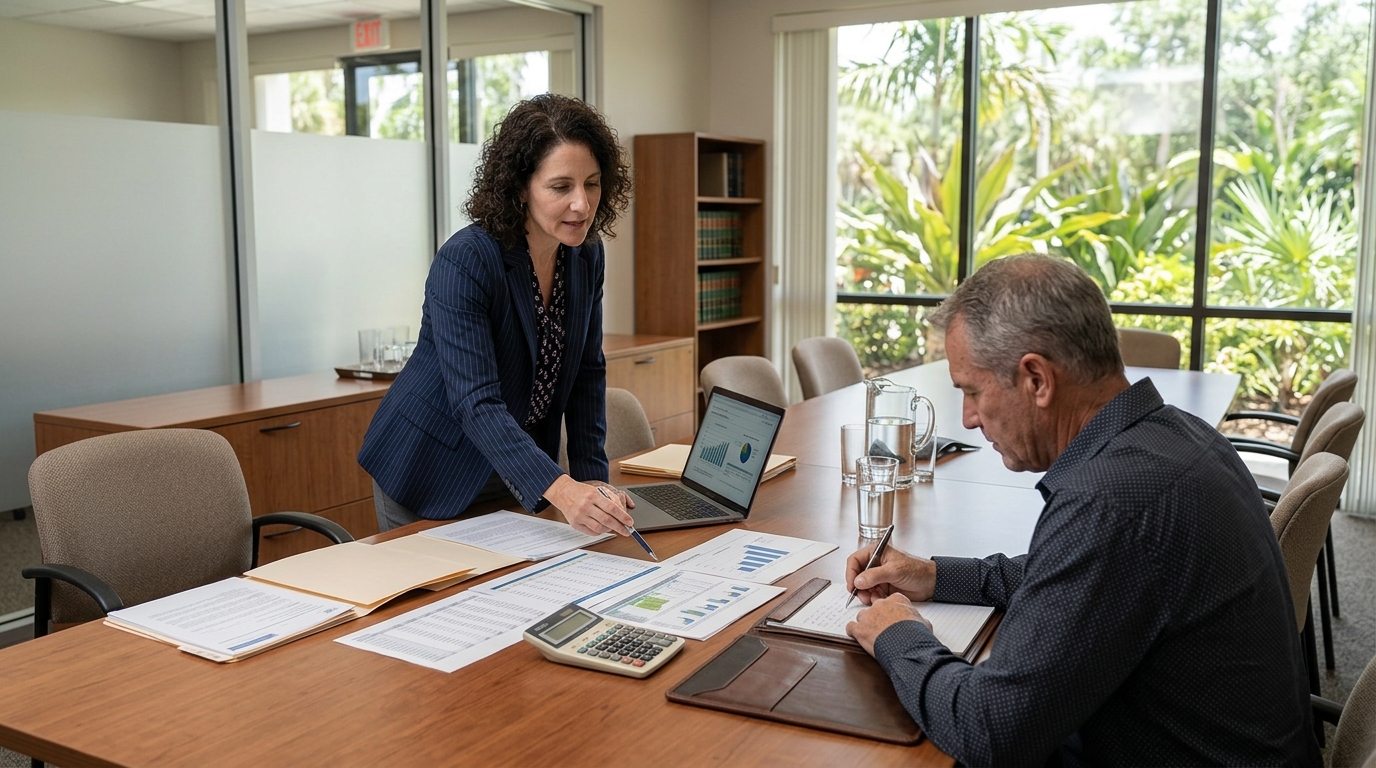
An attorney may therefore need to identify which assets and debts are marital, determine what financial information is necessary, review account statements and other records, and negotiate how property and liabilities should be divided.
The financial side of a divorce can become considerably harder to sort out when the couple owns property, operates a business, or has accumulated substantial financial accounts during the marriage.
- A home or other real estate
- Businesses or business interests
- Retirement accounts
- Investment accounts
- Valuable personal property
- Multiple properties
- Significant marital debt
- Assets acquired before or during the marriage that have changed in value
The attorney may also need to coordinate with financial professionals, appraisers, accountants, or other experts when the circumstances require specialized analysis.
A spreadsheet showing who owns what is sometimes enough to clarify a case. Sometimes it raises several additional questions.
“You can settle a divorce on paper and still create a disaster for the people who have to live with the agreement. A parenting schedule, for example, has to survive birthdays, school mornings, holidays, sick days and everything else that never appears in a courtroom. That is where the details start to matter.”
What Does a Divorce Attorney Do When Children Are Involved?
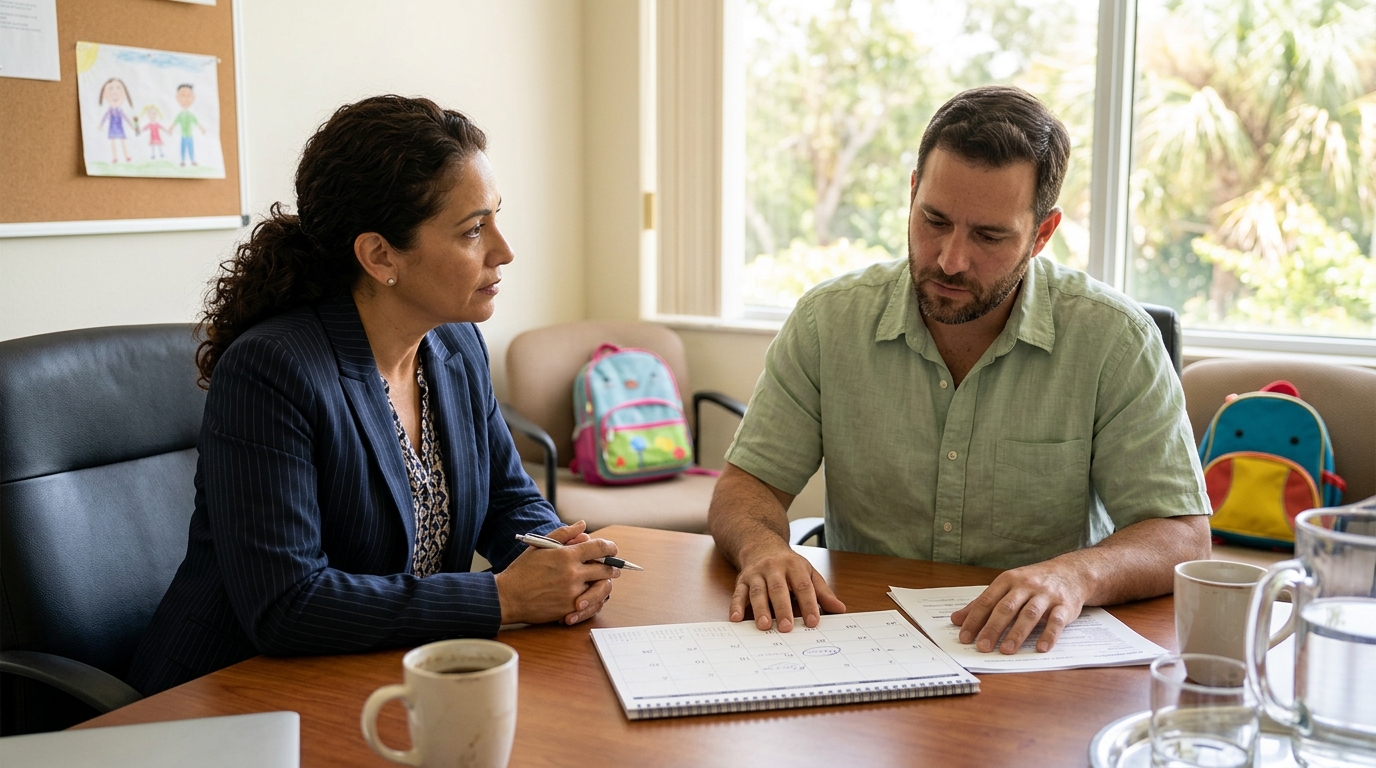
When minor children are involved, the divorce case includes issues concerning parental responsibility, time-sharing, child support, and the parenting plan.
Florida requires a written parenting plan in dissolution cases involving children. The plan addresses matters such as parental responsibility, time-sharing, and decision-making concerning the child’s care.
A divorce attorney can help the parent understand these requirements, negotiate proposed parenting terms, prepare the necessary documents, and present the client’s position if the parents cannot reach an agreement.
The attorney can also explain how particular arrangements may affect the client’s legal rights and responsibilities.
Florida law does not treat parenting disputes as a simple question of which parent gets custody. The legal framework addresses parental responsibility and time-sharing, with the child’s best interests guiding the court’s decisions.
Parents in Florida divorce cases involving minor children are also required to complete an approved parenting course. The Florida Bar explains that the course addresses the consequences of divorce for families and children.
Does a Divorce Attorney Have to Take the Case to Court?
No.
A divorce attorney can represent a client in negotiations and settlement discussions without taking every disputed issue to trial.
Florida’s divorce process allows spouses to resolve some or all of their issues by agreement. Those issues can include property division, parenting, support, and attorney’s fees and costs. A written settlement can then be presented to the court for approval.
Mediation is another important part of many Florida family law cases. Florida law authorizes courts to refer contested issues to mediation, including disputes involving parental responsibility, time-sharing, and child support. If the parties reach an agreement, the agreement can be submitted for court approval.
The role of the attorney during mediation is different from that of the mediator.
The mediator is a neutral third party. The divorce attorney represents one spouse and can advise that client about proposed terms, legal rights, and whether an agreement should be accepted.
What Happens When the Case Does Go to Court?
If negotiation and mediation do not resolve the disputed issues, the attorney prepares the case for a hearing or trial.
That preparation can include identifying the disputed issues, gathering evidence, preparing witnesses, reviewing financial records, preparing legal arguments, and determining which documents or testimony will be needed.
The attorney also prepares the client for what will happen in court.
That can involve explaining the procedure, discussing likely questions, reviewing testimony, and making sure the client understands what the court is being asked to decide.
At trial, each side presents evidence and arguments. The judge then decides the disputed issues that remain unresolved.
The resulting judgment can address the dissolution itself and, depending on the circumstances, matters such as property, support, and parenting.
What Happens After the Parties Reach an Agreement?
Reaching an agreement does not necessarily mean the legal work is finished.
The agreement must be documented properly and submitted through the appropriate court process. The attorney reviews the final terms, prepares or reviews the necessary documents, and works toward entry of the final judgment.
This is particularly important when an agreement covers several separate issues.
A settlement might address the marital home, retirement accounts, debts, child support, time-sharing, parental responsibility, alimony, attorney’s fees, and other matters. The final documents need to reflect what the parties actually agreed to.
The Florida Bar notes that spouses who reach an agreement can enter into a written settlement and present it to the court for approval and incorporation into the final judgment.
What Are the Responsibilities of a Divorce Attorney?
A divorce attorney’s responsibilities are broader than filling out forms.
The attorney represents the client’s legal interests, provides legal advice, prepares the necessary documents, communicates with the other side, negotiates when appropriate, and represents the client in court when litigation is necessary.
The attorney also has to work within the rules governing Florida lawyers and the court system.
That does not mean the attorney controls every decision.
A client still decides personal questions such as whether to accept a settlement, what compromises are acceptable, and what priorities should guide negotiations. The lawyer’s role is to provide legal advice so those decisions are made with a clear understanding of their consequences.
That division of responsibility is important in any divorce case.
What Does a Divorce Lawyer Do in a Coral Springs Case?
For someone going through a divorce in Coral Springs, the underlying law is Florida law and the case proceeds through the appropriate Florida court system.
The local setting can still matter.
A divorce may involve a family home in Coral Springs, children attending school in Broward County, local financial institutions, businesses, retirement accounts, or other property and relationships located in South Florida.
An attorney handling the case needs to understand the Florida legal framework while also dealing with the practical details of the client’s circumstances.
For residents of Coral Springs and throughout Broward County, that can include everything from a relatively straightforward uncontested dissolution to a heavily disputed case involving property, support, or parenting.
What Does a Divorce Attorney Actually Do for the Client?
The simplest answer is this:
A divorce attorney handles the legal work required to move a divorce through the Florida court system while advising and representing the client on the issues that must be resolved.
That work can begin before filing and continue through settlement, mediation, hearings, trial, and entry of the final judgment.
Some cases require extensive litigation. Others are resolved through negotiation and agreement.
The attorney’s job changes with the circumstances.
The client’s job is different. You provide information, explain your priorities, consider the options presented by your lawyer, and make the decisions that belong to you.
A good attorney should be able to tell you what Florida law permits, what the other side is asking for, what risks or consequences come with different choices, and what needs to happen next.
Frequently Asked Questions
What does a divorce attorney do in Florida?
- A divorce attorney advises the client about Florida family law, prepares and files legal documents, communicates with the other side, negotiates settlements, handles procedural requirements, prepares evidence, and represents the client in court when necessary.
Does a divorce lawyer have to go to court?
- No. Many divorce issues can be resolved through negotiation, mediation, or a written settlement. A lawyer can represent a client through those processes without taking every issue to trial.
What does a divorce attorney do if children are involved?
- The attorney can advise the parent about parental responsibility, time-sharing, child support, and the parenting plan, negotiate parenting arrangements, prepare the necessary documents, and represent the parent if the dispute has to be decided by a court. Florida requires a written parenting plan in dissolution cases involving children.
Does a divorce attorney handle property division?
- Yes. A divorce attorney can address the classification and division of marital assets and liabilities and negotiate or litigate disputes involving property, financial accounts, retirement assets, debts, and other financial interests. Florida’s equitable distribution rules are contained in Chapter 61.
What does a divorce lawyer do during mediation?
- The attorney represents the client during the mediation process, reviews proposed terms, explains their legal consequences, negotiates with the other side, and advises the client about whether a proposed settlement should be accepted. The mediator remains a neutral third party.
What happens if my spouse and I agree on everything?
- The agreement still needs to be documented and submitted through the appropriate court process. A divorce attorney can review the agreement, prepare or review the necessary documents, and help bring the case to a final judgment.
Talk With a Florida Divorce Attorney
Divorce law involves decisions about property, money, children, support, and the legal end of a marriage. The work required from an attorney depends on which of those issues are present and whether the spouses can resolve them by agreement.
If you are considering divorce in Coral Springs or elsewhere in Broward County, Reinfeld & Cabrera, P.A. can discuss your circumstances and explain how Florida family law applies to your situation.
Contact the firm to arrange a consultation with a Florida divorce attorney and discuss the legal issues involved in your case.
This article provides general information about Florida divorce law and is not a substitute for legal advice about a particular case.