
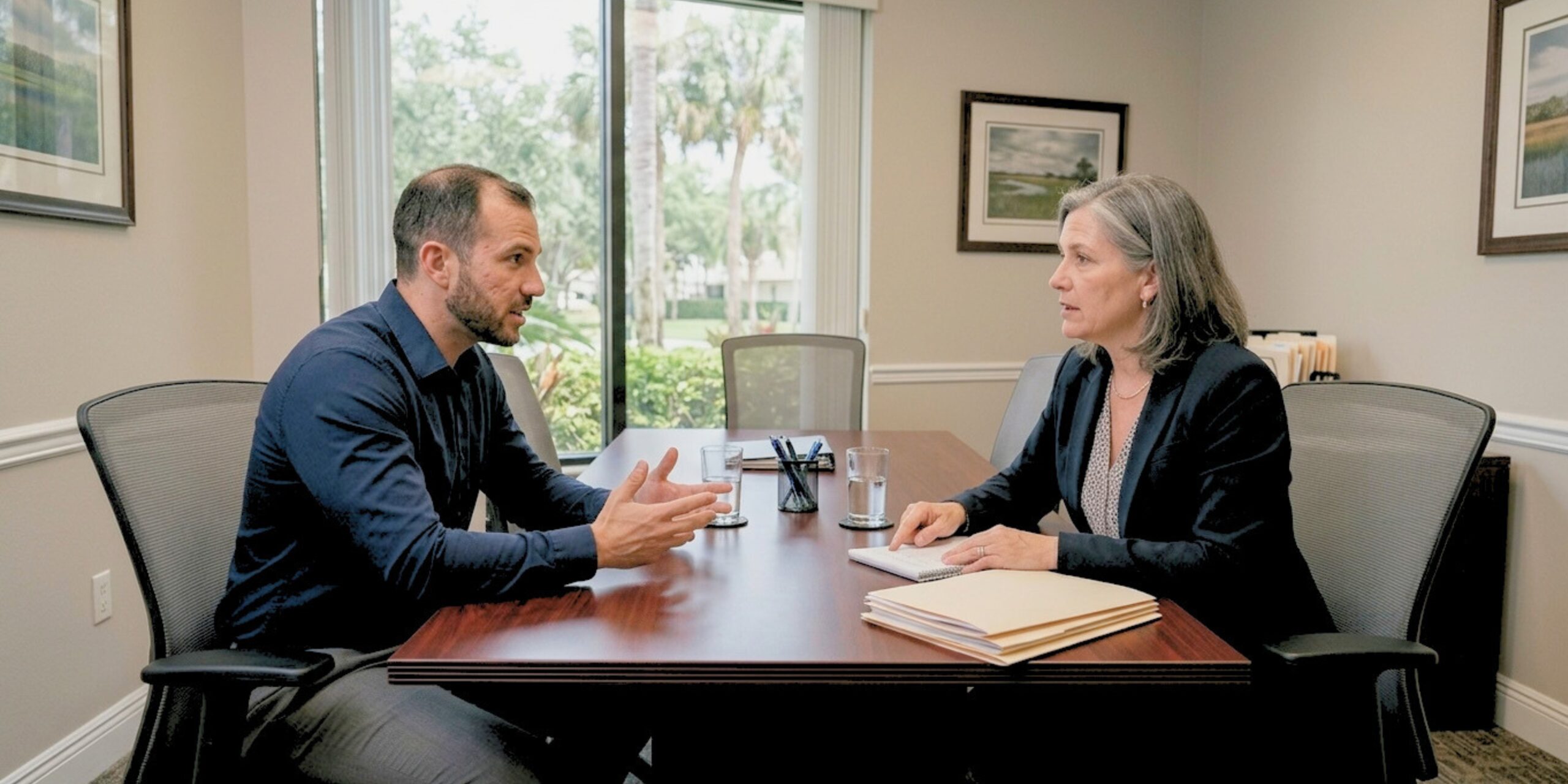
Finding an attorney in Coral Springs is not particularly difficult. There are law firms, directories, referral services, advertisements, reviews, and search results ready to give you names.
The harder part comes afterward.
You have a legal problem. You may have several attorneys in front of you who appear qualified. Their websites may use similar language. Their credentials may look impressive. Their reviews may all be positive. One office may be five minutes away while another is across Broward County.
So how do you decide?
The useful place to start is not with the attorney. Start with the problem you need to solve.
What Kind of Legal Problem Do You Have?
A lawyer’s practice area is a useful starting point, but it should not be the end of your research.
A probate dispute is different from preparing an estate plan. A personal injury claim is different from a real estate transaction. A divorce raises different legal questions from a business dispute.
Even within a single area of law, experience can vary considerably.
Someone looking for an attorney after a serious automobile accident may want to know whether the lawyer regularly handles personal injury claims involving insurance disputes, serious injuries, contested liability, or litigation. Someone dealing with an estate dispute may need an attorney who regularly handles probate litigation rather than someone whose practice consists primarily of drafting wills.
The first question to ask is therefore fairly simple:
Does this attorney regularly handle problems like mine?
The Florida Bar recommends asking prospective lawyers whether they have handled cases like yours before, how frequently they do so, and how much experience they have with that type of matter.
That is considerably more useful than counting how many different practice areas appear on a firm’s website.
Experience Should Be Specific
“Experienced attorney” is one of those phrases that appears on an enormous number of law firm websites.
By itself, it tells you very little.
A lawyer may have practiced for twenty years without spending much of that time on the particular kind of matter you are facing. Another lawyer may have concentrated heavily on a particular area for a shorter period.
That is why it is worth asking about relevant experience, rather than simply years in practice.
You can ask:
- How often do you handle cases like mine?
- Have you handled cases involving circumstances similar to mine?
- Will my matter probably require litigation?
- If so, how much experience does the firm have with that type of litigation?
- Who will actually handle my case?
The last question deserves particular attention.
Who Will Actually Handle Your Case?
You may meet one attorney during your initial consultation and later discover that another lawyer, associate, paralegal, or other member of the firm will be doing much of the work.
That arrangement is not necessarily a problem. A law firm is a team, and different people can have different responsibilities.
You should simply know what you are agreeing to.
The Florida Bar specifically recommends asking what support resources an attorney has available and who will work on the matter. Its consumer guidance also recommends asking about how and how often you will communicate with the attorney.
A reasonable question at the beginning is:
Who will be my primary contact, and who will be doing the legal work on my matter?
There is nothing awkward about asking. You are considering a professional relationship, and you should understand how that relationship will work.
Pay Attention to How the Lawyer Explains Things
Legal problems can be complicated. Your lawyer does not have to make them sound simple when they are not.
But you should be able to leave a consultation with a clearer understanding of what you are dealing with.
A good consultation should give you an opportunity to explain what happened, ask questions, hear the relevant legal issues, and understand what may happen next.
That does not mean the attorney can predict the outcome.
In many legal disputes, important facts are still unknown. The other side may take a position you cannot predict. Evidence may change the analysis. A court may ultimately have to decide an issue.
Be cautious of anyone who seems to know the result before knowing the facts.
A useful attorney can explain the strengths and weaknesses of your position without turning the consultation into either a sales pitch or a lecture you cannot follow.
Communication Is Part of the Representation
You may not need your lawyer to call you every afternoon.
You do need to know how communication will work.
Ask whether communication will generally happen by telephone, email, a client portal, or some combination. Ask who you should contact with routine questions. Ask how frequently you should expect updates.
The Florida Bar specifically recommends discussing both the means and frequency of communication during the initial meeting.
This is one area where client reviews can provide useful information. If numerous clients independently describe a firm as responsive, organized, or difficult to reach, that can tell you something about the client experience.
Reviews still have limits, though.
A collection of five-star reviews cannot tell you whether an attorney has handled your particular legal problem. Likewise, a lawyer with substantial experience in a specialized area may not have hundreds of online reviews.
Reputation and legal experience answer different questions.
Understand the Fee Before You Hire the Lawyer
Money is an uncomfortable subject until you receive a bill you did not expect.
It is better to discuss fees early.
Lawyers may charge fixed or flat fees, hourly fees, contingency fees, or other arrangements depending on the type of legal work. The Florida Bar recommends discussing prospective charges at the first meeting and understanding other costs that may arise.
Ask:
- How are your fees calculated?
- Is there a fee for the initial consultation?
- Are there costs separate from the attorney’s fees?
- What circumstances could cause the cost to increase?
For litigation and other matters where the amount of work depends heavily on what happens next, an attorney may not be able to give you an exact final number. That does not mean the financial conversation should be vague.
You should understand the basic fee arrangement before deciding whether to proceed.
Do You Need the Lawyer Who Is Closest to You?
If you live in Coral Springs, having an attorney nearby can certainly be convenient.
There may be times when you need to attend a meeting, review documents in person, sign something, or discuss an issue face to face. Local familiarity can also be useful depending on the nature of the legal matter.
But distance should not become a substitute for relevant experience.
Someone searching for a Coral Springs attorney may reasonably want a lawyer who understands the local area and can serve clients in Broward County. At the same time, the best geographical match is not necessarily the attorney whose office happens to be closest to your front door.
If the legal problem is specialized, experience with that problem deserves serious consideration alongside convenience.
What About Lawyer Referral Services?
You do not have to find an attorney entirely on your own.
The Florida Bar operates a statewide Lawyer Referral Service designed to connect consumers with verified attorneys based on their legal needs and location. The service is available online, and eligible referrals can receive an initial 30-minute consultation for no more than $25. Local bar associations also operate referral services in parts of Florida.
Referral services can be particularly useful if you know you have a legal problem but are unsure which type of attorney you need.
They are one starting point.
You should still use the consultation to decide whether the attorney is appropriate for your particular matter.
Check the Basics
There is also nothing wrong with checking the basic professional information available about an attorney.
The Florida Bar’s public resources allow consumers to search for an attorney and review information such as membership status and public disciplinary history.
That is not a substitute for evaluating experience or having a conversation with the lawyer.
It is simply sensible due diligence.
What Should You Bring to the First Meeting?
The quality of an initial consultation depends partly on how much useful information you can give the attorney.
The Florida Bar recommends organizing relevant documents and correspondence before the appointment and preparing a timeline when one would help explain what happened.
Depending on the matter, that might include:
- Contracts or other agreements
- Court papers
- Letters or emails
- Medical records or bills
- Insurance correspondence
- Property records
- Financial documents
- A written timeline of important events
You do not need to become your own lawyer before meeting the lawyer.
You simply want to give the attorney enough information to understand what happened.
And tell the truth, including the uncomfortable parts. Your attorney can deal with a fact you disclose. A surprise is harder to deal with after the other side has already found it.
Questions to Ask an Attorney in Coral Springs
If you are comparing several attorneys, you can ask each of them the same basic questions.
- Have you handled matters like mine before?
- How frequently do you handle them?
- Who will actually work on my case?
- What do you see as the main legal issues?
- What information or documents do you need from me?
- How will we communicate?
- How often should I expect updates?
- How are your fees calculated?
- Are there additional costs I should understand?
- What happens after this consultation?
The answers will not tell you everything. They will, however, give you something considerably more useful than a search-results page full of law firm names.

Finding the Right Attorney Is About Fit, Experience, and the Problem in Front of You
There is no single characteristic that makes an attorney the right choice for every client.
A large firm may be appropriate for one matter and unnecessary for another. A lawyer with decades of experience may be exactly what one case requires. Another client may need someone whose practice is highly concentrated in a particular area.
Location matters. Reviews matter. Professional experience matters. Communication matters. Fees matter.
What matters most is how those factors fit the legal problem you actually have.
If you are looking for an attorney in Coral Springs, start by identifying the type of legal help you need. Then look closely at the lawyers you are considering. Find out whether they regularly handle matters like yours, who will be working on your case, how communication will work, and what the financial arrangement will look like.
You are not expected to know Florida law before you hire a Florida lawyer. That is the lawyer’s job.
Your job is to ask enough questions to understand who you are hiring and what you can reasonably expect from the relationship.
Frequently Asked Questions
How do I choose an attorney in Coral Springs?
- Start by identifying the type of legal problem you have and looking for attorneys who regularly handle that kind of matter. Then ask about relevant experience, who will handle your case, communication, fees, and the likely next steps.
What should I ask a lawyer before hiring them?
- Ask whether they have handled matters like yours, how frequently they do so, who will work on your case, how communication will work, how fees are calculated, and what other costs may arise. The Florida Bar recommends discussing these issues during the initial meeting.
How can I find a lawyer in Coral Springs?
- You can search directly for local attorneys, ask people you trust for recommendations, or use a lawyer referral service. The Florida Bar Lawyer Referral Service can match consumers with attorneys based on their legal needs and location.
Should I choose a lawyer based on online reviews?
- Reviews can provide useful information about client experience, particularly communication and responsiveness. They should be considered alongside relevant legal experience and the attorney’s ability to handle the specific type of matter you have.
Does the closest attorney make the best choice?
- Not necessarily. Convenience can matter, particularly when in-person meetings are useful, but relevant experience with your particular legal problem should also be considered.
How much does an attorney in Coral Springs cost?
- There is no single standard fee. Florida attorneys may use different fee arrangements depending on the type and complexity of the legal matter. Discuss the consultation fee, attorney’s fees, and other anticipated costs before retaining counsel.
Looking for an Attorney in Coral Springs?
Reinfeld & Cabrera, P.A. represents clients in Coral Springs and throughout Broward County in a range of probate legal matters.