

Quick Answer:
Under Florida law, you generally cannot use a standard landlord-tenant eviction to remove a family member who does not pay rent and has no lease. Instead, homeowners must file an Unlawful Detainer action under Florida Statutes Chapter 82. This has to be done in county court to legally regain possession of the property.
Inviting an adult child, relative, or guest to stay in your home can start as a temporary arrangement. When that relationship breaks down or the guest refuses to leave, the situation quickly becomes stressful and emotionally exhausting.
For homeowners in Broward County, trying to resolve this can feel overwhelming, especially if you are worried about legal missteps.
The biggest mistake a homeowner can make is treating a family member like a standard tenant. Under Florida law, the legal mechanism for removing a guest or family member is entirely different from evicting a renter. Using the wrong procedure can lead to immediate dismissal in the 17th Judicial Circuit, wasting valuable time.
Why a Family Member Is Usually Not a “Tenant”
Many homeowners assume that anyone living in a home without paying rent can be put out through a standard landlord-tenant eviction.
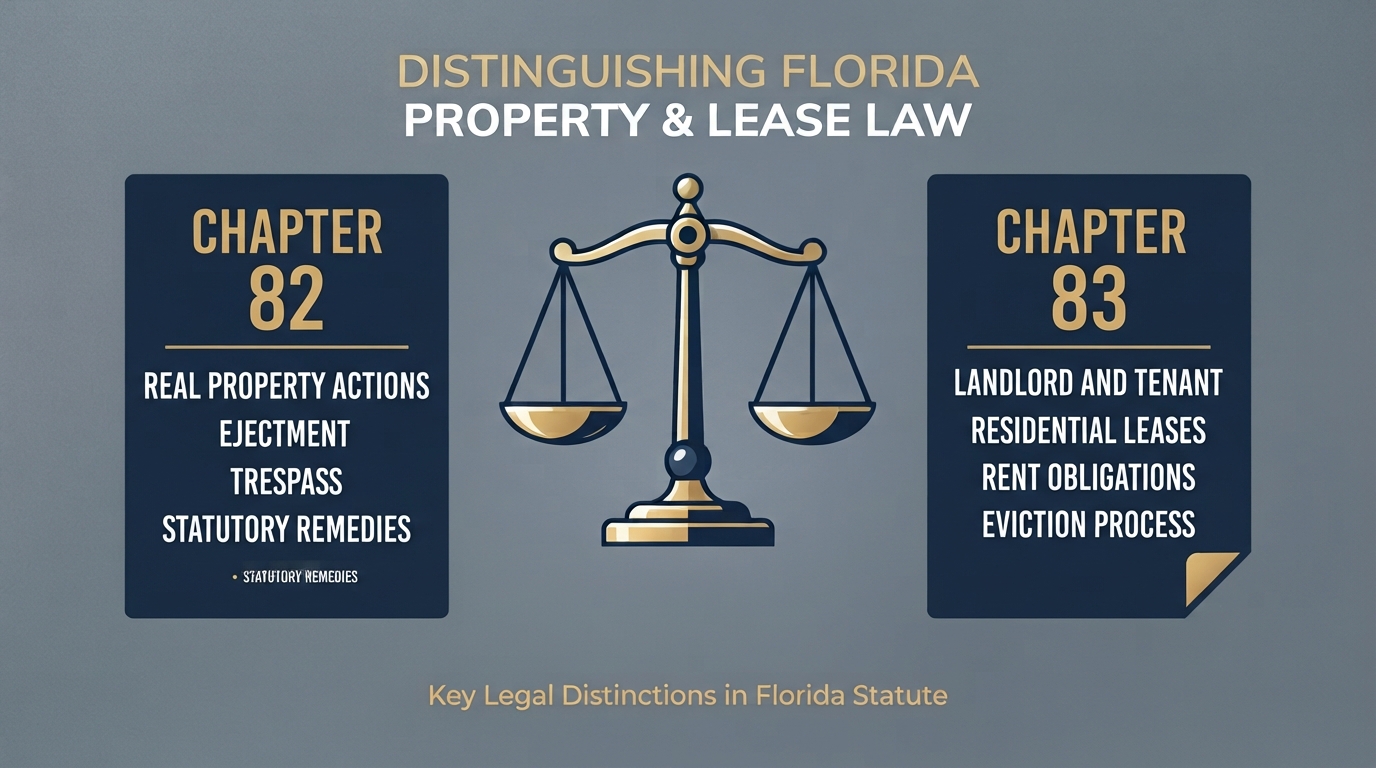
Under Florida Statutes Chapter 83, a residential eviction requires a valid landlord-tenant relationship, which typically involves a lease agreement or a formal agreement to pay regular rent.
If you permitted a family member, friend, or former partner to move into your Coral Springs home without a lease and without paying rent, they are legally considered a guest or occupant, not a tenant.
Attempting to issue a standard 3-day or 7-day tenant notice or filing a Chapter 83 landlord-tenant lawsuit for someone who isn’t a tenant can cause a judge to throw the case out of court.
Instead, the proper legal remedy under Florida law for removing an unauthorized or overstaying guest who has no ownership interest or lease is an Unlawful Detainer action under Florida Statutes Chapter 82.
Understanding Florida Chapter 82: Unlawful Detainer
An unlawful detainer action is a lawsuit filed in county court to regain possession of property from someone who entered with permission. Such as a family member or guest – but whose permission has since been revoked.
Key elements of a Florida unlawful detainer include:
- No Lease Required: The occupant has no written or oral lease agreement.
- No Rent Paid: The occupant does not pay regular rent (occasional or minor household contributions do not create a tenancy).
- Revoked Consent: You have officially withdrawn permission for them to remain on the property.
Unlike standard tenant evictions, an unlawful detainer action generally does not require a statutory advance notice period before filing the complaint in court, though giving clear written notice to vacate is often a prudent first step to encourage voluntary compliance.
The Legal Process to Remove an Occupant in Broward County
When a family member refuses to leave after you have asked them to go, navigating the court system correctly is essential. The process in Broward County typically follows these procedural phases:
1. Revoking Consent and Demanding Possession
- While not strictly mandated by Chapter 82 for every scenario, providing a clear, written demand letter stating that permission to occupy the property is terminated by a specific date helps establish a clean timeline for the court.
2. Filing the Unlawful Detainer Complaint
- If the individual remains on the property, the homeowner files a formal Unlawful Detainer Complaint in the County Civil Division of the 17th Judicial Circuit. At this stage, you are designated as the Plaintiff, and the occupant is the Defendant.
3. Service of Process via the Broward County Sheriff
- Once filed, the Clerk issues a summons. The summons and complaint must be formally served to the occupant by the Broward County Sheriff’s Office or a certified process server.
4. The Response Window and Court Hearing
In Florida unlawful detainer actions, the defendant is given a short window (typically 5 business days from service) to file a written response with the court.
- If the occupant fails to respond, you can move for a default judgment.
- If the occupant files an answer contesting the removal, the court will schedule a hearing where both sides present evidence regarding who holds the superior right to possession.
5. Issuance and Execution of the Writ of Possession
- If the court rules in your favor, a Final Judgment of Possession is entered, and the clerk issues a Writ of Possession. This writ is delivered to the Broward County Sheriff, who will execute the removal to restore full possession back to the homeowner.
Why You Should Never Take Matters Into Your Own Hands
Property owners are sometimes tempted to change the locks or remove a family member’s belongings while they are out.
Under Florida law, “self help” evictions or lockouts are strictly illegal—even against non-tenant guests or family members. Engaging in self help can expose a homeowner to civil liability, tenant rights claims, and court penalties.
Working with an experienced Coral Springs real estate and property litigation attorney matters. It ensures that every step follows statutory guidelines, protecting you from procedural delays.

Frequently Asked Questions
What is the difference between an eviction and an unlawful detainer in Florida?
- An eviction (Chapter 83) is used exclusively to remove tenants who have a lease or an agreement to pay rent. An unlawful detainer (Chapter 82) is used to remove guests, former partners, or family members who never had a lease. They never paid rent, and refuse to leave after permission is revoked.
Do I have to give a 3-day or 7-day notice before filing an unlawful detainer?
- Unlike standard residential evictions, Florida law does not require a statutory advance notice period before filing a Chapter 82 action. But providing written notice is often recommended.
Can the police physically remove a family member from my house?
- Generally, local law enforcement agencies in Broward County will treat disputes involving occupants who were originally invited into the home as a “civil matter” rather than a criminal trespass. Therefore requiring the homeowner to obtain a court order or Writ of Possession.
What if the family member claims they have an ownership interest in the house?
- If an occupant asserts a legitimate claim to title of the property, a standard unlawful detainer action may be insufficient. That’s why an ejectment action in Circuit Court may be required instead.
How long does an unlawful detainer take in Broward County?
- Because unlawful detainer actions qualify for Florida’s summary procedure statutes, they are designed to move faster than standard civil lawsuits. Timelines depend on court scheduling, service of process, and whether the defendant contests the action.
Schedule a Consultation with Our Coral Springs Real Estate Attorneys
Dealing with an uncooperative family member in your home is stressful and legally complex. Whether you need assistance filing a Chapter 82 unlawful detainer or evaluating the right property recovery procedure in Coral Springs, Broward County, or South Florida, Alan Reinfeld and Stuart Reinfeld can help. Contact our office today to protect your property rights and resolve the situation lawfully.